Kokatat Announces Scott Frank as New Sales Manager | Photo: Kokatat
ARCATA, CA – Kokatat, a leading manufacturer of innovative paddlesports apparel and accessories, is pleased to announce Scott Frank as its new Sales Manager, effective immediately. In his new role at Kokatat, Scott will oversee the Sales Department, external Sales Representatives and the Warranty and Repair Department.
Scott has over 30 years of sales experience in the outdoor industry, working for multiple specialty outdoor retail shops prior to leading the Kokatat customer and dealer service department for the past 14 years.
Mark Loughmiller, Kokatat CEO, stated, “Scott has developed excellent relationships with Kokatat’s dealers and outside Sales Representatives, which will serve him well in his new role as Sales Manager. Scott has a thorough understanding of Kokatat’s business operations and product lines making Scott a perfect fit for his new role in the company.”
Kokatat is deeply committed to quality and excellence in customer service. Scott’s prior role as Customer Service Manager provided firsthand interactions with customers, both wholesale and consumer, putting him in a unique position to utilize their feedback in Kokatat and Scott’s shared goal of continual improvement.
“We will continue to focus on improving sustainable manufacturing through the use of less harmful chemicals, and increasing paddlesports participation through community engagement,” said Scott.
Scott brings much knowledge and enthusiasm to his new position at Kokatat, where he will give input to the company’s management team and provide leadership for the sales department. His responsibilities will be on the domestic and global scale for the company’s paddlesports business.
“From its founding and continuing to this day, Kokatat has been a small family business. In my new role as Sales Manager, I have been enabled with the opportunity to serve Kokatat and its customers in the tradition of all families; a tradition of encouraging the success of each other and having fun doing it,” said Scott.
About Kokatat Inc.
Kokatat has been manufacturing paddling gear in Arcata, California, for over 50 years. At a time when many technical apparel brands were moving manufacturing offshore, Kokatat continued to invest in infrastructure in the United States. Kokatat founder Steve O’Meara was committed to the development of the finest and driest paddling apparel in the world and recognized the need to control and continually evolve the development of our dry wear. In the early days, Kokatat worked closely with W.L. Gore& Associates, makers of GORE-TEX®, to refine the sewing and sealing techniques required for full immersion suits and tops.
Paddlesports gear designer Ryan Lightfoot enjoys a contemplative moment on the Colorado River. | Feature photo: Nate Herbeck
We asked paddling retailers and brand leaders to sound off on everything from the perfect trade show to the global supply chain, and where the inventory rollercoaster went off the rails. Here’s what some of you had to say.
31 paddlesports industry leaders on what matters most right now
Many retailers have had a tough ride on the post-pandemic inventory rollercoaster. What strategies have you used to deal with—or even take advantage of—fluctuating supply and demand?
It seems that the same thing that was crucial during the pandemic is important now—that is staying agile and light on your feet. A banker once told me that booms usually go far bigger and last longer than anyone expects. The same is true during the bust.
— Ed Vater, Vater Solutions LLC., Osceola, Wisc.
There’s always something new and cool coming out, and that’s great for the customer. However, obsolescence of inventory is a reality, so give us some warning so we can sell the stuff we have before it’s discontinued or updated. This has become more of a problem now that manufacturers use social media to introduce ‘hot new products’ as a teaser, often even before they’re shipping them.
— Darren Bush, Rutabaga Paddlesports, Madison, Wisc.
Manage your production with facts vs. hopes and aspirations.
— Peter Hausin, Jackson Kayak, Sparta, Tenn.
Forecasting is absolutely critical. That, combined with open communication between retailers and manufacturers, is the way to navigate this together in a transparent and mutually beneficial fashion.
— Simon Coward, AQ Outdoors, Calgary, Alta.
Nothing in business is ever as good or as bad as it feels at any given moment, and that’s certainly true in our industry’s case. The only way out of a slump like this is creating more excitement around paddling. I’d like to explore how manufacturers could join in with retailers in stimulating demand through creative investment at the local level.
— John Williams, Pack and Paddle, Lafayette, La.
It’s going to take time to sort this one out. Keep it tight, keep having fun and hope some of the big boxes lose interest and decide to stick to Rubbermaid garbage cans.
— Aaron Pruzan, Rendezvous River Sports & Jackson Hole Kayak School, Jackson Hole, Wyo.
After 39 years in business, we’ve realized that every year is different, and there’s little percentage in analyzing data from past performance. Best is to keep being true to ourselves and treating our customers and staff like family.
— Bruce Hyer, Wabakimi Fishing and Canoeing Outfitters, Armstong, Ont.
Photo: Georg Popp
What has had a bigger effect on your business: inflation or the higher interest rates used to control it?
It’s well above my pay grade to say for certain, but right now we have too much stuff and too few customers. I didn’t study economics in college, but that’s usually not a winning formula.
— Mike Harvey, Badfish SUP, Salida, Colo.
The paddlesports industry needs to wake up and begin developing products for active older adults that are as high quality as the gear they have been using for years. If they’ve spent decades paddling a top-of-the-line sea kayak, they don’t want to paddle a bathtub sit-on-top just because they have bad hips or knees.
— Sue Bakkila, Woods and Waters, Hessel, Mich.
We’re taking advantage of stabilized construction costs, realizing future inflation will help pay off debt. Our diversification strategy includes lodging improvements, VIP riverside lodgings, and an attractive multi-events center to include a yoga dome, conferences, hot tub, bar and terraces. We’re taking the risk to distinguish the retreat, and remain sustainable within an inflationary market.
— David Hughes, Pucón Kayak Retreat, Pucón, Chile
Customers are more price sensitive. As a result, we have marked down prices on some items. There is not a lot of margin in paddlesports equipment so this impacts the bottom line. We have held steady on our outfitting pricing as we want to get people to embrace an active outdoor lifestyle and rentals, trips, and lessons play a big part in accomplishing this.
— Kevin Versino, Rocktown Adventures, Rockford, Ill.
Both. It’s an overall economy issue. People aren’t buying kayaks because their gas, groceries and other basic needs have gone up too much. The discretionary dollars are gone.
— Jeremy Dahl, Hi Tempo Snowsports-Watersports, White Bear Lake, Minn.
According to U.S. Coast Guard stats, 39 percent of fatal kayaking accidents involve paddlers with less than 10 hours experience. Why do you think beginners are so vulnerable, and what can the industry do to stop it?
It’s a constant battle to educate our guests about the proper kayak for open water. Everyone has kayaked in a recreational kayak (or wreck boat as we call them) from the hardware store, and anyone can move a kayak around on flat water. But with the increase in accidents and deaths reported this year it’s obvious we need to do better. Most people still don’t wear their PFDs, but we can change that: When I was a kid no one wore bike helmets; now everyone does.
— Greg Weiss, Lost Creek Adventures, Cornucopia, Wisc.
The recent surge in recreational activities underscores the need for accessible basic safety education for new paddlers.
— Dennis Vasey, Marsh Paddlers Inc., Naples, Fla.
Beginners are vulnerable because they don’t know what they don’t know. I think the industry—maybe the Paddlesports Trade Coalition—could collaborate with the American Canoe Association to create very simple online videos that give the basics of why and how to wear a PFD, how to self-rescue and how to decide when and where to go paddling.
— Anna Levesque, Mind, Body, Paddle, Asheville, N.C.
Increased participation since the pandemic has sadly come hand-in-hand with a surge in paddling incidents, including fatalities. While overall boating fatalities decreased in 2023, paddling fatalities actually increased. To reverse this trend, we encourage the industry to promote safety at every opportunity, be it sales, instruction or on the water.
— Jim Emmons, The Water Sports Foundation, Orlando, Fla.
Internet sales and Facebook marketplace make paddling more dangerous for beginners. Online buying has no relationship between the seller and buyer. Shopping in-person allows the seller to take five minutes to explain potential dangers for new paddlers.
— Kristen Stuller, Estero River Outfitters, Estero, Fla.
Photo: Courtesy Melker of Sweden
If starting from a blank slate, what would you like to see in a paddlesports industry event? Is the new PTC Colab event responsive to your needs?
It certainly could be. It feels like everyone is hopeful, but there’s definitely a wait-and-see vibe.
— Jeremy Dahl, Hi Tempo Snowsports-Watersports, White Bear Lake, Minn.
Paddlers are having a large and growing adverse effect on sustainability and environmental quality, including remoteness. As the founder of Wabakimi Wilderness Park, I am in a conflict of interest. More paddlers can mean more income for my business. It also is threatening the very values the park was created to protect. Catch 22.
— Bruce Hyer, Wabakimi Fishing and Canoeing Outfitters, Armstong, Ont.
I would like to see one event where retailers and manufacturers can get together. This would ideally be held as a more informal venue than a trade show where people could try products and interact, since convention centers cost a bunch of money for nothing.
— Marc Pelland, Kayak Distribution/Riot Kayaks, Montreal, Quebec
As one of the founding members, we align closely with the PTC’s mission for our industry. We are not only happy to attend, but feel an obligation to collaborate, innovate and progress the world of paddlesports alongside others in the industry. The PTC Colab gives us all an opportunity to do just that.
— Jordan Jones, Director of Plant Operations, Kokatat, Arcata, Calif.
As a PTC board member I’ve had the opportunity to put a stamp on the event, and I’m happy Colab will include industry panel discussions and education. We need a trade association event that not only gives us a chance to see new product and celebrate together but also to come together, learn from one another, and vision a future. I believe Colab will do that.
— Brian Vincent, Appomattox River Co., Farmville, Va.
Our industry is full of experienced, capable leaders who see challenges and opportunities from different perspectives. It feels like the most valuable thing we can do is build relationships and share thoughts with those outside the handful of folks we typically go to. If this is true, the best activities involve mixing people and getting us outside our comfort zone to see new perspectives and cement and leverage new relationships.
We don’t talk enough in the industry about what we can do to raise wages for professional guides and instructors. It’s time to stop using the excuse that it’s fun so you shouldn’t need or want to get paid. This keeps great folks from having long-term opportunities in our industry and keeps folks from diverse backgrounds from working in the industry, among other things.
— Anna Levesque, Mind, Body, Paddle, Asheville, N.C.
— Ed Vater, Vater Solutions LLC., Osceola, Wisc.
Are you or your staff actively learning about search engine optimization, artificial intelligence and other tech to improve online sales?
Guided day trips account for about 75 percent of our business, so we don’t focus on online sales. However, we do work with a company that manages online ads for all aspects of our business. With MAP pricing prevalent with many of the brands we carry, we really just need potential customers to find us based on geographic location and having us pop up when they are searching is the avenue we’ve decided to invest in.
— Sue Bakkila, Woods and Waters, Hessel, Mich.
We do work with the internet but ultimately the best sales come from shoppers who take the time to come into the store, learn and do trial paddles before buying. Internet sales could ruin ‘paddling being fun’ for customers who buy the wrong paddlecraft.
— Kristen Stuller, Estero River Outfitters, Estero, Fla.
Photo: Maurice Ramirez
With more paddlers than ever getting their start with box-store kayaks and paddleboards, what can specialty stores do to convert those customers?
The real problem is that the box store customers don’t get good service, so they end up buying the wrong product (for them), then they have a bad experience and leave the sport. It also trains the consumer to shop based on price rather than the best options for their needs. In some areas, this will put specialty stores out of business, which exacerbates the problem. It’s a bad deal.
Vendors making a buck selling cheap landfill products are always a thorn in the side of paddlesports because they lower the price expectations and create miserable paddling experiences for their users. If a specialty store sells the same junk as the local box store they are part of the problem by validating those products to the customer.
— Brian DeFouw, Confluence Kayaks and Ski, Denver, Colo.
— Jeremy Dahl, Hi Tempo Snowsports-Watersports, White Bear Lake, Minn.
We’re seeing plenty of social media posts from folks in $300 kayaks who are having fun, so it makes no sense to tell them they’re doing it wrong. We’re going to have to make a compelling case that they’ll have even more fun in something that’s sleeker, cooler and better.
— Matt O’Brien, Offshore Chicago, Chicago, Ill.
People are in essence making impulse buys without understanding the sport they are leaping into for less than $800. We discuss the value of instruction, but value-conscious customers often don’t understand why it’s important when paddling, on the surface, seems so simple.
— Sue Bakkila, Woods and Waters, Hessel, Mich.
We’re focusing on building a community through instructor training and offering basic skills courses. This equips them with safety knowledge and fosters a sense of belonging that keeps them coming back for more.
— Dennis Vasey, Marsh Paddlers Inc., Naples, Fla.
We offer regular and convenient demos to show paddlers what the extra money buys them.
The successful brands in this industry are the ones that have real paddlers at the forefront. If you wake up every morning and you’re excited about what you’re doing, you’ll be successful. It’s not a hard formula.
— Stig Larsson, Level Six, Ottawa, Ont.
— Simon Coward, AQ Outdoors, Calgary, Alta.
Is the global supply chain finally back on track?
In many ways yes. Working with factories overseas is much easier now than it was during the height of the pandemic. The volume of trade has dropped significantly which is probably the number one factor in why the supply chain has stabilized.
— Mike Harvey, Badfish SUP, Salida, Colo.
Yes and no. We don’t think the global supply chain will go back to what it was prior to 2020, but we have begun to see much more transparent communication and reliable lead times, even if those lead times are longer than they were pre-pandemic.
— Jordan Jones, Director of Plant Operations, Kokatat, Arcata, Calif.
Photo: Courtesy Jackson Kayak
We’re concerned by the stasis shown by so many brands in the industry. What’s driving sales for us this year are the fishing brands, where new and improved is a mantra that keeps buyers hungry. If a brand’s lineup today is largely the same as it was in 2010, they’re not doing anything to drive sales at the retail level. Those brands need to get in the game; retailers can’t do the heavy lifting for them.
— Matt O’Brien, Offshore Chicago, Chicago, Ill.
Can paddlesports thrive without classes or clubs that lower the barriers to entry?
The barrier to entry due to expense, perceived (and real) risk, and knowledge is too great for most people to access the sport alone. Community, clubs and education are, in my opinion, the only sustainable way forward.
— Simon Coward, AQ Outdoors, Calgary, Alta.
Paddlesports is, at its heart, a business that demands personal attention. We’ve taught lessons and guided trips for youth through to seniors for almost four decades, and whatever we did always seemed to be well-received.
— Bruce Hyer, Wabakimi Fishing and Canoeing Outfitters, Armstong, Ont.
Without classes and clubs, paddlesports will not thrive.
— Brian DeFouw, Confluence Kayaks and Ski, Denver, Colo.PB
This article was first published in the 2024 issue of Paddling Business. Subscribe to Paddling Magazine’s print and digital editions, or browse the archives.
Paddlesports gear designer Ryan Lightfoot enjoys a contemplative moment on the Colorado River. | Feature photo: Nate Herbeck
At 14 feet long and 51 pounds, the Radisson canoe boasts a good size-to-weight ratio for an aluminum canoe. | Feature photo: Jesse McEntee
Known as the Radisson in the U.S. and Sportspal in Canada, this aluminum canoe crafted by BW Marine Products in North Bay, Ontario, has earned its reputation on both sides of the border. A durable and family-friendly recreational canoe popular among anglers and hunters, the Radisson is often recognizable thanks to its distinctive black foam sponsons. Versatile and rugged, this square-stern canoe will allow any modern canoeist to venture into the wilderness the way Pierre-Esprit Radisson did nearly three centuries ago.
The Radisson canoe is named after Pierre-Esprit Radisson, a French settler whose adventurous life included being captured by the Mohawk at 16 and later escaping. Around 1660, Radisson and his brother-in-law, Médard Chouart des Groseilliers, paddled from the St. Lawrence River up the Ottawa River, seeking alternatives to established travel corridors, which they hoped would result in lucrative fur trading arrangements. Traveling up the Ottawa and turning west on the Mattawa River toward Lake Superior, Radisson and Groseilliers paddled by the present-day town of North Bay, Ontario, on the northeast shore of Lake Nipissing.
Today, the Radisson canoe is handmade by BW Marine Products in North Bay. David Keown, production manager at Baywood Enterprises, a part of BW Marine Products, explains the Radisson “is a very popular vessel for trappers, hunters and fishermen, so the name was an easy choice.”
First built in 1947 by Royal Canadian Air Force engineer Cedric Summers, the canoes manufactured in North Bay have gone by several different names, with Radisson emerging in the 1970s.
My lighter upgrade
While I love the durability of my 1970s-era aluminum Grumman canoe and my 12-foot Jon boat, they aren’t lightweight. Tired of having their heft be an obstacle to getting on the water, I decided to upgrade to a lighter boat that could nimbly navigate New England’s lakes, ponds and rivers.
I narrowed my search to reputable aluminum canoes I could load solo with square sterns to accommodate a small motor. As a father of two children who enjoy canoe camping, safety, durability and high capacity were critical features. We’ve often packed our canoes to the gunwales with gear, once even bringing a Pack ‘n Play on a three-mile paddle to a remote campsite.
Years ago, while staying at a rental cabin in Nova Scotia, I paddled a distinct-looking canoe with a patterned exterior painted to look like birch bark. Foam pieces were attached along the length of the hull on either side. When I went canoe shopping years later, the image of that canoe returned to me, and I soon realized it was a Radisson.
At 14 feet long and 51 pounds, the Radisson canoe boasts a good size-to-weight ratio for an aluminum canoe. | Feature photo: Jesse McEntee
I compared its specs with other square-stern models, such as Grumman’s Square Stern, Old Town’s Discovery Sport, Esquif’s Cargo and Wenonah’s Backwater. Each with its own benefits and drawbacks, my focus on weight, price and availability ultimately led me to the Radisson.
Design features
The first thing I noticed about my Radisson canoe was its size-to-weight ratio: at just under 14 feet long and 51 pounds, I can easily pick it up, maneuver it onto my truck and carry it into the water. Other aluminum canoes I’ve owned—older double-ender 17- and 18-foot Grummans—weighed around 80 pounds and required two people to load.
The Radisson is constructed out of a lighter gauge 5052 marine aluminum. Other square-stern models of comparable length, like the polyethylene Old Town Discovery Sport, weigh up to 114 pounds. Meanwhile, the composite Wenonah Backwater weighs 52 pounds but is nearly three times the cost.
“Our canoes are lightweight, which makes them easy to load on even a small car, and durable 5052 marine aluminum, which will not embattle, delaminate, peel, waterlog, rot, shrink or swell,” Keown told me.
The 14-foot square-stern Radisson has a weight capacity of 850 pounds.
I was pleasantly surprised by the numerous components that came standard with my Radisson canoe, including:
Two 60-inch paddles with six-inch-wide blades with oar locks and bungee tie-downs for easy transport
Foam liner in the interior of the canoe for a quiet padding experience
Two sponsons—the black foam strips on either side—add to the canoe’s buoyancy and function as bumpers
Nylon cleats and tie-down ropes
Wood-reinforced stern plate for mounting a small outboard motor
Numerous add-ons are available, such as an extra seat and yoke for carrying. A sail kit, which converts the canoe into a sailing vessel, looks fun, though I did not test it as part of this review. I purchased the BW Marine repair kit, just in case, which includes an aluminum patch, adhesive, sealant, sheet metal screws and touch-up paint.
On-water performance
With a beamy 38-inch width, rock-solid stability is where the Radisson shines, both on flat and moving water. When it comes to efficiency, I did notice my Radisson has a slight tendency to veer even on calm waters, especially when compared to the straight tracking glide of my 18-foot double-ended Grumman. This isn’t surprising: not only does my Radisson have four fewer feet of waterline, but the square stern design reduces the ability to maintain a straight course when compared to a “pointed” canoe, as BW Marine Products calls them.
Keown confirms, “Having a square stern is essentially a hybrid of the pointed and wide transom [model]. Although it doesn’t directly compare to a pointed model, it does paddle very well. All the while allowing it to have a small motor clamped directly to the transom allowing it to be also used as a [motor]boat without sacrificing paddling ability.”
With a beamy 38-inch width, rock-solid stability is where the Radisson shines. | Photo: Jesse McEntee
BW Marine Products makes 12-, 14- and 16-foot double-ender models of the Radisson, as well as a 12-foot version of the square stern design I opted for.
The freeboard of the 14-footer is minimal when loaded to the 850-pound capacity, but this is the case with any heavily loaded canoe.
The Radisson has oar locks, allowing users to use the paddles as oars. After about 30 seconds of trial and error, this craft is fun and functional to paddle in the rowboat configuration. This feature is a welcome change of pace from traditional canoe paddling if you’re paddling solo or want to exercise a different set of muscles on a long paddle. It’s also fun to try out, especially for kids who are comfortable with canoes and want to experiment.
Installing a small electric trolling or outboard gas motor adds another propulsion option to the Radisson’s arsenal.
Hull durability
The hull of the Radisson is tough enough that the typical bumps and scratches of canoe tripping won’t dent it, but the lighter-weight aluminum hull material does not rival the durability of a heavier aluminum canoe like a Grumman. I’ve smashed my Grumman canoe against rocks and dropped it while trying to load it, none of which left a mark. I wouldn’t try that with the Radisson.
Choosing a canoe to adventure with into the wilderness is often about trade-offs; in this case, the Radisson’s reduced weight has sacrificed some durability, but it is a worthwhile trade for me. I’ve taken my Radisson places I never considered taking my heavier Grumman because a lighter canoe means I don’t hesitate to head out on a trip, paddle it solo, portage it or drag it through the woods.
The folks at BW Marine view the Radisson canoes as long-lasting and functional: “We believe our canoes provide an excellent light, quiet, durable, quality canoe built to last generations,” says Keown. “We take pride in our canoes because we know they will be with you a long time, leaving the question: which grandchild are you going to leave it to?”
On Keown’s YouTube channel, Gettenany Outdoors, he shoots a Radisson canoe with a shotgun and then explains how to patch the hole with BW Marine’s repair kit to demonstrate how repairable it is. Another video highlights the plasticity of the hull material as Keown hammers out a mangled aluminum stern crushed under a fallen tree. Seeing the crumpled metal, I first assumed the canoe was unsalvageable. However, the video reveals how the repair is possible with a few common tools.
Radisson canoe: Review verdict
Before owning the Radisson, I’d think, “Should I try to load the canoe on my own?” or “Is someone around to help me load it?” Those little barriers were sometimes enough to prevent the trip from ever happening. With the Radisson, those obstacles are removed, allowing for more adventure and less hassle.
If you’re looking for an affordable, durable, multifunctional workhorse that you can take camping, fishing, or hunting—with the ability to paddle, row, sail, and motor—the Radisson is an ideal family vessel.
At 14 feet long and 51 pounds, the Radisson canoe boasts a good size-to-weight ratio for an aluminum canoe. | Feature photo: Jesse McEntee
Feature photo: Virginia Marshall & Courtesy Eddyline Kayaks
It’s hard to say what the best kayaks for recreational paddlers are: sit-on-top or sit-inside. With more than 30 years of experience working in the paddling industry, I know each has its strengths and weaknesses. To decide, it is important to consider where, when and how you plan to use your kayak. This will help you focus on the category best for you.
The most significant advantage of a sit-inside kayak is protection from the elements. It can be fitted with a sprayskirt to keep drips and cold breezes out of the boat. The design of sit-in kayaks also ensures water is kept out of the hull unless you tip over or are caught in a downpour. This makes them a better choice for comfort in cold weather and cold water, particularly when paddling close to shore.
Enjoy increased protection from the elements when paddling a sit-inside kayak. | Photo: Courtesy Eddyline Kayaks
Sit-inside kayak cons
The biggest downside of sit-inside recreational kayaks has to do with flotation and ease of rescue.
Most sit-in recreational kayaks feature large cockpits for comfort and ease of entry. These large cockpits can take in a lot of water should you flip your kayak. Touring kayaks have bulkheads to limit the amount of water getting into the boat. Most recreational kayaks don’t have bulkheads, or may have a single bulkhead behind the seat. This means if you do swamp, you’ll have a lot of water to deal with.
It can be difficult to climb back into a swamped recreational kayak and tough to get the water out if you do. Paddling a swamped boat without a front bulkhead can be next to impossible. For these reasons, sit-inside recreational kayaks are best paddled close to shore, where a quick swim to the beach can get you safely emptied out and back on the water.
Touring kayaks with two bulkheads and hatches are easier to rescue than recreational kayaks with a single bulkhead or none at all. This makes them safer to paddle far from shore. If you paddle a touring kayak in open water, you’ll need to learn some specialized rescue skills to ensure you can get back into the boat safely should you capsize, but it’s well worth the effort if you plan to use your kayak for coastal paddling and camping.
The flatter, lower design of sit-on-top kayaks makes them easier to get in and out of than sit-inside kayaks. | Photo: Courtesy Old Town Canoes & Kayaks
Sit-on-top kayak pros
The biggest advantages of a sit-on-top kayak have to do with self-rescue and ease of entry into—or onto—the boat.
Sit-on-top kayaks are completely sealed top and bottom. This means if you flip your kayak, all you need to do to get back in action is flip it back upright and climb back on. You don’t need any special self-rescue skills to get safely back onto the kayak and most folks can master a quick self-rescue with a little practice.
Unless something goes wrong with a hatch, sit-on-top kayaks won’t fill with water. This means they can be paddled again right away in the event of capsizing. You don’t need to swim to the shore and empty them or perform a rescue to get the water out of the cockpit.
Most sit-on-top kayaks feature drain holes called scuppers, which allows water washing over the top of the boat to drain back out through the bottom of the hull. The combination of easy self-rescue and self-draining design makes sit-on-top kayaks a better choice if you’re looking for a recreational kayak to paddle a little farther from shore.
The low, flat design of many sit-on-top kayaks is also helpful when launching and landing. If you walk your sit-on-top out into the water until you are standing knee-deep, it’s easy to lower yourself onto the seat and swing your legs on board. This makes sit-on-top designs a great choice for paddlers who have limited mobility.
Sit-on-top kayak cons
The biggest downside of a sit-on-top kayak is the open design leaves the paddler more exposed to the elements. There is no cockpit to seal off from rain, wind or cold weather. The scupper holes that make them so quick to drain and easy to rescue may also allow water back up into the boat from beneath. Waves can wash over the deck and end up on your lap. This means paddlers who choose sit-on-top kayaks need to wear the right kind of clothing to stay warm if it’s cold, wet and rainy out.
For safety’s sake, all paddlers should take the water temperature into consideration when choosing what to wear kayaking so they don’t develop hypothermia if they go for a swim. The exposed seating position of sit-on-top kayaks makes this doubly important.
Both sit-inside kayaks and sit-on-top kayaks are stable. Stability is largely a function of the width of the kayak, so you can expect two kayaks with similar widths to have similar stability. Of course, there are other factors in play.
The seat height in a kayak has a big impact on stability, with seats mounted high above the waterline decreasing stability and lower seats increasing it. Fishing kayaks frequently have seats mounted higher off the water to allow for better casting. This means they must be wider or fuller in the ends to have the same stability.
Fullness in the ends is a fancy way of describing how far the width of the boat is carried toward the bow and stern. A kayak with a boxy shape, when viewed from above, is said to have fuller ends than one that’s more diamond-shaped. The boxier the boat looks from above, the more stable it will be at a given width.
Sit-inside touring kayaks are narrower than recreational kayaks, so they are less stable on average. However, with so many designs available on the market, it isn’t difficult to find a touring kayak with enough stability to make any paddler comfortable on the water.
The width of a kayak is one of the most significant factors in determining its stability. With all other factors being equal, a wider kayak will provide greater stability. | Photo: Courtesy Eddyline Kayaks
Design
The basics of boat design are the same for both sit-on-top and sit-inside kayaks, and you can gain a decent understanding of how a boat will perform by focusing on three main factors: length, width and rocker.
All things being equal, a boat that is longer will be faster than a shorter boat. A short kayak will be slow. A long kayak will be faster. Most people can quickly notice the increase in speed when they switch from a 10-foot kayak to a 12-foot kayak, or a 12-foot kayak to a 14-foot kayak.
All things being equal, a shorter boat will be easier to turn than a longer boat. Small, recreational kayaks turn very quickly. Longer kayaks are faster, but slower to turn.
Increasing the rocker of a kayak will make it easier to turn. Rocker is the curve of the kayak hull as it runs from the bow to the stern of the boat. If you set a kayak on the ground, you can easily see the rocker—the bow and stern of highly rockered boats won’t touch the ground. A boat without rocker will touch the ground from the bow to the stern.
More rocker makes a boat easier to turn but also makes it slower. Designers have to balance the right amount of rocker for each design, depending on what it will be used for.
Here’s the bottom line: Wider boats are more stable, and narrower boats move through the water with less effort. Designs fuller toward the ends have more stability but are slower than those that have sharper ends. As mentioned above, width and fullness need to be balanced against the seat’s height to ensure good stability. Fishing sit-on-top designs with high seats are typically wider and have fuller ends than sit-inside recreational kayaks with seats mounted closer to the waterline.
Sit-inside touring kayak designs are longer and narrower than recreational kayaks. They don’t have the same stability as recreational models but are more efficient on the water. | Photo: Kaydi Pyette
Performance
When people talk about performance, they usually mean speed. As we discussed above, speed is mostly related to how long and narrow a kayak is. A long, narrow kayak will be faster than a short, wide kayak, regardless of whether it is a sit-on-top or sit-inside design.
Very short recreational kayaks are noticeably slow. Boats under about 10 feet often feel like they’re plowing through the water. A kayak even a couple of feet longer will move with much less effort, so it makes sense to start at about 12 feet if you’re looking for a versatile recreational kayak.
Because of how the physics of watercraft work, there is an upper limit to how speed increases with length. If a design gets too long, the drag on the hull starts to offset the gain in speed that the longer hull provides. Narrow racing or touring designs might be quite long—18 or 19 feet—but that’s about the limit in most cases. A kayak much longer than this wouldn’t have much of a speed advantage and would be more difficult to maneuver.
If kayak camping is a big part of your goals, sit-inside touring kayaks are the best option thanks to the ample storage space they offer. | Photo: Virginia Marshall
If you’re going on an overnight camping trip or even a full day paddle, you’ll need some storage room in your kayak for equipment. The larger the kayak, the more space you’ll have for gear. Sit-on-top designs often have an open space at the rear of the kayak where you can strap on a large dry bag. Many designs have a front hatch allowing for the internal storage of drybags near the bow.
Sit-inside designs allow for storage under the decks. Many recreational boats have a rear bulkhead that creates a storage compartment that can be accessed through a hatch in the back deck. The most basic designs skip this hatch and bulkhead, so you have to pack your drybags into the hull from the cockpit. In many designs, there is room for a small drybag at the bow of the boat beyond the footrests.
Sit-inside touring kayaks or sea kayaks have bulkheads and hatches at the bow and stern. These bulkheads create storage compartments that can be packed full of camping gear. If camping is a big part of your kayaking plans, these touring kayaks are the best option, even though they typically feel less stable than recreational sit-inside designs.
Which is best for …
Sit-in or sit-on kayaks for beginners
There’s no easy answer to the question of which style of kayak is better for beginners. Beginners will likely prefer a stable kayak that is easy to paddle, but that kayak could be a sit-on-top or a sit-inside design.
Choosing the right kayak for a beginner has more to do with how you plan to use the kayak and what your kayaking goals are. A beginner interested in kayak camping will choose a different design than someone focused on kayak fishing. As a beginner, it’s better to think about finding the right kayak for your intended use, whether that’s a sit-on-top or a sit-inside design.
As far as recreational kayaks go, sit-on-top models are the better choice for paddling far from shore, including on the ocean. They won’t fill with water if you capsize, and they are easy to climb back onto if you fall off.
Sit-inside recreational kayaks frequently have large cockpits and limited flotation. This often makes them a poor choice for paddling on the ocean.
Sit-inside touring kayaks are a different category of kayaks and are excellent for ocean paddling. These kayaks are typically narrower and feel less stable than recreational kayaks, but they have bulkheads limiting how much water can flood into the cockpit in the event of a swim. These bulkheads also create large flotation chambers in the kayak, which keep it floating high even when swamped.
If you choose a sit-inside touring kayak for open water paddling, you’ll need to learn some rescue skills to safely get back into the boat should you flip.
The open deck of a sit-on-top kayak gives the paddler better mobility for casting, fighting and landing fish than a closed-cockpit sit-inside design. | Photo: Courtesy Evoke
Sit-on-top vs sit-in kayak for fishing
Most fishing kayaks are sit-on-tops. The open deck of a sit-on-top kayak gives the paddler better mobility for casting, fighting and landing fish than a closed-cockpit design. Wide, stable fishing sit-on-tops are designed with standing platforms, and some models feature pedal drives that allow you to keep both hands free for fishing. With all these features, sit-on-tops have the edge when it comes to fishing.
That said, many people choose to fish out of sit-inside kayaks, and some innovative designs blur the lines between canoes and kayaks or sit-on-tops and sit-insides. Kayak anglers who prefer to stay dryer and warmer in cool weather might opt for a sit-inside kayak that offers better protection from the elements. Or kayakers who already have a recreational sit-inside boat might choose to outfit that kayak with fishing accessories rather than purchasing a new, specialized fishing sit-on-top.
When it comes to tandem (two-person) kayaks, choose the type of kayak most appropriate for the paddling that you plan to do. | Photo: Courtesy Advanced Elements
Sit-in vs sit-on kayaks for tandem paddling
When it comes to tandem paddling, there’s no clear advantage to one design versus the other. Instead, it’s best to choose the tandem kayak that is most appropriate for the paddling that you plan to do. If you want a tandem recreational kayak that can be paddled some distance from shore, a sit-on-top design will be best. If you know you’ll stick to shallow water and want a dryer ride, choose a sit-inside recreational design. If you’re looking to camp out of your tandem, consider a tandem touring kayak instead of a recreational design.
One design element that does improve tandem performance is the position of the paddlers. If the paddlers are seated close together, they must synchronize their paddle strokes to avoid clashing paddles in the air. Some larger tandem touring kayaks have a hatch between the two cockpits, so the paddlers don’t need to paddle in sync.
Should I buy a sit-in or sit-on kayak?
I always recommend choosing the kayak that best fits your goals and aspirations as a paddler. If you want to take to the open water for multi-day trips, look hard at touring or sea kayak designs with storage and floatation. If you’re into fishing, you’ll probably want to consider a sit-on-top fishing design. Recreational paddlers who stick close to shore and want to keep dry will prefer a sit-inside recreational kayak. Those who wish to venture farther from shore but don’t need the specialized performance of a touring kayak should select a recreational sit-on-top.
Pick the boat that’s right for the conditions you plan to encounter most of the time, with a little bit of thought toward that ultimate trip you hope to take in the future. Head to your local kayak shop to check out the options. Arrange for a test paddle when your choices are narrowed down to a couple of boats. There’s a kayak out there for every aspiring paddler, and with a little homework and some advice from paddling friends and professionals, you’ll be able to find the right boat to get you on the water.
Feature photo: Virginia Marshall & Courtesy Eddyline Kayaks
“For Dad, wish you could have seen it—and humpback whale CRC12564, for setting me on this journey.”
These are the opening words of British naturalist Tom Mustill’s 2022 book, How to Speak Whale: A Voyage into the Future of Animal Communication. The book is an exploration of how human-animal connections are evolving, particularly with the rise of artificial intelligence. But the inspiration for Mustill’s work stems from a harrowing viral encounter that nearly cost him his life and altered the course of his career.
Meet the kayaker almost crushed by a whale in this viral video
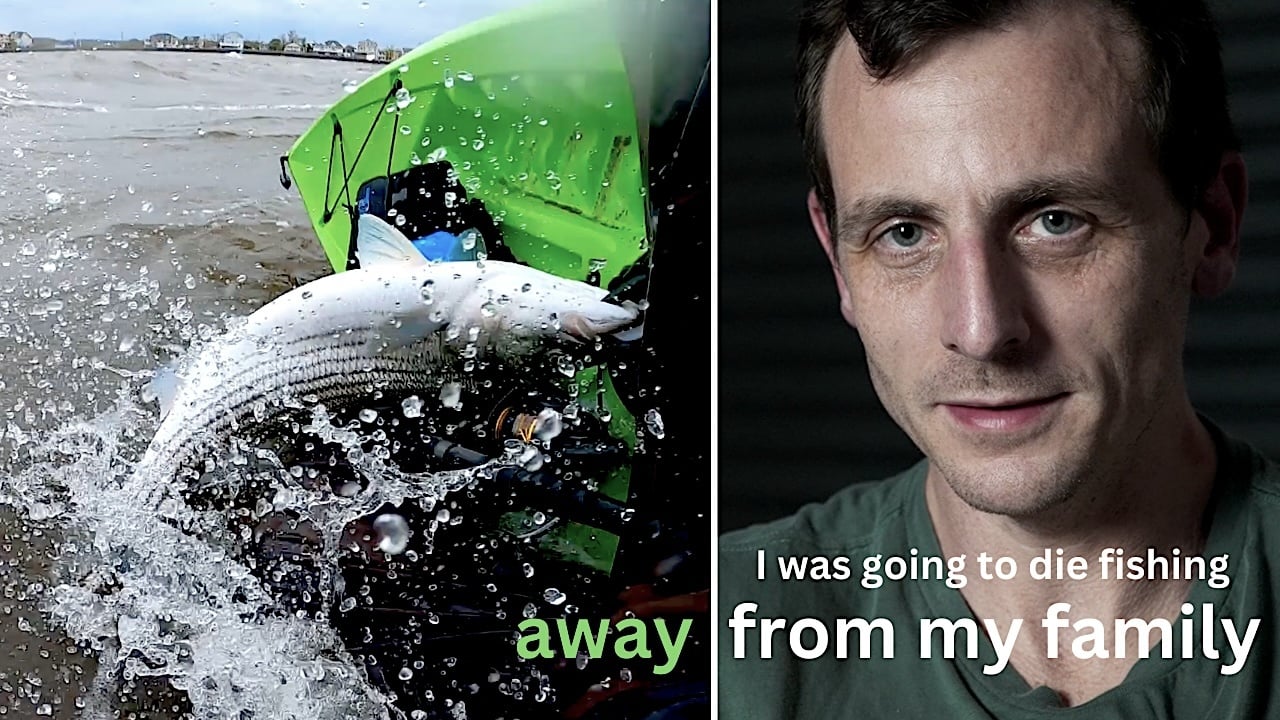
In September 2015, Mustill, an accomplished biologist and documentary filmmaker, was kayaking off the coast of Monterey, California, when a 30-ton humpback whale the size of a school bus breached and collided with his kayak, sending him and his paddling partner tumbling into the ocean. The dramatic moment, captured on video by a nearby whale-watching boat, has been viewed more than 6.6 million times.
“That was my main feeling—just feeling enormously lucky for having experienced something that full on and feeling that much energy,” said Mustill. “I wasn’t emotional [at the time]. I just thought, I am going to die.”
Biologist, author and filmmaker Tom Mustill at work. | Photo: Ru Mahoney
Working to bridge the gap
While the viral video made him synonymous with human-whale interactions for a time, it also sparked a shift in Mustill’s life. Trying to understand the close encounter with humpback whale CRC12564 left him wondering what the whale had been thinking. That question started a journey that culminated in the writing of How to Speak Whale, in which Mustill seeks to make sense of his experience and explore the broader implications of animal communication in an era increasingly dominated by technology. The book delves into the emerging science of animal communication, exploring how artificial intelligence and machine learning are being used to decode the languages of non-human species.
Mustill’s connection with whales dates back much further than his encounter in California. As a young paleontology student conducting research in the sub-Arctic, he experienced a life-changing moment when a pod of whales surrounded his small inflatable boat.
“It was in the middle of the summer, and the sun never set. We were lying in our tents, and we heard these whales. They were just 20 yards away, and there were hundreds of them. We pushed this little inflatable dinghy off the shore, and there was a pod all around us,” says Mustill. “I was going to be a paleontologist… but it was like the whales had literally come along and jerked me out of this. I became so fascinated with the challenges of things that were currently alive.”
Mustill’s passion for understanding the natural world is evident when he speaks. His stories about human-animal encounters are told with a smile, reflecting a deep appreciation for the unpredictable beauty of nature. Canoeist and author Sigurd Olson was one of Mustill’s most formative writing inspirations. In his book Recollections from the North Country, Olson laments society’s detachment from the natural rhythms of the world. Mustill’s work, much like Olson’s, seeks to rekindle the connection.
Tom Mustill is a director of nature documentaries and the author of a popular science book, How to Speak Whale: A Voyage into the Future of Animal Communication. | Photo: Sam Mansfield
“When you go out into nature, you’re not thinking: I really hope I see this. I’m thinking, I wonder what I’m going to see,” says Mustill. “It’s really different from a kind of bucket list approach to life… when other lives kind of just come across you and depart again unexpectedly, particularly when you’re under your own steam. If you’re sat in a kayak or a canoe or on a board or swimming or walking, it’s so intimate… you both have a feeling that you’re not forcing something, that there is a kind of meeting going on.”
For many paddlers, unexpected animal encounters—like spotting a moose in a marsh or a bear on a distant beach—are what draw them back to the water time and time again. You can review the best practices for wildlife encounters, including whales, here. Mustill believes such moments of connection can help bridge the divide between humans and other animals. On his website, he has compiled a collection of whale calls designed to evoke the same sense of connection and intimacy that paddlers experience on the water. Mustill hopes that by listening to these calls, people will feel a deeper connection to the natural world.
Ian Patton is a journalist and outdoor educator who has spent the past decade on the water paddling open canoes across the United States and Canada. Originally from Duluth, Minnesota, Ian grew up paddling in the Boundary Waters and has taken his love of rapids to the southeastern United States where he now lives.
Tom Mustill shares how nearly being crushed by a whale changed his life. | Feature photo: Youtube.com
When people tell me they’re interested in getting into paddling, one of the first things I ask is whether they’re interested in canoeing or kayaking. Often, they’ve already made up their minds, but if you’re just getting started, it’s worth keeping an open mind.
Canoes and kayaks are similar, but each has advantages and disadvantages that can make a big difference in what you do on the water. After 30 years in the paddlesports industry, if you tell me you want to buy a kayak to paddle in the Boundary Waters, I’ll try hard to convince you that you’ll be better off with a canoe. And if you’re planning to paddle Lake Superior in an open canoe, I’ll do my best to steer you toward a sea kayak. Choosing the right vessel can be overwhelming for beginners, but this article will help guide you in the right direction.
Key differences between a canoe and kayak
Generally, kayaks are propelled using a two-bladed paddle, alternating strokes on each side of the boat. Canoes are typically paddled with a single-bladed paddle, requiring the paddler to use skilled strokes—or switch sides—to travel in a straight course.
However, the most significant difference between kayaks and canoes is in the design. Canoes are open on top, making them easy to get in and out of and load with bulky camping gear. The open design can be more challenging to handle in wind and rough water, which is why many people prefer to use canoes on smaller lakes and more sheltered waters.
Kayaks come in two main types: sit-inside and sit-on-top. Sit-inside kayaks feature an enclosed cockpit with a deck that reduces wind resistance. When paired with a sprayskirt, waves wash over the deck, making sit-inside kayaks suited for bigger water as well as whitewater paddling. Sit-on-top kayaks feature an open deck. These kayaks are the easiest to get on and off of, are typically quite wide and offer exceptional stability, and are better suited to warm-weather paddling environments.
The key is to pick the right vessel for the type of paddling you want to do.
Sit-on-top kayaks offer easy entry and excellent stability. | Photo: Scott MacGregor
Which is better: canoeing or kayaking?
To decide whether a canoe or kayak is best for you, consider the type of water you’ll be paddling and the activities you want to do. Will you paddle solo, tandem, or with kids or a pet? Will you explore calm marshlands or navigate choppy bays? How vital is cargo space, and will you camp with your canoe or kayak? Will portaging be necessary, and are you paddling in warm or cold conditions?
Before we dive into which factors each type of craft excels at, it’s important to note that both canoes and kayaks come in many designs and constructions, each suited for different activities. Canoes range from banana-shaped whitewater models to skinny racing canoes, wide hunting canoes, square-stern models and even hybrids that resemble kayaks. Similarly, kayaks vary widely, including short whitewater kayaks, long touring kayaks, sprint racing kayaks, stable recreational types, sit-on-tops and fishing kayaks.
With so many options, generalizing can be tricky, but we’ll cover the essential factors to consider when choosing a canoe or a kayak below. Bottomline: For new paddlers, the most significant advantage of the average canoe is its cargo capacity and ease of portaging, while the biggest advantage of a kayak is its ease of use and performance in wind and waves.
Ease of handling for beginners
Kayaks use a double-bladed paddle and alternate forward strokes on either side of the boat. This makes moving a kayak straight ahead through the water more intuitive than a canoe. Touring kayaks with rudders are even easier to use—simply paddle and press one of the pedals with one foot to steer the kayak in that direction. These elements make it easier for many people to get into a kayak for the first time and successfully control the boat.
Paddling a canoe in a straight line takes a little practice, but don’t be intimidated. Beginners may keep a canoe moving straight by switching sides with their paddle or using a two-bladed kayak paddle. Most canoeists learn a few specialty paddle strokes, like the J-stroke, to help control their canoe.
Stability
One common concern for new paddlers when choosing between a canoe and a kayak is which is less prone to tipping. The truth is that recreational boats are designed to be stable, and capsizing in calm conditions is less common than many beginners might assume. That said, many newbie paddlers report kayaks feel more stable. This is often because a kayaker typically sits closer to the water than a canoeist, lowering his or her center of gravity.
All other design elements being equal, a wider canoe or kayak will offer more stability than a narrower one, and boats with flat hulls will feel more stable in calm water than those with more rounded shapes. Learn more with Paddling Magazine‘s guide to kayak hulls.
Regardless of how stable your canoe or kayak feels, paddlers should wear a PFD at all times when on the water.
Cargo capacity
Canoes typically have more cargo capacity than similarly sized kayaks and are easier to load, too. A canoe’s open design makes it easy to load with large dry bags, coolers, barrels, family members or your canine companion.
Sit-inside kayaks have less cargo capacity and must be loaded through small hatches, making them less practical for transporting bulky gear. You can still go kayak camping; it just requires more mindful packing. Kayak camping is better suited to coastal touring trips where you’ll only load and unload the kayak once per day. It’s less ideal for trips with multiple portages, like those in the Boundary Waters Canoe Area Wilderness or Quetico wilderness. Canoes have an edge over kayaks when it comes to carrying big loads.
If you have a lot of bulky gear or want to bring the family pooch, a canoe is an ideal choice. | Photo: Kaydi Pyette
Comfort
Kayaks get the nod for the most comfortable seats. Recreational and fishing kayaks frequently come standard with padded and highly adjustable seats, many featuring tall backrests.
Canoe seats are more basic. The classic canoe seat is a flat bench covered with either cane or nylon webbing. Some canoeists opt for an after-market canoe seat with back support for extra comfort.
Despite the basic design, some paddlers may prefer canoe seats due to the higher sitting position. A canoe’s bench seat allows you to sit, kneel and stretch your legs, which can be a game-changer for paddlers with back, hip or knee injuries who might struggle with the fixed position of a sit-inside kayak. Some recreational kayaks feature seats with adjustable heights.
Seaworthiness
Seaworthiness is a factor that might make you choose a kayak instead of a canoe. Touring and sea kayaks are designed to excel on big open water. These kayaks are longer, narrower, and have a lower profile than recreational kayaks, which improves speed and tracking while reducing wind resistance. The enclosed cockpit and use of a sprayskirt provide some protection from waves and wind.
Sea kayaks are ideal for big water journeys. | Photo: Kaydi Pyette
The open design and higher profile of sit-on-top kayaks leave them more exposed to wind and waves, making them less efficient and harder to control in rough conditions. Likewise, a canoe’s open and deeper design, combined with a higher seating position, makes it more susceptible to wind than a kayak. Waves are another challenge. If waves are big enough, they can splash over a canoe’s gunwales, filling the boat with water.
Whether you choose to paddle a canoe or a kayak, don’t forget to consider how you will get it to the water and back home, as the ease of transporting your boat will play a significant role in how often you get out paddling. The more manageable your canoe or kayak is to load and unload, the more likely you are to enjoy frequent trips on the water.
For beginners just getting into paddling, canoes are easier to tie down on your car by using simple foam blocks and without needing a specialized roof rack system. While foam blocks are also available for kayaks, canoes generally work better with this setup.
Most paddlers invest in a kayak- or canoe-specific roof rack. It provides a secure way to transport the boat, while also protecting the car’s finish and ensuring the safety of other drivers on the road.
When it comes to weight, both canoes and kayaks can range from as light as 20 pounds to over 100 pounds, depending on the material the boat is constructed with. Composite materials, like carbon and Kevlar, are lighter and more expensive than plastic constructions. What a canoe or kayak is made of impacts performance, aesthetics and how long the boat lasts over time. If you want a lightweight canoe or kayak, countless options are available.
Canoes and kayaks are both built in a range of sizes, from less than 10 feet to longer than 20 feet. Specialty canoes built for large groups of paddlers can be even longer. Most canoes purchased are tandem (two-person) models. These canoes are generally around 16 feet long. Most kayaks purchased are solo (one-person) designs. Many of these are recreational kayaks that are under 12 feet long. So, it’s safe to say the average canoe purchased is larger than the average kayak. Folding canoes and kayaks are good options for paddlers with limited storage space.
Paddling Mag’s Kaydi Pyette tosses the 16-pound Wenonah Wee Lassie canoe over her head during a boat test. | Photo: Joel Clifton
Maneuverability
Canoes and kayaks come in various shapes, and their maneuverability largely depends on hull design. This is more important when choosing between different types of canoes or kayaks rather than between a canoe or kayak.
In general, shorter models are more maneuverable. Boats with more rocker (a banana-shaped keel) turn more easily while racing designs feature minimal rocker to track straight. Canoes and kayaks for new paddlers typically feature moderate rocker to help with maneuverability while still providing some tracking.
Portaging and portability
Many popular backcountry canoe routes involve portaging, which means carrying your canoe from one lake to another. The best strategy for portaging involves putting your camping gear into a few large dry packs that are easy to manage on the trail. These packs are easy to load in and out of a canoe but would be impossible to stuff into a typical kayak.
Canoes are often fitted with a portaging yoke, which allows a canoe to be carried on the shoulders of a single person. Kayaks are usually portaged by two people, one on each end. Moving a kayak around solo requires balancing the cockpit opening on your shoulder. This works for short distances but is awkward and uncomfortable for longer carries. For trips with lots of portaging, canoes are generally superior to kayaks.
A canoe equipped with a yoke for portaging is easier to carry over long distances and more efficient for backcountry routes than a kayak. | Feature photo: Kaydi Pyette
Speed
Long, skinny canoes are fast, while short, wide canoes are slow. Generally, the longer and narrower a canoe is, the quicker it will move, though it may be less stable. The same goes for kayaks. Longer kayaks are faster than shorter ones, and narrower kayaks are faster than wider designs of the same length.
Speed alone isn’t usually a reason to choose between a canoe or kayak unless you’re focused on racing. It’s more relevant when deciding between different designs within each category.
Versatility
For sheer versatility, some paddlers argue a recreational canoe is a more versatile craft than a recreational kayak. A 16-foot canoe can be paddled solo or tandem and can be equally suited to short backyard paddles and longer expeditions. The canoe’s open design lets you bring kids, pets or extra gear, offering more flexibility than the average recreational kayak.
A 16-foot canoe provides ample room for two paddlers, two pups and plenty of gear for a long weekend of backcountry adventure. | Photo: Virginia Marshall
Which is better for beginners?
When I help someone decide on the right boat, I always ask where they want to paddle. This is usually the most crucial factor in determining whether a canoe or kayak is better. I’ve outlined some advantages of both canoes and kayaks above, and beginners should consider these as they decide between them.
That said, kayaks are easier to get the hang of than canoes for most newbies. A complete beginner can jump into a kayak with a minimum of instruction and do a halfway decent job of getting from point A to point B. Canoes take a little more practice and maybe a little bit of instruction. So, if you want to get out on the water with minimal fuss, a kayak can be a good choice.
Is a canoe or kayak better for fishing?
You can fish from a canoe or kayak, but the choice of which to use depends on where you’ll be paddling. If you’re traveling in classic canoe country, like the Boundary Waters of Minnesota and Ontario, you’ll want a canoe for efficient portaging. In these situations, you’ll fish from a canoe because it’s the best tool for the trip, not necessarily because canoes are preferred as fishing craft. Similarly, if you’re hiking into a remote lake to fish, you may prefer an ultralight canoe to a heavier kayak.
Canoes are also a good choice for tandem fishing. A canoe usually has more room between the paddlers than in a tandem kayak. This makes it easier to avoid hooking your paddling partner with your backcast. Tandem boats also allow one person to steer while the second paddler targets the fish.
These exceptions aside, most people prefer to fish from kayaks, especially if paddling solo. Specialized sit-on-top fishing kayaks are among the most popular boats among anglers. These kayaks are often wide enough to stand in and sometimes feature pedal foot drives that allow you to keep your hands free for casting.
Sit-on-top fishing kayaks are usually heavy, especially if they are wide enough for standing, so some kayak anglers choose to use more traditional recreational kayaks outfitted with rod holders and other fishing accessories.
Interested in kayak fishing? Check out Paddling Mag’s sister publication, Kayak Angler.
Kayak Angler editor Ric Burnley and fishing pal ready for a day of fishing on their sit-on-top kayaks. | Photo Scott MacGregor
What’s better for two people?
Canoes have some significant benefits when it comes to tandem paddling, especially for families with children or pets, but it is a personal preference. Ultimately, it depends on the type of paddling you will do.
One disadvantage of tandem kayaks is that the bow and stern paddlers need to coordinate their paddle strokes so they don’t crash their kayak paddles together occasionally. This problem is eliminated in large coastal touring designs with more space between the cockpits, but it is a factor in most tandems. Tandem canoeists usually sit far apart in the boats and typically use single blades paddled on opposite sides, so there is no need to synchronize strokes perfectly.
Canoe vs kayak: The verdict
Which is better, a canoe or a kayak? The answer is: It depends. The right choice of craft comes down to how you plan to use it and which factors are most important to you. If you’re interested in coastal touring on the ocean or Great Lakes, a sea kayak will be the best choice. If you want a boat for dawn photography sessions, you may prefer a solo canoe. Fishing kayaks get the nod for anglers who don’t want to compromise on stability and features. Tandem-tripping canoes are best for classic trips on lakes and rivers. There’s no easy answer to the question of which is best. This is why, if you look in an avid paddler’s garage, you’ll frequently find both canoes and kayaks—and often a couple of types of each.
Enjoying the mystical cloud of joy nostalgia brings. | Feature photo: David Jackson
“Have I ever written about our ability as humans to forget pain and suffering, remembering only the good times?” I asked editor Kaydi while planning my summer canoe trips and writing this piece to appear in the Paddling Trip Guide. “You know, like, why would anyone ever do another paddling trip?”
Friedrich Nietzsche was a 19th-century German philosopher who famously wrote in his book Twilight of the Idols, “Was mich nicht umbringt, macht mich stärker.”
French voyageur Pierre-Esprit Radisson of the Hudson’s Bay Company predated Nietzsche by 200 years. Still, he likely shared a version of the famous aphorism, “Ce qui ne te tue pas te rend plus fort,” as he loaded a 90-pound pack on a newly recruited voyageur heading up Grand Portage, the grueling eight-and-a-half mile slog out of the west end of Lake Superior.
And, at this very moment, 136 years after Nietzsche, a counsellor is watching a camper hysterically swatting blackflies, saying the same thing, “What doesn’t kill us makes us stronger.”
Enjoying the mystical cloud of joy nostalgia brings. | Feature photo: David Jackson
If we made a list of possible dangers, risks and discomforts on any given paddling trip found in our 2024 Paddling Trip Guide, it would read like any liability waiver of things that could kill us or make us stronger, including but not limited to: Overturning or upsetting of canoes or kayaks; entrapment by trees, rocks or equipment; encounters with wild animals; equipment malfunction; storms, lightning, hail and snow; becoming lost or separated; lack of shelter; limited access to and/or delay of medical attention; physical exertion, hypothermia, exhaustion, dehydration or frostbite; and/or mental distress from exposure to any of the above.
And yet we go. Over and over again.
Motivated forgetting theory goes something like this: We forget feelings because we either do not want to remember them or the feelings are too painful and disturbing to recall. So, we push them deep into our unconscious, making them very difficult to retrieve.
Whether days of relentless driving wind, cold and rain are intentionally or unconsciously buried probably doesn’t matter. What matters is when my buddy Paul calls with a window of opportunity to paddle the Spanish River in the bloodsucking heart of bug season, I’m dumb enough to agree. I rationally know June is a bad idea, but I’ve buried the horrific feeling of thousands of blackflies biting my neck.
So, of course, I agree to go.
Looking back through rose-coloured glasses
The phenomenon of remembering the good times more vividly than the bad times can be attributed to a few human psychological phenomena. Positive memories are often associated with strong positive emotions such as love, joy and connection. These feelings make the good times more salient and memorable than negative experiences, which may be associated with feelings of pain, conflict and sadness. I’ll leave you to draw your own links to previous paddling trips.
And with the passage of time, we know the negative aspects fade in intensity while the positive memories become more enduring and cherished—sometimes as quickly as a cheeseburger and beer after the trip. As more time passes, the more nostalgic we become.
When we look back on past adventures, we often focus on the positive memories because they evoke feelings of warmth, comfort and happiness. This is called emotional nostalgia bias. It makes the good times stand out more prominently in our memories. This is why we fondly remember the dining hall despite the food being God-awful.
Krystine Batcho is a psychologist and professor at New York’s Le Moyne College. She regularly contributes to Psychology Today and is a leading expert on the study of nostalgia.
“Nostalgia helps to unite our sense of who we are, our self and our identity over time,” writes Batcho, who believes we are changing constantly in incredible ways. We’re not the same today as we were three years ago, she says. We may not even be who we were at the beginning of our last paddling trip.
“Nostalgia motivates us to remember the best feelings in our lives,” says Batcho. “It helps to unite us to our authentic selves and remind us of who we have been and then compare that to who we feel we are today.”
Basically, this positive, nostalgia-inspired version of ourselves gives us a sense of who we want to be in the future. And this is why we keep doing paddling trips.
What doesn’t kill us makes us stronger.
Scott MacGregor is the founder of Paddling Magazine.
This article was first published in Issue 72 of Paddling Magazine. Subscribe to Paddling Magazine’s print and digital editions, or browse the archives.
Enjoying the mystical cloud of joy nostalgia brings. | Feature photo: David Jackson
Two fishermen were on a boat preparing their rods for walleye during the morning of September 11, on Lake Erie, when they heard a noise and recognized it was someone yelling for help.
Kayaker Survives By Clinging To Broken Bucket
According to 19 News in Cleveland, the anglers Larry Smith and Charles Steven were in the area of the city’s drinking water intake, known as Five-Mile Crib, when they heard the distress cry. At first, they couldn’t see anything, then they drove the boat out further and saw an arm wave in the air.
“This time when we see it, we see an arm come up out of the water, and then the arm goes back into the water,” Smith told 19 News.
The anglers had stumbled upon kayaker James Manning, who had been reported missing around 6:30 p.m. the evening before. Wearing no lifejacket or layers besides his shorts, the most shocking revelation the two fishermen witnessed was that the kayaker had survived by grasping to a bucket he found floating in the lake.
“The bucket is what was keeping him afloat,” Steven, who was driving the boat, told 19 News. “I guess he was probably tired. It was like he had a death grip on that bucket. I shut the boat down. Smith grabbed him first by the arm, and then I went around and grabbed his other arm. Then we pulled him in the boat. I had a jacket and put it around him. I said you alright, you want me to call 911?”
The kayaker asked if, instead, he could first call his girlfriend of eight years to let her know he was alive.
A news story published by Cleveland.com shared that Manning had left home around 5 p.m. Tuesday to go kayaking — launching from Merwin’s Wharf on the Cuyahoga River. Manning intended to paddle the mile-and-a-half down the Cuyahoga to Lake Erie and back. Then he decided to change his plan and try to reach the Five-Mile Crib about three miles offshore.
Around 6:30 p.m., Manning’s girlfriend, Lindsay Longforth, texted to see how his kayak trip was going. She didn’t receive a response, and she followed up. This time, the messages were not delivered. Fortunately, she knew where he had embarked from and checked on the status of his vehicle, as well as notified the authorities something was wrong.
The police were able to track his phone’s last position five miles from the Great Lake-side community of Lakewood and searched the area using helicopters and drones until 3 a.m. With helicopters circling above, Manning was in the water and in a fight for his life.
Cleveland, Ohio skyline and Lake Erie. Image: DJ Johnson | Unsplash
A fight to survive
According to Manning’s interview with Cleveland.com, the ordeal began when his kayak started taking on water near Five-Mile Crib. Waves started to splash over the boat, and Manning suspects a crack or defect may have been the culprit for his sinking ship. Depending on the type of boat, a kayak can also sink from water entering through the drain plug on the stern if it has not been closed or a hatch is left open. Or if it is a sit-inside kayak and no skirt is worn to keep water out.
“I didn’t realize how much water had come in the kayak until it was too late,” Manning said. “It sunk on me immediately.”
According to the article, Manning tried to bring the kayak back to the surface, but the account makes it appear Manning was unsure of the source of sinking. Without a bilge pump or something else, it would be difficult to empty the water fast enough to self-rescue.
From the account, it also appears Manning did not have his phone in a floating case or dry bag he could hang on to. Whether through water damage or sinking, it went down with the ship.
Once his kayak sank, Manning started swimming the miles toward shore. He made multiple attempts, coming within what he believed was a half-mile and, at one point, even 20 yards from shore before currents carried him back out.
At one point, he shared with the interviewer a moment he recalled his relatives who fought in World War II, including one who had survived a torpedoed ship and told himself, “If Uncle John could spend 10 days in a lifeboat in the North Atlantic, I can do a night on Lake Erie.”
Without a life jacket and failing to reach land, Manning was left treading in the massive freshwater lake. All told the kayaker believes he spent seven hours trying to stay afloat. At times, his head began to slip under the surface, and he even took in some water.
Then, a miracle floated along. A cracked bucket Manning clung to for what little buoyancy it had.
After a few more hours holding onto the bucket, Manning floated into his second small miracle—a couple of guys out for some walleye.
The only tripping companion you really need. | Image: Geoff Whitlock
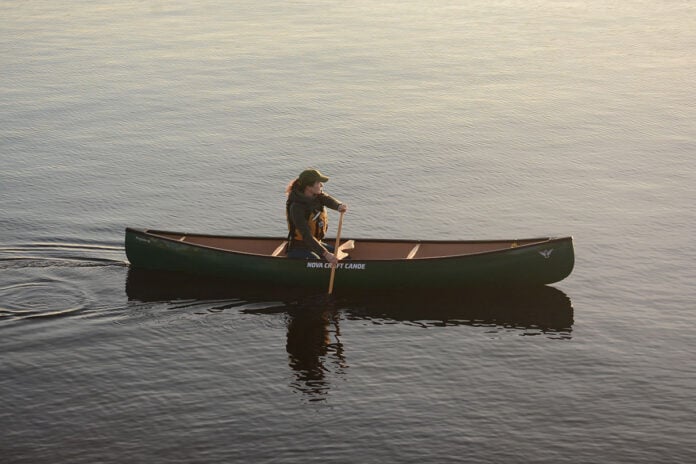
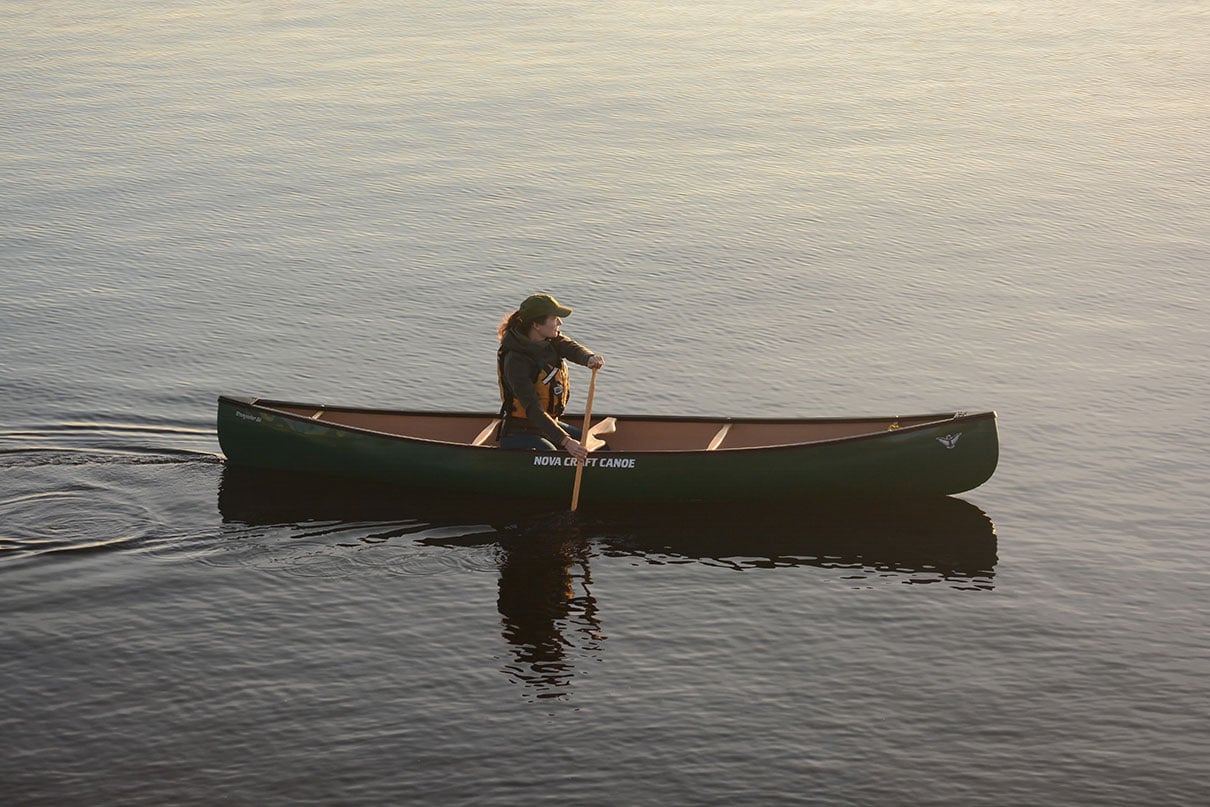
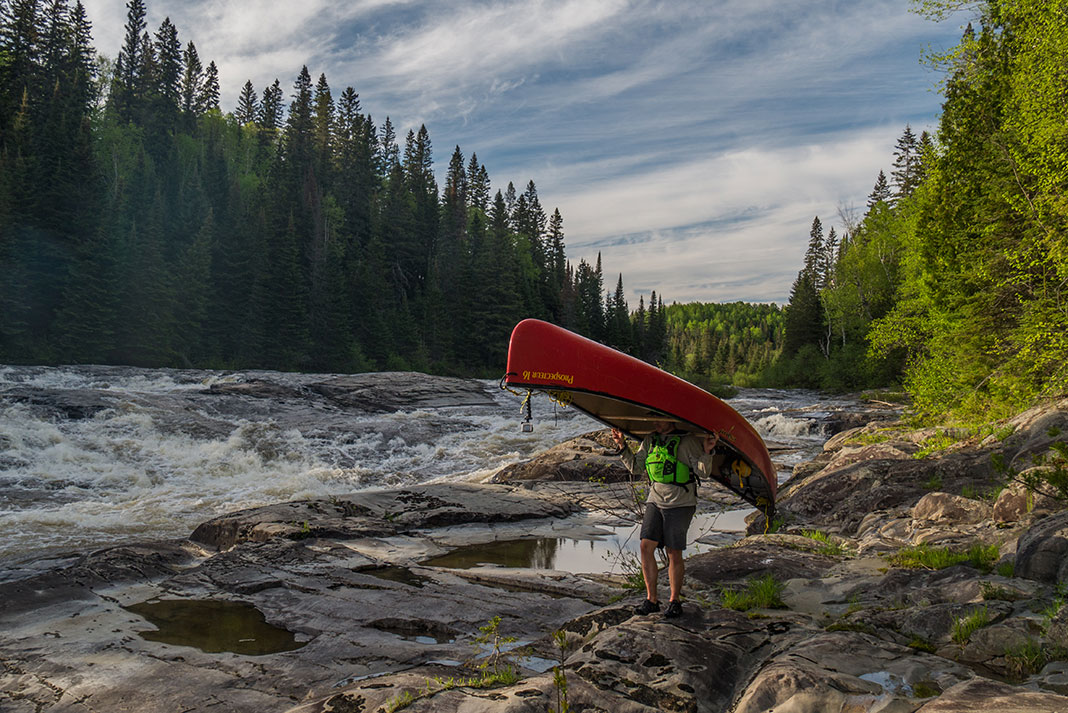
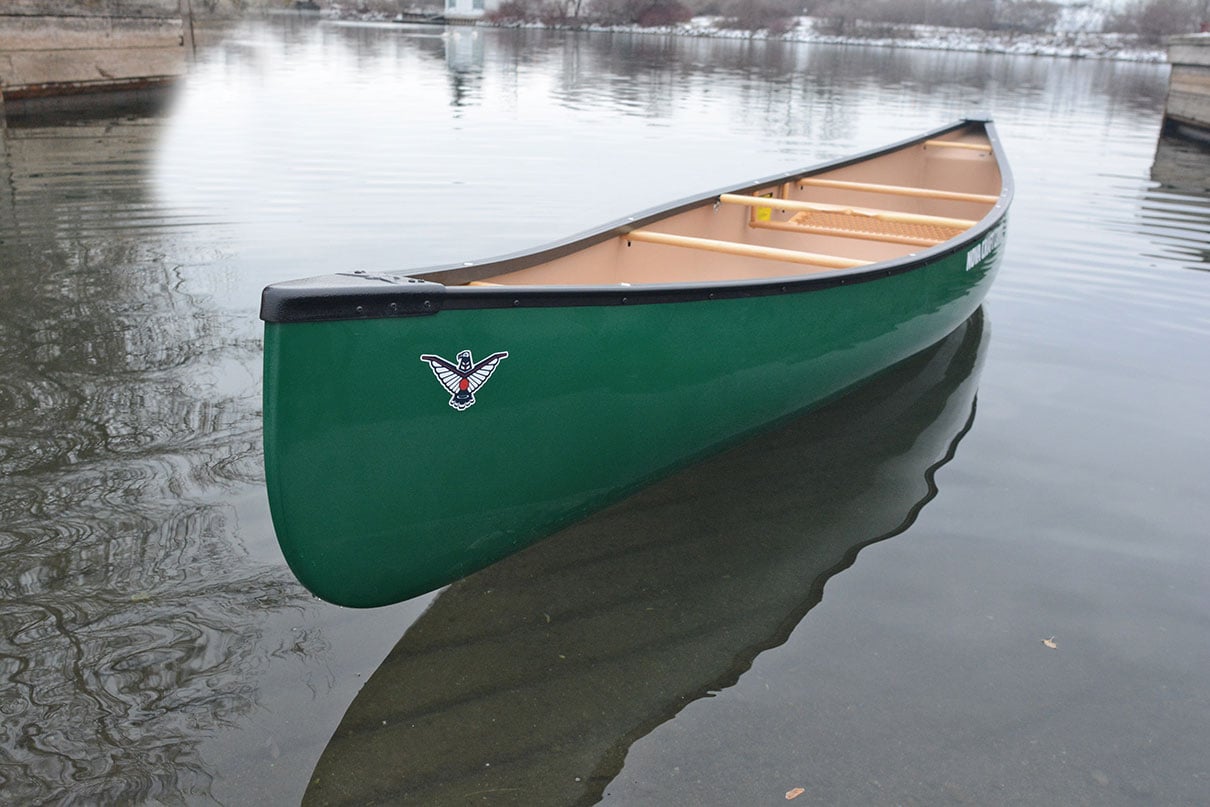
New for 2024, the Prospector 14 (P14) from Nova Craft Canoe is the first solo offering in the brand’s bestselling Prospector series. And this tough little tripper seems destined to become a classic.
The P14 was created to respond to the increasing popularity of solo tripping. “There’s a lot more activity in the last three or four years in solo,” says Nova Craft owner Chris Rath. “Not all go tripping, but if you want to go into the backcountry and want to carry some gear and the lake is quasi-large, you want capacity and stability.”
Whether solo trippers simply prefer to paddle their own canoes, go solo because they don’t know anyone else interested in wilderness tripping, or are just looking for some true solitude, the P14 is built to handle the backcountry easily. And it’ll make a compelling argument it’s the only tripping companion you really need while you’re out there.
The P14 isn’t Nova Craft’s only solo design, but the brand’s three other solo models have specialized purposes. The 12-foot Trapper is designed for fishing small waterways, the 14-foot Fox is a flatwater cruiser, and the longer and rocker-heavy Supernova excels as a solo river tripper.
“We were missing a solo design to meet the needs of a backcountry tripper who could encounter various paddling conditions in a wilderness park. It had to be something compact, easy to portage and manage solo,” says Sara Mills, marketing manager at Nova Craft. “With the Fox on one side of the solo spectrum and the Supernova on the opposite, we needed a compromise—something with whitewater capabilities but not a pig to paddle on flatwater.”
The only tripping companion you really need. | Feature photo: Geoff Whitlock
Enter the versatile P14. Intended to handle trips with mixed conditions, it lives up to the Prospector’s reputation of being a Swiss Army knife.
Just about every contemporary canoe builder makes a Prospector. Each manufacturer’s version of the design differs, but the category can best be defined as a general wilderness tripper with above-average depth, width and rocker. When paddling a Prospector, canoeists expect a versatile and rugged workhorse, able to perform in wind, waves and rapids, all while carrying an expedition load. It’s one of the most popular canoe designs of all time, and its 100-year acclaim is partly attributed to Bill Mason’s praise of the Chestnut Prospector and lamentation of its demise when the Chestnut Canoe Company went bankrupt in 1979.
Nova Craft Canoe was among the first modern canoe manufacturers to develop a composite replica, which was released in 1984. Today, its Prospectors are known for their “classic lines, greater capacity, and greater initial and secondary stability,” according to Rath. The new P14 is the fifth Prospector in Nova Craft’s series. Nova Craft’s tandem Prospectors come in 15-, 16-, 17- and 18-foot lengths, each with a 36-inch width, 14-inch center depth, and 2.5 inches of rocker.
Design & performance
Up until now, plenty of canoeists have solo tripped with Nova Craft’s Prospectors, particularly the 15- and 16-foot models. The canoes’ symmetrical designs allow them to be paddled backwards from the bow seat. So, how does the P14 differ?
While the P14 retains the moderate rocker of its tandem counterparts and just a half-inch less of depth, it’s four inches slimmer. So, if you’re used to paddling one of Nova Craft’s larger Prospectors, you may feel a difference in the P14’s initial stability. How much you notice the difference is totally subjective. Paddler size, experience, what you’re used to paddling, and trim all impact how stable a canoe feels to you.
At 32 inches wide, most paddlers will find the P14 plenty stable. Like its lengthier siblings, its shallow-arch hull is confidence-inspiring. Whether weaving through marsh flats, bouncing down small rapids or bobbing through mild chop on a big lake, the P14 is reliable. Reminiscent of a steadfast tripping companion, it was never fussy, did what needed doing, and was dang good company.
There are more benefits to paddling a purpose-built solo tripping canoe instead of a larger tandem paddled backwards, too. First of all, the P14 has less heft. It has a more comfortable paddling station. Most importantly, the P14’s compact shape and easier reach will translate into improved boat control for many soloists.
Our P14 tester is made of TuffStuff, Nova Craft’s proprietary composite made of basalt and Innegra. Woven together and infused with vinylester resin, it creates a reasonably light canoe with the strength to handle backcountry travels. | Photo: Kaydi Pyette
At 13.5 inches deep and with a capacity of 550 pounds, the P14 maintains a solidly high capacity for its size. Just what you would expect from a Prospector. There is ample room for all your tripping gear. And if you travel light, there’s even room for a dog.
Nova Craft offers the P14 in its full range of composite materials, from a 35-pound aramid layup to a 50-pound fiberglass version. Our tester model is made in TuffStuff, Nova Craft’s bestselling hull material, which debuted a decade ago to respond to the loss of Royalex from the canoe market. It’s a durable layup for backcountry tripping, allowing a paddler to bang the canoe around a bit without worry and providing peace of mind when tackling unexpected shallows.
And it’s reasonably light, too. At 45 pounds, our P14 tester is manageable for most solo paddlers, both on the shoulders when portaging and at the take-out when loading solo.
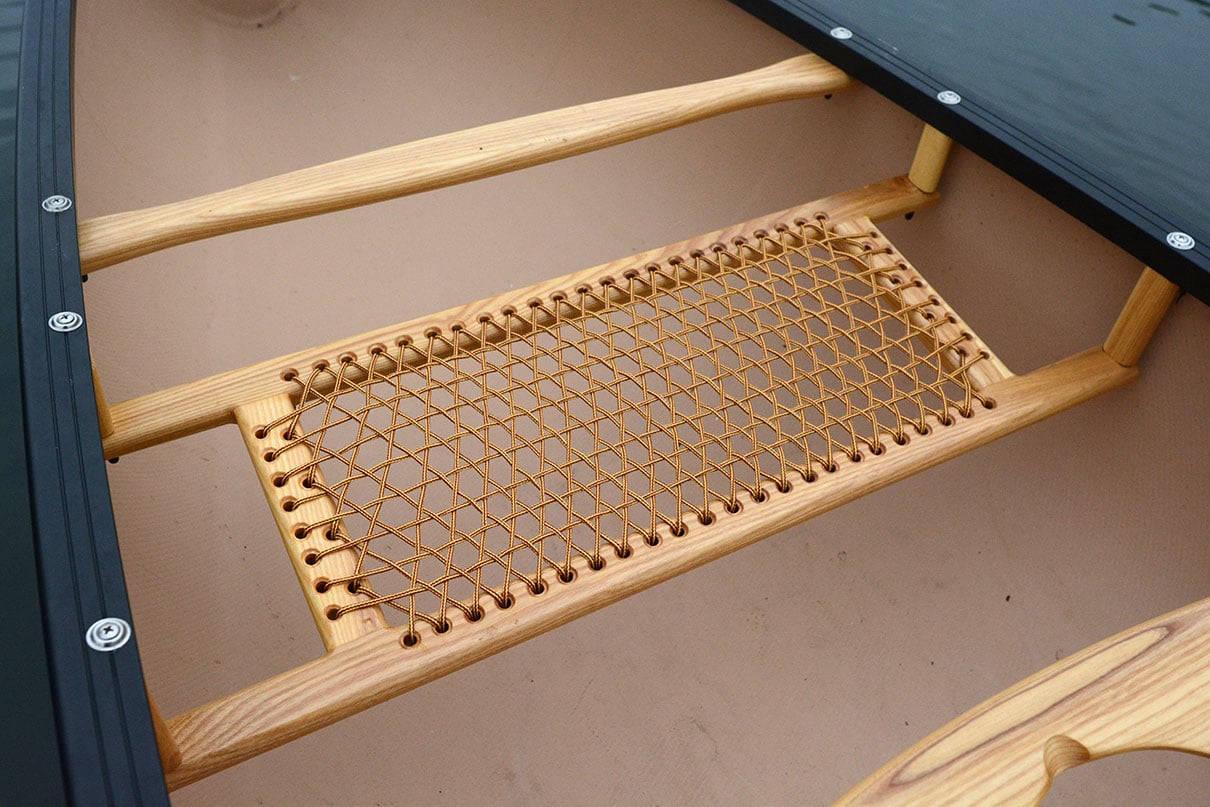
The P14’s ash and laced traditional canoe seat is comfortable and has a classic look. Seats can be ordered hung flat to suit paddlers who prefer to sit upright or hung angled downwards to suit paddlers who like to kneel. | Photo: Kaydi Pyette
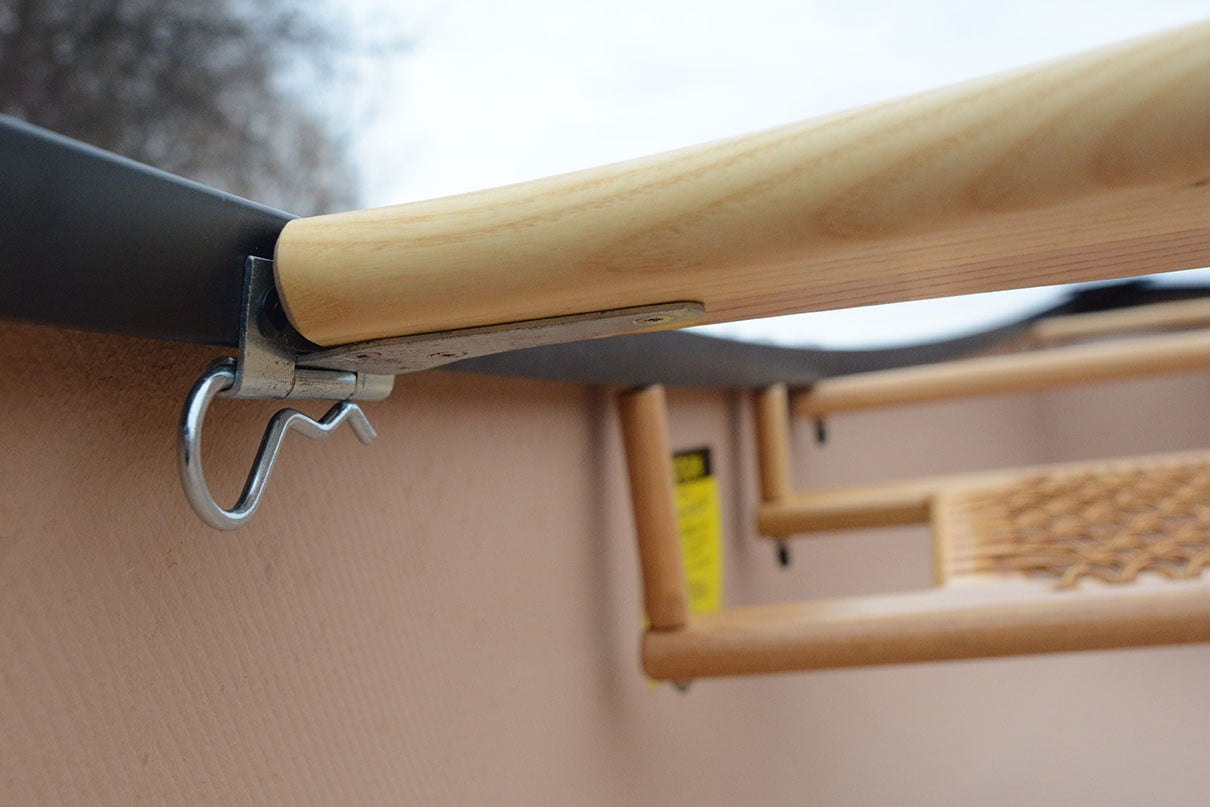
Use the yoke when needed, then remove it while paddling. Nova Craft’s newly redesigned removeable yoke is a $150 upgrade on the Prospector 14. | Photo: Kaydi Pyette
Prospector 14 outfitting
With the Prospector 14, there’s no shortage of outfitting options. You can add skid plates, kneepads, cages for whitewater tripping, or an expedition deck if you’re traveling big water. Our tester features Nova Craft’s standard aluminum gunwales, but I’d be tempted to opt for ash gunwales for an instantly warm and classic look.
Because the seat is close to the P14’s center, paddling with a permanent yoke won’t be possible for many paddlers. That’s why Nova Craft offers a removable yoke. It consists of steel brackets and a cotter pin on each side. The removable yoke system installs and de-installs in seconds. Super simple. In testing, I found smaller paddlers can easily slip in behind the removable yoke and comfortably paddle with it installed—perhaps ideal for route sections with many small lakes and portages. Larger paddlers will have to remove the yoke to be comfortable, which is how Nova Craft recommends you paddle the P14 on your next solo wilderness adventure.
This article was first published in Issue 72 of Paddling Magazine. Subscribe to Paddling Magazine’s print and digital editions, or browse the archives.
The only tripping companion you really need. | Feature photo: Geoff Whitlock
Renowned canoe builder Jim Henry talks shop with his son, Dana. The Henrys are partnering with Adirondack Canoe Company to unveil never-before-seen designs under the brand Henry Designed. | Feature photo: Courtesy Adirondack Canoe Company
“Jim was always forward thinking,” said John Gereau, director of the Adirondack Canoe Co. in Mineville, New York. “What he did in the ‘70s with composites was incredibly cutting edge.”
Legendary canoe designer Jim Henry and his son Dana recently teamed up with ACC to release the Trapper, the first model in a new line of canoes labeled Henry Designed.
Legendary canoe designer Jim Henry and son team up with Adirondack Canoe Co.
Made with cutting-edge composite technology, this 14-foot tandem weighs just 38 pounds. Yet it’s designed as a rugged recreational canoe for everything from day trips to backcountry fishing to multiday adventures. The Trapper is based upon an unreleased design from Henry’s extensive archive of roughly 75 canoe schematics, the vast majority of which were never sold to the public.
“What’s particularly exciting is the opportunity to introduce these designs to today’s market,” Dana Henry told Paddling Magazine. “Jim’s unfulfilled innovations were ahead of their time but constrained by the market conditions in the past. We are all very excited to share [Jim’s designs] with a new generation of paddlers.”
Renowned canoe builder Jim Henry talks shop with his son, Dana. The Henrys are partnering with Adirondack Canoe Company to unveil never-before-seen designs under the brand Henry Designed. | Feature photo: Courtesy Adirondack Canoe Company
Dead River to Mad River
In the early 1970s, Jim Henry checked out a library book about Native American bark-and-skin canoes. This inspired him to design a plaster mold for a fiberglass canoe that he named the Malecite.
In August 1971, Henry raced his new boat in the second annual National Whitewater Open Canoe Championships. Held on the Dead River in Maine, the 22-mile downriver course combined flatwater, a portage and 16 miles of class II and II rapids. Henry won the competitive C-1 division with a time of 3:35:21, eight seconds ahead of the runner up. Word quickly spread about the winning boat, and Henry was soon building custom-ordered Malecites in his garage.
This led Jim and his then-wife Kay to co-found Mad River Canoes in Waitsfield, Vermont. At its height, Mad River had over 80 employees building more than 20 canoe models sold by a network of 200 distributors. One of Jim Henry’s major innovations came in the mid-1970s when he introduced DuPont’s newly invented Kevlar into canoe construction. Mad River’s most popular model became the Explorer, and further Henry designs incorporated rotomolded construction, Royalex hulls, pre-preg and carbon fiber.
Henry continued working with Mad River after it was sold to Confluence Outdoors in the early 2000s. In 2019 Pelican International acquired Confluence, but the company hasn’t produced canoes under the Mad River brand since 2022. As a result, for the first time in more than four decades, paddlers couldn’t purchase new models created by one of canoeing’s most famous designers.
Enter Adirondack Canoe Co.
“There’s almost a cult following,” said Gereau. “People are begging for [Henry’s] designs.”
In recent years, the ACC director began to notice a revealing trend. Numerous paddlers were posting comments in online forums lamenting that they could not replace their aging Mad River canoes with new models designed by Jim Henry.
By now, Gereau believed that new canoes on the market mostly fell into two categories. He saw carbon-fiber racing canoes that were fast but unstable, sacrificing primary stability for secondary. Or he saw wide canoes made from plastic or aluminum that had plenty of primary stability but were slow and heavy. What Gereau wanted for the ACC lineup was what he calls “the best of both worlds.” A modern composite boat that bridged the gap between extremes: fast and light but stable and durable.
“There’s almost a cult following. People are begging for [Henry’s] designs.”
“I do an awful lot of backwoods fishing,” said Gereau. “When you’re fighting a brook trout, you certainly don’t want to take a dip in 30-degree water in May.”
Meanwhile, during the COVID-19 pandemic, Jim Henry moved to a retirement community in Pennsylvania. Before relocating, he passed down his collection of tools and canoe schematics to his son. The hope was Dana might find a way to release some of the prototype designs using modern manufacturing techniques. This led the Henrys to Adirondack Canoe Co.
Founded in 2013, ACC is a boutique boat manufacturer affiliated with the nonprofit Essex Industries, also located in Mineville, New York. For 50 years, the latter company has built canoe accessories, employing an integrated workforce of abled and developmentally disabled employees.
The crew at Adirondack Canoe Company is eager to begin manufacturing canoe designs from Jim Henry’s extensive archive. | Photo: Courtesy Adirondack Canoe Company
Gereau explained that ACC is committed to building cutting-edge boats through research and development of composite technologies. One of their primary manufacturing techniques is vacuum infusion, which Gereau describes as an environmentally friendly process that provides two key benefits.
First, the process allows greater control over resin saturation when laying up composite fibers. In the past, resin amounts were often estimated, and over-saturation led to excess weight while undersaturation could cause weak spots in the finished canoe. The second benefit of vacuum infusion is that the toxic resins are contained within a vacuum-sealed barrier. This reduces the hazards associated with composite manufacturing and allows the ACC to involve more of the Essex workforce in constructing canoes like the Trapper.
The Trapper by Henry Designed
Fourteen feet long and with a waterline width of 37 inches, the new Henry Designed Trapper is intended as a tandem canoe for a wide range of paddlers. Its symmetrical, shallow V-hull offers a relatively flat bottom that aims for the sweet spot between primary and secondary stability. This allows paddlers to enter and exit the boat more easily or stand up while fishing.
The standard layup for the Trapper is a carbon fiber exterior with a Kevlar interior. An underside gelcoat serves as a wear guard for withstanding rocky shorelines like those found in the Adirondacks. ACC is currently taking pre-orders for the Trapper, which retails for $2,500 USD.
Renowned canoe builder Jim Henry talks shop with his son, Dana. The Henrys are partnering with Adirondack Canoe Company to unveil never-before-seen designs under the brand Henry Designed. | Feature photo: Courtesy Adirondack Canoe Company


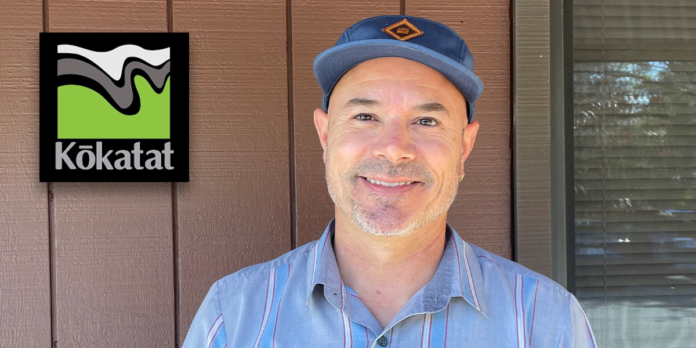
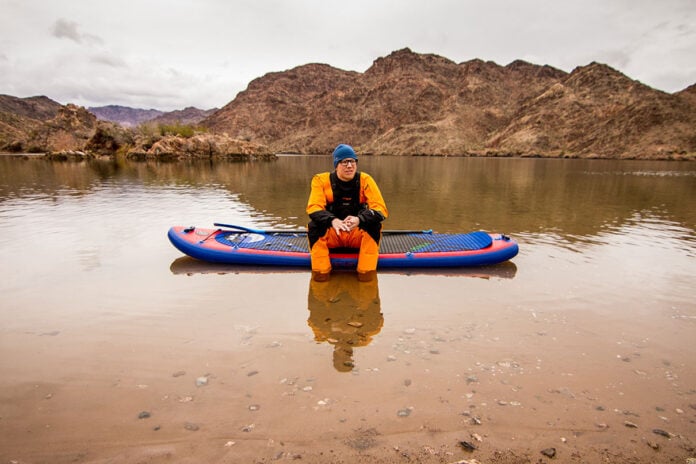
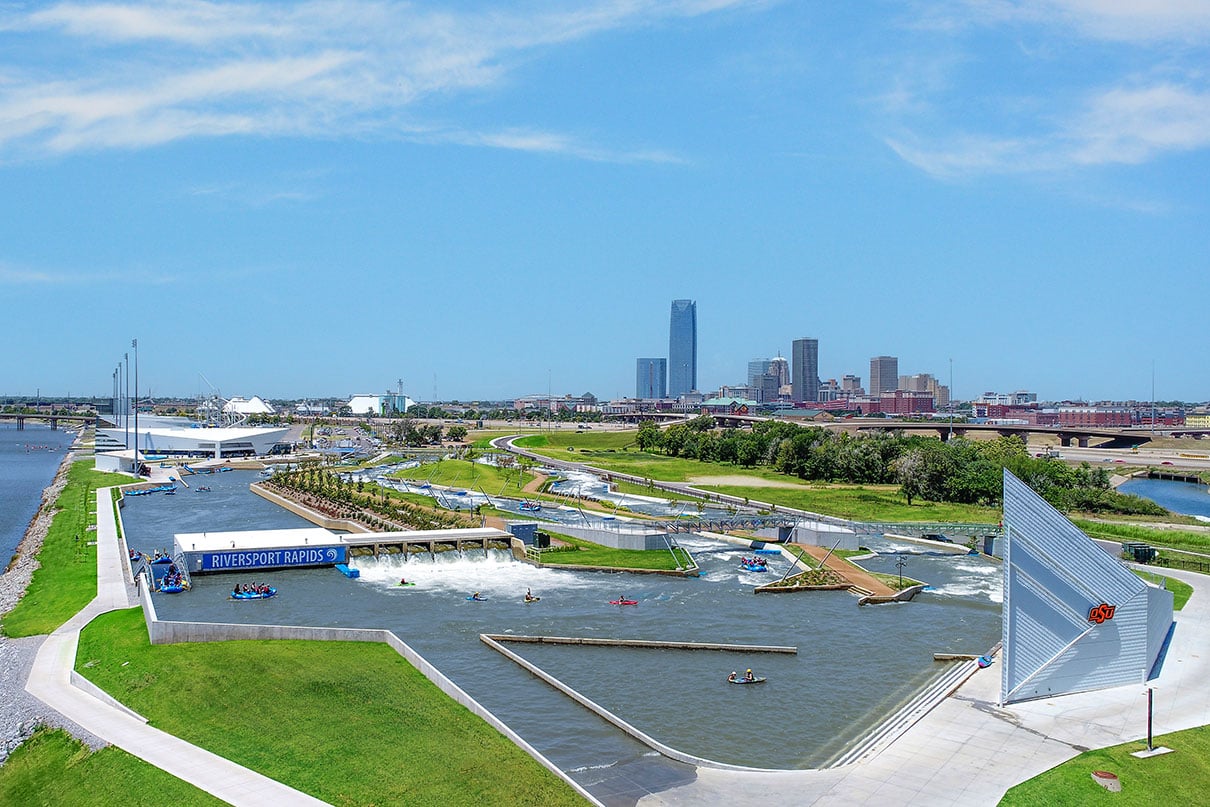

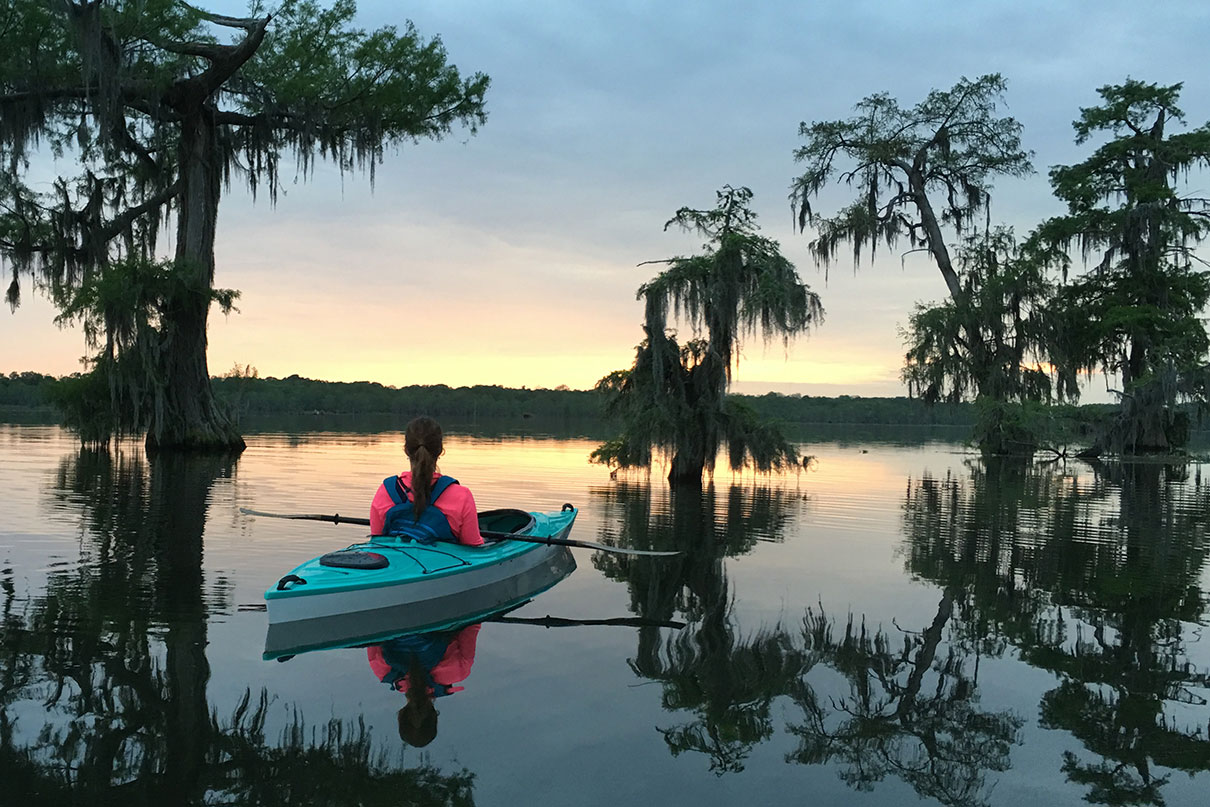

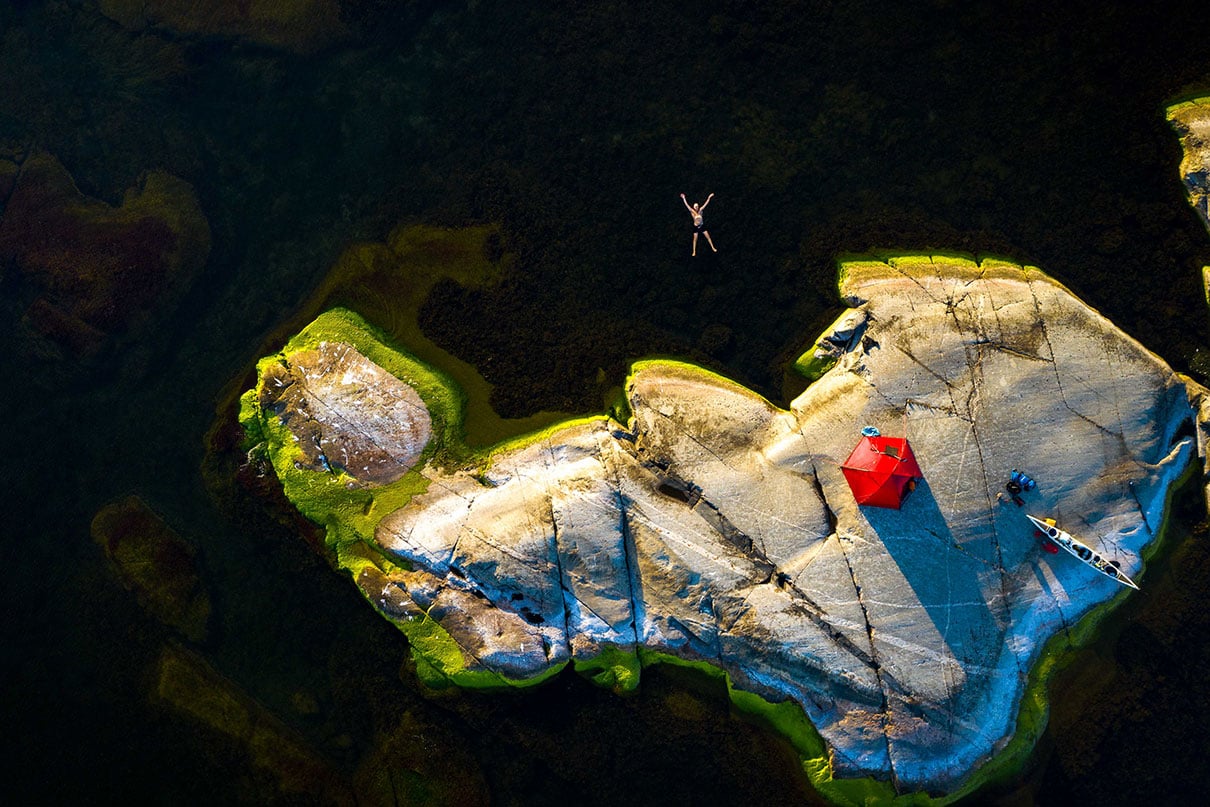

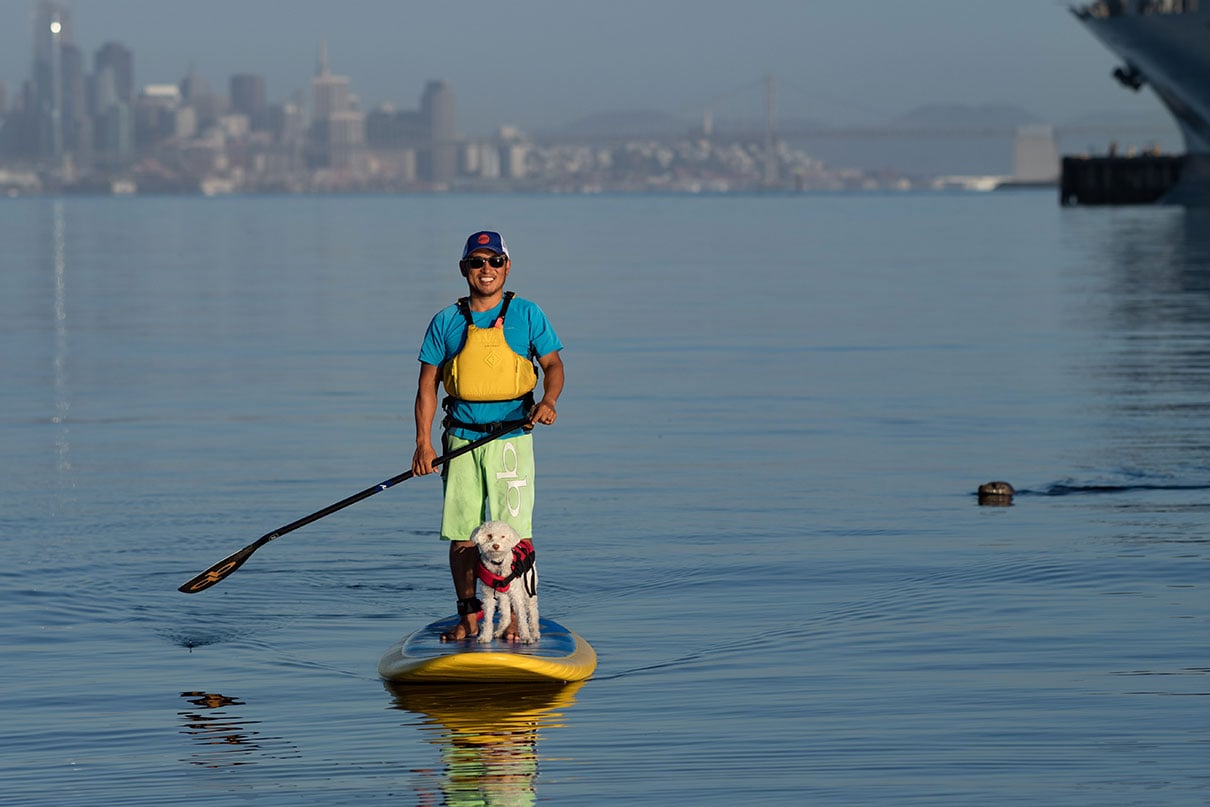


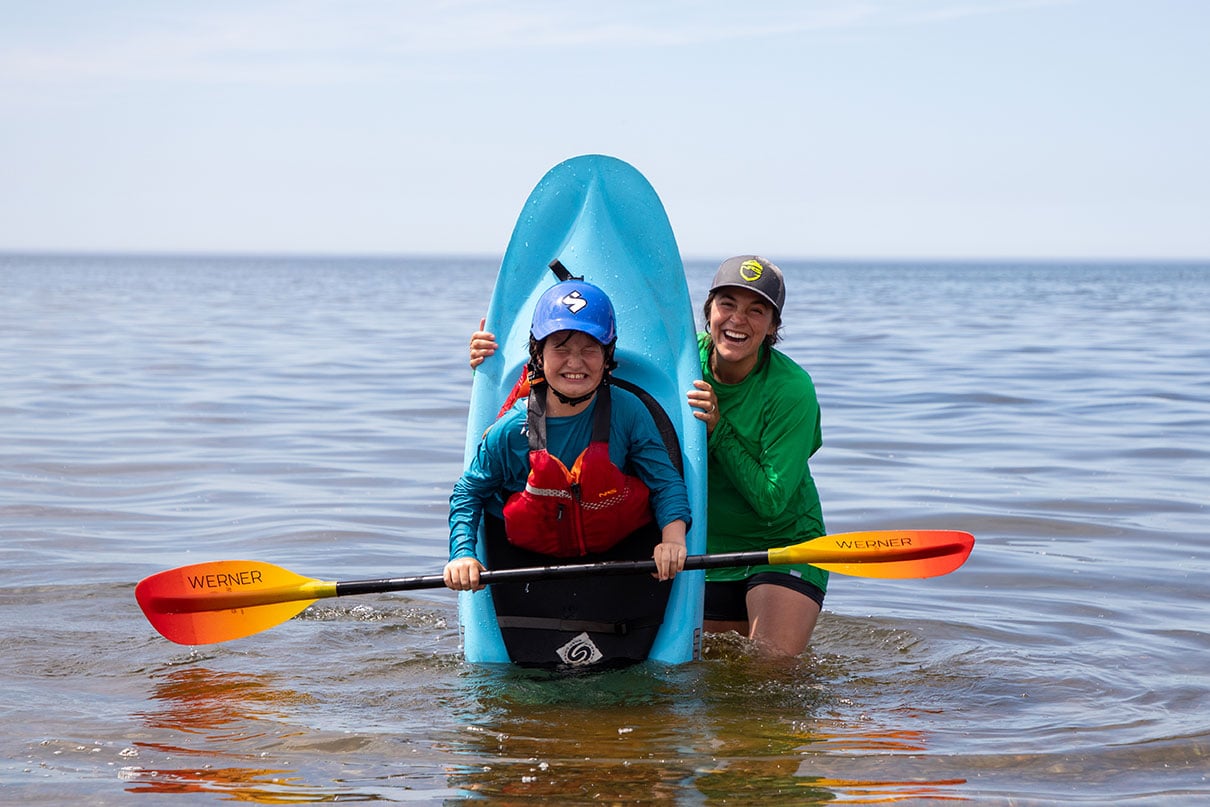

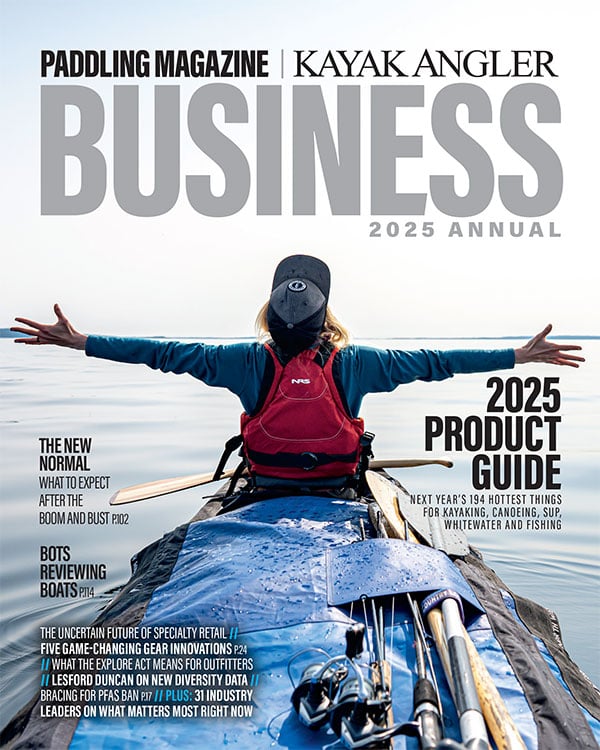 This article was first published in the 2024 issue of Paddling Business.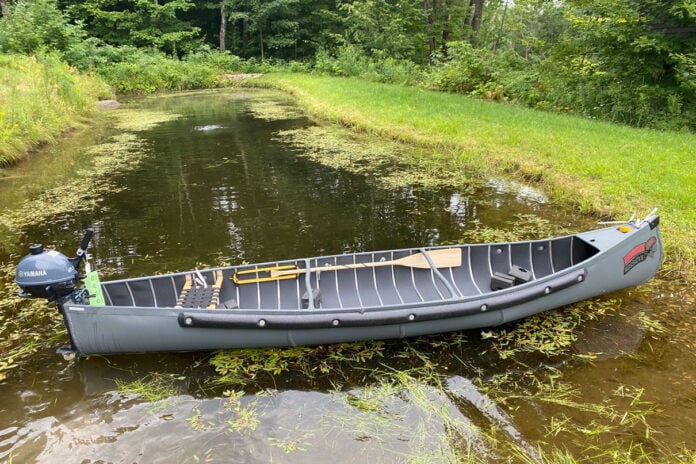
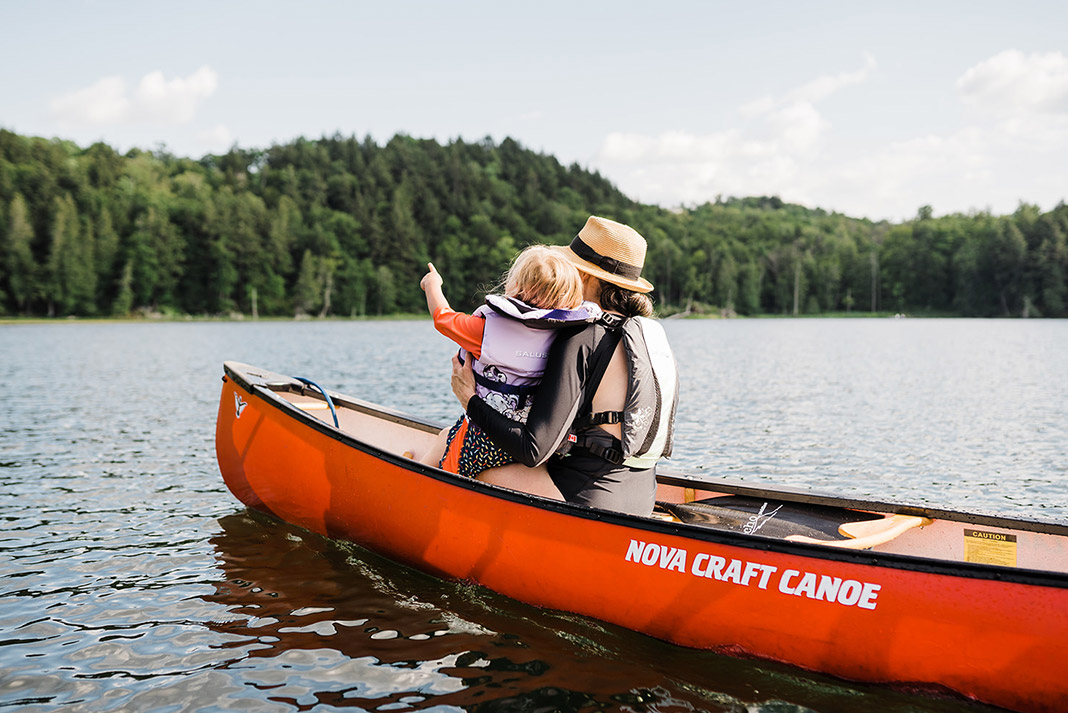
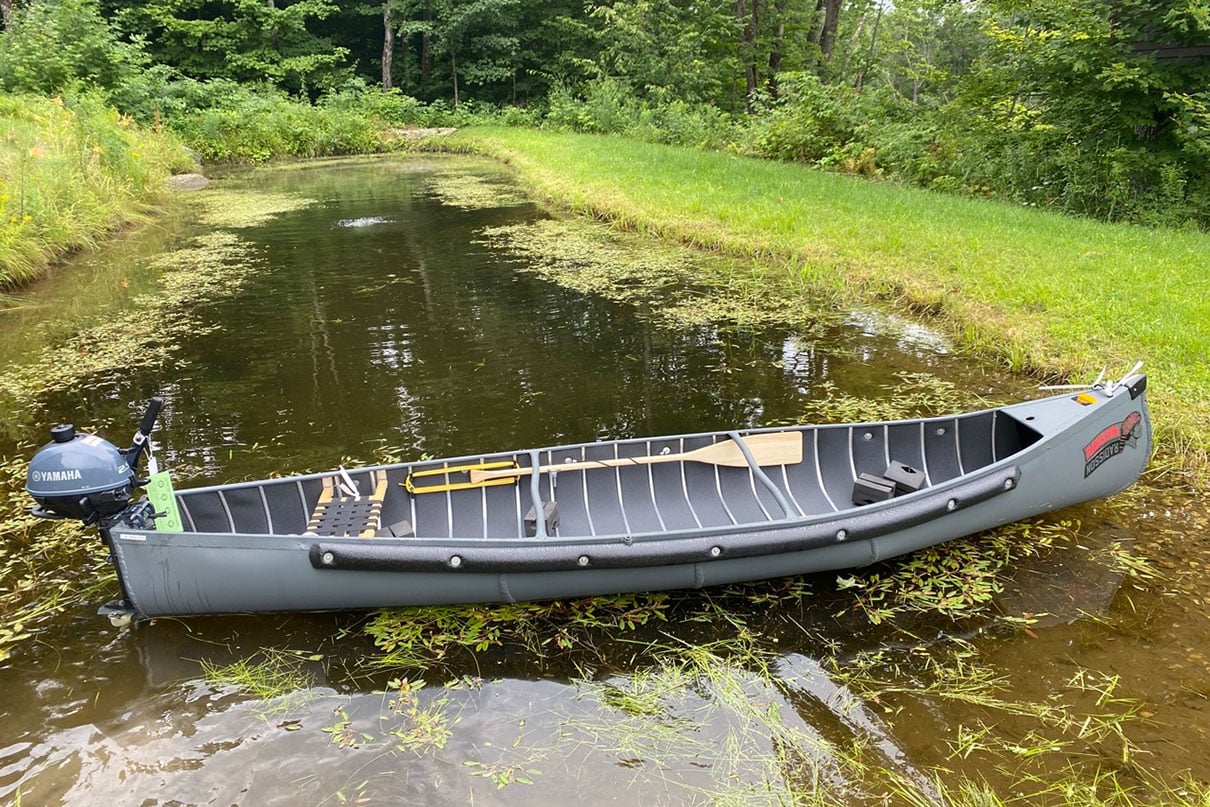
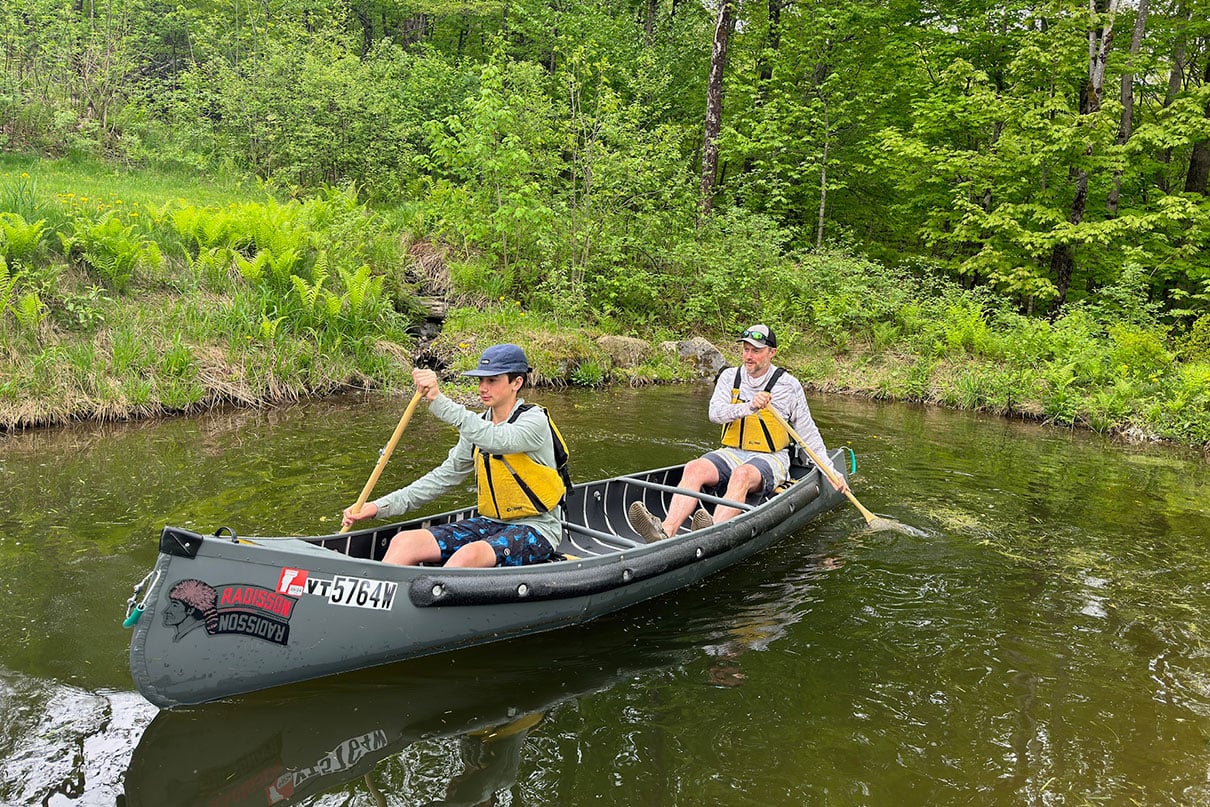
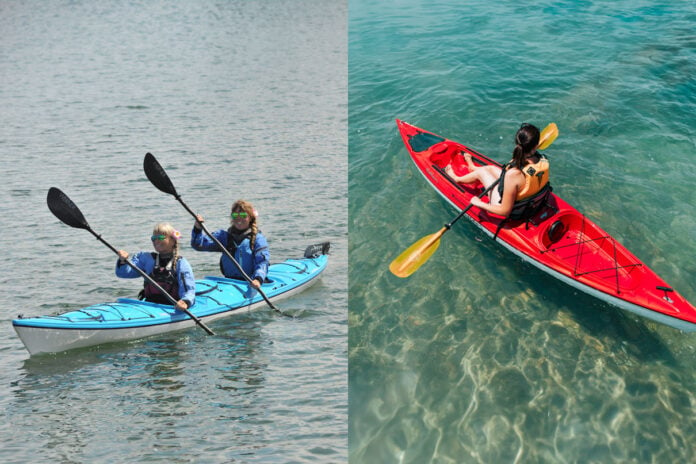
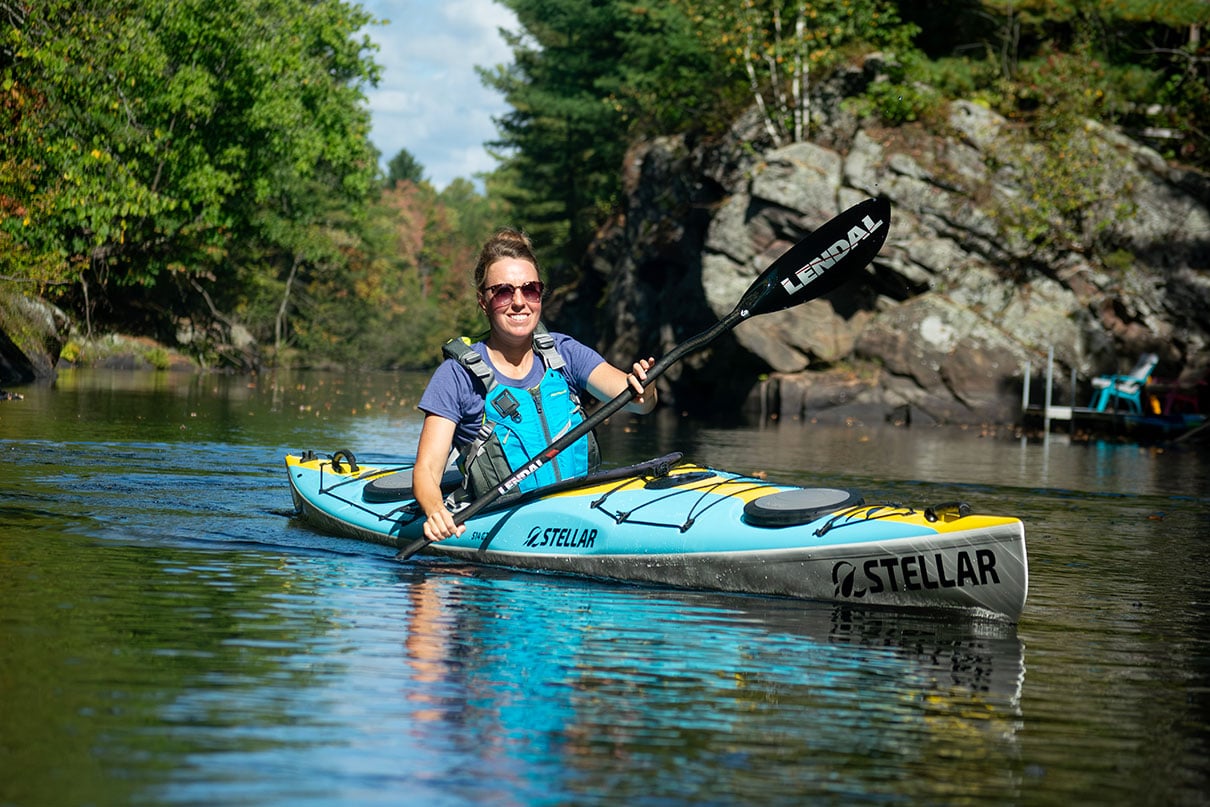
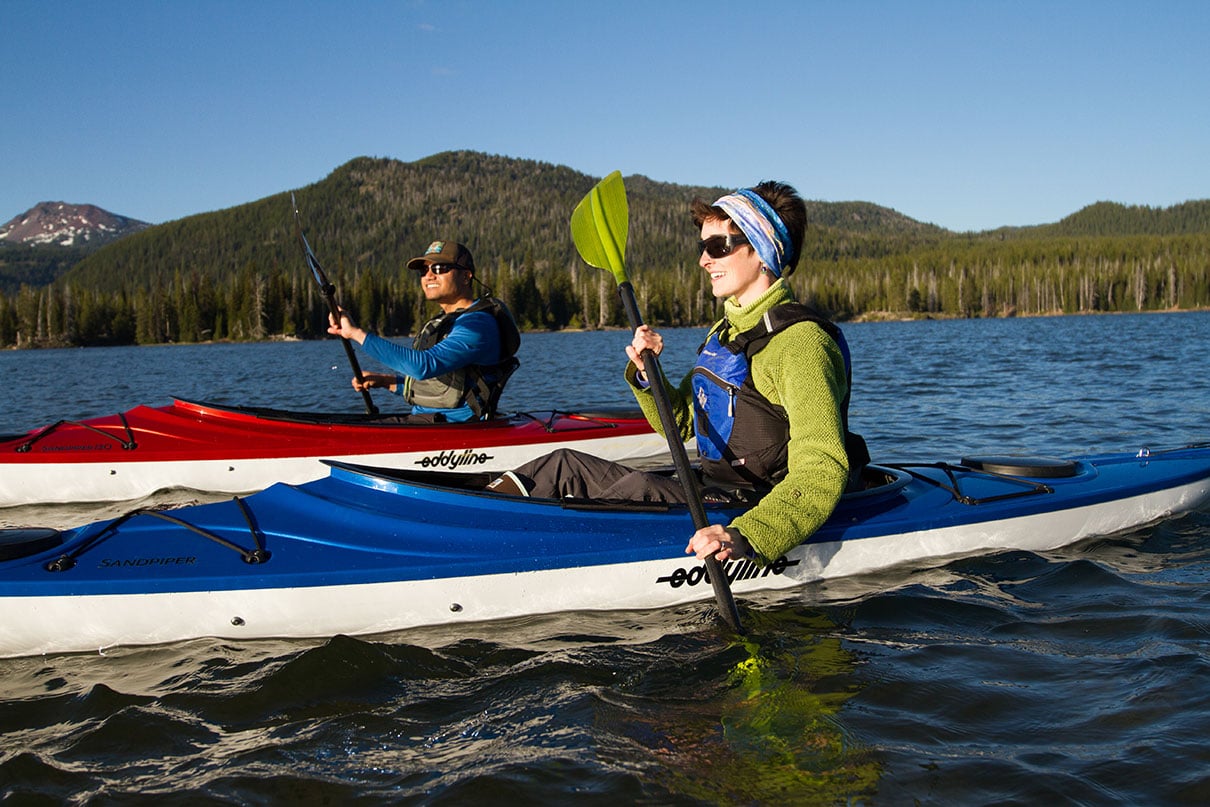
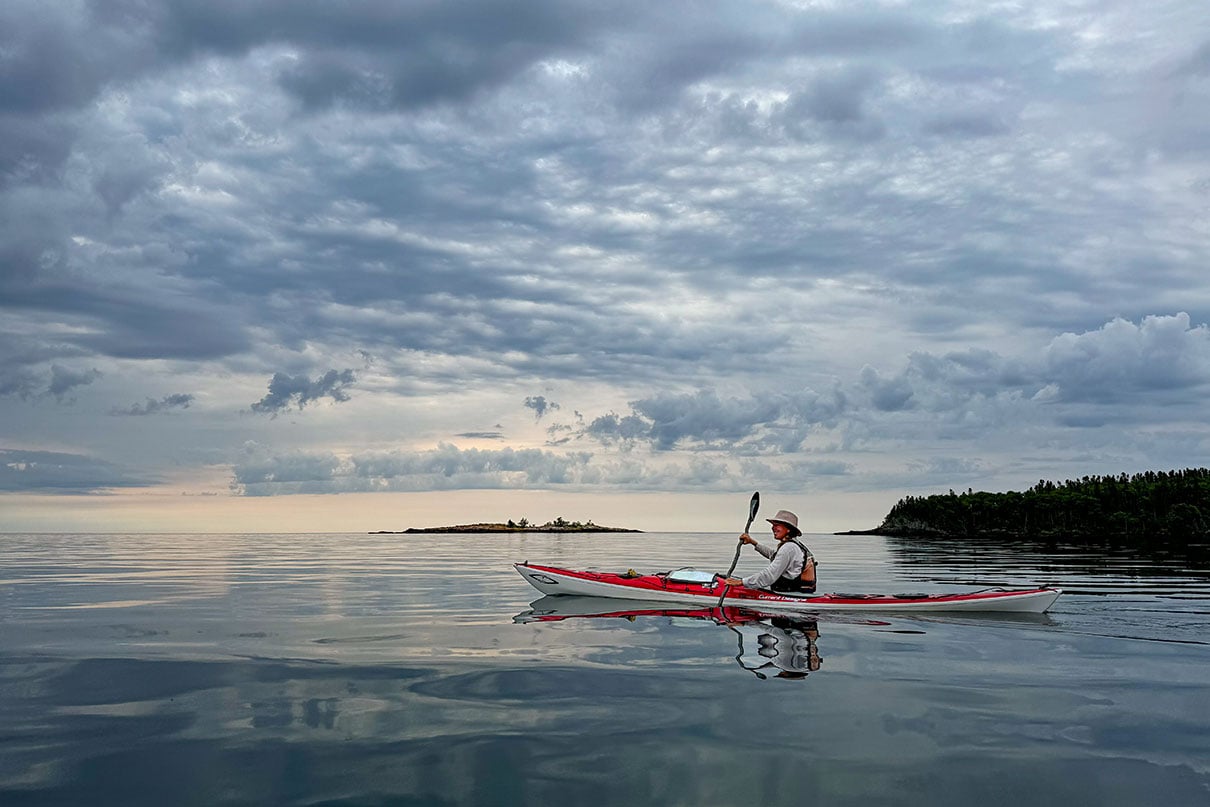
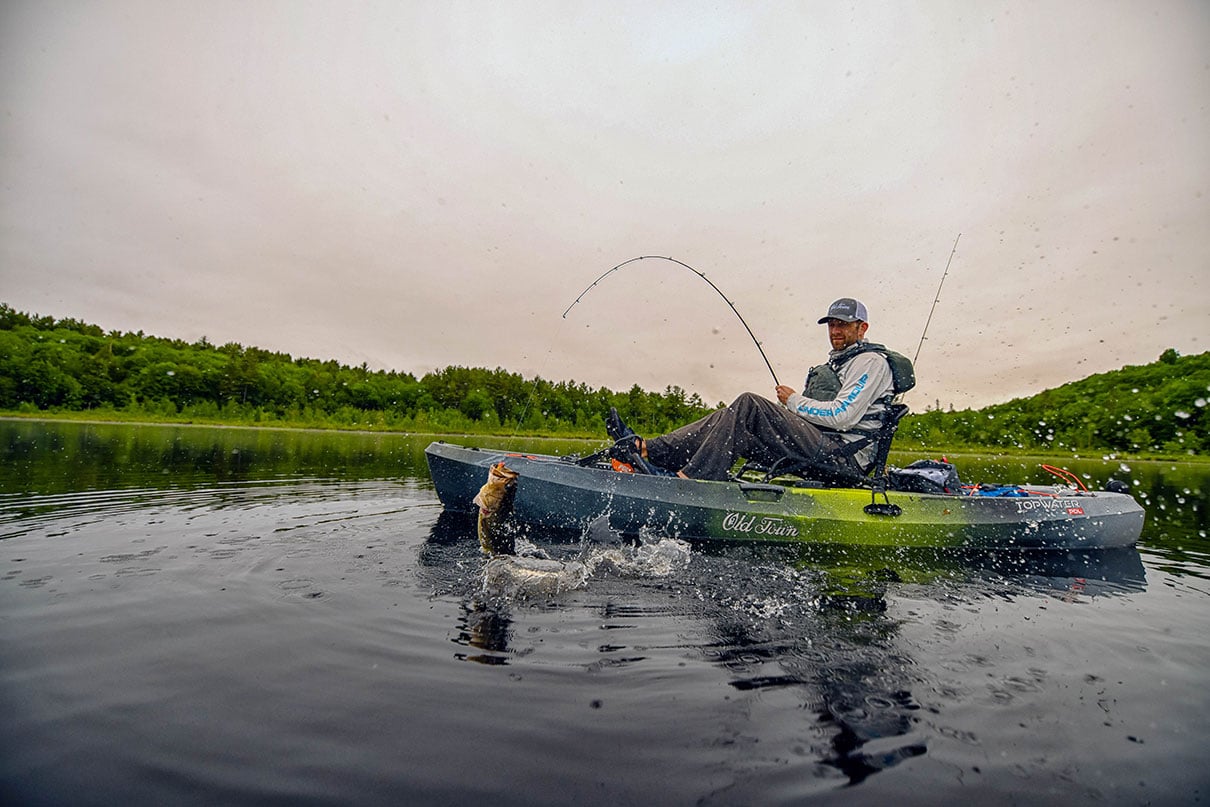
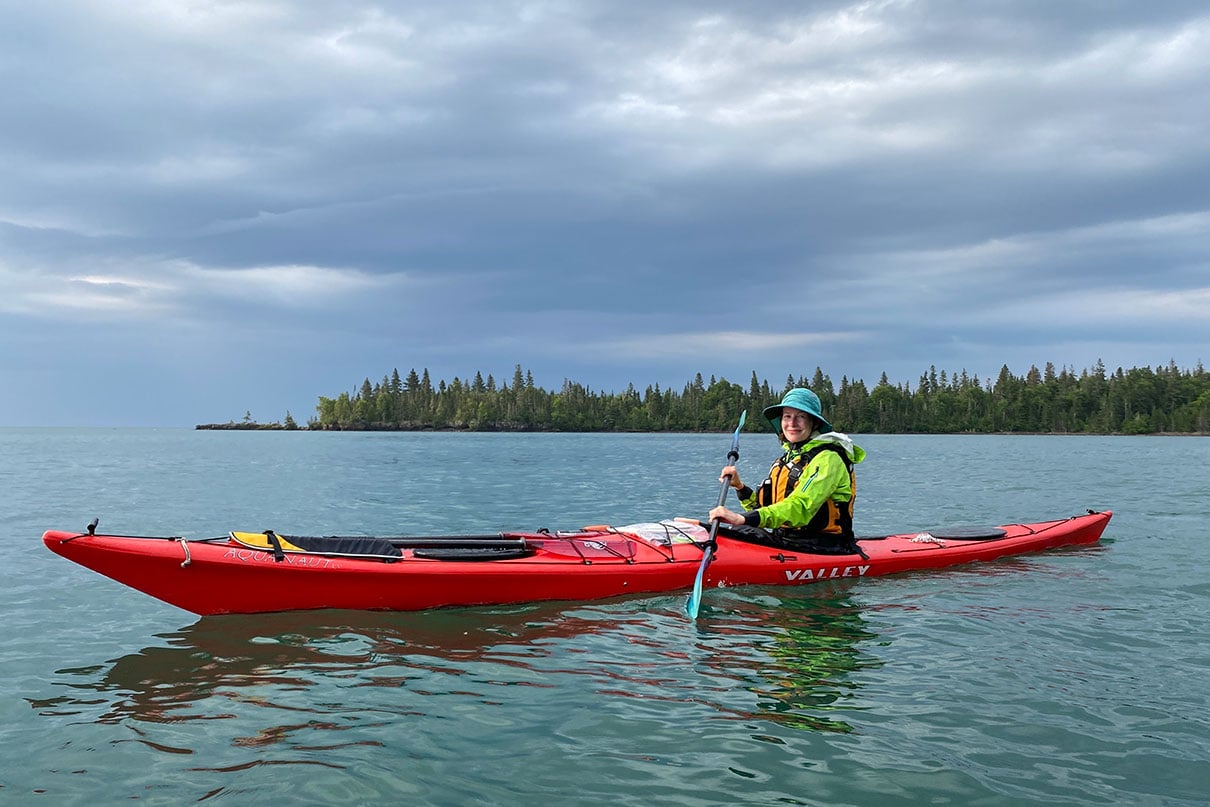
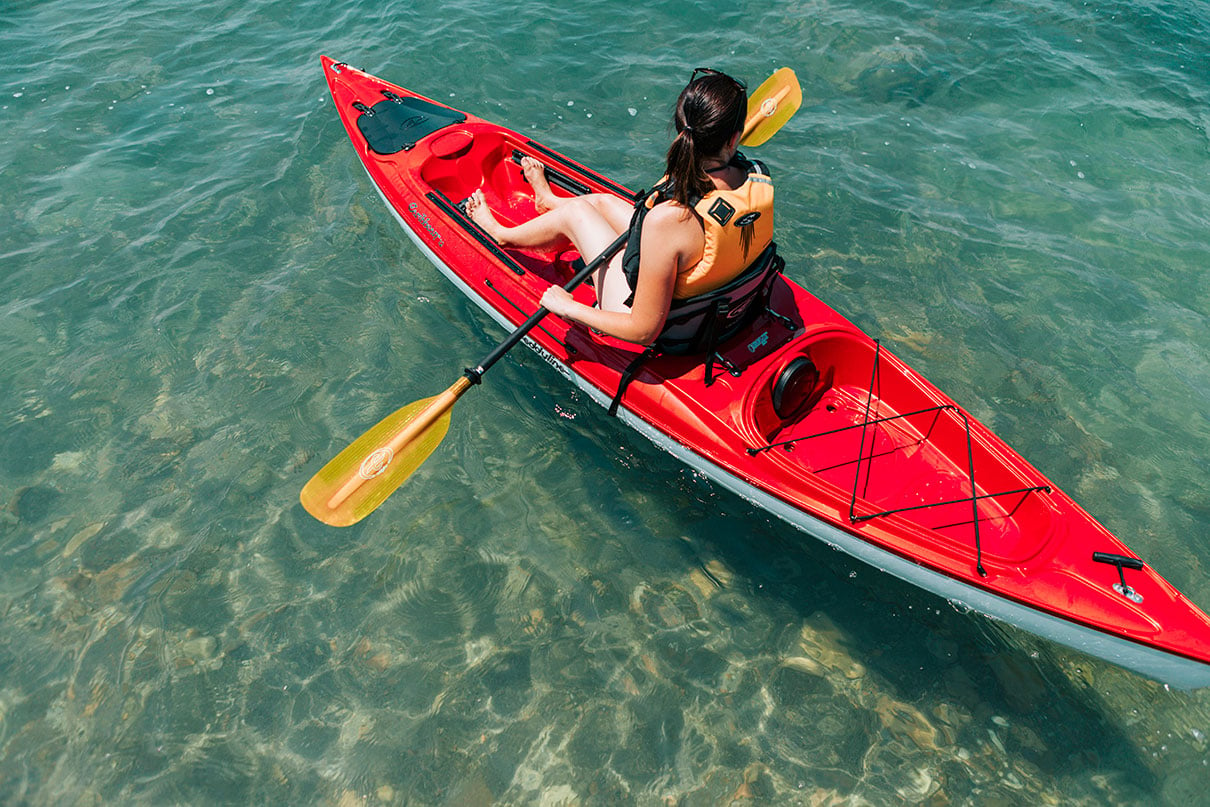
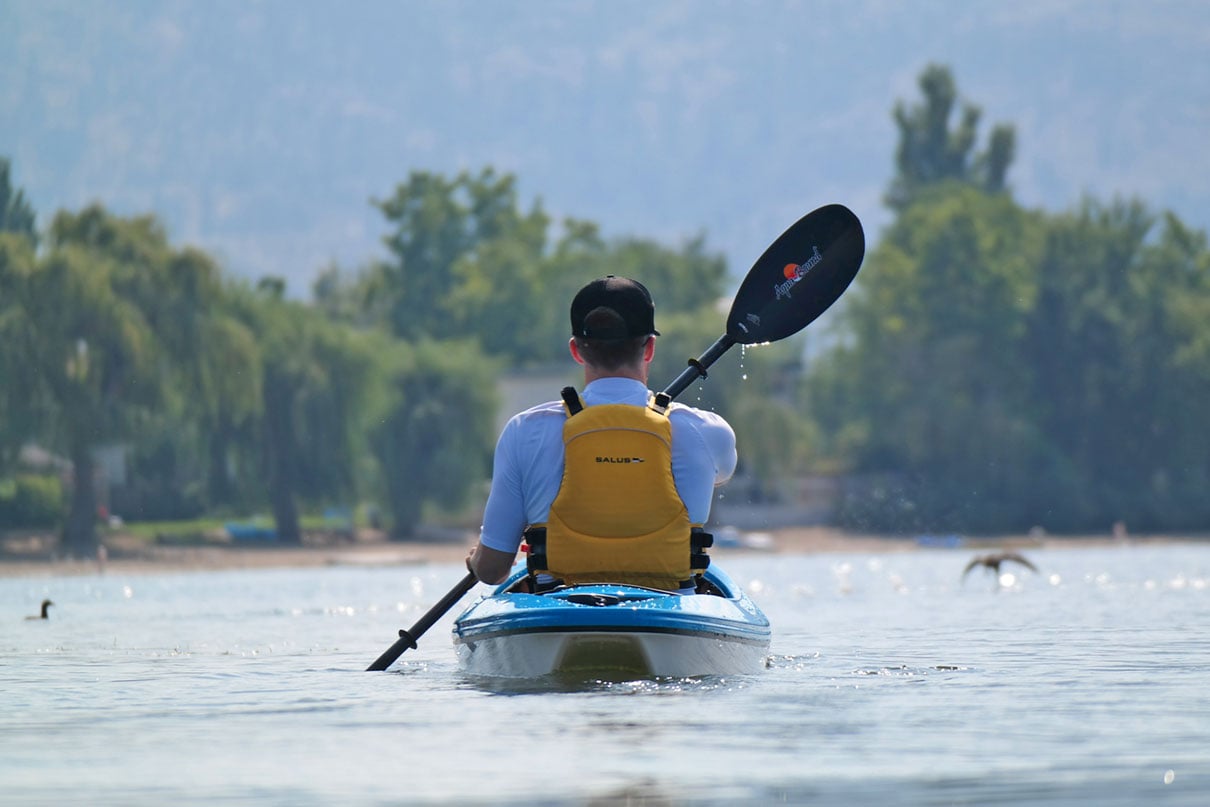
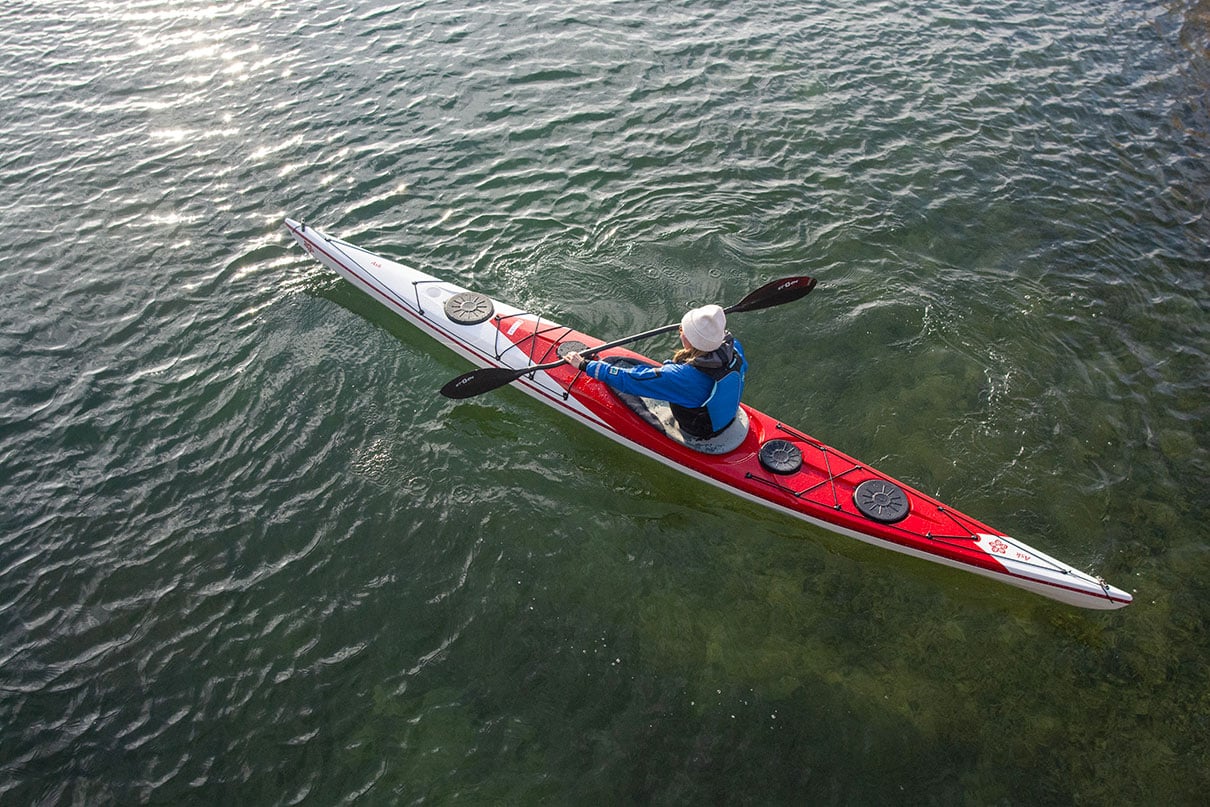
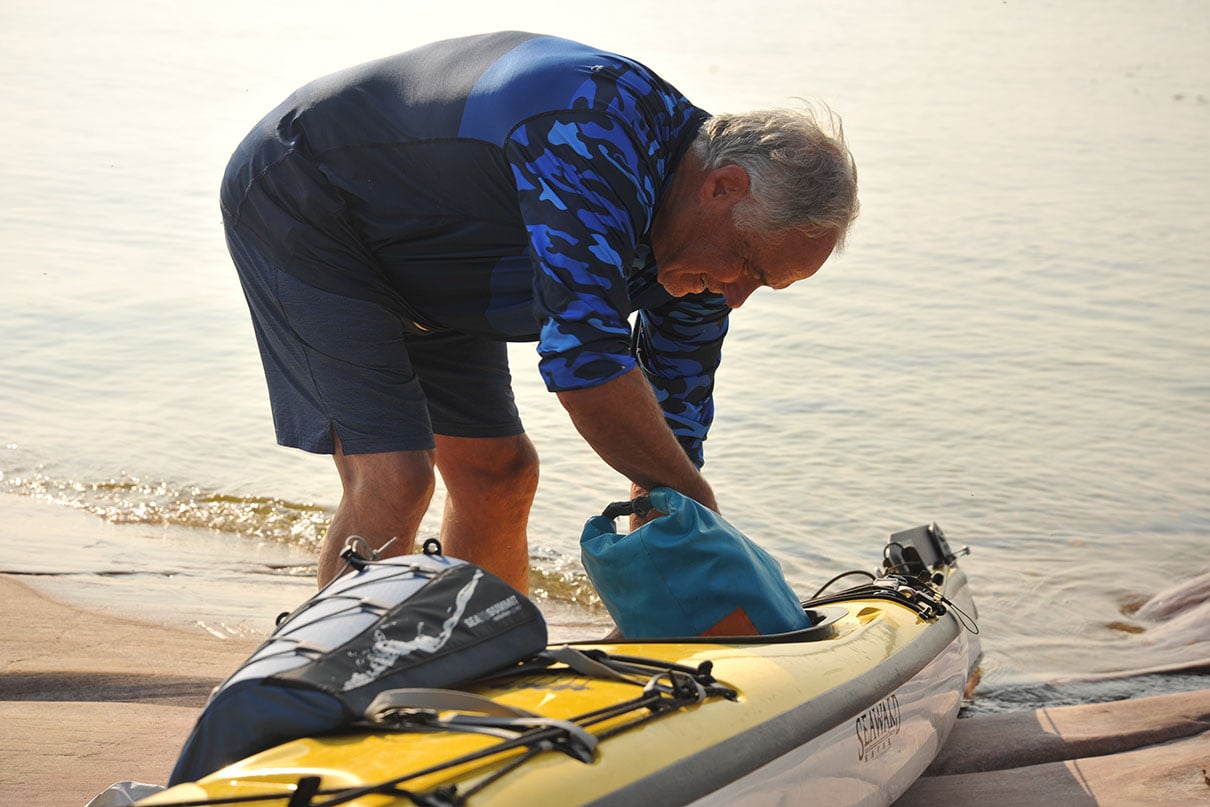
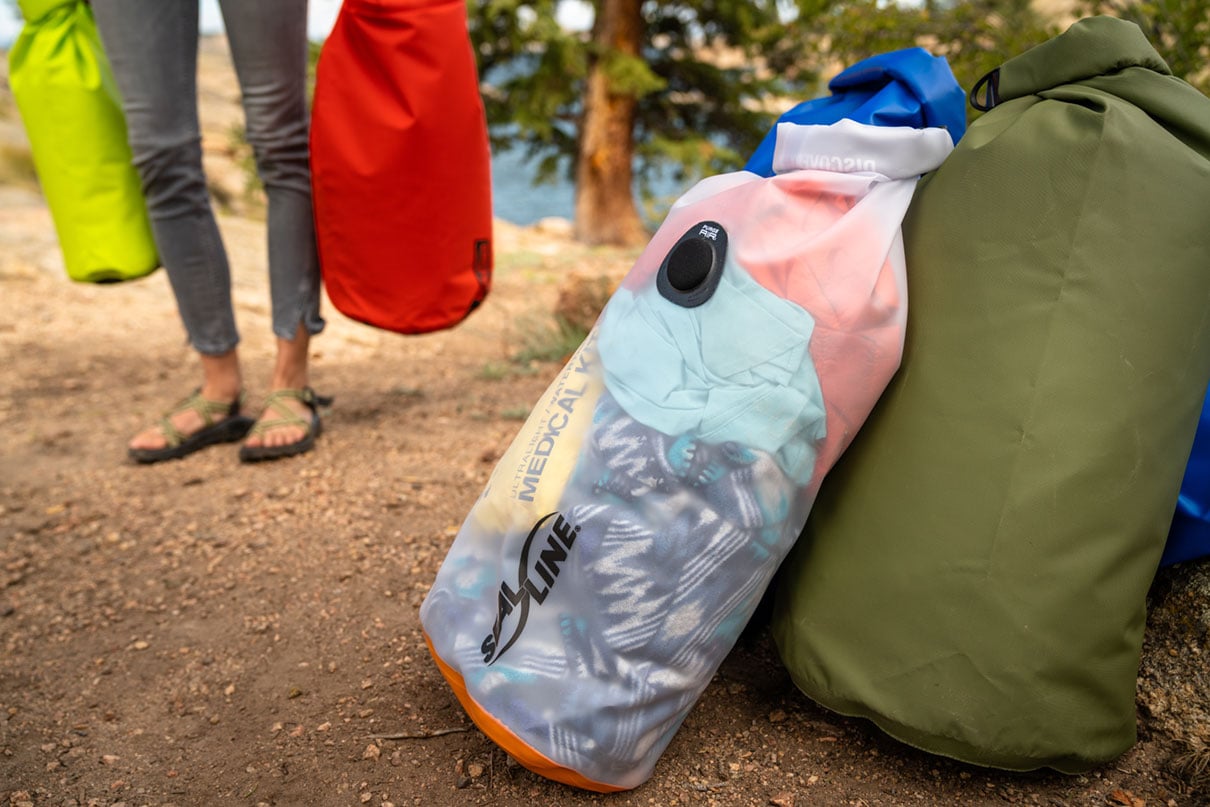
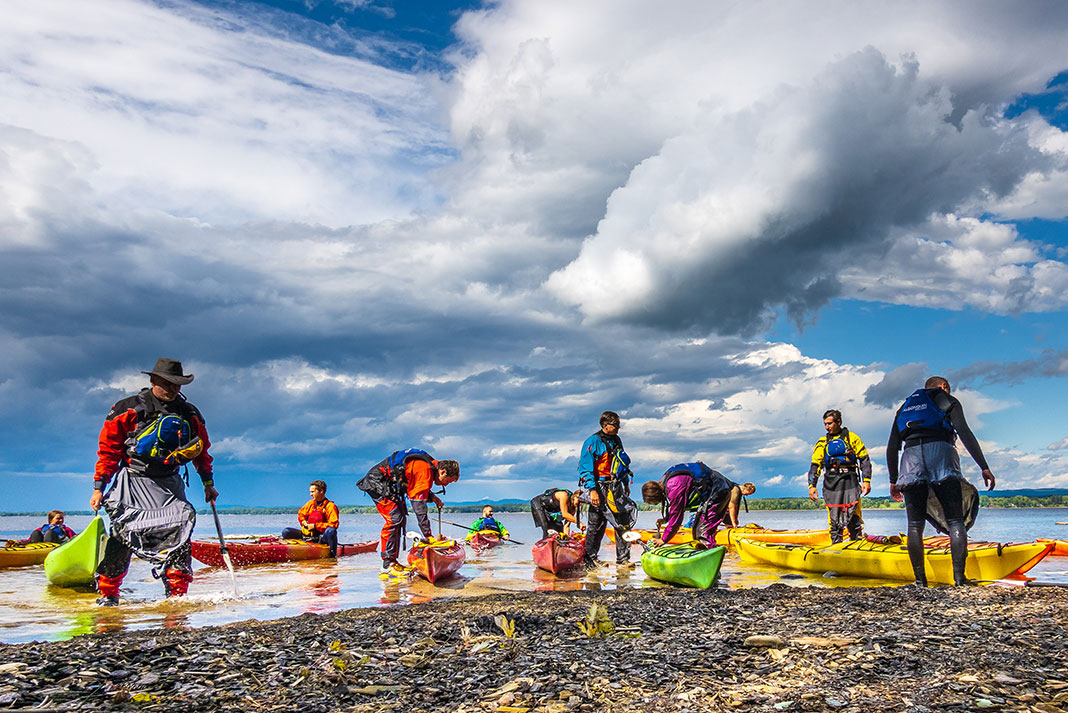
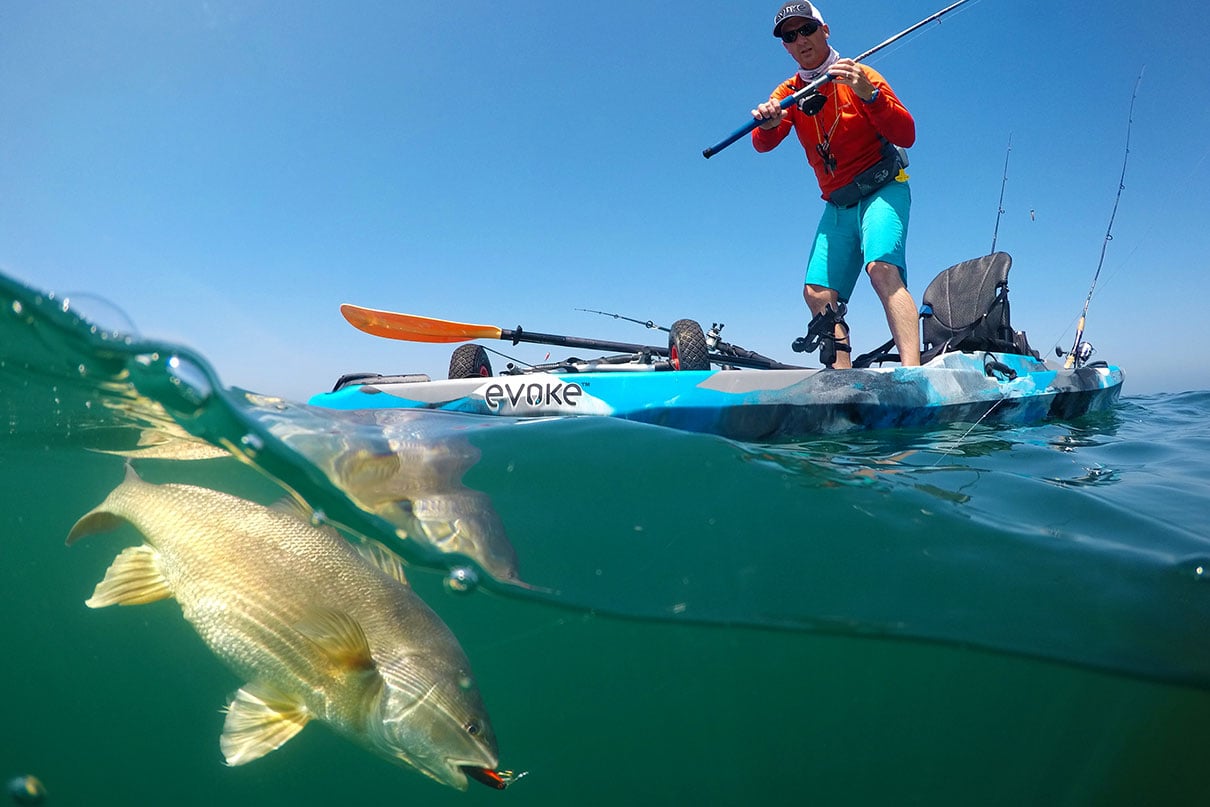
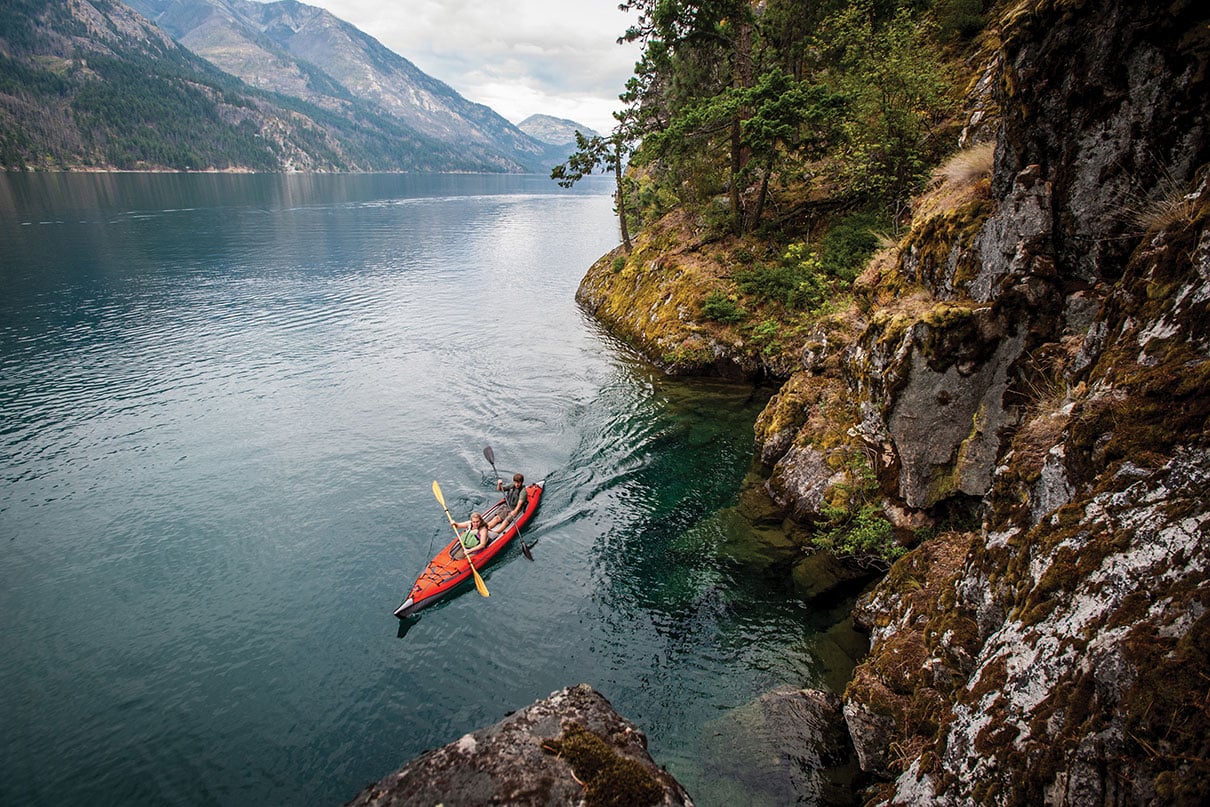
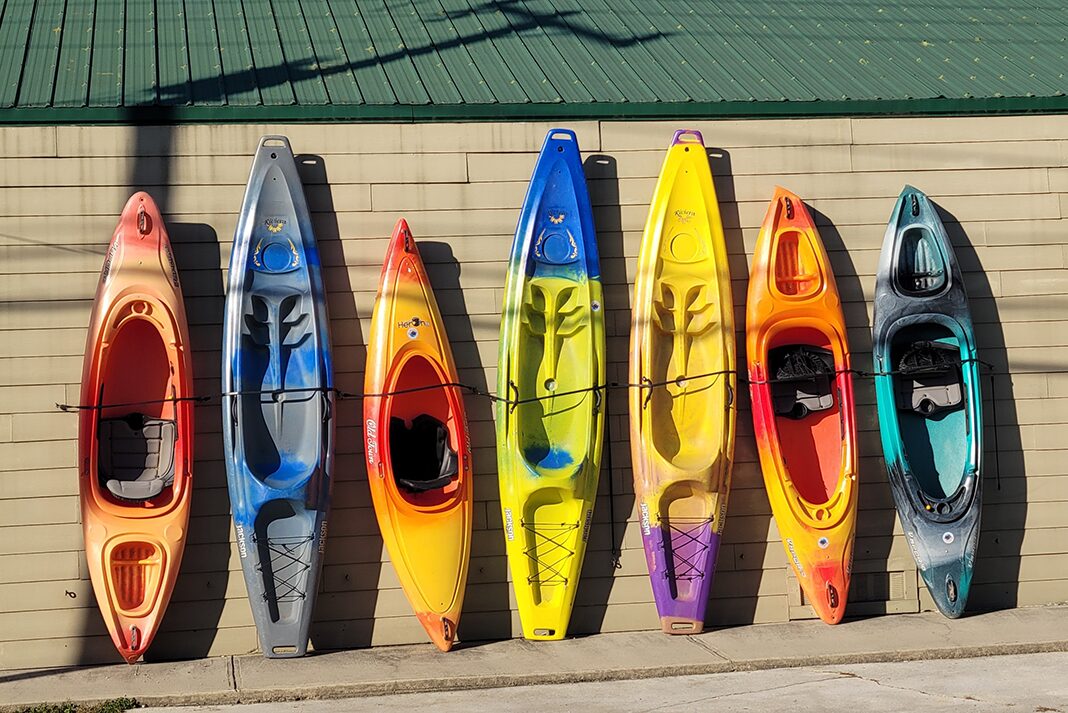
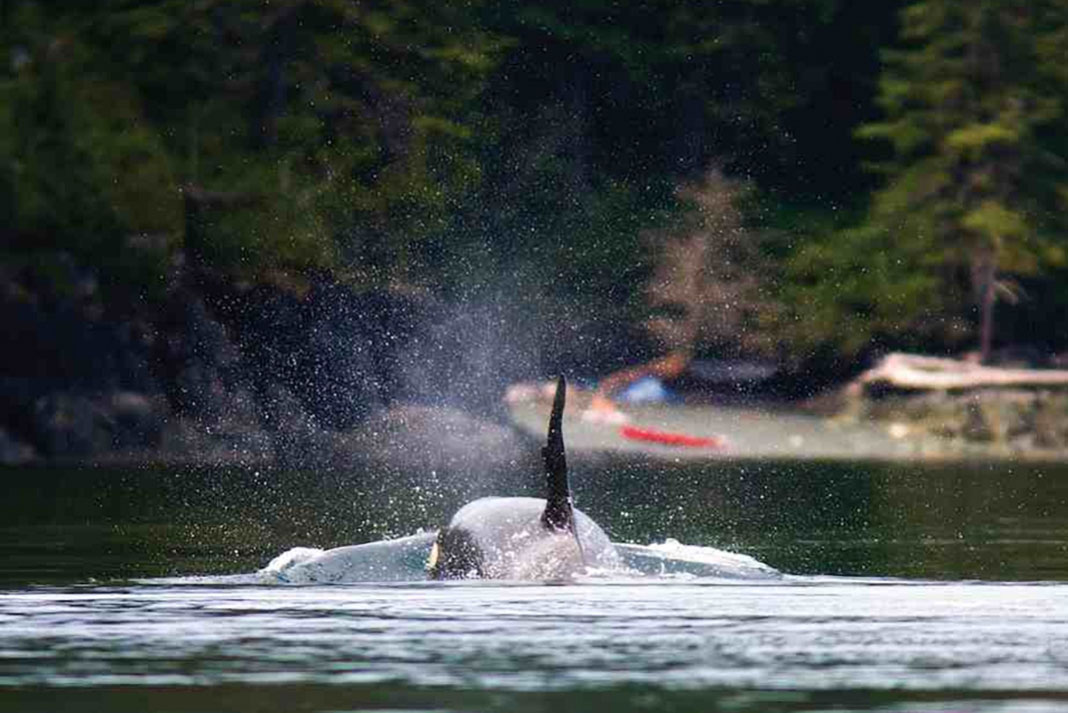
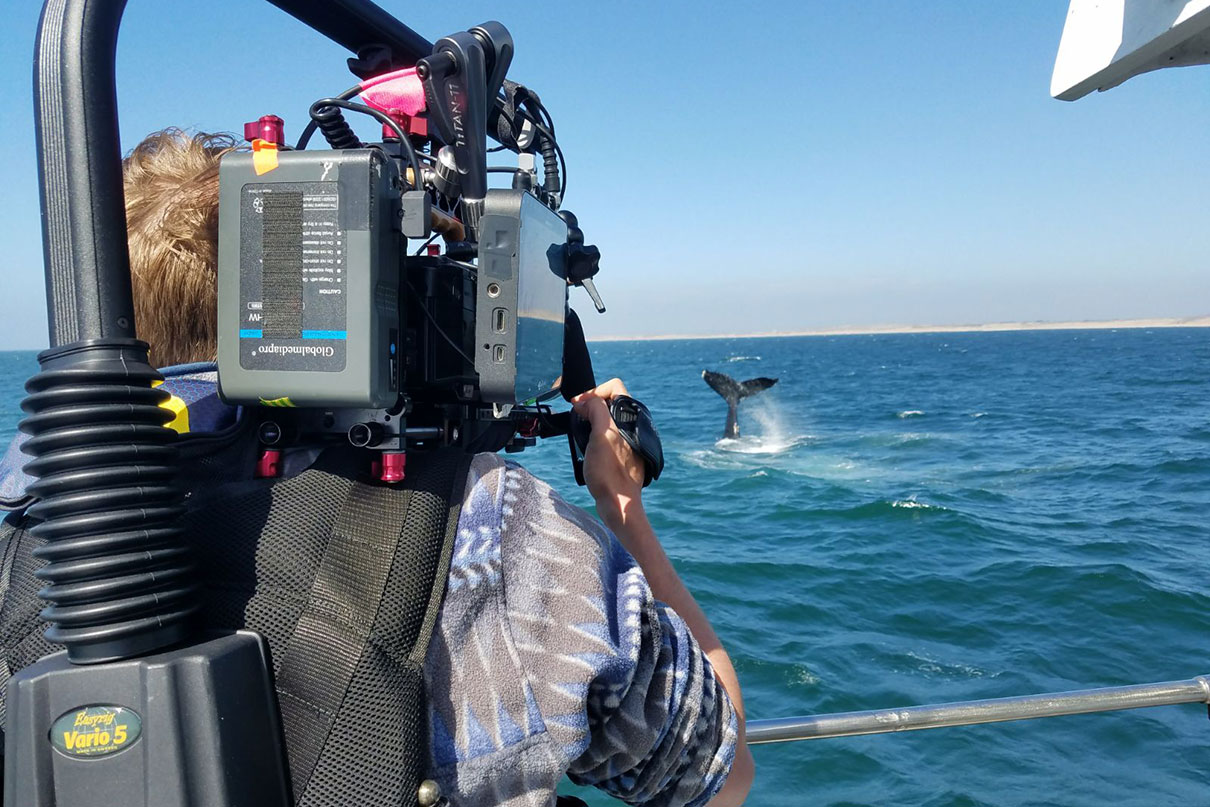
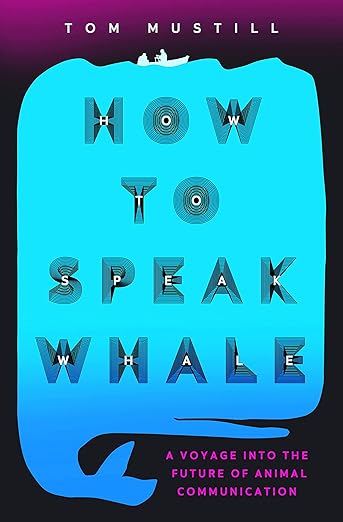
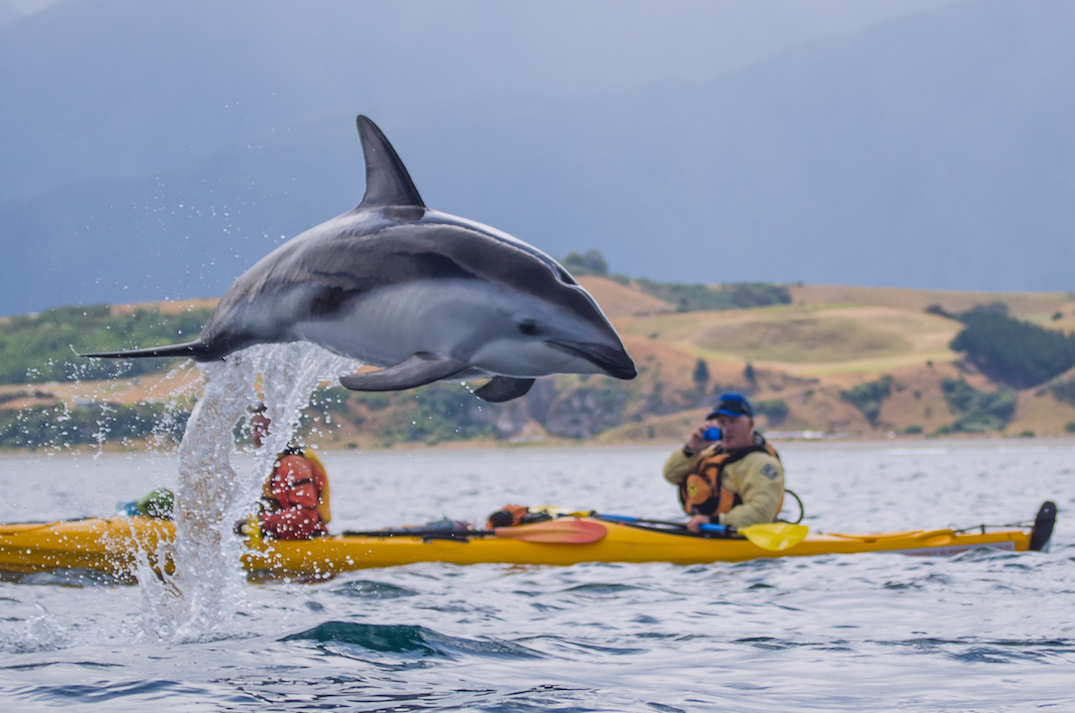
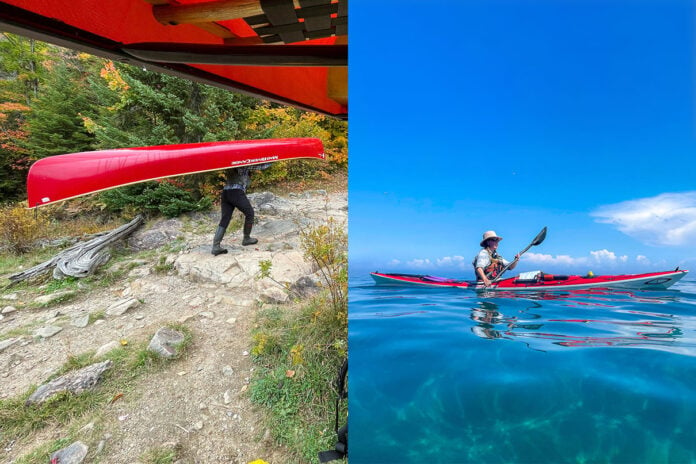
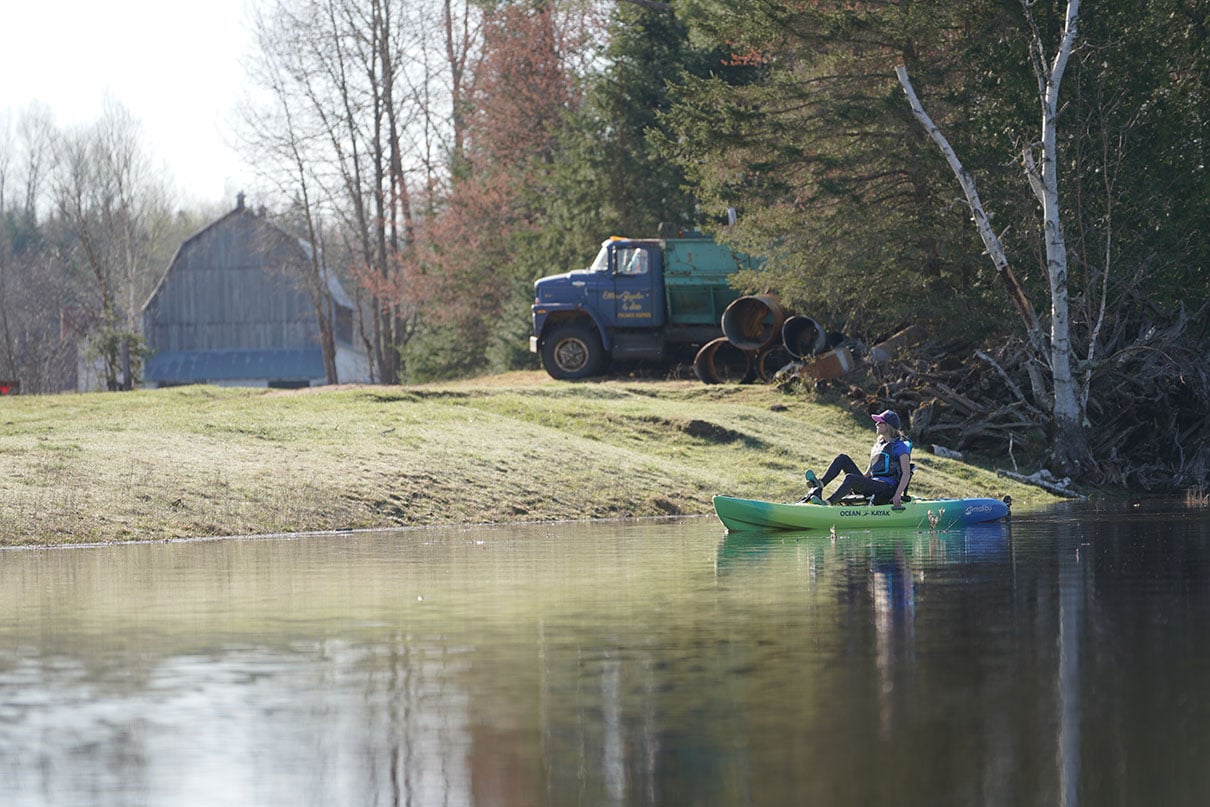
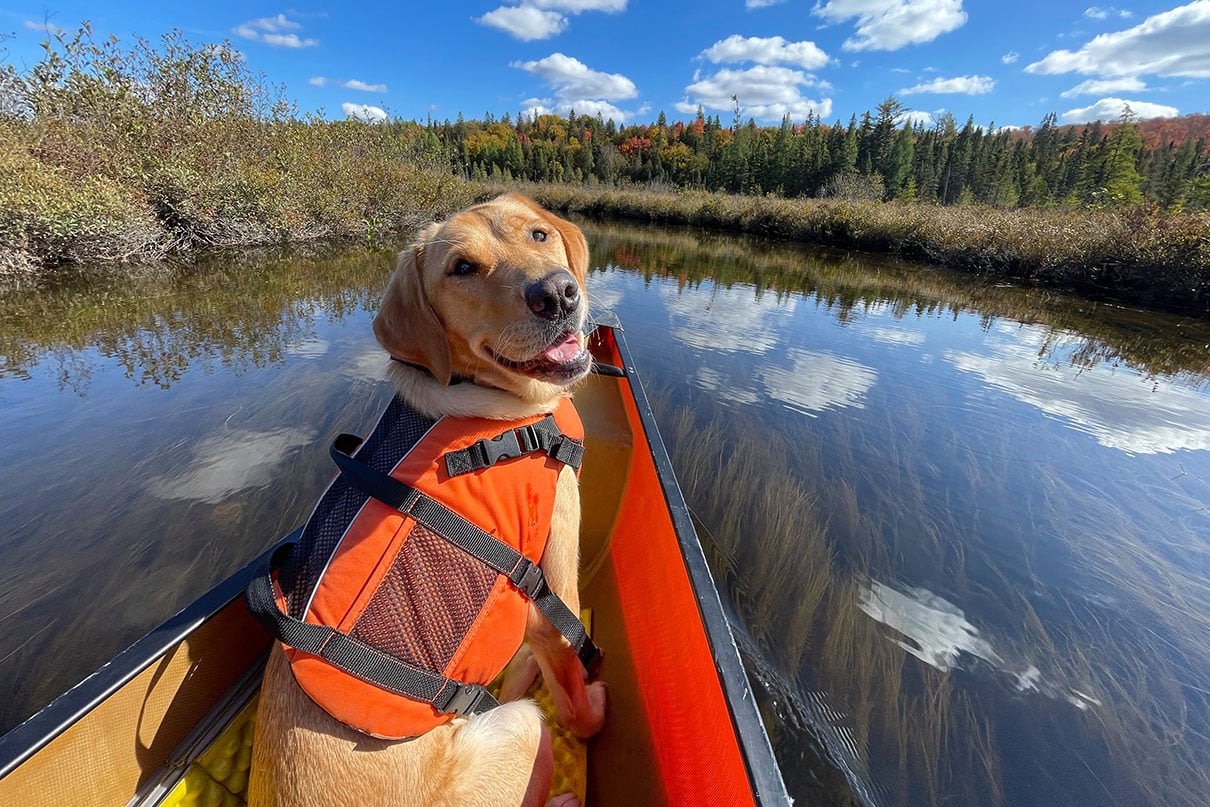
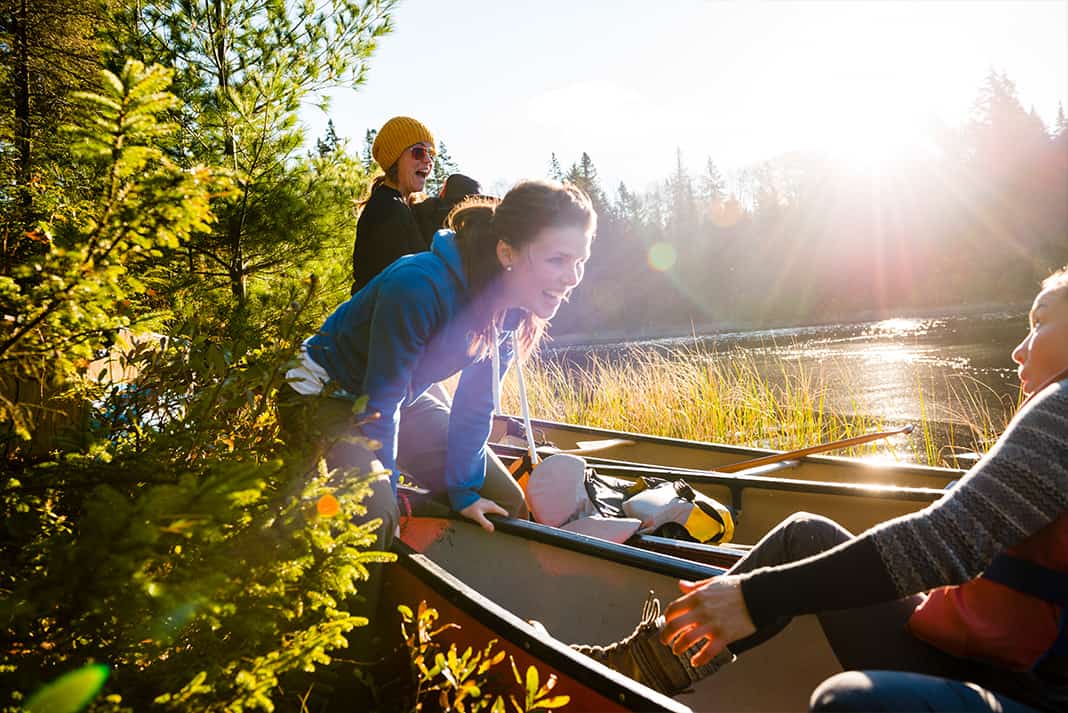
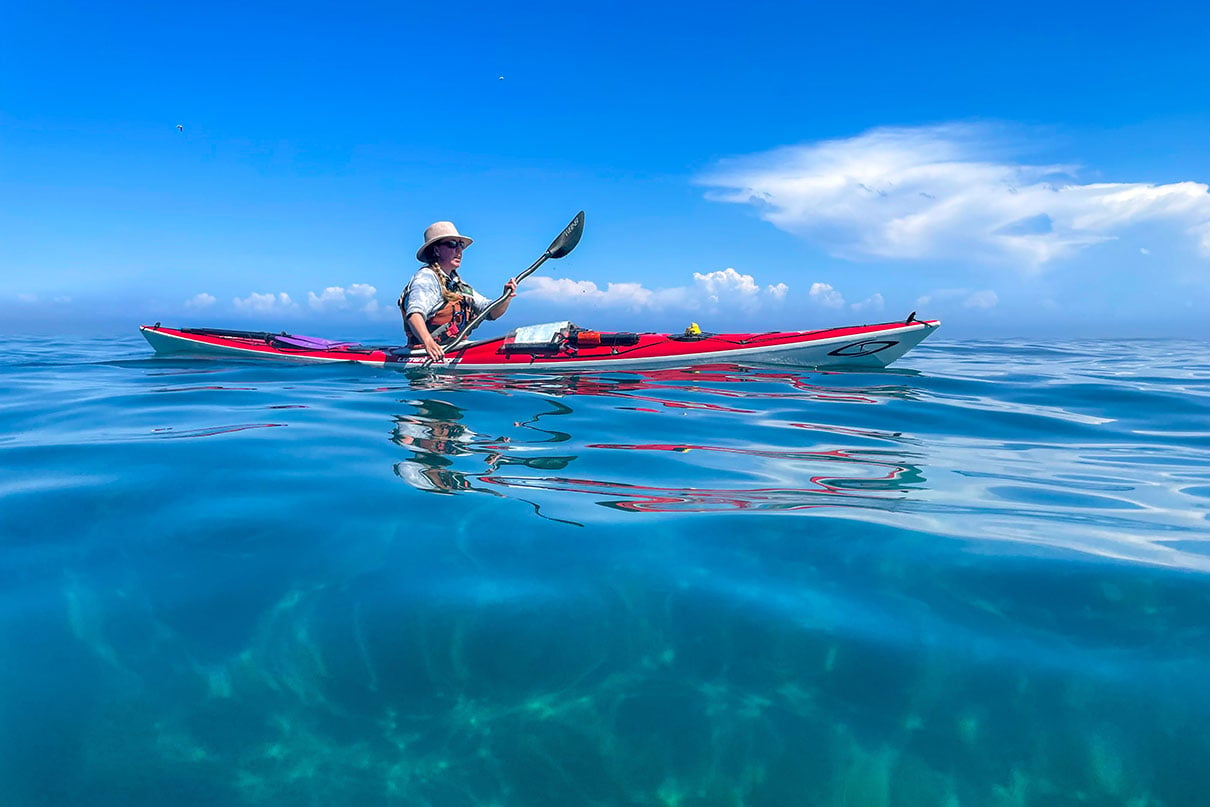
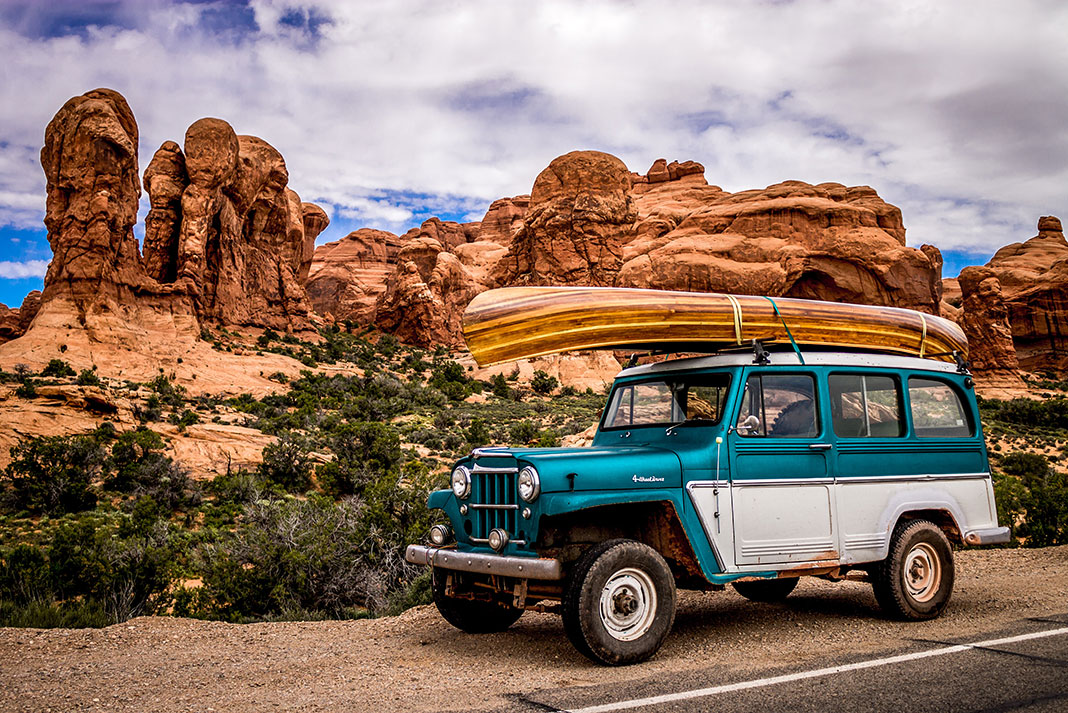
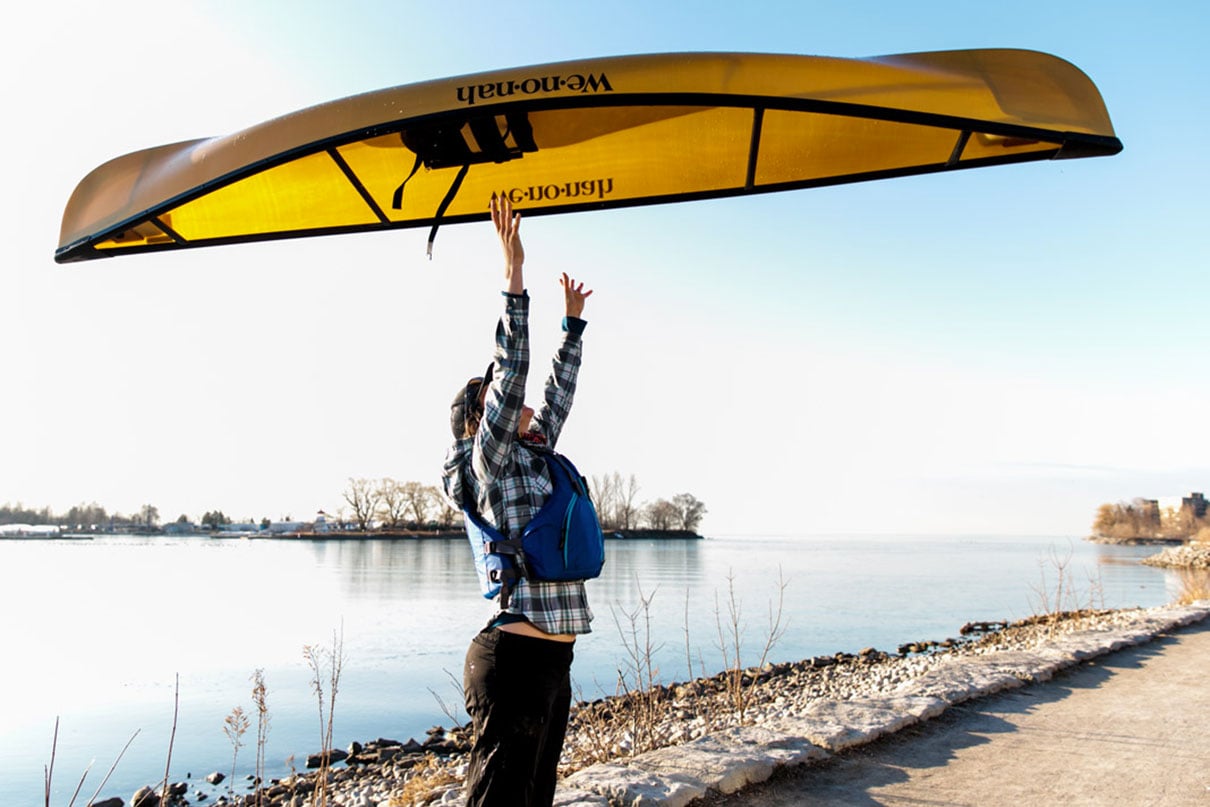
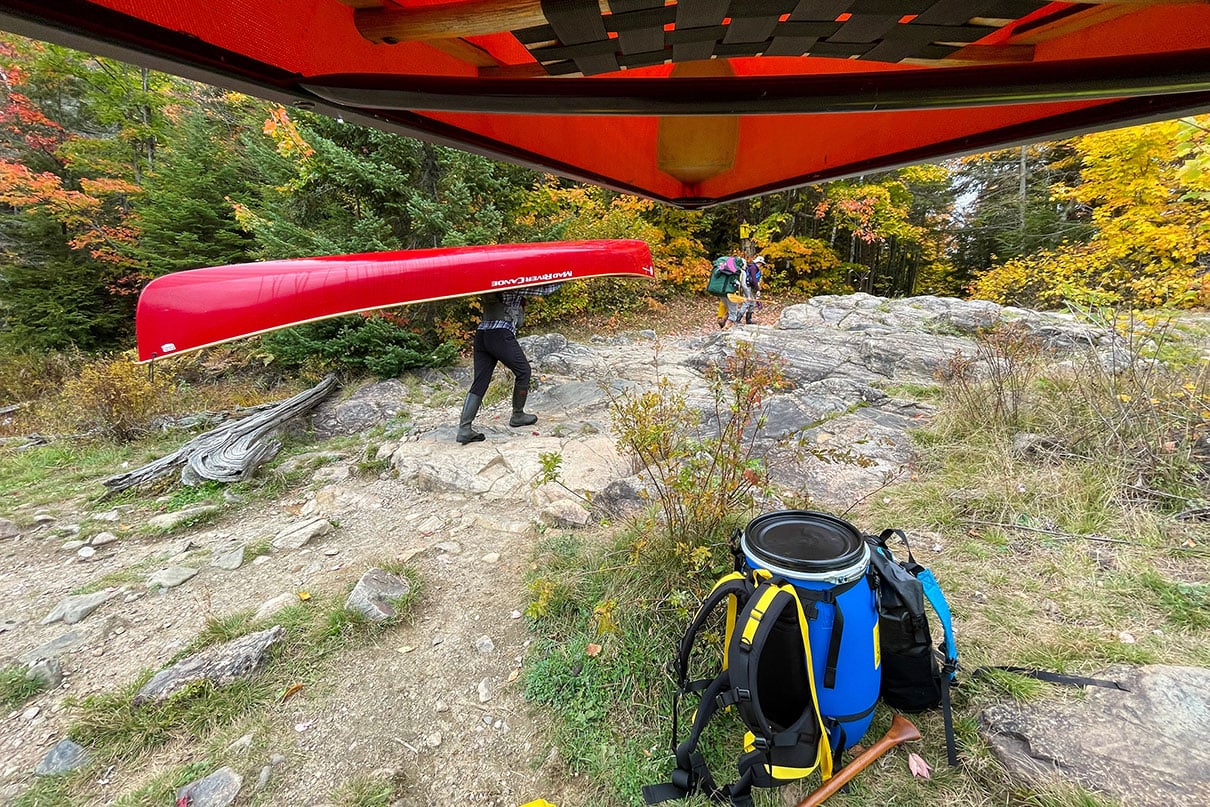
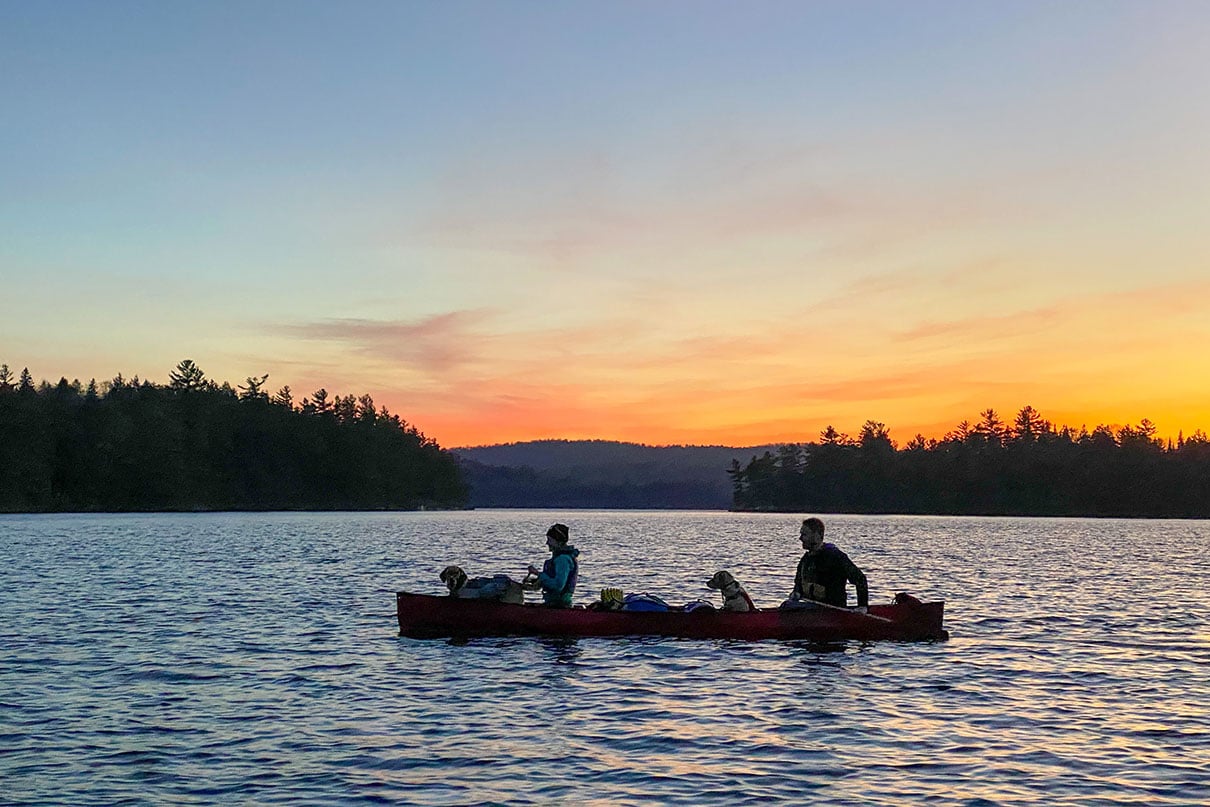
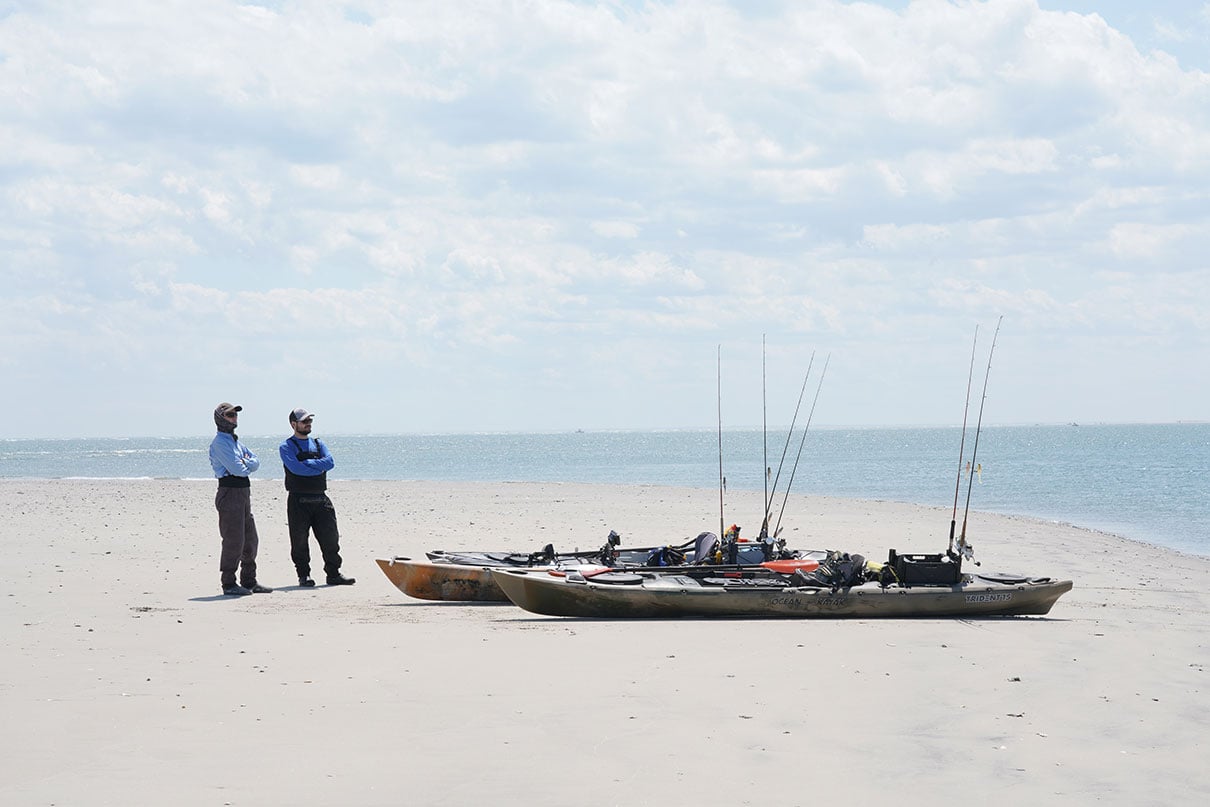
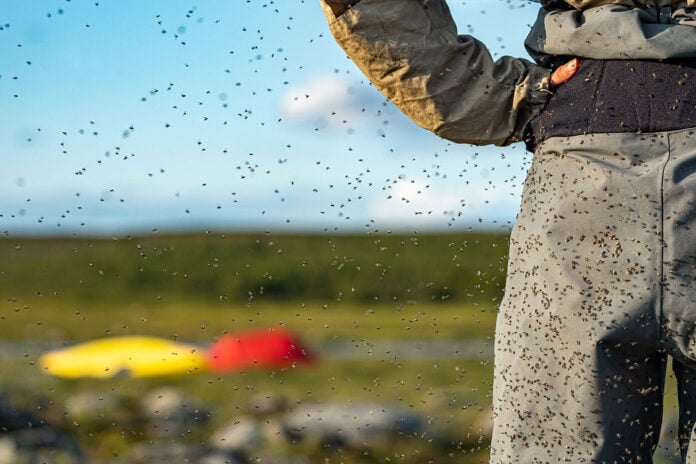
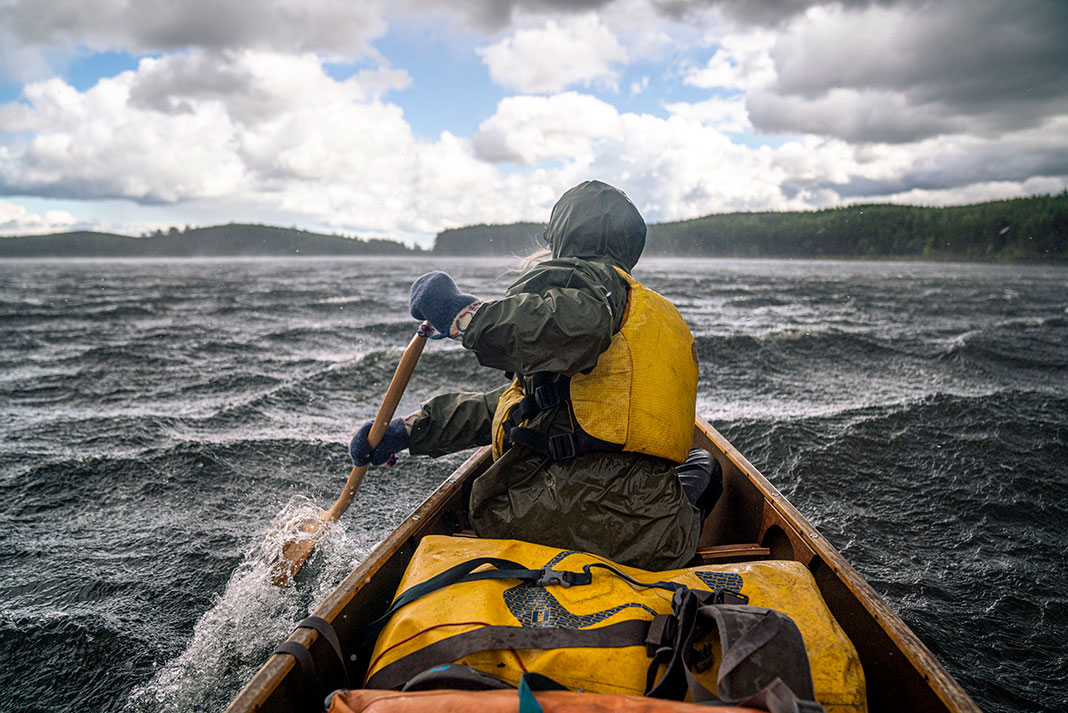
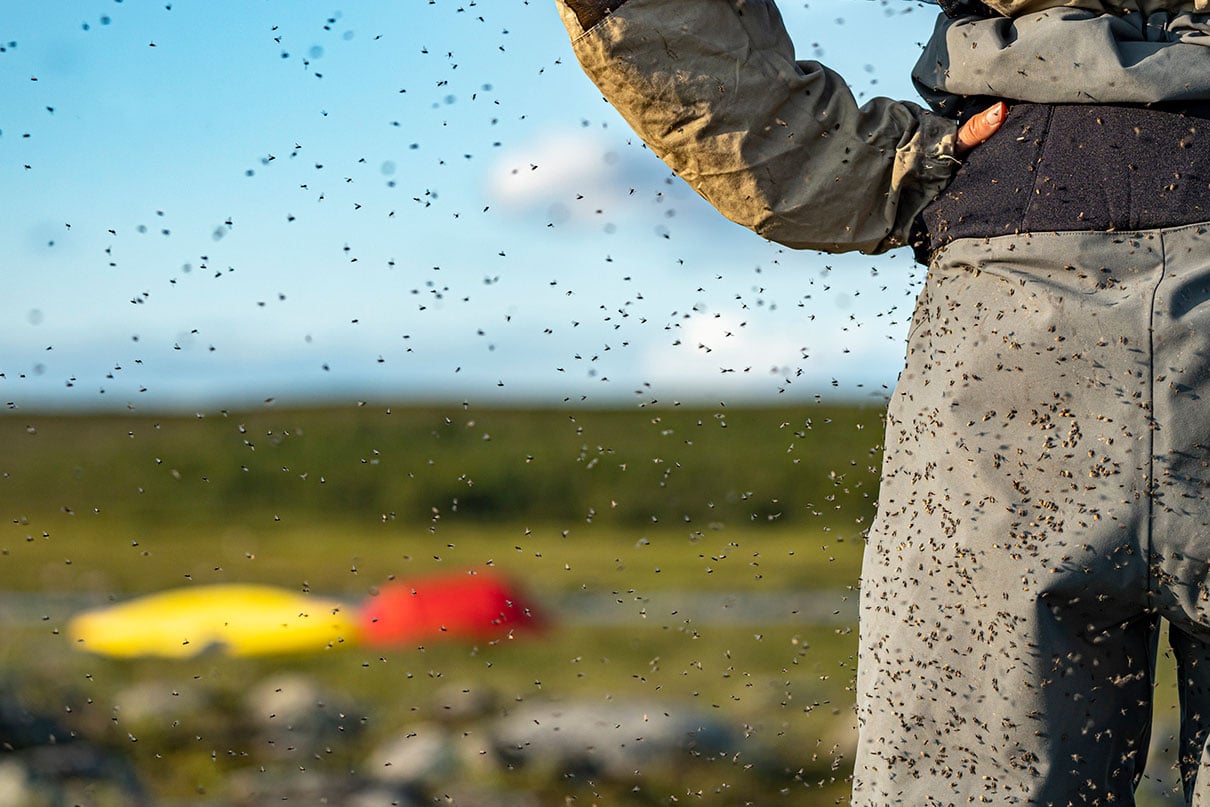
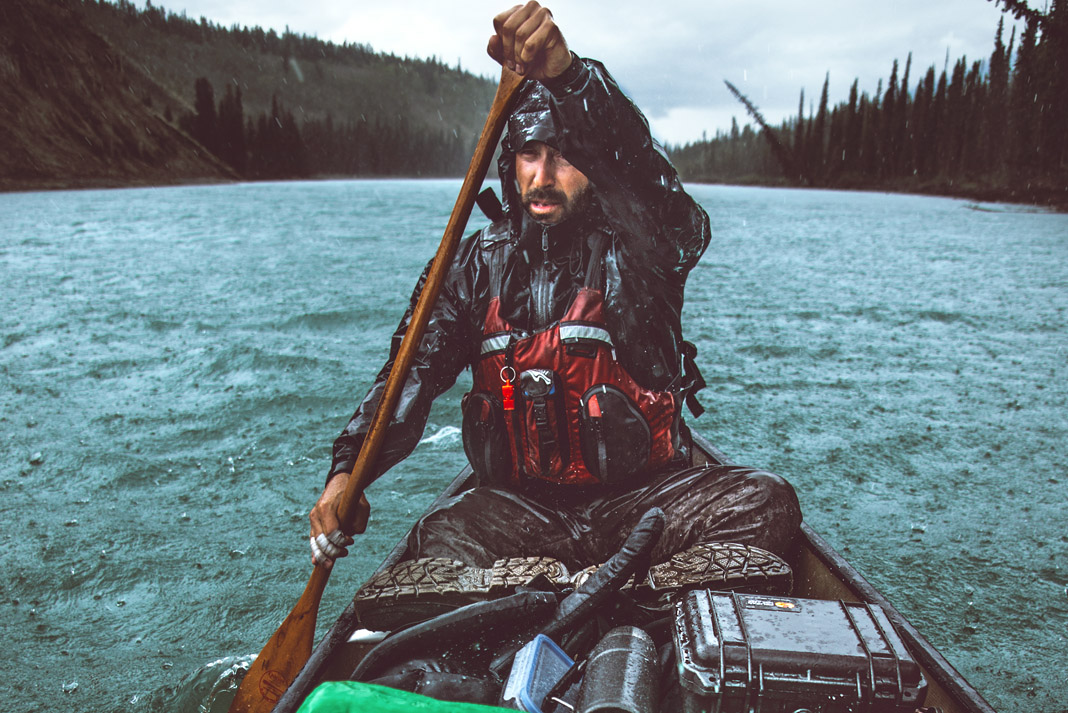
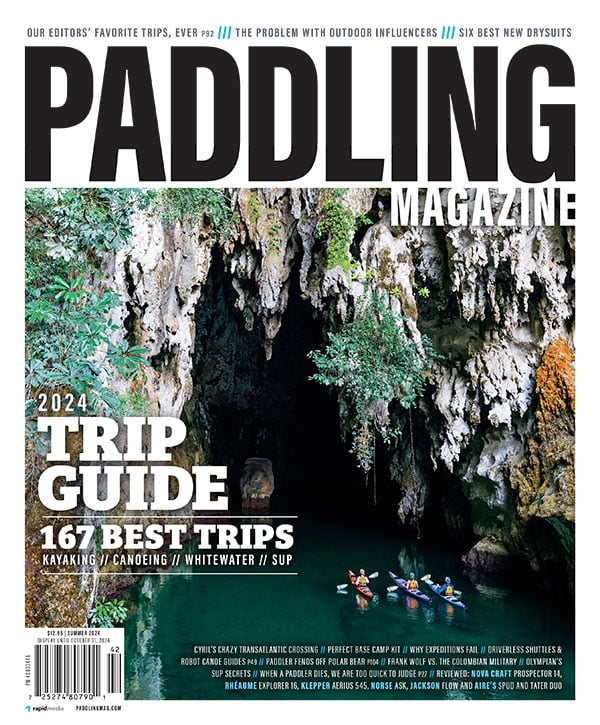 This article was first published in Issue 72 of Paddling Magazine.