Home Blog Page 84

Best Body Glove Paddleboards For 2026

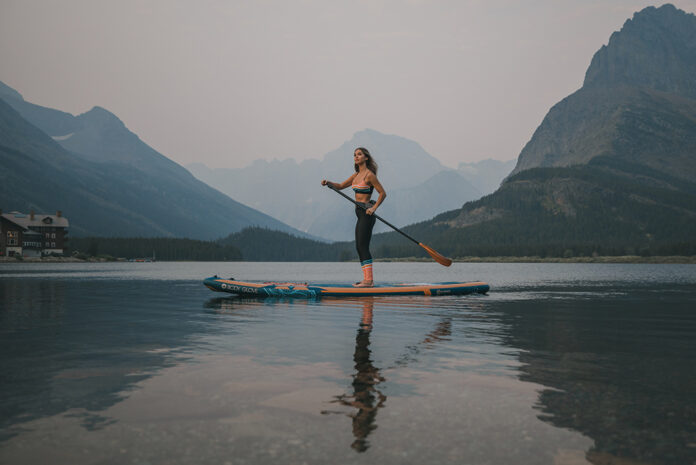
Woman on inflatable paddleboard on lake with mountain in background
Photo courtesy: Body Glove

Over the past few years, standup paddleboarding has grown in popularity and expanded into a growing number of households thanks to companies like Body Glove who make it convenient to toss a rolled-up inflatable paddleboard into a grocery cart on a big-box retail run. It’s through this strategy that Body Glove’s 11-foot Performer iSUP model become the top-selling paddleboard in the world in 2020, retailing at $499 CAD and changing paddleboarding from a niche sport to a recreational family activity.

With a mission to innovate, inspire and create happiness on the water, Body Glove standup paddleboards are family-friendly paddleboards with good stability and durability, fun colors, an integrated water bottle and paddle holder, and offer kid specific and tandem paddleboards for shared paddling experiences on board together. Body Glove paddleboards are a great choice for fitness enthusiasts, for paddling with kids or dogs, for taking a yoga practice onto the water and for surfing waves.

Check The Weather
  • Plan for changing weather conditions. Prepare for the worst case.
  • Don’t forget to check tide, currents, or river levels.

Body Glove paddleboards are targeted toward entry-level and intermediate paddlers looking for an affordable price and are becoming the brand of choice for recreational paddlers with a BJs Wholesale Club or Costco membership. Body Glove paddleboards are also sold through the Body Glove website, Atmosphere and Dick’s Sporting Goods.

Body Glove is a well-known American company that was founded by the Meistrell brothers in 1953 after the brothers developed wetsuits to keep them warm while playing along the coast of California. Body Glove is recognizable globally for its wetsuits and also sells swimwear, paddleboards, surfboards, inflatable kayaks and other water accessories. Body Glove was acquired by Marquee Brands in 2016 and since 2022 they have partnered with One Tree Planted to plant one tree for every paddleboard sold.
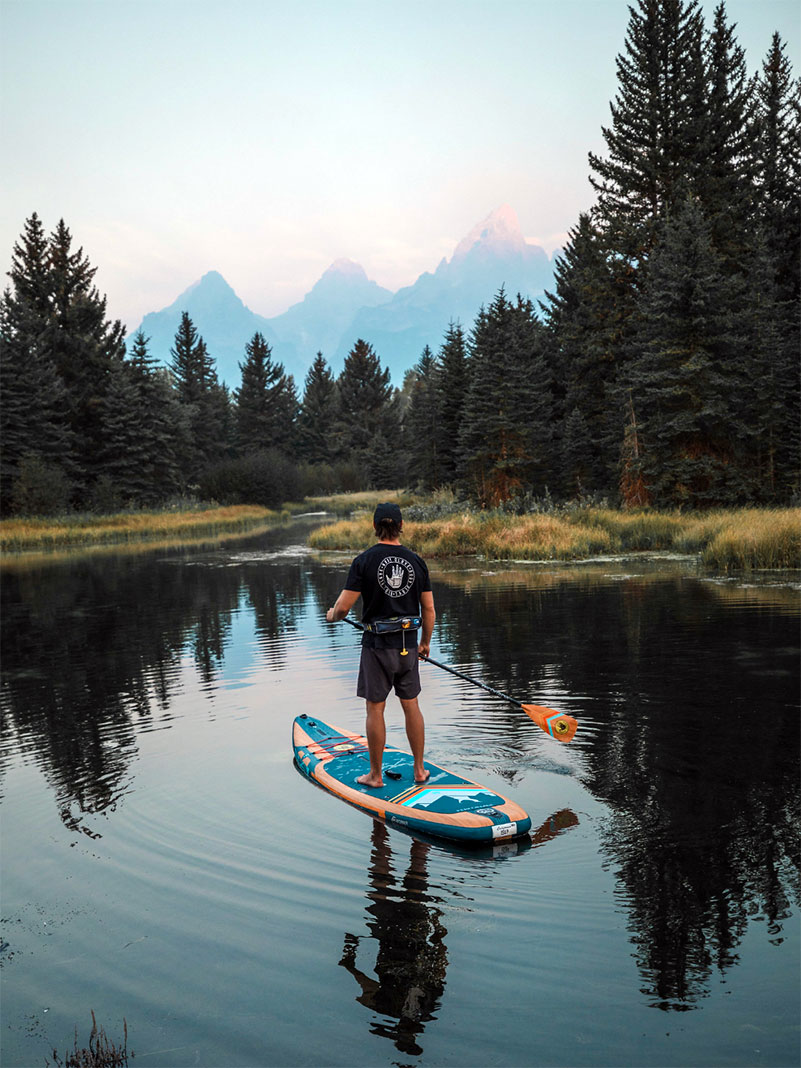
man standing on a Body Glove paddleboard in front of trees and distant mountains
Photo: Courtesy Body Glove

The Body Glove line of paddleboards includes over 20 models which are designed for various on-water adventures and range from 8 feet to 15 feet in length. Body Glove standup paddleboard models include a kids’ paddleboard, paddleboard-kayak hybrids called SUPYAKS, tandem SUPYAKS, pedal drive SUPYAKS, multiperson boards and a yoga and fitness board. Body Glove paddleboards can be used by novice to advanced paddlers for recreational paddling, playing on the water, fishing, tandem touring, and even for wake surfing or being towed behind a motorized boat.

Body Glove offers two composite rigid board models while the remainder of the Body Glove standup paddleboard line is comprised of inflatable paddleboards, called iSUPs. The Body Glove iSUPs are sold in a package which includes a three-piece aluminum adjustable paddle, a hand pump for inflation, a safety leash, a cellphone dry pouch, repair kit and a backpack for easy storage and transportation.

The word that comes to mind to describe Body Glove paddleboards is friendly. Between the fun branding and color scheme, the environmentally friendly and plastic-free packaging, the comprehensive user manual and board features (such as a paddle attachment in the carry handle), Body Glove has created a beginner-friendly set-up to welcome new paddlers into the sport.

Body Glove offers an accessible and fast customer service system through which you can text your questions to Body Glove and receive a quick and detailed response back. The Body Glove adjustable paddles are labeled with the recommended paddle length for your height, to remove any guesswork and ensure improved paddle technique.

Some key features of Body Glove standup paddleboards are a bumper under the nose of the board to protect it on beach landings, a GoPro mount, triple-layer side rails to strengthen and protect the edges and D-rings for gear attachment points. Body Glove paddleboards also have adjustable bungee tiedowns, an integrated towing clip at the front for unique towing capability, and carbon-reinforced stringers on the top and bottom of the boards to add strength and rigidity.

In my opinion, one of the most user-friendly features on the Body Glove models is that the central neoprene and velcro carry handle can be used to secure down a water bottle while paddling or the paddle while carrying the board. The Body Glove paddleboards generally lack carry handles at the nose and tail of the boards, and don’t feature removable fins and a long centre fin for improved tracking.

The warranty on Body Glove paddleboards is one year and is extended by an additional year at no additional cost upon registering the paddleboard at www.registermyboard.com.

Shopping for a used Body Glove paddleboard?

There are sure to be many used Body Glove paddleboards on the market as they’ve been in circulation for a few years now and have been sold in high volumes. While buying a used Body Glove paddleboard will certainly get you a deal and a lower price than buying new, the savings won’t be as big as you would get if you were purchasing a used paddleboard that was higher end with a more expensive retail price. So while there is still a savings advantage to purchasing a used Body Glove standup paddleboard, consider whether you’d like to invest a little more to purchase a new board and get the warranty as well.

When considering a used Body Glove paddleboard it’s important to check the integrity of the board by inflating it and ensuring that it holds pressure, in addition to looking over the seams and deckpad for any damage or bubbling. Some of the Body Glove standup paddleboards have dark graphics and coloring, which makes the paddleboard more susceptible to heat damage.

The dark colors absorb heat and can cause seams to burst as well as cause the material itself to deteriorate. Look the board over for sun damage, including color fading, and confirm that the previous owner had stowed the paddleboard in the shade. If there are signs of sun damage it might be best to pass on the purchase, since the integrity of the board could be compromised.

Wear The Appropriate Leash When Stand Up Paddleboarding
  • Always wear a leash on open bodies of water like lakes, bays, and oceans. Due to the risk of snags and entrapment, leashes should only be worn on rivers if they include a quick release attached to your life jacket.

In 2021, package upgrades to the Body Glove standup paddleboards included a mount at the nose of the board for camera installation, an oval paddle shaft for better ergonomic grip, translucent leashes to match board colors and a tow clip at the nose for the option to tow the paddleboard behind motorized boats.

The fins on Body Glove boards prior to 2018 are quite rubbery and flexible and manufactured at a lower quality. Since 2018, the fins on Body Glove standup paddleboard models have been improved with sturdier, rigid plastic.

Graphics have changed over the years on the deckpads and underside of the Body Glove paddleboards. If specific graphics, or features like a camera mount, tow clip, or rigid fins are important to you then take them into consideration when shopping for a used Body Glove paddleboard.

For more tips on what to look for when selecting a used paddleboard, read our article How To Buy A Used Paddleboard.

Body Glove paddleboard buying guide

With over 20 models of Body Glove standup paddleboards in the 2022 line up you are sure to find a board that catches your eye. To best help you find that board, this section will be broken down into the categories below.

The global favorite 11’ Performer model will be looked at on its own, followed by a general look at different categories corresponding to intended use. Note that all of the categories except the rigid paddleboards are comprised of inflatable paddleboards.

Body Glove 11-foot Performer

Let’s begin with the superstar of the Body Glove lineup—the 11-foot long Performer iSUP. The Performer is the Body Glove standup paddleboard model that draws the most attention and became the top-selling paddleboard in the world in 2020.

The Performer is a stable, all-around or touring board that’s 34 inches wide with a capacity of up to 320 pounds. It features many metal D-rings for gear attachments or cooler tie-downs, a beautiful wood grain pattern, a multi-functional carry handle and water bottle holder, a reinforced nose bumper and a cool mountain deckpad graphic.

For 2022, the Performer was designed to be more stable and faster than the previous model and the package now also includes an electric pump as well as the hand pump. The Performer is a durable board with reinforced rails and a soft and grippy deckpad. For families, wakesurfers and adventure seekers, the Performer is the paddleboard board to take you to inspiring places.
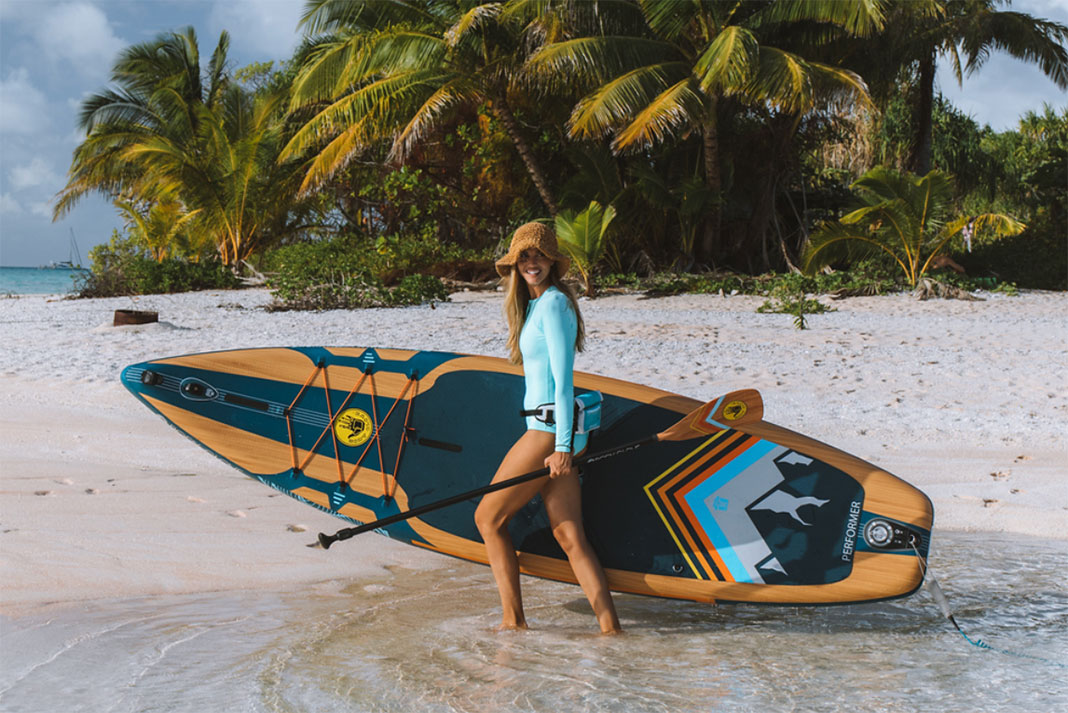
woman carries the Body Glove Performer paddleboard into the water on a tropical beach
Photo: Courtesy Body Glove

All-around Body Glove paddleboards

Body Glove has a handful of options for all-around paddleboards. Boards in the category don’t  typically excel in one particular use, but instead may be used for many different activities such as recreational flatwater paddling, fitness, family fun, gentle surf waves, and for playing at the beach.

There isn’t much variation in the specifications or shapes of the all-around boards as the lengths range from 10.3 feet to 10.5 feet and the weight capacity from 300 to 320 pounds. When choosing between the Navigator Pro, I-Skiff Pro, Cruiser Pro, Solo, Mantra and Alena your choice will likely largely be based on the look of the paddleboard and the design you like best.

Touring Body Glove paddleboards

Body Glove touring paddleboard options range from 10.5 feet to 11 feet in length. Ideally I prefer touring paddleboards to be a minimum of 12.5 feet for longer day trips or overnight adventures but the Performer, Raptor Pro, Mantra and Alena will all do the trick for covering reasonable distances on the water for a few hours at a time. The Mantra has more of an all-around shape while the other three models have a more distinctive touring style shape at the front of the nose.

The Body Glove touring paddleboards each have three rigid, non-detachable fins and multi-functional carry handles. The Performer and Raptor Pro models have more options for accessory or gear attachment with multiple D-ring attachment points and also have a reinforced nose bumper to protect the board from impacts.

Fishing Body Glove paddleboards

If you’re looking for a Body Glove paddleboard that you can take out for your next catch, the Mariner+ was designed with fishing in mind and includes attachment points for fishing accessories like rod holders, an action camera attachment and bungee storage. The SUPYAKs and pedal-drive SUPYAK models which are described below also make good options for both recreational and serious anglers to use as fishing paddleboards.

Kids Body Glove paddleboards

Body Glove offers an 8-foot-long paddleboard for kids called the Grommet which is sure to be a blast on the water. The Grommet is 27 inches wide and holds up to 120 pounds. The Grommet is four inches thick so it is lower to the water and features a bungee tie down and water bottle holder.

Yoga and fitness Body Glove paddleboards

At 10 feet in length and a stable 34 inches in width, the Oasis is the closest Body Glove paddleboard to an inflatable yoga mat. The beautifully patterned deck pad is the full length of the board for good traction while in yoga postures or fitness movements and features innovative and integrated handles at the nose and tail of the board to secure a paddle or hold a water bottle.

I haven’t seen this feature on other paddleboards and overall the Oasis is the Body Glove paddleboard that is at the top of my wishlist for yoga and fitness boards and my favorite of the Body Glove lineup. The Oasis can easily link to other Oasis models as well as the Kayoga model to secure a fleet together as a floating yoga studio.

The Kayoga is a slightly longer yoga and fitness paddleboard model at 10.5 feet in length and (similar to the Oasis) has an action camera attachment, although it also has a little more bungee tie down space for securing gear. The major difference between the Kayoga and Oasis is that the Kayoga is transformable into a kayak by securing on a kayak seat as well as removable footrests on D-ring attachment locations.

SUPYAK Body Glove hybrid paddleboard kayaks

If you can’t decide between paddleboarding and kayaking the good news is that you don’t have to. Body Glove has created four hybrid paddleboard kayak SUPYAK models that let you standup as well as sit down, so you’re able to enjoy the best of both worlds. The Porter SKX is 9.5 feet in length and, along with the 10.5 foot Dynamic model, seems to be the best SUPYAK option for anglers.

The Bullet Pro is a great recreational touring and all-purpose option rated at 300 pounds. The fourth model is the Kayoga, also mentioned above as a yoga and fitness paddleboard. All of the SUPYAKs include kayak and SUP conversion accessories including an adjustable paddle that functions for both paddleboarding and kayaking by swapping out a handle grip for a paddle blade.

Pedal drive Body Glove SUPYAKs

Pedal drive SUPYAKS are hybrid paddleboard kayaks that are powered by foot pedals and are a good choice for fishing or if you are looking for something that can be paddled but also pedalled. The Ripple 9.5-foot model is the shorter design which can be configured with or without the removable high-back kayak seat and pedal drive and has a capacity of up to 280 pounds.

If you are looking to bring kids on board or require more cargo space and bungee tie downs the Body Glove Drive is an 11-foot pedal drive SUPYAK that has a rating of 320 pounds.

Know The Local Hazards
  • Check navigation charts before you launch.
  • Check with those who have local knowledge of man-made and natural hazards, e.g. low-head dams; sweepers, strainers and undercuts; tides and currents; and rocks and shoals.

Two-person SUPYAKs

Body Glove is really catering to shared paddleboard adventures with six options in their lineup for two-person SUPYAKs. These models that can easily transform between kayaking and paddleboarding are the best choice for family and social excursions. There are really no major differences between the two-person SUPYAK models as they all have the same overall dimensions and 500-pound capacity rating, with the exception of the Tango which is 13 feet long.

In my opinion, Body Glove made four models too many in this category and you could flip a coin to pick between the I-Skiff Tandem Pro, Duet Pro, Twin Pro and Dynamic Deuce.

The most notable two-person SUPYAK is the Body Glove Tandem at 15 feet long and 32 inches wide. It was the winner of the SUP Connect 2021 Gear of the Year award for SUP/kayak hybrid. While it could be paddled alone, it is best enjoyed with a paddling partner out on a touring adventure with any configuration of none, one or two kayak seats added on.

Multi-person Body Glove paddleboards

When playing on the water, more people = more fun. Enter the Body Glove Crusader and Big Boy models, constructed as multi-person paddleboards to be enjoyed among family and friends.

At 15 feet long and 66 inches wide, the Crusader is rated for 1,000 pounds and is ideal for up to four people. The Crusader includes a front bungee storage area, two anchor attachment points, seven carry handles, attachment points for coolers, foot placement guides on the large deckpad and four adjustable three-piece paddles. The Big Boy multi-person iSUP has the same dimensions as the Crusader with slightly less rigidity and has similar features with the exclusion of the anchor attachment points and foot placement guides.

Rigid Body Glove paddleboards

Body Glove has two options for rigid standup paddleboards in the Legend 10’6” and the Explorer 10’6”, both with one removable centre fin and rated for 280 pounds. The rigid Body Glove paddleboards are a great choice for leisure paddles, family fun and playing at the cottage. The rigid boards are ready to go at all times as they don’t require any prep time.

The 24-pound Legend is durable and both puncture- and impact-resistant. It’s made with a polycarbonate and epoxy hybrid construction. With a displacement-style nose that cuts through the water and with cargo storage at the front of the board the Legend is a good option for adventures near home.

The Explorer is a full-length soft top board made of high-density EPS foam and an epoxy composite material, making the board durable and lightweight. It’s a versatile option for yoga, flatwater paddling and surf and weighs 23 pounds.

  • Are Body Glove boards good?

    Body Glove paddleboards are family-friendly, durable options which are good for beginner to intermediate paddlers who want a more affordable paddleboard option without compromising on a cool design, fun features and good quality. Body Glove designs paddleboards for flatwater touring, fishing, yoga and kids as well as hybrid SUP kayak models and options for tandem and multi-person paddleboards. Body Glove paddleboards have innovative features such as an integrated carry handle that can also secure a paddle or a water bottle.

    Don’t be fooled by the low wholesale prices that Body Glove paddleboards are sold for at big-box stores such as Costco and BJ’s. The prices for Body Glove paddleboard packages are exceptional and include a leash, dry pouch and adjustable paddle, making it easy to head right to the water (once you grab a PFD). The inflatable Body Glove standup paddleboards also come with a carry backpack, repair kit and manual hand pump for inflation.

  • Body Glove paddleboard weight limit

    The weight limit on a Body Glove paddleboard begins at 120 pounds for the 8-foot Grommet kids model. Body Glove rigid paddleboards are rated for 280 pounds. The inflatable Body Glove standup paddleboards have a weight limit of 300 to 320 pounds while the SUPYAKs and pedal-drive SUPYAKs are rated from 280 to 320 lbs. The tandem Body Glove SUPYAKs can hold up to 500 pounds on board and the multi-person iSUPs have a weight limit of 1,000 pounds.

  • How much does the Body Glove paddleboard weigh?

    The Body Glove Grommet kids paddleboard model weighs under 15 pounds while the majority of the non-specialized inflatable standup paddleboard models are in the low to mid 20-pound range. The Body Glove Oasis yoga and fitness paddleboard weighs 22 pounds and the best-selling Performer weighs 24 pounds. The weight of the Body Glove rigid paddleboards is also 24 pounds. SUPYAKs and two-person paddleboards weigh over 30 pounds with the Tandem coming in at 34 pounds. The multi-person Body Glove paddleboards weigh a whopping 80 pounds and will need a few sets of hands to carry.

  • How wide is a Body Glove paddleboard?

    Body Glove paddleboards are designed to be very stable with the inflatable all-around, touring, fishing and yoga paddleboards all having a width of 33 or 34 inches. The rigid Body Glove standup paddleboard models are 32 inches wide. The Body Glove SUPYAKs range from 31 to 34 inches wide with tandem SUPYAKs all designed at 34 inches in width. Body Glove multi-person inflatable paddleboards are 66 inches wide.

  • Where are Body Glove paddleboards made?

    Body Glove paddleboards and manufactured in China, just like the majority of standup paddleboards (BIC is an exception).

  • Body Glove paddleboard warranty

    The warranty on Body Glove paddleboards is one year from the date of purchase. If you register your paddleboard with Body Glove at www.registermyboard.com you will receive one additional year of warranty at no additional cost.

Education: Get Some!
  • Take a paddling safety course from the American Canoe Association (ACA), your local paddling shop or outfitter, or other reputable source.
  • Take a boating safety course from the U.S. Coast Guard Auxiliary, U.S. Power Squadrons® or your own state’s boating agency.
  • Take on-the-water skills training.

Body Glove paddleboard comparison

With so many choices on the market and lots of seemingly similar options in paddleboard product design it can be helpful to understand which brand excels at which features and to have guidance on choosing between different brands. This section explores paddleboard comparisons between Body Glove and other stand up paddleboard brands that might have similar offerings.

  • Body Glove paddleboard vs iRocker

    iRocker offers four all-around inflatable paddleboard packages which range from 10 to 11 feet in length while Body Glove’s line up consists of over 20 paddleboard models which have more specialized options including yoga, fishing, rigid boards and hybrid paddleboard kayak options. Both brands are good-quality paddleboards and have options for action mounts and lots of D-rings for attachments.

    If you want a storage backpack with roller wheels, removable fins, additional side handles near the nose and tail of the board, and a higher quality and lighter paddle, buy an iRocker. If you want a paddleboard that is more specialized toward the intended use, has a cool carry handle to secure a paddle or water bottle, has options to transform into a kayak, or will be used by two or more people to paddle at once, get a Body Glove.

  • Nautica paddleboard vs Body Glove

    Nautica paddleboards are available at Costco and Canadian Tire and don’t have much to offer in the way of excitement. They are fairly bare bones paddleboards compared to Body Glove. If you are looking for a simple-looking stable inflatable paddleboard that gets you out enjoying the water at an entry level price, get a Nautica. If you’d like to be able to choose from more features, functions and designs, get a Body Glove.

  • Isle vs Body Glove paddleboard

    Isle has paddleboard options in both inflatable and rigid boards in all around and touring shapes. If you want a rigid touring board, clean colorways, the ability to attach your paddle along the rail of the board, or to be able to make payments in installments over three to 12 months, get an Isle.

    If you want an all-around soft top board at a lower price, generally more bang for your buck with accessory options, or the better choice for a yoga, fishing, multiperson, or kids-specific paddleboard, get a Body Glove.

  • Roc vs Body Glove paddleboard

    If you want a durable, 10-foot all-around inflatable paddleboard at the lowest price with no added features on board, get a Roc. If you want any other length or style of paddleboard which looks cooler and has more features to take your paddling experience beyond the very base level, get a Body Glove.

  • Retrospec vs Body Glove paddleboard

    For an entry-level inflatable paddleboard that is simple and minimalistic for recreational paddling with family and friends, get a Retrospec. Retrospec is also a good choice for a cheaper kids paddleboard and multi-person standup paddleboard. For a paddleboard that is manufactured with better quality and is a more comprehensive standup paddleboard package, get a Body Glove.

  • Body Glove vs Serene Life paddleboard

    If you want an inexpensive, fully packaged inflatable standup paddleboard as an entry point option for novice paddlers, get a Serene Life paddleboard. If you feel like you’ll be more committed to stand up paddleboarding rather than just testing out the waters or are an intermediate paddler, get a Body Glove.

  • Hyperlite vs Body Glove paddleboard

    If you want a 10-foot, stable and lightweight all-around inflatable paddleboard with an electric pump, drybag, front deck handles and an integrated shoulder carry strap, get a Hyperlite. If you want any other options of paddleboard length, action camera mount, the ability to convert a SUP into a kayak, or a paddleboard that is designed specifically for touring, yoga, fitness, fishing or multi-person fun, get a Body Glove.
 

50 Years Of Running Rivers With NRS (Video)

When Bill Parks set out to start his own business, he wanted to see if he could put to real-world practice the lessons he had been providing students at business school.

“My experience was in an office. With the whole rows of people doing approximately the same thing I was doing. I wanted to see if I could do the things I was teaching,” explains Parks.

50 years later NRS is one of the most iconic brands in the paddlesports community.

[ See the latest NRS gear in the Paddling Magazine Buyer’s Guide ]

In this video from NRS, the river runner and founder of the brand discusses what he set out to accomplish in 1972. As well as what he believes the employee-owned company stands for a half-century later.

“Sometimes you guys tell me that I’m important to the company, and I pretend I believe them,” Parks continues. “It’s about the people at NRS now. It’s just an amazing company that I am really so happy to have been associated with.”


Inside Dianne Whelan’s Six-Year, 27,000-Kilometer Continent-Crossing Odyssey

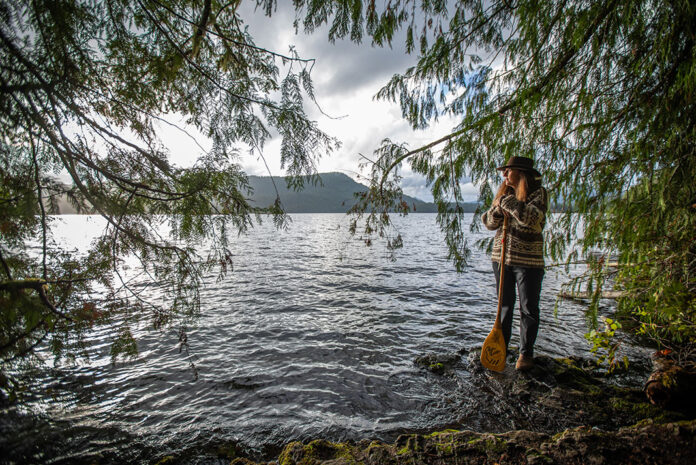
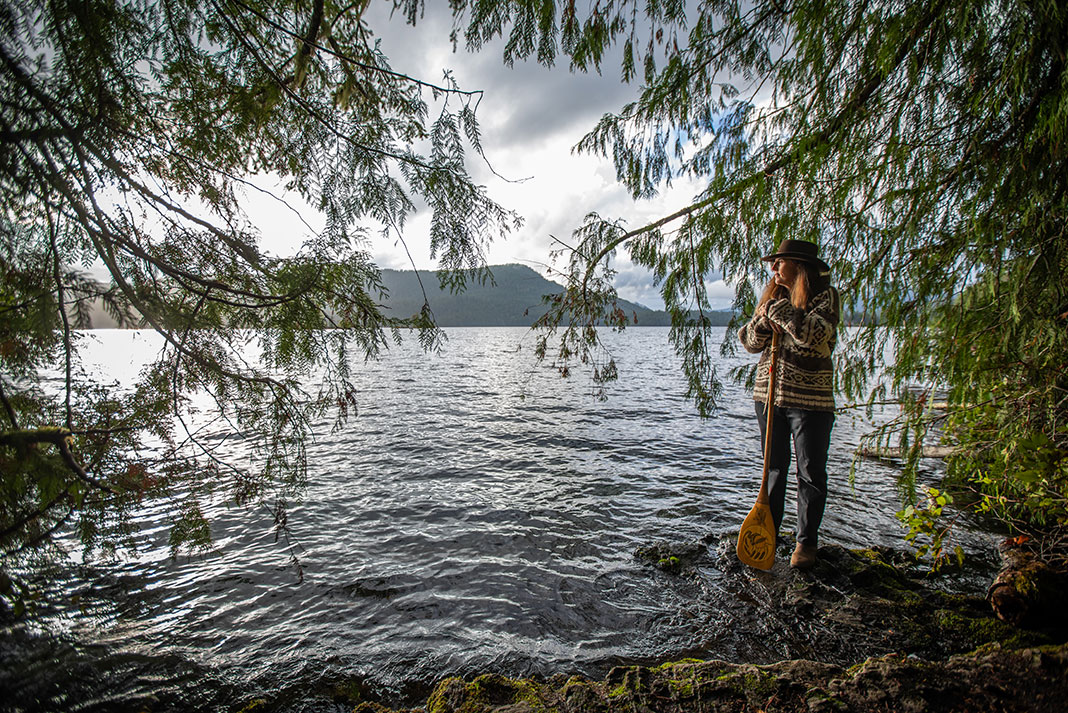
Dianne Whelan stands at the water's edge holding a paddle
Dianne Whelan spent six years traversing the longest recreational trail in the world—the 27,000-kilometer Trans Canada Trail—and filmed the experience. | Feature photo: Chelsea Brooke Roisum, CBR Photography

Dianne Whelan loves to say, “Good stories have many beginnings.” Her six-year cross-continent journey on the Trans Canada Trail (TCT) officially began in St. John’s, Newfoundland, in 2015 when she was 50 years old as a search for hope.

Her journey also began many years prior in rural New Brunswick when her mother lit a fire in the snow using birchbark. And it started in the early 1990s when she first heard about the TCT after her family donated to its creation.

It’s these beginnings that led Whelan to hike, bike, paddle, ski and snowshoe a 27,000-kilometer continuous line across Canada, traveling from Atlantic to Arctic to Pacific oceans. The TCT is the world’s longest multi-use recreational trail, and tracing it seemed an ideal project, following Whelan’s previous documentary films covering Mount Everest and the Arctic.


Inside Dianne Whelan’s six-year, 27,000-kilometer continent-crossing odyssey

Whelan initially planned for the route to take her roughly two years—or approximately 500 days. On her tenth day, she acknowledged she hadn’t gone as far as she’d hoped to make it on the first. So, she burned her schedule. Continuing at a slow and steady pace, on August 1, 2021, she became the first person to complete both the land and water trails of the TCT—six years after she started.

Eight-thousand kilometers of the TCT’s route spans lakes and rivers. Whelan paddled them in a 15-foot Nova Craft Canoe Prospector, using a kayak paddle to evenly distribute the effort on her body. Her canoe was named Kwimu (loon) by members of the Mi’kmaq community.

Dianne Whelan stands at the water's edge holding a paddle
Dianne Whelan spent six years traversing the longest recreational trail in the world—the 27,000-kilometer Trans Canada Trail—and filmed the experience. | Feature photo: Chelsea Brooke Roisum, CBR Photography

“The [paddling routes] were my favorite part of the journey,” she says. “They brought me into traditional Indigenous communities. In some cases, I spent weeks to facilitate the reconciliation part of the journey, which was to listen, learn and witness.” She describes her journey not as an athletic achievement, but an ecological pilgrimage to honor the land and water, and to pay respect to Indigenous people.

On the shore of Lake Superior, she joined a week-long Ojibwe ceremony with a four-day fast. “I feel immense gratitude to have had those experiences. They made the journey profound,” she says.

Lessons to learn from the wilderness

Some aspects of her journey sound idyllic: a moose in the river near her tent, drinking the water she paddled on, and watching the northern lights along the Mackenzie River. But reality checks came often: paddling past forest fires, breaking ice with a hatchet, and learning of a fellow paddler drowning and another being attacked by a grizzly bear.

“To survive out there, you have to learn from mistakes,” Whelan says. “Adaptation, connection and timing are key. I didn’t survive because I’m special or smart or better. And there’s always an element of luck.”

“Every woman who goes off into the woods by herself is going to face fear, but in the six years I was out there, I never met anyone who posed a threat to me,” she adds. “Every fear I had, I packed out there—they weren’t in the landscapes, they were in me.”

Much of her journey was solo, but many hands helped along the way, including filmmaker Ann Verrall, who filmed portions for the upcoming documentary about the journey, titled 500 Days in the Wild. During the final 200 kilometers, Whelan paddled sections of the British Columbia coast with two Indigenous women, with her partner, and also by herself on the Salish Sea.

“Those last 20 minutes, I was bawling my eyes out,” Whelan says.

Welcomed ashore at journey’s end

Upon arrival at the end of the trail in Victoria, British Columbia, she followed traditional Coast Salish protocol. Cecelia Dick and LaVatta Frank, daughters of the late Pally Dick, Hereditary Chief of the Songhees, came to greet her. “I said who I was, the journey I had been on, and asked permission to come ashore. I gifted them tobacco wrapped with birchbark and cedar,” Whelan says.

“They welcomed me to shore. We walked to Mile 0 of the trail, held hands, and they sang the warrior song. Then they said, ‘We are one.’ These are people who are digging up graves in the back of residential schools right now. And they are there to honor this journey, and then to say that: ‘We are one.’ The Earth is our country. We are one.”

At the end of her journey, Whelan says she discovered what she was looking for: “I found hope.”

Find more about Dianne Whelan’s upcoming film and book at 500daysinthewild.com.

This article was first published in the Early Summer 2022 issue of Paddling Magazine. Subscribe to Paddling Magazine’s print and digital editions, or browse the archives.


Dianne Whelan spent six years traversing the longest recreational trail in the world—the 27,000-kilometer Trans Canada Trail—and filmed the experience. | Feature photo: Chelsea Brooke Roisum, CBR Photography


Kayaking Team Breaks Record With One-Day Descent Of Bridge Creek And The Stehekin River

Photo Courtesy of PUNCH GUNK

LOS ANGELES – Nick Terry, Rob Scanlon, Non Worasilpchai, Austin Amon, and Sage Ebel successfully completed a one-day kayaking descent of North Cascades National Park’s Bridge Creek, setting the fastest known time for the route. Typically completed over three days with opportunities for sleep and recovery, the team finished the famous whitewater kayaking course in a remarkable 15 hours on Saturday, July 30, 2022.

The recent heatwave in the Seattle area caused the team to jump into action sooner than expected. The kayakers had planned a scouting trip for the same weekend. As they monitored the conditions, they realized their window of opportunity would soon be closed. They headed into the national park and camped at the trailhead on Friday evening. At 4 a.m. on Saturday, they began their hike to the water entry point. The team navigated the 25-mile run down the South Fork tributary and North Fork confluence through the Stehekin River, and finally the last whitewater of Tumwater Canyon. The kayakers arrived in the town of Stehekin at 7 p.m., clocking the expedition from start to finish at 15 hours. The team shared hugs and screams of triumph, noting that even they were skeptical in the days leading up that the conditions would align for success.

The team was the inaugural recipient of the Punch Gunk Go Get It Grant, which earned them $2000 in support from Punch Gunk, an award-winning performance therapeutics company shaking up the pain relief and workout recovery industry. Punch Gunk plans to open applications for another grant in January 2023.

“From the moment we received Nick, Rob, Non, Austin, and Sage’s application, we had complete faith that they would pull off this record-setting feat. Their careful planning, hard training, and daring spirit have helped them make history,” said Cameron McIntyre, co-founder of Punch Gunk. “This is exactly the kind of epic adventure we hoped the Go Get It Grant would allow athletes to embark on. We couldn’t be prouder to be a small part of their remarkable accomplishment.”

“We are thrilled to have realized this idea. In the past few years, there’s been increasing interest in executing traditional multi-day kayak trips within a single day. I appreciate this concept because it provides a medium for folks to push themselves, without just upping the difficulty and danger of the whitewater,” said Terry. “It’s been inspiring to see epic one-day trips on rivers like the Stikine and Middle Kings, and solving the unique logistical puzzle of Bridge Creek is our take on this genre of mission. We’d be thrilled to see others attempt it as well!”

Terry, Scanlon, Worasilpchai, Amon, and Ebel hail from Seattle, Washington where they train year-round on the most challenging and renowned sections of class V whitewater in the country, such as the Little White Salmon River, Robe Canyon of the Stillaguamish River, and Tumwater Canyon of the Wenatchee River. Each team member is a strong athlete and expert kayaker with years of experience. They also climb, run, bike, and ski in the offseason.

Punch Gunk was imagined, created, and is headquartered in Los Angeles, California. Well known in the mixed martial arts community, Punch Gunk’s pain-relieving lotion and recovery bath bombs help athletes of all sports and abilities fight the toughest pain using natural extracts with exceptional anti-inflammatory and pain relief properties. They are FDA compliant and certified as safe by both the United States and World Anti-Doping Agencies.

To learn more about Punch Gunk, visit www.punchgunk.com and follow the brand on FacebookInstagram and Twitter.


About Punch Gunk

Based in Los Angeles, Calif., Punch Gunk is an award-winning performance therapeutics company that develops innovative approaches to pain relief and workout recovery. Both Punch Gunk pain-relieving lotion and Muscle Therapy soak synthesize the best of science and nature to provide relief naturally and effectively. Punch Gunk products are available on their website and on Amazon. To learn more about Punch Gunk, visit www.punchgunk.com and follow the brand on FacebookInstagram and Twitter.

Photos: Courtesy Punch Gunk


Recreational Kayak Review: Wilderness Systems Tarpon 100

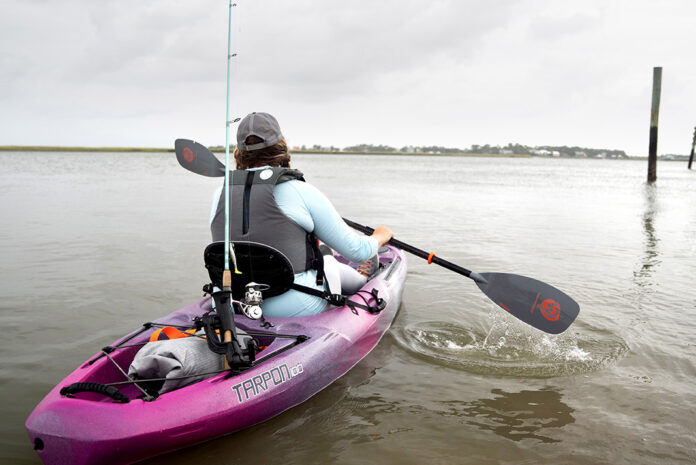
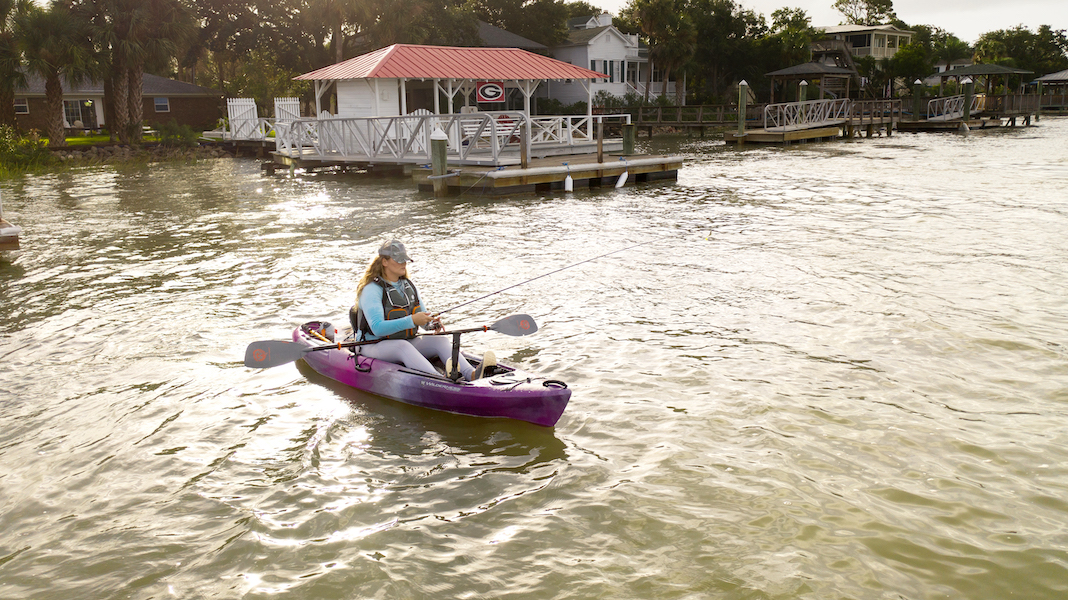
Woman paddling purple sit-on-top kayak
Photo: Courtesy Wilderness Systems

The Wilderness Systems Tarpon 100 kayak offers superlative performance in a compact and versatile package. This kayak lives up to its cred as a sit-on-top “legend” with a design heritage dating back 20 years. Tarpon 100 paddlers highlight this boat’s exceptional performance in a variety of recreational kayaking applications, including day paddling, kayak fishing and overnight touring.

Though this model has been discontinued (replaced by the slightly longer Tarpon 105), the Wilderness Systems Tarpon 100 is still widely available on the used market. This kayak remains a top pick for recreational paddling, with comfortable outfitting and a hull design that performs in a variety of conditions, from flatwater to easy surf.

On the water with Wildy’s Tarpon 100

Wilderness Systems Tarpon 100 Specs
Length: 10’ / 3 m
Width: 30.5” / 77.5 cm
Weight: 55 lbs / 25 kg
Capacity: 325 lbs / 147 kg

Performance

The Wilderness Systems Tarpon 100 sit-on-top kayak combines moderate speed and tracking with good maneuverability. These performance characteristics are all related to the kayak’s rocker, that is the amount of curve across its bow to stern hull profile.

In other words, rocker describes how much “banana” shape there is to a kayak hull. Highly rockered kayaks turn easily at the expense of glide and speed; meanwhile, kayaks with modest rocker (A.K.A. straight keel line) are more efficient to paddle in a straight line, at the expense of turning capacity. You’ll appreciate a straight-tracking kayak on open water and in wind and waves; while more rocker provides better maneuverability for river paddling.

The Wilderness Systems Tarpon 100 is billed as an “all around” recreational kayak, and the manufacturer managed to achieve a good balance of paddling characteristics for both flatwater lakes and smooth-flowing rivers. You may prefer one of the longer Wilderness Systems Tarpon models if you’re looking for a more efficient hull design primarily for lake paddling.

Check The Weather
  • Plan for changing weather conditions. Prepare for the worst case.
  • Don’t forget to check tide, currents, or river levels.

Additionally, the Wilderness System Tarpon 100 hull features sharp entry lines at the bow to part the water smoothly and track efficiently and quietly—a great feature for wildlife photography enthusiasts and anglers. The 30.5-inch width imparts reassuring stability, even for beginners. Kayak anglers wondering can you stand up in a Tarpon 100 will find plenty of stability, but not quite enough deck space for standing; sit-down casting is advised.

With 325 pounds of capacity there’s enough volume for all your fishing kit, day gear or even overnight camping equipment. In short, the Wilderness Systems Tarpon 100 sit on top kayak has something for everyone and won’t hold you back as your skills and paddling aspirations grow.

Woman fishing from purple sit-on-top kayak
Photo: Courtesy Wilderness Systems

Market and demographics

The Wilderness Systems Tarpon 100 beginner kayak is stable and comfortable to paddle yet also delivers enough performance to grow your skills in dynamic paddling conditions. If you’re looking for a versatile, made-in-USA recreational kayak the Tarpon 100 is an outstanding choice. It comes standard with clever features that make kayaking easier and more enjoyable—just bear in mind its open deck makes it best suited for use in warm weather and water conditions.

For kayak fishing, Wilderness Systems Tarpon 100 anglers describe it as an “advanced open water fishing kayak,” praising its speed and handling. The Tarpon 100 is best described as a crossover kayak. It includes few angling-specific features so diehard anglers will want to make their own modifications—such as rod holders mounted to accessory rails—to improve the Tarpon 100 as an angling kayak.

Comfort

Comfort and paddling efficiency go hand in hand with the Wilderness Systems Tarpon 100. Unlike many other recreational sit-on-top kayaks, the Tarpon 100 features the same adjustable foot rests found in sit-inside kayaks, which enable the paddler to make a solid connection to the boat and use the body’s larger muscle groups—including the core and legs—for stronger paddling over longer distances.

Other Wilderness Systems Tarpon 100 reviews praise the comfort of its adjustable seat, which is mounted low in the kayak for better stability and features airy, quick-drying 3D foam and mesh construction.

About the Tarpon 100 kayak

Design

Design features and details

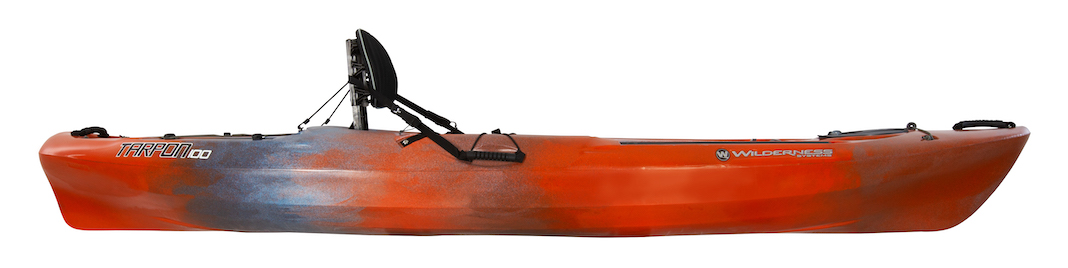
Unlike many other recreational kayaks, whose blunt bows tend to push water like tugboats in the water, the Tarpon 100 features a narrow entry at the bow—a sleek look that’s reminiscent of Wilderness Systems’ touring kayaks. Not only does this allow the kayak to move in virtual silence as it slices through the water, it also makes the overall paddling experience easier with less resistance.

Meanwhile, the Wilderness System Tarpon 100’s flared sides shed waves and make it feel super stable in choppy conditions, drawing upon a design feature known as “secondary stability”—another attribute typical of more advanced sea kayaks. Combined, the Tarpon 100’s sleek entry and flare are the foundation of a seaworthy design.

Side view of orange and grey sit-on-top kayak

Material and construction

Like many other recreational kayaks the Wilderness Systems Tarpon 100 is constructed of rotomolded polyethylene, a durable plastic that stands up to abuse and is easy to maintain. Wilderness Systems has created a resilient kayak that’s also stiff and efficient to paddle due to the flared hull shape.

Design trends

The Tarpon 100 is the smallest sibling of a broad, best-selling lineup of made-in-USA recreational sit-on-top kayaks from Wilderness Systems, including the Tarpon 120, Tarpon 140 and Tarpon 160. The difference in the models is mainly the length, ranging from 10 feet for the Tarpon 100, to 16 feet for the Tarpon 160.

The Wilderness Systems Tarpon 100 has since been replaced by the new Tarpon 105. The Tarpon series is Wilderness Systems’ all-around lineup of sit-on-top kayaks; these versatile models work equally well for recreational paddling and kayak fishing.

Wear A Life Jacket
  • Everyone, even strong swimmers, needs to wear a life jacket at all times when on the water. It is extremely difficult to put a life jacket on once you fall into the water. Even a light wind can blow any paddlecraft away from you, faster than you can swim.
  • Always wear a USCG-approved Level 70 or Type III life jacket designed for paddling.

Wilderness Systems Tarpon 100 outfitting and accessories

Outfitting on any kayak begins with the seat. In this regard, the Wilderness Systems Tarpon 100 seat delivers industry-leading comfort and adjustability. The standard Phase3 AirPro seating adjusts up and down with an intuitive array of straps and levers, enabling all-day comfort regardless of your body shape and size. The clever design carries over to the seat material, which is quick-drying and airy.

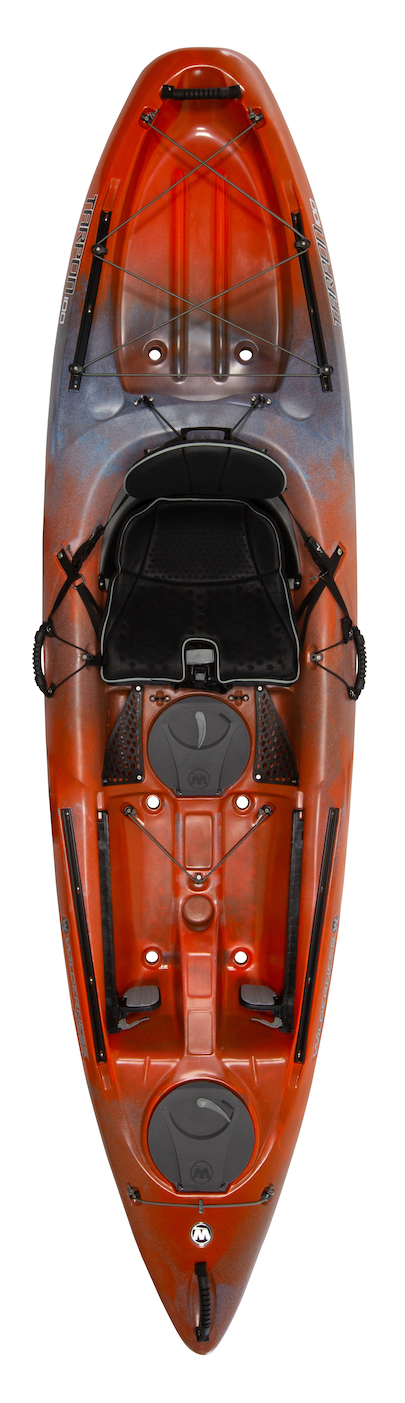
The Wilderness Systems Tarpon 100 is equipped with four accessory rails—two in the bow, and two in the stern—which provide solid lash points for deck-mounted gear and convenient attachment points for action cameras, fishing rod holders and your GPS unit. The standard foot rests are reminiscent of those on touring kayaks, with easy adjustability (simply squeeze the lever on the back of the foot rest). This style offers more range of adjustment and greater support than the molded foot rests on other sit-on-top kayaks.

Overhead shot of sit-on-top kayak

Finally, there’s plenty of storage, with a dry, seven-inch round hatch in the bow and a smaller accessory hatch positioned between the paddler’s legs. A spacious well in the stern of the kayak comes with bungees to secure a large duffel, making it possible to take the Wilderness Systems Tarpon 100 on an overnight trip.

Accessories including a rudder kit are available from Wilderness Systems. A foot-operated rudder makes the kayak easier to steer and handle better in windy conditions—a worthwhile upgrade if you intend to paddle more seriously. The kit includes foot braces and cables to control the rudder, which attaches to the stern of the kayak.

Other popular add-ons include the Wilderness Systems Kayak Krate, which provides dry storage for fishing tackle and camping gear in the stern well, as well as the Wilderness Systems Kayak Kart for moving the Tarpon 100 from your vehicle to the water’s edge. Kayak anglers will also love the Wilderness Systems Universal Trolling Motor Mount, which attaches easily and provides support for up to a 3 horsepower motor.

Looking for Wilderness Systems Tarpon 100 scupper plugs? These and other replacement parts are available from the manufacturer. In fact, 45 replacement parts (ranging from hatch covers to foot rests and fasteners) are available from Wilderness Systems to keep your Tarpon 100 paddling like new.

Opportunity for modifications

Looking for tips on how to modify a Wilderness Systems Tarpon 100? Your best place to start is with the kayak’s accessory rails, located in the bow and stern. It’s easy to use these features as mounting points for fishing rods, cameras and GPS units. Another easy modification is to retrofit your Tarpon 100 with the convenient MagnaTech water bottle holder.

The Wilderness Systems Tarpon 100 is an outstanding choice for anglers looking for a blank canvas to create the ultimate kayak fishing rig. Start by adjusting the stern bungees to accommodate a tackle crate and go from there, adding practical DIY features like an anchor trolley and fish finder.

Warranty

Like many other kayak manufacturers, Wilderness Systems offers a limited lifetime warranty that covers manufacturing defects in the hull and deck. Parts, accessories and outfitting come with a one-year warranty.

How it compares

Wilderness System Tarpon kayaks date back to 2001, with the Tarpon 100 being the shortest model in the lineup. The popular Tarpon 100 was replaced in 2020 with the upgraded Wilderness Systems Tarpon 105, which measures 10’6” and is slightly wider than its shorter sibling.

There’s plenty of competition in the market for sit-on-top kayaks. Wilderness Systems shines for its attention to detail and clever design features, particularly in its outfitting. The Tarpon 100 is a safe kayak for a variety of applications including paddling on lakes, rivers, oceans and easy surf.

Know The Local Hazards
  • Check navigation charts before you launch.
  • Check with those who have local knowledge of man-made and natural hazards, e.g. low-head dams; sweepers, strainers and undercuts; tides and currents; and rocks and shoals.

The Wilderness Systems Tarpon 100 costs more than recreational kayaks found in big box outlets but you get what you pay for in terms of paddling performance and comfort.

  • Wilderness Systems Tarpon 100 vs 120

    The 10-foot Wilderness Systems Tarpon 100 is more compact and maneuverable than the longer, 12-foot Tarpon 120 with somewhat less hull speed and storage space. You may prefer the Wilderness Systems Tarpon 120 if you’re a larger paddler, looking for more glide or aspiring to overnight touring—this bigger kayak simply features more space and its longer waterline length makes it faster on the water.

    The newest, 2020 edition of the Wilderness Systems Tarpon 120 features upgraded outfitting and a larger bow storage hatch. You’ll also have far more room on board a Tarpon 120 to bring your canine companion along for the ride.

  • Wilderness Systems Tarpon 100 vs 105

    The Wilderness Systems Tarpon 105 is an upgraded version of the original 100, with an extra six inches of length and two inches of width added to the same sleek, flared hull. Paddling performance is quite similar; the difference is in the outfitting. The Tarpon 105 was released in 2020 to replace the Tarpon 100 with even more creature comforts: a removable storage dry box; a mesh cover for the stern storage well; and a rectangular bow storage hatch that’s easier to load.

    Is the Wilderness Systems Tarpon 105 worth buying new? Paddling performance is very similar so the decision comes down to budget and your desire for comfort features out of the box. If you have the aptitude for DIY upgrades and don’t mind paddling a late model kayak, you may be able to score a great deal on a used Tarpon 100.

  • Wilderness Systems Tarpon 100 vs Perception Pescador

    The Perception Pescador 10 is a solid alternative to the Wilderness Systems Tarpon 100 with similar paddling characteristics, comfort features and range of accessories. Both kayaks feature the same 325-pound capacity and all-around paddling versatility, suitable for calm water (lakes, rivers and ocean) and easy surf. The Pescador 10 measures slightly longer at 10’6”, offering a bit more deck space. The Tarpon 100 comes standard with four accessory rails, while only the fishing-specific Perception Pescador Pro 10 comes with two accessory rails.

    Thinking about the Wilderness Systems Tarpon 100 vs. the Perception Pescador Pro 10? You’ll find better out-of-the-box fishing performance with the Pescador Pro 10, including built-in rod holders and an inset to mount a fish finder. The Pescador Pro 10 seat is on par with the Tarpon 100’s Phase3 AirPro, with the added bonus of being removable.

    If price is a big decision point, consider the Perception Pescador a better value than the Wilderness Systems Tarpon 100, with a slightly shorter range of features.

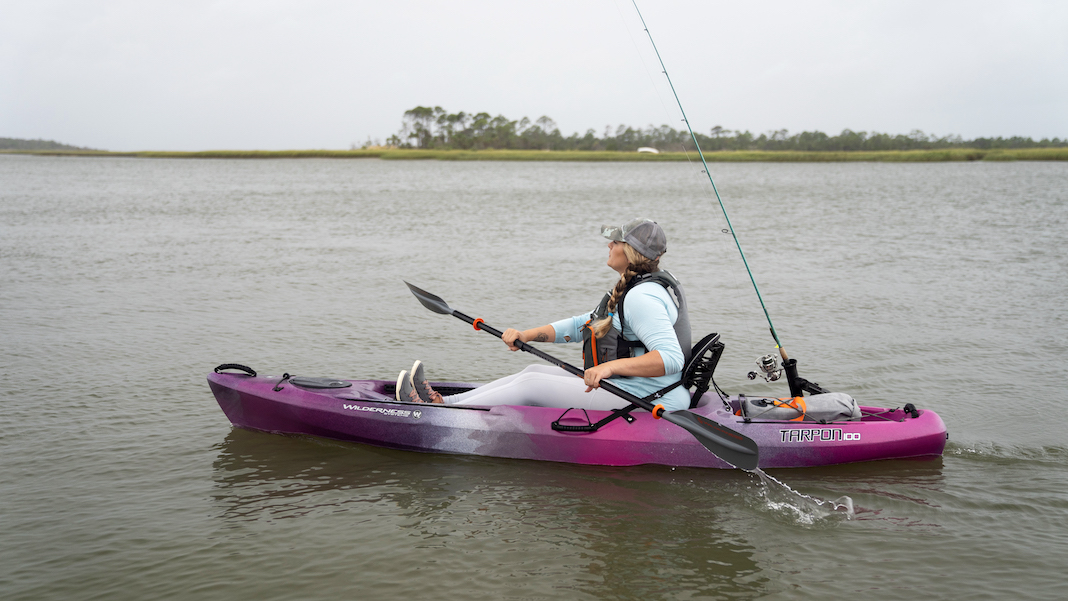
Woman paddling purple kayak with fishing rod in holder on back
Photo: Courtesy Wilderness Systems

Where to buy the Tarpon 100

Regardless of how many times you Google REI Wilderness Systems Tarpon 100, you won’t find this kayak in retail stores. Instead you’ll have to search Craigslist and Facebook marketplace for a used Tarpon 100. Take a serious look at the upgraded Tarpon 105 kayak if you’ve got the budget for a new boat; it’s available through Wilderness Systems dealers across North America, including REI stores across the United States and independent paddlesports retailers.

Tarpon 100 pros and cons

Pros

  • Versatile and suitable for paddling in a range of calm water environments
  • Forgiving design strikes a good balance between glide and maneuverability, with performance characteristics that will grow along with your paddling skills
  • Outstanding comfort for most sizes of paddlers
  • Great choice for anglers willing to make a few do-it-yourself upgrades to the standard hull

Cons

  • Priced somewhat higher than comparable sit-on-top kayaks (although that’s justifiable given the standard accessories)
  • You’ll have to scour the used market for a Wilderness Systems Tarpon 100 kayak—or shop new for its replacement, the Tarpon 105

Related articles

Wilderness Systems kayak reviews

Sit-on-top recreational kayak reviews

Sit-on-top fishing kayak reviews

SEE ALL KAYAK REVIEWS


The Joy Of (Self-Imposed) Suffering

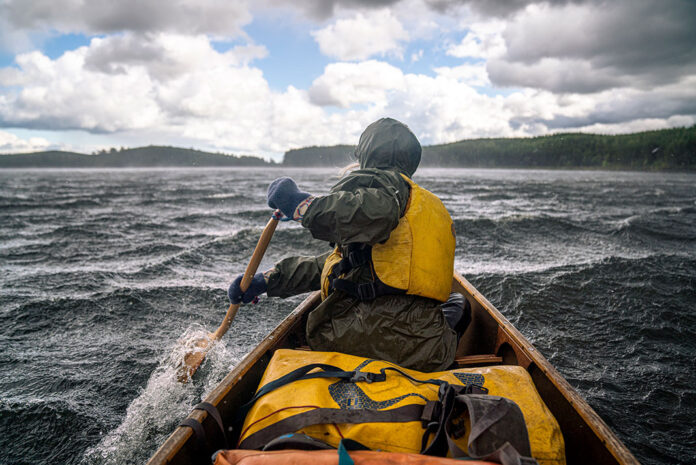
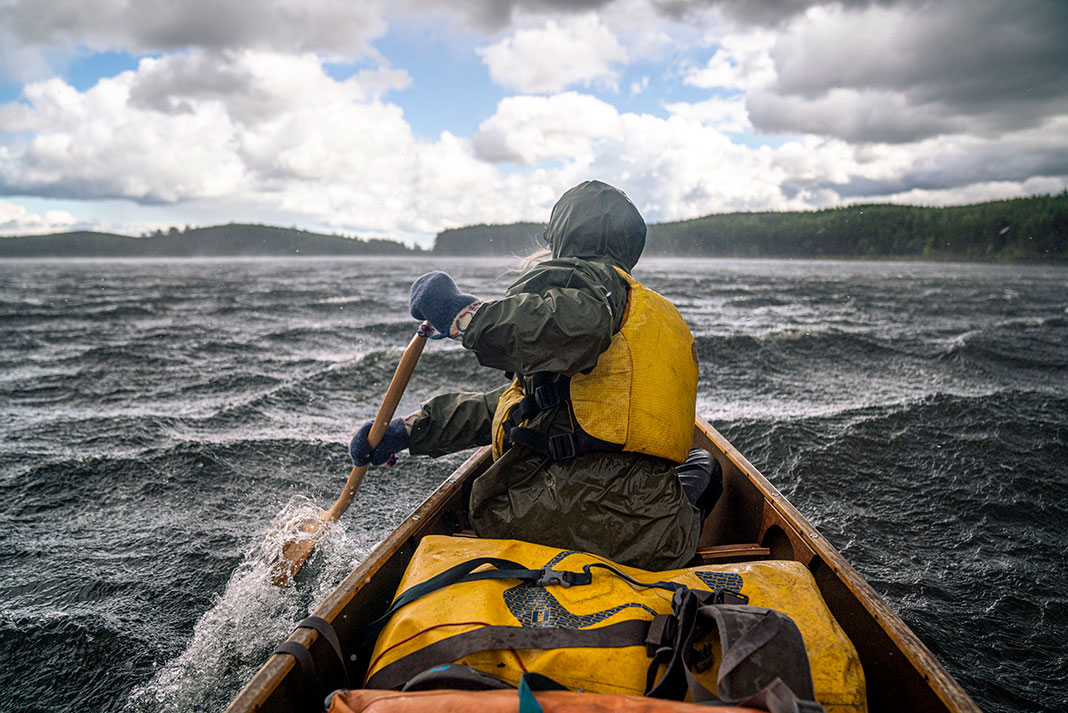
person in rain gear paddles a canoe across a choppy lake
Hurts so good. | Feature photo: David Jackson

There’s a story circulating about a guy who accidentally zapped his manly bits with bear spray. How these two items came into communion boggles the imagination. Being naked on a campsite is understandable, but being naked with the bear spray safety off? Maybe there was a bear who got left out of the story. Either way, the image of randy chappie doing the danse frénétique about tents and guy wires with a capsicum inferno raging just south of the equator does nicely open the topic of self-imposed suffering and canoe trips.


The joy of (self-imposed) suffering

In 1980, Don Starkell packed up his two sons and paddled 12,000 miles from Winnipeg, Manitoba, to the mouth of the Amazon River. Son Jeff had the good sense to bail in New Orleans, but son Dana went the distance and lived to tell the tale. Along the way, as recounted in Starkell’s classic Paddle to the Amazon, the lads had a dizzying variety of close calls, including a mock firing squad execution enacted by a bunch of bored Central American guerillas.

However, the tribulation lingering in my mind is an ankle scrape, exacerbated over time by saltwater, malnutrition and exhaustion that roiled and festered until Starkell’s ankle bone was visible in the crater.

person in rain gear paddles a canoe across a choppy lake
Hurts so good. | Feature photo: David Jackson

Lest you get the idea this behavior is a uniquely male predilection, recall the story of Victoria Jason, who had the notion kayaking through the Northwest Passage would be a good idea. In cutting the corner from Naujaat to Uqsuqtuuk in arctic Nunavut—a 450-kilometer drag in winter conditions—her body consumed every scrap of available fat. It then started devouring muscle, which affected her entire frame, including her heart. This left Jason so compromised she had to take a couple of seasons off to regain strength before returning and completing the trip.

[ Plan your next canoe adventure with the Paddling Trip Guide ]

Suffering builds character, right?

Jason and Starkell—I don’t know about fireball guy—have since passed of causes unrelated to their paddling journeys. However, when either wrote or spoke about their expeditions, they both often said tough conditions are the crucible of character formation. And they’re not the only ones.

Wise men and women of every tradition claim suffering can bestow clarity. “If you want to know the truth about the universe, about the meaning of life, and about your own identity, the best place to start is by observing suffering and exploring what it is,” writes Israeli self-help sage Yuval Noha Harari in his book, 21 Lessons for the 21st Century.

Immersed in nature in an unmediated encounter with the weather, the world and your frailties, a canoe trip is uniquely poised to do all Harari says, while also nurturing growth through the many possible trials and tribulations of the trail.

Paddling trips are good for the soul

One of the best things about paddling trips is taking what you think you might need to solve the problems of the days ahead and committing to the process of testing the idea by crossing the threshold between the relative safety and predictability of home to the relative risk and unpredictability of the wild. Often things don’t go quite as planned. Enter discomfort, difficulty, a little self-imposed suffering, and a lot of learning.

This can happen on trips of any length, of course, but the longer, the merrier. Experiencing a variety of topography, watersheds, weather conditions, and even the moods of travel mates all increase your chances of earning a hard-won lesson. But, if ever this seems too arduous or time-consuming, you can get naked, pull the safety pin off the pepper spray and find the meaning of life.

This article was first published in the Early Summer 2022 issue of Paddling Magazine. Subscribe to Paddling Magazine’s print and digital editions, or browse the archives.


Hurts so good. | Feature photo: David Jackson


Meet The 77-Year-Old Solo Canoeist Crushing 1,000-Mile Arctic Journeys

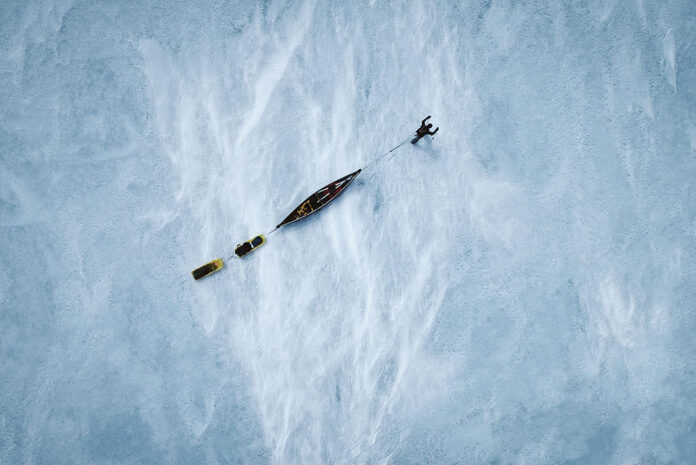
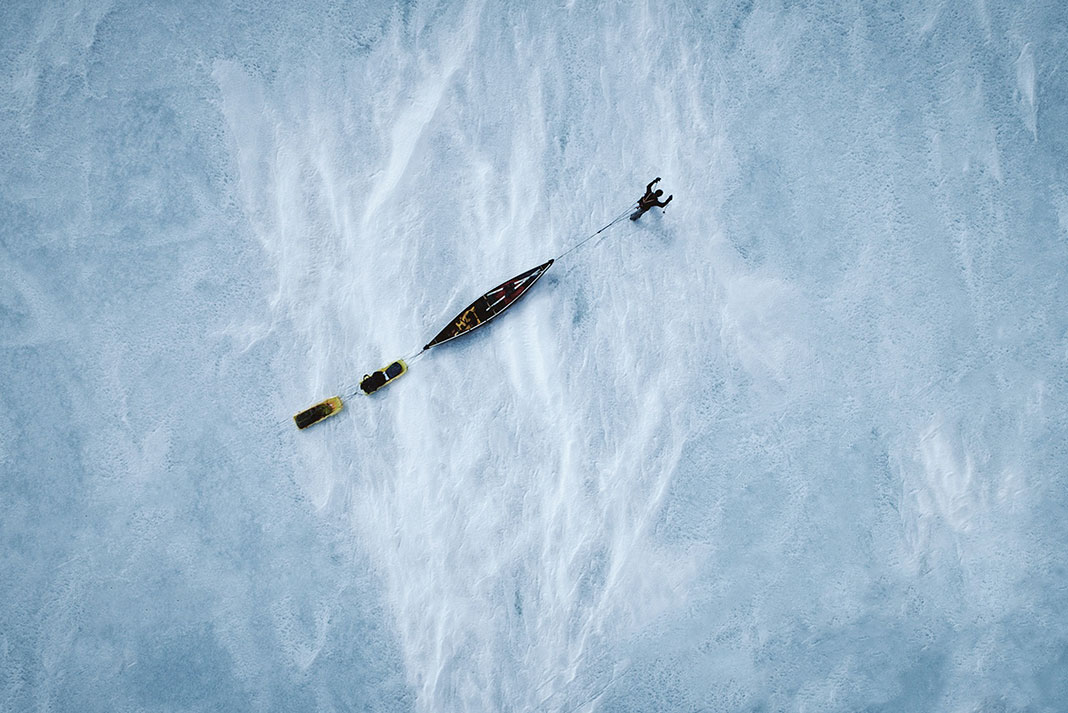
Will Steger pulls a laden kayak across the Arctic ice sheet
“When you’re on a solo, you see your life so clearly,” says Will Steger, pictured here on the Arctic Ocean in 2019 at the end of a 1,000-mile solo expedition at the age of 74. | Feature photo: Tasha Van Zandt

Polar explorer Will Steger says, “Expeditions have kept me young.” This spring, at the age of 77, he set off on another two-month solo canoe-sled trip above the Arctic Circle.


On thin ice: Will Steger’s solo Arctic expeditions

Traveling by canoe-sled during the risky spring breakup has become something of an annual meditation retreat for Steger in his seventies. “It’s a really beautiful way of travel. On the thin ice, you have to be in the moment at all times. You have to be at your extreme best,” he says.

Steger perfected his canoe-sled system over the last three decades with the help of Ted Bell of Minnesota’s Northstar Canoes. The canoe is an essential piece of kit to get over bad ice and open water, and made possible Steger’s 1995 Arctic Ocean crossing, from Russia to Canada via the North Pole. Modifications are made to square off the entry lines in the bow and stern to lessen resistance over snowdrifts, and removable plastic dog sled runners are bolted on.

person pulls a laden kayak across the Arctic ice sheet
“When you’re on a solo, you see your life so clearly,” says Will Steger, pictured here on the Arctic Ocean in 2019 at the end of a 1,000-mile solo expedition at the age of 74. | Feature photo: Tasha Van Zandt

“My biggest fear is cold water—especially being swept under the ice. I’m working the fear out of my system,” Steger says.

As one of the most renowned polar explorers of the modern age, Steger has a humbling list of accomplishments, including leading the first dogsled expedition without resupply to the North Pole. His 1990 non-motorized crossing of Antarctica—also a first— has brought him back into the spotlight with the release of After Antarctica.

Steger revisits an earlier expedition

The new documentary film features the dangers and tension of the Trans-Antarctic Expedition—a 4,000-mile, seven-month traverse of the frozen continent by dogsled. The expedition brought together six explorers from six nations and captured the world’s attention. Steger was its leader.

“What is so inspiring about the expedition is it was bigger than themselves. It was an opportunity to draw together in international cooperation to ratify the Antarctic Treaty,” says director Tasha Van Zandt. The expedition achieved its goal in 1991, protecting Antarctica from oil and mineral exploration for another 50 years.

“On Antarctica, we set an example that a small team of people can change the world,” says Steger.

The documentary features archival footage from the 1990 expedition, interspersed with modern reflections from Steger on his 1,000-mile, two-month canoe-sled journey in 2019. Van Zandt captured this photo on the final day of the expedition as Steger pulled his canoe-sled on the Arctic Ocean.

[ Plan your next paddling expedition with the Paddling Trip Guide ]

From Arctic firsts to lasts

The solo trips ground and recharge Steger for his work as a climate advocate at the Steger Wilderness Center in Ely, Minnesota. “I was fortunate to do some geographical firsts, but I will go down in history for lasts,” says Steger in After Antarctica. “You can’t do the expeditions I did—the routes don’t exist anymore. Every ice shelf I traveled has disintegrated.”

Yet, he remains hopeful as increasingly the public is seeing climate change firsthand, he says.

“We’re all eyewitnesses now. Whenever I get overwhelmed by climate, I reflect on the Trans-Antarctic Expedition and what we did on that small team. Through international cooperation, we helped preserve Antarctica. Now, we have to look at preserving the world we live in.”

This article was first published in the Early Summer 2022 issue of Paddling Magazine. Subscribe to Paddling Magazine’s print and digital editions, or browse the archives.


“When you’re on a solo, you see your life so clearly,” says Will Steger, pictured here on the Arctic Ocean in 2019 at the end of a 1,000-mile solo expedition at the age of 74. | Feature photo: Tasha Van Zandt


6 Epic Expeditions To Follow This Summer

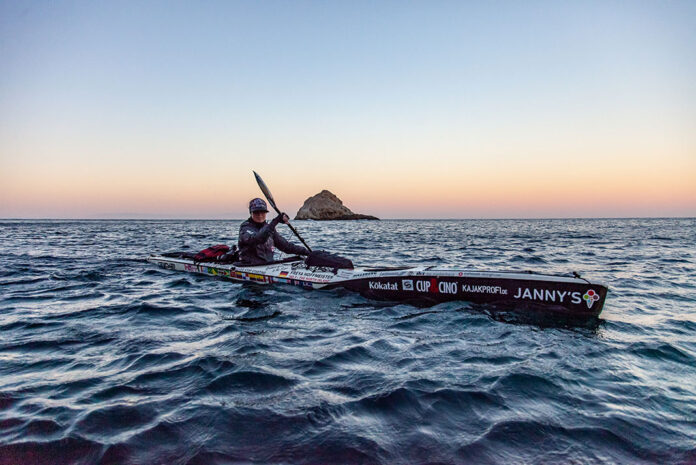
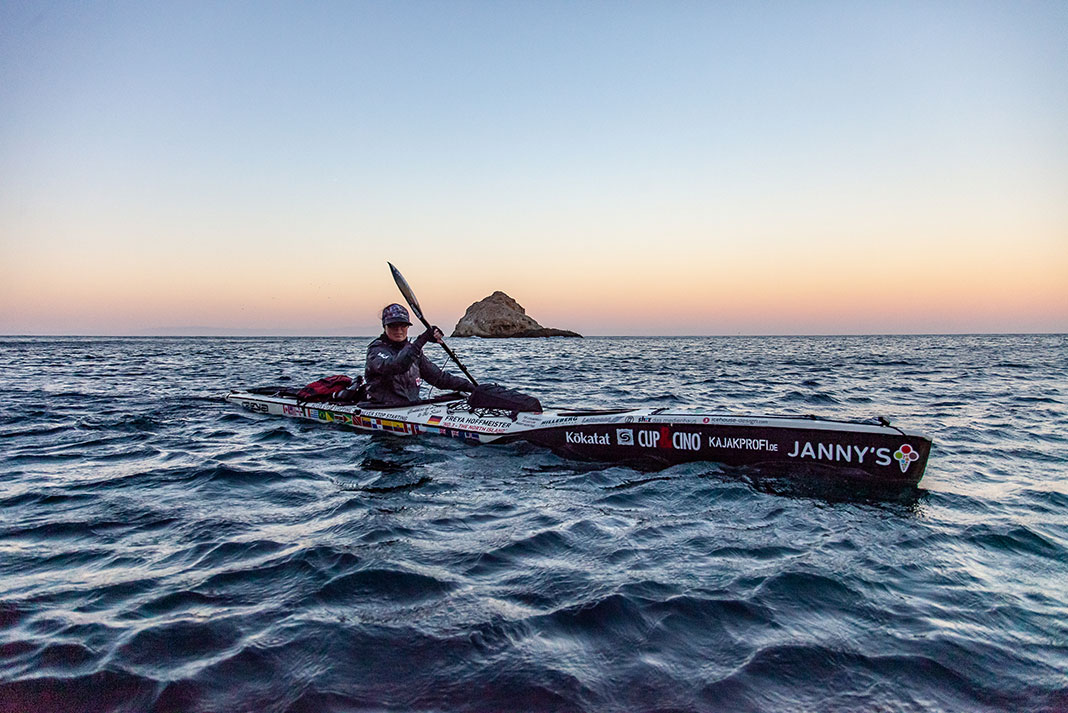
Freya Hoffmeister paddles an expedition kayak on her epic paddling trip
Freya Hoffmeister started her North American epic in 2017 and has completed roughly 40 percent of the decade-long journey. Feature photo: Jaime Sharp

Sticking closer to home this year? Satisfy your wanderlust from afar with these six epic, record-breaking kayaking and canoeing journeys to track in summer 2022. From paddling Canada’s north to circumnavigating the Australian continent, let these far-flung adventures inspire you next time you venture off the beaten path.


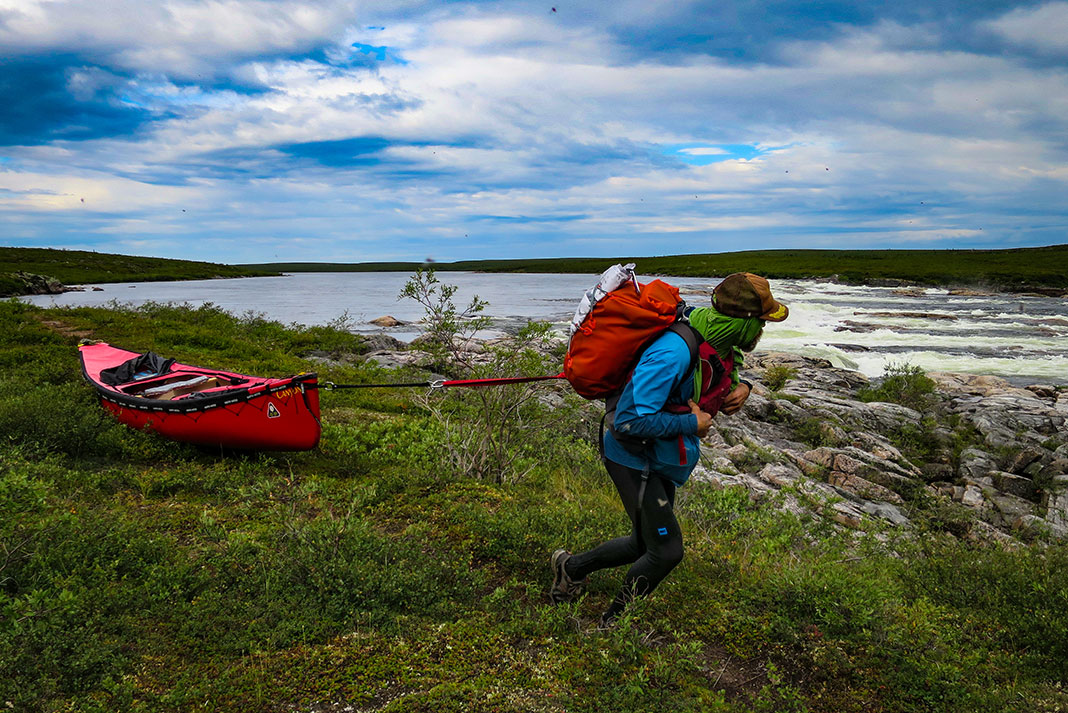
Frank Wolf tows his canoe on an epic summer paddling expedition
Frank Wolf has covered 25,000 miles on 26 self-propelled wilderness expeditions. | Photo: Frank Wolf

1 Symbiosis: To the Arctic Coast

Vancouver-based adventurer Frank Wolf has an impressive resume of long, self-propelled journeys in the Canadian wilderness. Sticking with his tradition of never repeating the same route, Wolf is plotting a challenging northern canoe route for the summer of 2022.

Wolf’s Symbiosis expedition will start at the headwaters of the Tsichu River near the border of the Yukon and Northwest Territories. He’ll descend the Tsichu to the Peel and Mackenzie rivers, before ascending the Great Bear River and tracing the vast, treeless shoreline of Great Bear Lake. Finally, Wolf will follow a traditional route to the Coppermine River and continue downstream to the Arctic coast.

Like always, Wolf’s vision is audacious. But he has no doubt the 800-mile route has been done before. “I don’t think any canoeists can claim a first,” he says. “People have been traveling these waterways for thousands of years. They were just doing it to live back then with no thought of hedonistic adventure—and they were just plain hardier than we are because the times were harder.”


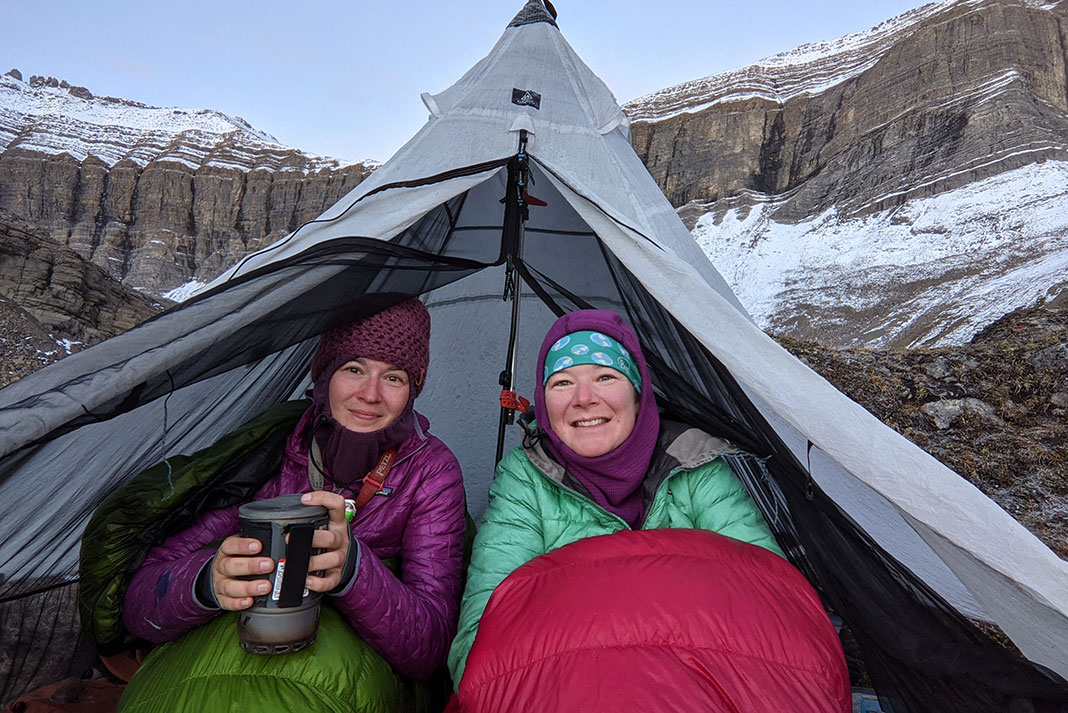
two women sit bundled up in a tent in front of a snowy cliff
Bethany “Fidgit” Hughes and Lauren “Neon” Reed’s seven-year odyssey finishes this fall. | Photo: Courtesy HerOdyssey.com

2 Across the Americas

The final leg of a multi-year, human-powered expedition spanning the Americas ends this summer with a canoe trip. Bethany “Fidgit” Hughes and Lauren “Neon” Reed’s seven-year, 20,000-mile expedition, aptly named Her Odyssey, will end in early September, after the duo paddle a 17-foot Venture canoe from Jasper, Alberta, to the Arctic Ocean.

The two women started walking north from the Beagle Channel in 2015 and became the first women to walk the length of South America when they arrived in Turbo, Colombia, three years later. The pair then biked, kayaked and hiked through Central America, Mexico and the United States, publishing stories connecting the land and its people along the way.

[ Plan your next paddling adventure with the Paddling Trip Guide ]

Freya Hoffmeister paddles an expedition kayak on her epic paddling trip
Freya Hoffmeister started her North American epic in 2017 and has completed roughly 40 percent of the decade-long journey. | Feature photo: Jaime Sharp

3 Freya keeps paddling

Freya Hoffmeister knew her sea kayak expedition around the North American continent would require up to a decade to complete. But she never imagined losing close to a full calendar year due to a global pandemic. Still, Hoffmeister managed to tackle a good chunk of the Alaskan coast last summer and returned to paddle part of Mexico’s Pacific coast in the fall, approaching a total distance of 10,500 miles, nearly 40 percent of the total distance. The tireless German super paddler keeps going in summer 2022 along the northern coast of Alaska and Canada’s Yukon Territory.


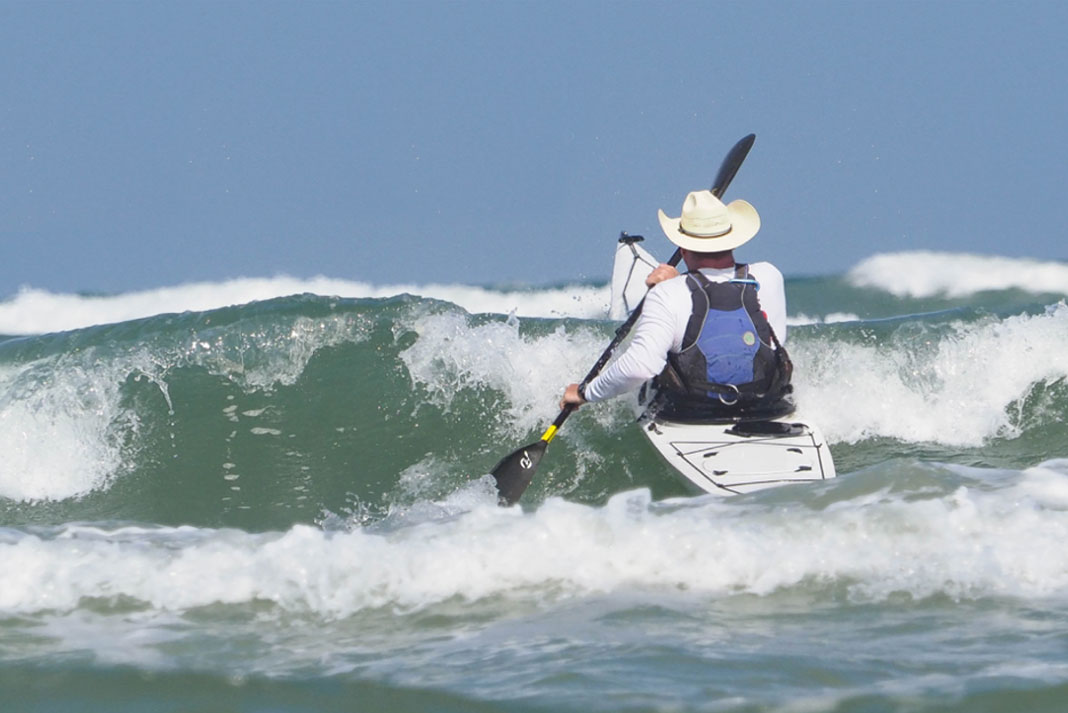
man paddles a kayak into the surf
The Northwest Passage has never been paddled in a single season. | Photo: Pam LeBlanc

4 Northwest Passage: Arctic cowboys

After COVID-19 delayed the departure of three Texans planning to kayak the Northwest Passage in 2020 and again in 2021, the Arctic Cowboys are hoping to take a crack at the 1,925-mile expedition this year. West Hansen, a veteran kayaker who organized a National Geographic-sponsored Amazon River expedition in 2012, will be joined by Jeff Wueste and Rebekah Feaster. They will be attempting the first documented single-season kayak journey through the Arctic Ocean islands of Canada’s Far North.

The team plans to paddle from Pond Inlet on Baffin Island to Tuktoyaktuk, near the Yukon-Alaska border. On this legendary water route they will document the impacts of climate change that could reshape global transportation in an ice-free future. Much of the route has never been paddled in modern times and includes crossings of up to 60 miles long.


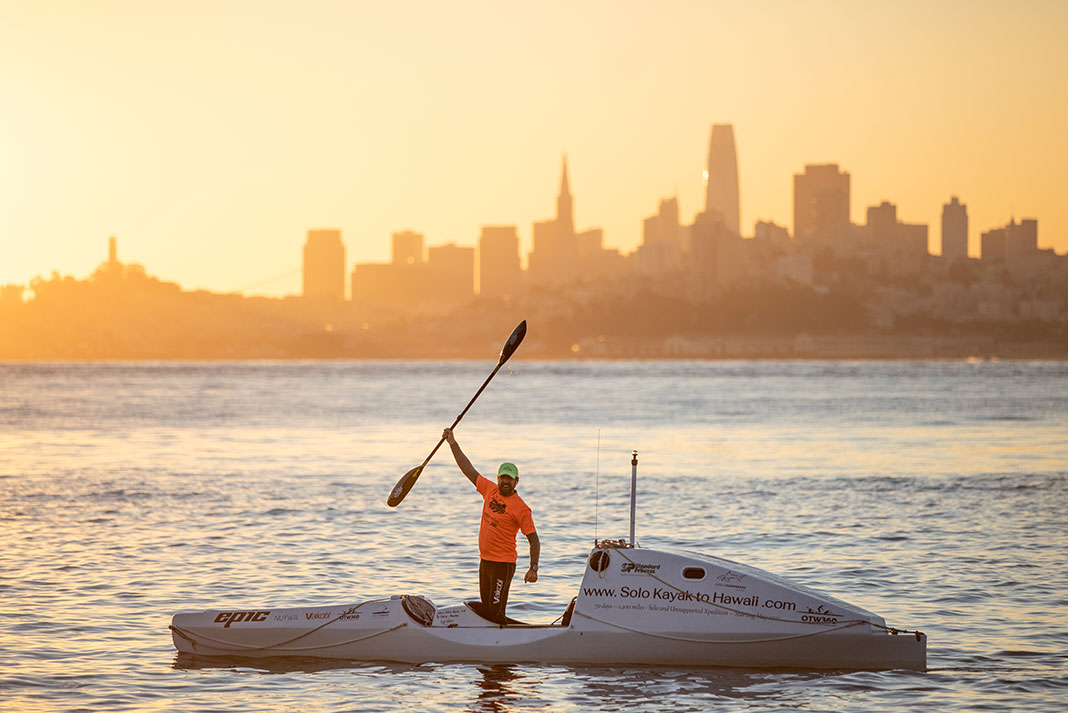
expedition paddler holds up a paddle in front of a city skyline at dawn
Cyril Derreumaux pre-departure in 2021. | Photo: Teresa O’Brien

5 Another crack at a huge crossing

To date, Ed Gillet remains the only person to complete a sea kayak expedition from California to Hawaii. Gillet made his epic journey in 1987 in a modified Necky tandem kayak—long before the advent of satellite communication. In fact, the adventurer had been given up for dead by the time he stumbled ashore on Maui after 63 days at sea. Multiple attempts to recreate the expedition have failed, except for a 2019 SUP crossing by Antonio De La Rosa.

Last summer, France-born American Cyril Derreumaux set out in a custom-built, live-aboard, solar panel-clad sea kayak, but was rescued by the coast guard six days into the expedition following some equipment failures. Derreumaux, who set a Guinness speed record for rowing the same crossing in 2016, insists 2022 is his year. He predicts a 70-day journey.


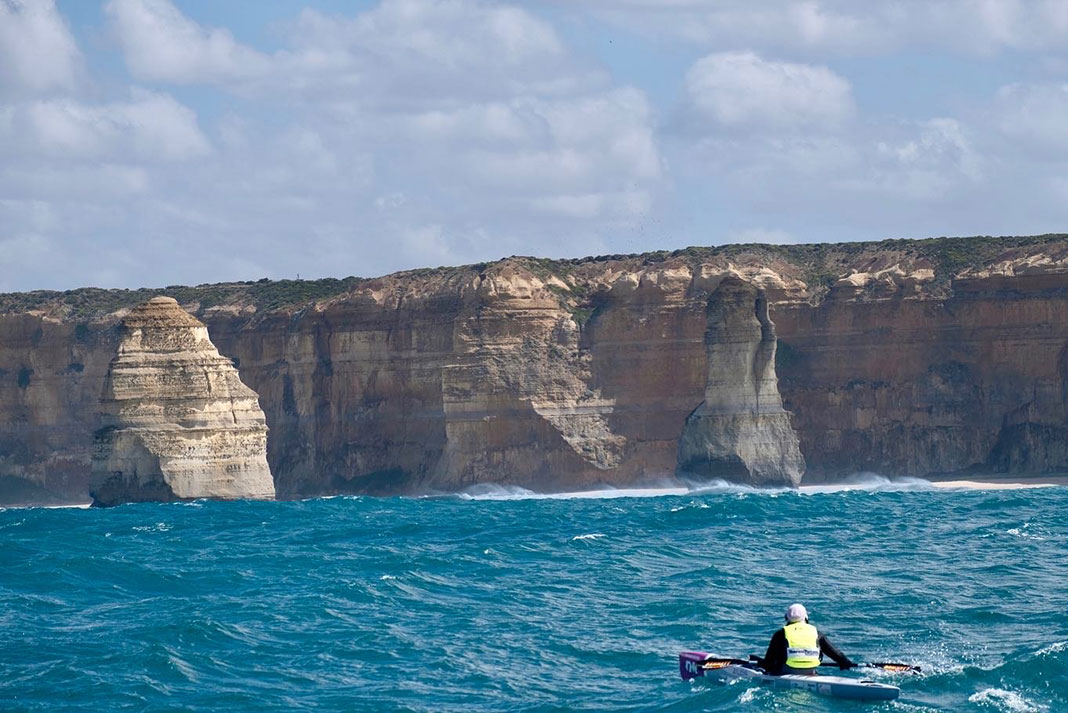
person paddles a sea kayak in front of seaside cliffs
Bonnie Hancock set out from the shores of Australia’s Gold Coast on December 19, 2021, in an attempt to circumnavigate the continent. | Photo: Courtesy Bonnie Hancock

6 Circumnavigating Australia

On December 19, 2021, Bonnie Hancock set out from the shores of Australia’s Gold Coast to attempt to become just the fifth person and second woman to circumnavigate the continent.

At the time of publication, Hancock was more than five months into her 10,000-mile, seven-month journey by surfski, and on schedule to break Freya Hoffmeister’s speed record set in 2009. Hoffmeister completed the circumnavigation in 10 months and 26 days unsupported. Hancock has the assistance of a support boat, which gives her the safety net to paddle point to point—she was able to save more than 600 miles of distance by paddling across the Great Australian Bight, at one point 300 miles from shore.

[ Browse the widest selection of boats and gear in the Paddling Buyer’s Guide ]

A professional Ironwoman and dietician, Hancock is fundraising for Gotcha4Life, an organization supporting mental health. She expects to finish the expedition in July.

This article was first published in the Early Summer 2022 issue of Paddling Magazine. Subscribe to Paddling Magazine’s print and digital editions, or browse the archives.


Freya Hoffmeister started her North American epic in 2017 and has completed roughly 40 percent of the decade-long journey. | Feature photo: Jaime Sharp


Fishing Kayak Review: SeaStream Angler 120 PD

man pedals SeaStream 120 Angler fishing kayak
Budget doesn't mean cheap. Smart design and sturdy construction for less than $2,000. | Feature photo: Roberto Westbrook

Confidently crossing a choppy bay, I’m heading to my favorite sheltered creek in a rigged-up pedal kayak. I have rod holders, frame seat, gear tracks and a powerful pedal drive taking me to the fish. What’s the big deal, you ask? I still have $1,000 in my bank account—the difference between the SeaStream Angler 120 PD I’m testing and what you would typically pay for an equally equipped pedal drive sit-on-top. In fact, the Angler 120 PD falls well below the $2,000 threshold that we thought no pedal kayak could beat just a few years ago.

Too many moving parts, they said. Not enough sales volume, they said. I say, I’m going fishing in the Angler 120 PD.

SeaStream Angler 120 Offers Pedal Power at Great Price

SeaStream Angler
120 PD Specs
Length: 12’3”
Width: 35”
Weight: 97 lbs
(Rapid Drive 22 lbs)
Capacity: 400 lbs
MSRP: $1,699
seastreamkayaks.com

SeaStream is the sister company of long-time New Zealand sit-on-top kayak manufacturer Feelfree Kayaks. Feelfree made it easier to get from truck to the water with their innovative Wheel in the Keel, and created the first pedal drive and motor drive hybrid called the Overdrive. Feelfree also launched the Bass 100 microskiff under the Jonny Boats label and offers the Big Fish series of affordable kayaks badged 3 Waters Kayaks. 
Since its inception in 2020, the SeaStream catalog has grown to include seven kayaks. Four make sense for anglers and borrow design and rigging features inspired by its big brother and sister brands.

The Angler 120 PD is positioned as a fishing kayak for beginners. It’s a funny category. Are beginner fishing kayaks for new kayakers or new anglers? Beginner kayaks are often thought to be inexpensive. So, do beginner kayakers have less money? This doesn’t make sense either; I know a few dentists getting into kayak fishing. I leave this conversation for the bait shop coffee counter. Discuss.  
Key Fishy Features

The Angler 120 PD is two inches over 12 feet long and weighs 97 pounds without the pedal drive. So, I loaded it on my kayak trailer instead of wrestling it onto my roof racks. After adding the 22-pound drive and a day’s worth of fishing gear, a heavy-duty cart with large wheels is the best way to roll everything down to the launch.

man pedals SeaStream 120 Angler fishing kayak
Budget doesn’t mean cheap. Smart design and sturdy construction for less than $2,000. | Feature photo: Roberto Westbrook

The pontoon-style hull design and rudder system on the Angler 120 PD feel like the Feelfree Lure and Feelfree Moken, while the cockpit layout and seat base pull from the 3 Waters Kayaks brand.

The topside of the kayak features a molded storage area in the bow instead of a hatch. A large, deep tankwell in the stern has space for a standard gear crate or small cooler. A usual spider web of bungees will hold gear in place. The advantage to the well is it’s a convenient place to store gear and tackle you want to keep within easy reach.

The wide EZ-Rider frame seat features quick drying and breathable mesh on the bottom and back. It’s easy to adjust the angle on the water with ladder lock slider buckles. The seat moves forward and back on notches molded into the kayak, and a strap running through the seat base secures the seat to the boat. Simple and functional.

SeaStream Angler 120 Rigging

One of the most contentious discussions behind the scenes at any fishing kayak company, or automotive company for that matter, must be finding the balance of how much to include as standard features and at what price. Straight out of the box, this boat is ready to go fishing as soon as it hits the water.

Two flush mounted rod holders are installed behind the seat. The flush mount rod holders are angled straight back for trolling or bait fishing. I appreciated these flush mount rod holders as a quick place to stick the rod while rigging up or unhooking fish. Two horizontal rod holders with tip protectors run down each gunwale. Horizontal rod holders secured my rods to the deck as I sneaked below overhanging trees and low bridges. 

Adding a gear crate to the tankwell gave me a place to carry more rods while underway and expanded storage to include a couple of tackle trays and a bag of gear. Feelfree UNI-Track accessory rails run either side of the cockpit ahead of the seat. 

Maybe what makes the SeaStream Angler 120 PD a beginner fishing kayak is the lack of through-hull scuppers and routing for wires and batteries to run electronics, motor or power anchor systems. And that’s okay. Not including these niceties allows SeaStream to keep the kayak simple and the price down. And it doesn’t mean you can’t drill, thread and epoxy them in later, of course.

bow detail of SeaStream 120 Angler fishing kayak
Pedal power in a bargain kayak. | Photo: Roberto Westbrook

The Rapid Pedal Drive

The heart of the SeaStream Angler 120 PD is the Rapid Pedal Drive pedal system.

The drive uses bicycle crank arms to turn a chain spinning the propeller below. Forward and backward. The internal mechanisms are sealed from water and dirt. The prop and crank arms are easily tightened. Remove a bolt to grease the chain and bottom end. If the chain feels sloppy, it can be adjusted via an external hex bolt without having to crack the unit apart.

The Rapid Pedal Drive is easy to install into the Angler 120. The pedal unit slides smoothly into a metal track and clips to the deck with a simple latch. When in place, the system fills the pedal scupper, blocking water and noise. It’s a solid connection to the hull to transfer as much pedal power to turn the propeller.

To enter shallow water or land the kayak follow these steps: Push down the blue prop catch knob on the drive; turn the pedals until the propeller hits the catch; flip the latch holding the pedal drive into the deck and lift the lower unit. To keep the pedal system elevated, turn the propeller perpendicular to the drive opening and further secure it for transport with a little bungee cord. Sounds complicated? It’s not.

The Rapid Pedal Drive is larger and heavier than many other pedal systems. But the Angler 120 PD package is also $1,000 less expensive than some other pedal kayaks. It’s heavy to lug around but, on the water, it’s an easy-to-operate pedal system pushing the Angler 120 PD smoothly and efficiently.

man pedals SeaStream 120 Angler fishing kayak leaving wake behind boat
Our favorite feature is the huge Beaver Tail rudder that makes turning the big kayak easy. | Photo: Roberto Westbrook

On Water Performance

The Angler 120 PD’s strongest point is its stability. The SeaStream’s catamaran hull pushes volume to the outside edges. As a result, the SeaStream stays rock solid for confident paddling and pedaling, whether you’re a beginner or not. I bet you’ll stand and cast with barely a wobble.

The large Beaver Tail rudder complements the Rapid Drive Pedal system and catamaran hull and performs the heavy work of turning the Angler 120 PD. The large rudder is controlled by sturdy stainless steel cables and a long tiller arm left of the seat. The rudder goes up and down with a rope and cleat system located on the right side of the seat. Simple, reliable and effective handling. The rudder allows it to turn on a dime at any speed.

I’ve tested plenty of bargain pedal kayaks. Most brands try to cut corners with wiggly rudder controls, flimsy seats and creaky pedal systems. Beginners don’t want this. Nobody does. 

SeaStream’s rich lineage allows the Angler 120 PD to take advantage of all the research and development, design experience, and quality of its predecessors to build a pedal drive fishing kayak at a once-unimaginable price.

Is the Angler 120 PD still too dear for your first kayak? It’s also available in a paddle-only version, the Angler 120, for half the price. That means you can either have the pedal drive or a second boat. Do you know what’s just as great as an efficient pedal system when learning to kayak fish and crossing a choppy bay to a new favorite sheltered creek? A buddy.

Pros and cons

Pros

  • Less expensive than most pedal kayaks
  • Stable
  • Solid construction
  • Comfortable seat

Cons

  • Heavy
  • Drilling to rig with electronics
  • No hatch


Budget doesn’t mean cheap. Smart design and sturdy construction for less than $2,000. | Feature photo: Roberto Westbrook


Recreational Kayak Review: Ocean Kayak Frenzy

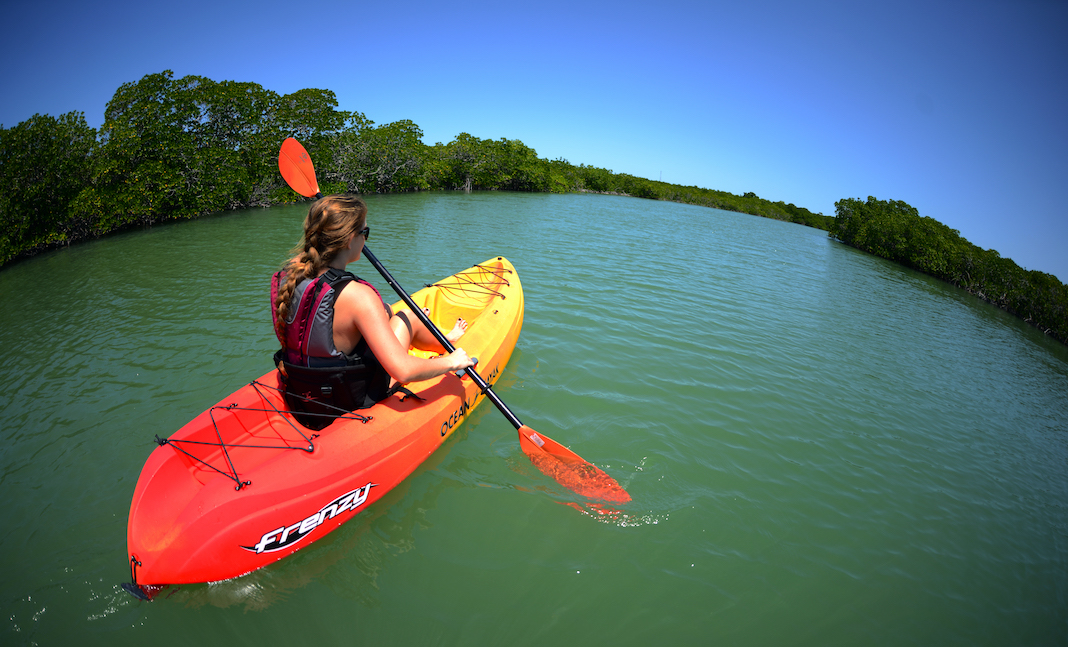
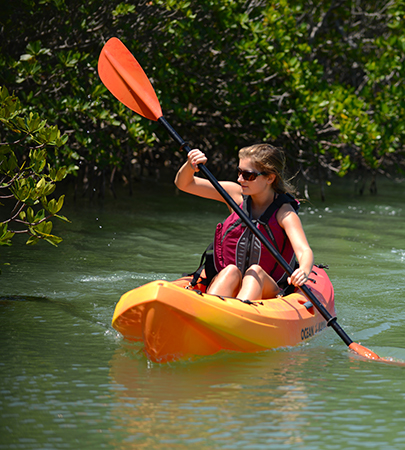
Woman paddling orange sit-on-top kayak
Photo: Courtesy Ocean Kayak

Does Ocean Kayak still make the Frenzy? That’s the biggest question around this uber-popular day tripper whose design dates back decades, to the beginning of the recreational kayak revolution. The answer is no, unfortunately.

But if you have a chance at a used Ocean Kayak Frenzy, take a close look. The Frenzy was popular for good reason: this nine-foot sit-on-top is a great all-arounder, equally capable for family kayaking on flatwater, kayak fishing and playing in the surf.

Read on for a full Ocean Kayak Frenzy review.

On the water with Ocean Kayak’s Frenzy

Ocean Kayak Frenzy Specs
Length: 9’0” / 2.7 m
Width: 31” / 79 cm
Weight: 43 lbs / 19.5 kg
Capacity: 325 lbs / 148 kg

Performance

The fundamental trade-off of kayak design is how well a kayak turns to navigate obstacles compared to its tendency to glide in a straight line, known as tracking. Too much maneuverability and not enough glide is annoying—until you need to avoid a rock that appears suddenly! The Ocean Kayak Frenzy strikes a good balance of maneuverability and tracking. It has a pronounced, deep-V keel line that bites into the water to keep the kayak moving straight; while it’s curved side panels add turning capacity when it’s needed.

Of course, at nine feet, the Ocean Kayak Frenzy is not the fastest kayak around, but it’s comparable to other kayaks of this length and plenty capable for recreational use. You’ll feel comfortable aboard the Frenzy: stability is outstanding on flat and choppy water owing to the flat bottom of its hull. This kayak has a maximum capacity of 325 pounds, which is about typical for a recreational kayak.

Education: Get Some!
  • Take a paddling safety course from the American Canoe Association (ACA), your local paddling shop or outfitter, or other reputable source.
  • Take a boating safety course from the U.S. Coast Guard Auxiliary, U.S. Power Squadrons® or your own state’s boating agency.
  • Take on-the-water skills training.

Market and demographics

The Ocean Kayak Frenzy has been described as an SUV, suitable for all sorts of paddling conditions. It’s great for family paddling on calm water; it easily accommodates beginner kayak anglers; and it performs well in ocean surf.

Ocean Kayak Frenzy owners challenge its description as a “starter” kayak and counter that the Frenzy is an equally good “finisher”—that is, a one kayak solution for paddlers looking to do it all.

With great stability and good performance, the Ocean Kayak Frenzy is an obvious choice for beginners. If you’re looking for something more challenging and exciting than paddling around the local lake, Ocean Kayak Frenzy surfing is smooth and predictable, with the boat’s nine-foot hull handling similar to a longboard.

It’s worth mentioning that Ocean Kayak was originally designed for playing in surf waves, and that legacy carries over in the Frenzy: the rockered, or curved, side panels make it possible to carve turns on a wave. Decent speed makes it easier to catch waves and punch through breakers when you’re returning to the line-up for the next ride.

Ocean Kayak Frenzy fishing is adequate, too—though the hull lacks the features of dedicated kayak fishing rigs (like rod holders, tackle storage areas and live wells), it’s plenty stable and will get you to the places where big fish lurk.

Comfort

The Ocean Kayak Frenzy is an older design so its outfitting and accessories aren’t quite as refined as more contemporary designs. Newer recreational kayaks feature more comfortable and adjustable seating arrangements and a wider array of convenience factors, such as ergonomic carry handles.

However, the adjustable back band in the Ocean Kayak Frenzy is still plenty supportive for most users and there’s ample room on board for paddlers well over six feet tall.

About the Frenzy

Design

Design features and details

The Frenzy’s versatile design comes down to its Tri-Form hull: Ocean Kayak combined the straight-tracking of a deep-V keel with curved rails along the sides. The latter feature creates trimaran-like stability and increases turning capacity. True to its ocean surfing heritage, the Frenzy features a bulbous tip to keep the bow buoyant in waves, making for more control in surf and a drier ride.

Stay Clear Of All Other Vessels
  • Know the “Rules of the Road” Navigation Rules that govern all boat traffic and stay out of the way of all other vessels.
  • Never assume that power boaters can see you. Avoid high-traffic areas whenever possible. Proceed with caution when you can’t avoid paddling near boats. Dress for visibility.

Material and construction

The Ocean Kayak Frenzy is constructed from single-layer polyethylene, a super durable plastic that resists abrasion and slips easily over obstructions. The Tri-Form hull imparts stiffness to the keel; after decades of use, original Frenzy sit-on-top kayaks are still going strong.

Woman paddles orange sit-on-top kayak beside bushes
Photo: Courtesy Ocean Kayak

Keep an eye out for sun fading if you’re buying an older used model. Fading indicates that the kayak has been stored outdoors for extended periods of time, which can make the kayak’s plastic hull softer and less durable.

Design trends

Ocean Kayak founder Tim Niemier was a true kayaking innovator, inventing the sit-on-top genre to support his interests in scuba diving and surfing. The Ocean Kayak Frenzy’s design became the standard for recreational kayaks. When you purchase a Frenzy you’re buying one of the sit-on-top originals.

Ocean Kayak Frenzy outfitting and accessories

The Ocean Kayak Frenzy has a good blend of comfort and performance. You’ll also find an assortment of molded-in features that are inset in the kayak’s deck, including a cup/bottle holder and a tank well behind the seat, which makes the Frenzy popular for kayak-supported scuba missions. The Ocean Kayak Frenzy seat features an adjustable backband for lumbar support.

Looking for a drain plug or replacement scupper stoppers? Ocean Kayak Frenzy parts are still available from the manufacturer. Wheels are also available from Old Town for easy transport on hard surfaces and sand.

Top down view of green and white sit-on-top kayak

How it compares

The Ocean Kayak Frenzy was replaced by the Ocean Kayak Malibu 9.5, a boat with similar specs. Take a look below at how this classic sit-on-top recreational kayak compares to others.

  • Perception Tribe 9.5 vs Ocean Kayak Frenzy

    Like the Ocean Kayak Frenzy, the Perception Tribe 9.5 is another bestselling kayak in the sit-on-top class. The Tribe is slightly longer, wider and heavier than the Frenzy, and equally suitable for recreational paddling and easy surf.

    The main difference between the two kayaks is that the Perception Tribe 9.5 is still available to purchase new from retailers.

  • Ocean Kayak Yak Board vs Frenzy

    The Ocean Kayak Yak Board is more focused for surf use than the Ocean Kayak Frenzy. It’s shorter, lower profile in the water (like a surfboard) and has a much lower maximum weight capacity, at 240 lbs (110 kg). Due to its shorter length the Yak Board is slower than the Frenzy, and lacks the same on-deck accessories.

    Like the Ocean Kayak Frenzy, the Yak Board is also discontinued but available on the used market. Look for a Yak Board if you want a cheap sit-on-top that works for all applications, especially waves. Find a Frenzy for more comfort and better flatwater performance.

  • Ocean Kayak Scrambler vs Frenzy

    At 11 feet in length the Ocean Kayak Scrambler is a stretched out Frenzy. More length means more speed and capacity, with somewhat diminished maneuverability and wave-riding performance. The Scrambler adds a six-inch storage hatch in the center of the kayak, along with an oversized tank well behind the seat.

    You’ll have to comb Craigslist and Facebook Marketplace for an Ocean Kayak Scrambler since it too has been discontinued, replaced by the similar (and upgraded) Malibu 11.5.

  • Ocean Kayak Mysto vs Frenzy

    The Ocean Kayak Mysto measures nine inches longer than the Frenzy, with similar design attributes and performance. The main upgrades on the Frenzy include a paddle holder and updated seat back. The Mysto does not feature a bow storage area on account of a narrower and sleeker profile at the bow (which translates to a bit more speed).

    Like the Ocean Kayak Frenzy, the Mysto has been discontinued but turns up regularly on the used market.

  • Ocean Kayak Frenzy vs Malibu

    The Ocean Kayak Malibu is a modernized Frenzy, with updates to increase performance and comfort. If you’re looking for a new Ocean Kayak Frenzy, the Malibu is it. You’ll find similar paddling characteristics between the Frenzy and the Malibu 9.5, including great versatility to tackle all sorts of paddling challenges as well as relaxing family outings on calm water.

    Choose the Ocean Kayak Malibu 11.5 for better glide and more on-deck storage, both characteristics being direct functions of the Malibu 11.5’s longer overall length.

Woman dragging sit-on-top kayak in the water toward shore
Photo: Courtesy Ocean Kayak

Where to buy the Ocean Kayak Frenzy

Keep a close eye on the used market if you want to buy an Ocean Kayak Frenzy. Popular search terms include Ocean Kayak Frenzy Craigslist; also search Ocean Kayak Frenzy on eBay.

Follow paddling groups on Facebook to pick up a used Ocean Kayak Frenzy. You stand the best chance of scoring one in hot weather areas where the boat was wildly popular, such as Florida and California.

Wear A Life Jacket
  • Everyone, even strong swimmers, needs to wear a life jacket at all times when on the water. It is extremely difficult to put a life jacket on once you fall into the water. Even a light wind can blow any paddlecraft away from you, faster than you can swim.
  • Always wear a USCG-approved Level 70 or Type III life jacket designed for paddling.

Frenzy pros and cons

Pros

  • The Frenzy’s greatest strength is its versatility—this kayak’s all-around performance and stability have stood the test of time
  • Well-made, durable and weighs a reasonable 43 pounds

Cons

  • Slower than longer sit-on-top kayaks like the Ocean Kayak Malibu 11.5, and not quite as nimble as shorter kayaks
  • Dated outfitting (especially the seat back) compared to modern sit-on-top kayaks
  • Perhaps the greatest downside of the Frenzy is the fact you can no longer buy a new one. Consider yourself lucky if you manage to find a Frenzy in good condition on the used market.

Related articles

Ocean Kayak reviews

Sit-on-top recreational kayak reviews

Sit-on-top fishing kayak reviews

SEE ALL KAYAK REVIEWS