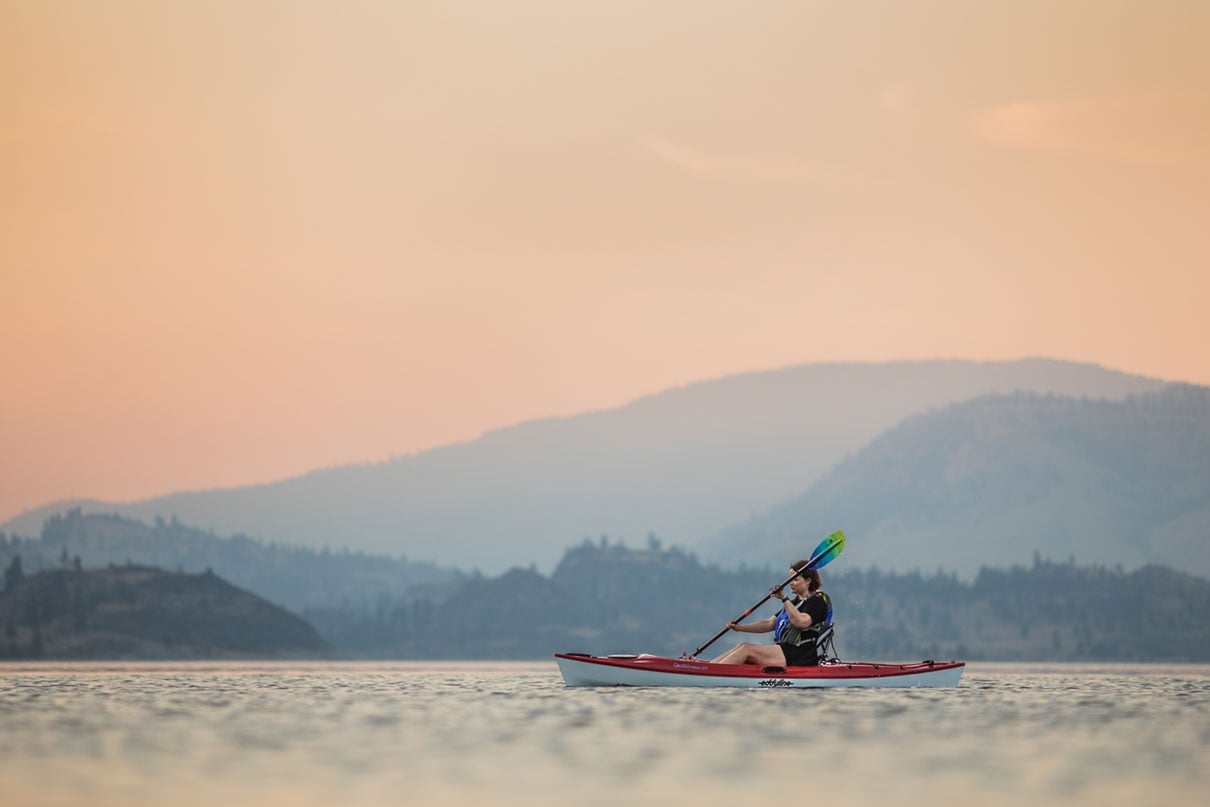
A properly executed kayak balance brace is almost as relaxing as a break on shore. | Feature photo: Scott MacGregor
The first sea kayakers devised the balance brace as a means of gaining stability in rough water and a way to stretch out their lower bodies without leaving their boats. In the balance brace maneuver, the kayak is held at the capsize point indefinitely—without ever going over—using the flotation of the upper body and Greenland-style paddle. Pressure from one leg is needed to hold the paddler in the boat while the other is free to dangle. It’s almost as relaxing as a break on shore.
Modern-day paddlers should think of the balance brace as a party trick that’s practical. Not only does it look good; it also makes a solid rough-water survival position and is the basis of several Greenland rolls.
A properly executed kayak balance brace is almost as relaxing as a break on shore. | Feature photo: Scott MacGregor
How to Stick the Kayak Balance Brace
1 Lean Back and Scull
Start off by leaning the kayak and sculling with the paddle to keep the boat upright. Lean back as far as you can on the stern deck and work on twisting at your hips to expose the back of your PFD to the water—think of arching your back. Use your lower leg—the one that’s in the water—to keep the boat from capsizing by exerting steady pressure on the foot and thigh braces. Relax the other leg—you can even take it off the foot brace.
2 Act Like an Outrigger
Now stop sculling altogether. Arch your back and let your head fall into the water; maintain a steady pressure on your lower knee; and hold the paddle motionless across your chest, allowing it to float to the surface. The boat should be kept as level as possible; your body acts like an outrigger to keep the kayak from capsizing.
[ Paddling Buyer’s Guide: View all outriggers & stabilizers ]
3 Sit Back Up
Returning to the upright position from the balance brace is as simple as sitting up. It’s possible to scull your way up, but unnecessary. It’s easiest to bring your body over the back deck of the kayak by pivoting at your hips. Remember to bring your head up last.
This article originally appeared in Paddling Magazine Issue 65. Subscribe to Paddling Magazine’s print and digital editions here, or download the Paddling Magazine app and browse the digital archives here.
A properly executed kayak balance brace is almost as relaxing as a break on shore. | Feature photo: Scott MacGregor
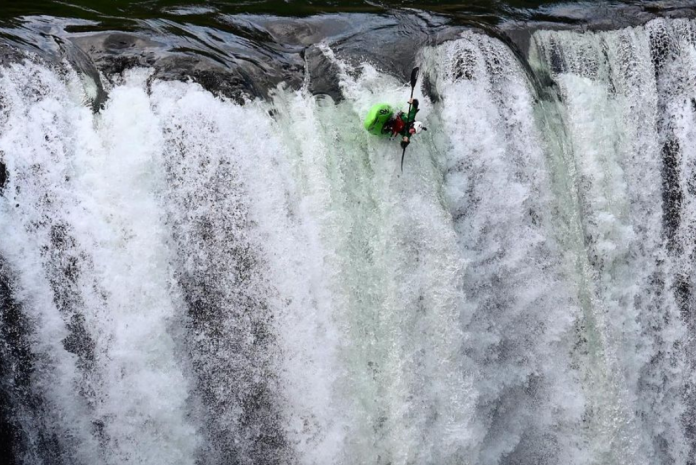
You need to choose the right boof to run small drops in your kayak. | Feature photo: Tyler Toohey
For the best way to kayak small drops, look no further than the boof. Boofing lifts you clean off the lip of a drop and prevents your bow from diving on landing. Even in the best conditions, you need to choose the right boof and pay attention to the bow–stern trajectory of the boat, because landing dead flat is a real shock. Read on for an introduction to this fine art, plus two types of boof to try for yourself.
Most of the time, inadvertent penciling off small drops works out—but when it doesn’t, the results can be crushing. If something is lurking below or when you are unsure what is down below, keep the bow up on the surface.
You need to choose the right boof to run small drops in your kayak. | Feature photo: Tyler Toohey
Small drops and pourovers with sticky recirculations are good places to boof. You can land on the boil, skip off and ricochet clean of the drop. This is great for tighter recirculations or when you have a must-make move immediately downstream. A clean boof means you are more likely to land in control and on line for the next move.
Timing is critical when running small drops and practice is essential to having a reliable boof. When on the river, utilize every possible object or drop to learn to launch the bow high and land clean.
2 types of boof to try
1 Sweep-and-leap boof
On small drops with a smooth green lip, a well-timed sweep and pull stroke can lift the boat clear of the water and allow for a controlled launch. Approach the drop slowly, so you are in control and the boat is loose on the water rather than embedded in the flow or caught in its own wave. The bow should be somewhat off perpendicular to the recirculation below—say 30–45 degrees or so.
As the bow reaches the lip, sweep the bow downstream and up, into the air, off your stern upstream edge. When the boat extends out over the drop, thrust your hips forward, transition to the opposite edge and throw your upper body forward to help the stern clear the falling water. You land on an outstretched power stroke on the side opposite to the initiation sweep.
On bigger drops, you’ll need less sweep, or more angle to the drop, because you are falling further and the boat has more time to spin.
2 Power boof
Sometimes, there is no substitute for a power boof. You can execute power boofs on almost all drops. Powerful strokes, good strength and a light boat make power boofing easier. The concept is to pull with a lifting power stroke, so the bow rises as you fall.
Start with some forward lean, rotate the upper body with a long reach to the bow for a forward stroke, then wait until the boat starts to drop. With your paddle, reach over the lip of the drop into the curtain of falling water, pull and lift with your knees. Keep your power stroke close to the boat and don’t lean too far back—pull with the upper body more or less neutral, heaving the boat forward as it teeters off the lip.
This article originally appeared in Paddling Magazine Issue 65. Subscribe to Paddling Magazine’s print and digital editions here, or download the Paddling Magazine app and browse the digital archives here.
You need to choose the right boof to run small drops in your kayak. | Feature photo: Tyler Toohey
There’s a lot to like about the Old Town Otter kayak. This classic sit-inside recreational kayak may be discontinued, but there are plenty of these compact, lightweight and virtually indestructible kayaks floating around on the used market—often for bargain prices and ideal for beginners looking for a taste of kayaking.
The Old Town Otter offers excellent value in a basic, entry-level recreational kayak that fits a wide range of paddlers and performs well in flatwater conditions.
Since the Otter’s conception in the 1990s, various Otter models have been sold at outdoor stores across North America by the thousands. The models included: the original Old Town Otter; the Old Town Otter XT; the Old Town Otter Sport; and the Old Town Otter Plus kayak. All were nearly the same, with a stable 9-foot, 6-inch hull, great handling, a large, easy to enter cockpit and simple outfitting. An Old Town Otter Twin two-person recreational kayak was also produced for a period of time.
For the sake of simplicity, our review describes the general features of all Old Town Otter models and highlights any differences in the models when relevant.
The Old Town Otter kayak is best described as short and squat; its overall dimensions contribute to modest speed, excellent maneuverability and rock-solid stability. This recreational kayak is easy to handle in flatwater conditions and up to Class II moving water, if equipped with a spray skirt.
The short length makes the Old Town Otter perfect for exploring narrow rivers and wetlands; however, the short length makes it bob like a cork in waves and chop—stick to sheltered water and easy rivers for best performance and safety.
Market and demographics
This is the quintessential beginner kayak and it’s hard to find a body type that won’t fit in the Old Town Otter. In fact, Otter owners indicate that its maximum capacity of 225 pounds can easily be pushed to 250 pounds without compromising performance or seaworthiness.
There’s enough legroom inside for paddlers up to 6’2” (190 cm) tall. Yet its short length and easy handling makes the Old Town Otter perfect for youngsters ages 8 and up.
The Old Town Otter kayak is a great boat for the cottage, beach or campground, offering worry-free durability. It’s also a good choice for paddlers looking for a lightweight kayak that’s easy to car-top and carry to the launch.
Comfort
The Old Town Otter kayak’s rudimentary outfitting reveals its stature as a “vintage” recreational kayak. The original Old Town Otter model did not include foot pegs, a standard feature in all kayaks today (foot pegs are one upgrade included in the Old Town Otter XT).
Invest in a newer kayak such as the Old Town Loon if you desire cushy seating, adjustable thigh braces and other comfort features. If you’re handy, it’s easy to add comfort to the Old Town Otter with glued in foam pads and DIY seat modifications.
About the Otter kayak
Design
Design features and details
The Old Town Otter kayak offers no surprises on the water, owing to its stable, flat bottom and symmetrical hull design. Its lines mirror everything you’d expect in a kayak: a pointed bow and stern with low profile to minimize exposure to winds, front and back decks for seaworthiness, as well as a large cockpit for easy entry and exit. The bow widens quickly to its 28.5-inch maximum width, offering reassuring stability but compromising speed and glide.
The bow and stern are both low profile and close to the water, making the Old Town Otter easier to handle in winds but also meaning that choppy waves can break over the ends of the kayak.
Shorter kayaks are always more maneuverable than long ones, and the compact, 9.5-foot Old Town Otter is easy to turn and handle. However, the flipside of short length is a lack of speed and glide, and the Otter is no exception. Traveling any distance in the Otter will be a workout compared to longer kayaks.
Material and construction
Besides a user-friendly hull design, another big attribute of the Old Town Otter kayak is its bombproof construction. The Otter is made from rotomolded polyethylene plastic.
The fact that original Old Town Otter kayaks manufactured over two decades ago are still going strong attests to the supreme durability of this no-maintenance material. Leave it on the dock, drag it over rocks or store it in a snowbank for the winter: regardless of the abuse, the Otter kayak will come back for more.
Design trends
With its design dating back to the 1990s, the Old Town Otter is one of the original recreational kayaks. It was conceived at a time when kayaking was divided into two disciplines: whitewater and touring.
Early recreational kayaks like the Old Town Otter created a new category for beginners, cottagers and day paddlers, providing stable and comfortable designs that were more compact and easy to transport than traditional sea kayaks and far easier to paddle than dedicated whitewater kayaks.
Old Town Otter kayak outfitting and accessories
As a pioneering recreational kayak the Old Town Otter was among the first to include features that are standard in today’s entry-level kayaks, including the high back seat. The seating arrangement on the Old Town Otter feels basic compared to some of the ultra-adjustable and padded seats in contemporary kayaks, but it’s still very supportive and easy to modify with glued-in padding.
Foot pegs were added to the Old Town Otter XT kayak model, offering good support that adjusts easily with a push button—just be sure to avoid tracking too much sand and grit into the cockpit, since this can jam sliding foot pegs. Standard replacement Old Town Otter kayak foot pegs are available from the manufacturer and other kayak retailers.
The Old Town Otter kayak spray skirt is available to stretch over the kayak’s 38- by 19-inch cockpit to keep waves and chop out of the kayak and provide protection from the elements; spray skirts are available in lightweight nylon (best for sheltered waters) and robust neoprene (best if you want to paddle the Otter in whitewater). Look for a spray skirt size of 2.5 from popular manufacturer Seals Sprayskirts to fit all Old Town Otter models except the tandem Old Town Otter Twin.
Pick up an Old Town Otter kayak cockpit cover to keep creepy crawlies out of your kayak when it’s in storage.
Opportunity for modifications
Like any kayak, there are plenty of ways you can improve a basic Old Town Otter kayak. Start by adding foam to the seat, hip area and thigh braces to custom fit your body to the boat—a key modification if you’re looking to paddle in moving water where good boat control is necessary. You can also glue a thin layer of foam beneath your heels in the cockpit to pad your heels and keep your feet comfortable.
The deck rigging on many used Old Town Otter kayaks can be replaced with tighter bungees and lines for better on-deck storage of small essentials. It’s easy to spend an afternoon making an Otter kayak more comfortable and functional with modifications.
How it compares
The original Old Town Otter was an instant classic, helping to define recreational kayaking as a new genre. Old Town followed up the success of the Otter by modifying it with models like the Old Town Otter XT and renaming it (and changing some dimensions) as the Old Town Loon.
The most similar model in Old Town’s current kayak lineup is the Old Town Loon 106.
Old Town Otter vs Otter XT
If you have a choice, go for the Old Town Otter XT over the original edition. The Otter XT features the same dimensions and identical performance, with the critical upgrade of adding adjustable foot pegs to the cockpit.
Foot pegs improve paddler fit in the boat and allow you to paddle more efficiently by transferring energy from your entire body to the kayak, making your strokes more effective. Foot pegs also reduce paddler fatigue by improving posture while seated in the kayak.
Old Town Loon vs Otter
The Old Town Loon replaced the Old Town Otter kayak with key comfort features like more adjustable seating and a variety of lengths and sizes to fit a wider range of paddlers. The current Old Town Loon 106 measures a foot longer than the Otter, upping its maximum paddler capacity to 272 pounds.
Old Town Loon kayaks include padded seats (the current model’s ACS2 seat is one of the best on the market) and dry hatches for storing gear for a day trip. Simply put, the Old Town Otter kayak looks primitive alongside the creature comforts of the newer Loon. A variety of Loon kayaks are available in different lengths to match different paddler sizes and needs.
Where to buy the Old Town Otter
You will no longer find Old Town Otter kayaks at outdoor stores since the model was discontinued by the manufacturer. Besides trolling yard sales in cottage areas, your best bet is searching Old Town Otter kayak Craigslist for a bargain on this classic entry level kayak.
Expect to pay between $150 and $250 for a used Old Town Otter kayak in good shape. Similar Old Town Loon kayaks are available at paddlesports retailers across North America.
Old Town Otter pros and cons
Pros
One of the earliest recreational kayaks to hit the market, the Old Town Otter kayak helped define a new style of safe, comfortable and easy to paddle kayaks meant for day touring and cottage use on sheltered water
Predictable handling in flatwater and river conditions
Compact dimensions and a relatively light weight for portability
Outstanding durability that’s proven to stand the test of time
Cons
As a classic design, the biggest knock on the Old Town Otter kayak is its primitive outfitting compared to modern recreational kayaks
Look for the upgraded Old Town Otter XT kayak for adjustable foot pegs and be prepared to make some modifications to the basic cockpit to add comfort
Compact dimensions limit its overall speed (yet also make it super easy to handle)
Don’t get Todd Frank started on pro deals. The veteran retailer owns The Trail Head and Trail Head River Sports in Missoula, Montana, where seemingly everyone in town has a pro deal or a hookup.
You already know what he’s going to say.
“There’s not a day that goes by where we’re not faced with somebody who comes in getting sized for a product or looking at a product, and then as they walk out the door,” he says. “They’re like, ‘Hey, thanks for the help. My buddy’s a fishing guide. I’m just going to get this on pro deal.’”
Frank can only watch the sale walk out the door, and wonder about the irony. After all, the whole point of pro deals is supposed to be getting gear into the hands of core users who will sing its praises, thus driving full-price retail sales. The discount is supposed to go to the guy on the sales floor answering the questions, not the dude who came in off the street looking for advice.
Or is it? What if some pro-deal programs have evolved into another way to move inventory? That’s how it looks to a growing number of industry veterans.
“Fifteen years ago, pro-dealing was a marketing tool. A handful of store employees got pro deals, and that was it. Now anyone can get a pro deal and it’s become a full-on sales channel,” says Immersion Research president John Weld. “It’s one of the key reasons why the retailer-manufacturer relationship is falling apart.”
The typical pro-deal discount ranges from about 30 to 60 percent, which pencils out to a sales price that is comparable—and in many cases higher—than wholesale. As the number of people with access to pro deals has continued to grow, retailers and some manufacturers say the programs have become a way for brands to sell direct-to-consumer at a discount, without violating MAP [minimum advertised price] policies.
Photo: Artem Peretiatko/istock.com
Liberal pro deal programs risk weakening both retail sales and brand integrity, says Brian DeFouw, head buyer at Confluence Ski and Kayak in Denver. “It’s really pandering to a direct-to-consumer model that is not supportive of retail and doesn’t do what the brands claim,” he says. “All it does is cheapen their gear. It just means people won’t pay retail for it.”
DeFouw says it’s not at all unusual for customers to waltz into his shop and boast about their pro deals they receive directly from brands or, increasingly, through third-party online platforms. That in itself is a mark of how far they are from the core of the industry. “They want to get fitted for stuff. They want advice and they want to know how things are going to work, and you’re like ‘Oh, you’re a pro, who do you paddle for?’ and they say their buddy is with the fire department.”
DeFouw says easier access to pro deals undermines what should be the core market for outdoor specialty retailers—active enthusiasts with good jobs outside the industry. “The majority of the customers who come in bragging about their pro deals make three times in a year what I make,” he says. “If you’re a real pro, you’ve probably taken the vow of poverty to work in the industry. Those are the real influencers—not guys who join the Alpine Club and get 60 percent off on all these brands.”
Ten or 20 years ago, most brands managed their pro programs through their marketing departments, with an eye toward getting their gear into the hands of people others looked to for advice, be they retail employees, guides or local ringleaders. Now a number of third-party companies manage pro deals en masse, making it easier for anyone with a connection to the outdoor industry to access discounts from multiple brands with a single application. Online platforms such as ExpertVoice, Outdoorly, Liberty Mountain, IPA Collective and Outdoor Prolink manage pro programs for hundreds of brands in exchange for fees and commissions.
“The definition of what was pro really started to change when these third-party sites came on the scene, and that’s because their business model was pushing as much product through that channel as they could. I don’t call it pro deals anymore. I call it discount direct-to-consumer.”—Todd Frank, Trail Head River Sport
“The definition of what was pro really started to change when these third-party sites came on the scene, and that’s because their business model was pushing as much product through that channel as they could,” Frank says. “I don’t call it pro deals anymore. I call it discount direct to consumer.”
ExpertVoice CEO Tom Stockham takes issue with that characterization. “We exist to help consumers make more confident full-price buying decisions, period, full-stop,” he says. “We think we have figured out a unique way to do so that is good for brands, good for retailers, good for consumers and good for experts.”
ExpertVoice is the largest of the third-party pro sites, with more than one million members—the company calls them “active experts”—in a variety of outdoor and outdoor-adjacent industries, from retailers and guides to fitness instructors and pet store workers. Stockham says the company facilitated about $150 million in sales in the last 12 months.
A coalition of independent specialty retailers sees that channel as an existential threat to their stores and the brands they sell, and is urging its members to fight back. In June, Grassroots Outdoor Alliance (GOA) circulated a letter to industry leaders claiming ExpertVoice erodes the ability of brands to sell at full price in other consumer channels, including direct-to-consumer, big box specialty, and independent specialty outdoor retailers.
Easier access to pro-deals undermines what should be the core market for outdoor specialty retailers, some say. | Photo: Nick Gottlieb
“Creation of off-price loyalists at the expense of brand equity cements a change in consumer buying behavior that is immediate and irrevocable,” GOA states in the letter, provocatively titled “The ExpertVoice Consumer Database and Permanent Brand Damage.”
The letter characterizes ExpertVoice’s business strategy as bringing a whole lot more people into the pro deal tent, and letting them stay as long as they like. Take an avalanche safety course for backcountry skiing? You’re in—and not just for ski gear. Depending on the platform and brand, you could also gain access to discounts on gear for hiking, climbing, biking and paddling.
The issue of bloated pro deal access has been simmering for years and came to full boil after ExpertVoice opened access to what GOA calls “general association databases” such as healthcare workers, firefighters, police and active military, as well as “paid membership organizations with no qualification requirements.” The latter includes nonprofits such as the American Canoe Association, Paddle Canada and American Whitewater, but also the for-profit streaming service Teton Gravity Research.
“Teton Gravity Research put out a promotion saying, ‘Join TGR and get an ExpertVoice membership,’” says GOA spokesman Drew Simmons of Pale Morning Media. “That’s not a pro. That’s like somebody buying a subscription to Sports Illustrated and getting a discount.”
The same holds for people who get pro deals through professional affiliations. If you work for the U.S. Department of the Interior—that’s the Forest Service, Bureau of Land Management, U.S. Fish & Wildlife and National Park Service, among others—you qualify as an ExpertVoice pro, whether you’re a river ranger on the Grand Canyon or a desk jockey in Washington, D.C.
Nobody is saying the river ranger shouldn’t have a pro form, but Frank says when a wildland firefighter walks into his shop with a brand new pair of Scarpa ski boots to be mounted, it feels like overreach. “You should be able to get a Scarpa wildland firefighting boot,” he says. “We could probably even stretch and say you should get a pro deal on packs, sleeping bags and anything else that’s associated with your job—but the sidebars on the sort of gear you can buy just aren’t there.”
Stockham says it’s up to the brands to decide how widely their deals are shared, choosing categories of experts that fit their marketing strategy. “Typically a brand would say they want to target people who currently work at a given retailer, and that is the only access those people would get and that brand would deliver,” Stockham says.
ExpertVoice was founded in 2004 as Experticity, a pro site and online training forum for retail employees in the outdoor industry. It still serves that purpose, but critics say its primary role has evolved into that of a discount sales channel. And, claims GOA, once you’re in, you’re in for good.
“Based on ExpertVoice membership statistics listed on their website, the ExpertVoice database includes a significant number of “phantom” employees—consumers who have gained permanent brand discount status through an ExpertVoice approved company or organization, yet do not exist on that group’s actual member list.”
As evidence, GOA compares current employment figures at its 86 member retailers and four big-box chains with the number of people shown as employees of those stores on the EpertVoice website. The results suggest many ExpertVoice pros hold onto their discount privileges far longer than their retail gigs. For example, Rutabaga Paddlesports in Madison, Wisconsin, has 23 people on payroll and 163 registered as pros at ExpertVoice. Nantahala Outdoor Center, a North Carolina outdoor store and rafting outfitter with just 20 full-time employees, had 531 affiliated pros on the ExpertVoice website. Those specialty numbers pale in comparison to Dick’s Sporting Goods, which reports about 50,100 current employees and had 130,449 people registered as pros on the ExpertVoice website when GOA conducted its search on May 20, 2021.
Paddling Business verified the figures on the ExpertVoice website, which on June 5 reported 130,924 members with a Dick’s affiliation, and 553 connected to NOC. By June 10, after the GOA letter had been distributed, the ExpertVoice website tool had been changed so a search of “Dick’s Sporting Goods retail employees” now returns a result of “1,000 employees or more,” rather than a precise figure.
GOA’s criticism has left other pro-deal platforms scrambling to distance themselves from ExpertVoice. Outdoor Prolink went so far as to release a “manifesto” in June, which details how its program and member list differs from those of ExpertVoice, without mentioning that company by name.
When done right, pro deals can be very effective marketing tools, industry veterans claim. | Photo: Aaron Black-Schmidt
“While our membership base may seem small in comparison with others, we will not compromise when it comes to maintaining our authenticity,” declares the manifesto, which also touts Outdoor Prolink’s origins in founder Gareth Richard’s basement in (where else?) Boulder, Colorado. The company says it does not does not accept “enthusiasts, ‘experts’ or hobbyists; subscribers, members of or donors to outdoor clubs, non-profits or publications; students and participants of outdoor skills courses,” or people who don’t work in the outdoor industry.
“Treating a pro purchase program as nothing more than a direct-sales channel is dangerous territory, and we believe this mentality is what has led some of our competitors to loosen qualification restrictions in order to boost sales,” Outdoor Prolink Chief Marketing Officer Kenzie Rodriguez said in an emailed response to written questions from Paddling Business.
None of the online pro sites are running a particularly tight ship, as reporters for industry magazine The Voice discovered last year when they applied to five pro deal platforms including ExpertVoice and Outdoor Prolink using fake personas and bogus documentation. While “Minnie Mouse” only scored one pro deal with Liberty Mountain (using a coffee-shop punch card as proof of employment) a faux yoga instructor was accepted by four out of five platforms, and a fictitious outdoor store employee went five-for-five. The magazine used the same three personas to apply directly to pro programs at six different brands, with a 27 percent success rate.
“I registered for ExpertVoice as a dead president using a fake pay stub from the U.S. government, and was approved in basically an hour,” Frank says.
Outdoor Prolink says its pros are required to submit new documentation every 12 months or lose their privileges. The platform currently has 130,000 members—about equal to the number of former and active Dick’s Sporting Goods employees with an ExpertVoice hookup.
Stockham says the GOA letter overstates the significance of those top-line numbers, which in the ExpertVoice system deliberately include both current and former employees. “They think of a pro program as you’re either in or you’re out with one credential, but that’s not how our system works,” Stockham says. “Ours includes a bunch of credentials, much more like a LinkedIn profile than a single ticket.”
Just as LinkedIn doesn’t scrub your old jobs from your resume when you move on, ExpertVoice doesn’t remove former work affiliations. If you pushed rubber for Nantahala Outdoor Center one summer, that experience stays on your ExpertVoice profile no matter what you’re doing now. Take those 130,449 Dick’s employees. Stockham says only 21,812 were active on the ExpertVoice website in the 12 months. He also said—twice, because we asked him to clarify this point—that all 21,812 are current Dick’s employees. Of those, he says roughly 3,800 made a purchase through ExpertVoice in the last year.
“For most organizations your credential is only good [on ExpertVoice] for a limited amount of time. Each year your credential expires and you have to re-verify,” Stockham says. While retail store owners can choose to manage their employee lists on the ExpertVoice website, they can’t remove former employees from the program—nor should they, Stockham says. “Just like on LinkedIn, your former employer can’t go in and erase your past job.”
One thing retailers can do is ask brands not to participate with third-party pro sites, and choose not to carry those that do. “We are purposefully not working with brands that support ExpertVoice,” says Rutabaga Paddlesports owner Darren Bush. “We’re walking away and we’ve told brands this is why we’re walking away. If enough people do this, brands will stop working with ExpertVoice.” Some already have. Yakima closed its store on ExpertVoice after hearing from Bush and other specialty retailers. “The magic order-writing pen seems to be what makes vendors listen,” Frank says.
Third-party sites are only one reason pro deals have proliferated in recent years. Brands that manage their own programs have increased volume through pro channels as well. Look no farther than Patagonia and prAna, both of which print lavish pro-deal catalogs, Weld says. “To say that isn’t a legitimate sales channel for them is nonsense.”
Patagonia gets high marks for controlling pro-form access, requiring regular verification from its pros. But the brand has also used the program to push seasonal sales, particularly through “friends-and-family” promotions allowing a savvy pro to fill the space under a Christmas tree with discounted gear—and have the unintended effect of training consumers to wait for the discounts rather than purchasing at full price from retailers.
If pro deals are a slippery slope, it’s the ski and apparel industries that are sliding out of control. Paddlesports by comparison has so far managed to pick its way downstream, even as the gradient continues to increase. That’s not to say pro-deals aren’t pervasive in paddlesports. They’re just less pervasive. Even Weld, an outspoken critic of the current pro-deal environment, runs an active pro-form at Immersion Research.
“Manufacturers can easily get addicted to pro deals. It’s easy money. You basically get wholesale pricing, except you’re getting it at net zero on a credit card,” he says. Pro deals also typically include modified warranty policies reducing the expense and hassle of returns.
When done right, pro deals can be very effective marketing tools. Look no farther than Jackson Adventures, which built its brand around the whitewater exploits of company namesake Eric “EJ” Jackson and his family. The company later extended the strategy to build a powerful presence in the kayak fishing segment.
The key is demanding return on the pro deal investment, and coordinating strategy with retailers, says James McBeath, Jackson’s lifestyle and outdoor marketing lead. “We’re actually aligning team members with our dealers,” he says. The company keeps a tight rein on pro discounts, with preference to team members who are good on a dealer sales floor or active in local paddling communities. That wasn’t always the case.
“In the old days, EJ had such a huge whitewater team that at the end of the season these boats all of a sudden started flooding into the used market,” McBeath says. Now, when team members trade up, Jackson asks them to sell their old boats through local dealers.
Such cooperation will have to be at the heart of any successful pro deal reform, Weld says. The flip side of brands selling direct to consumer is retailers taking fewer reorders. These trends have tracked in parallel in recent years, as internet sales have increased and on-demand shipping has become more common.
“We’ve gotten into this spiral, where manufacturers say to retailers, ‘If you’re not going to hold inventory we’re going to keep selling direct.’ You get into this position where manufacturers can replace, or at least deeply augment, the retail sales channel with a pro-deal channel and bingo, here we are.”—John Weld, Immersion Research
“We’ve gotten into this spiral, where manufacturers say to retailers, ‘If you’re not going to hold inventory we’re going to keep selling direct.’ You get into this position where manufacturers can replace, or at least deeply augment, the retail sales channel with a pro deal channel and bingo, here we are,” Weld says.
Reining in pro deals would take an industry-wide effort, with all sides willing to give a little, he says. This includes retailers committing to more preorders and brands agreeing to a sort of pro-form armistice. Reform is the goal, because it’s not the concept of pro deals that’s flawed, it’s the execution. The idea someone can get an ExpertVoice membership simply by subscribing to Teton Gravity Research raised hackles at GOA, but the linking of third-party pro platforms with advocacy organizations does have an upside. Last year Outdoor Prolink made American Whitewater one of four featured non-profits that members can donate to at checkout, and raised more than $5,000 for the organization.
Weld turned the non-profit backdoor on its head. Becoming an American Whitewater member won’t get you an Immersion Research pro form, he says—but you also won’t get one without it.
“We made every pro deal customer join American Whitewater,” Weld says. “Without an AW membership, or something similar if you’re a sea kayaker, you can’t get a pro deal. I would encourage all manufacturers in our industry to adopt this program.”
This article was first published in the 2022 issue of Paddling Business. Inside you’ll find the year’s hottest gear for canoeing, kayaking, whitewater and paddleboarding. Plus: Industry leaders on surviving COVID, the dirty little secret of pro deals, brand consolidation and more. READ IT NOW »
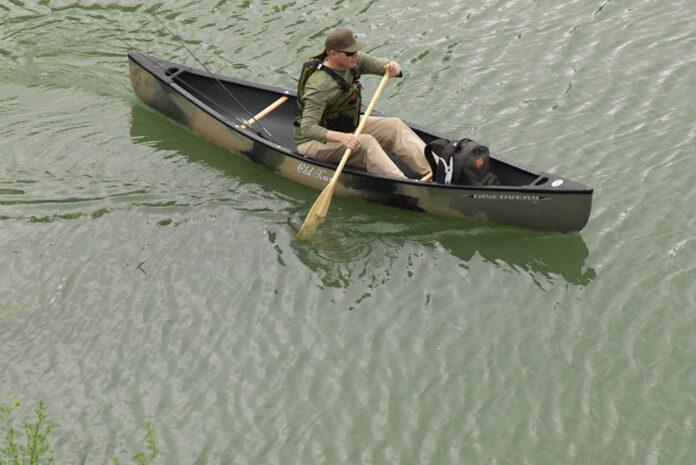
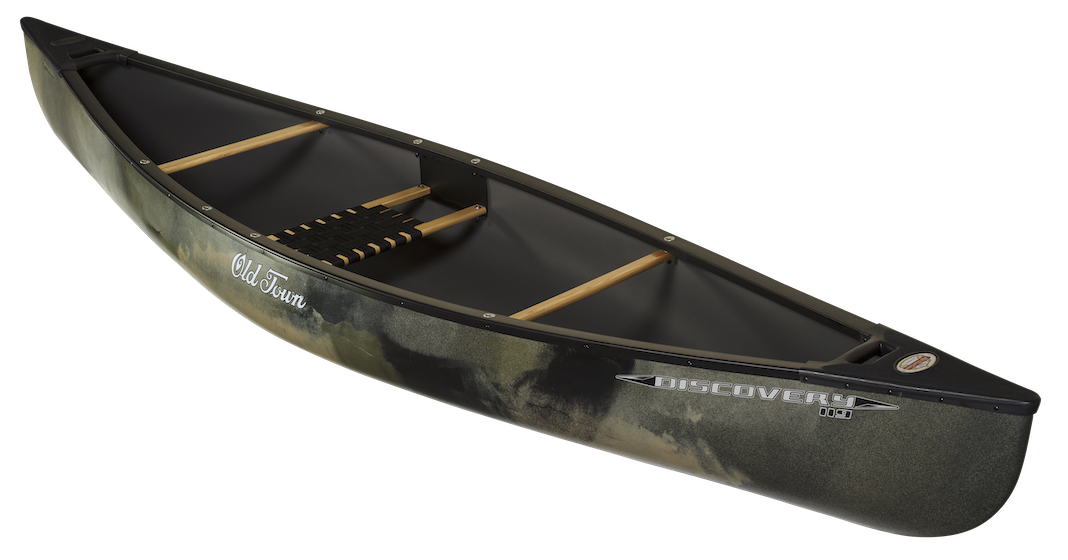
Maine-based Old Town Canoe Company has been building canoes since 1900. It’s reasonable to view Old Town’s Discovery 119 solo canoe as a descendent of the company’s iconic wood-and-canvas canoes. That’s quite a legacy to uphold, and the Old Town Discovery 119 canoe honors and updates the tradition with nimble performance and durable polyethylene plastic construction.
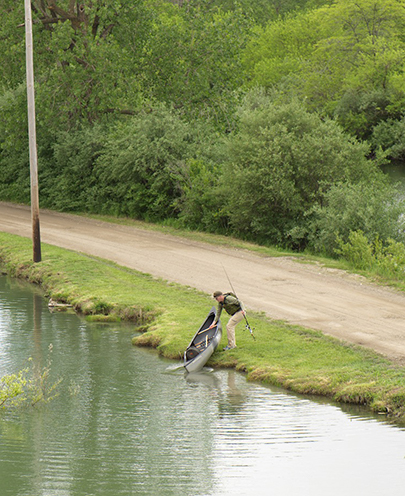
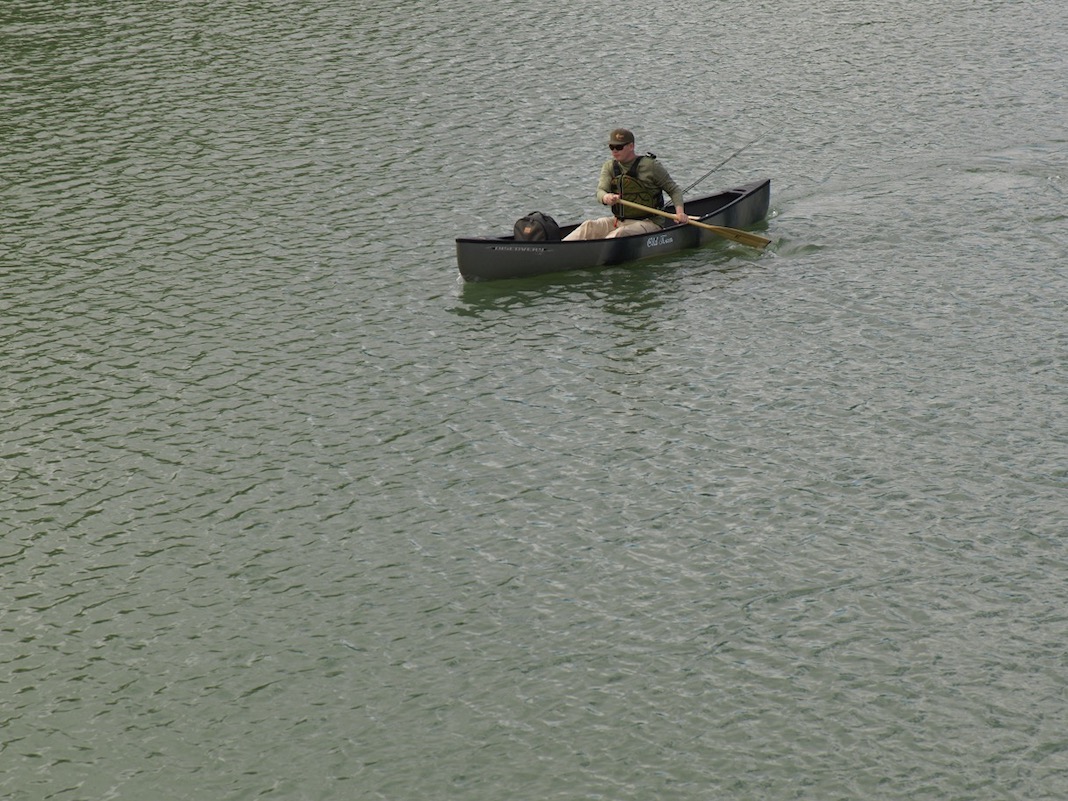
The Discovery 119 canoe is an outstanding choice for fishing and recreational use, suitable for single-blade canoe and double-blade kayak paddles. Its compact dimensions and ability to go anywhere make it especially popular among anglers and hunters.
This Old Town Discovery 119 canoe review will highlight its design characteristics and performance attributes, letting you know if you’re the right paddler for this versatile solo boat.
The Old Town Discovery 119 canoe boasts an impressive blend of speed, stability, maneuverability and tracking—with enough carrying capacity for short solo canoe camping trips, angling outings and duck hunts. The Discovery 119’s compact dimensions allow it to accelerate quickly, especially when propelled with a double-bladed kayak paddle; cruising speed is impressive given its short length.
At 32.5 inches wide, the Old Town Discovery 119 strikes a fine balance: it’s narrow enough for easy solo paddling yet also remains quite stable for novice paddlers. There’s plenty of room ahead of the paddler to fit a well-behaved mid-sized dog. The handling of any canoe is determined by its length and rocker (is the bow-to-stern profile of the hull curved like a banana or flat?). The Discovery 119 has moderate upturn at the bow and stern, creating some rocker for maneuverability.
Meanwhile, the Old Town Discovery 119’s sub-12-foot length adds to its ease of handling—though this comes at the expense of some glide and speed (shorter canoes tend to be slower than longer ones). The Discovery 119 is easiest to handle with a double-bladed paddle; some steering stroke technique is required if you want to propel this craft with a single-bladed paddle.
Market and demographics
“Versatile” is perhaps the best word to describe the Old Town Discovery 119. It makes an excellent solo tripping canoe for smaller paddlers and an excellent day tripper for larger paddlers or those who like to get on the water with their dog. The Discovery 119 is all the boat you need if you’re looking for a general-purpose solo canoe that excels in the conditions encountered on small lakes and gentle rivers.
Photo: Courtesy Old Town Canoe & Kayak
Old Town Discovery 119 whitewater performance is adequate for Class I and II rivers in the hands of a skilled paddler. Overall, this canoe performs admirably, is easy to carry and cartop, and is built to last.
Fishing is a blast in the Old Town Discovery 119. With reassuring stability and plenty of space for rods and tackle, the Discovery 119 is a solid choice for anglers. Once again, versatility is the name of the game: The Discovery 119 is a crossover canoe, an excellent choice for dedicated paddlers who also like to fish. In fact, a dedicated Old Town Discovery 119 Solo Sportsman model is available, rigged with rod and ammo holders and a kayak-style seat for added stability.
Comfort
The basic Old Town Discovery 119 canoe comes equipped like a traditional canoe with ash-framed web seats and ash crossbars. It’s best for use with a single-bladed paddle in the kneeling or sitting position, though it’s also comfortable with a longer kayak-style paddle.
The upgraded 119 Solo and 119 Solo Sportsman models both have a kayak-style adjustable, bucket-style seat with an articulated backrest and adjustable foot braces. The lower seat position makes it most comfortable for use with a double-bladed paddle.
About the Discovery 119 canoe
Design
Design features and details
The Old Town Discovery 119 canoe has the look and feel of a traditional canoe. It paddles predictably, responding nimbly to paddle strokes and remaining stable in rough conditions. Credit the Discovery 119’s shallow arch hull (which responds to weight shifts smoothly) and straight sides for this solo canoe’s predictable performance.
The compact 11.9-foot length combines with moderate rocker for good maneuverability around obstructions and in moving water. The Old Town Discovery 119’s polyethylene construction is extremely buoyant; its blunt entry lines at the bow and stern allow the canoe to float over waves, making for a dry ride in choppy conditions.
Material and construction
The Old Town Discovery 119 canoe is constructed of three-layer polyethylene, a stiff and durable plastic laminate. Old Town stands behind the durability of its canoes: The Discovery 119 comes backed with a limited lifetime warranty.
The Old Town Discovery 119 will easily stand up to most impacts encountered while whitewater canoeing and is plenty tough for the entire family to use around the cabin. The weight penalty that comes with bombproof construction is minimal in the compact Discovery 119; the base model weighs a manageable 50 pounds.
Design trends
The Old Town Discovery 119 bridges the gap between traditional solo canoes and compact “pack” canoes, which are often propelled with double-bladed kayak paddles. You get the best of both worlds: A durable, river-ready craft with elegant lines that can be used with either a canoe or kayak paddle. What’s more, the Discovery 119 is also a perfect choice for dedicated paddlers who like to hunt and fish.
Old Town Discovery 119 outfitting and accessories
The standard Old Town Discovery 119 comes equipped with a traditional ash-framed web seat, hung from the gunwales. It looks Spartan, but has the advantage of versatility, allowing you to sit to either side to tilt the canoe or to kneel with your feet tucked underneath (so long as your feet aren’t too large). This is the preferred posture for many experienced paddlers and highly recommended for engaged paddling and whitewater conditions.
Outfitting in this traditional-style canoe remains basic, with ash thwarts and carry handles molded into the bow and stern decks. Note that the Old Town Discovery 119 is outfitted for solo paddling and lacks a center thwart or yoke for portaging; you’ll want to buy a removable yoke if you plan on portaging the Discovery 119 for any distance on canoe trips.
The Old Town Discovery 119 seat gets an upgrade in the Solo and Solo Sportsman models, with a kayak-style bucket seat installed close to the floor of the canoe. It’s the best choice if you intend to use a kayak paddle (at which point the included foot braces become essential). These versions include drink holders and, in the Sportsman model, fishing rod and ammunition holders.
Ready-made Old Town Discovery 119 trolling motor kits are not available from the manufacturer, however many Discovery 119 anglers have come up with creative DIY solutions to retrofit their canoe with a trolling motor mount bracket.
Old Town Discovery 119 modifications
The easiest way to make an Old Town Discovery 119 seat upgrade is to select either the Solo or Solo Sportsman model, both of which come with a kayak-style seat and adjustable backband for lumbar support. If you have the time and skills to make upgrades yourself, it’s possible to carve a custom seat from closed-cell foam and install it in the hull with a structural adhesive, such as Vinyl Tec 2000. Follow the instructions carefully to ensure a lasting bond.
Another seat upgrade is to replace the standard, bench-style seat with a contoured seat, which are available online. With this approach you can change the height of the seat below the gunwales with different length spacers and bolts.
Warranty
The durable Old Town Discovery 119 comes backed with a limited lifetime warranty, which covers the three-layer polyethylene hull and deck plates, covering defects in workmanship and materials.
How it compares
Old Town Discovery 119 vs Guide 119
The Old Town Discovery 119 and Old Town Guide 119 are the same canoe, except the guide has a tractor-style molded plastic seat, with backrest. This style of seat is better for those who prefer a double-blade kayak paddle. Otherwise, performance is virtually identical. The Guide 119 was produced for Dick’s Sporting Goods in the U.S.—and has since been discontinued. The Old Town Guide 119 is still available on the used market; begin by searching Old Town Guide 119 Craigslist.
Old Town Discovery 119 vs Next
Old Town plugged the Next as “the future of paddling,” touting this 13-footer as a cross between a canoe and kayak. It’s longer and narrower than the Old Town Discovery 119, making it somewhat faster and easier to paddle, at the expense of stability. The Next tips the scales at 59 pounds, nearly 10 pounds heavier than the Discovery 119 solo canoe. It boasts the same three-layer polyethylene construction.
Comfort-wise, the Next features Old Town’s Element Seating System, which offers great adjustability. Choose the Old Town Discovery 119 if you’re looking for a traditional solo canoe experience and prefer a single-bladed paddle. The Next features far more bells and whistles—and is a superior choice if you want to use a kayak paddle.
Old Town Discovery 119 vs Old Town Pack
The main difference between the Old Town Pack and Discovery 119 is construction: The discontinued Pack was made of Royalex, a durable plastic laminate that is stiffer and somewhat lighter than polyethylene. As a result, the 12-foot Pack weighs only 33 pounds, making it a great choice for canoe trips with lots of portages. Otherwise, the two canoes are virtually identical.
Similar to the Old Town Discovery 119, the Pack is ideal for those who prefer using a single-bladed canoe paddle. It also features an ash-frame web seat that’s hung from the gunwales. The Pack was a popular canoe and remains available on the used market; try searching Old Town Pack on Craigslist or Kijiji.
Photo: Courtesy Old Town Canoe & Kayak
Where to buy the Discovery 119
Old Town Discovery 119 solo canoes are widely available from paddlesports retailers across North America; visit the Old Town website for a complete list of retailers. Looking to save a few dollars? Google Old Town Discovery 119 Craigslist to comb the used market.
Discovery 119 pros and cons
Pros
Great for those who wish to paddle independently
Big enough to be safe and seaworthy
Small enough and cleverly designed to be easy to control, even for beginner paddlers
Can be paddled with a single- or double-bladed paddle
Provides stable platform for anglers to fish from
Performance is plenty adequate for Class I and II rivers
Solid tripping canoe for outings up to a week in length
Cons
Old Town Discovery 119 Solo or Solo Sportsman are better if you prefer an adjustable kayak-style seat
Will need to buy a removable portage yoke if you wish to use it for canoe trips where portages are necessary
Weighs a solid 50 pounds, making it a bit of a grunt to load on taller vehicles and a challenge for longer portages
“I’m going up the country, babe don’t you wanna go/I’m going to some place where I’ve never been before/I’m going, I’m going where the water tastes like wine.” —Canned Heat | Feature photo: Frank Wolf
You don’t have to be superhuman to cross a continent by canoe. With the right mindset and some preparation, anyone with determination and a love of canoe tripping can cross continents by paddle power alone. Here are some tips from an epic expedition to help as you prepare for your own cross-country canoe trip.
How to complete a cross-country canoe trip
On April 18, 1995, Roman Rockliffe and I dipped our paddles into the Bay of Fundy. We had no support team and little funding; only a canoe and a dream.
In the following six months, we paddled up the Saint Lawrence, sloshed across the Great Lakes, hopped through the Boundary Waters, danced across Lake Winnipeg, toiled up the North Saskatchewan, grunted over the Rockies and then flew down the Fraser. On October 12 we splashed down in the Pacific Ocean and tasted its salty broth, bringing our great adventure to a close.
How did we pull off this continent-spanning journey without hitting the wall—or each other? Read on to find out how you can do it too.
“I’m going up the country, babe don’t you wanna go/I’m going to some place where I’ve never been before/I’m going, I’m going where the water tastes like wine.” —Canned Heat | Feature photo: Frank Wolf
5 tips for a successful cross-country canoe trip
1 Pick the right partner
Some might think on a 180-day canoe trip you’d want your best friend or partner to be your companion. It could work, sure…or you could be at the throat of your dear friend and ruin that relationship forever.
In order to do all 5,000 miles from the East to West coasts, you have to be prepared to paddle and portage for 10 to 12 hours a day, every day. So pick out a determined individual who loves to trip and shares your dream.
2 Gear up
A 180-day trip requires the same gear as a weekend trip. All you essentially need is a canoe, tent, stove, pot set, paddles and basic clothing. Ah yes, one more thing…
When we got to the Rockies, we faced a 250-mile portage over the divide between the North Saskatchewan and the Fraser. Get a canoe cart for that section. We slugged through in seven mind-numbing days, pulling our canoe and gear along the Yellowhead Highway. I shudder to think of toting our load the same distance on our backs.
We discovered on our journey we could average about 40 miles per day on flat water, 55 miles per day downstream and 30 miles per day upstream. Portaging, of course, cut down these distances.
To keep the engine humming at this pace, we ate a very basic diet. It consisted of oatmeal for breakfast, peanut butter and jam on tortillas for lunch, and some facsimile of freeze-dried noodles and gravy for dinner. Energy bar breaks during mid-morning and mid-afternoon rounded out our Spartan diet.
Anyone with determination and a love of paddling can complete a cross-country canoe trip. | Photo: Headshatter/Pexels
We sent our food ahead to towns along the route by mail before we left. Call ahead and talk to the person in charge of each respective post office so they’ll hold it beyond the usual 30 days before returning it to the sender.
Often you’ll be able to find a cheap buffet in the town where you pick up your cache. Go on in, then amaze, confound, and finally bring the poor proprietor to tears as you proceed to eat every last bit of food on the buffet table.
4 Get half a year off to go on a trip
Don’t let a job get in the way of a dream. Ask your superiors nicely. If they refuse, quit. There are thousands of jobs out there but there is only one trip of a lifetime. Let the canoe become your office and the tent your home. “Back in the days when I canoed across the country…” is going to sound better to your grandchildren than, “Back in the days when I processed insurance claims….”
5 Maintain an adventurous attitude
If on day 10 you’re hoping for day 180, the trip is as good as over. On long trips, the best mental approach is to savor every day, one paddle stroke at a time. You can never look ahead. Living in the moment is the way to go. Remind yourself that you will never pass this way again.
On a point-to-point canoe trip, every dip of the blade brings you in contact with different sights and sounds that are gone a moment later. When it’s pissing rain, you’re paddling upstream, the bugs are hammering you, and you miss your family and friends, think to yourself, “Where in the world would I rather be?” Inevitably, your answer will be, “Nowhere. Nowhere but here, on a canoe trip across a continent.”
“I’m going up the country, babe don’t you wanna go/I’m going to some place where I’ve never been before/I’m going, I’m going where the water tastes like wine.” —Canned Heat | Feature photo: Frank Wolf
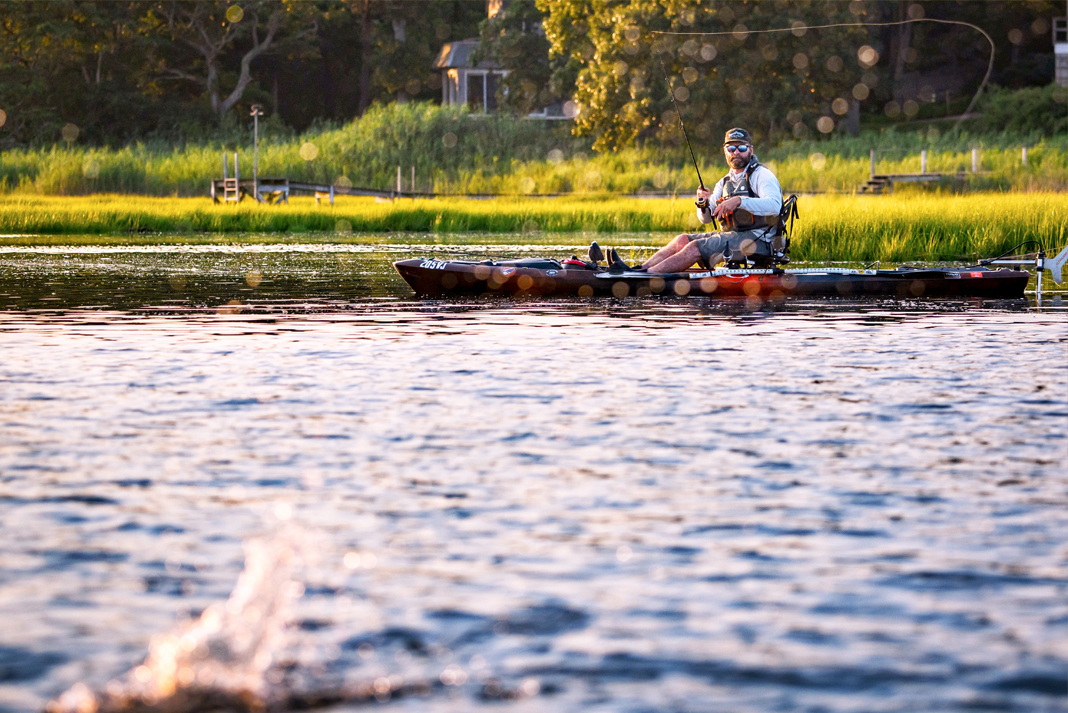
The marriage of watercraft and angling have been hand in hand since, well, the invention of boats. Sport fishing has come a long way though, and the days of holding a rod in your mouth while back paddling away from the mangroves is all but forgotten in the wake of pedal drives, flush-mounted rod holders and accessory tracks found on today’s best fishing kayaks.
Whether you fish competitively or just for fun, there’s a modern fishing kayak to suit your needs and appetite. From affordable, easy-to-use recreational kayaks with just enough fish-focused features, to elaborate rigs costing thousands of dollars and capable of landing massive offshore trophies.
Fishing kayaks are also available in a range of propulsion options. Some are paddled the old-fashioned way. Others employ a fin or propeller system that’s powered by foot pedal drive. In recent years fishing kayaks have also come to accept electric trolling motors, for fully motorized kayaking.
The number of brands and models of fishing kayaks to choose from can be intimidating. Our goal is to get you on the water so you can start doing what you love: catching fish. This article will share everything you need to know to compare the best fishing kayaks and find the one that will make your kayak angling dreams a reality.
Buying a fishing kayak can be a big investment. You’ve probably peeked at a few price tags and asked yourself how a fishing kayak could cost more than your first car. A great way to find a deal on a quality fishing kayak is to purchase used. But before jumping into the rabbit hole and searching “Craigslist fishing kayak” or “fishing kayak Kijiji”, you need to know what to look for.
Here are a few things to keep in mind when buying a used fishing kayak.
Know what you are looking at and what you want
Classified ads can use terms like fishing kayak broadly. The ad should have plenty of photos of the kayak, as well as details. If not, get more photos and details.
Be sure you have the brand, model and any other specifics like length to help you research a specific used kayak. If you are uncertain, ask the seller questions about how and where they used the kayak.
When deciding what kind of fishing kayak you need, use the buying guide section of this article as a reference.
Does the price of a used kayak make sense compared to buying new?
Depending on which brand of fishing kayak you find there can be a wide price range for the sticker price of a new boat. Do your brand research and see how much of a deal you are actually getting for the pre-loved boat.
If you are scooping up an expensive kayak for under $1,000, that’s great. But if you are looking at models which only cost a few hundred dollars when bought new, consider if the beat-up boat that’s growing mold under the seller’s porch is actually a better deal than a new purchase.
Be skeptical of owner-installed modifications
Souping up your rig is a common kayak angler pastime. The idea of going overboard doesn’t really exist for kayak anglers, at least not when it comes to adding additional gear mounts or installing a trolling motor mount via two-by-fours.
Making modifications to your fishing kayak is fun but, when purchasing a used fishing kayak, be skeptical of the work others have done to the kayak. Look for cracks and gaps around any bolts and holes which have been added. These will leak, and be points of failure on a kayak. Self-made modifications aren’t exactly manufacturer approved, so unless you’ve found the dream rig you could never put together on your own, it’s better to have a kayak on which you can make your own modifications.
Will this kayak actually work for your needs?
There are a lot of fishing kayak models on the market. Some are good, and some are terrible. You want to know a kayak has the speed, tracking, performance and (perhaps most of all) stability you will be comfortable with. The only way to know for sure if a fishing kayak is the best for you is to get it out on the water. See if you can meet the seller near a launch site, or make other arrangements for test paddling before committing to a purchase. Have your PFD, paddle and paddling layers with you unless these items are part of the sale.
Buying your first fishing kayak can be a really exciting time, but with so many options and different designs out there, figuring out how to choose a fishing kayak can also be really confusing. We’ve created this all-inclusive, definitive guide to answer your questions and make buying a fishing kayak a smooth and fun process.
Where will you be fishing?
The first question when choosing a fishing kayak is always, “where are you going to be fishing most of the time?” Specifically, what type of water will you be paddling in? If you’re going to be trolling for big lake trout for 90 percent of your fishing, you probably don’t need a super stable (and slower) kayak designed for standup fishing.
Are you going to be fishing faster moving water in rivers and creeks? Are you going to encounter rapids? If so, you’ll want a shorter, more nimble fishing kayak, usually less than 12 feet. Most moving water anglers will also want to avoid pedal drives that can be damaged on underwater rocks.
Are you going to be fishing bigger lakes, ponds or inshore? You’ll want a kayak which can get up and move, somewhere between 12 and 16 feet long.
Open ocean? You’ll want the longest and skinniest boat you can paddle comfortably so you can get out far with ease. Boats longer than 16 feet are going to be best for your type of kayak fishing. Secondary stability (how stable the kayak feels when tilted to the side) will be an important factor for an open ocean fishing kayak.
What’s your experience level in a kayak or canoe?
This question is more about balance than anything. Your experience level helps determine how skinny a boat can be before you feel unstable. Brand new paddler anglers are going to want a boat that is wider, at least 32” wide, so they don’t feel like they’re about to tip over with every cast. A more experienced angler who’s used to feeling a nimble craft rocking beneath them will be able to upgrade to a more nimble boat, something skinnier than 32”, which will make paddling around more enjoyable.
How does the kayak fit?
Turns out one size does not fit all. A larger angler may feel more comfortable in a wider kayak while a shorter angler looks for a narrow boat. Smaller, lighter paddlers may prefer to paddle while larger, heavier anglers go farther with less effort by using pedals or a motor.
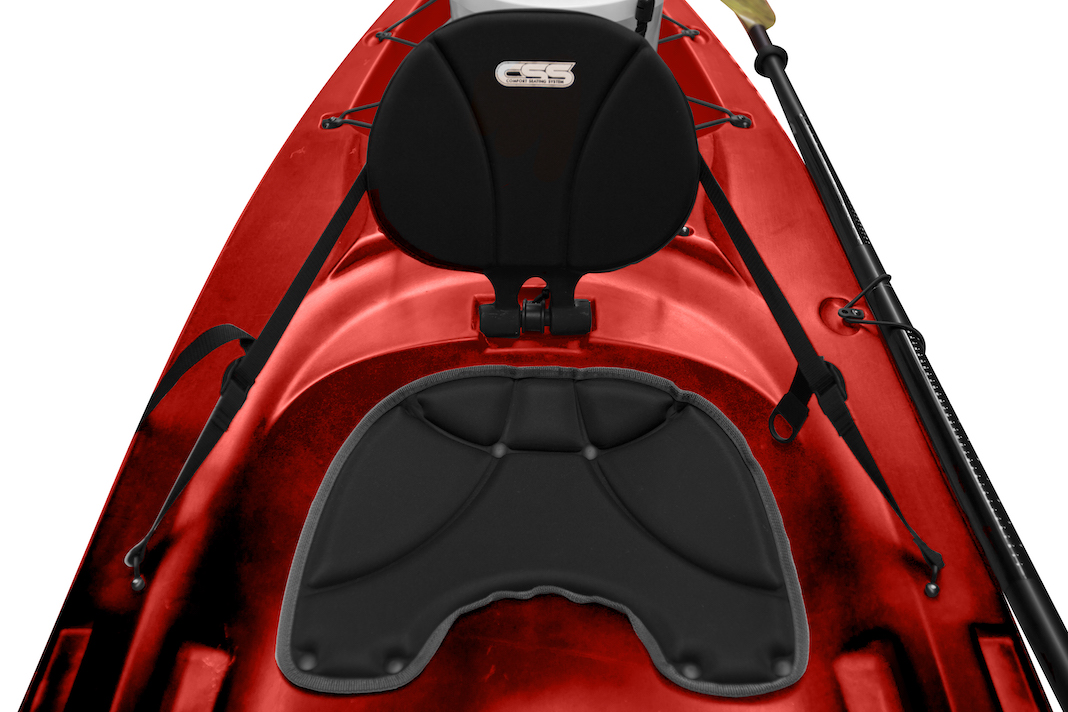
Fit comes down to more than length and width of the kayak. The kayak’s seat is the first thing to test. Not only should the seat be padded, fast drying and adjustable, but it must provide a solid platform for paddling or pedaling. Matching the angler’s body size to the seat size ensures the kayak fits like a glove.
Paddle, pedal or motor
Traditional paddle kayaks get where they are going the old-fashioned way. Paddle kayaks are lighter and cheaper than pedal- or motor-equipped alternatives. Aside from weight and cost, paddle power is better suited to some environments. If you’re going to be fishing swift moving rivers where you need to be agile and shallow, rocky bottoms come up fast, then a paddle kayak makes great sense.
One of the downsides to a paddle-only kayak is the need to use your hands for multiple tasks while fishing. It can quickly get frustrating to try to multitask with your hands. Both pedal- and motor-powered kayaks give anglers a hands-free option. This is a great advantage if your main focus is fishing, you have the room in your budget and you don’t mind hauling the additional weight of a pedal drive or trolling motor.
Both pedal and power options keep you on the water longer through the use of leg muscles or a marine battery. Most fishing kayak manufacturers now offer pedal-drive models, and many companies are now offering kayaks with motors or motor kits.
Pedal power keeps the experience simpler and human-propelled (and so remains a great way to exercise), and requires less overhead and maintenance than a trolling motor. If you want the stealth of a kayak, but the range and ease of a big motorboat, then check out boats with a motor option.
Sit-on-top vs sit-inside
Whether an angler should get a sit-inside or a sit-on-top kayak is really a mix of personal preference and the style of fishing you’ll be doing.
A sit-on-top fishing kayak is the most popular for kayak angling. A sit-on-top kayak is like having an open workbench. Almost everything, including the seating area, is laid out on the deck of the kayak. The seat being on top of the flat deck is the main feature of a sit-on-top kayak. This gives the paddler access to much of the kayak deck space while underway. You can reach a tackle box, swing a leg over the side to land your fish and, on models with sufficient stability, you may even stand up to cast or gain a better view.
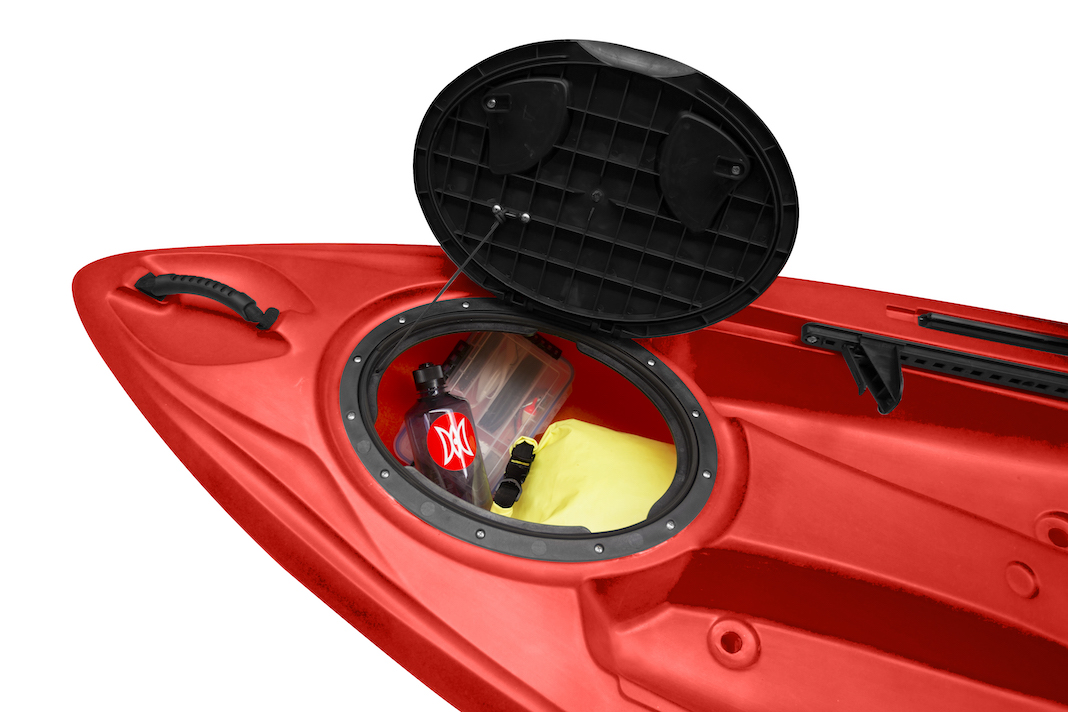
Sit-inside kayaks are another type of fishing kayak, and are a bit of an old-school choice. With a sit-inside kayak the paddler sits within the interior of the kayak. It’s a nice way to stay out of the elements, but decreases mobility for an angler. Sit-inside kayaks usually have hatches to store gear internally, this can be helpful if you are spending more time paddling than going through your lures, but also limits access to your tackle.
One of the biggest downsides to a sit-inside kayak is in the consequences of a capsize. When a sit-inside kayak capsizes the open cavity of the kayak fills with water. This means you have to get to shore and empty the kayak before you can re-enter. With a sit-on-top kayak, if you fall over or the kayak capsizes, you can just climb back on. If you’re going to be fishing out in the ocean or on a big lake where there’s a chance you could flip and have to get back in quickly and easily, a sit-on-top is the best option.
Hull design
The hull design will tell you a lot about how the kayak will perform on the water.
If the kayak has a pronounced keel running down the center then the boat is designed to track nicely in a perfect straight line. If the bottom of the hull is smooth with no keel protruding then the boat will be more agile and turn on a dime, but also harder to stand in. Pontoon hulls have a W-shape and are some of the most stable overall, though they generally plow slowly through the water. Pontoon shapes provide a great hull shape for a wide kayak with a standing platform within the cockpit.
When considering hull design the most important factor for kayak anglers is usually stability.
There are two types of fishing kayak stability. Primary and secondary. Primary stability is the amount of effort it takes to tilt the boat onto its edge, or in other words, to engage the secondary stability. Once on its edge, secondary stability is the amount of effort it takes to actually flip the boat over.
The easiest way to think about the two types of stability is to look at a jon boat compared to a sea kayak. Jon boats have flat bottoms with tons of primary stability, but the straight sides have very little secondary stability. It’s very hard to get a jon boat on its side, but once it is on its side, since there’s no secondary stability, the boat just flips right over. A sea kayak on the other hand has little primary stability, meaning it can tip over onto its edge pretty easily, but then it has more secondary stability so paddlers can carve on their edge or recover.
As a guideline, when it comes to width, the wider the fishing kayak the more stable it’ll be and better for standing. If you need a kayak to stand up and cast or sight fish from all day, then look toward wider fishing kayaks. Of course there are other factors to consider in hull shape, but as a general principle, the concept of more width equals more stability holds true.
A final consideration is length. In general, length equals speed—if everything on two different boats was exactly the same, the longer boat would be faster. If you need a boat that can go the distance or battle big tides, a faster boat might be the better option for you. Shorter boats tend to be more agile, so if you’re fishing moving water where dodging rocks is a factor, then you might want a shorter, stubbier boat that can turn on a dime.
Hull materials
Rotomolded plastic
The vast majority of fishing kayaks you’ll come across on your shopping quest will be made from rotomolded polyethylene. Most kayaks are rotomolded polyethylene because it is easy to produce and durable. You can slam up against rocks, structures, trees, the beach, and these things will keep on truckin’. The hull of a rotomolded kayak is produced as one piece with a rotational mold in an industrial-size oven.
Thermoformed plastic
Some companies have started making fishing kayaks from thermoformed plastic. Thermoformed plastic kayaks are often lighter than rotomolded kayaks. A thermoformed kayak can be made of various types of plastic, though polyethylene and ABS are popular. Thermoformed kayaks are produced in a top and bottom half and joined with a seam around the waterline.
Composites
Fishing kayaks made of composite materials such as carbon fiber are starting to pick up traction. The materials are expensive, but the performance and weight can be unmatchable. Composites such as carbon or fiberglass are mixed with resin and laid in layers. Composite kayaks can be cracked, but they can also be repaired. These can be some of the highest cost kayaks you’ll come across.
Inflatables
Inflatable kayaks can be a great option for anglers who don’t want to car-top or trailer their boats, or don’t have the storage space for a 12-foot rigid kayak. Inflatables can be made of various materials, but PVC or polyurethane-coated fabrics are most common. Simple inflatables are among the cheapest fishing kayaks available, but are also slower and have fewer fishing features.
Fishability features
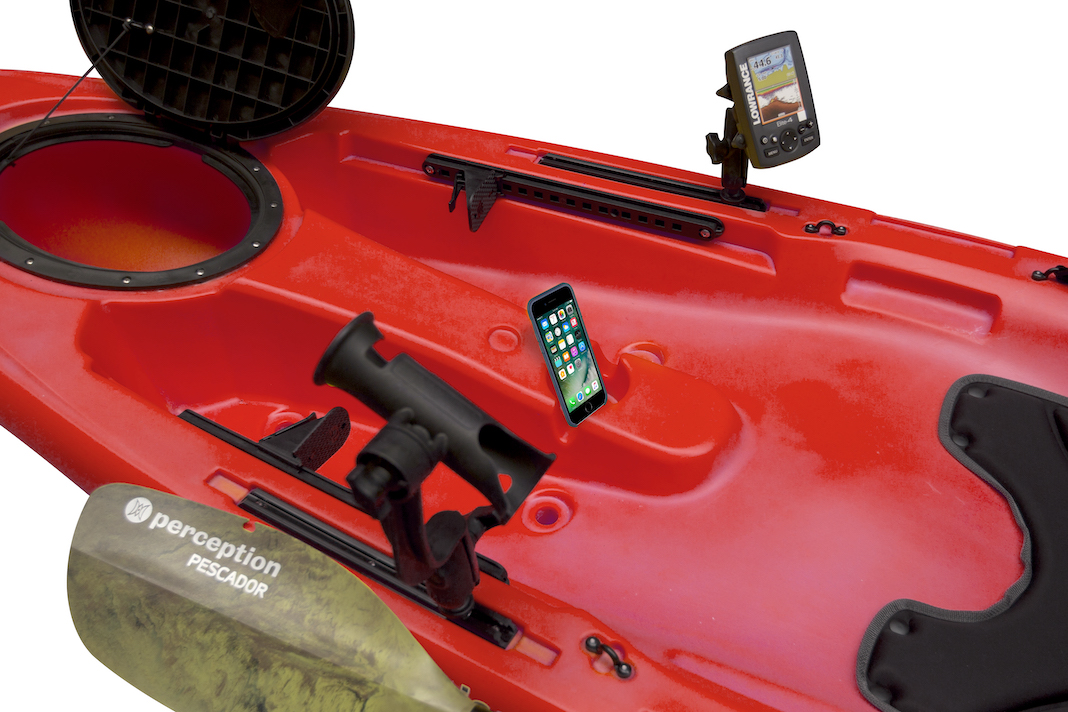
Accessories like gear tracks, rod holders, livewells, tackle storage, camera and video mounts, light mounts and deck padding can all add to a boat’s fishability and make it a real fishing-ready craft.
Some boats come fully rigged with all the gadgets you might want, so you’re ready to fish the moment you buy your boat. One way beginner boats cut cost is with fewer rod holders, gear tracks and hatches. For beginners, accessories are less important—you can always add gadgets and gear down the road.
A final word of advice
Try out as many different boats as you can before you buy. Your local paddling shop is also a great place to ask questions and seek demos of various models. While you are there check out accessories like paddles and PFDs designed for use with fishing kayaks.
There is still a lot of water to cover when it comes to discussing the best fishing kayaks. Here are answers to some of the top questions kayak anglers have.
Are kayaks good for fishing?
Kayaks make a great watercraft for fishing, especially those specifically designed for kayak angling. A kayak is easy to transport, less paperwork and upkeep than a motorized boat, and generally more affordable to purchase. The best part of fishing from a kayak though may be the ability to reach places a motorized boat can not, and taking part in a physically engaging and environmentally friendly activity while fishing.
Is a fishing kayak worth it?
You do not need to purchase a kayak specifically designed for fishing in order to fish from a kayak. However, if your main aim for heading out on the water is fishing, then a kayak designed specifically for angling can make the experience much more enjoyable. Fishing kayaks include features such as rod holders, gear mounts and tank wells to store your rods, tackle and bait. Higher end fishing kayaks may even have pedal drives or electric trolling motors to keep your hands free for more fishing action.
Can you fish from a kayak?
You can absolutely fish from a kayak. Choose a kayak equipped with rod holders and other fishing-focused features for the easiest kayak angling experience. Some fishing kayaks are even designed with enough width and stability to use as a standing platform for casting.
Should I buy a fishing kayak?
Whether you buy a fishing kayak or another type of kayak is largely dependent on your primary use for the kayak and the types of waterways you’ll be paddling. If you expect to use the boat primarily for fishing outings, then a fishing kayak is the best choice, as these types of kayaks include rod holders and storage areas for tackle.
Fishing kayaks are also designed with stability in mind for casting and fighting fish. If you plan to paddle more recreationally with some casual fishing on the side, then a lighter weight and cheaper recreational kayak may be more appropriate for your needs.
Kayak vs fishing kayak
Fishing kayaks share many of the same design elements as most other kayaks. Some of the most affordable fishing kayaks are simply recreational kayak designs with a few additional features specific to fishing, such as rod holders, gear mounts and tackle or bait storage areas.
Higher priced fishing kayaks include deck and hull shapes specifically designed around kayak fishing, including pontoon hulls for standup stability and pedal drive or electric motors for greater range and speed. These fishing kayaks are also considerably more expensive than a basic kayak.
Fishing kayak vs touring kayak
Kayaks labeled as fishing kayaks have different dimensions and features than those labeled as touring kayaks. A fishing kayak is usually wider and much more stable than a touring kayak.
Touring kayaks are generally longer and narrower, and have more speed to cover distance on a paddling focused outing, while fishing kayaks are usually designed more for comfort and stability over speed.
A fishing kayak also includes fishing specific features such as rod holders, accessory tracks and tankwells for on deck storage. By comparison, a touring kayak will have a more streamlined deck profile, and most storage will be within the kayak and accessed through hatches on the deck.
Fishing kayak vs jon boat
A fishing kayak differs from a Jon boat in design and usually propulsion. A Jon boat is a lightweight, flat bottomed boat powered by a small motor. While some kayaks have started to include electric trolling motors, fishing kayaks are generally powered by human effort with a paddle or foot pedal drive.
Another difference between using a fishing kayak versus a Jon boat is paperwork. Since a Jon boat is a motorized vessel, it will require registration in more jurisdictions than a kayak.
Fishing paddleboard vs kayak
A fishing paddleboard refers to a standup paddleboard rigged for fishing. A standup paddleboard has a flat open deck, and is paddled from a standing position with a long, single-blade paddle.
Fishing from a standup paddleboard has benefits such as an increased line of sight and superior stealth. Plus, you can attach gear to just about anywhere on the deck. Some hybrid paddleboards even have a removable seat so you can sit to rest or fight fish.
On the other hand, fishing from a kayak provides more capability and stability in rough water conditions, and a kayak also has more storage space.
Fishing boat vs kayak
A fishing boat usually refers to a motorized vessel. Fishing kayaks have the advantage of being lighter, and capable of reaching shallower and tighter waterways. Fishing kayaks generally have less overhead cost as well, are easier to maintain, store and transport, and provide a physically active and environmentally friendly fishing experience.
Fishing kayak vs recreational kayak
Fishing kayaks and recreational kayaks are often quite similar in design. However, fishing kayaks have more features for dedicated kayak anglers, including rod holders, gear tracks and tackle storage areas. Choose a fishing kayak if fishing will be your primary on-water focus; a recreational kayak is a solid choice for paddlers who may want to occasionally toss a line.
Fishing kayak vs regular kayak
Fishing kayaks have a general resemblance to other types of kayaks, especially recreational kayaks. Recreational kayaks are intended for use on calm, sheltered water and slow moving waterways. Recreational kayaks generally prioritize stability over speed.
Fishing kayaks tend to have similar overall performance to recreational kayaks, however they will also include fish-focused features such as rod holders or larger tankwells for storage.
Fishing kayaks may also have specific design elements such as a pontoon hull for increased stability, or a flat open area in the cockpit to provide a platform for standing, which you would not find on a regular recreational kayak.
What makes a good fishing kayak?
A good fishing kayak should have a comfortable seat for spending extended time sitting while you are on the water. A fishing kayak should also feel stable enough for you to cast, fight and land fish. Good fishing kayaks have a thoughtful layout of storage space for your tackle, rods, paddle and other accessories.
Sit in or sit on kayak for fishing
Both sit-inside and sit-on-top kayaks are capable of fishing, but the vast majority of dedicated fishing kayaks are of a sit-on-top design. The reason for this is simple: sit-on-tops tend to be wider and more stable, with open decks that allow better paddler mobility and access to gear. A sit-inside will also fill with water should you capsize, while a sit-on-top will not, and can easily be re-entered if the paddler falls off or tips over in deep water.
What size fishing kayak do I need?
The size of the fishing kayak you need is dependent on how and where you plan to use your fishing kayak. A 12-foot kayak is a great starting length for a good all-around fishing kayak. Choose a longer kayak if your ambitions run to covering more ground on open bays and larger lakes.
Fishing kayak features
Some of the most common fishing kayak features include flush-mount and swiveling rod holders, gear tracks for mounting fish finders and other accessories, open tankwells for tackle storage, small hatches for dry storage, a paddle holder and an elevated folding seat.
How much does a fishing kayak weigh?
The weight of a fishing kayak is dependent on its construction, size and design. It’s common for simple, paddle-powered fishing kayaks to weigh over 50 pounds. Pedal-powered fishing kayaks, with their complex pedal drive and elevated lawn-chair seat, can weigh well over 100 pounds.
In general, fishing kayaks are often heavy and cumbersome to lift and transport. For this reason, kayak anglers typically use a cart to wheel their kayak to and from the water.
Fishing kayak width
Fishing kayak width will vary with each fishing kayak model. Many fishing kayak designs will commonly be wider than other types of kayaks to provide more stability for casting and fighting fish, and even standing on the kayak. For a beginner-friendly fishing kayak, look for widths greater than 32 inches.
Best length for fishing kayak
The best length for a fishing kayak largely depends on how and where you plan to use your kayak. The 10- to 12-foot range is the most common length of fishing kayak. This size provides a good overall length for a variety of waters, with a user-friendly blend of speed, maneuverability, and ease of storage and transportation.
If you’ll mostly be fishing bigger lakes, ponds or inshore, you will want a kayak that is faster for covering distance, somewhere between 12 and 16 feet long.
Fishing kayak weight capacity
A fishing kayak’s weight capacity will vary with each kayak model. Be sure to check the manufacturer’s specifications to ensure the combined weight of you and your gear is within the kayak’s maximum weight limit. In general, fishing kayaks have higher weight capacities than similarly sized recreational kayaks.
How much do fishing kayaks cost?
Entry level kayak anglers looking to purchase a new fishing kayak should expect to spend around $1,000 for a paddle-powered kayak, and about $2,000 for a pedal-drive fishing kayak. The top fishing kayak models can cost $4,000 or more.
Why are fishing kayaks so expensive?
The price of a fishing kayak will likely be higher than a similar recreational kayak because of the inclusion of specialized outfitting accessories for kayak anglers. The price is also higher because many fishing kayaks are larger than recreational kayaks, requiring the use of more materials in production. Advanced features like pedal drives or e-motors also drive the price of these fishing kayaks much higher than paddle-powered models.
Do fishing kayaks flip easily?
Fishing kayaks are generally very stable, and most of the popular designs do not flip easily. Paddlers should understand there is always a possibility of capsizing. Dress appropriately, wear a properly fitting PFD (personal flotation device), and check the kayak’s maximum capacity before use.
Fishing kayak speed
The speed of a fishing kayak is relative to its length and shape, as well as a paddler’s ability. All other things being equal, longer equals faster. A fishing kayak with a long, narrow waterline is capable of more speed than a short, wide kayak.
Expect most paddle-powered fishing kayaks in the 10- to 12-foot range to have an average speed of around 2 mph, and be able to pick up to a higher speed of around 3 mph.
Pedal drive kayaks will have a similar average speed as a paddle kayak, but can reach top speeds of around 5 mph.
Finally, motorized fishing kayaks, such as Old Town kayaks with Minn Kota trolling motor, can travel at sustained speeds over 4 mph.
Are fishing kayaks safe?
Like any other kayak, the safety of fishing kayaks relies on the proper use of personal safety equipment, good judgment and an understanding of appropriate waterways for your ability level and the kayak you are using.
Keep in mind there is always the possibility of a kayak capsizing. Practicing how to self-rescue is an important skill.
For an inexperienced paddler, a sit-on top fishing kayak is a safer choice than a sit-inside design. Unlike sit-in kayaks, which will flood with water if they tip over, a sit-on-top kayak doesn’t take on water and won’t sink if capsized.
Are fishing kayaks stable?
Fishing kayaks are some of the most stable in the kayak market. In fact, some fishing kayaks are stable enough to allow comfortable standup fishing. Look for a fishing kayak with a pontoon hull for maximum stability.
Paddlers should understand there is always a possibility of capsizing. Dress appropriately, wear a properly fitting PFD (personal flotation device), and check the kayak’s maximum capacity before use.
Where to buy a fishing kayak
Fishing kayaks are widely available across North America at many big-box outdoor, hardware and department stores, as well as through online retailers like Amazon. The best place to purchase a fishing kayak, though, is your nearest paddling specialty shop. Paddling specialty shops have a vast understanding of kayaks and your surrounding waterways, and can provide you with proven advice for purchasing the best fishing kayak for your needs.
Can you tour in a fishing kayak?
While you can certainly tour shorter distances in a fishing kayak, this is not the most efficient craft for covering many miles. Fishing kayaks have less hull speed and glide than dedicated touring kayaks, as well as less interior storage space. However, if you pack thoughtfully and plan a bit more time, a fishing kayak—especially longer models (14 to 16 feet) designed for offshore fishing—can be used for ambitious day tours or even a multi day excursion.
Can you use a fishing kayak on the river?
There are fishing kayak models designed with rivers in mind. Some will even handle mild rapids as well. A fishing kayak intended for the river will be shorter with a smooth, flatter bottom for better maneuverability.
Most stable fishing kayak
It’s difficult to say which fishing kayak model is the most stable, however, in general wider fishing kayaks with a pontoon hull provide more stability and a better platform for standing.
Fastest fishing kayak
As a general rule, longer, narrower and lighter fishing kayaks are the fastest. Take this into account when assessing the top speed of different fishing kayaks.
Expect the fastest paddle-powered fishing kayaks to top out around 3 mph, with motorized and pedal drive kayaks reaching a max speed of about 5 mph.
Fishing kayak reviews
How does a specific fishing kayak model perform on the water? What’s the story with the brand? What are popular modifications for a fishing kayak? Our comprehensive reviews discuss on-water performance, company background, design and popular modifications, as well as specifications, price and places to purchase.
This pandemic has turned the retail game on its head.
Used to be, you waited for customers in a store full of stuff. Now you wait for stuff in a store full of customers. So, what do you do when there’s nothing to sell?
Humans are adaptable creatures, and retail humans more so than most. So naturally they – you – are coming up with creative ways to pass the weeks between inventory shipments.
When he sold out of life jackets, Rob Porter at Just Liquid Sports in Cranbrook, British Columbia, started teaching swimming lessons. Wait, he was just joking about that. The real problem for Porter was finding staff for his mostly-empty store.
“It seems most young enthusiasts wanted to ride the CERB [Canada Emergency Response Benefit] payroll and enjoy their summers,” he says. “To all those people, we wish them luck when applying for jobs in the future.”
Generous unemployment benefits have slowed staffing in the States as well, both on the retail and manufacturing side. It’s one reason all those store shelves are empty—still. Andy Fraden, owner of All Wet Sports in Jacksonville, Florida, says getting inventory this season has been even harder than it was at the height of the pandemic last summer.
“Last year was lots of movement but we found a way to keep stock. This year what little was replaced by wholesalers and distributors is long gone.”
“Last year was lots of movement but we found a way to keep stock. This year what little was replaced by wholesalers and distributors is long gone,” he says.
“It’s crazy! So this year we just sell what we got! Need any whistles?”
Photo: The Complete Paddler
If only everyone was lucky enough to have a full supply of $3 plastic whistles. Judging by mid-pandemic photos from inside many retailers across North America, the smart play might have been turning those empty store aisles into a bowling alley. So far we haven’t heard of any retailers being quite that resourceful.
Industrious retailers have found ways to keep busy, however. Simon Coward and his management team at Aquabatics Calgary got on the horn with new suppliers from around North America and the world, hunting for inventory. “We created new relationships with manufacturers we hadn’t worked with, and that is proving to be really valuable in the long run,” he said.
That may not be as fun as an inter-staff bowling tournament on aisle 3, but it’s probably better for the bottom line. Coward’s crew also logged more river time than usual, including staff training to build on-water skills and get familiar with whatever products were still on
the shelves. The level of in-house Croakie expertise soared.
Aquabatics also implemented an entirely new inventory management system and integrated it with the website. “We produced content—videos, how-to’s, blog posts, where to’s. We leaned into Paddling Maps like crazy,” Coward says. “It is now paying off with huge increases in organic traffic and building our visibility on social media channels.”
That’s perfect, because social media is where plenty of paddling store employees are hanging out these days. After all, you can’t play Solitaire on a cash register. Can you?
This article was first published in the 2022 issue of Paddling Business. Inside you’ll find the year’s hottest gear for canoeing, kayaking, whitewater and paddleboarding. Plus: Industry leaders on surviving COVID, the dirty little secret of pro deals, brand consolidation and more. READ IT NOW »
There are many good reasons the Perception Pescador 12 sit-on-top fishing kayak is a fan favorite. First, at only 64 pounds with seat, the Perception Pescador 12 fishing kayak is lighter than almost every boat in its class. Even better, the weight savings come from a paired down hull that isn’t light on form or function.
Second, pedigree. For over 40 years, Perception has been a leader in getting paddlers on the water. The company is staffed by passionate kayakers who design, mold and hand-assemble every Perception kayak in Greenville, South Carolina. With paddling experience running through the company, Perception’s team knows the personal touches that make kayaking fun for paddlers of all experience levels.
Third, a proven track record. Sit-on-top fishing kayak connoisseurs will know the Perception Pescador 12.0 kayak as the original Wilderness Systems Tarpon 120, released around 2008. Today, Wilderness Systems and Perception are both owned by Confluence Outdoor. When the much-loved Tarpon line received an update, the original mold was sent over to Perception to continue as the Pescador 12.
Finally, value. The Perception Pescador 12 is an affordable, versatile fishing kayak that offers many of the premium features of more expensive boats, for less than $800 USD. This Perception Pescador 12.0 kayak review takes a deep dive into the performance, handling and features that make this such a popular boat for so many different anglers.
The Perception Pescador 12 is a sit-on-top kayak. Sit-on-top kayaks are the most popular choice for kayak fishing, as the open deck allows the angler better mobility and more accessible storage space for rods and tackle. Sit-on-top kayaks are also easier than a sit-inside to enter and exit, and should you fall out of a sit-on-top you can simply climb back on and get going again.
Topside, the Perception Pescador 12 has an open rear tankwell as well as a spacious front hatch for dry storage. The padded seat is supportive and comfortable and Perception paired it with premium foot braces that don’t slip (more on outfitting later).
The underside of the Perception Pescador 12 is as impressive as the top. The boat paddles confidently and the flat-bottomed, 32.5-inch-wide hull supports a standing angler with good balance. A multi-chine hull profile provides solid secondary stability without reducing maneuverability.
What does this mean, exactly? Well, some kayaks have large flat bottoms with plenty of initial stability, but are considerably less stable when the kayak is tilted to one side (known as secondary stability). Other kayaks have rounded bottoms, which feel more stable in waves and swells but lend the boat a tippy feeling on flatwater, like it wants to rock to one side or the other.
Photos: Courtesy Perception Kayaks
The Pescador combines the best of both worlds. The flat, stable bottom pairs with a multi-chine hull profile that transitions from flat to tilted in gradual steps. This secondary stability gives the Pescador its confidence-inspiring ability to handle rolling waves in exposed waterways. It also allows users to tilt the boat on its edge to enhance maneuverability for quicker turning.
Users of the Perception Pescador 12 are often surprised at how fast this kayak feels compared to similar boats in its class. Its light weight combined with the tapered and streamlined hull shape give the Pescador 12 enough speed to battle headwinds or climb against tidal current. At 12 feet long, it’s not going to win any races against 14- or 16-footers, but the Pescador is still quick for a fishing kayak.
The Perception Pescador 12 hull is cut with long channels that improve tracking. Tracking describes a kayak’s ability to travel in a straight line with minimal corrections. The Pescador 12 is able to hold course in pesky crosswinds thanks to a pronounced keel (ridge in the center of the hull) at the bow and stern.
Perception improved tracking even further by shaping the Pescador 12 stern to act like a built-in skeg. A helpful analogy is to think of a skeg like studded tires on an icy road. Without it, when you stopped paddling, the rear of the kayak would slide out like the back end of a car that’s lost traction.
Perception Pescador 12 users also applaud the boat’s ability to handle waves and choppy water with ease. If you look at the side profile of the Pescador, you can get a sense of something kayak designers call “rocker”. Rocker describes the hull’s upward curve from bow to stern. A kayak with extreme rocker from end to end would have a banana shape. Like every other design element, rocker is a compromise: lots of rocker equates to better maneuverability and handling in choppy water, but poor tracking and less speed on flatwater. The Perception Pescador 12 has just enough rocker to assist with riding over choppy water so you don’t bog down in the troughs, but not so much that it robs cruising speed.
Market and demographics
The Perception Pescador 12.0 kayak is a sit-on-top fishing kayak best suited for lakes, ponds, slow-moving rivers and calm coastal areas.
The sub-$800 price tag and paired down outfitting classify the Pescador 12 as an entry level kayak, but this proven design is well known for punching above its class. Longtime Pescador 12 users say it is one of the best entry level fishing kayaks on the market.
A capable and versatile fishing kayak that can go well beyond the pond, the Perception Pescador 12 is a boat that will grow with aspiring kayak anglers as their skills develop.
About the Pescador 12 fishing kayak
Design
Material and construction
The Perception Pescador 12 fishing kayak is made of high density polyethylene (HDPE), which is a durable and cost effective plastic for kayak production. The affordability and toughness of this material make it the most popular choice for recreational and fishing kayaks.
Perception kayaks are built using a rotomolding process in which small plastic pellets are poured into a mold that is then heated and rotated in an industrial-size oven. This liquifies the plastic pellets and evenly distributes the plastic throughout the mold, resulting in a robust and seamless final product.
Where are Pescador kayaks made? All Perception kayaks are designed and built in Greenville, South Carolina.
Photo: Courtesy Perception Kayaks
Perception Pescador 12 accessories and outfitting
The Perception Pescador 12.0 kayak packs comfortable outfitting and a number of useful accessories into its streamlined design.
The bow of the Perception Pescador 12 fishing kayak has a spacious dry hatch with an easy to open, hinged hatch cover. This hatch is the first of the Pescador’s on deck storage areas and provides an interior space to keep gear loaded toward the bow of the kayak.
The Pescador 12.0 kayak cockpit area offers comfort and functionality that outperforms comparable models with thick ergonomic padding and an adjustable seat back for personalized support. The sliding foot braces allow paddlers to fine-tune their leg position for optimal comfort and fit, reducing fatigue and enhancing boat control.
The cockpit area also has six scupper holes, which act like one-way valves to allow water that splashes into the Pescador 12 to drain out through the floor. Scuppers drain best when the kayak is moving forward, but when you’re sitting still a small amount of water can lap up through the holes. For this reason, foam or plastic scupper plugs are available to seal the holes when desired, and open the scuppers in rougher water or when the boat needs to be emptied.
Perception Pescador 12 rigging includes a convenient bungee paddle park for securing your paddle when your hands are otherwise busy. Multiple gear tracks and Solo Mount recesses make it easy for anglers to add accessories like action cameras, fish finder, GPS and additional rod holders. Behind the seat, a pair of molded-in rod holders keep stashed rods out of the paddle swing.
The stern of the Pescador 12 is occupied by a spacious rear tankwell that is criss-crossed with bungees and drained by scuppers. This open storage area provides an easily accessible space for tackle and gear, and is large enough to accommodate a fishing crate or cooler.
Below the rear carry handle on the stern of the Pescador 12 is a drain plug. Drain plugs provide a way to empty any water which has entered the interior of a sit-on-top kayak’s hull. It’s common to have a very small amount of water enter the hollow cavity of the hull through outfitting screws or hatches. Before hitting the water, be sure the drain plug is tightly closed to keep water from filling the kayak.
Opportunity for modifications
Handy kayak anglers looking to get the most out of their fishing kayak have opportunities for DIY Perception Pescador 12 rigging modifications.
A useful upgrade for anglers headed onto more exposed waters or looking to control drift on slow-moving rivers and tidal currents is a Perception Pescador 12 rudder kit. The kit is available directly from Perception and, in addition to the stern-mounted rudder, requires installing a different set of foot braces and connecting cables to steer the rudder system.
Another possible modification is a seat upgrade. While the seat pad and backrest of the Pescador 12 are more comfortable than many comparable kayaks in this price range, some users may prefer more padding or support. Since Perception does not offer a compatible over-the-counter seat upgrade, an easy DIY Perception Pescador 12 seat mod would be to install a more supportive, third-party backrest and thicker piece of foam to raise your seating position. The popularity of this classic fishing kayak means there’s no shortage of advice and YouTube instructional videos from other Pescador users in the kayak fishing community.
Keep in mind that the low seating position of the Pescador 12 does provide a good amount of the kayak’s stability. The downside to modifying a seat and lifting your position in a kayak not designed for this, is you may lose some stability by having a higher center of gravity.
Another option if you prefer a higher seating position is to consider the Pescador Pro 12.0, which is only $200 USD more than the Pescador 12 and includes an elevated stadium-style frame seat. The seat goes from high level to low level and back with a scooch of the butt. A higher seating position also allows for easier transitions to standup fishing. Scroll down for a more in-depth look at the differences between these two popular models.
If you’re looking to add power to your fishing kayak, you may be disappointed to learn there is no Perception Pescador 12 trolling motor. However, like most fishing kayak modifications, where there’s a will there’s a way. Users of the Pescador 12 have fashioned motor mounts to the stern to turn this paddle powered boat into a motorized craft. In addition to mounting the motor, you’ll need a marine battery stored in the stern tankwell. Once again, watch as many YouTube user videos as you can before drilling any holes in your Perception kayak.
Warranty
Perception offers a five-year limited warranty on the hull and deck of the Pescador 12 from the original date of purchase.
Parts, accessories and outfitting are provided a one-year warranty from manufacturing defects.
Photo: Courtesy Perception Kayaks
How it compares
The Perception Pescador 12 is a favorite in a crowded class of low cost sit-on-top fishing kayaks. Here are comparisons to a few other models in the Pescador lineup to help you decide which may be best for your fishing experience.
Perception Pescador 12 vs Pro
The Perception Pescador 12 and Perception Pescador Pro 12 are the same hull design with the Pro bringing a few upgrades on deck for an enhanced user experience.
Most notably, the Pro features a removable stadium-style frame for a higher, drier and more comfortable seating position. This is in comparison to the Pescador 12 seat, which is molded into the deck of the kayak with a simple padded cushion and folding backrest.
For storage space, both the Pescador 12 and Pescador Pro 12 have a large stern tankwell capable of carrying tackle boxes, cooler or a fishing crate. The difference between the two comes to the bow storage. The Pescador 12 has a bow hatch accessing dry storage, while the Pro 12 has a second open tankwell space with a mesh cover to keep your gear in place. The open tankwell on the bow is advantageous for kayak anglers seeking maximum storage space on the deck.
The other major difference in features between the 12 and Pro 12 is the inclusion of a fish finder console space and drill-free transducer mount on the Pro 12. For gadget craving kayak anglers, having a ready-to-go space for their fish finder saves installation time and drill holes in your kayak.
Ultimately, the decision between the Pescador 12 or Pescador Pro 12 may come down to individual comfort and fit. For users who prefer a deluxe frame seat, spending an extra $200 on the Pescador Pro 12 may be a small price to pay.
Perception Pescador 10 vs 12
The Pescador 10 is another size option from Perception, and one of the company’s best selling fishing kayaks. The Pescador 10 and 12 complement one another in the Perception fishing lineup, and either could make a great fishing kayak for you.
With the same outfitting and design elements, the only significant difference between the two boats is size. The Pescador 10 is 10’6” long, compared to the 12-foot Pescador 12.
Since longer equates to faster, all other things being the same, the 12 has a slight edge on its shorter sibling in terms of speed and tracking. On the other hand, smaller users and those who fish in tighter waterways may prefer the Pescador 10’s more nimble maneuverability and lighter weight. The Pescador 10 weighs 57 lbs, seven pounds less than the Pescador 12, and a 10-foot kayak is also easier to store and transport.
Size also affects weight capacity; the Pescador 12 can carry an additional 50 pounds for a maximum capacity of 375 pounds.
In summary, choose the Pescador 12 if you fish on larger, more exposed waters or need the additional weight capacity. The Pescador 10 is a better choice for smaller paddlers and those who fish tighter ponds and rivers where a more maneuverable kayak is desirable.
Perception Pescador Pro 10 vs 12
The Pescador Pro 10 is built on the Pescador 10 hull discussed above, and features the Pro deck features outlined in the Pescador 12 vs Pro comparison. If you are seeking a slightly shorter and more maneuverable kayak with an elevated stadium-style frame seat and open bow tankwell for more on-deck storage, then the Pro 10 may be a good option for you. If you’re happy with a lower seated position, combined with better speed and tracking for cruising open water, the Pescador 12 is the more suitable choice.
Where to buy the Perception Pescador 12
You can find Perception kayaks at specialty paddling shops as well as many major outdoor sporting goods retailers. For example you will find the Perception Pescador 12 at Academy Sports, REI and Dick’s Sporting Goods.
Pescador 12 Pros and cons
Pros
Proven and popular design
Lighter than most sit-on-top fishing kayaks in its class (64 lbs)
Versatile hull has standup stability and can handle choppy waters
Affordably priced below $800
Designed and built in the USA by a team of dedicated paddlers
Cons
Low seat position offers less support than a frame seat
Less on-deck and dry storage than some fishing kayaks in its class
Kaelin Friedenson throws a switch freewheel off Tomata Falls in Mexico. Photo: Dion Carroll
Despite the continued unsettling state of the world, Kaelin Friedenson has made 2021 his year. The 18-year-old whitewater kayaker is taking downriver freestyle to new heights–quite literally.
You may recognize Friedenson as the winner of the 2021 Green Race in the Under 21s category (placing 6th overall), the 2021 Extreme Slalom Junior Champion, or as the first-place winner of this year’s Great Falls slalom race. But even off the racecourse, this up-and-comer has been making waves in the whitewater scene.
In the 12 months we’ve seen Friedenson throw tomahawks, land Cobra Flips off intimidating waterfalls and, most recently, huck a ~60-foot waterfall in Mexico, backwards. Watch his recent descent of Tomata Falls in Veracruz, Mexico here.
Follow Kaelin Friedenson on Instagram: @kaelinkayak


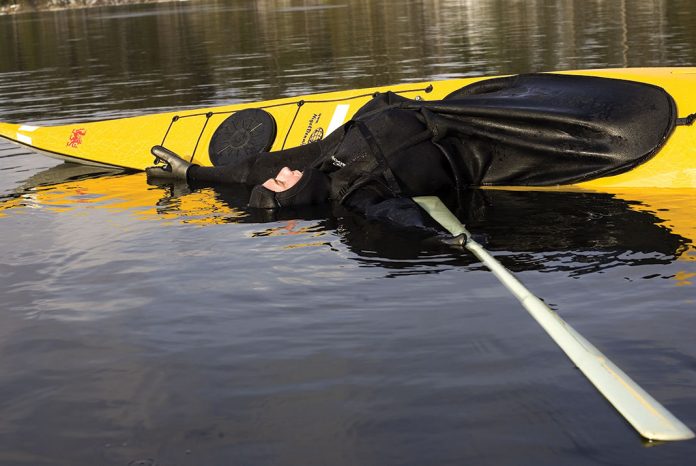
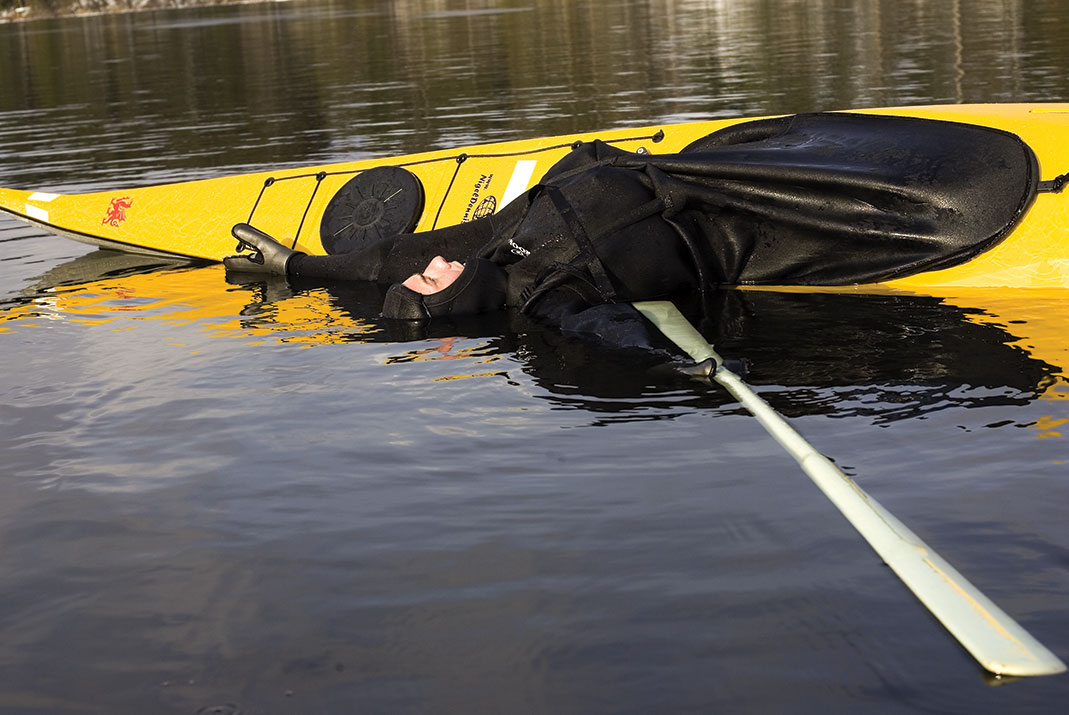
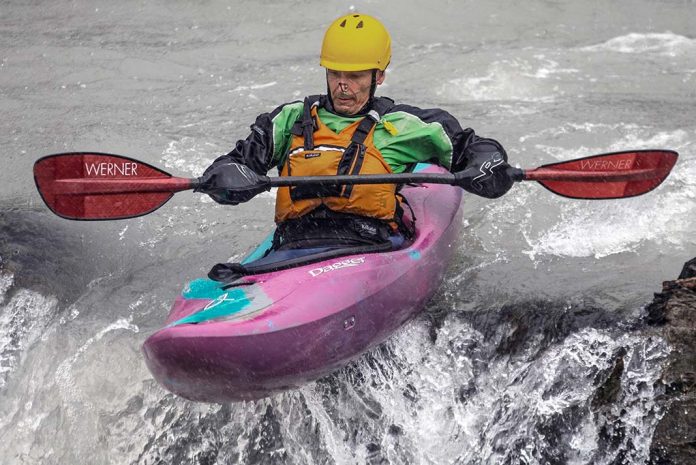
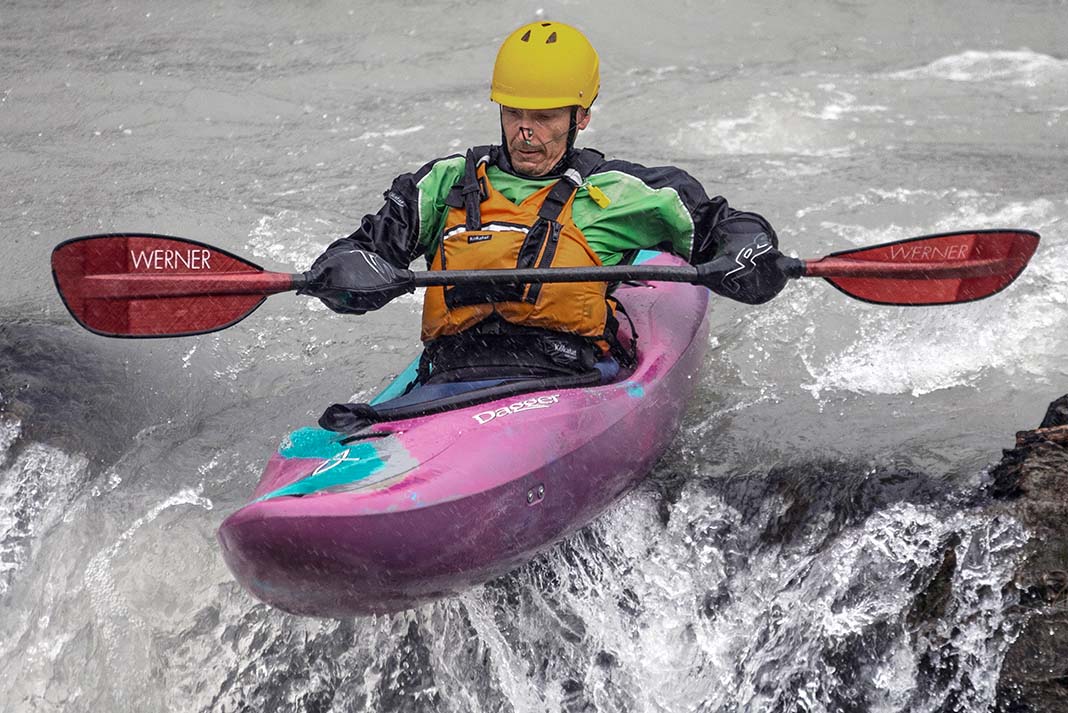



 “The definition of what was pro really started to change when these third-party sites came on the scene, and that’s because their business model was pushing as much product through that channel as they could. I don’t call it pro deals anymore. I call it discount direct-to-consumer.”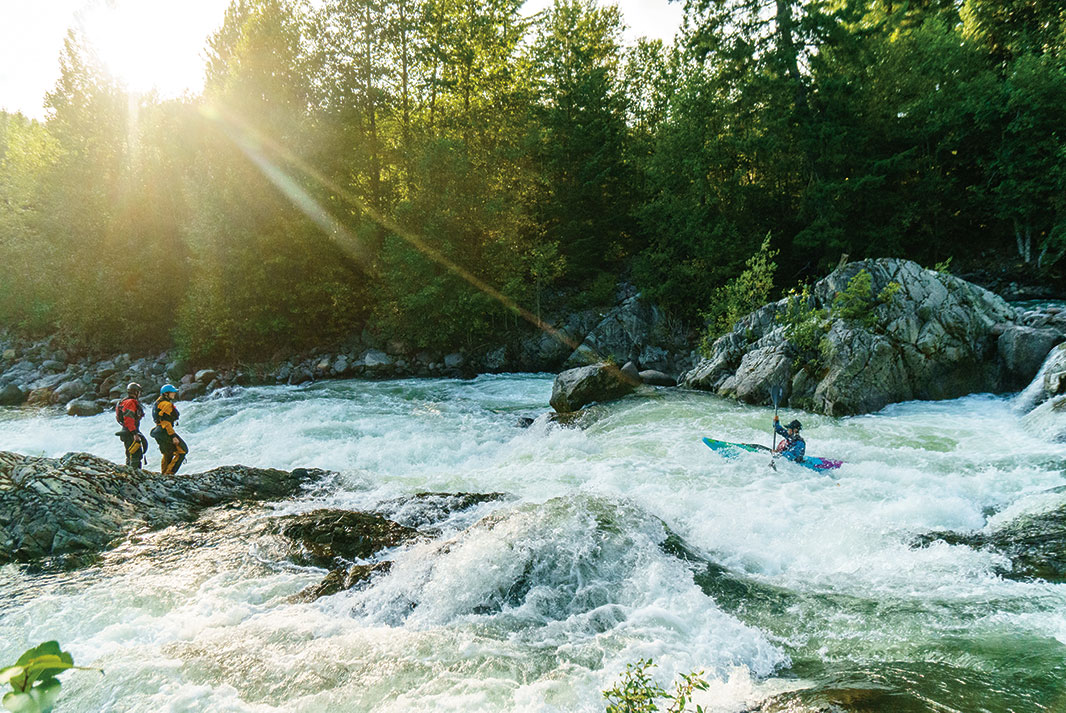
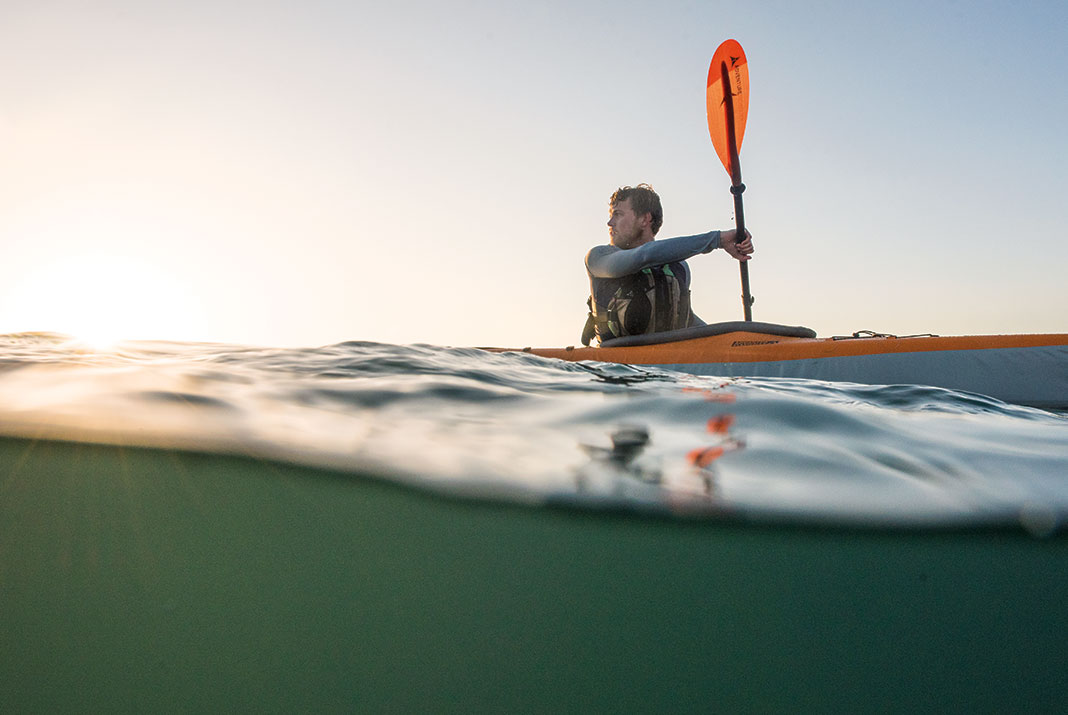
 This article was first published in the 2022 issue of Paddling Business. Inside you’ll find the year’s hottest gear for canoeing, kayaking, whitewater and paddleboarding. Plus: Industry leaders on surviving COVID, the dirty little secret of pro deals, brand consolidation and more.