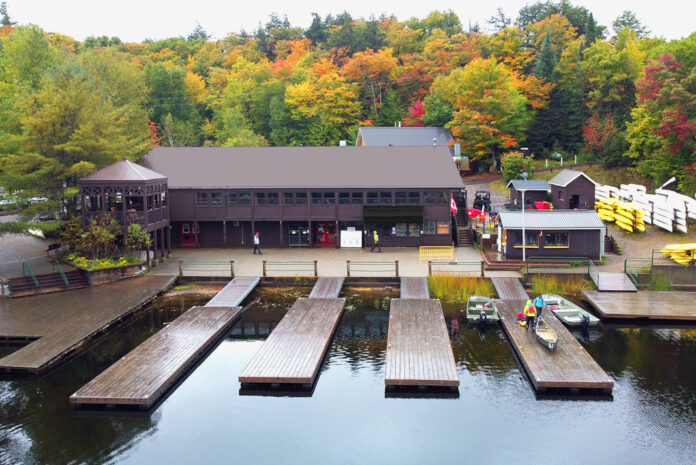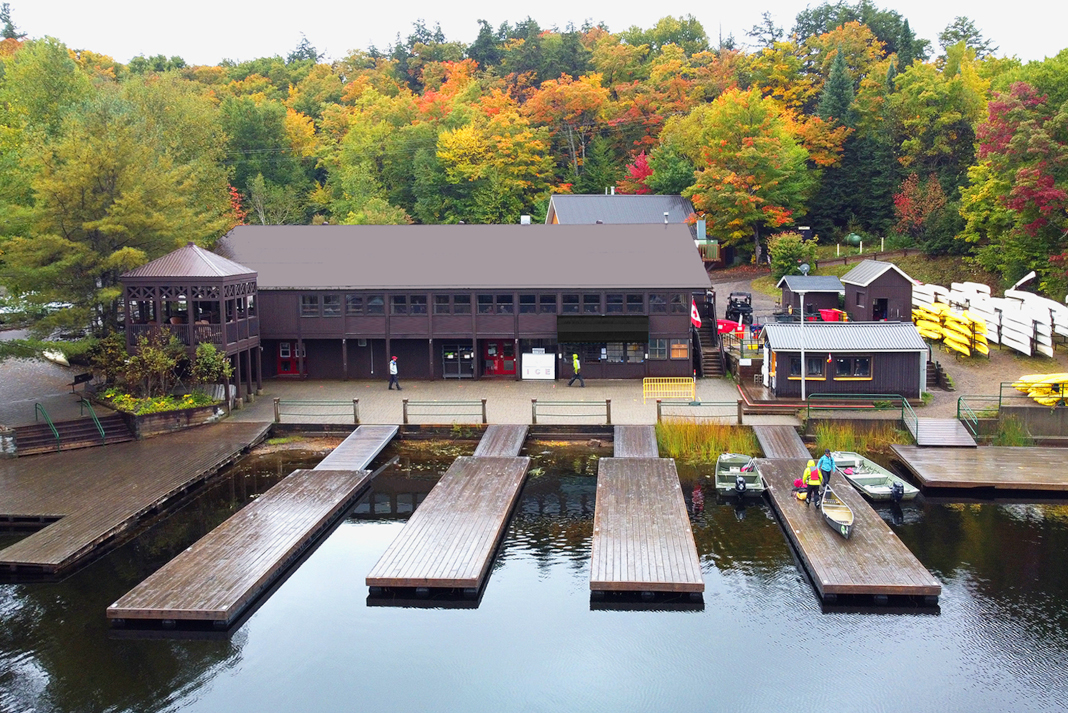
PETERBOROUGH, THURSDAY, JANUARY 26, 2023 – 2023 will begin a new chapter in the Canadian Canoe Museum’s (CCM) history as the organization prepares to move to its new waterfront location, currently under construction along Ashburnham Drive in Peterborough, Ontario.
“It is an exciting time for the Canadian Canoe Museum. A little more than a year ago, we had just begun construction. Since then, we’ve achieved many milestones. The building structure has come to life before our eyes, the mass timber-facade is taking shape and the building is nearly closed in. Exhibits have been developed and are being sent to fabrication, the fundraising campaign is in its final stretch and the collection is nearly ready for its move across town,” exclaims Carolyn Hyslop, executive director.
The Canadian Canoe Museum is creating a new cultural destination that will inspire visitors to learn about Canada’s collective history and reinforce our connection to land, water and one another—all through the unique lens of the canoe.
Photo: courtesy Canadian Canoe Museum
The new museum will be located on a five-acre site that will provide stunning west-facing views of Little Lake, a connection to the Trans Canada Trail, and will be surrounded by public parks. It will become a vibrant community space for outdoor activities and the Museum’s canoeing and outdoor programs and events.
A national fundraising campaign has inspired Canadians from coast to coast to coast and has raised 95 percent of the project’s $40-million cost to date.
The project is also made possible in part by the generous support of the Weston Family Foundation, the City and County of Peterborough, the Province of Ontario, the Government of Canada through both the Department of Canadian Heritage and the Federal Economic Development Agency for Southern Ontario (FedDev Ontario), and donors from across the country.
While steady progress has been made, the new museum’s opening will occur later than initially anticipated. The new museum project is experiencing delays due to the Pandemic and its ongoing impacts on the construction industry, affecting supply chains and material availability and resulting in material shortages. For example, a national shortage of cement powder recently created a three-week delay in completing the building’s superstructure.
Maria Williams, project director, Chandos Construction, explains: “The CCM project started at a difficult time in the industry. Due to the Pandemic and other influences outside our control, we have seen trade shortages, material supply issues and escalations beyond what we have historically seen. I am incredibly proud of the work of this team, which has come together to find unique solutions to minimize the impact on the project budget and schedule while maintaining the overall quality of the design and construction.”
The CCM hoped to welcome visitors in early summer 2023, but due to these delays, the anticipated opening of the new museum is now late summer or early fall.
“As designers, we have seen unprecedented upheaval in the construction sector over the last two years. While there have been similar delays and supply chain issues on the CCM, through our integrated approach to project delivery, these have been minimized compared to other projects. We are pleased with the progress made and look forward to seeing the Museum open to the public in 2023,” reflects Bill Lett, managing principal, Lett Architects Inc.
The CCM remains hopeful that the new museum will be able to celebrate its grand opening during paddling season.
“We are working very closely with the project team to recover the schedule delays, as we would be overjoyed to open earlier. With so much excitement and interest in the new museum, locally and nationally, we want to be transparent with our community about the timeline as we know many are planning trips to visit us this summer,” says Hyslop.
Mariann Sæther was crowned Queen of the North Fork Championship in 2019. It was the first year the NFC offered a women’s category, and with it the competition offered equal prize money. | Photo: North Fork Championship // Liam Kelly
After 10 iterations, the North Fork Championship has been canceled. The organizers made the difficult announcement through social media on January 26, 2023.
Reign of the North Fork Championship
The North Fork Championship first took place in 2012 and from there skyrocketed as one of the most highly anticipated whitewater races each year. The prestige of the event was due in no small part to the fact that the course took place on Jacob’s Ladder, the most notorious rapid on the North Fork of the Payette River in Idaho.
The event pushed the progression of whitewater racing through multiple avenues, including equal prize money for women. The original organizers, James and Regan Byrd, stepped away from the event following NFC VIII. The Voorhees—a local Idaho paddling family, which includes two Jackson team paddlers, Alec and Hayden— took the reins in 2020. The family kept the NFC running through two iterations. The Voorhees built upon the event’s success by incorporating new elements including live streaming.
Now it appears the North Fork Championship’s reign has come to an end.
“Over the past decade, NFC has pushed the progression of whitewater kayaking and brought legends from all generations together on the river each year. The North Fork of the Payette has had a special place in our family for decades. It has been an amazing experience participating in each year’s evolution of NFC and an honor taking on the event as organizers in its final few years. That is why with heavy hearts we are announcing the cancelation of North Fork Championship,” the Voorhees family shared in a statement through the race’s social media accounts.
The statement goes on to share a number of factors that led to the decision.
“The event has grown exponentially, but with that growth came a new set of logistical challenges: from parking/spectating safely on the river banks, to the record numbers of both paddlers and spectators reuniting in the town of Crouch. At the same time local businesses and our sponsors are having to navigate a very different economic climate in these post-pandemic times.”
The uncertain state of the economy is a far reaching factor that could be foreseen. But the Voorhees mention another obstacle they smashed into—one which will likely ripple across whitewater races around the country.
“The final blow to NFC was the change in paddler insurance coverage previously provided by the ACA,” the statement reads. “The loss of which may shut down many other class V races in the USA this year as well.”
If other class V races are unable to find an alternative liability coverage they may ultimately be pushed to a similar fate of the North Fork Championship.
Le Parc des Expositions de Strasbourg. Image: Kengo Kuma & Associates.
Le Parc des Expositions de Strasbourg. Photo: courtesy of Kengo Kuma & Associates.
After two years in Lyon, France, The Paddle Sports Show is moving to the city of Strasbourg for its 2023 event taking place September 27-29.
The international trade show is all-encompassing of the paddlesports industry. It includes everything from kayaks to standup paddleboards, and even foil sports manufacturers. The Paddle Sports Show also features an industry award ceremony and the “Testival” on-water demo day. The event draws retail buyers, outfitters and others within the industry from across the continent as well as internationally. In 2022 The Paddle Sports Show said it had over 90 exhibitors and more than 1,000 attendees. According to the event organizers, the move to Strasbourg is intended to be strategic.
“We are moving to Strasbourg to get a more centrally located exhibition center in Europe,” shares Philippe Doux, organizer of The Paddle Sports Show and publisher of Kayak Session. “Strasbourg being pretty much in the center of Europe, at the French and German border—two of the three biggest European markets along with the U.K. That means a really easy trip for exhibitors and visitors alike, wherever you come from.”
The tradeshow will move into the Le Parc des Expositions de Strasbourg, an exhibition center that opened in September 2022 and was designed by international architecture firm Kengo Kuma & Associates. The exhibition center is located in the heart of the city and sits adjacent to canals connecting to the Rhine River.
According to Doux, the announcement is already proving a positive move for The Paddle Sports Show.
“The response is beyond expectations, with projections looking at an even bigger event than the previous two years. Nine months before the event, over 100 exhibitors are already prebooked.”
The team at Algonquin Outfitters is excited to announce that after an open tender process, Ontario Parks has selected us to be the operator of the Canoe Lake Store concession (known as The Portage Store) in Algonquin Park, starting this season. Algonquin Outfitters and the Swift family have been part of the Algonquin Park community for over 60 years and have welcomed Park visitors from all over the world during that time.
We would also like to take the opportunity to recognize the rich history of all the previous operators, who collectively have operated the concession since the 1930s. We are committed to honoring that legacy as we move forward at Canoe Lake by offering excellent service, great food, top-notch merchandise and high-quality rental equipment.
Feature Image: Algonquin Outfitters
The opportunity to improve and enhance the visitor experience in Algonquin Park has always been our focus. Some of our initiatives include education and raising awareness in important areas such as Indigenous culture, canoe and camping ethics, and respect for Algonquin’s wildlife and natural spaces. This will help us embrace, preserve, and share the unique history and experiences of Canoe Lake and The Portage Store.
We have a long history of providing quality canoe trip outfitting packages, equipment rentals and guided experiences for Park visitors. We are looking forward to bringing that experience to Canoe Lake. Stay tuned to algonquinoutfitters.com and our social media channels for more news and updates.
We look forward to meeting visitors at Canoe Lake this season and in the years ahead and thank Ontario Parks for this opportunity. We value the input of the Algonquin Park community and welcome any feedback or questions you may have about the Canoe Lake Store: canoelakestore@algonquinoutfitters.com
In addition to setting a new speed record around mainland Australia, Bonnie Hancock set a new unofficial world record for most distance paddled in open water by a female in 24 hours when she paddled 213 kilometers on July 14. | Feature photo: Courtesy Paddle Of Aus
“It’ll be another 27 years before anyone does this again, that’s for sure.” Those words were spoken by German sea kayaker Freya Hoffmeister when she finished her nearly 11-month paddle around Australia in 2009, becoming the first woman to do so.
Hoffmeister was right; it’s a journey few would attempt. It’s 16,000 kilometers around Australia’s coastline, where sharks and crocodiles frequent the waters and extreme temperatures can result in hypothermia and heat stroke. Hoffmeister was wrong about one thing, though—it would only be a decade before her biography, Fearless: One Woman, One Kayak, One Continent, would be picked up at the library by the Australian woman who is now about to break her record.
“I was hooked on the story. It was the most out there, outrageous, incredible thing,” says 32-year-old dietician Bonnie Hancock. Soon, the wheels started turning: “I just couldn’t get the idea out of my head. I knew I didn’t want to get to 80 and wish I’d given it a crack.”
Bonnie Hancock circumnavigates Australia and sets two new world records
Hancock is no stranger to feats of endurance; she’s participated in nine Ironwoman events—completing her first at just 17—and the Moloka’i Hoe outrigger canoe race between Molokai and Oahu, Hawaii. And when she completes her paddle around Australia in August 2022, she will become the youngest person to do so and the fastest, having done it in just over eight months.
Her speed is partially thanks to her six-meter-long carbon fiber surfski. Unlike a comparatively heavy sea kayak, it weighs just eight kilograms, enabling her to average 10 kilometers per hour and around 100 kilometers per day.
“I just couldn’t get the idea out of my head. I knew I didn’t want to get to 80 and wish I’d given it a crack.”
Sacrificing stability for speed comes at a cost, though. Everything from reapplying sunscreen to getting on and off her support boat—a 65-foot sailing ketch—becomes a literal balancing act. Being cramped into a tight space has left her glutes and hip flexors painfully tight, while her back seizes up. And after months in the water, her fingers have become so swollen she can no longer open a water bottle. As a result, her Instagram account has become a journal of agony and perseverance, and a platform for fundraising for Gotcha4Life, a suicide prevention program.
“I will make myself bleed out there before giving up—that’s how much stronger your mind is than your body,” says Hancock.
In addition to setting a new speed record around mainland Australia, Bonnie Hancock set a new unofficial world record for most distance paddled in open water by a female in 24 hours when she paddled 213 kilometers on July 14. | Feature photo: Courtesy Paddle Of Aus
How Hancock set her world records
She shaved off time by braving the open ocean rather than sticking to the coastline, making her total journey just 13,000 kilometers. She cut 1,000 kilometers off her route by paddling straight across the Great Australian Bight, where she encountered five-meter swells, suffered from extreme seasickness, and nearly got hypothermia after falling in the water. The 15 kilograms she’d put on in preparation—the result of a steady diet of almond croissants—provided some cushioning, but in February she ended up hospitalized for malnutrition and dehydration.
“It was very hairy,” says Hancock. “I’m glad we did it, but I’m also very glad it’s done.”
That was months ago, though. When I speak with Hancock in July, she’s in Cairns with only 1,500 kilometers left. Now on the homestretch, she tells me she’s beginning to reflect on what life will look like when the expedition is over, including what she intends to bring into her coaching practice.
Takeaways from the record-setting journey
“The message I want to take back is you don’t have to be that special to do something special,” she says. “I’m not particularly tall or naturally strong. I just had a crazy idea I really wanted to do—and I’m not afraid to fail.”
Right now, she’s dreaming of the moment her feet touch the Gold Coast sand again. When she gets there, she’ll hug her nephews, then walk across the road to her favorite café, where there’s an almond croissant with her name on it.
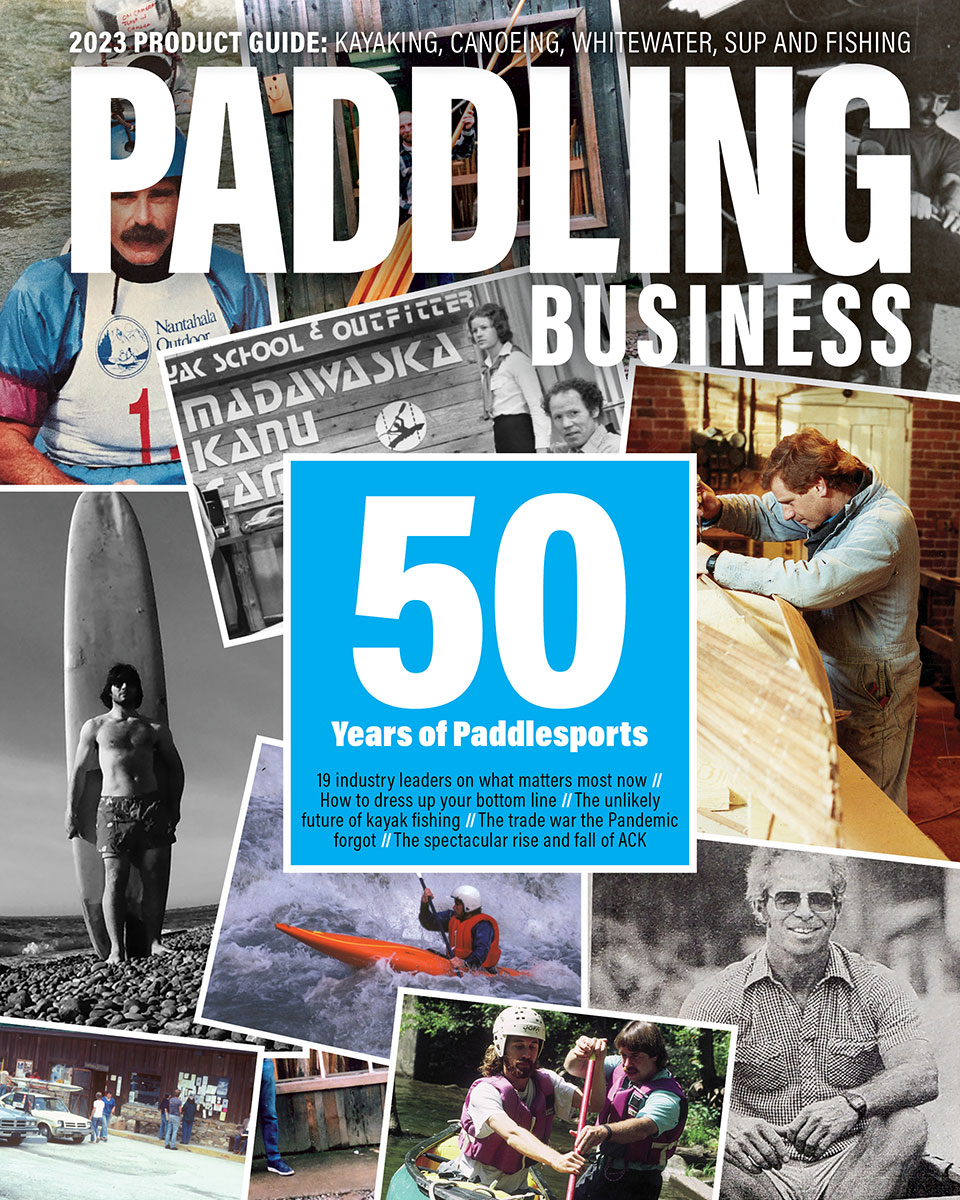
This article was first published in the Fall 2022 issue of Paddling Magazine. Subscribe to Paddling Magazine’s print and digital editions, or browse the archives.
In addition to setting a new speed record around mainland Australia, Bonnie Hancock set a new unofficial world record for most distance paddled in open water by a female in 24 hours when she paddled 213 kilometers on July 14. | Feature photo: Courtesy Paddle Of Aus
Kayaking is about more than torso rotations — it’s about the sense of the experience. Something you can quickly see PlayStation attempts to capture in their recently announced game, Kayak VR: Mirage.
We won’t be posting our gear for sale anytime soon and letting a bodiless-paddler avatar replace the real-world experience. But the game is set to drop in late February 2023, and looks like an enticing way to spend the winter months dreaming of our next escapes.
Neal Moore, seeing America low and slow on his cross-continent canoe trip for the 22 Rivers project. | Feature photo: John Noltner
Neal Moore spent most of the last two years on a canoe trip across America, the country where he was born and raised, and which he left at 18. In the three decades since he lived and adventured all over the world. He spent little time in the U.S., aside from his 2009 source-to-sea paddle on the Mississippi River, and also the months he spent in 2018 fighting high water on the Columbia River and its tributaries, all the way up and over the Continental Divide, only to call it quits in North Dakota.
That was Moore’s first crack at the 7,500-mile cross-country canoe journey he calls the 22 Rivers project. When he started again from Astoria, Oregon, in February 2020, the Pandemic was barely a month behind. He crossed into Washington just ahead of a shelter-in-place order and kept moving. His 22-month journey linked the Columbia to the Missouri, arced south on the Mississippi through the first winter, continued along the Gulf Coast and upstream to the Ohio, then into the Erie Canal and finally down the Hudson to the Statue of Liberty.
The journey was a first in the modern era, and perhaps ever. For Moore, it was a way to stitch together a fractured America by getting to know its people and places, as he puts it, “slow and low down from the view of a canoe.” Along the way, he gained a deeper understanding of the country he’d left behind, and he learned about himself, too. These are a few of the enduring lessons from Moore’s journeys on America’s rivers and in its river towns.
Neal Moore, seeing America low and slow on his cross-continent canoe trip for the 22 Rivers project. | Feature photo: John Noltner
8 unexpected life lessons from a 22-month canoe trip across America
1 Slow the hell down
The first lesson came back in 2009, at the Brainerd Portage in Minnesota, some 500 miles into his Mississippi descent. Hustling back and forth on the portage trail, Moore passed a mountainous man perched on a boulder, smoking a cigarette and watching him with a degree of disinterest. This was Dick Conant, a now legendary canoe wanderer and the subject of Ben McGrath’s new book Riverman: An American Odyssey. Just as Moore stowed his last bit of gear and prepared to shove off, Conant strolled to the riverbank.
“Slow down,” he said. “Slow the hell down and enjoy the ride.”
2 If at first you fail, try again (from the start)
In 2018 Moore canoed more than 1,700 miles from the Oregon Coast, bucking historic high water up the Columbia River and across the Continental Divide. He lost his canoe and most of his gear to a cottonwood snag on the St. Regis River in Montana, and though he regrouped and pressed on, he was weeks behind schedule. When he finally pulled the plug in North Dakota, he thought of it as a pause. Later he realized the trip he’d planned and dreamed about for so long could not be broken into pieces.
“By following the seasons, it had a chance to be continuous,” he said. “So, I happily decided to try again.”
3 Shelter in motion
Barely a month into his second attempt, in March 2020, the Covid-19 pandemic caught up to Moore on the border of Oregon and Washington. Authorities advised people to wait out the Pandemic at home, but Moore’s home was in Taipei and international flights were grounded. So he crossed into Washington just hours before Oregon’s governor issued a shelter-in-place order, and kept moving.
“I have my tent and I have my canoe,” he said. “I decided to shelter in motion.”
Moore had planned to seek out people along the way to tell their stories, as he’d done during his Mississippi journey. On that trip, he operated like a cross between Huck Finn and “On The Road” journalist Charles Kuralt, filing some 50 stories as a CNN citizen journalist. But with Covid raging, Moore decided to chronicle only chance encounters—what he calls the “stumble-upons”—and was rewarded with experiences and friendships beyond anything he could have planned.
Moore likes to say there’s power, a certain alchemy, in vulnerability. “You stash the canoe upon arrival into a town… armed with the knowledge that by and large, river people are rough and tumble and good,” he said. “And if I listened, if I dropped my preconceived biases and truly listened, I could capture their stories.”
5 The power of new beginnings
During his Mississippi descent, Moore became the second person in 97 years invited to spend the night in the boyhood home of Mark Twain. “If you had to put a price on that experience, you couldn’t,” he said. “It’s priceless. But the punchline is it’s the exact same feeling as every morning waking up on an island in the middle of the Mississippi River.”
“That moment at first light when I’m pushing off into the current with all of my worldly possessions in my canoe, it’s bliss. That instant is complete perfection.”
6 Technique is overrated
Moore paddled his canoe more than 7,500 miles, switching sides every three or four strokes. “Whenever I’d post a video of myself paddling, just out there in the moment and having a whale of a time, inevitably there’d be somebody commenting at me in all-caps and exclamation points, J-STROKE! J-STROKE!!”
“I’m an unrefined paddler,” he admitted. “I’m unrefined and proud of it because I’m having fun.”
7 You don’t need a cause
Moore used a set of portage wheels to drag his canoe and gear around dams, along a closed portion of the Erie Canal, and over the Rocky Mountains. Early in the trip, as he neared the Continental Divide on a Montana two-lane, a woman in an old station wagon slowed to investigate.
“What’s the cause?” she hollered.
“I just wanted to see America,” Moore answered.
The car crept along beside him.
“Well, where are you going?”
“New York City.”
Another pause.
“Why? Why would you want to go to New York City?”
“It’s not about New York City,” Moore said. “It’s about everywhere in between, from coast to coast.”
8 But you have to have a goal
Moore kept Lady Liberty in his sights all across the country. The statue marked more than the end-point of his journey; it was a beacon for what he was trying to capture: a deeper understanding of America and what holds it together in these divided times.
“There is the map—our goals and our guidebooks; our paper navigational charts—and then, there are the people,” said Moore, who reached New York in December 2021 and took a ceremonial lap around Liberty Island.
“Sharing the journey with my friends, and them sharing their journeys and their spirits with me, speaks to what this expedition has been about from the beginning,” he said.
This article was first published in the Fall 2022 issue of Paddling Magazine. Subscribe to Paddling Magazine’s print and digital editions, or browse the archives.
Neal Moore, seeing America low and slow on his cross-continent canoe trip for the 22 Rivers project. | Feature photo: John Noltner
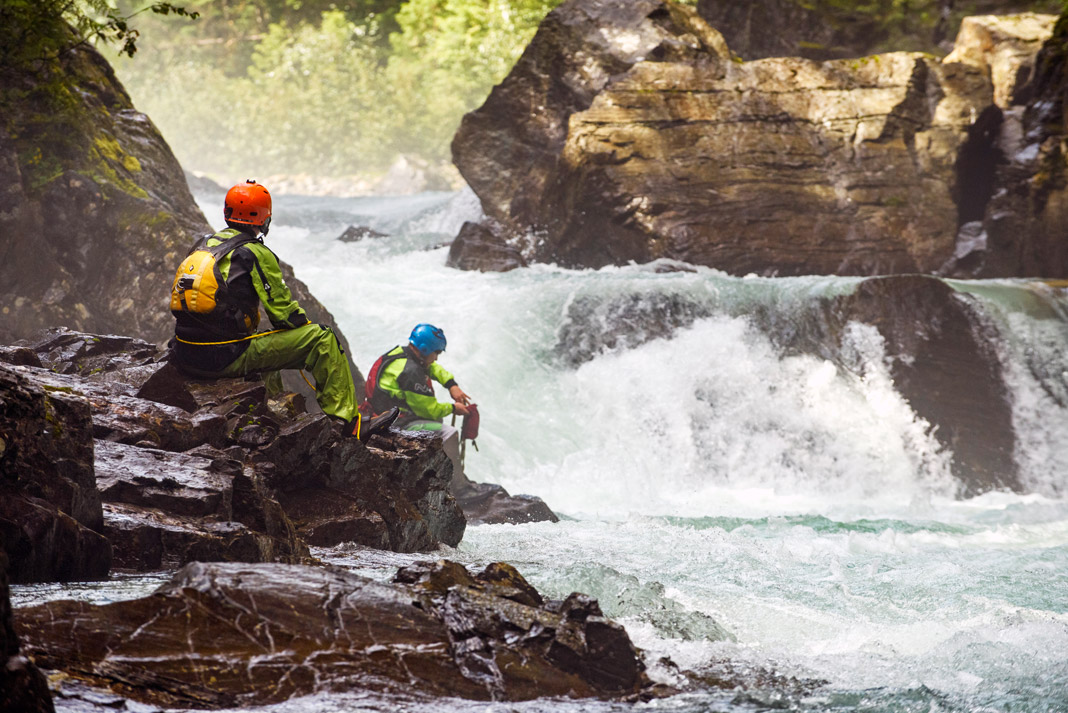
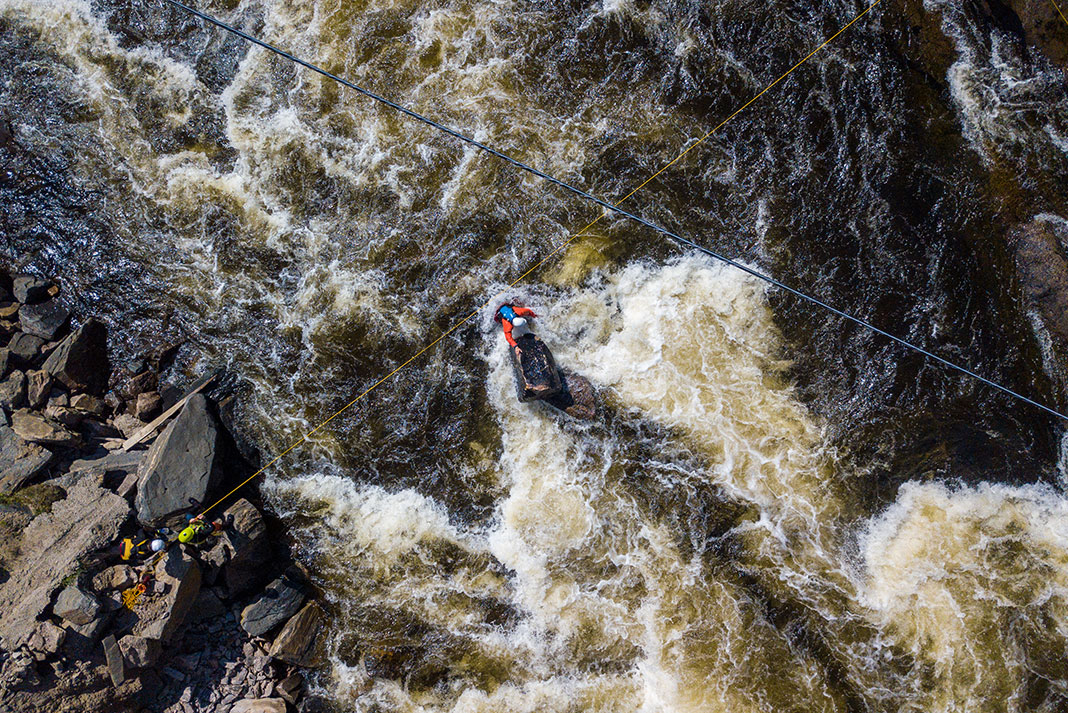
A run down Mexico’s cascades on the Agua Azul turned into a life-saving rescue when kayaker Curtis May became trapped behind the curtain of a 35-foot waterfall. May’s attempts to escape and the successful rescue that ensued would elapse over one hour and fifteen minutes.
Below is Curtis May’s detailed account of the ordeal per the description in the video published to YouTube. Please be advised this video includes strong language:
On December 18th, 2022 six friends make a descent of the Agua Azul in Chiapas, Mexico. The climax of this section consists of 5 waterfalls called the Five Kings. At the third ‘King’ my approach was too far right and I dried out at the lip in about 3 inches of water. I lost my speed and dropped behind the curtain of the waterfall.
For the next 75 minutes I made multiple attempts to escape and repeatedly blew my whistle in an attempt to let my friends know that I was still alive. My friends acted swiftly to begin rescue operations. I was the last of us to run the drop so the other 5 boats were all downstream of this waterfall AND the 60-footer below it. There is no access to the river between the 35′ drop and the 60′ drop, so Issac & Wesley hiked their boats back upstream and ran the 35-footer again to get into position.
I could not see or hear anything beyond the curtain of the waterfall and they could not see or hear me, even whistles. The curtain looked thinner to my right but the wall was much closer and severely undercut. I considered making an attempt there but knew that a failed attempt could result in a much worse situation. I decided to save this as a last resort if it started to get dark. Issac and Wesley made many attempts to gain access behind the curtain, both with ropes and their bodies. After about 60 minutes with no success, no signs of life, and sunset fast approaching Wesley decided to try to paddle behind the curtain through a small gap on river right. Both Wesley and Issac were able to get behind the curtain and stash their boats to launch a heroic live bait rescue attempt. It wasn’t until Wesley was about 30 feet from me that we were finally able to hear each other. This was their first indication that I was still alive.
After over an hour of failed attempts to escape and zero contact with anyone I was beginning to lose hope. When I first heard another voice and knew my friends were still working to get me out, I felt a wave of relief and a renewed enthusiasm. We couldn’t see each other, there was a rock wall between us. I could hear Wesley shouting but couldn’t understand what he was saying. I thought he was on the other side of the curtain. I had no idea that he was just around the corner from me until I saw him while making another attempt to paddle through the curtain. When I saw Wesley floating there, I realized that I actually wasn’t going to die that day. I felt a level of relief and joy that I had never experienced in my life. At this point it had been well over an hour and I was exhausted. Every attempt to paddle through the curtain zapped my energy and it took a few minutes to recharge between attempts. I retreated back to my point of safety and gathered my strength for a moment to make the ferry around the corner to where Wesley was waiting. When I reached Wesley he gave three blasts on his whistle and Issac started pulling us both along the undercut wall back to safety. They saved my life on this day and I will forever be grateful.
Our ordeal wasn’t over yet though. We then had to scale a 35 foot vertical mud cliff to get back to the trail, put back on, paddle 45 mins to the takeout, and hike uphill for 1.5 miles in the dark while being pursued by armed Zapatista rebels. We were in their territory and they had spotted us at the takeout. Yes, seriously. We finally made it back to our village and all enjoyed a few cold beers.
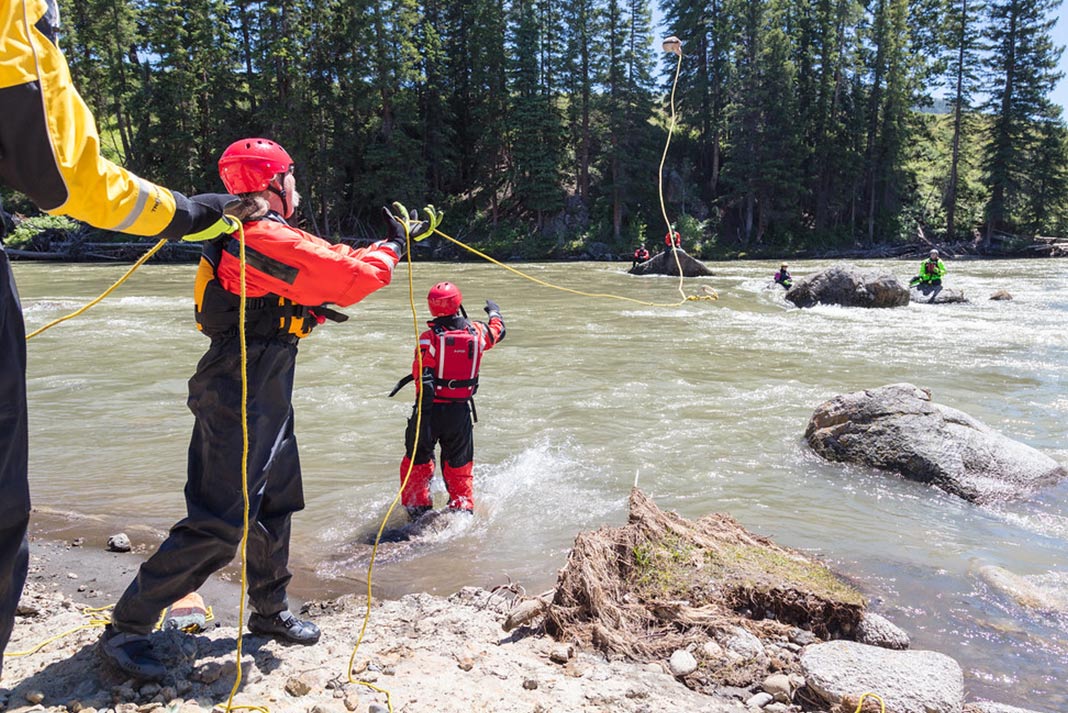
This rescue situation highlights the importance of taking a swiftwater rescue course and keeping those rescue skills sharp. Always paddle with rescue gear, always discuss safety with your crew before you put on, and always be prepared to act when the time comes.
Thank you to @WesleyShelmire for putting together the majority of this video.
The Pyranha Scorch offers easy handling in tricky conditions. | Feature photo: Paul Robert Wolf Wilson
The Pyranha Scorch hit the market in 2021 as a successor to the classic Burn. Billed as a boundary-smashing river runner and creek boat hybrid, the Scorch combines and refines characteristics from three of Pyranha’s latest and greatest hits. After getting it on the river, I can attest, it’s one of the best whitewater kayaks out there today.
The Scorch starts with a bow and elongated hull influenced by the 9R, beloved for its speed and squared-off stern. The wide planing hull and sharp edges of the Scorch are pulled from the speedy Ripper, known for its nimble playfulness and carving ability. And the Scorch’s kick rocker at the stern is similar to the Machno, which allows the stern to release from features quickly.
For this review, we paddled the Scorch in size medium, which comes in just under nine feet long and holds 82 gallons.
You’ll first notice the bow’s high rocker when doing a walk-around of the Scorch. This gives the Scorch the ability to boof just about anything, drop and ride high over holes and shed water to stay on the surface. The bow rocker helps prevent pearling when surfing waves, which tends to occur in many river runner designs. This feature is great for some fun surfing, but it also helps you glide across a feature on a must-make move.
The Scorch has a flat, planing hull. Pyranha and other paddlers have compared the hull of the Scorch to the Ripper—Pyranha’s play-the-river, half-slice design. I agree. A wide, flat area gives the almost-nine-foot-long creek boat a nimbleness to spin. Much like the design of the Ripper, the Scorch has biting edges. At the bow, these edges are softer and less pronounced, allowing the front of the boat to pass over rocks and current without resistance. Closer to the stern, the Scorch transitions to a hard, aggressive edge, seeking to dig in. When you want to put this edge to good use, you can load your weight toward the stern and lay out a carve. This drives the kayak in and out of eddies and across the river.
What’s most interesting is the tapering width of the Scorch’s stern and the flattened—rather than protruding—deck profile. Imagine taking a dedicated creek and river running design and giving it the ability to sink the stern. It’s like having an extra boost button to power the bow over features the way you can with a half-slice. This is the premise behind the stern design of the Scorch.
Sure, you could boof with the hull flat. Or you could put the Scorch on edge and then, approaching a feature, sweep the bow up and load water from upstream on the stern. The technique gets the already highly rockered bow up and over anything and looks slick when dialed in.
Full size grab handles all the way around make the Scorch easier to handle on big portages or when loaded for a multiday trip. The Stout 2 Outfitting features a simple, solid and ergonomic padded seat, oversized hip pads, padded and contoured thigh grips and a ratchet backband with height adjustment. | Photos: Paul Robert Wolf Wilson
Pyranha Scorch outfitting
Pyranha’s Stout 2 outfitting included doesn’t look much different than what they have been putting in their kayaks for years with the Connect and Stout systems. That’s great because the previous generations worked just fine. The ratchet system for the backband is intuitive. The seat, hip pads and thigh hooks are comfortable. For the Stout 2, Pyranha has upgraded the hip pads to a deep fill that molds to your shape, but I would say nothing in the outfitting of the Scorch seemed noticeably different than past Pyranha kayaks I’ve paddled. And not noticing outfitting is generally a very good thing.
New school creek boat meets aggressive river runner. | Photo: Paul Robert Wolf Wilson
The Scorch is built for steep rivers with a good amount of volume. Paddling during spring high-water in the Cascades, I came through a section where the creek pinched between a rock wall and large boulder, creating a squirrely V with reactionary waves surrounded by swirling eddylines. The speed of the juicy creek made me skeptical about whether I could catch the first eddy on the opposite side of the river following this chute. I planned to go for it, knowing I’d probably have to windmill a bit and just make the eddy. My backup plan was to move back to the center until the runout above a log-choked drop. But the Scorch charged through the slot and slid over the chaotic water as though it didn’t exist. I looked for my eddy, leaned slightly back, engaging the stern edge, and the boat kicked right across to the opposite side of the creek. I cruised with barely more than a few correction strokes to make the eddy.
This is indicative of the Scorch from bow to stern. It crushes features. The hull accelerates, the bow rides over and the edges drive on. River features I most anticipated would pass and, a moment later, I would say to myself, “That was it?”
The Scorch makes running steep, pushy water feel almost effortless.
The high bow of the Scorch does create the sensation you are riding a wheelie and takes some getting used to at first. And the chines of the Scorch can get tripped up on a rocky stretch. Paddlers will want to ensure the Scorch’s seat is forward enough to stay over the bow.
For those on low-volume creek runs, the Scorch may feel edgy. But for rivers and creeks with volume, the Scorch can not only charge down the river with confidence, but it can also elevate how you paddle them.
This article was first published in the Fall 2022 issue of Paddling Magazine. Subscribe to Paddling Magazine’s print and digital editions, or browse the archives.
The Pyranha Scorch offers easy handling in tricky conditions. | Feature photo: Paul Robert Wolf Wilson
Feature photo: Courtesy Momentum River Expeditions
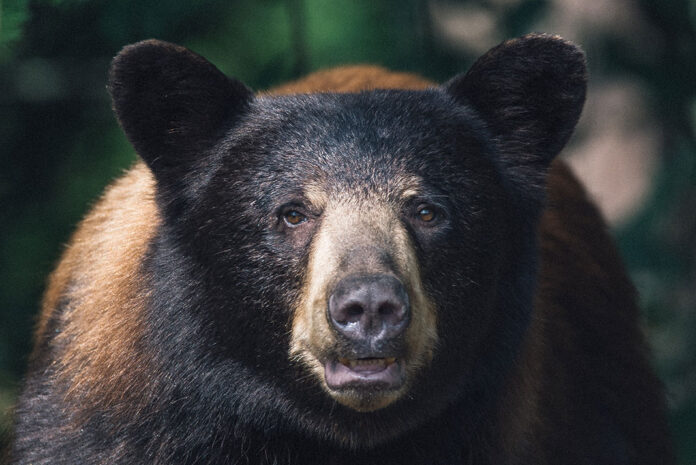
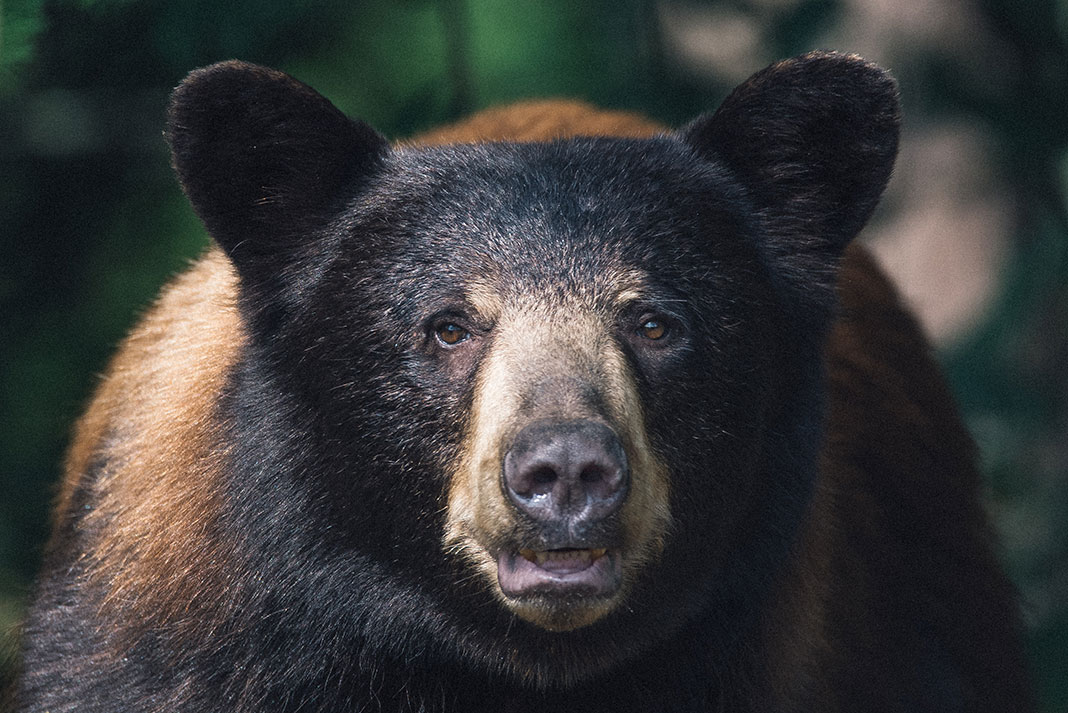
Staring down a black bear on the opposing shore at Solitude Camp, I dropped eggs in a cast iron vat for a gourmet riverside eggs Benny commercial breakfast. I watched as guests lost their minds over the impromptu Yogi Bear encounter. The fuzzy life-sized teddy lumbered along the bank in brambles, cherry-picked the plumpest berries, meandered up cliffs, paused to sniff the air, and occasionally made coy eye contact with the audience. It was my rookie season of guiding, which happened to be on the Wild and Scenic Rogue River. I was grateful for the moment of peace in the kitchen while the guests were distracted.
At this point, I have rafted the Rogue River in Oregon 16 times and seen a bear on at least half of those trips. Sometimes twice on the same trip. Wildlife encounters are a significant part of the allure. Salmon are often jumping. There are cuddling pairs of otters, great blue herons, bald eagles, and newts. And keep an eye out for the elusive madrone monkey.
The mystique of the Rogue goes beyond wildlife encounters. There is world-class fishing, amazing side hikes, a history of murder and mayhem, and of course, outstanding whitewater. All of the above is what lures rafters, kayakers and anglers to try their luck for a permit on the Rogue, and experience this pinnacle river trip.
Secure a Rogue River permit and plan your trip
The Lower Rogue River was one of the first eight water courses designated under the original legislation of the Wild and Scenic Rivers Act in 1968. To support this designation, in 1978 upward of 35,000 surrounding acres were named Wild Rogue Wilderness. The 84 miles of river designated Wild and Scenic are managed by the Bureau of Land Management and the Rogue-Siskiyou National Forest. This section of the Rogue utilizes a river permit system, which paddlers need to be familiar with in order to plan a trip.
Most parties float the Wild and Scenic Rogue on the 35 miles from Grave Creek to Foster Bar. These trips range from three to four nights. Occasionally folks blast through in two nights. From May 15 to October 15, the BLM allows 120 people per day to launch on this section. The group sizes are limited to 20 people per permit. You must win a competitively allocated Rogue River permit in one of three ways during this period.
The first is to apply in the noncommercial lottery. For most rivers, the lottery opens on December 1 and closes on January 31. Results and winners are announced via email on February 15. If a permit is won, each person on the permit will need to pay a $10 fee.
The second is to call in for a cancellation permit via the Grants Pass Bureau of Land Management office at 541-471-6535.
Finally, it is common practice to show up at the Smullin Visitor Center at Rand ready to run a trip by picking up a last-minute cancellation permit to launch the day of.
From October 16 to May 14, launches are unregulated outside of submitting a self-issued non-lottery permit via the Rand office.
The more you know about the Lower Rogue
People have inhabited the Rogue River corridor for at least 15,000 years. The Rogue River is the traditional homeland and waterway of the Tututni, Upper Coquille and Shasta Costa Native Americans. These people were violently removed from the land through colonialism in 1856 and placed in the Siletz Indian Reservation with the Confederated Tribe of Siletz Indians and Grand Ronde Indian Reservation with the Confederated Tribes of the Grand Ronde Community of Oregon.
As of this writing, the USFS states that it maintains a government-to-government relationship with each of the eight federally-recognized and sovereign tribes having traditional lands within the Rogue River-Siskiyou National Forest.
Carving out valleys in the remote and ecologically diverse Siskiyou Range, the Rogue’s casual erosive efforts reveal rare rocks. Many hundreds of thousands of years ago island arc chains, not unlike Hawaii, were dragged across the Pacific Plate to the Juan De Fuca subduction zone. Too buoyant to be subducted, the landmasses coalesced along the ever-growing Oregon shoreline. These puzzle pieces made a mosaic of exotic terrains. Metamorphosed, shifted and penetrated by intruding molten rock, these terrains have experienced many overprints.
Many fortune seekers have ventured into the depths of the Rogue to hunt for gold, one of the many minerals produced in the wake of these geologic processes. Whiskey Creek Cabin, Mule Creek Canyon, China Bar, Merial, and many more nooks hold keys to pieces of the legend and lore of gold. Like gold on the Rogue, history and tall tales are plentiful. If you keep panning or digging, you’ll find more and more.
Today, river recreationists experience Rogue River rocks mostly as recreation-inducing outcrops. Ask around about Sports Illustrated, Otter, Big Windy and other named jump rocks as well as Glen Wooldridge’s history of shaping the river through the use of dynamite.
The best camping on the Rogue is on gravel bars and sandy inlets which emerge from the landscape as water levels fluctuate. These campsites are unmarked and undeveloped. The BLM’s free downloadable and printable Rogue River Boater’s Guide excels at indicating camp sizes and helps private boaters avoid camping at the largest sites, which etiquette dictates are for commercial (or at least sizable) groups.
If you do end up in a sizable camp with a small party and didn’t realize it, if another group approaches and asks to share, it’s excellent river karma to oblige.
Pro tip: Schedule at least one layover day to fully saturate in the Rogue atmosphere. But not at a favorite or oversized site. Sharing is caring.
Notable rapids
Blossom Bar (IV), named for the gorgeous and fragrant pink wild azaleas that bloom in the spring, is perhaps the most famous of rapids on the Rogue.
Located about 20 miles into the trip, Blossom Bar was made runnable year-round by Glen Wooldridge’s blasting. Blossom Bar is a technical rock garden requiring multiple maneuvers. The crux is near the top, where paddlers must make a 90-degree right turn and thread the needle between two clusters of pinning rocks.
The Fish Ladder (III), just a handful of miles into the trip on river-right was also blasted by dynamite as an alternative passage to Rainie Falls (V) and the Mid-Chute (IV).
And let’s not forget to be vigilant at Wild Cat (III). Many have underestimated the difficulty and ultimately wrapped on Alligator Rock in the center channel.
Hiking the Rogue River Trail
Unique to the Rogue River experience is the Rogue River National Recreation Trail, a track that parallels the entire Wild and Scenic section from Grave Creek to Big Bend.
The Rogue River-Siskiyou National Forest offers an excellent downloadable map outlining hiking highlights from the 40-mile trail. This trail is accessible from many campsites and points of interest along the Rogue. Some of the benefits of exploring the trail from camp are viewing the intricacies of wildflowers up close and stopping on a whim at creekside pools to cool off. Not to mention, the ability to explore any side trail or point of interest that catches your fancy.
Best seasons to paddle the Rogue River
Folks often decide when to raft the Wild and Scenic Rogue based on their ancillary recreation plans.
Anglers prefer to chase the river in early March and April for “Springers,” the salmon with the most fight and tailspin. Or, autumn, when the Chinook heavyweights reign the river.
Professional rafters are always aching for the wildcard factor of high water, which typically happens in the winter or spring.
Commercial river guests and cold-blooded boaters prefer July and August for the greatest chance of warm weather.
Meanwhile, lazy private boaters, like me, only want to raft the Rogue outside of permit season so they don’t have to go through the hassle of applying for a permit.
Rogue River flows
Compare USGS Grants Pass flows (above the Wild and Scenic stretch) to USGS Agness flows (below) and split the difference; be sure to click the CFS tab. The Wild and Scenic Rogue American Whitewater listing also includes flow information, among other insightful river details.
Catch a shuttle for the Rogue River
Setting shuttle on the Rogue River is an endeavor at a minimum of four hours long. This is why many private paddlers choose to use a shuttle service to set their rigs at take-out. Two popular outfits are Whitewater Cowboys and Morrisons.
Get yourself a Rogue River map
Because flows can vary greatly from spring to fall, grab the Sawyer Paddles and OARS-sponsored, The Rogue River – A Comprehensive Guide, 3rd Edition. This map of the Rogue River provides the most detailed beta on rapids at multiple flows.
The Rogue River Boater’s Guide, from the BLM and National Forest Service, is another great resource available to paddlers.
If you need gear or just want to talk shop, check out the retail spaces at SOTAR and Sawyer Station. The two Oregon-grown local rafting suppliers are headquartered in Southern Oregon, near the put-in.
If you are not an experienced paddler or do not own your own equipment, there are still a number of options to experience a trip on the Lower Rogue. Two well-known commercial outfitters on the Rogue worth checking out are OARS and Northwest Rafting Company. No experience is necessary and trips run from $1,050–2,000 depending on number of days and extras.
Additional resources to know before you go
We’ve already introduced you to the bears of the Rogue. But there are a number of other natural encounters to be aware of. Poison oak is common along the river as is the potential to meet up with rattlesnakes. Wildfires are also a factor, especially in the summer and fall. Visitors to the river should stay up to date on current situations and fire restrictions from the Forest Service.
[ Find more Pacific Northwest adventures in the Paddling Trip Guide ]
Respect the Rogue River through the use of Leave No Trace principles. Speaking of which, part of the requirements for a Rogue River permit is following the Forest Services’ detailed guidelines for portable toilets. Regulations vary some between river systems, so be sure your groover is up to code.
Oregon requires non-motorized watercrafts 10 feet or longer to carry the state’s Waterway Access Permit. This permits costs $19 for the year or $7 for a seven-day permit.
Feature photo: Courtesy Momentum River Expeditions