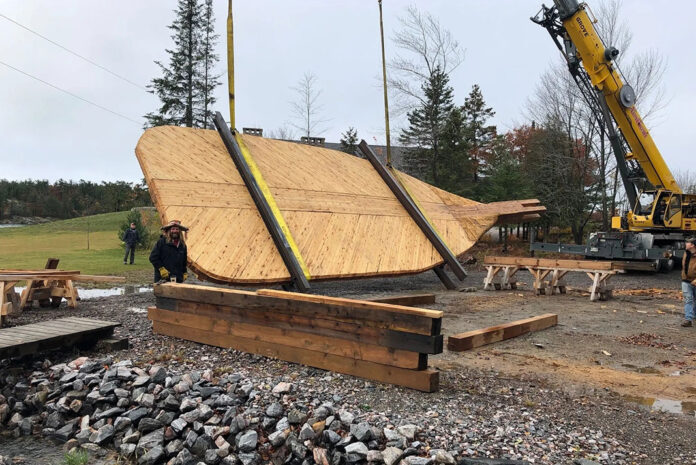
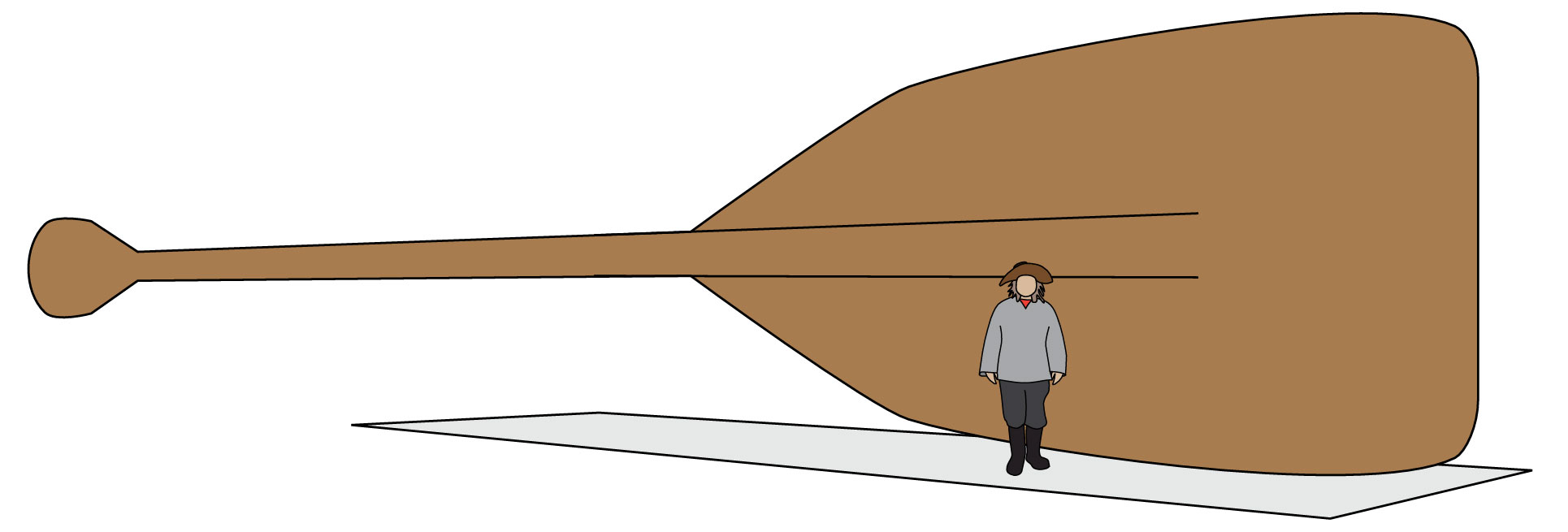
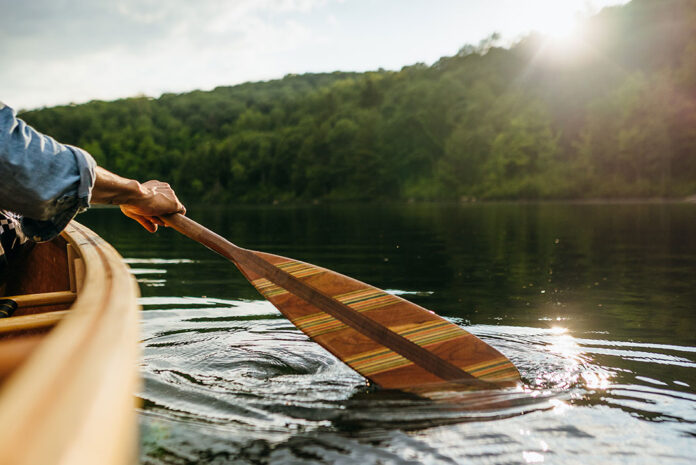
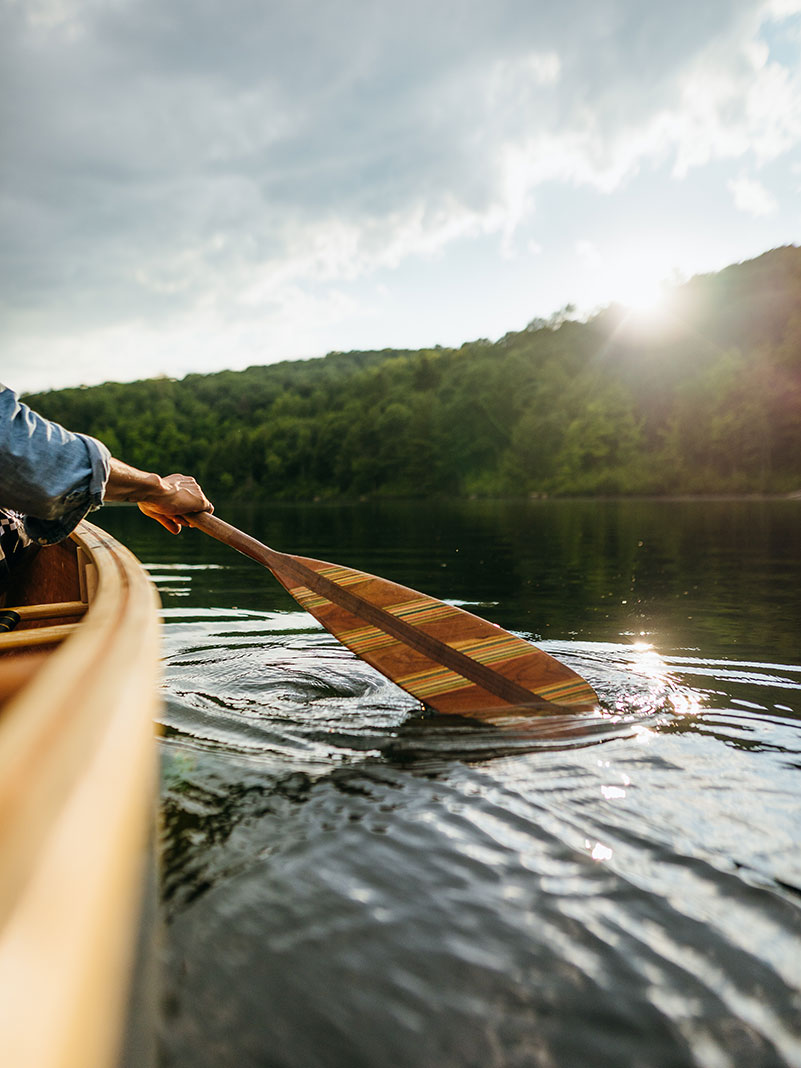
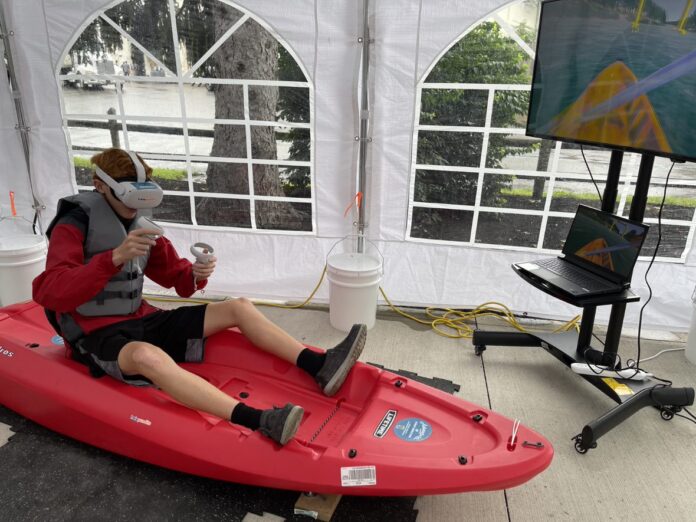
Cross-continent canoeist Mike Ranta is known for dreaming big, and his 110.5-foot-long paddle is the latest proof of the paddler’s larger-than-life mindset. Affectionately called the Big Dipper, Ranta’s mammoth bent-shaft blade was confirmed in 2021 by Guinness World Records as the world’s largest paddle, ousting from the record books a 60-footer in Golden, British Columbia.
World Record recognized: in 2021 as world’s largest paddle/oar
7 weird facts about the new biggest paddle in the world
The Big Dipper resides on the shores of Georgian Bay at the Killarney Mountain Lodge in Killarney, Ontario, where it celebrates the rich voyageur history of the area and is also a tribute to veterans, Ranta says.
Known for crossing Canada two-and-a-half times on solo expeditions, Ranta didn’t let a little thing like inexperience with a spokeshave deter him. “I’ve built a few paddles and done a few woodworking projects, but never anything on this scale. I learned a lot about woodworking,” he reports.
Mike Ranta
Length: 5 feet, 8 inches
Weight: 220 pounds
Time to make: 50 years
Constructed with: Pasta, especially lasagna
World Record made: unofficially in 2016, for the longest single-season solo canoe trip (4,660 miles)
With his canine companion, Spitzii, by his side, Ranta will put the finishing touches on the paddle in summer 2022 and seal a 200-year time capsule into a hollowed out portion of the paddle shaft.
[ Plan your next Canada canoe expedition with the Paddling Trip Guide ]
“It’s not just the biggest paddle in the world; it’s going to be the prettiest too,” says Ranta. “I want to add a table in the shade next to it, so those who visit can sit and honor who they’re thinking about.”
This article was first published in the Early Summer 2022 issue of Paddling Magazine. Subscribe to Paddling Magazine’s print and digital editions, or browse the archives.
When assessing risk, 10,000 hours isn’t a magical threshold. Time in cockpit is only one factor to making good decisions. | Feature photo: Kevin Light
Those with a lot of training and experience outdoors like to think we know what we’re doing when making decisions in risk environments. Our ability to make sound judgments about the terrain, timing, group management and safety is something we generally believe improves the longer we spend in the field. But the oft-cited threshold of 10,000 hours is no guarantee that we’ll strike the right balance when it comes to risk.
Does 10,000 hours really equal good risk management? Research says, “No”
For many recreational paddlers, the number of days on the water is a badge of honor and a way of providing evidence of competence. “Dude, I’ve paddled 120 days this year so far!” When advertising guiding services, guides will highlight the number of years we have worked in the field on our websites because we believe it instills confidence. Who wouldn’t choose a guide with 20 years and thousands of field days of experience over one with only three years? Three years, by the way, is the average length of time most guides remain in their field careers.
The common assumption is more days equals more skill. As Malcolm Gladwell points out in his bestselling book Outliers, it takes at least 10,000 hours—or 2,000 five-hour paddling days—for someone to become an expert in any field. Practice, repetition and skill development all take time, and the more you do it, the better you get. Right?
Maybe not.
When assessing risk, 10,000 hours isn’t a magical threshold. Time in cockpit is only one factor to making good decisions. | Feature photo: Kevin Light
When assessing risk and making good decisions based on those assessments, time is not the only factor. Sometimes the more “time in” we have equals an increased likelihood of an incident and poorer decision making in outdoor risk environments.
Over the past decade, studies from the National Outdoor Leadership School (NOLS) and academia have correlated more instructor years in the field with higher incident rates. A few factors cause this increase in incidents in an experienced instructor’s career.
First, as our confidence increases on the water over time, often so can our tolerance for higher levels of risk. As our skill level goes up, we tend to move into more challenging terrain where higher consequence incidents are more likely to occur. Second: Ego breeds complacency. Decreased attention to detail can result in poor decision-making. We can become less attentive to hazards when we adopt a been-there-done-that attitude.
Non-event feedback is the crux of the matter. As we go through our paddling careers, we are continuously exposed to near-miss situations. A near miss is where something could have gone wrong but didn’t. It would be nice to think all near misses are obvious, but sometimes, perhaps often, we don’t notice the giant boomer we just paddled over exploding in a gnarly mess of barnacles and white water behind us. We may squeeze by in situations where we think we had miles to spare, or have become so complacent we didn’t even recognize the scope of the hazard. We also become more comfortable with risk when it is familiar, which is a well-documented heuristic trap in the study of avalanche incidents. The more we paddle a section of exposed coastline without incident, the more our brains decide it’s safe, even though the risk hasn’t objectively changed.
Event feedback is crystal clear—the shattered kayak, dislocated shoulder or hypothermic client will all make us think twice the next time we paddle that type of water—but it is much less frequent than non-event feedback. The more unacknowledged near misses we collect, the more evidence we have of our true decision-making prowess.
[ Browse the widest selection of boats and gear in the Paddling Buyer’s Guide ]
In the paddling world, we’ve adopted the rationale more is inherently better. The more field days you have, the higher you can go in the certification levels. You can’t move from one level to the next or take the next course or exam without putting in a certain number of days in between, ranging from 30 to 200 depending on the level. Certainly, there should be a minimum number of days of guiding experience someone earns before moving up to more complex terrain and greater leadership responsibility. But the assumption inherent in these systems is the more days you have, the more competent you will be at your job and the better your judgment will be. However, time alone does not equal competency.
4 ways to manage risk and use better judgment
So, what is the antidote to this gap between experience and the development of good judgment and sound decision-making in risk environments?
1 Avoid risk creep
Watch for risk creep in your terrain choices and paddling circles—before you go, consider the what-ifs, and even in familiar terrain, make a plan individually and as a group for shit-hits-the-fan scenarios.
2 Develop your intuition
Put the ego and external pressures aside and get quiet enough to tune in to what your gut tells you.
Even the most familiar terrain can have a drastically different character and set of consequences depending on the weather, season, and the group you’re with. Know the forecast and the terrain, but pay attention to the actual conditions, including human factors.
4 Make a study of near misses
Study your own mishaps and those of others. There is copious wisdom in the world of outdoor risk management we can learn from. Understand the heuristic traps leading to misadventure and use this information to analyze your own decisions.
This article was first published in the Early Summer 2022 issue of Paddling Magazine. Subscribe to Paddling Magazine’s print and digital editions, or browse the archives.
When assessing risk, 10,000 hours isn’t a magical threshold. Time in cockpit is only one factor to making good decisions. | Feature photo: Kevin Light
North Of Inn Valley, the waters of the Brandenberger Ache cut decisively through the limestone of the Austrian Alps. The pinching walls of this section of the river are known as the Kaiserklamm, or “Emperor’s Gorge.”
The whitewater ricochets around in the swirling potholes, making for a natural wonder, and alas, burly whitewater run with solid flows.
[ Find your next whitewater destination in the Paddling Trip Guide ]
Bren Orton saw the potential for capturing the gorge in its visual entirety. The Pyranha paddler teamed with professional FPV drone pilot Juli Strauss. The result is this incredible footage edited by Orton and published on the Senders YouTube channel.
Feature Image: Georgia Read / RIVERSPORT Foundation
1 of 8
Image: Georgia Read / RIVERSPORT Foundation
Feature Image: Georgia Read / RIVERSPORT Foundation
Image: Georgia Read / RIVERSPORT Foundation
Image: Georgia Read / RIVERSPORT Foundation
Image: Georgia Read / RIVERSPORT Foundation
Image: Georgia Read / RIVERSPORT Foundation
Image: Georgia Read / RIVERSPORT Foundation
Image: Georgia Read / RIVERSPORT Foundation
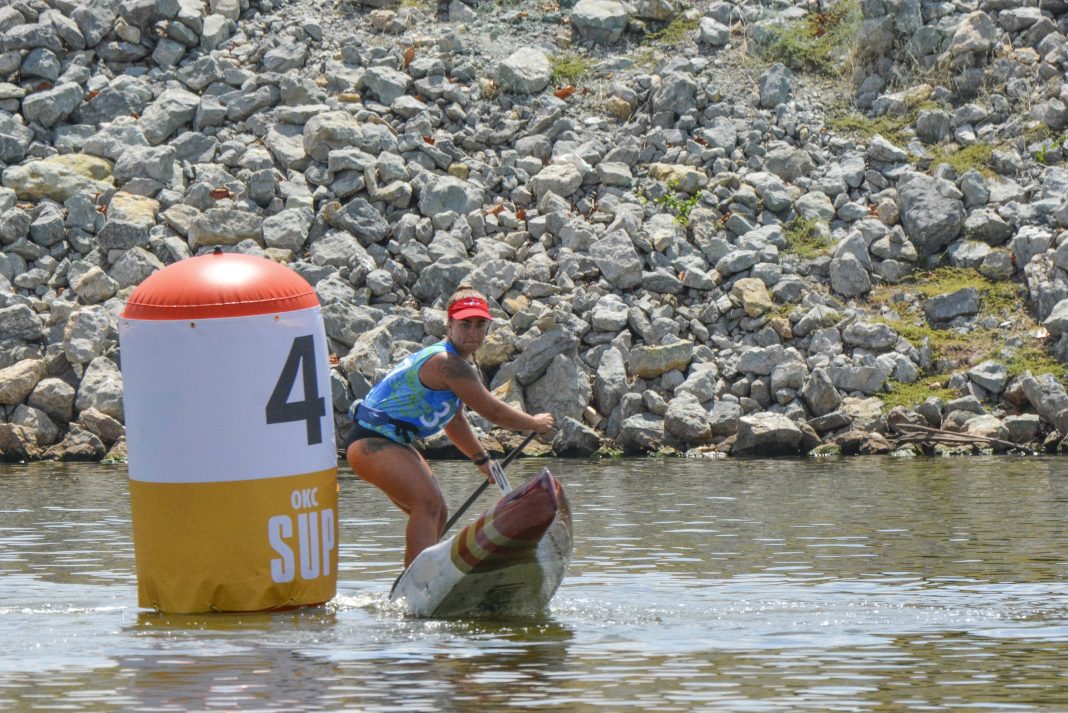
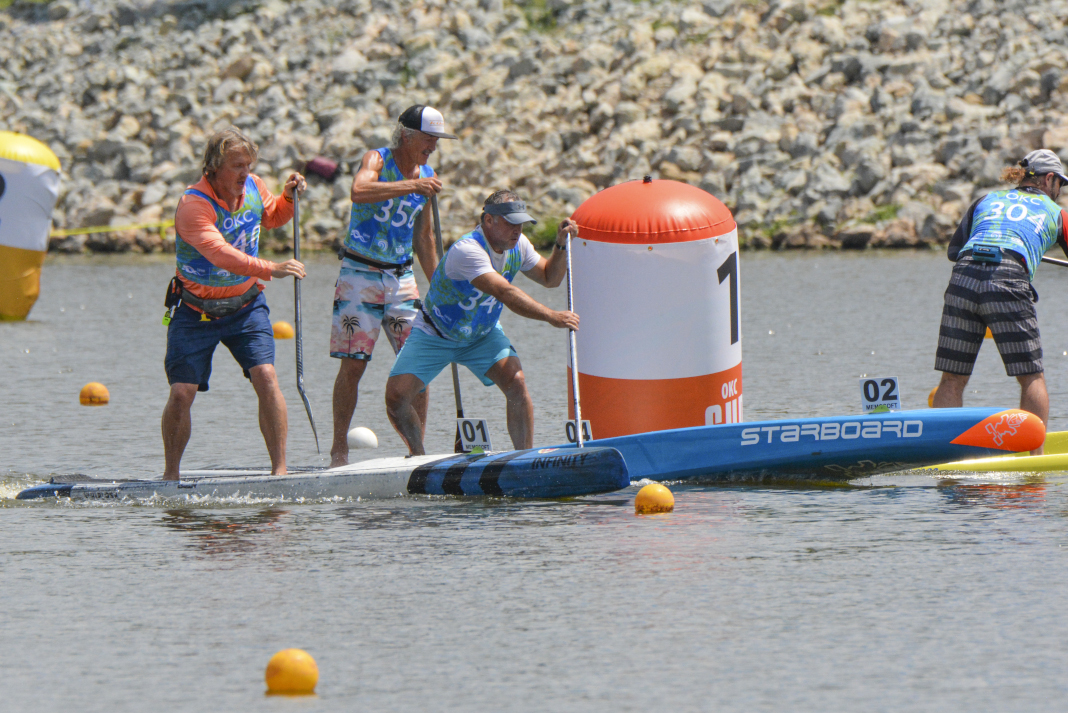
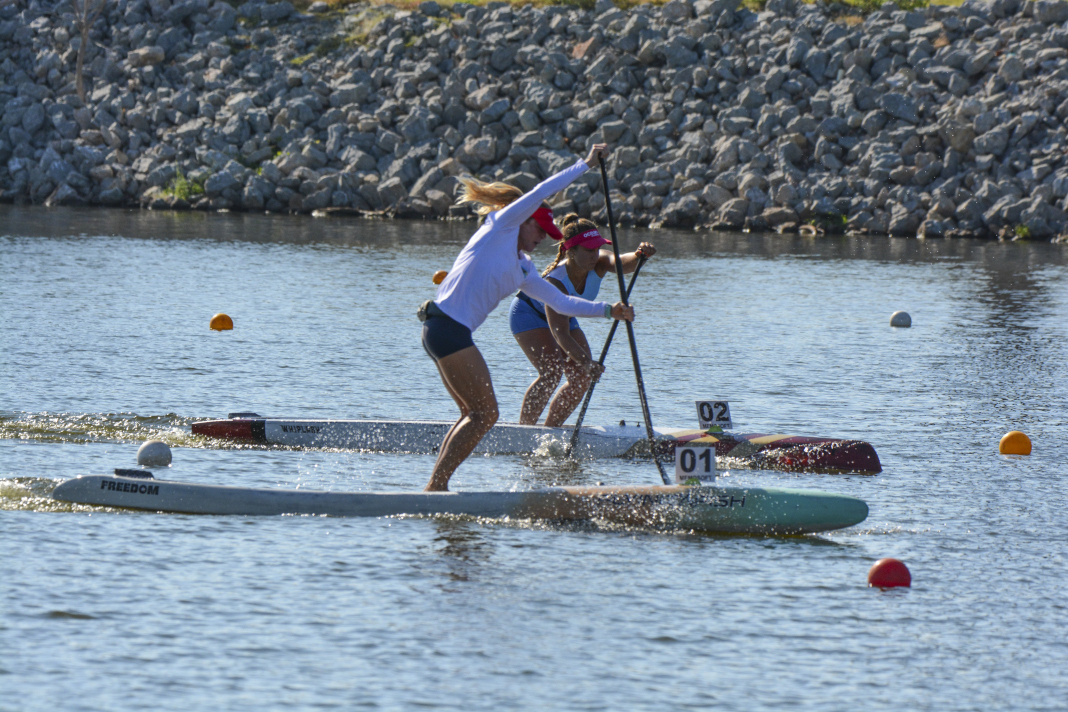
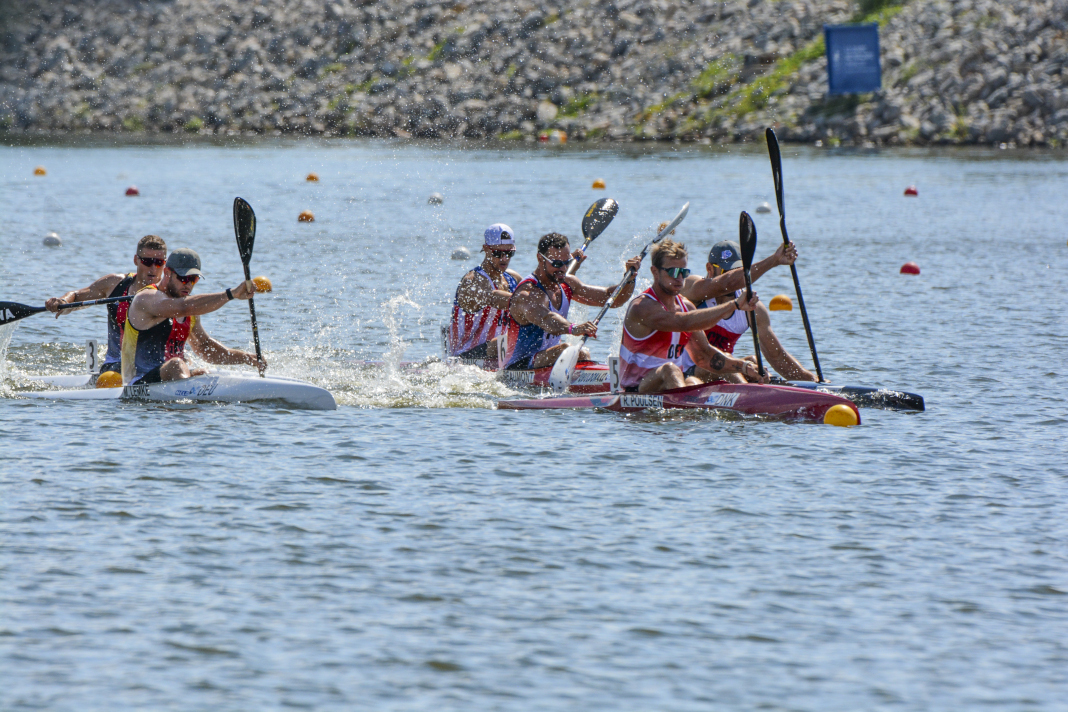
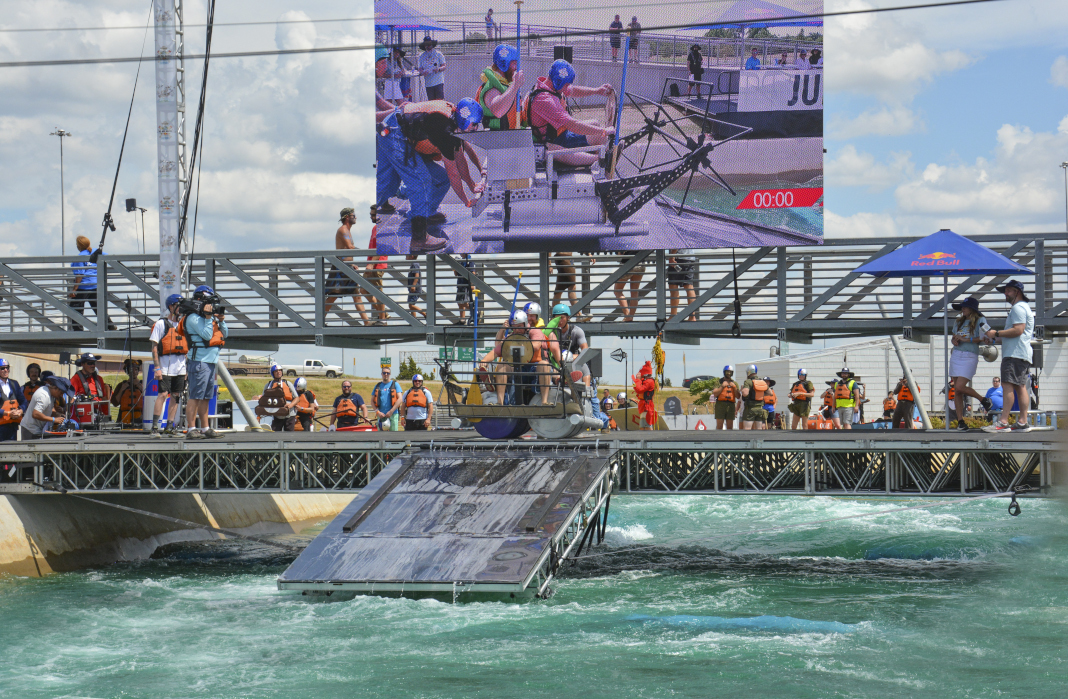
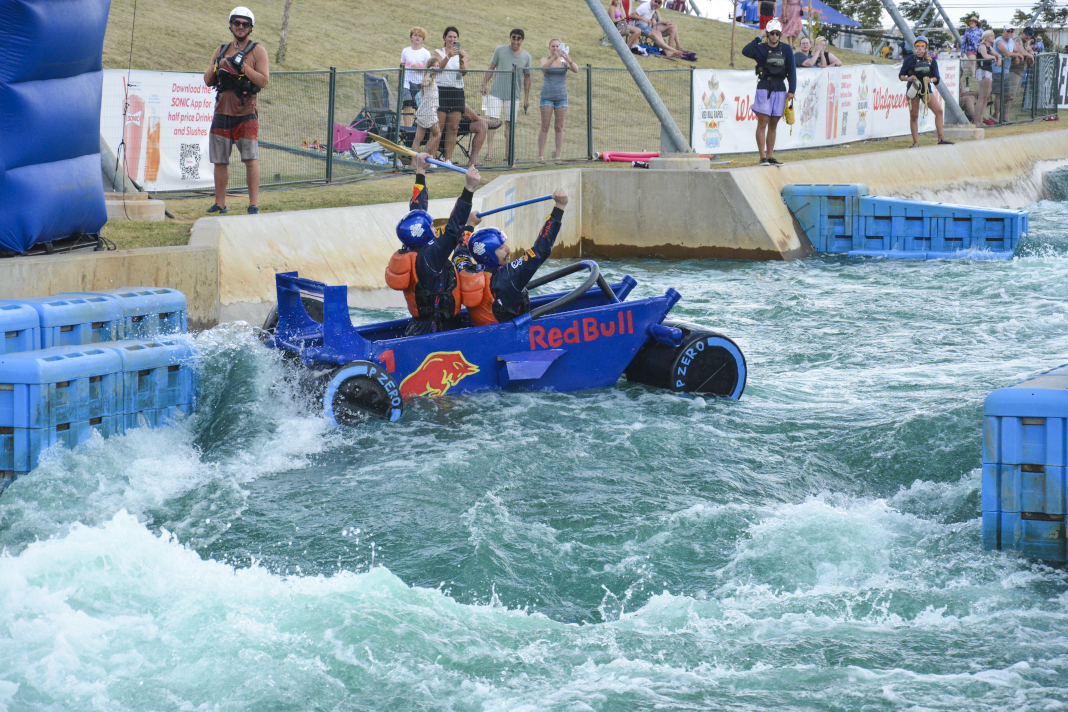
The Riversport OKC paddling center on the Oklahoma River was built with the intention of training Olympians and hosting international-scale events. On August 26-28, 2022, Riversport put its vision on display as the host of a global gathering in Oklahoma City that spanned the paddling spectrum.
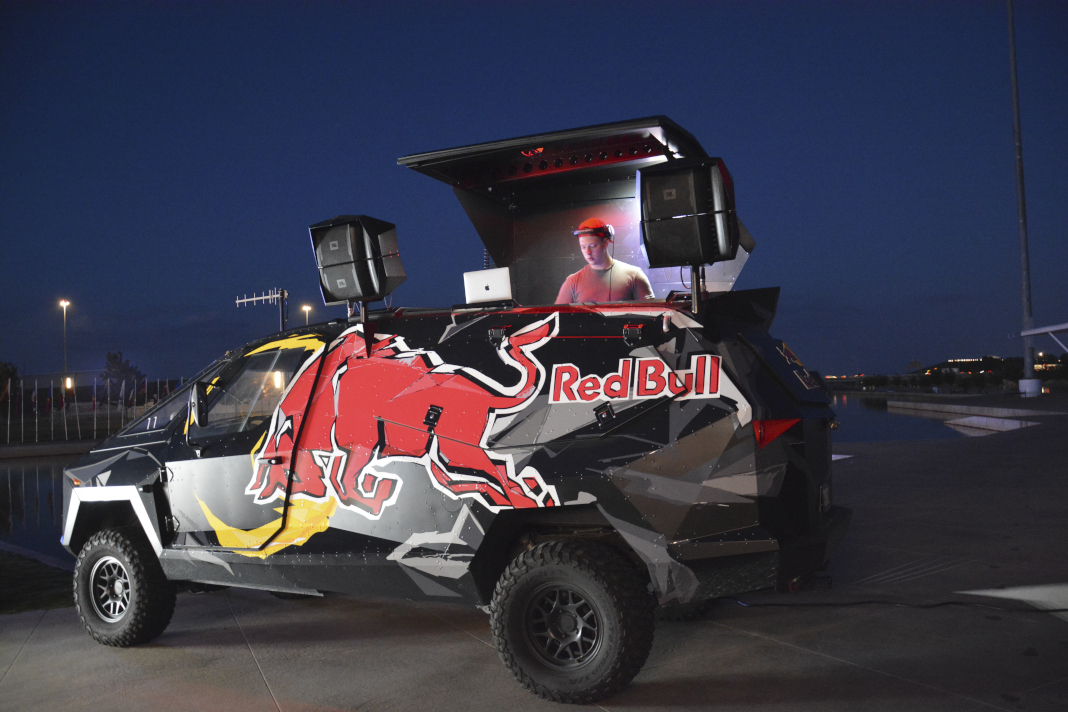
Oklahoma City held three paddling events melded together into one weekend: the ICF Standup Paddling World Cup, the invitational ICF Canoe Sprint Super Cup, and Red Bull Rapids, a fun-loving and amusing rafting race at the Riversport whitewater park.
[ Find your next destination in the Paddling Trip Guide ]
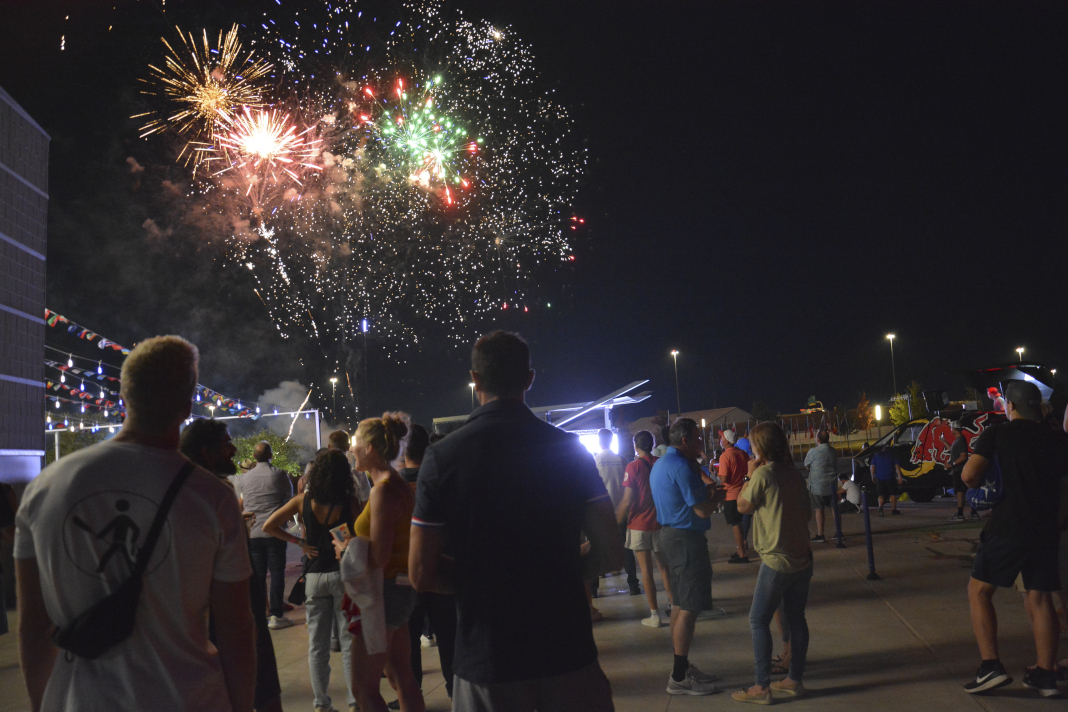
Athletes from 20 countries landed in Oklahoma to compete in the events and enjoy the paddling festival, appropriately called the World Party.
The only true competition is with ourselves, argues Shuff. Agree or disagree? | Feature photo: Elizabeth Gadd
As a sea kayaking fan, should you root for the activity you love to become an Olympic event? The benefits of shining a global spotlight on the sport seem obvious, but the drawbacks of high-profile competition merit a second look—especially for paddlers who value personal exploration and the simple freedom to play around.
According to the Dutch scholar Johan Huizinga, play exists on the margins. “A free activity standing quite consciously outside ordinary life as being ‘not serious,’” he defines it. Many outdoor adventure sports were created in this spirit by tinkering renegades and free thinkers turning their back on the spotlight of competition and the big business of sponsorship and sales. But most of these sports have changed.
The quintessential counterculture pursuits of mountain biking, rock climbing and surfing were all featured in the Olympic Games in 2021, the pinnacle of mainstream sellout. We celebrate this as progress, but why? Should we want the same result for sea kayaking?
Sea kayaking will never be an Olympic event—and that’s okay
High-profile competition brings money, power and influence to various entities involved in promoting, officiating and outfitting these sports. Manufacturers can sell more widgets, convincing more people they need the best and newest gear, and promote their brands so non-participants will want to be seen in their logo clothing. It also brings more kids into the development assembly line so there will be greater numbers of entry-level products sold, more coaches who can make a career of it, more airlines can sell tickets to events in far-off places, and so on.
Granted, it’s nice to share the benefits and joys of the sports we love with the masses. And a greater pool of participants from a greater range of ages and backgrounds brings with it a higher level of performance and exponential innovations in technique and equipment. New talent comes out of the woodwork, and it’s inspiring to watch elite athletes break records and exceed the bounds of what we ever thought possible.
The only true competition is with ourselves, argues Shuff. Agree or disagree? | Feature photo: Elizabeth Gadd
Despite these benefits, I remain a contrarian, and a selfish one at that. Because I wonder, why would I want my outdoor sports to become more popular? I asked myself this question repeatedly when I briefly worked in the outdoor industry and heard people at conferences talk about “growing the sport” as if it were a house plant. Wouldn’t it just mean more people in the places where I go to get away from them?
Needless to say, I didn’t last long in the business.
Whenever a sport gets caught up in the mass marketing machine of commerce and competition, it becomes harder to separate what’s essential about the pursuit from all the distractions: titles, trophies, toys, and gadgets. Once so-called success in a sport starts to be defined on a measurable continuum, Huizinga’s realm of the “not serious” departs.
Hitting the mainstream means making some sacrifices
Look what has happened to running. Recreational runners now have to consider whether they want to shell out twice as much money to buy the latest shoes, like the Nike Vaporfly, which allegedly make you four percent faster for twice the cost.
Ditto for gear-obsessed cycling, which saw all its pro riders switch to racing with disc brakes. Disgraced former racer Lance Armstrong lauded this innovation, saying on his podcast it would be great for the industry because all the amateur riders would want to go out and buy new bikes. How typical of the bike business, which is great at making everybody think they need a different frame material or wheel diameter every couple of years. And when that doesn’t work, they invent a whole new product category, like gravel. Carbon replaced aluminum replaced steel. Next comes electronic shifting. Then electric assist.
I’m their worst nightmare because I bought just one cyclocross bike for commuting two decades ago and have used it for every type of riding since, from Ironman racing to group road rides to trails. I made my bike as long-lived and versatile as my kayak. Can you imagine what other industries would say if you suggested their products should last for as long as we keep our kayaks and canoes?
This nonstop cycle of specialization and obsolescence is driven by a business mindset that goes hand-in-hand with the competitive mindset. Nobody ever mentions all this so-called innovation is an environmental disaster, a hyper-acceleration of our disposable culture, or questions whether it is good for the sport’s participants, those poor suckers who have to shell out for the gear. When competition creeps in, the gear soon becomes more technology than craft; we start to take for granted that it will be worn out or obsolete within a few years, like an iPhone or a computer, instead of a wooden canoe or kayak, which can be indefinitely repaired.
Soon enough, whatever competitive edge you get from the carbon-plated running shoes or the aerodynamic bike with deep-dish wheels and ceramic bearings vanishes, either because the gear wears out or gets replaced by something better, or the benefit is neutralized by everybody else buying the same equipment. In the world of competitive sports, the top-of-the-line gear becomes a baseline requirement, raising the price of participation. The only true winner is big business, which has figured out how to con us into spending twice as much, twice as often.
Competition can obscure other measures of success
And once sports become competitive, they are inevitably plagued by scandal and controversy. The never-ending push and pull of governing bodies struggling to ensure a fair and level playing field while individual competitors try to squeak out every possible advantage. And now there’s the issue of transgender competition, where at the very time our culture is moving away from binary identification and toward greater diversity, competition gatekeepers are fortifying their definitions of who can compete against whom, all to elevate the winners to a podium. This controversy just underscores the fact that the only pure competition is ultimately with ourselves.
I prefer sports where the individual experiences are unique and participants focus on internal measures of success and the pleasures of the moment, rather than the elevation of the end goal, and where the equipment is secondary to the experience.
Sure, anytime humans take on an activity, some will try to do it faster, longer and stronger, and others will cheer them on. I would be lying to suggest I’m immune. If anything, I’m just trying to protect my paddling experiences from being corrupted by my own devilish competitive streak. I spent a morning last summer obsessively watching the Tour de France riders battle in the Pyrenees, bloodthirstily eager to see who would crack on the Col du Portet. All the while multitasking on my phone to check out how my trail run metrics stacked up on Strava.
There’s a place for competition. But I love wilderness canoeing and kayaking all the more because they take me away from it. The whole notion of going into the wilderness is to remove ourselves from the culture where such comparisons are possible and to pretend we’re traveling in a place where there aren’t even any other people to compare ourselves to.
The experience is genuinely playful in that it is outside the ordinary. It’s too dazzlingly rich and complex to quantify and measure, a Zen koan in contrast to the linearity of conventional sport. How fast we paddle and the equipment we use doesn’t matter, as long as we get where we need to go—not just in space but also in spirit.
This article was first published in the Early Summer 2022 issue of Paddling Magazine. Subscribe to Paddling Magazine’s print and digital editions, or browse the archives.
The only true competition is with ourselves, argues Shuff. Agree or disagree? | Feature photo: Elizabeth Gadd
The story of standup paddleboarding didn’t begin with an inflatable at your local whitewater park in Colorado. The sport has crossed oceans and cultures to become one of the fastest growing in paddling today. If you’re like us though we know you’d rather be out on your board than sitting through a lecture. That’s why we appreciate this concise standup paddleboarding history video with Robert Stehlik, owner of Blue Planet Surf on Oahu.
Similar to kayaks and canoes, standup paddling traces its roots back to utilitarian uses thousands of years ago.
Stehlik opens the video by bringing our attention to evidence of cultures as far away as Ecuador, Peru, and even Israel, using some method of standup paddling for the purposes of transport and fishing.
Stehlik goes on to share the influence of modern standup paddling, coming from the surfers of Hawaii.
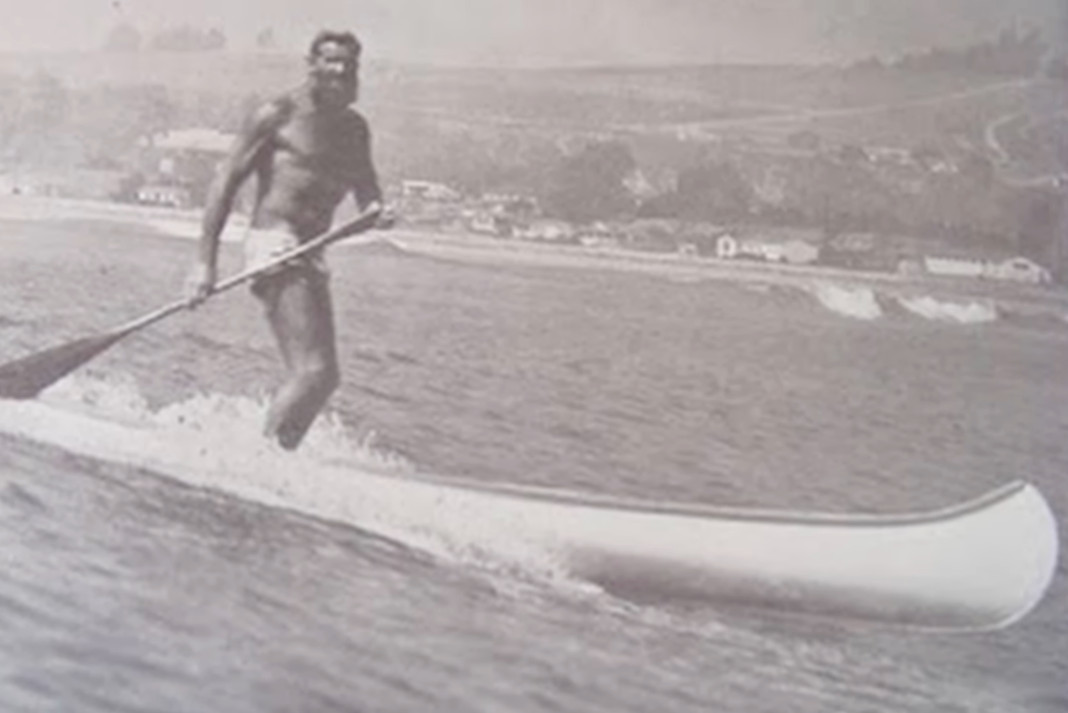
No story of the spread of modern board riding can be told without the global influence of Duke Kahanamoku. The Olympic champion and global ambassador of surf, among many other honors, at times used a paddle on the massive surfboards of the day out in the waves of Waikiki.
Image: Blue Planet Surf / YouTube
The Hamilton And Kalama Effect
Paddles were occasionally used on various crafts in the surf within the past century. But, Stehlik goes on to say that we have another pair of surfing celebrities to thank for turning standup paddleboarding from a historic rarity into the popular paddlesport we have today.
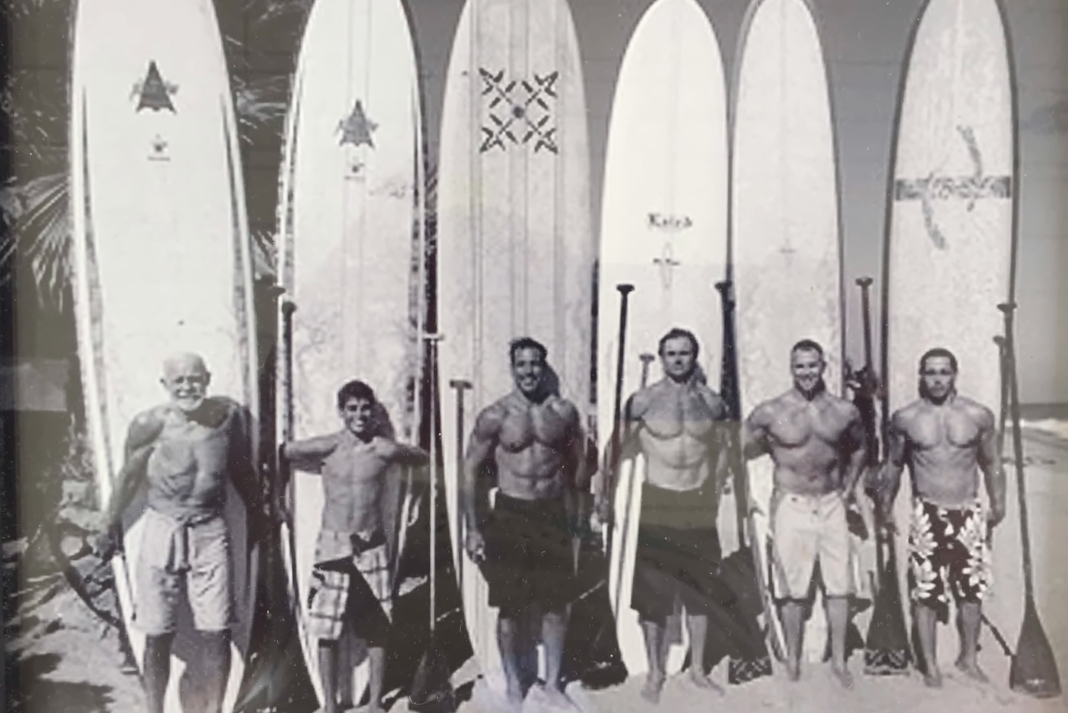
“More recently Laird Hamilton and Dave Kalama were doing an Oxbow photo shoot with big long boards, and they picked up some wooden paddles and started paddling standing up on these longboards.” Stehlik explains. “They got into it more. And that’s kind of how the modern day stand-up paddling began, and that’s when the rapid rise of the sport began worldwide.”
[ Find your next standup paddleboard in the Paddling Buyer’s Guide ]
In the 1990s, when Hamilton and Kalama took up the discipline in earnest, standup paddling lacked any notoriety or specific equipment. Today, nearly four-million people have learned how to paddleboard and participate in the sport in the US alone. And the next chapter of standup paddleboarding history books will undoubtedly include the sport’s migration from the sea to our lakes and whitewater rivers.
Finding the right recreational kayak for your needs can be a daunting task with so many different designs and styles to choose from. Essentially it comes down to deciding how and where you intend to use the kayak, and then finding something that fits your budget.
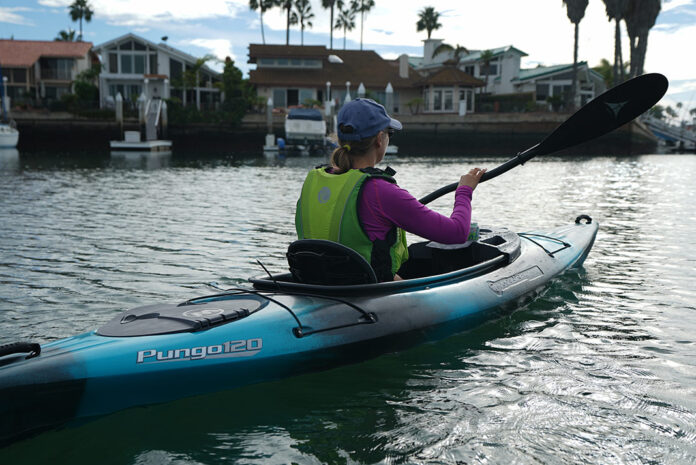
The bestselling Wilderness Systems Pungo series of do-it-all recreational kayaks are some of the most popular choices for paddlers who enjoy smaller lakes, meandering rivers, coastline exploration, kayak fishing or even the occasional overnight trip. The Pungo lives up to its cred as a sit-inside recreational kayak “legend” with a design heritage dating back 20 years.
The Wilderness Systems Pungo 120 will serve as a great day tripper for small- to medium-sized paddlers looking for more glide and efficiency than the shorter Pungo 105; larger paddlers should look at the Pungo 125 for a roomier fit and higher carrying capacity alongside the same versatile features and performance.
The Wilderness Systems Pungo is priced higher than many budget and box store recreational kayaks, but boasts the features and comfort of kayaks costing hundreds of dollars more. Looking at it from a value standpoint, the Pungo 120 is tough to beat—that’s why we picked it as one of the best kayaks.
On the water with Wildy’s Pungo 120
Wilderness Systems Pungo 120 Specs
Length: 12’2” / 3.7 m
Width: 29” / 74 cm
Weight: 49 lbs / 22 kg
Capacity: 325 lbs / 147 kg
MSRP:$1,099 USD / $1,399 CAD
Market and demographics
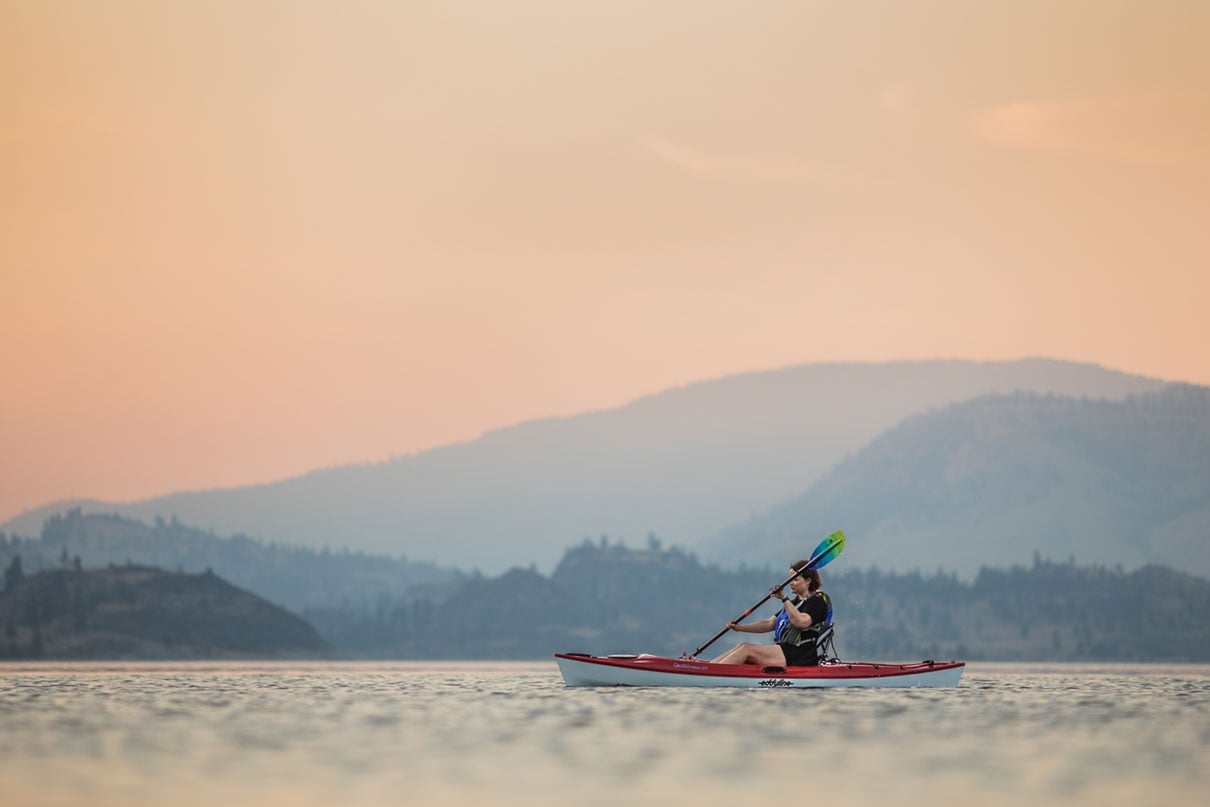
The Wilderness Systems Pungo series really are do-it-all recreational kayaks. This sit-inside design best suits the beginner to intermediate paddler who enjoys a variety of paddling situations. If you want a kayak to take on a slow serpentine river one day and then fish the local quarry the next, the Pungo is it.
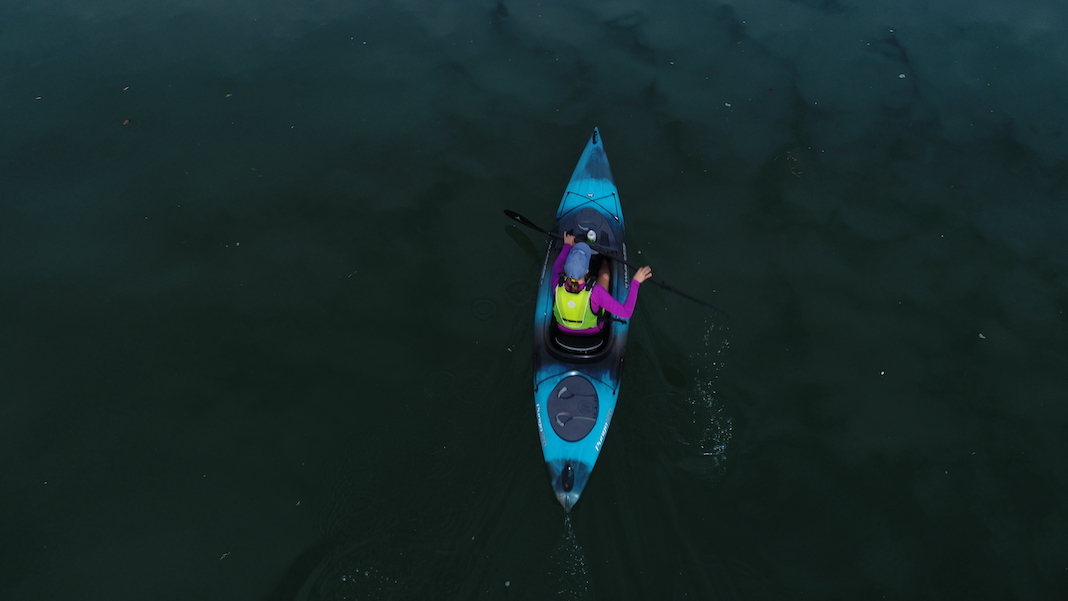
The Wilderness Systems Pungo 120 is 12’2” long, weighs 49 lbs, is rated to carry up to 325 lbs and is the middle option in the Pungo lineup. Wilderness Systems also offers the Pungo in two other sizes: The Pungo 105 is a more compact 10’6” version suited for small- to mid-sized paddlers, and the Pungo 125 offers a more comfortable fit for larger paddlers with an increased deck height (more legroom) and slightly larger cockpit.
The Wilderness Systems Pungo 120 sits right in the Goldilocks zone for a wide variety of paddlers. The Pungo 105 is slower and carries slightly less weight, but is lighter and more maneuverable. The Pungo 125 has a generous carrying capacity of 425 lbs, but is somewhat heavier and less maneuverable.
Paddle Sober And Smart
Never mix alcohol and paddling. Coast Guard and state BUI (boating under the influence) laws apply to all vessels. This includes canoes, kayaks, SUPs and rafts.
Comfort
The Wilderness Systems Pungo 120 is a sit-inside kayak that has a large cockpit opening for easy entry and exit and an unrestricted feeling when sitting in the kayak. The airy cockpit offers the best of both worlds; paddlers enjoy the benefits of a sit-inside kayak—like better protection from harsh sun, cold environments, precipitation and splashing water—without the claustrophobic feeling that can accompany a smaller cockpit opening.
Photos: Courtesy Wilderness Systems
Wilderness Systems aims to make the world’s most comfortable kayaks, and the Pungo 120 is no exception. The Pungo 120 comes equipped with Wilderness Systems’ Phase 3 AirPro seating system, which features a plush 3D foam seat with honeycomb pattern mesh fabric. The foam seat forms to your body, while the perforations ensure it’s quick-drying and keeps you cool on hot days. The seat is fully adjustable while seated with a simple pull or release of easy-to-reach straps.
The supportive, high back rest can be pulled forward or relaxed as needed; the seat itself has an adjustable leg lifter to reduce fatigue and dial in a comfortable position. Cushy thigh pads prevent bare legs from rubbing on the plastic sides of the kayak—an all-too-often overlooked feature in cheaper box store kayaks.
Easy-to-adjust Slidelock XL foot braces round out the Wilderness Systems Pungo 120 cockpit outfitting. An adjustable foot brace system is key to ensuring you are comfortable and efficient; it improves posture, reduces fatigue and boosts your overall performance by enabling you to make a solid connection with the boat and engage the larger muscles of your core and legs for stronger paddling.
Adjusting a kayak to fit you correctly is one of the most important steps you can take to make paddling more enjoyable. A comfortable kayak will end being used more often, and for longer, and comfort can also drastically affect how well the kayak handles.
About the Pungo 120 kayak
Design
Design features and details
Everyone wants a kayak that is light, fast, durable, maneuverable and inexpensive. That’s what I’d call a Bigfoot. I’m not saying they don’t exist, but I’ve never seen one…
Every design decision has a trade-off. Longer kayaks tend to go faster, but they generally aren’t as stable or quick to turn as shorter, wider boats. Space-age composite materials are lightweight and easy to manage, but not so easy on the wallet.
Bigfoot aside, the Wilderness Systems Pungo 120 strikes up a great balance of speed, stability, durability, comfort and affordability.
The Wilderness Systems Pungo 120 is faster than many comparable recreational kayaks. The 12’2” length and minimal rocker (the amount the hull curves up at the bow and stern) gives the Pungo 120 a relatively long waterline. In other words, it has enough hull speed to feel the wind on your face when zipping across a lake, without the worry that the slightest ripple will send you cheeks up (not a technical term, but you get the idea).
Dress For Immersion, Not Air Temperature
Your body loses heat much faster when immersed in cold water than it does when dry.
Avoid cotton clothing like t-shirts and jeans; they retain water and accelerate cooling when wet. Synthetic fabrics, or wool, are generally a better choice. If the water is very cold (60° fahrenheit or less), you should wear a wetsuit or drysuit.
In fact, it’s the Wilderness Systems Pungo 120’s stability and predictable handling that make this such a well-loved boat. The 29-inch width and voluminous chines (where the sides of the kayak meet the bottom) create confidence-inspiring stability so you can wiggle around, snap a few pics or take Fido out on the water without fear of the slightest movement sending you overboard. Wider kayaks might be even more stable but the trade-off is increased drag and slower performance. Again it seems like the Pungo 120 is just right.]
Another balancing act for kayak designers is maneuverability versus tracking, or the ability of a kayak to hold a straight course. The Wilderness System’s Pungo 120’s pronounced stern keel helps it stay on track even in choppy waters, without feeling like a barge. On winding, slow-moving rivers, alert paddlers will be able to easily maneuver around obstacles like rocks, lazy sturgeon or shopping carts (hey, we paddle where we can).
The Wilderness Systems Pungo 120 weight comes in at just under 50 pounds, which means it’s quite manageable to load on your car and get it to and from the water.
Material and construction
Like many recreational kayaks, the Wilderness Systems Pungo 120 is made of rotomolded polyethylene, a durable plastic that stands up to abuse and is easy to maintain. This means you don’t need to shed a tear every time you bump a dock or a rock, and can drag it up on craggy shores without fear of damaging the hull.
The Wilderness Systems Pungo 120 also comes with an integrated and replaceable skid plate, an extra thick piece of plastic that is located on the bottom of the boat at the stern. This protects the hull by taking the bulk of the punishment when dragging your kayak in and out of the water or when loading on and off your vehicle by yourself.
Wilderness Systems Pungo 120 outfitting and accessories
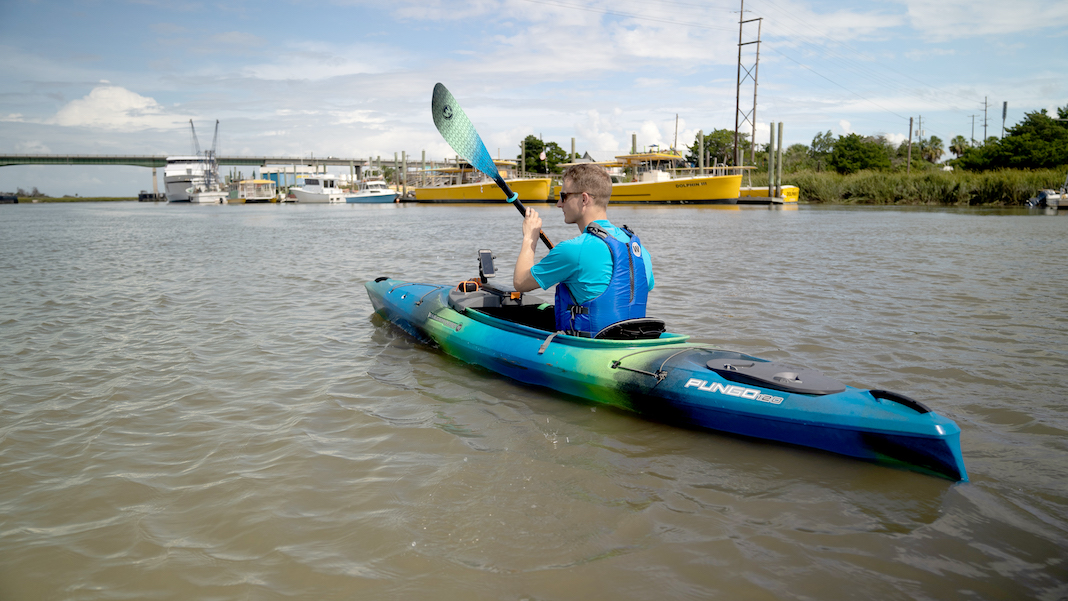
For many paddlers, Wilderness Systems Pungo 120 accessories and outfitting is top of the list of things to love about this versatile kayak. The Pungo 120 is equipped with what Wilderness Systems bills as “the most comprehensive kayak dashboard”—a removable console that fits over the front of the cockpit and features a removable dry box, cup holders, an accessory gear track and a recessed battery compartment.
The removable dry box is perfect for keeping small essentials like keys, wallet, cellphone, camera and snacks safe and dry. It’s also nice to be able to leave your boat at the dock and have your valuables in one convenient place to quickly grab and go. A pair of cup/bottle holders keeps water, sports drinks or your morning mocha close at hand, so it’s easy to stay hydrated (and you don’t have water bottles rolling around the bottom of your boat—one of my personal pet peeves).
The Wilderness Systems dashboard includes a recessed compartment that is specially designed to house the WS lithium battery, which can be purchased separately. This lightweight 14-ounce, water-resistant battery has one 12-volt and two USB ports to keep phones, tablets, fish finders or other electronics charged on the water.
The Pungo 120 dashboard also incorporates Wilderness Systems’ SlideTrax gear mounting system. This little strip of grooved aluminum opens up a world of possibilities to mount accessories like a fishing rod holder, phone or GPS. If you can think of something you’d mount on a kayak, then there is a good chance an aftermarket mounting bracket exists.
Tidy, adjustable deck bungees on the bow and stern give you more options to stash gear on-deck. You can even add specifically designed, matching mesh deck pouches (sold separately) for even more storage.
Perhaps the greatest opportunity for Wilderness Systems Pungo 120 customization is choosing from various RAM mounts to install on the dashboard. Get the X-Grip Phone Mount/Base if you want to keep your phone handy for selfies and navigation, or opt for a Basic Track Ball with T-Bolt Base to open up a huge array of mounts and options.
Add some of these optional accessories and you can really start to customize things to make the Pungo 120 your perfect personalized ride.
More traditional accessory options are also plentiful. Add a Wilderness Systems TrueFit Spray Skirt to keep splashing waves out of the cockpit when paddling in rougher waters. A skirt is also really nice to have in the rain and in cooler weather for a bit of extra warmth. And I don’t know about you, but I don’t like paddle drips in my lap on anything but the hottest days.
Other TrueFit options include a Sun Shield partial deck for warmer climates (because burnt thighs aren’t much fun) and a Cockpit Cover to keep creepy crawlies out of the kayak when it’s being stored.
If you are the type of paddler that doesn’t like to leave any of the comforts of home behind, then the storage capacity in the Wilderness System Pungo 120’s Orbix stern hatch should keep you satisfied. The double latches make this hinged, oval hatch super easy to open and close. If you’re parking your boat where you can’t keep an eye on things, you can even lock the latches for peace of mind.
The Wilderness Systems Pungo 120 stern hatch is separated from the rest of the kayak by a watertight, sealed bulkhead. In addition to keeping your gear dry, a bulkhead is a critical safety feature that ensures adequate flotation should the kayak swamp in deep, open water.
Wear A Life Jacket
Everyone, even strong swimmers, needs to wear a life jacket at all times when on the water. It is extremely difficult to put a life jacket on once you fall into the water. Even a light wind can blow any paddlecraft away from you, faster than you can swim.
Always wear a USCG-approved Level 70 or Type III life jacket designed for paddling.
As with any kayak, it’s a good idea to put anything that absolutely needs to stay dry in a waterproof bag or box inside the hatch, as a small amount of water may find its way in through the hatch lid.
Warranty
Like many other kayak manufacturers, Wilderness Systems offers a limited lifetime warranty that covers manufacturing defects in the hull and deck. Parts, accessories and outfitting come with a one-year warranty.
Photo: Courtesy Wilderness Systems
Pungo 120 pros and cons
Pros
Do-it-all kayak with a good balance of speed and stability for beginner and intermediate paddlers
Proven, paddler-informed design that has made the Pungo the best-selling sit-inside recreational kayak of all time
Plenty of useful space, including a roomy stern hatch and a unique and handy cockpit “dashboard”
Premium, comfortable and easy to adjust outfitting
Rear bulkhead means the kayak won’t sink if it swamps in deep water—a critical safety feature if you intend to paddle further from shore or on more exposed coastlines
Cons
Might not be suited for larger paddlers—choose the Pungo 125 for a higher capacity option
Do-it-all design means the Pungo 120 doesn’t excel at any one thing; if fishing from your kayak is your main objective, you might be happier with a dedicated fishing kayak
Significantly more expensive than budget recreational kayaks…just remember, you get what you pay for, with superior comfort and convenience features and paddling performance
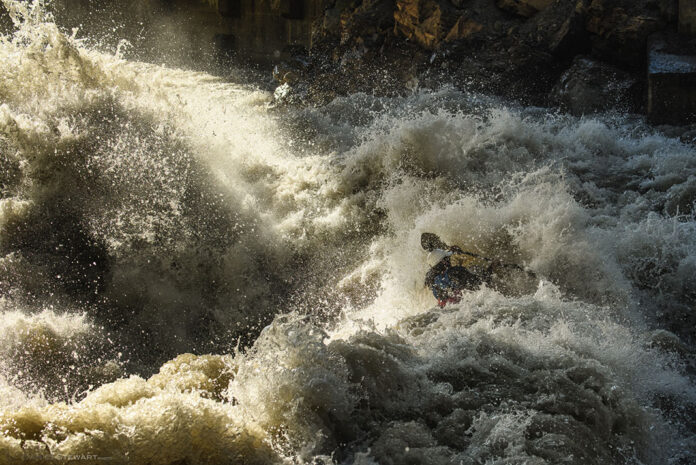
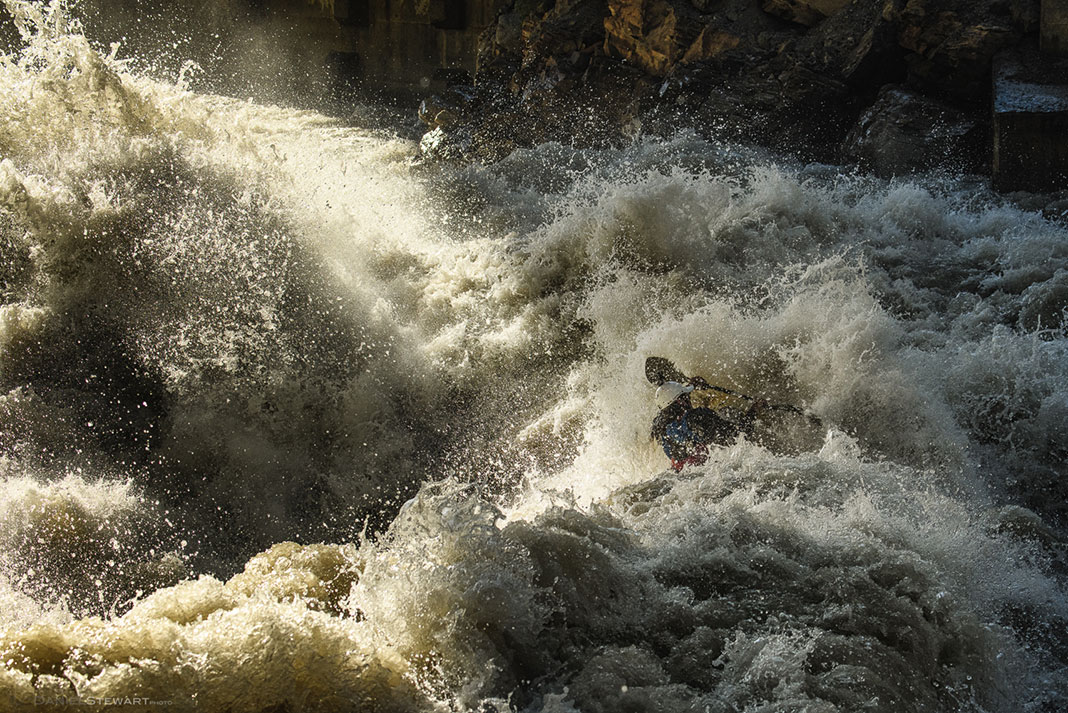
Myth (noun): 1) An unfounded or false notion. 2) A colleague who regularly vanishes during office hours. As in, “Has anyone seen Billy? He is such a myth.” | Feature photo: Daniel Stewart
Formal instruction aside, whitewater paddlers round out their skills with informal advice from peers and fellow paddlers. But not every well-intentioned nugget of wisdom is worth following. How can you decide what advice to take to heart—and what to leave at the put-in? We caught up with eight top pros for their picks on the worst whitewater myths.
8 of the worst whitewater myths, according to pros
“That you don’t need to learn certain basic skills because ‘you won’t need them.’ Learn to get in or out of your kayak in hard places, learn to hand roll well, practice surfing out of features, and learn how to catch harder eddies. Every bit of skill you add makes you safer on the water.”
— Dane Jackson
“If you can’t spit, you shouldn’t run it.”
— Benny Marr
Myth (noun): 1) An unfounded or false notion. 2) A colleague who regularly vanishes during office hours. As in, “Has anyone seen Billy? He is such a myth.” | Feature photo: Daniel Stewart
“Being a class which-ever-number paddler. There is no such thing as being a class V boater. Some days you can run class V, some days you can’t.”
— Nouria Newman
“Every myth is there for a reason. The dangerous part is how many people try to convince you something is a bad idea. At the end of the day, if you and the crew want to give it a try, then it’s worth going for.”
“‘Waterfalls are easy; you just tuck up and fall off the thing!’ Waterfalls are the most dangerous discipline of kayaking. The tiniest mistake can be the difference between a perfect line and a broken back. I have unfortunately learned this lesson twice, and I am not keen on learning it again.”
— Brooke Hess
“That you are safer in a group. A group can also give you a feeling of safety which makes you either fuck up more or push harder than you should. You find out real fast where you stand if you go up ahead.”
— Mariann Saether
“The most dangerous myth is people think it’s a game for young people. I got into whitewater when I was 30 and, at 47, I am running class V consistently. Last year, I competed for my first time at both North Fork Championship and the Green Race. I have students who started kayaking in their 50s and students in their 70s who continue to run class III. It’s never too late.”
“‘You can only run it blind once.’ The statement might be true, but it’s dangerous. Don’t be ashamed to get out and scout.”
— Nick Troutman
This article was first published in the Early Summer 2022 issue of Paddling Magazine. Subscribe to Paddling Magazine’s print and digital editions, or browse the archives.
Myth (noun): 1) An unfounded or false notion. 2) A colleague who regularly vanishes during office hours. As in, “Has anyone seen Billy? He is such a myth.” | Feature photo: Daniel Stewart
Two paddles is too much of a good thing. Or is it? You have 376 miles to make your argument. Time starts…now. | Feature photo: Taylor Burk
Recently, a newbie canoeist asked a simple question on a social media page dedicated to backcountry travel. “Do I need to bring a spare paddle?”At least, I thought it was a simple question.“It’s the law to equip your vessel with a spare manual propelling device,” I replied.Whomp whomp. I was wrong. My error created a stir.
Contentious backcountry spare paddle guideline divides canoeist community
As it turns out, a majority of canoeists commented they always carry a spare paddle. Whether it was the law or not, it’s just good sense, they said. A few renegades replied they never have and never will. One proclaimed he was a certified canoe instructor—therefore, I guess, he had to be right.
Two paddles is too much of a good thing. Or is it? You have 376 miles to make your argument. Time starts…now. | Feature photo: Taylor Burk
The anti-spare paddle defenses were varied. Some stated you must be a poor paddler to break the only paddle you had—or just unlucky, I thought. Others claimed a spare is smart when trekking in the far north but not needed on wilderness trips closer to home. I tried to imagine anyone using this same argument to rationalize leaving behind a spare tire on a drive of only a few hours.
Many paddlers seemed to have the misguided notion they could easily fix a broken paddle with a couple of inches of duct tape or make a paddle from forest materials. So, I know those commenters haven’t tried. One guy even bragged about creating a makeshift paddle from a plastic kitchen cutting board and a marshmallow stick. Just imagine how this triumph performed.
[ Paddling Buyer’s Guide: View all canoe paddles ]
A spare paddle isn’t just for emergencies
Bringing a spare paddle isn’t just a safety measure; it’s practical. I might opt for a featherweight blade for lakes, but I pull out my burlier spare for swifts and navigating rocky shallows. And for folks who only bring a spare on far north trips—I’ve also heard of paddles swiped totally by accident on busy portages. I’ll tell you this, too: every paddler I know who has broken or lost a paddle on a canoe trip opted to bring a spare on future trips.
The bottom line is that even if you’re Red Green, fashioning a floppy repair is a hassle, and it’s never as good.
Why did I think bringing a spare paddle was a regulation in the first place? The seasoned canoeists I learned from always packed a PFD, whistle, throw line, bailer and waterproof flashlight. Back then, law enforcement didn’t fine you if those safety items weren’t in the canoe the way they do now, but canoeists brought ‘em anyway because it’s common sense.
And those canoeists always brought a spare paddle too.
Whether you place a plastic whitewater blade between your packs, tuck an ottertail behind your seat, or strap a carbon fiber bent shaft under the gunwales with a bungee, a spare paddle is less than a pound and guarantees you can continue on your trip if you snap a shaft, split a blade or twist off a t-grip.
Nope, it’s not illegal to paddle without a spare. But you know what they say. You never want to be up the creek without a…
This article was first published in the Early Summer 2022 issue of Paddling Magazine. Subscribe to Paddling Magazine’s print and digital editions, or browse the archives.
Two paddles is too much of a good thing. Or is it? You have 376 miles to make your argument. Time starts…now. | Feature photo: Taylor Burk
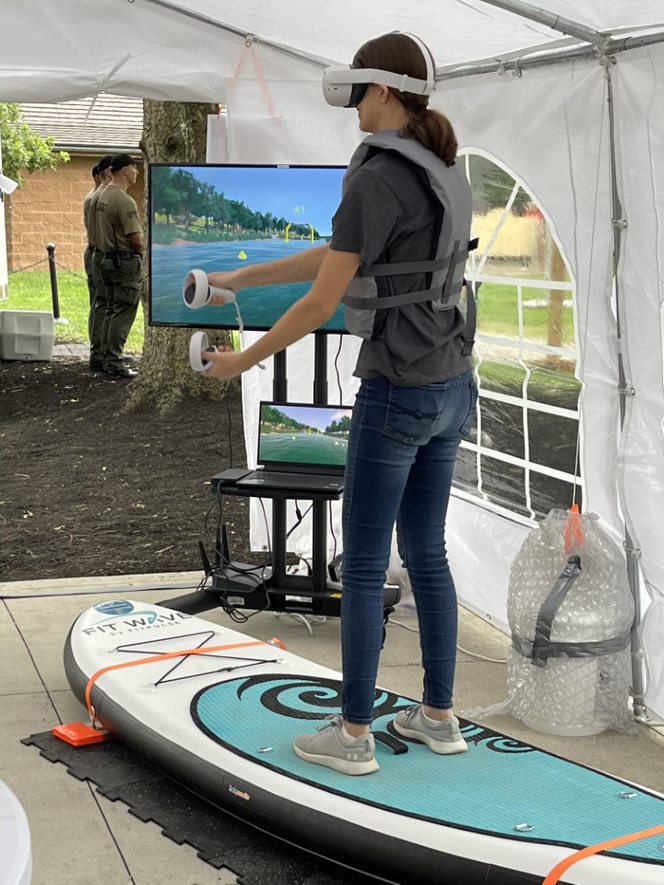
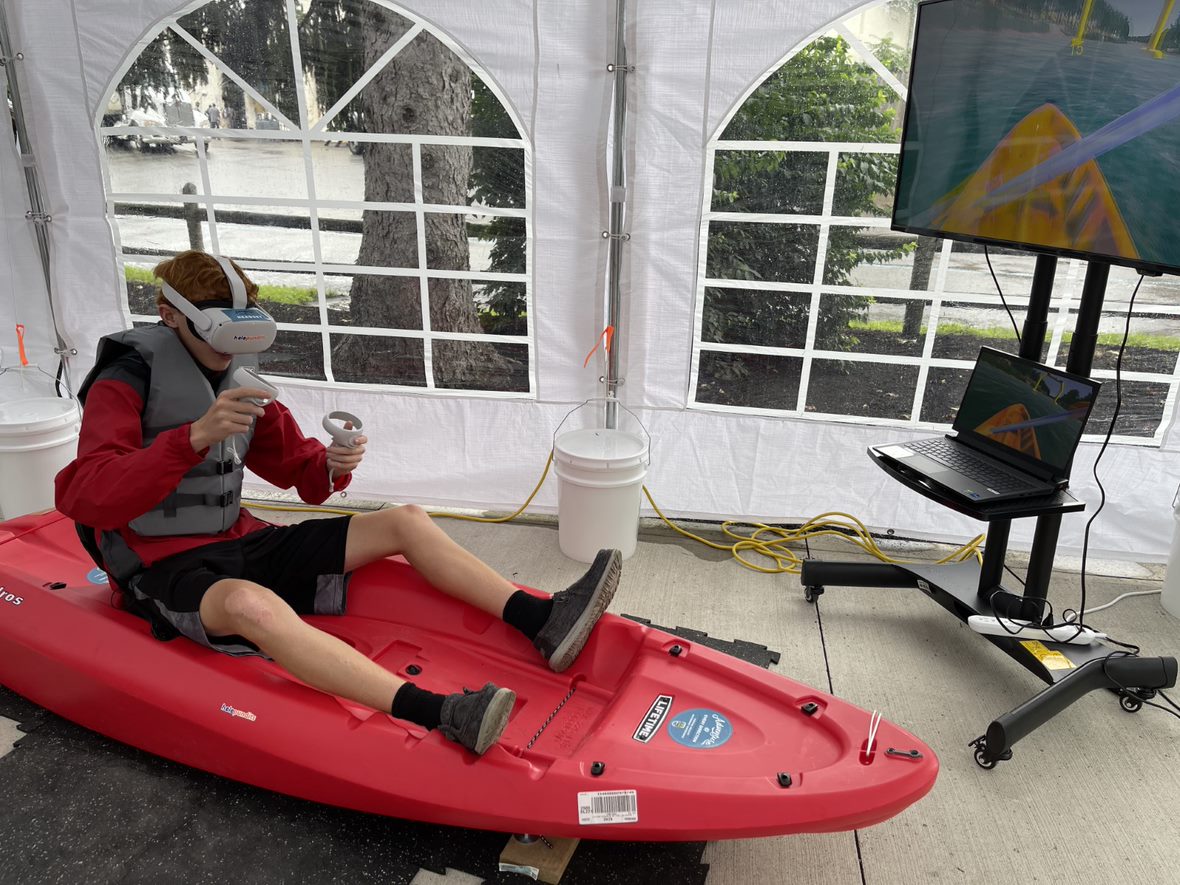
COLUMBUS, Ohio (Aug 16, 2022) – HoloPundits, experts in immersive technology including Augmented Reality (AR), Virtual Reality (VR), and Mixed Reality (MR), is excited to announce its partnership with the Ohio Department of Natural Resources (ODNR). Working with ODNR’s Division of Parks and Watercraft, HoloPundits has created four unique virtual environments for the purpose of educating Ohioans about the use of personal watercraft, kayaks, and standup paddleboards on Ohio’s waterways.
These virtual experiences were recently unveiled to the public during the Ohio State Fair, and will soon go “on tour,” making stops at Ohio state parks to promote kayaking and paddleboarding as a family-friendly activity for all Ohioans.
Photo: Courtesy of HoloPundits
In addition to education, the virtual environments provide plenty of enchantment, allowing visitors to paddleboard or kayak through some of Ohio’s most breathtaking water features. Participants begin by selecting their watercraft and choosing between the locations of Alum Creek, Lake Erie, the Little Miami River and the Ohio River.
Guests are fitted with life jackets, an Oculus headset and two controllers (which simulate paddles). Video monitors allow viewers to see what the participants are experiencing.
Photo: Courtesy of HoloPundits
“This has been such a fun project for all involved,” says Colin Saunders, senior learning designer at HoloPundits. “We are thrilled to play a part in promoting the responsible enjoyment of Ohio’s beautiful waterways, using our VR expertise to demonstrate how enjoyable kayaking and paddleboarding can be in a safe environment, and reducing anxiety or fears people may have associated with these activities.”
About HoloPundits
HoloPundits is an immersive technology company with deep expertise across the entire spectrum of AR, VR and MR. With a focus on education and enterprise solutions for multiple sectors including healthcare, manufacturing and insurance, HoloPundits enthusiastically pursues new business opportunities enabled by the immense potential of these new technologies.