The story of standup paddleboarding didn’t begin with an inflatable at your local whitewater park in Colorado. The sport has crossed oceans and cultures to become one of the fastest growing in paddling today. If you’re like us though we know you’d rather be out on your board than sitting through a lecture. That’s why we appreciate this concise standup paddleboarding history video with Robert Stehlik, owner of Blue Planet Surf on Oahu.
Similar to kayaks and canoes, standup paddling traces its roots back to utilitarian uses thousands of years ago.
Stehlik opens the video by bringing our attention to evidence of cultures as far away as Ecuador, Peru, and even Israel, using some method of standup paddling for the purposes of transport and fishing.
Stehlik goes on to share the influence of modern standup paddling, coming from the surfers of Hawaii.
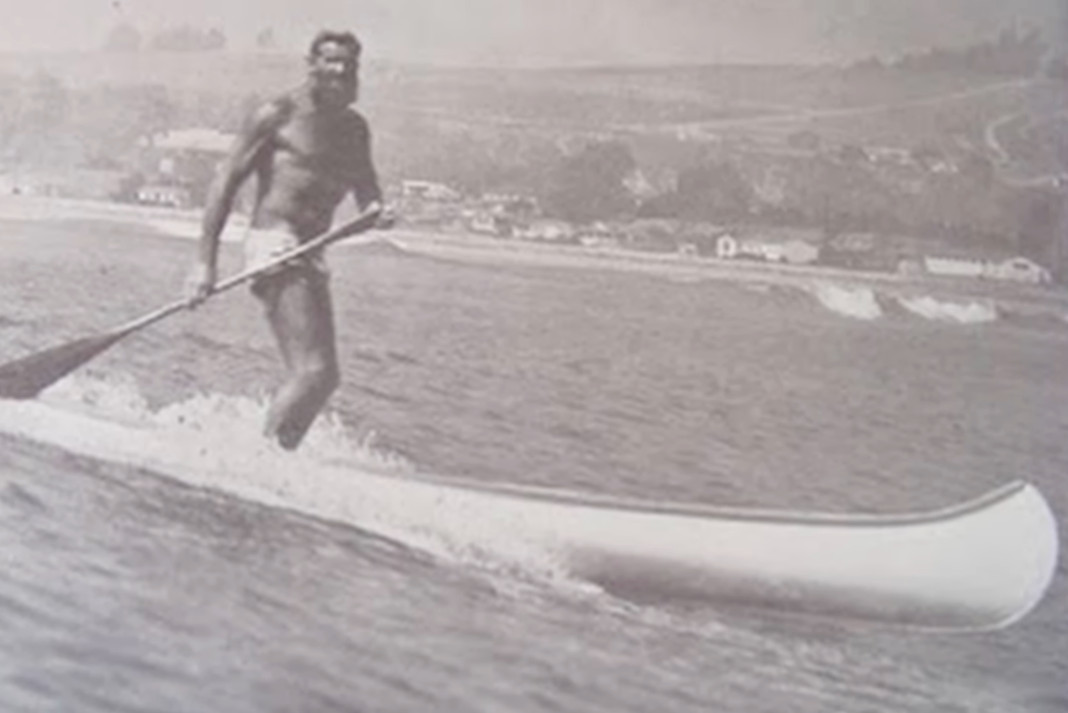
No story of the spread of modern board riding can be told without the global influence of Duke Kahanamoku. The Olympic champion and global ambassador of surf, among many other honors, at times used a paddle on the massive surfboards of the day out in the waves of Waikiki.
Image: Blue Planet Surf / YouTube
The Hamilton And Kalama Effect
Paddles were occasionally used on various crafts in the surf within the past century. But, Stehlik goes on to say that we have another pair of surfing celebrities to thank for turning standup paddleboarding from a historic rarity into the popular paddlesport we have today.
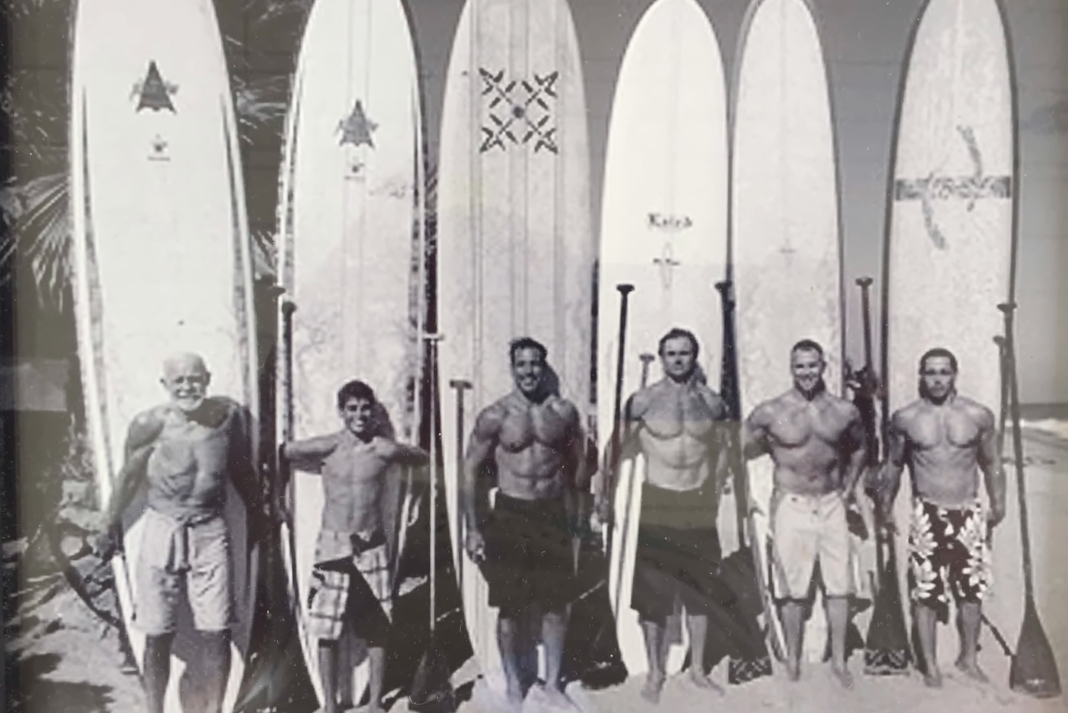
“More recently Laird Hamilton and Dave Kalama were doing an Oxbow photo shoot with big long boards, and they picked up some wooden paddles and started paddling standing up on these longboards.” Stehlik explains. “They got into it more. And that’s kind of how the modern day stand-up paddling began, and that’s when the rapid rise of the sport began worldwide.”
[ Find your next standup paddleboard in the Paddling Buyer’s Guide ]
In the 1990s, when Hamilton and Kalama took up the discipline in earnest, standup paddling lacked any notoriety or specific equipment. Today, nearly four-million people have learned how to paddleboard and participate in the sport in the US alone. And the next chapter of standup paddleboarding history books will undoubtedly include the sport’s migration from the sea to our lakes and whitewater rivers.
Finding the right recreational kayak for your needs can be a daunting task with so many different designs and styles to choose from. Essentially it comes down to deciding how and where you intend to use the kayak, and then finding something that fits your budget.
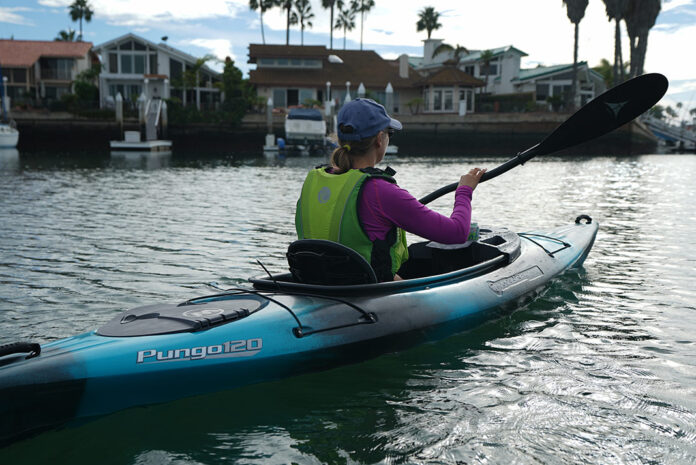
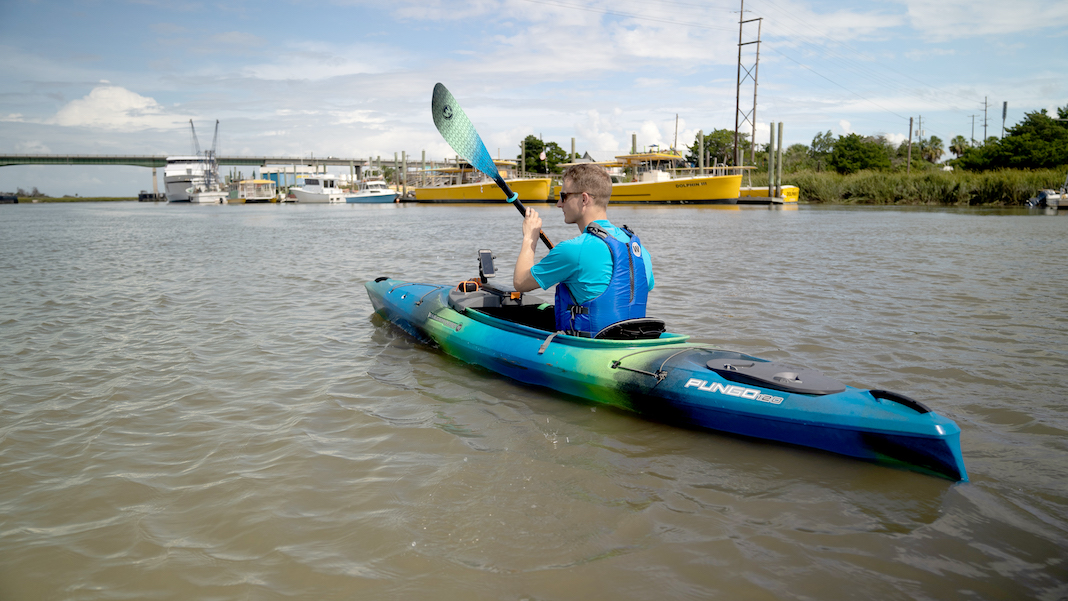
The bestselling Wilderness Systems Pungo series of do-it-all recreational kayaks are some of the most popular choices for paddlers who enjoy smaller lakes, meandering rivers, coastline exploration, kayak fishing or even the occasional overnight trip. The Pungo lives up to its cred as a sit-inside recreational kayak “legend” with a design heritage dating back 20 years.
The Wilderness Systems Pungo 120 will serve as a great day tripper for small- to medium-sized paddlers looking for more glide and efficiency than the shorter Pungo 105; larger paddlers should look at the Pungo 125 for a roomier fit and higher carrying capacity alongside the same versatile features and performance.
The Wilderness Systems Pungo is priced higher than many budget and box store recreational kayaks, but boasts the features and comfort of kayaks costing hundreds of dollars more. Looking at it from a value standpoint, the Pungo 120 is tough to beat—that’s why we picked it as one of the best kayaks.
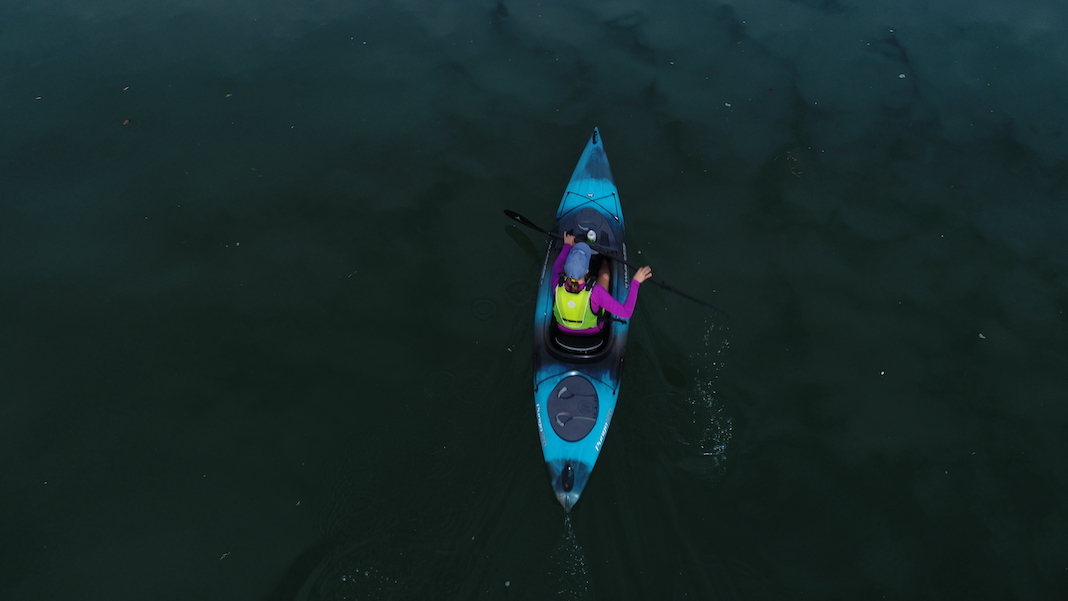
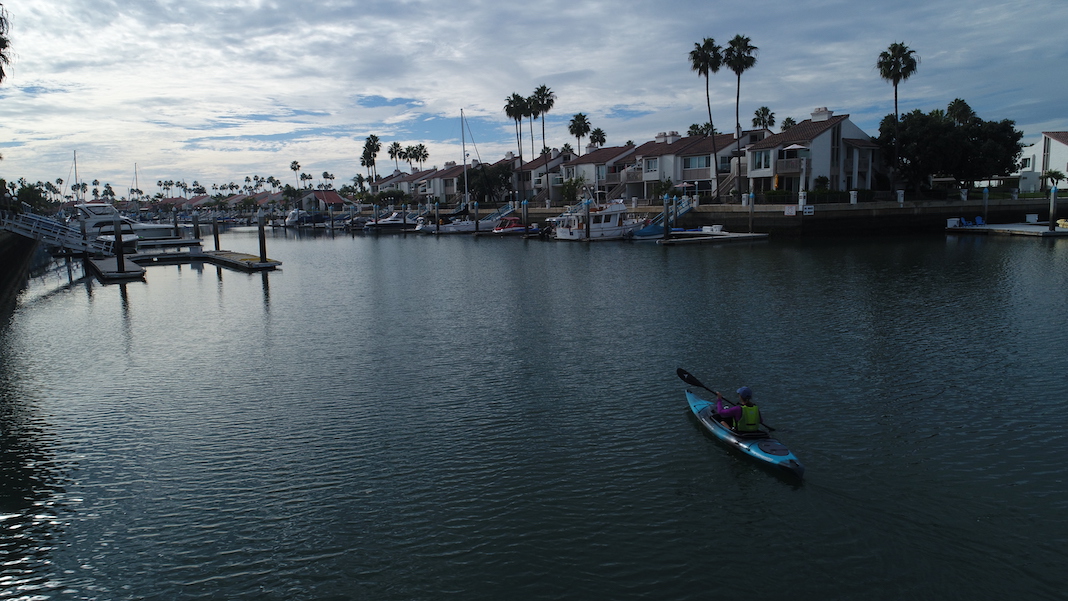
On the water with Wildy’s Pungo 120
Wilderness Systems Pungo 120 Specs
Length: 12’2” / 3.7 m
Width: 29” / 74 cm
Weight: 49 lbs / 22 kg
Capacity: 325 lbs / 147 kg
MSRP:$1,099 USD / $1,399 CAD
Market and demographics
The Wilderness Systems Pungo series really are do-it-all recreational kayaks. This sit-inside design best suits the beginner to intermediate paddler who enjoys a variety of paddling situations. If you want a kayak to take on a slow serpentine river one day and then fish the local quarry the next, the Pungo is it.
The Wilderness Systems Pungo 120 is 12’2” long, weighs 49 lbs, is rated to carry up to 325 lbs and is the middle option in the Pungo lineup. Wilderness Systems also offers the Pungo in two other sizes: The Pungo 105 is a more compact 10’6” version suited for small- to mid-sized paddlers, and the Pungo 125 offers a more comfortable fit for larger paddlers with an increased deck height (more legroom) and slightly larger cockpit.
The Wilderness Systems Pungo 120 sits right in the Goldilocks zone for a wide variety of paddlers. The Pungo 105 is slower and carries slightly less weight, but is lighter and more maneuverable. The Pungo 125 has a generous carrying capacity of 425 lbs, but is somewhat heavier and less maneuverable.
Paddle Sober And Smart
Never mix alcohol and paddling. Coast Guard and state BUI (boating under the influence) laws apply to all vessels. This includes canoes, kayaks, SUPs and rafts.
Comfort
The Wilderness Systems Pungo 120 is a sit-inside kayak that has a large cockpit opening for easy entry and exit and an unrestricted feeling when sitting in the kayak. The airy cockpit offers the best of both worlds; paddlers enjoy the benefits of a sit-inside kayak—like better protection from harsh sun, cold environments, precipitation and splashing water—without the claustrophobic feeling that can accompany a smaller cockpit opening.
Photos: Courtesy Wilderness Systems
Wilderness Systems aims to make the world’s most comfortable kayaks, and the Pungo 120 is no exception. The Pungo 120 comes equipped with Wilderness Systems’ Phase 3 AirPro seating system, which features a plush 3D foam seat with honeycomb pattern mesh fabric. The foam seat forms to your body, while the perforations ensure it’s quick-drying and keeps you cool on hot days. The seat is fully adjustable while seated with a simple pull or release of easy-to-reach straps.
The supportive, high back rest can be pulled forward or relaxed as needed; the seat itself has an adjustable leg lifter to reduce fatigue and dial in a comfortable position. Cushy thigh pads prevent bare legs from rubbing on the plastic sides of the kayak—an all-too-often overlooked feature in cheaper box store kayaks.
Easy-to-adjust Slidelock XL foot braces round out the Wilderness Systems Pungo 120 cockpit outfitting. An adjustable foot brace system is key to ensuring you are comfortable and efficient; it improves posture, reduces fatigue and boosts your overall performance by enabling you to make a solid connection with the boat and engage the larger muscles of your core and legs for stronger paddling.
Adjusting a kayak to fit you correctly is one of the most important steps you can take to make paddling more enjoyable. A comfortable kayak will end being used more often, and for longer, and comfort can also drastically affect how well the kayak handles.
About the Pungo 120 kayak
Design
Design features and details
Everyone wants a kayak that is light, fast, durable, maneuverable and inexpensive. That’s what I’d call a Bigfoot. I’m not saying they don’t exist, but I’ve never seen one…
Every design decision has a trade-off. Longer kayaks tend to go faster, but they generally aren’t as stable or quick to turn as shorter, wider boats. Space-age composite materials are lightweight and easy to manage, but not so easy on the wallet.
Bigfoot aside, the Wilderness Systems Pungo 120 strikes up a great balance of speed, stability, durability, comfort and affordability.
The Wilderness Systems Pungo 120 is faster than many comparable recreational kayaks. The 12’2” length and minimal rocker (the amount the hull curves up at the bow and stern) gives the Pungo 120 a relatively long waterline. In other words, it has enough hull speed to feel the wind on your face when zipping across a lake, without the worry that the slightest ripple will send you cheeks up (not a technical term, but you get the idea).
Dress For Immersion, Not Air Temperature
Your body loses heat much faster when immersed in cold water than it does when dry.
Avoid cotton clothing like t-shirts and jeans; they retain water and accelerate cooling when wet. Synthetic fabrics, or wool, are generally a better choice. If the water is very cold (60° fahrenheit or less), you should wear a wetsuit or drysuit.
In fact, it’s the Wilderness Systems Pungo 120’s stability and predictable handling that make this such a well-loved boat. The 29-inch width and voluminous chines (where the sides of the kayak meet the bottom) create confidence-inspiring stability so you can wiggle around, snap a few pics or take Fido out on the water without fear of the slightest movement sending you overboard. Wider kayaks might be even more stable but the trade-off is increased drag and slower performance. Again it seems like the Pungo 120 is just right.]
Another balancing act for kayak designers is maneuverability versus tracking, or the ability of a kayak to hold a straight course. The Wilderness System’s Pungo 120’s pronounced stern keel helps it stay on track even in choppy waters, without feeling like a barge. On winding, slow-moving rivers, alert paddlers will be able to easily maneuver around obstacles like rocks, lazy sturgeon or shopping carts (hey, we paddle where we can).
The Wilderness Systems Pungo 120 weight comes in at just under 50 pounds, which means it’s quite manageable to load on your car and get it to and from the water.
Material and construction
Like many recreational kayaks, the Wilderness Systems Pungo 120 is made of rotomolded polyethylene, a durable plastic that stands up to abuse and is easy to maintain. This means you don’t need to shed a tear every time you bump a dock or a rock, and can drag it up on craggy shores without fear of damaging the hull.
The Wilderness Systems Pungo 120 also comes with an integrated and replaceable skid plate, an extra thick piece of plastic that is located on the bottom of the boat at the stern. This protects the hull by taking the bulk of the punishment when dragging your kayak in and out of the water or when loading on and off your vehicle by yourself.
Wilderness Systems Pungo 120 outfitting and accessories
For many paddlers, Wilderness Systems Pungo 120 accessories and outfitting is top of the list of things to love about this versatile kayak. The Pungo 120 is equipped with what Wilderness Systems bills as “the most comprehensive kayak dashboard”—a removable console that fits over the front of the cockpit and features a removable dry box, cup holders, an accessory gear track and a recessed battery compartment.
The removable dry box is perfect for keeping small essentials like keys, wallet, cellphone, camera and snacks safe and dry. It’s also nice to be able to leave your boat at the dock and have your valuables in one convenient place to quickly grab and go. A pair of cup/bottle holders keeps water, sports drinks or your morning mocha close at hand, so it’s easy to stay hydrated (and you don’t have water bottles rolling around the bottom of your boat—one of my personal pet peeves).
The Wilderness Systems dashboard includes a recessed compartment that is specially designed to house the WS lithium battery, which can be purchased separately. This lightweight 14-ounce, water-resistant battery has one 12-volt and two USB ports to keep phones, tablets, fish finders or other electronics charged on the water.
The Pungo 120 dashboard also incorporates Wilderness Systems’ SlideTrax gear mounting system. This little strip of grooved aluminum opens up a world of possibilities to mount accessories like a fishing rod holder, phone or GPS. If you can think of something you’d mount on a kayak, then there is a good chance an aftermarket mounting bracket exists.
Tidy, adjustable deck bungees on the bow and stern give you more options to stash gear on-deck. You can even add specifically designed, matching mesh deck pouches (sold separately) for even more storage.
Perhaps the greatest opportunity for Wilderness Systems Pungo 120 customization is choosing from various RAM mounts to install on the dashboard. Get the X-Grip Phone Mount/Base if you want to keep your phone handy for selfies and navigation, or opt for a Basic Track Ball with T-Bolt Base to open up a huge array of mounts and options.
Add some of these optional accessories and you can really start to customize things to make the Pungo 120 your perfect personalized ride.
More traditional accessory options are also plentiful. Add a Wilderness Systems TrueFit Spray Skirt to keep splashing waves out of the cockpit when paddling in rougher waters. A skirt is also really nice to have in the rain and in cooler weather for a bit of extra warmth. And I don’t know about you, but I don’t like paddle drips in my lap on anything but the hottest days.
Other TrueFit options include a Sun Shield partial deck for warmer climates (because burnt thighs aren’t much fun) and a Cockpit Cover to keep creepy crawlies out of the kayak when it’s being stored.
If you are the type of paddler that doesn’t like to leave any of the comforts of home behind, then the storage capacity in the Wilderness System Pungo 120’s Orbix stern hatch should keep you satisfied. The double latches make this hinged, oval hatch super easy to open and close. If you’re parking your boat where you can’t keep an eye on things, you can even lock the latches for peace of mind.
The Wilderness Systems Pungo 120 stern hatch is separated from the rest of the kayak by a watertight, sealed bulkhead. In addition to keeping your gear dry, a bulkhead is a critical safety feature that ensures adequate flotation should the kayak swamp in deep, open water.
Wear A Life Jacket
Everyone, even strong swimmers, needs to wear a life jacket at all times when on the water. It is extremely difficult to put a life jacket on once you fall into the water. Even a light wind can blow any paddlecraft away from you, faster than you can swim.
Always wear a USCG-approved Level 70 or Type III life jacket designed for paddling.
As with any kayak, it’s a good idea to put anything that absolutely needs to stay dry in a waterproof bag or box inside the hatch, as a small amount of water may find its way in through the hatch lid.
Warranty
Like many other kayak manufacturers, Wilderness Systems offers a limited lifetime warranty that covers manufacturing defects in the hull and deck. Parts, accessories and outfitting come with a one-year warranty.
Photo: Courtesy Wilderness Systems
Pungo 120 pros and cons
Pros
Do-it-all kayak with a good balance of speed and stability for beginner and intermediate paddlers
Proven, paddler-informed design that has made the Pungo the best-selling sit-inside recreational kayak of all time
Plenty of useful space, including a roomy stern hatch and a unique and handy cockpit “dashboard”
Premium, comfortable and easy to adjust outfitting
Rear bulkhead means the kayak won’t sink if it swamps in deep water—a critical safety feature if you intend to paddle further from shore or on more exposed coastlines
Cons
Might not be suited for larger paddlers—choose the Pungo 125 for a higher capacity option
Do-it-all design means the Pungo 120 doesn’t excel at any one thing; if fishing from your kayak is your main objective, you might be happier with a dedicated fishing kayak
Significantly more expensive than budget recreational kayaks…just remember, you get what you pay for, with superior comfort and convenience features and paddling performance
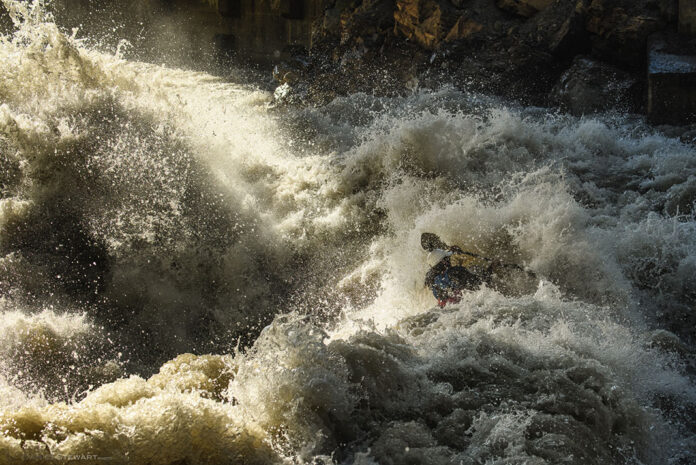
Myth (noun): 1) An unfounded or false notion. 2) A colleague who regularly vanishes during office hours. As in, “Has anyone seen Billy? He is such a myth.” | Feature photo: Daniel Stewart
Formal instruction aside, whitewater paddlers round out their skills with informal advice from peers and fellow paddlers. But not every well-intentioned nugget of wisdom is worth following. How can you decide what advice to take to heart—and what to leave at the put-in? We caught up with eight top pros for their picks on the worst whitewater myths.
8 of the worst whitewater myths, according to pros
“That you don’t need to learn certain basic skills because ‘you won’t need them.’ Learn to get in or out of your kayak in hard places, learn to hand roll well, practice surfing out of features, and learn how to catch harder eddies. Every bit of skill you add makes you safer on the water.”
— Dane Jackson
“If you can’t spit, you shouldn’t run it.”
— Benny Marr
Myth (noun): 1) An unfounded or false notion. 2) A colleague who regularly vanishes during office hours. As in, “Has anyone seen Billy? He is such a myth.” | Feature photo: Daniel Stewart
“Being a class which-ever-number paddler. There is no such thing as being a class V boater. Some days you can run class V, some days you can’t.”
— Nouria Newman
“Every myth is there for a reason. The dangerous part is how many people try to convince you something is a bad idea. At the end of the day, if you and the crew want to give it a try, then it’s worth going for.”
“‘Waterfalls are easy; you just tuck up and fall off the thing!’ Waterfalls are the most dangerous discipline of kayaking. The tiniest mistake can be the difference between a perfect line and a broken back. I have unfortunately learned this lesson twice, and I am not keen on learning it again.”
— Brooke Hess
“That you are safer in a group. A group can also give you a feeling of safety which makes you either fuck up more or push harder than you should. You find out real fast where you stand if you go up ahead.”
— Mariann Saether
“The most dangerous myth is people think it’s a game for young people. I got into whitewater when I was 30 and, at 47, I am running class V consistently. Last year, I competed for my first time at both North Fork Championship and the Green Race. I have students who started kayaking in their 50s and students in their 70s who continue to run class III. It’s never too late.”
“‘You can only run it blind once.’ The statement might be true, but it’s dangerous. Don’t be ashamed to get out and scout.”
— Nick Troutman
This article was first published in the Early Summer 2022 issue of Paddling Magazine. Subscribe to Paddling Magazine’s print and digital editions, or browse the archives.
Myth (noun): 1) An unfounded or false notion. 2) A colleague who regularly vanishes during office hours. As in, “Has anyone seen Billy? He is such a myth.” | Feature photo: Daniel Stewart
Two paddles is too much of a good thing. Or is it? You have 376 miles to make your argument. Time starts…now. | Feature photo: Taylor Burk
Recently, a newbie canoeist asked a simple question on a social media page dedicated to backcountry travel. “Do I need to bring a spare paddle?”At least, I thought it was a simple question.“It’s the law to equip your vessel with a spare manual propelling device,” I replied.Whomp whomp. I was wrong. My error created a stir.
Contentious backcountry spare paddle guideline divides canoeist community
As it turns out, a majority of canoeists commented they always carry a spare paddle. Whether it was the law or not, it’s just good sense, they said. A few renegades replied they never have and never will. One proclaimed he was a certified canoe instructor—therefore, I guess, he had to be right.
Two paddles is too much of a good thing. Or is it? You have 376 miles to make your argument. Time starts…now. | Feature photo: Taylor Burk
The anti-spare paddle defenses were varied. Some stated you must be a poor paddler to break the only paddle you had—or just unlucky, I thought. Others claimed a spare is smart when trekking in the far north but not needed on wilderness trips closer to home. I tried to imagine anyone using this same argument to rationalize leaving behind a spare tire on a drive of only a few hours.
Many paddlers seemed to have the misguided notion they could easily fix a broken paddle with a couple of inches of duct tape or make a paddle from forest materials. So, I know those commenters haven’t tried. One guy even bragged about creating a makeshift paddle from a plastic kitchen cutting board and a marshmallow stick. Just imagine how this triumph performed.
[ Paddling Buyer’s Guide: View all canoe paddles ]
A spare paddle isn’t just for emergencies
Bringing a spare paddle isn’t just a safety measure; it’s practical. I might opt for a featherweight blade for lakes, but I pull out my burlier spare for swifts and navigating rocky shallows. And for folks who only bring a spare on far north trips—I’ve also heard of paddles swiped totally by accident on busy portages. I’ll tell you this, too: every paddler I know who has broken or lost a paddle on a canoe trip opted to bring a spare on future trips.
The bottom line is that even if you’re Red Green, fashioning a floppy repair is a hassle, and it’s never as good.
Why did I think bringing a spare paddle was a regulation in the first place? The seasoned canoeists I learned from always packed a PFD, whistle, throw line, bailer and waterproof flashlight. Back then, law enforcement didn’t fine you if those safety items weren’t in the canoe the way they do now, but canoeists brought ‘em anyway because it’s common sense.
And those canoeists always brought a spare paddle too.
Whether you place a plastic whitewater blade between your packs, tuck an ottertail behind your seat, or strap a carbon fiber bent shaft under the gunwales with a bungee, a spare paddle is less than a pound and guarantees you can continue on your trip if you snap a shaft, split a blade or twist off a t-grip.
Nope, it’s not illegal to paddle without a spare. But you know what they say. You never want to be up the creek without a…
This article was first published in the Early Summer 2022 issue of Paddling Magazine. Subscribe to Paddling Magazine’s print and digital editions, or browse the archives.
Two paddles is too much of a good thing. Or is it? You have 376 miles to make your argument. Time starts…now. | Feature photo: Taylor Burk
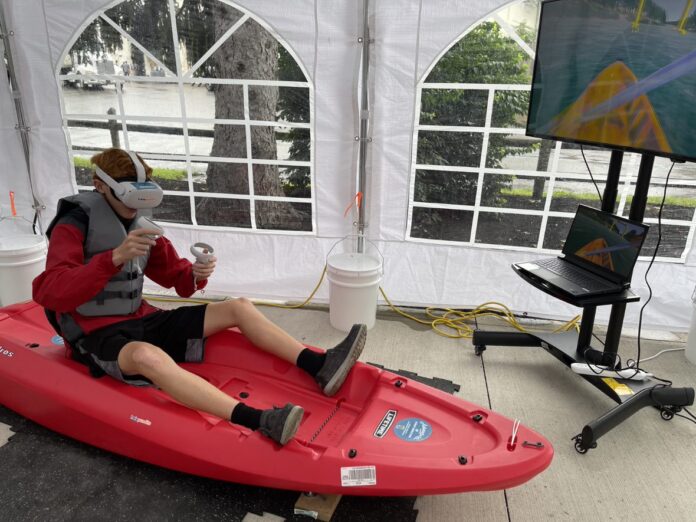
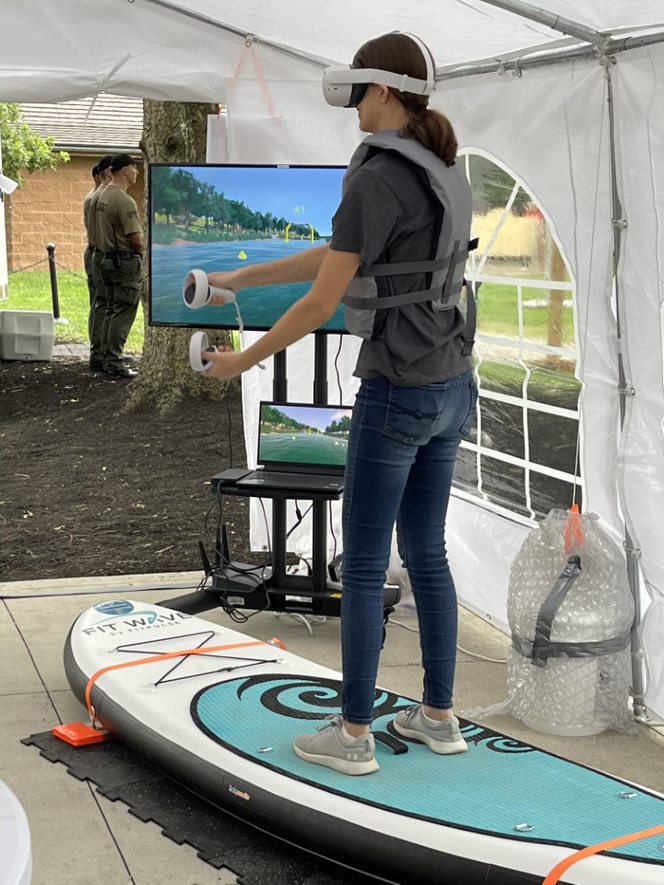
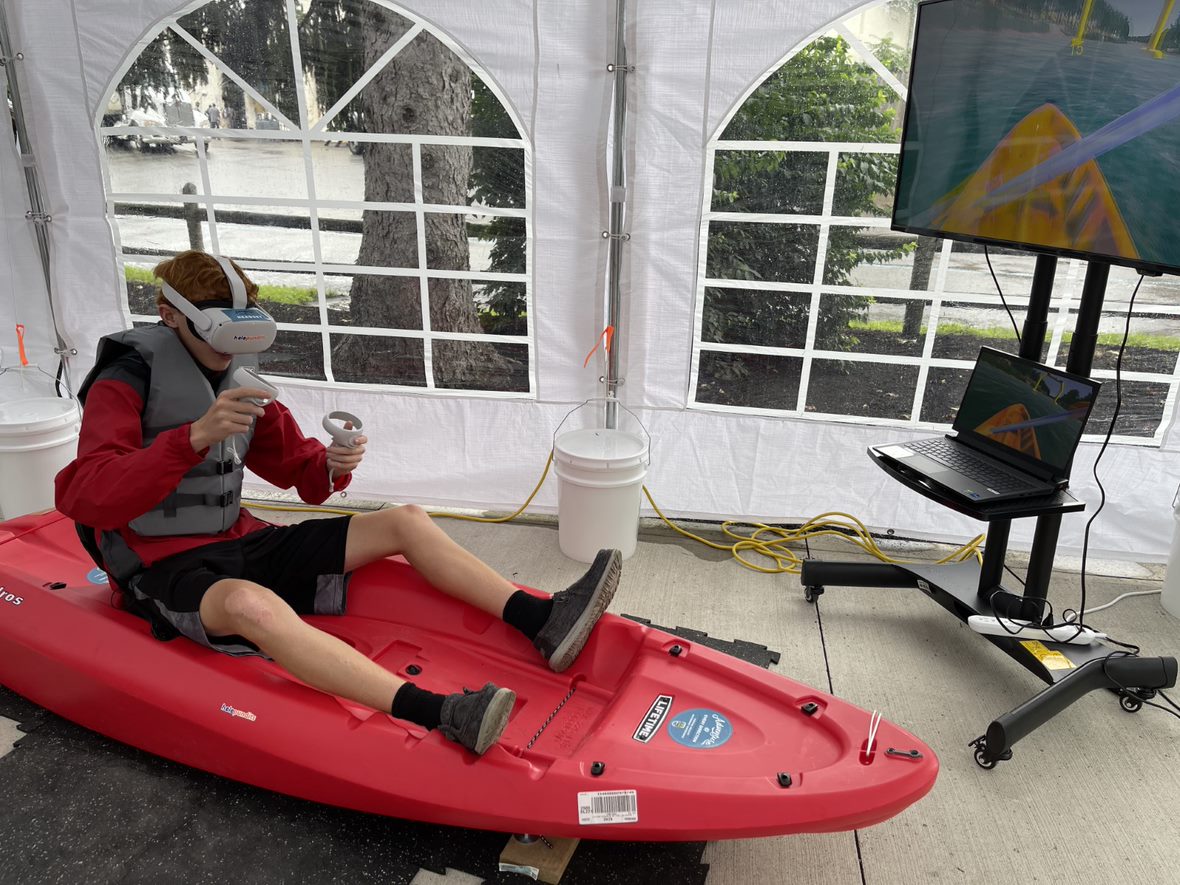
COLUMBUS, Ohio (Aug 16, 2022) – HoloPundits, experts in immersive technology including Augmented Reality (AR), Virtual Reality (VR), and Mixed Reality (MR), is excited to announce its partnership with the Ohio Department of Natural Resources (ODNR). Working with ODNR’s Division of Parks and Watercraft, HoloPundits has created four unique virtual environments for the purpose of educating Ohioans about the use of personal watercraft, kayaks, and standup paddleboards on Ohio’s waterways.
These virtual experiences were recently unveiled to the public during the Ohio State Fair, and will soon go “on tour,” making stops at Ohio state parks to promote kayaking and paddleboarding as a family-friendly activity for all Ohioans.
Photo: Courtesy of HoloPundits
In addition to education, the virtual environments provide plenty of enchantment, allowing visitors to paddleboard or kayak through some of Ohio’s most breathtaking water features. Participants begin by selecting their watercraft and choosing between the locations of Alum Creek, Lake Erie, the Little Miami River and the Ohio River.
Guests are fitted with life jackets, an Oculus headset and two controllers (which simulate paddles). Video monitors allow viewers to see what the participants are experiencing.
Photo: Courtesy of HoloPundits
“This has been such a fun project for all involved,” says Colin Saunders, senior learning designer at HoloPundits. “We are thrilled to play a part in promoting the responsible enjoyment of Ohio’s beautiful waterways, using our VR expertise to demonstrate how enjoyable kayaking and paddleboarding can be in a safe environment, and reducing anxiety or fears people may have associated with these activities.”
About HoloPundits
HoloPundits is an immersive technology company with deep expertise across the entire spectrum of AR, VR and MR. With a focus on education and enterprise solutions for multiple sectors including healthcare, manufacturing and insurance, HoloPundits enthusiastically pursues new business opportunities enabled by the immense potential of these new technologies.
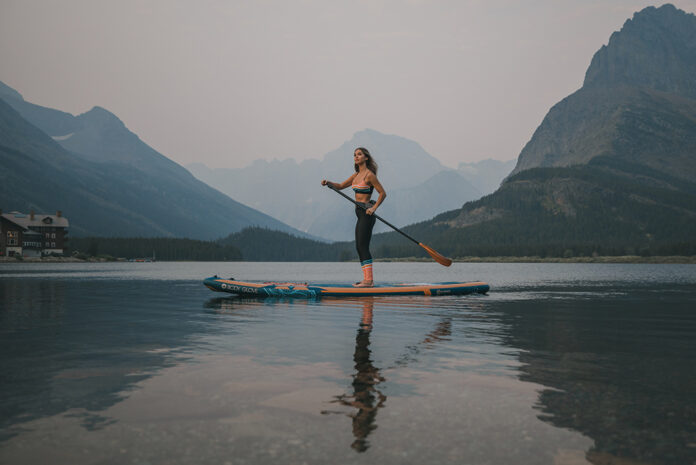
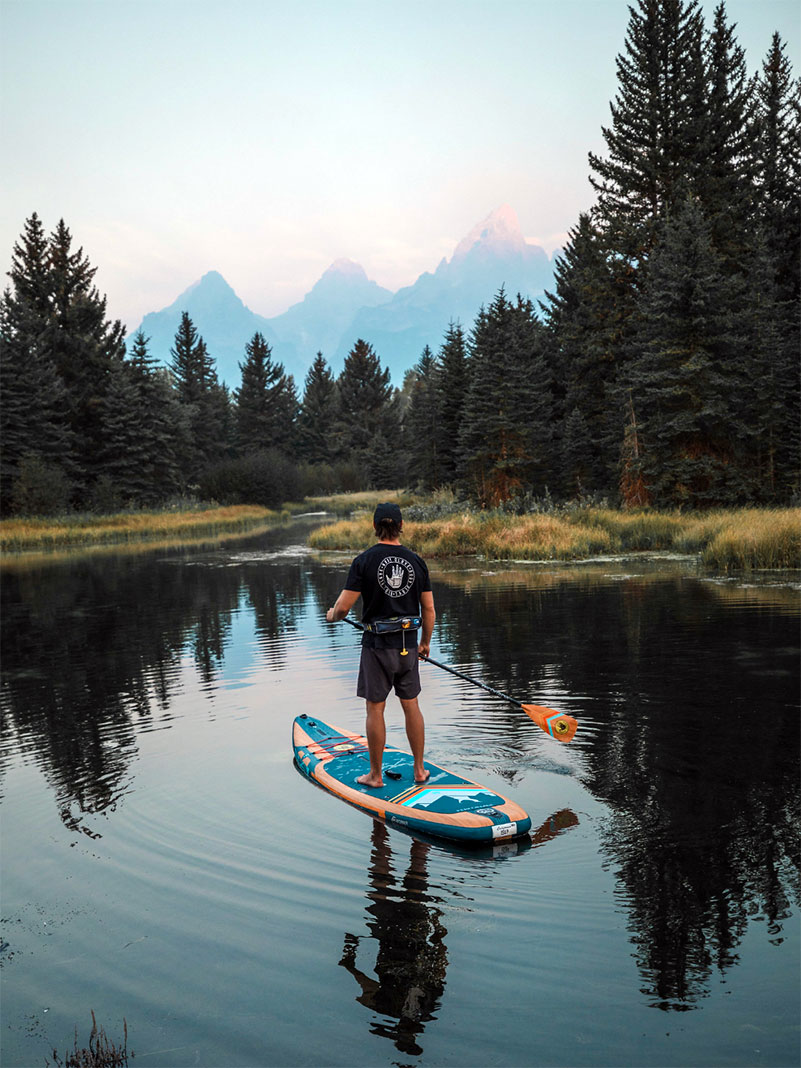
Over the past few years, standup paddleboarding has grown in popularity and expanded into a growing number of households thanks to companies like Body Glove who make it convenient to toss a rolled-up inflatable paddleboard into a grocery cart on a big-box retail run. It’s through this strategy that Body Glove’s 11-foot Performer iSUP model become the top-selling paddleboard in the world in 2020, retailing at $499 CAD and changing paddleboarding from a niche sport to a recreational family activity.
With a mission to innovate, inspire and create happiness on the water, Body Glove standup paddleboards are family-friendly paddleboards with good stability and durability, fun colors, an integrated water bottle and paddle holder, and offer kid specific and tandem paddleboards for shared paddling experiences on board together. Body Glove paddleboards are a great choice for fitness enthusiasts, for paddling with kids or dogs, for taking a yoga practice onto the water and for surfing waves.
Check The Weather
Plan for changing weather conditions. Prepare for the worst case.
Don’t forget to check tide, currents, or river levels.
Body Glove paddleboards are targeted toward entry-level and intermediate paddlers looking for an affordable price and are becoming the brand of choice for recreational paddlers with a BJs Wholesale Club or Costco membership. Body Glove paddleboards are also sold through the Body Glove website, Atmosphere and Dick’s Sporting Goods.
Body Glove is a well-known American company that was founded by the Meistrell brothers in 1953 after the brothers developed wetsuits to keep them warm while playing along the coast of California. Body Glove is recognizable globally for its wetsuits and also sells swimwear, paddleboards, surfboards, inflatable kayaks and other water accessories. Body Glove was acquired by Marquee Brands in 2016 and since 2022 they have partnered with One Tree Planted to plant one tree for every paddleboard sold.
Photo: Courtesy Body Glove
The Body Glove line of paddleboards includes over 20 models which are designed for various on-water adventures and range from 8 feet to 15 feet in length. Body Glove standup paddleboard models include a kids’ paddleboard, paddleboard-kayak hybrids called SUPYAKS, tandem SUPYAKS, pedal drive SUPYAKS, multiperson boards and a yoga and fitness board. Body Glove paddleboards can be used by novice to advanced paddlers for recreational paddling, playing on the water, fishing, tandem touring, and even for wake surfing or being towed behind a motorized boat.
Body Glove offers two composite rigid board models while the remainder of the Body Glove standup paddleboard line is comprised of inflatable paddleboards, called iSUPs. The Body Glove iSUPs are sold in a package which includes a three-piece aluminum adjustable paddle, a hand pump for inflation, a safety leash, a cellphone dry pouch, repair kit and a backpack for easy storage and transportation.
The word that comes to mind to describe Body Glove paddleboards is friendly. Between the fun branding and color scheme, the environmentally friendly and plastic-free packaging, the comprehensive user manual and board features (such as a paddle attachment in the carry handle), Body Glove has created a beginner-friendly set-up to welcome new paddlers into the sport.
Body Glove offers an accessible and fast customer service system through which you can text your questions to Body Glove and receive a quick and detailed response back. The Body Glove adjustable paddles are labeled with the recommended paddle length for your height, to remove any guesswork and ensure improved paddle technique.
Some key features of Body Glove standup paddleboards are a bumper under the nose of the board to protect it on beach landings, a GoPro mount, triple-layer side rails to strengthen and protect the edges and D-rings for gear attachment points. Body Glove paddleboards also have adjustable bungee tiedowns, an integrated towing clip at the front for unique towing capability, and carbon-reinforced stringers on the top and bottom of the boards to add strength and rigidity.
In my opinion, one of the most user-friendly features on the Body Glove models is that the central neoprene and velcro carry handle can be used to secure down a water bottle while paddling or the paddle while carrying the board. The Body Glove paddleboards generally lack carry handles at the nose and tail of the boards, and don’t feature removable fins and a long centre fin for improved tracking.
The warranty on Body Glove paddleboards is one year and is extended by an additional year at no additional cost upon registering the paddleboard at www.registermyboard.com.
There are sure to be many used Body Glove paddleboards on the market as they’ve been in circulation for a few years now and have been sold in high volumes. While buying a used Body Glove paddleboard will certainly get you a deal and a lower price than buying new, the savings won’t be as big as you would get if you were purchasing a used paddleboard that was higher end with a more expensive retail price. So while there is still a savings advantage to purchasing a used Body Glove standup paddleboard, consider whether you’d like to invest a little more to purchase a new board and get the warranty as well.
When considering a used Body Glove paddleboard it’s important to check the integrity of the board by inflating it and ensuring that it holds pressure, in addition to looking over the seams and deckpad for any damage or bubbling. Some of the Body Glove standup paddleboards have dark graphics and coloring, which makes the paddleboard more susceptible to heat damage.
The dark colors absorb heat and can cause seams to burst as well as cause the material itself to deteriorate. Look the board over for sun damage, including color fading, and confirm that the previous owner had stowed the paddleboard in the shade. If there are signs of sun damage it might be best to pass on the purchase, since the integrity of the board could be compromised.
Wear The Appropriate Leash When Stand Up Paddleboarding
Always wear a leash on open bodies of water like lakes, bays, and oceans. Due to the risk of snags and entrapment, leashes should only be worn on rivers if they include a quick release attached to your life jacket.
In 2021, package upgrades to the Body Glove standup paddleboards included a mount at the nose of the board for camera installation, an oval paddle shaft for better ergonomic grip, translucent leashes to match board colors and a tow clip at the nose for the option to tow the paddleboard behind motorized boats.
The fins on Body Glove boards prior to 2018 are quite rubbery and flexible and manufactured at a lower quality. Since 2018, the fins on Body Glove standup paddleboard models have been improved with sturdier, rigid plastic.
Graphics have changed over the years on the deckpads and underside of the Body Glove paddleboards. If specific graphics, or features like a camera mount, tow clip, or rigid fins are important to you then take them into consideration when shopping for a used Body Glove paddleboard.
For more tips on what to look for when selecting a used paddleboard, read our article How To Buy A Used Paddleboard.
Body Glove paddleboard buying guide
With over 20 models of Body Glove standup paddleboards in the 2022 line up you are sure to find a board that catches your eye. To best help you find that board, this section will be broken down into the categories below.
The global favorite 11’ Performer model will be looked at on its own, followed by a general look at different categories corresponding to intended use. Note that all of the categories except the rigid paddleboards are comprised of inflatable paddleboards.
Body Glove 11-foot Performer
Let’s begin with the superstar of the Body Glove lineup—the 11-foot long Performer iSUP. The Performer is the Body Glove standup paddleboard model that draws the most attention and became the top-selling paddleboard in the world in 2020.
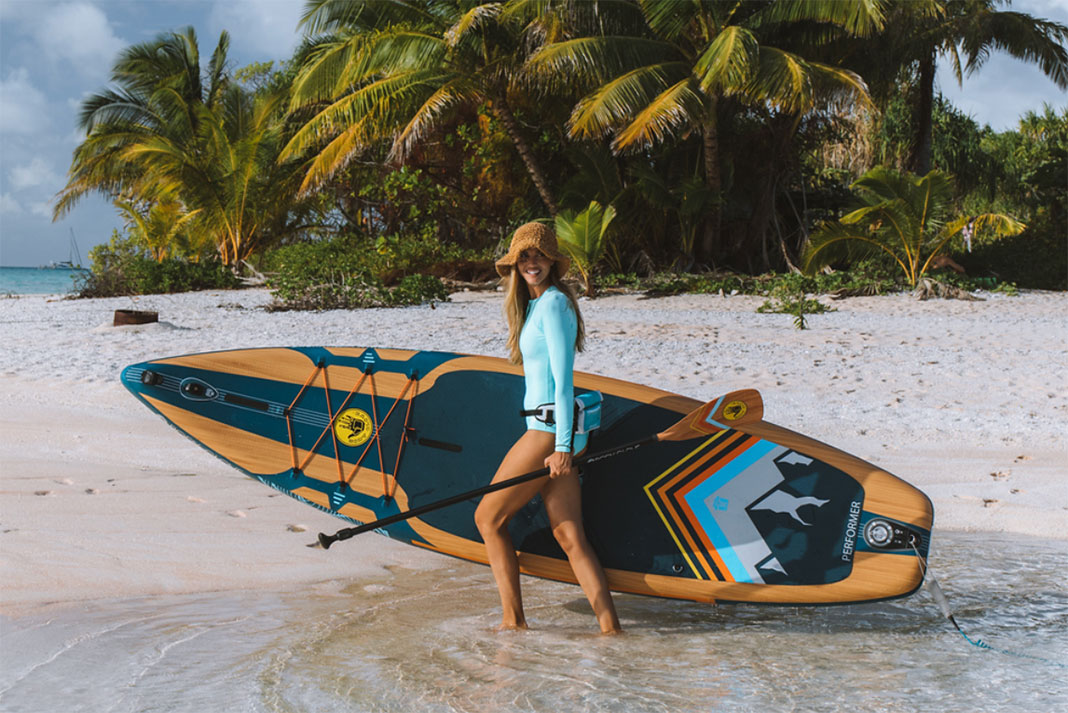
The Performer is a stable, all-around or touring board that’s 34 inches wide with a capacity of up to 320 pounds. It features many metal D-rings for gear attachments or cooler tie-downs, a beautiful wood grain pattern, a multi-functional carry handle and water bottle holder, a reinforced nose bumper and a cool mountain deckpad graphic.
For 2022, the Performer was designed to be more stable and faster than the previous model and the package now also includes an electric pump as well as the hand pump. The Performer is a durable board with reinforced rails and a soft and grippy deckpad. For families, wakesurfers and adventure seekers, the Performer is the paddleboard board to take you to inspiring places.
Photo: Courtesy Body Glove
All-around Body Glove paddleboards
Body Glove has a handful of options for all-around paddleboards. Boards in the category don’t typically excel in one particular use, but instead may be used for many different activities such as recreational flatwater paddling, fitness, family fun, gentle surf waves, and for playing at the beach.
There isn’t much variation in the specifications or shapes of the all-around boards as the lengths range from 10.3 feet to 10.5 feet and the weight capacity from 300 to 320 pounds. When choosing between the Navigator Pro, I-Skiff Pro, Cruiser Pro, Solo, Mantra and Alena your choice will likely largely be based on the look of the paddleboard and the design you like best.
Touring Body Glove paddleboards
Body Glove touring paddleboard options range from 10.5 feet to 11 feet in length. Ideally I prefer touring paddleboards to be a minimum of 12.5 feet for longer day trips or overnight adventures but the Performer, Raptor Pro, Mantra and Alena will all do the trick for covering reasonable distances on the water for a few hours at a time. The Mantra has more of an all-around shape while the other three models have a more distinctive touring style shape at the front of the nose.
The Body Glove touring paddleboards each have three rigid, non-detachable fins and multi-functional carry handles. The Performer and Raptor Pro models have more options for accessory or gear attachment with multiple D-ring attachment points and also have a reinforced nose bumper to protect the board from impacts.
Fishing Body Glove paddleboards
If you’re looking for a Body Glove paddleboard that you can take out for your next catch, the Mariner+ was designed with fishing in mind and includes attachment points for fishing accessories like rod holders, an action camera attachment and bungee storage. The SUPYAKs and pedal-drive SUPYAK models which are described below also make good options for both recreational and serious anglers to use as fishing paddleboards.
Kids Body Glove paddleboards
Body Glove offers an 8-foot-long paddleboard for kids called the Grommet which is sure to be a blast on the water. The Grommet is 27 inches wide and holds up to 120 pounds. The Grommet is four inches thick so it is lower to the water and features a bungee tie down and water bottle holder.
Yoga and fitness Body Glove paddleboards
At 10 feet in length and a stable 34 inches in width, the Oasis is the closest Body Glove paddleboard to an inflatable yoga mat. The beautifully patterned deck pad is the full length of the board for good traction while in yoga postures or fitness movements and features innovative and integrated handles at the nose and tail of the board to secure a paddle or hold a water bottle.
I haven’t seen this feature on other paddleboards and overall the Oasis is the Body Glove paddleboard that is at the top of my wishlist for yoga and fitness boards and my favorite of the Body Glove lineup. The Oasis can easily link to other Oasis models as well as the Kayoga model to secure a fleet together as a floating yoga studio.
The Kayoga is a slightly longer yoga and fitness paddleboard model at 10.5 feet in length and (similar to the Oasis) has an action camera attachment, although it also has a little more bungee tie down space for securing gear. The major difference between the Kayoga and Oasis is that the Kayoga is transformable into a kayak by securing on a kayak seat as well as removable footrests on D-ring attachment locations.
SUPYAK Body Glove hybrid paddleboard kayaks
If you can’t decide between paddleboarding and kayaking the good news is that you don’t have to. Body Glove has created four hybrid paddleboard kayak SUPYAK models that let you standup as well as sit down, so you’re able to enjoy the best of both worlds. The Porter SKX is 9.5 feet in length and, along with the 10.5 foot Dynamic model, seems to be the best SUPYAK option for anglers.
The Bullet Pro is a great recreational touring and all-purpose option rated at 300 pounds. The fourth model is the Kayoga, also mentioned above as a yoga and fitness paddleboard. All of the SUPYAKs include kayak and SUP conversion accessories including an adjustable paddle that functions for both paddleboarding and kayaking by swapping out a handle grip for a paddle blade.
Pedal drive Body Glove SUPYAKs
Pedal drive SUPYAKS are hybrid paddleboard kayaks that are powered by foot pedals and are a good choice for fishing or if you are looking for something that can be paddled but also pedalled. The Ripple 9.5-foot model is the shorter design which can be configured with or without the removable high-back kayak seat and pedal drive and has a capacity of up to 280 pounds.
If you are looking to bring kids on board or require more cargo space and bungee tie downs the Body Glove Drive is an 11-foot pedal drive SUPYAK that has a rating of 320 pounds.
Know The Local Hazards
Check navigation charts before you launch.
Check with those who have local knowledge of man-made and natural hazards, e.g. low-head dams; sweepers, strainers and undercuts; tides and currents; and rocks and shoals.
Two-person SUPYAKs
Body Glove is really catering to shared paddleboard adventures with six options in their lineup for two-person SUPYAKs. These models that can easily transform between kayaking and paddleboarding are the best choice for family and social excursions. There are really no major differences between the two-person SUPYAK models as they all have the same overall dimensions and 500-pound capacity rating, with the exception of the Tango which is 13 feet long.
In my opinion, Body Glove made four models too many in this category and you could flip a coin to pick between the I-Skiff Tandem Pro, Duet Pro, Twin Pro and Dynamic Deuce.
The most notable two-person SUPYAK is the Body Glove Tandem at 15 feet long and 32 inches wide. It was the winner of the SUP Connect 2021 Gear of the Year award for SUP/kayak hybrid. While it could be paddled alone, it is best enjoyed with a paddling partner out on a touring adventure with any configuration of none, one or two kayak seats added on.
Multi-person Body Glove paddleboards
When playing on the water, more people = more fun. Enter the Body Glove Crusader and Big Boy models, constructed as multi-person paddleboards to be enjoyed among family and friends.
At 15 feet long and 66 inches wide, the Crusader is rated for 1,000 pounds and is ideal for up to four people. The Crusader includes a front bungee storage area, two anchor attachment points, seven carry handles, attachment points for coolers, foot placement guides on the large deckpad and four adjustable three-piece paddles. The Big Boy multi-person iSUP has the same dimensions as the Crusader with slightly less rigidity and has similar features with the exclusion of the anchor attachment points and foot placement guides.
Rigid Body Glove paddleboards
Body Glove has two options for rigid standup paddleboards in the Legend 10’6” and the Explorer 10’6”, both with one removable centre fin and rated for 280 pounds. The rigid Body Glove paddleboards are a great choice for leisure paddles, family fun and playing at the cottage. The rigid boards are ready to go at all times as they don’t require any prep time.
The 24-pound Legend is durable and both puncture- and impact-resistant. It’s made with a polycarbonate and epoxy hybrid construction. With a displacement-style nose that cuts through the water and with cargo storage at the front of the board the Legend is a good option for adventures near home.
The Explorer is a full-length soft top board made of high-density EPS foam and an epoxy composite material, making the board durable and lightweight. It’s a versatile option for yoga, flatwater paddling and surf and weighs 23 pounds.
Are Body Glove boards good?
Body Glove paddleboards are family-friendly, durable options which are good for beginner to intermediate paddlers who want a more affordable paddleboard option without compromising on a cool design, fun features and good quality. Body Glove designs paddleboards for flatwater touring, fishing, yoga and kids as well as hybrid SUP kayak models and options for tandem and multi-person paddleboards. Body Glove paddleboards have innovative features such as an integrated carry handle that can also secure a paddle or a water bottle.
Don’t be fooled by the low wholesale prices that Body Glove paddleboards are sold for at big-box stores such as Costco and BJ’s. The prices for Body Glove paddleboard packages are exceptional and include a leash, dry pouch and adjustable paddle, making it easy to head right to the water (once you grab a PFD). The inflatable Body Glove standup paddleboards also come with a carry backpack, repair kit and manual hand pump for inflation.
Body Glove paddleboard weight limit
The weight limit on a Body Glove paddleboard begins at 120 pounds for the 8-foot Grommet kids model. Body Glove rigid paddleboards are rated for 280 pounds. The inflatable Body Glove standup paddleboards have a weight limit of 300 to 320 pounds while the SUPYAKs and pedal-drive SUPYAKs are rated from 280 to 320 lbs. The tandem Body Glove SUPYAKs can hold up to 500 pounds on board and the multi-person iSUPs have a weight limit of 1,000 pounds.
How much does the Body Glove paddleboard weigh?
The Body Glove Grommet kids paddleboard model weighs under 15 pounds while the majority of the non-specialized inflatable standup paddleboard models are in the low to mid 20-pound range. The Body Glove Oasis yoga and fitness paddleboard weighs 22 pounds and the best-selling Performer weighs 24 pounds. The weight of the Body Glove rigid paddleboards is also 24 pounds. SUPYAKs and two-person paddleboards weigh over 30 pounds with the Tandem coming in at 34 pounds. The multi-person Body Glove paddleboards weigh a whopping 80 pounds and will need a few sets of hands to carry.
How wide is a Body Glove paddleboard?
Body Glove paddleboards are designed to be very stable with the inflatable all-around, touring, fishing and yoga paddleboards all having a width of 33 or 34 inches. The rigid Body Glove standup paddleboard models are 32 inches wide. The Body Glove SUPYAKs range from 31 to 34 inches wide with tandem SUPYAKs all designed at 34 inches in width. Body Glove multi-person inflatable paddleboards are 66 inches wide.
Where are Body Glove paddleboards made?
Body Glove paddleboards and manufactured in China, just like the majority of standup paddleboards (BIC is an exception).
Body Glove paddleboard warranty
The warranty on Body Glove paddleboards is one year from the date of purchase. If you register your paddleboard with Body Glove at www.registermyboard.com you will receive one additional year of warranty at no additional cost.
Education: Get Some!
Take a paddling safety course from the American Canoe Association (ACA), your local paddling shop or outfitter, or other reputable source.
Take a boating safety course from the U.S. Coast Guard Auxiliary, U.S. Power Squadrons® or your own state’s boating agency.
Take on-the-water skills training.
Body Glove paddleboard comparison
With so many choices on the market and lots of seemingly similar options in paddleboard product design it can be helpful to understand which brand excels at which features and to have guidance on choosing between different brands. This section explores paddleboard comparisons between Body Glove and other stand up paddleboard brands that might have similar offerings.
Body Glove paddleboard vs iRocker
iRocker offers four all-around inflatable paddleboard packages which range from 10 to 11 feet in length while Body Glove’s line up consists of over 20 paddleboard models which have more specialized options including yoga, fishing, rigid boards and hybrid paddleboard kayak options. Both brands are good-quality paddleboards and have options for action mounts and lots of D-rings for attachments.
If you want a storage backpack with roller wheels, removable fins, additional side handles near the nose and tail of the board, and a higher quality and lighter paddle, buy an iRocker. If you want a paddleboard that is more specialized toward the intended use, has a cool carry handle to secure a paddle or water bottle, has options to transform into a kayak, or will be used by two or more people to paddle at once, get a Body Glove.
Nautica paddleboard vs Body Glove
Nautica paddleboards are available at Costco and Canadian Tire and don’t have much to offer in the way of excitement. They are fairly bare bones paddleboards compared to Body Glove. If you are looking for a simple-looking stable inflatable paddleboard that gets you out enjoying the water at an entry level price, get a Nautica. If you’d like to be able to choose from more features, functions and designs, get a Body Glove.
Isle vs Body Glove paddleboard
Isle has paddleboard options in both inflatable and rigid boards in all around and touring shapes. If you want a rigid touring board, clean colorways, the ability to attach your paddle along the rail of the board, or to be able to make payments in installments over three to 12 months, get an Isle.
If you want an all-around soft top board at a lower price, generally more bang for your buck with accessory options, or the better choice for a yoga, fishing, multiperson, or kids-specific paddleboard, get a Body Glove.
Roc vs Body Glove paddleboard
If you want a durable, 10-foot all-around inflatable paddleboard at the lowest price with no added features on board, get a Roc. If you want any other length or style of paddleboard which looks cooler and has more features to take your paddling experience beyond the very base level, get a Body Glove.
Retrospec vs Body Glove paddleboard
For an entry-level inflatable paddleboard that is simple and minimalistic for recreational paddling with family and friends, get a Retrospec. Retrospec is also a good choice for a cheaper kids paddleboard and multi-person standup paddleboard. For a paddleboard that is manufactured with better quality and is a more comprehensive standup paddleboard package, get a Body Glove.
Body Glove vs Serene Life paddleboard
If you want an inexpensive, fully packaged inflatable standup paddleboard as an entry point option for novice paddlers, get a Serene Life paddleboard. If you feel like you’ll be more committed to stand up paddleboarding rather than just testing out the waters or are an intermediate paddler, get a Body Glove.
Hyperlite vs Body Glove paddleboard
If you want a 10-foot, stable and lightweight all-around inflatable paddleboard with an electric pump, drybag, front deck handles and an integrated shoulder carry strap, get a Hyperlite. If you want any other options of paddleboard length, action camera mount, the ability to convert a SUP into a kayak, or a paddleboard that is designed specifically for touring, yoga, fitness, fishing or multi-person fun, get a Body Glove.
When Bill Parks set out to start his own business, he wanted to see if he could put to real-world practice the lessons he had been providing students at business school.
“My experience was in an office. With the whole rows of people doing approximately the same thing I was doing. I wanted to see if I could do the things I was teaching,” explains Parks.
50 years later NRS is one of the most iconic brands in the paddlesports community.
[ See the latest NRS gear in the Paddling Magazine Buyer’s Guide ]
In this video from NRS, the river runner and founder of the brand discusses what he set out to accomplish in 1972. As well as what he believes the employee-owned company stands for a half-century later.
“Sometimes you guys tell me that I’m important to the company, and I pretend I believe them,” Parks continues. “It’s about the people at NRS now. It’s just an amazing company that I am really so happy to have been associated with.”
Dianne Whelan spent six years traversing the longest recreational trail in the world—the 27,000-kilometer Trans Canada Trail—and filmed the experience. | Feature photo: Chelsea Brooke Roisum, CBR Photography
Dianne Whelan loves to say, “Good stories have many beginnings.” Her six-year cross-continent journey on the Trans Canada Trail (TCT) officially began in St. John’s, Newfoundland, in 2015 when she was 50 years old as a search for hope.
Her journey also began many years prior in rural New Brunswick when her mother lit a fire in the snow using birchbark. And it started in the early 1990s when she first heard about the TCT after her family donated to its creation.
It’s these beginnings that led Whelan to hike, bike, paddle, ski and snowshoe a 27,000-kilometer continuous line across Canada, traveling from Atlantic to Arctic to Pacific oceans. The TCT is the world’s longest multi-use recreational trail, and tracing it seemed an ideal project, following Whelan’s previous documentary films covering Mount Everest and the Arctic.
Whelan initially planned for the route to take her roughly two years—or approximately 500 days. On her tenth day, she acknowledged she hadn’t gone as far as she’d hoped to make it on the first. So, she burned her schedule. Continuing at a slow and steady pace, on August 1, 2021, she became the first person to complete both the land and water trails of the TCT—six years after she started.
Eight-thousand kilometers of the TCT’s route spans lakes and rivers. Whelan paddled them in a 15-foot Nova Craft Canoe Prospector, using a kayak paddle to evenly distribute the effort on her body. Her canoe was named Kwimu (loon) by members of the Mi’kmaq community.
Dianne Whelan spent six years traversing the longest recreational trail in the world—the 27,000-kilometer Trans Canada Trail—and filmed the experience. | Feature photo: Chelsea Brooke Roisum, CBR Photography
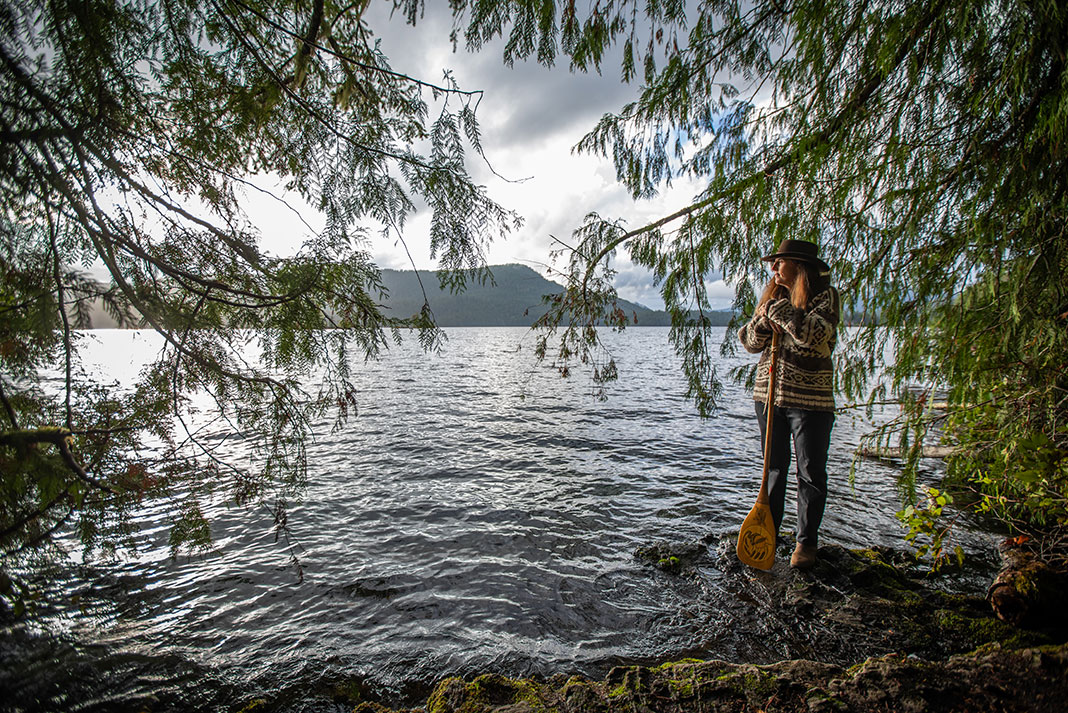
“The [paddling routes] were my favorite part of the journey,” she says. “They brought me into traditional Indigenous communities. In some cases, I spent weeks to facilitate the reconciliation part of the journey, which was to listen, learn and witness.” She describes her journey not as an athletic achievement, but an ecological pilgrimage to honor the land and water, and to pay respect to Indigenous people.
On the shore of Lake Superior, she joined a week-long Ojibwe ceremony with a four-day fast. “I feel immense gratitude to have had those experiences. They made the journey profound,” she says.
Some aspects of her journey sound idyllic: a moose in the river near her tent, drinking the water she paddled on, and watching the northern lights along the Mackenzie River. But reality checks came often: paddling past forest fires, breaking ice with a hatchet, and learning of a fellow paddler drowning and another being attacked by a grizzly bear.
“To survive out there, you have to learn from mistakes,” Whelan says. “Adaptation, connection and timing are key. I didn’t survive because I’m special or smart or better. And there’s always an element of luck.”
“Every woman who goes off into the woods by herself is going to face fear, but in the six years I was out there, I never met anyone who posed a threat to me,” she adds. “Every fear I had, I packed out there—they weren’t in the landscapes, they were in me.”
Photos: Chelsea Brooke Roisum, CBR Photography
Much of her journey was solo, but many hands helped along the way, including filmmaker Ann Verrall, who filmed portions for the upcoming documentary about the journey, titled 500 Days in the Wild. During the final 200 kilometers, Whelan paddled sections of the British Columbia coast with two Indigenous women, with her partner, and also by herself on the Salish Sea.
“Those last 20 minutes, I was bawling my eyes out,” Whelan says.
Welcomed ashore at journey’s end
Upon arrival at the end of the trail in Victoria, British Columbia, she followed traditional Coast Salish protocol. Cecelia Dick and LaVatta Frank, daughters of the late Pally Dick, Hereditary Chief of the Songhees, came to greet her. “I said who I was, the journey I had been on, and asked permission to come ashore. I gifted them tobacco wrapped with birchbark and cedar,” Whelan says.
“They welcomed me to shore. We walked to Mile 0 of the trail, held hands, and they sang the warrior song. Then they said, ‘We are one.’ These are people who are digging up graves in the back of residential schools right now. And they are there to honor this journey, and then to say that: ‘We are one.’ The Earth is our country. We are one.”
At the end of her journey, Whelan says she discovered what she was looking for: “I found hope.”
This article was first published in the Early Summer 2022 issue of Paddling Magazine. Subscribe to Paddling Magazine’s print and digital editions, or browse the archives.
Dianne Whelan spent six years traversing the longest recreational trail in the world—the 27,000-kilometer Trans Canada Trail—and filmed the experience. | Feature photo: Chelsea Brooke Roisum, CBR Photography
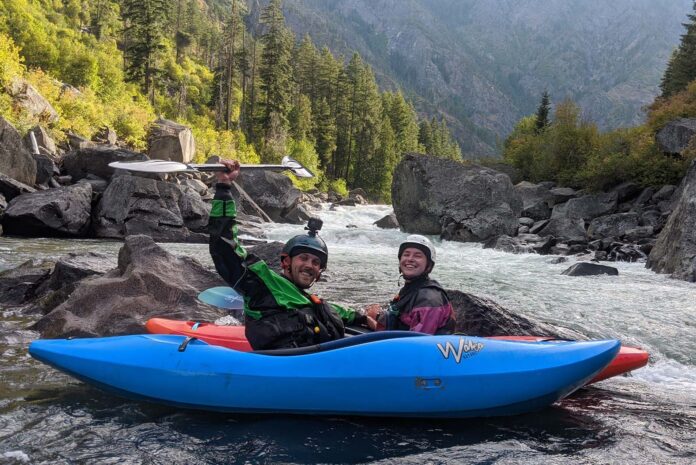
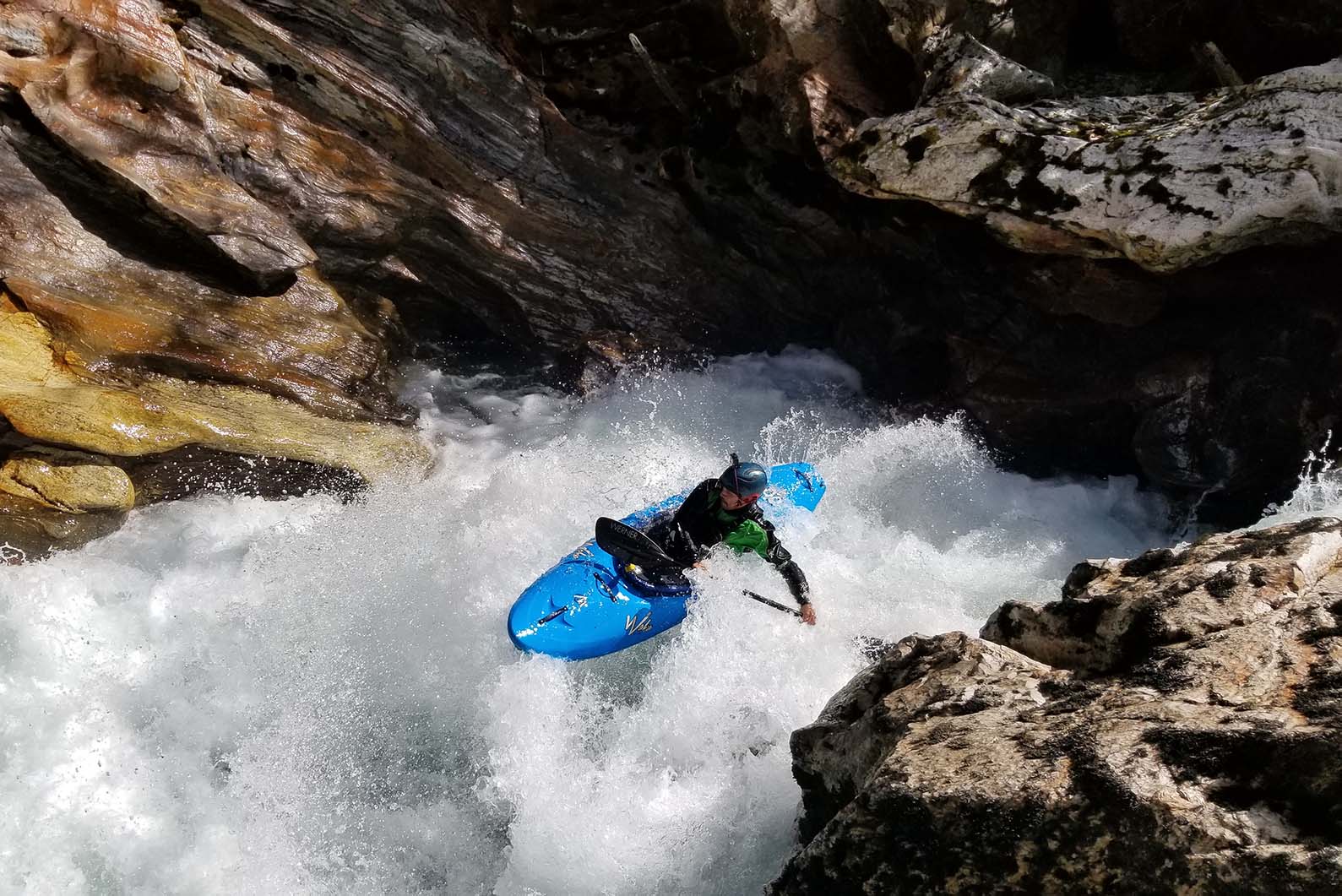
LOS ANGELES – Nick Terry, Rob Scanlon, Non Worasilpchai, Austin Amon, and Sage Ebel successfully completed a one-day kayaking descent of North Cascades National Park’s Bridge Creek, setting the fastest known time for the route. Typically completed over three days with opportunities for sleep and recovery, the team finished the famous whitewater kayaking course in a remarkable 15 hours on Saturday, July 30, 2022.
The recent heatwave in the Seattle area caused the team to jump into action sooner than expected. The kayakers had planned a scouting trip for the same weekend. As they monitored the conditions, they realized their window of opportunity would soon be closed. They headed into the national park and camped at the trailhead on Friday evening. At 4 a.m. on Saturday, they began their hike to the water entry point. The team navigated the 25-mile run down the South Fork tributary and North Fork confluence through the Stehekin River, and finally the last whitewater of Tumwater Canyon. The kayakers arrived in the town of Stehekin at 7 p.m., clocking the expedition from start to finish at 15 hours. The team shared hugs and screams of triumph, noting that even they were skeptical in the days leading up that the conditions would align for success.
The team was the inaugural recipient of the Punch Gunk Go Get It Grant, which earned them $2000 in support from Punch Gunk, an award-winning performance therapeutics company shaking up the pain relief and workout recovery industry. Punch Gunk plans to open applications for another grant in January 2023.
“From the moment we received Nick, Rob, Non, Austin, and Sage’s application, we had complete faith that they would pull off this record-setting feat. Their careful planning, hard training, and daring spirit have helped them make history,” said Cameron McIntyre, co-founder of Punch Gunk. “This is exactly the kind of epic adventure we hoped the Go Get It Grant would allow athletes to embark on. We couldn’t be prouder to be a small part of their remarkable accomplishment.”
“We are thrilled to have realized this idea. In the past few years, there’s been increasing interest in executing traditional multi-day kayak trips within a single day. I appreciate this concept because it provides a medium for folks to push themselves, without just upping the difficulty and danger of the whitewater,” said Terry. “It’s been inspiring to see epic one-day trips on rivers like the Stikine and Middle Kings, and solving the unique logistical puzzle of Bridge Creek is our take on this genre of mission. We’d be thrilled to see others attempt it as well!”
Terry, Scanlon, Worasilpchai, Amon, and Ebel hail from Seattle, Washington where they train year-round on the most challenging and renowned sections of class V whitewater in the country, such as the Little White Salmon River, Robe Canyon of the Stillaguamish River, and Tumwater Canyon of the Wenatchee River. Each team member is a strong athlete and expert kayaker with years of experience. They also climb, run, bike, and ski in the offseason.
Punch Gunk was imagined, created, and is headquartered in Los Angeles, California. Well known in the mixed martial arts community, Punch Gunk’s pain-relieving lotion and recovery bath bombs help athletes of all sports and abilities fight the toughest pain using natural extracts with exceptional anti-inflammatory and pain relief properties. They are FDA compliant and certified as safe by both the United States and World Anti-Doping Agencies.
Based in Los Angeles, Calif., Punch Gunk is an award-winning performance therapeutics company that develops innovative approaches to pain relief and workout recovery. Both Punch Gunk pain-relieving lotion and Muscle Therapy soak synthesize the best of science and nature to provide relief naturally and effectively. Punch Gunk products are available on their website and on Amazon. To learn more about Punch Gunk, visit www.punchgunk.com and follow the brand on Facebook, Instagram and Twitter.
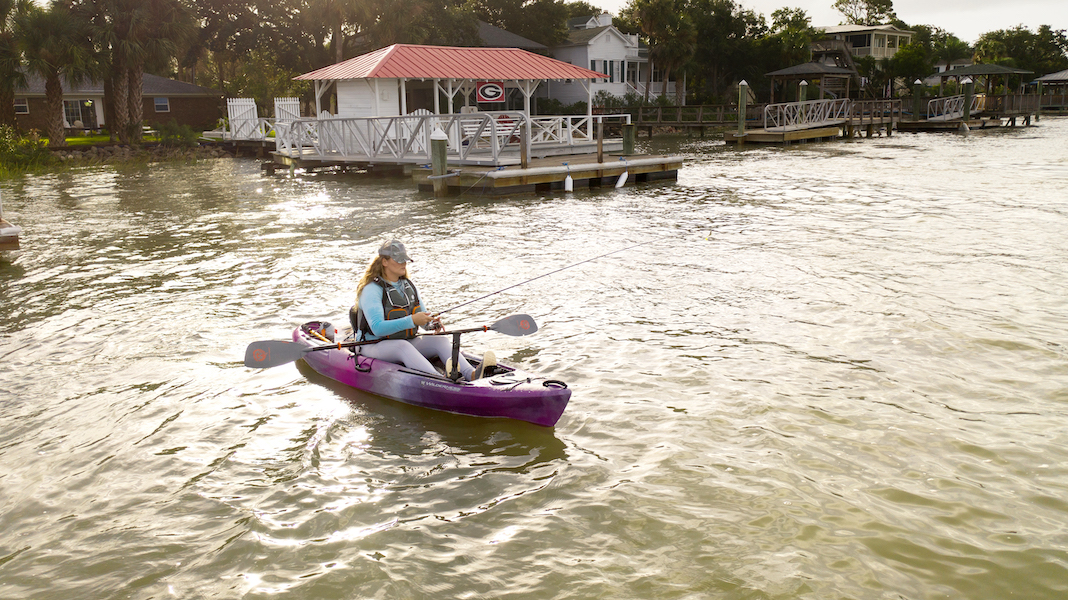
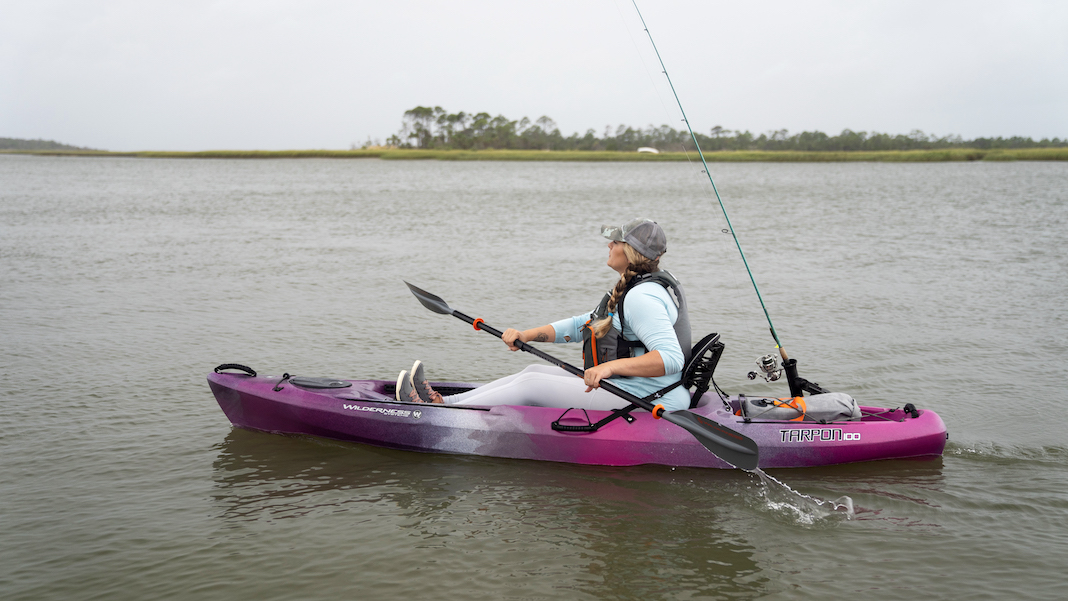
The Wilderness Systems Tarpon 100 kayak offers superlative performance in a compact and versatile package. This kayak lives up to its cred as a sit-on-top “legend” with a design heritage dating back 20 years. Tarpon 100 paddlers highlight this boat’s exceptional performance in a variety of recreational kayaking applications, including day paddling, kayak fishing and overnight touring.
Though this model has been discontinued (replaced by the slightly longer Tarpon 105), the Wilderness Systems Tarpon 100 is still widely available on the used market. This kayak remains a top pick for recreational paddling, with comfortable outfitting and a hull design that performs in a variety of conditions, from flatwater to easy surf.
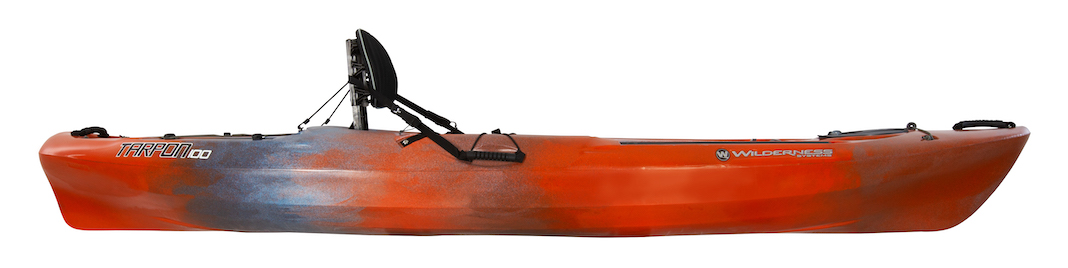
The Wilderness Systems Tarpon 100 sit-on-top kayak combines moderate speed and tracking with good maneuverability. These performance characteristics are all related to the kayak’s rocker, that is the amount of curve across its bow to stern hull profile.
In other words, rocker describes how much “banana” shape there is to a kayak hull. Highly rockered kayaks turn easily at the expense of glide and speed; meanwhile, kayaks with modest rocker (A.K.A. straight keel line) are more efficient to paddle in a straight line, at the expense of turning capacity. You’ll appreciate a straight-tracking kayak on open water and in wind and waves; while more rocker provides better maneuverability for river paddling.
The Wilderness Systems Tarpon 100 is billed as an “all around” recreational kayak, and the manufacturer managed to achieve a good balance of paddling characteristics for both flatwater lakes and smooth-flowing rivers. You may prefer one of the longer Wilderness Systems Tarpon models if you’re looking for a more efficient hull design primarily for lake paddling.
Check The Weather
Plan for changing weather conditions. Prepare for the worst case.
Don’t forget to check tide, currents, or river levels.
Additionally, the Wilderness System Tarpon 100 hull features sharp entry lines at the bow to part the water smoothly and track efficiently and quietly—a great feature for wildlife photography enthusiasts and anglers. The 30.5-inch width imparts reassuring stability, even for beginners. Kayak anglers wondering can you stand up in a Tarpon 100 will find plenty of stability, but not quite enough deck space for standing; sit-down casting is advised.
With 325 pounds of capacity there’s enough volume for all your fishing kit, day gear or even overnight camping equipment. In short, the Wilderness Systems Tarpon 100 sit on top kayak has something for everyone and won’t hold you back as your skills and paddling aspirations grow.
Photo: Courtesy Wilderness Systems
Market and demographics
The Wilderness Systems Tarpon 100 beginner kayak is stable and comfortable to paddle yet also delivers enough performance to grow your skills in dynamic paddling conditions. If you’re looking for a versatile, made-in-USA recreational kayak the Tarpon 100 is an outstanding choice. It comes standard with clever features that make kayaking easier and more enjoyable—just bear in mind its open deck makes it best suited for use in warm weather and water conditions.
For kayak fishing, Wilderness Systems Tarpon 100 anglers describe it as an “advanced open water fishing kayak,” praising its speed and handling. The Tarpon 100 is best described as a crossover kayak. It includes few angling-specific features so diehard anglers will want to make their own modifications—such as rod holders mounted to accessory rails—to improve the Tarpon 100 as an angling kayak.
Comfort
Comfort and paddling efficiency go hand in hand with the Wilderness Systems Tarpon 100. Unlike many other recreational sit-on-top kayaks, the Tarpon 100 features the same adjustable foot rests found in sit-inside kayaks, which enable the paddler to make a solid connection to the boat and use the body’s larger muscle groups—including the core and legs—for stronger paddling over longer distances.
Other Wilderness Systems Tarpon 100 reviews praise the comfort of its adjustable seat, which is mounted low in the kayak for better stability and features airy, quick-drying 3D foam and mesh construction.
About the Tarpon 100 kayak
Design
Design features and details
Unlike many other recreational kayaks, whose blunt bows tend to push water like tugboats in the water, the Tarpon 100 features a narrow entry at the bow—a sleek look that’s reminiscent of Wilderness Systems’ touring kayaks. Not only does this allow the kayak to move in virtual silence as it slices through the water, it also makes the overall paddling experience easier with less resistance.
Meanwhile, the Wilderness System Tarpon 100’s flared sides shed waves and make it feel super stable in choppy conditions, drawing upon a design feature known as “secondary stability”—another attribute typical of more advanced sea kayaks. Combined, the Tarpon 100’s sleek entry and flare are the foundation of a seaworthy design.
Material and construction
Like many other recreational kayaks the Wilderness Systems Tarpon 100 is constructed of rotomolded polyethylene, a durable plastic that stands up to abuse and is easy to maintain. Wilderness Systems has created a resilient kayak that’s also stiff and efficient to paddle due to the flared hull shape.
Design trends
The Tarpon 100 is the smallest sibling of a broad, best-selling lineup of made-in-USA recreational sit-on-top kayaks from Wilderness Systems, including the Tarpon 120, Tarpon 140 and Tarpon 160. The difference in the models is mainly the length, ranging from 10 feet for the Tarpon 100, to 16 feet for the Tarpon 160.
The Wilderness Systems Tarpon 100 has since been replaced by the new Tarpon 105. The Tarpon series is Wilderness Systems’ all-around lineup of sit-on-top kayaks; these versatile models work equally well for recreational paddling and kayak fishing.
Wear A Life Jacket
Everyone, even strong swimmers, needs to wear a life jacket at all times when on the water. It is extremely difficult to put a life jacket on once you fall into the water. Even a light wind can blow any paddlecraft away from you, faster than you can swim.
Always wear a USCG-approved Level 70 or Type III life jacket designed for paddling.
Wilderness Systems Tarpon 100 outfitting and accessories
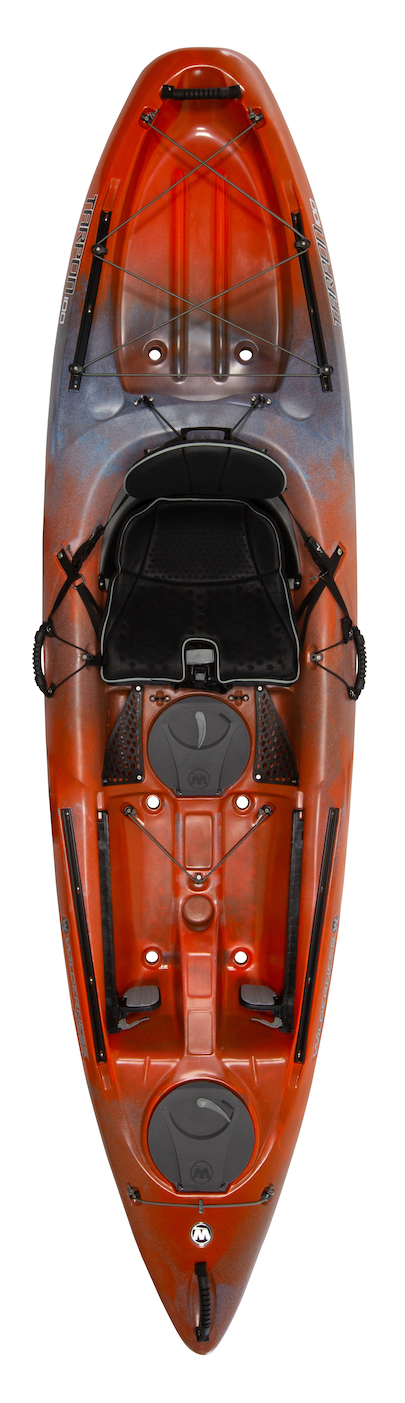
Outfitting on any kayak begins with the seat. In this regard, the Wilderness Systems Tarpon 100 seat delivers industry-leading comfort and adjustability. The standard Phase3 AirPro seating adjusts up and down with an intuitive array of straps and levers, enabling all-day comfort regardless of your body shape and size. The clever design carries over to the seat material, which is quick-drying and airy.
The Wilderness Systems Tarpon 100 is equipped with four accessory rails—two in the bow, and two in the stern—which provide solid lash points for deck-mounted gear and convenient attachment points for action cameras, fishing rod holders and your GPS unit. The standard foot rests are reminiscent of those on touring kayaks, with easy adjustability (simply squeeze the lever on the back of the foot rest). This style offers more range of adjustment and greater support than the molded foot rests on other sit-on-top kayaks.
Finally, there’s plenty of storage, with a dry, seven-inch round hatch in the bow and a smaller accessory hatch positioned between the paddler’s legs. A spacious well in the stern of the kayak comes with bungees to secure a large duffel, making it possible to take the Wilderness Systems Tarpon 100 on an overnight trip.
Accessories including a rudder kit are available from Wilderness Systems. A foot-operated rudder makes the kayak easier to steer and handle better in windy conditions—a worthwhile upgrade if you intend to paddle more seriously. The kit includes foot braces and cables to control the rudder, which attaches to the stern of the kayak.
Other popular add-ons include the Wilderness Systems Kayak Krate, which provides dry storage for fishing tackle and camping gear in the stern well, as well as the Wilderness Systems Kayak Kart for moving the Tarpon 100 from your vehicle to the water’s edge. Kayak anglers will also love the Wilderness Systems Universal Trolling Motor Mount, which attaches easily and provides support for up to a 3 horsepower motor.
Looking for Wilderness Systems Tarpon 100 scupper plugs? These and other replacement parts are available from the manufacturer. In fact, 45 replacement parts (ranging from hatch covers to foot rests and fasteners) are available from Wilderness Systems to keep your Tarpon 100 paddling like new.
Opportunity for modifications
Looking for tips on how to modify a Wilderness Systems Tarpon 100? Your best place to start is with the kayak’s accessory rails, located in the bow and stern. It’s easy to use these features as mounting points for fishing rods, cameras and GPS units. Another easy modification is to retrofit your Tarpon 100 with the convenient MagnaTech water bottle holder.
The Wilderness Systems Tarpon 100 is an outstanding choice for anglers looking for a blank canvas to create the ultimate kayak fishing rig. Start by adjusting the stern bungees to accommodate a tackle crate and go from there, adding practical DIY features like an anchor trolley and fish finder.
Warranty
Like many other kayak manufacturers, Wilderness Systems offers a limited lifetime warranty that covers manufacturing defects in the hull and deck. Parts, accessories and outfitting come with a one-year warranty.
How it compares
Wilderness System Tarpon kayaks date back to 2001, with the Tarpon 100 being the shortest model in the lineup. The popular Tarpon 100 was replaced in 2020 with the upgraded Wilderness Systems Tarpon 105, which measures 10’6” and is slightly wider than its shorter sibling.
There’s plenty of competition in the market for sit-on-top kayaks. Wilderness Systems shines for its attention to detail and clever design features, particularly in its outfitting. The Tarpon 100 is a safe kayak for a variety of applications including paddling on lakes, rivers, oceans and easy surf.
Know The Local Hazards
Check navigation charts before you launch.
Check with those who have local knowledge of man-made and natural hazards, e.g. low-head dams; sweepers, strainers and undercuts; tides and currents; and rocks and shoals.
The Wilderness Systems Tarpon 100 costs more than recreational kayaks found in big box outlets but you get what you pay for in terms of paddling performance and comfort.
Wilderness Systems Tarpon 100 vs 120
The 10-foot Wilderness Systems Tarpon 100 is more compact and maneuverable than the longer, 12-foot Tarpon 120 with somewhat less hull speed and storage space. You may prefer the Wilderness Systems Tarpon 120 if you’re a larger paddler, looking for more glide or aspiring to overnight touring—this bigger kayak simply features more space and its longer waterline length makes it faster on the water.
The newest, 2020 edition of the Wilderness Systems Tarpon 120 features upgraded outfitting and a larger bow storage hatch. You’ll also have far more room on board a Tarpon 120 to bring your canine companion along for the ride.
Wilderness Systems Tarpon 100 vs 105
The Wilderness Systems Tarpon 105 is an upgraded version of the original 100, with an extra six inches of length and two inches of width added to the same sleek, flared hull. Paddling performance is quite similar; the difference is in the outfitting. The Tarpon 105 was released in 2020 to replace the Tarpon 100 with even more creature comforts: a removable storage dry box; a mesh cover for the stern storage well; and a rectangular bow storage hatch that’s easier to load.
Is the Wilderness Systems Tarpon 105 worth buying new? Paddling performance is very similar so the decision comes down to budget and your desire for comfort features out of the box. If you have the aptitude for DIY upgrades and don’t mind paddling a late model kayak, you may be able to score a great deal on a used Tarpon 100.
Wilderness Systems Tarpon 100 vs Perception Pescador
The Perception Pescador 10 is a solid alternative to the Wilderness Systems Tarpon 100 with similar paddling characteristics, comfort features and range of accessories. Both kayaks feature the same 325-pound capacity and all-around paddling versatility, suitable for calm water (lakes, rivers and ocean) and easy surf. The Pescador 10 measures slightly longer at 10’6”, offering a bit more deck space. The Tarpon 100 comes standard with four accessory rails, while only the fishing-specific Perception Pescador Pro 10 comes with two accessory rails.
Thinking about the Wilderness Systems Tarpon 100 vs. the Perception Pescador Pro 10? You’ll find better out-of-the-box fishing performance with the Pescador Pro 10, including built-in rod holders and an inset to mount a fish finder. The Pescador Pro 10 seat is on par with the Tarpon 100’s Phase3 AirPro, with the added bonus of being removable.
If price is a big decision point, consider the Perception Pescador a better value than the Wilderness Systems Tarpon 100, with a slightly shorter range of features.
Photo: Courtesy Wilderness Systems
Where to buy the Tarpon 100
Regardless of how many times you Google REI Wilderness Systems Tarpon 100, you won’t find this kayak in retail stores. Instead you’ll have to search Craigslist and Facebook marketplace for a used Tarpon 100. Take a serious look at the upgraded Tarpon 105 kayak if you’ve got the budget for a new boat; it’s available through Wilderness Systems dealers across North America, including REI stores across the United States and independent paddlesports retailers.
Tarpon 100 pros and cons
Pros
Versatile and suitable for paddling in a range of calm water environments
Forgiving design strikes a good balance between glide and maneuverability, with performance characteristics that will grow along with your paddling skills
Outstanding comfort for most sizes of paddlers
Great choice for anglers willing to make a few do-it-yourself upgrades to the standard hull
Cons
Priced somewhat higher than comparable sit-on-top kayaks (although that’s justifiable given the standard accessories)
You’ll have to scour the used market for a Wilderness Systems Tarpon 100 kayak—or shop new for its replacement, the Tarpon 105