After decades of exploring, where do the boldest sea kayakers, whitewater boaters and canoe trippers fantasize about paddling? That’s the question that inspired Paddling Magazine to query some of our long-time contributors and favorite nomadic aquaphiles to ask after their dream destinations, most challenging expeditions and what a life of exploration really means anyways.
In this series of profiles, these exceptional water-wanderers share their top trips, best advice and biggest blunders. And whether their ambitious journeys were taken in the name of discovery, education, environment or glory, these legends affirm what we already know: There’s far more to explore by paddle than anyone could fit in a lifetime—but don’t let that stop you from trying.
[ Plan your next adventure with the Paddling Trip Guide ]
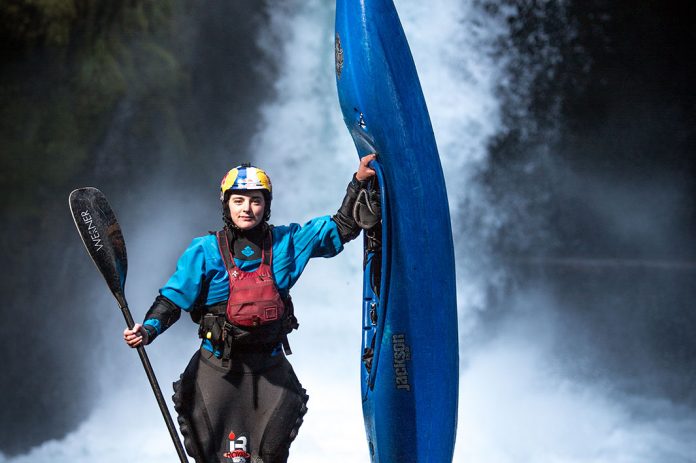
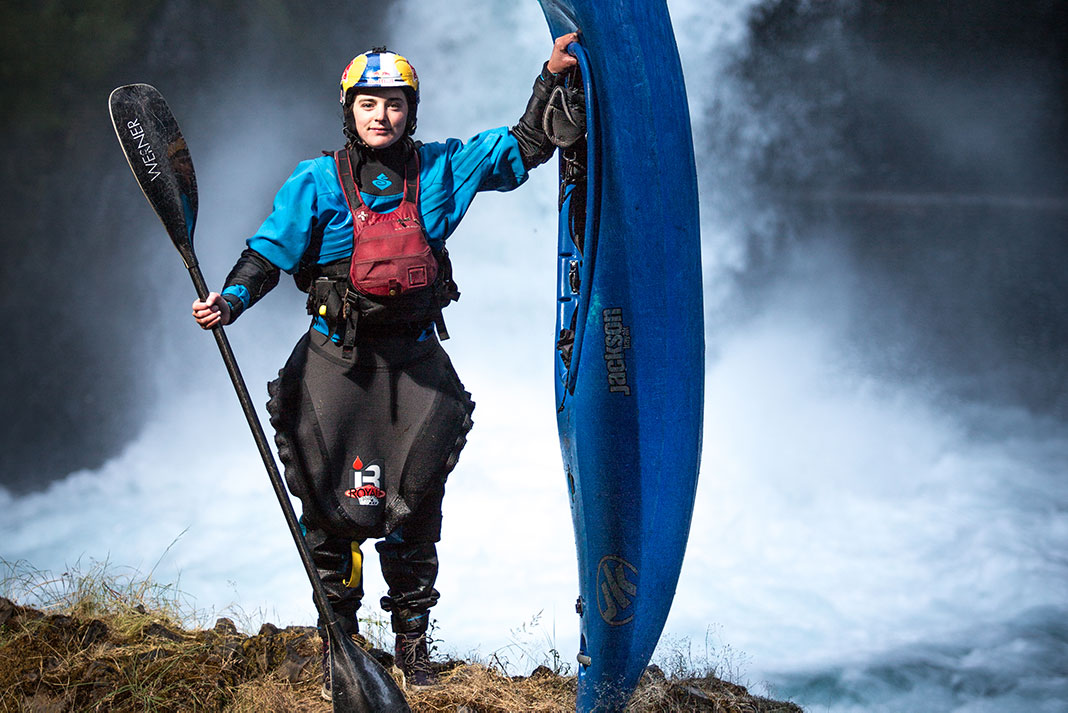
Nouria Newman has been pushing the boundaries of whitewater for a decade. The ex-slalom boater has claimed first descents, dominated competitions and paddled some of the world’s most challenging whitewater, including the Stikine’s Site Zed. Earlier this year, Newman snagged the first descent of Pucuno Falls in Ecuador and became the first woman to run a 100-foot waterfall.
Location: Tignes, France
Occupation: Professional kayaker
Next project: An expedition in Ecuador, “but these days, nothing is sure.”
Nouria Newman, ready for adventure. | Photo: Erik Boomer
Q & A with Nouria Newman
1One river I dream of returning to is…
the Tsangpo in Tibet, or the Stikine.
“This location still captivates me because I have so many good memories from that river,” says Newman. “I will never forget the feeling when I first entered the canyon. A sense of pure freedom, fear mixed with excitement. It was just beautifully overwhelming, and at this point, there was no turning back. That’s what I wanted to do with my life.”
2One place I dream of paddling is…
Pakistan. I want to paddle there because if this place is known to have the most beautiful mountains in the world, it must have the most beautiful rivers too.
3 My biggest pet peeve is…
lack of critical thinking and Internet trolls.
4One thing I can’t live without is…
the important people.
5The greatest advice I ever got was…
never to forget to have fun and that was from a friend who knew me better than I knew myself.
I don’t even know where to start. My friends created a dedicated scoring system to keep track.
8I learned…
I have to focus more and sometimes take the time to slow down.
9 The hardest part about making that dream trip happen is…
permission, budget and dam removal.
10My best advice for young paddlers is…
do it because it’s fun and because you love it.
11Happiness is…
the most important thing.
12My most challenging expedition was…
high water Rio Tunuyan in Chile or the Patagonia tour and it taught me that sometimes you just have to put your head down and keep going.
Newman teamed up with Ben Stookesberry and Erik Boomer to tackle nine rivers in Patagonia. The team achieved four first descents and the second human-powered descent of the Pasqua, one of Patagonia’s largest rivers (you can read about it here). To access the Pasqua, they had to bushwhack for 54 miles.
13What scares me most is…
losing someone I love—and siphons.
14My favorite camp meals are…
Jo’s sausage croissant and Chomps’ pepper with cheese and egg.
15The true gift of big trips is…
the good things that come unexpectedly from the hard times and the people you meet and become friends with.
16One thing I will never do again is…
swim through a siphon.
This article was first published in Paddling Magazine Issue 64. Subscribe to Paddling Magazine’s print and digital editions here, or download the Paddling Magazine app and browse the digital archives here.
Nouria Newman, ready for adventure. | Photo: Erik Boomer
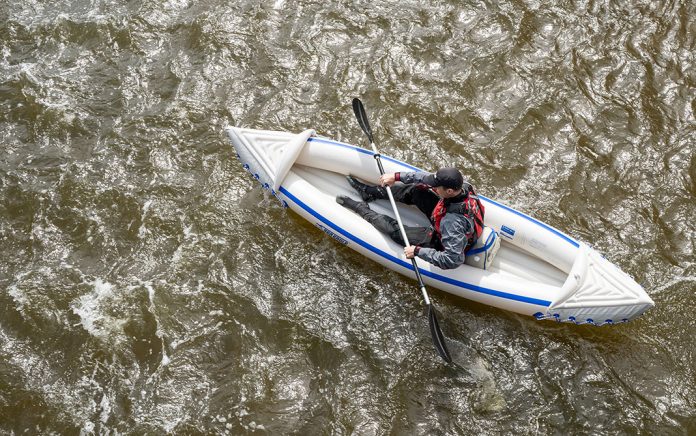
With a lightweight design and efficient hull shape, the Sea Eagle 370 is easy to handle for paddlers of all abilities. | Photo: Colin Field
When I think of canoes, I think of the traditional wood-canvas Prospectors straight out of a Tom Thomson painting. Of kayaks, I imagine handcrafted composite hulls built on Greenlandic lines in an Old World workshop. So, I had to park my prejudices to review the Sea Eagle 370, an inflatable PVC two-seater that retails starting at $349 USD. I also had to deflect several derisive remarks from snooty companions referencing mail-order catalogs. After all this, the Sea Eagle 370 went on to make Paddling Mag’s list of best kayaks.
The catalog business is, in fact, where Sea Eagle proudly got its start way back in 1968, supplying retailers like L.L. Bean and Sears & Roebuck with a $99 inflatable called the Pyrawa closely resembling today’s 370. Sea Eagles went on to cruise the length of the Mississippi and float expeditions worldwide, including the first descent of China’s upper Yangtze River. By 2015 the Long Island-based family business estimated it had sold more than 250,000 boats, which by numbers alone should trump anyone else’s definition of a proper kayak.
Comparison is not only the thief of joy, as Theodore Roosevelt said. It is also the downfall of the snob because my suspicion of the Sea Eagle’s pedigree caused me to stick it in a corner of my garage until test day and completely forget to look up the set up instructions or the instructional video. And then one sunny afternoon found me on a riverbank surrounded by loose valves, plastic bags, an expanse of vinyl and sections of paddle feeling like a complete novice fool.
Set up in less than 10 minutes
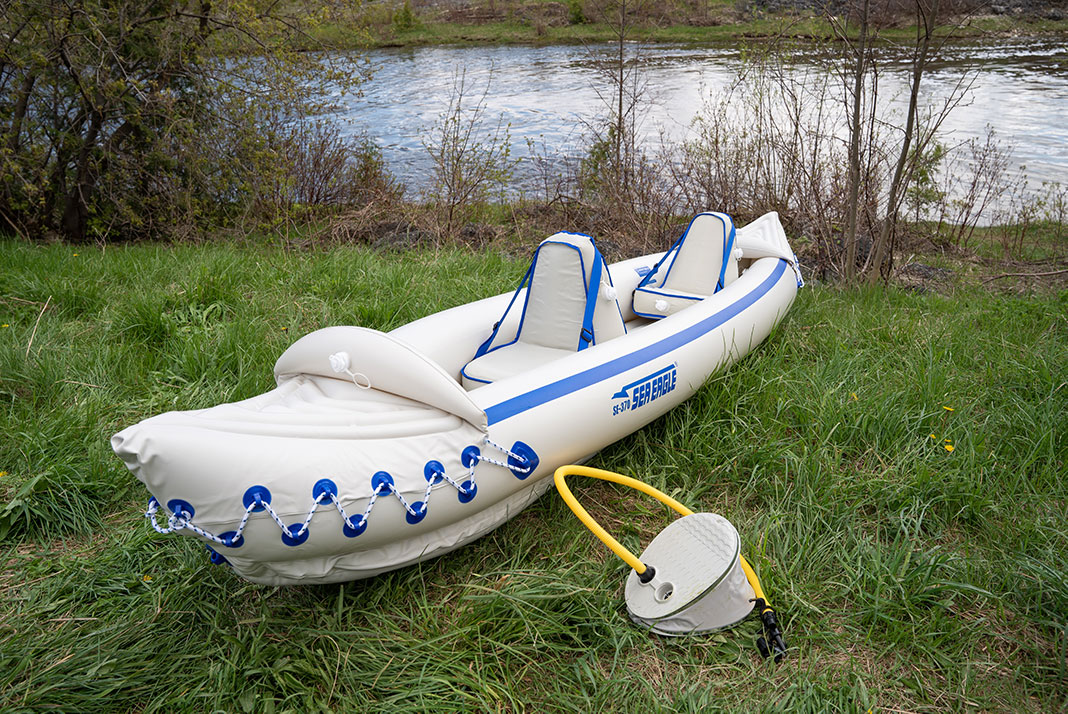
Fortunately, the Sea Eagle is very forgiving. The included foot pump plugs into each of the five screw-in one-way valves—three for the main hull chambers and one for each inflatable spray decks—one at a time, starting with the floor. The Sea Eagle 370 inflation pressure of 1.1 psi is easily achieved with the foot pump and measured on the tubes using the included visual ruler. My improvisational approach ate up several times more than the manufacturer’s claimed eight-minute inflation time. Still, I was rather chuffed with how intuitive the Sea Eagle turned out to be.
With a lightweight design and efficient hull shape, the Sea Eagle 370 is easy to handle for paddlers of all abilities. | Feature photo: Colin Field
Immediately, the inflated craft spoke to my 10- and 12-year-old kids with the marine-architectural vernacular of an oversized pool toy. Or maybe I should say jumpy castle because the two siblings, whose minds had not been preprogrammed by any notions of paddlecraft hierarchy, immediately jumped into it and initiated a game of rocking back and forth, trying to pitch each other out onto the grass.
“Can we keep it,” they asked, in a voice reserved to beg for puppies or ice cream, “Pleaaaase?” It was all I could do to get them out so I could paddle and discover how much more the Sea Eagle 370 is than just an inflatable kids toy.
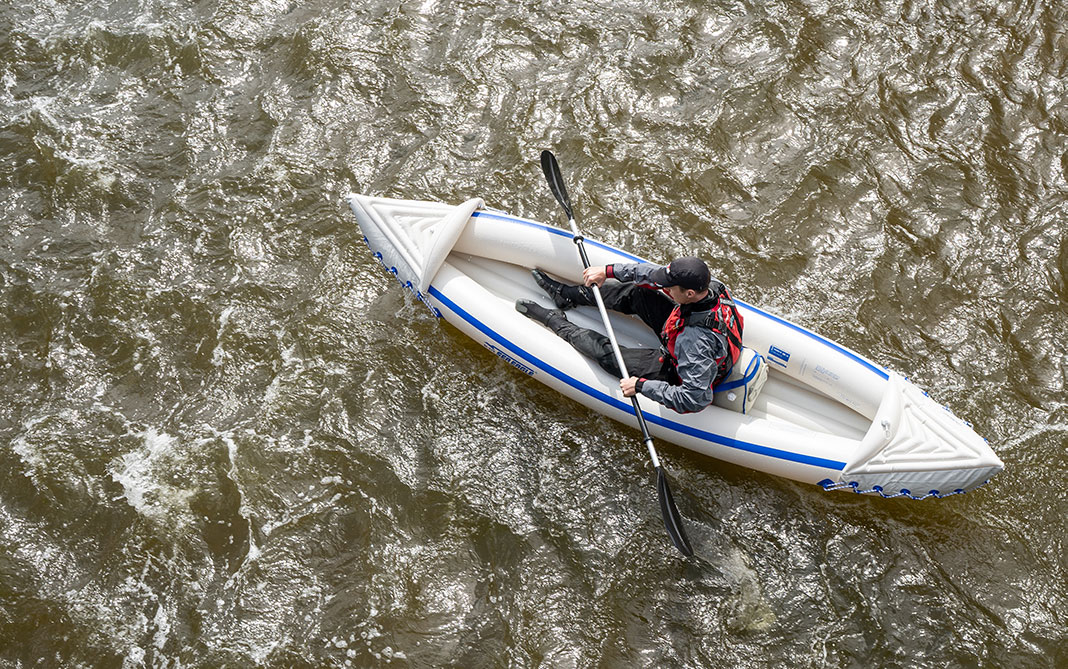
I headed out solo, with just one of the two seats installed in the middle position, into some spirited spring class I and II whitewater. The Sea Eagle felt stable, dry, nimble and responsive, tracking well when ferried back and forth across the river thanks to the two molded plastic skegs and the shape of the I-beam floor tubes that run the length of the river hull to form chines.
Yet the Sea Eagle 370 also turned quickly into eddys and even responded to being put on edge like a hard chine sea kayak. In straight-ahead paddling, the side pontoons almost sit above the water, making a narrower waterline for good speed, and only really engage in waves, under a heavy load, or when tilted into the water to help carve a turn. The Sea Eagle 370 tracks and turns much like a narrower rigid-hull sea kayak of the same length.
Remarkably stable and durable
After scraping and bouncing over a few rocks and being dragged upriver for a bit, the K80 PVC hull showed no signs of wear. Sea Eagle rates the Sea Eagle 370 for whitewater up to class III. The lack of self-bailing valves might be a problem in bigger water, but since the single stern drain plug sits mostly above the waterline, it could function as a self-bailer in the right conditions.
A few days later my family headed to the beach. Out of a suburban garage quiver of carbon fiber paddleboards, a Kevlar canoe and one fancy British sea kayak (with a total value equaling the GDP of a small island nation), I’ll give you one guess as to which craft made the cut. You could almost hear the heathen cry of the Sea Eagle, like the voice of Buzz Lightyear to the highfalutin toys that got left behind: So long, suckahs!
My second inflation attempt came in close to 15 minutes. With the optional electric DC pump plugged into my van, I might have achieved the suggested eight. At the beach, the Sea Eagle became a play platform. Although much more susceptible to wind, the Sea Eagle beats any other kayak for sheer unsinkability. My attempts to wash the sand out by filling the hull with water completely failed because there was nothing I could do to submerge it. Even after turning it upside down, I’d flip it back over to find nary a drop in the cockpit—a safety bonus in any potential capsize. What water does splash in disappears below the beams in the floor, leaving the paddlers high and dry.
The bow and stern spray decks inflate to provide added buoyancy and help shed waves. They’re lashed onto the deck with ropes that double as safety grab lines and a place to tie gear. There is also a plastic-molded attachment for a bowline. | Photo: Colin Field
The Sea Eagle 370 Pro package offers these premium five-inch-high seats with protective fabric covering, storage pouch and high, supportive backrest. Also available: a Sport Fishing package, or the QuickSail, which includes a small sail and electric inflation pump. | Photo: Colin Field
The five tubes of the I-beam hull provide a rigid platform constructed of sun- and saltwater-resistant 38 mil PolyKrylar (K80 PVC) that’s rated to withstand up to class III rapids. Two fins and the side chines of the hull help it to paddle in a straight line. | Photo: Colin Field
The Sea Eagle 370 deflated quickly and was easy to fold and stow in the included carrying bag, which is big enough to fit all the accessories, including pump and paddles. The Pro package is priced at $399, which is excellent value and includes all accessories. While pricier than some other inflatable brands like Intex, Sea Eagle offers greater carrying capacity and a venerable history as a specialty watercraft manufacturer, all backed by an included three-year or optional six-year warranty.
For rugged touring adventures in a Sea Eagle inflatable, consider the more robust Explorer series. The Sea Eagle Explorer 380x is the same size as the Sea Eagle 370 but has an additional 100 pounds of capacity, a removable high-pressure drop stitch floor, self-bailing valves, and a 1000 Denier reinforced hull rated for a motor mount and whitewater up to class IV. But at a very affordable price point, with a generous bundle of accessories and features suitable for most recreational uses, the Sea Eagle 370—or its shorter sibling, the Sea Eagle 330—is a perfect introduction to the world of inflatable kayaks.
This article was first published in Paddling Magazine Issue 64. Subscribe to Paddling Magazine’s print and digital editions here, or download the Paddling Magazine app and browse the digital archives here.
With a lightweight design and efficient hull shape, the Sea Eagle 370 is easy to handle for paddlers of all abilities. | Feature photo: Colin Field
Whitewater athletes Gerd and Aniol Serrasolses, Matias Wegger, David Vory, Dagg, Robert Eggleston, George Snook recently returned from a “rowdy” trip to one of the world’s best whitewater playgrounds; Norway.
In an Instagram post, Aniol Serrasolses commented: “I’m so happy I got to travel to Norway this summer! Definitely one of the most beautiful countries in the world to go kayak.”
Check out this latest edit from the Serrasolses brothers and witness some of the world’s best whitewater athletes tackle the steep, intimidating and pushy waters of the land of the midnight sun.
After decades of exploring, where do the boldest sea kayakers, whitewater boaters and canoe trippers fantasize about paddling? That’s the question that inspired Paddling Magazine to query some of our long-time contributors and favorite nomadic aquaphiles to ask after their dream destinations, most challenging expeditions and what a life of exploration really means anyways.
In this series of profiles, these exceptional water-wanderers share their top trips, best advice and biggest blunders. And whether their ambitious journeys were taken in the name of discovery, education, environment or glory, these legends affirm what we already know: There’s far more to explore by paddle than anyone could fit in a lifetime—but don’t let that stop you from trying.
[ Plan your next adventure with the Paddling Trip Guide ]
Paul Caffyn’s 1982 circumnavigation of Australia is one of the most remarkable journeys ever taken. Challenged by surf, cyclone and 100-mile-long stretches of cliffs, the 9,420-mile epic spanned 360 days. Caffyn also paddled around Japan, Great Britain, New Zealand and the entire 4,700-mile coastline of Alaska, challenging the limits of what was thought possible with a double blade. And all without the aid of GPS.
Location: South Island, New Zealand
Latest Project: Caffyn worked as a mining geologist until he retired in 2002. Earlier this year, he co-authored The Search for the Deepest Hole in the World, a history of deep caving expeditions in New Zealand, Australia and Papua New Guinea (you can find out more from his website).
Caffyn during his 4,700-mile Alaskan epic. | Photo: Paul Caffyn Archives
Q & A with Paul Caffyn
1One destination I dream of returning to is…
the east coast of Grønland. This location captivates me because of the dynamic, unforgiving coastline, with thousands of years of maritime history.
2One trip I dream of paddling but haven’t yetis…
the Northwest Passage from Inuvik east to Greenland. This trip excites me because it feels like unfinished business.
3My biggest pet peeveis…
getting my feet wet in icy seas and river delta mudflats.
4One thing I can’t live withoutis…
my two-piece, lightweight carbon fiber paddle.
5The greatest advice I ever gotwas…
“stay seated for the entire performance,” and that was from Australian veteran paddler Crocodile Winky (David Winkworth).
misjudging a late evening surf landing onto what looked like a sandy beach but was a boulder beach guarded by bumper dumpers. The result was a full loop, smashed helmet, a tooth through my lip, and serious cracks by the kayak bow.I learned never be impatient when faced with a surf landing.
9
The hardest part about making that dream trip happen is…
getting a good mate to share the ups and downs.
10
Happiness is…
a bowl of hot sweet tea brewed over a driftwood fire after a big challenging day.
11
My most challenging expedition was…
around Alaska and it taught me how to paddle and navigate in icy seas.
Caffyn’s 1989-91 solo paddle around Alaska was a 4,700-mile odyssey (you can read about it here). He set out from Prince Rupert, British Columbia, and paddled to Inuvik on the Northwest Territories’ Arctic Coast. Initially conceived as a single-season trip, the Exxon Valdez oil spill in Prince William Sound in 1989 forced Caffyn to stop at the north end of Alaska’s panhandle, and the journey was recast into two more summers. The trip included pre-GPS fogbound crossings, sea ice, storms of Alaskan magnitude and a bear-shredded tent.
12
What scares me mostis…
the stuff I had not planned for or visualized.
13
My favorite camp meal is…
Pasta with lumps of bacon ends.
14
The true gift of big tripsis…
experiencing nature as it was before humans buggered stuff up.
This article was first published in Paddling Magazine Issue 64. Subscribe to Paddling Magazine’s print and digital editions here, or download the Paddling Magazine app and browse the digital archives here.
Caffyn during his 4,700-mile Alaskan epic. | Photo: Paul Caffyn Archives
From scuppers to bulkhead, there may be some terms you've never heard before.
Every sport has its jargon, and kayaking is no exception. The parts of a kayak have specific names and it helps to learn them as you’re exploring the world of paddlesports. Some words will likely be familiar to you because they’re borrowed from general nautical terminology. Others may be new or confusing. Either way, learning a few kayak-specific terms will help you as you navigate the many different types of kayaks and their options.
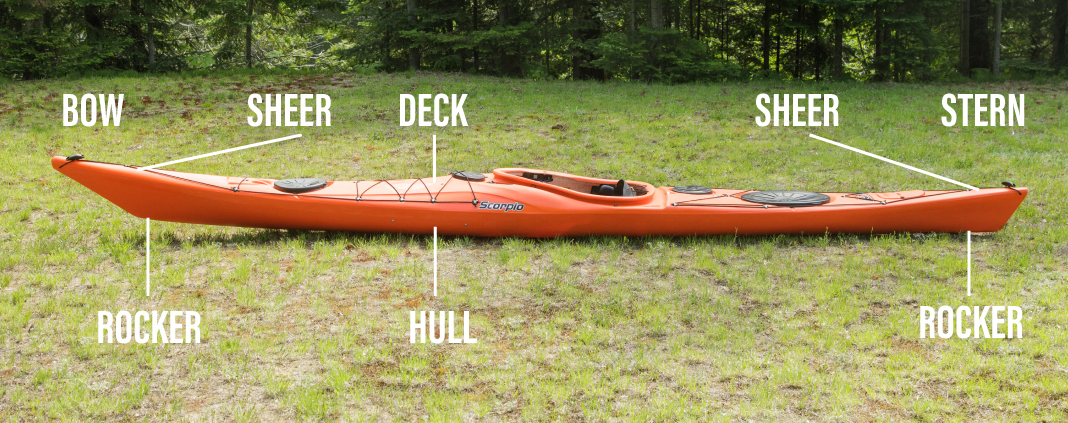
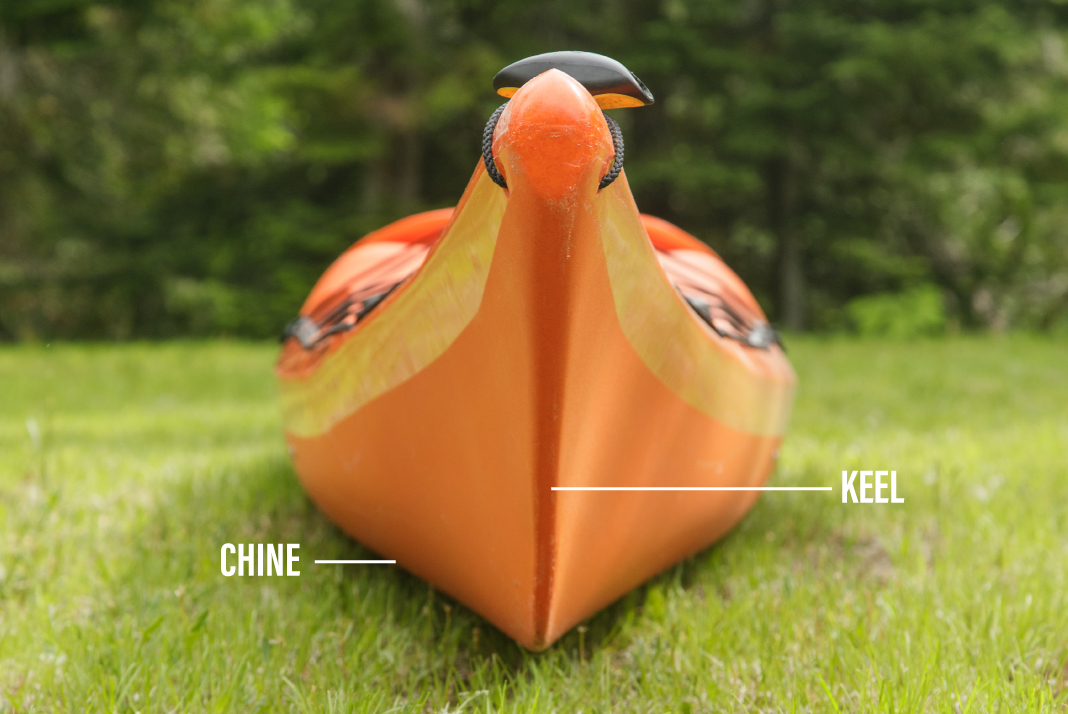
Chine refers to the transition from the side of the hull to the bottom of the hull. For instance, there may be a sharp transition from the side to the bottom. This would be called a “hard chine.” Alternatively, there could be a soft transition from side to bottom of the hull. This is referred to as a “soft chine.” A kayak hull may have one chine per side or multiple chines, depending on the designer’s preferences.
Keel
The keel or keel line is the center line of the hull of the boat. If you’re looking at the hull, the keel line runs right down the middle from bow to stern.
Plan view
Plan view is the shape of the kayak when viewed from above or below. Some kayaks have a symmetrical plan view, others are wider toward the bow or stern.
Sheer
Sheer is the upsweep of the bow and stern above the waterline.
Rocker
Rocker is the upsweep of the keel line toward the bow and stern of the boat. A boat with lots of rocker has a banana-shaped keel line. A boat with no rocker is flat from bow to stern along the keel. More rocker makes a kayak turn easier. Less rocker improves tracking and speed.
Deck fittings
A variety of attachment points on the deck of the kayak that hold deck elastics or decklines.
Security loop
A bar or loop that can be used to lock the kayak to a rack or other secure object.
Carry handles
Handles at the bow and stern of the kayak for comfortable carrying.
Deck elastics
Small diameter bungee cord for holding maps, water bottles or other accessories on the deck of the kayak.
Seat
All kayaks have a place for the paddler to sit. Seats can be basic or elaborate. Some seats have tall backrests like lawn chairs that provide lots of back support. Others have minimal backrests that promote easy rolling and effective forward paddling.
Foot rests
Foot rests, foot braces or foot pegs give you something to push against in the kayak. This helps you sit upright and keeps your back comfortable. Foot rests also help transfer power from the paddle and paddler to the kayak.
Parts of a sit-inside kayak
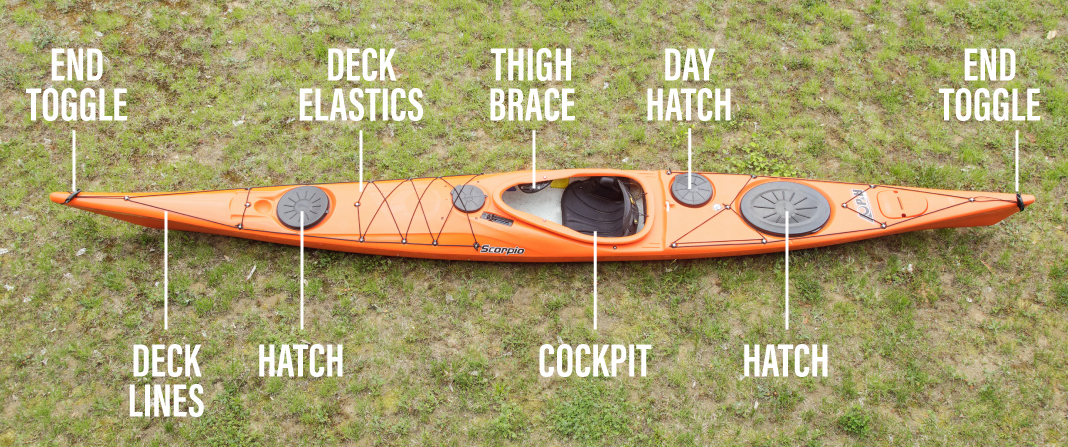
Sit-inside recreational kayaks, sea kayaks and whitewater kayaks have specific parts that improve performance and comfort. Some of the most common terms for sit-inside kayak anatomy are outlined below.
Cockpit
The cockpit is the opening where the paddler sits in the kayak. Cockpit openings can be large, as in recreational kayaks, or smaller, as in whitewater or touring kayaks. Smaller cockpits provide a more secure fit for bracing and rolling. Larger cockpits are easy to enter and exit.
Cockpit coaming
The cockpit coaming or cockpit rim is the raised rim around the outer edge of a cockpit. The raised edge allows the fitting of a sprayskirt to keep water out of the kayak.
Bulkhead foot brace
Bulkhead foot braces are specialized foot rests found in whitewater kayaks. Bulkhead foot braces form a solid wall across the kayak with no space at the edges. The paddler may place their feet anywhere on the bulkhead for comfort and support. This type of foot rest offers more safety and comfort in difficult whitewater.
Hip pads
Hip pads are removable shaped pads that fit on the sides of the seat. Hip pads allow a paddler to customize the width of the seat so they won’t shift from side to side while edging or bracing. Hip pads are common on whitewater kayaks and sometimes seen on sea kayaks.
Recessed deck fittings
Recessed deck fittings are common on sea kayaks. These fittings hold deck lines or elastics, but don’t project above the top of the deck like conventional pad-eye fittings. Recessed deck fittings are less likely to bump your hands during paddling or rescues.
End toggles
Toggles stick off the end of a sea kayak and are attached with a piece of accessory cord. They’re different than carry handles, although they can be used to carry a kayak. The main purpose of end toggles is to give kayakers a safe place to hold onto their kayak should they go for a swim and need to be rescued.
Deck lines
Deck lines are rigid ropes rigged around the perimeter of a sea kayak deck. They give kayakers something to grip while emptying a sea kayak during deep water rescues.
Compass recess
Commonly found on sea kayaks. A depression in the deck for mounting a sailboat-style piloting compass.
Retractable skeg
Retractable skegs are found in sea kayaks, hybrid whitewater kayaks and some recreational kayaks. Skegs are fins that sit in a slot in the underside of the hull near the stern of the boat. They can be dropped into the water to improve tracking.
Skeg slider
A skeg slider is mounted near the cockpit and controls how deeply the skeg is deployed into the water. Sometimes a simple rope and jam cleat.
Rudder
Rudders are used to steer kayaks and control their course in the wind. Movable foot braces control the rudder. Most rudders flip up onto the deck for launching and landing. Common on sea kayaks.
Rudder uphaul
A rudder uphaul is a rope or lever used to pull the rudder up or down for launching and landing. Mounted near the cockpit.
A backband is a low backrest common in whitewater kayaks and some sea kayaks. A backband helps you sit upright in the kayak without interfering with upper body rotation during paddling.
Bulkheads
Bulkheads are walls inside the kayak that separate the cockpit from the rest of the boat. Bulkheads create buoyancy and dry storage space inside a kayak. They also keep water from sloshing all the way from bow to stern during a rescue. This last feature of bulkheads makes them an important safety feature in sea kayaks.
Hatches
Hatches are openings in the deck of a kayak that allow you to access the dry compartments formed by bulkheads. Hatches come in a variety of sizes and some are drier than others. Dry hatches are an important feature in sea kayaks.
Day hatch
A day hatch is a small compartment located directly behind the cockpit of a sea kayak that can be accessed by the paddler while on the water. The compartment is formed by adding a third bulkhead that separates the day hatch from the main stern flotation chamber. This prevents the stern of the boat from flooding if the day hatch takes on water while opened.
Thigh braces
Thigh braces are fitted under the deck of a kayak near the cockpit rim. These contoured brackets allow a paddler to securely grip the kayak with his thighs and knees. Secure contact from thigh braces is essential for rolling and bracing. Thigh braces are found on whitewater and sea kayaks.
Paddlefloat rigging
Some sea kayaks have special rigging on the back deck behind the cockpit to securely lash a paddle. This rigging is frequently used to facilitate self-rescue with a paddlefloat, which is placed on the extended end of the paddle to serve as a stabilizing outrigger.
Parts of a sit-on-top kayak
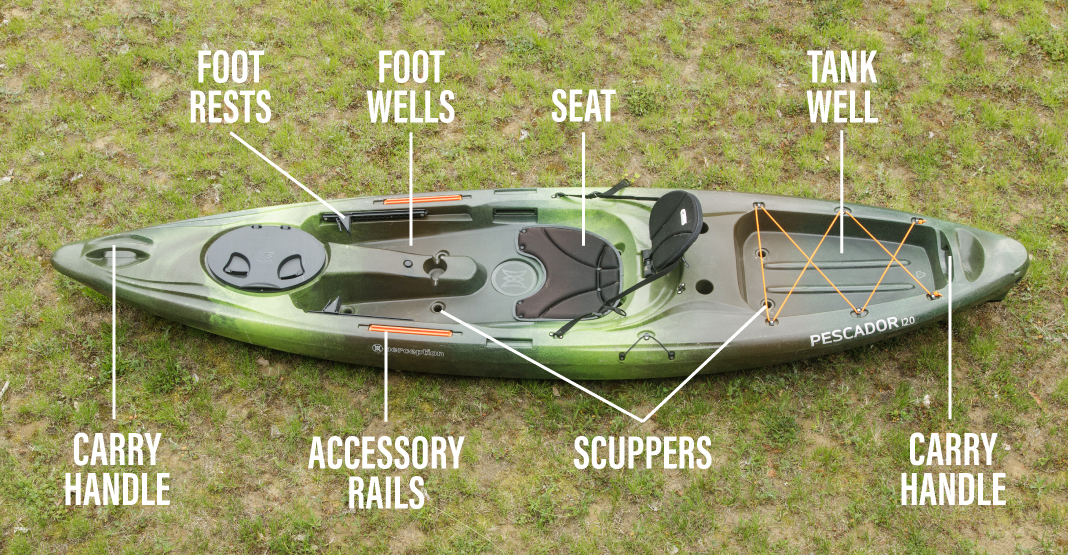
Sit-on-top kayaks are different from sit-inside kayaks in some key ways. Instead of sitting inside the kayak in the cockpit, the paddler sits on top of the deck. The deck may have hatches to access internal storage, but this storage space will be more limited than that found in a sit-inside kayak of similar size. Sit-on-top kayaks are popular for fishing and many angling specific features are common on these designs.
Find out about the kayak components specific to sit-on-tops below.
Scuppers
Scuppers are holes that go from the deck of a sit-on-top kayak through the hull. They’re sealed so water can’t enter the inside of the hull and allow any water that splashes onto the deck to drain back out of the kayak. Scuppers do allow water back up into the kayak from below, so in cold water some paddlers choose to close them with scupper plugs.
Footwells
Footwells are molded foot braces found in basic sit-on-top designs. A series of bumps are molded into the deck of the kayak and the paddler chooses the one closest to their preferred foot position.
High-low seat
Found on many fishing kayaks, high-low seats allow the paddler to position the seat higher or lower above the water. The high position is favored for fishing, while the low position offers better stability in rough water.
Pedal-drive
Some sit-on-top kayaks feature a propeller or flipper-style pedal-drive that allows the paddler to propel their craft using their legs rather than a paddle. Pedal-drives can be removed from the kayak for transport or conventional paddling.
Rod holder
Many kayaks have molded-in rod holders that allow you to slide the butt of your fishing rod into a recess in the deck of the kayak.
Accessory rails
Accessory rails are common on fishing kayaks. They allow for easy customization for the kayak angler who wishes to add rod holders, fish finders and other accessories to their kayak.
Tankwell
A tankwell or deckwell is a depressed area in the deck of the sit-on-top kayak near the stern. A true tankwell is molded to fit a scuba tank, but many wells are configured to fit fishing accessory crates or large drybags.
The step-up you didn’t know you were ready to take. | Photo: Scott MacGregor
Red Paddle Co describes their updated 11’3” Sport as the perfect step-up from an all-rounder. Those are big shoes to fill since Red Paddle’s all-arounder for the under 240-pound crowd is their best-selling and awarding-winning Ride 10’6”.
When Red Paddle Co says it’s a step-up, they don’t mean in quality. More on that later. They mean in performance. And by performance, they mostly mean speed. The 11’3” Sport falls comfortably between their do-it-all all-rounders and their narrower and faster specialty Elite racers. So, it falls right where I tell most of my friends they should look.
While Red Paddle’s 11’3” Sport borrows some design features from the Ride all-rounder, like its 32-inch width for stability, its sleeker profile and drawn-out nose is a giveaway that it’s home in a touring lineup of boards for paddlers wanting to go places.
When I first took the 11’3” Sport out for a test spin, it was early in the season. Some of my local paddling spots were still covered in ice. So, I did what every cold water paddleboarder would do. I blew it up in the comfort of my living room.
Like many Red Paddle Co customers, I received the inflatable 11’3” Sport delivered to my door. Of course, the first piece of gear everyone sees during the unboxing is the All Terrain Backpack. Red Paddle takes first impressions seriously.
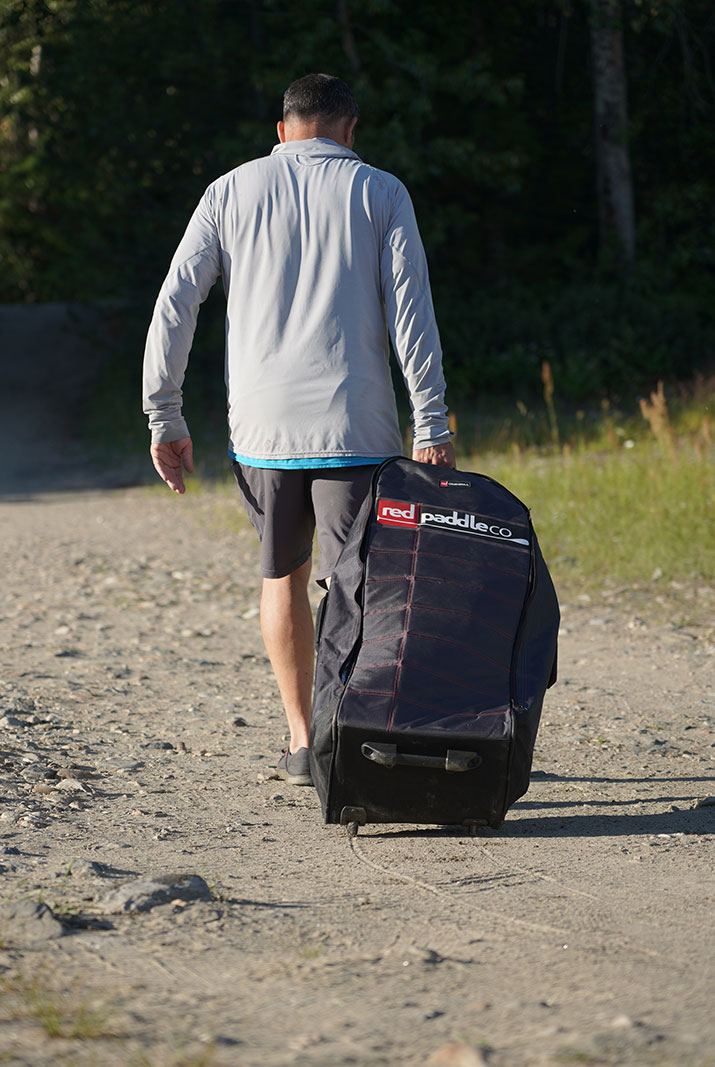
This isn’t your standard run-of-the-mill inflatable SUP bag. The premium backpack is foil-lined and constructed with durable 800 denier-reinforced nylon cloth and stitched together with sail thread. Comfortable handles and sturdy wheels make rolling this board around easy. Or, for uneven terrain, the built-in Sherpa Carry System unfolds into a comfortable backpack harness. It feels a bit silly to be so impressed with the wide shoulder straps and the extra cushioning for my lower back. But, if the whole point of inflatable boards is portability, then make it as cushy as possible getting to the water’s edge.
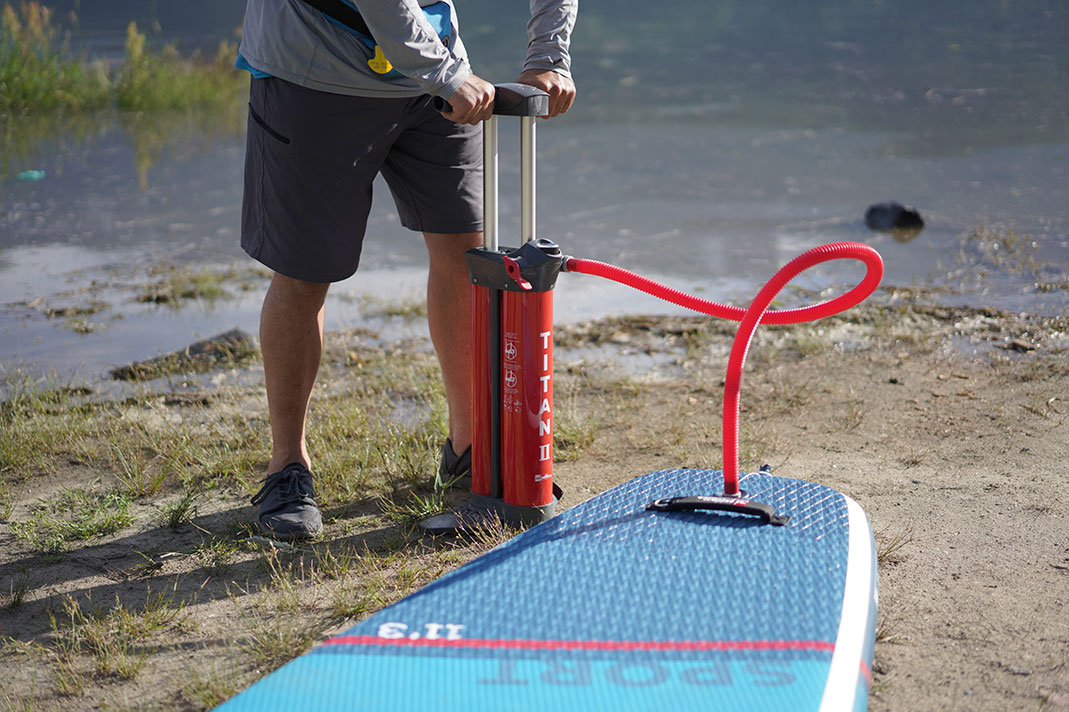
The Titan 2 pump hose attaches to its base and Red has added locking valves on both ends of the hose. Way better. Pumping took me seven minutes, even stopping partway to install the RSS Batons. | Photo: Scott MacGregor
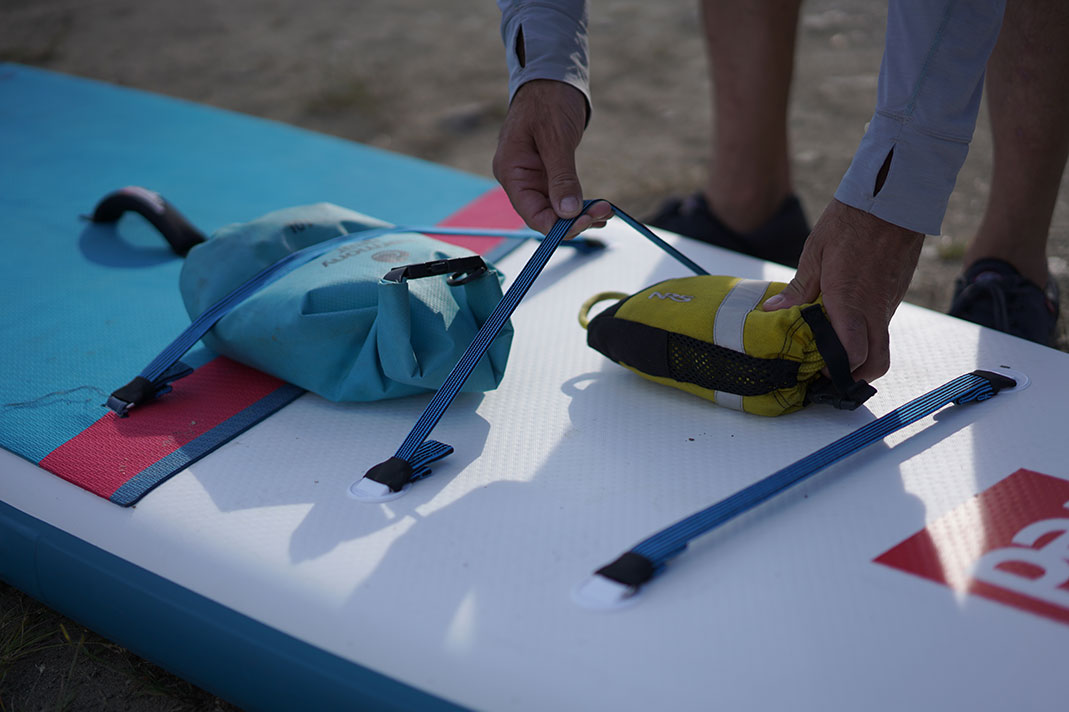
Flat webbing replaces the standard round bungee cord. The extra friction held my water bottle, throw bag and drybag in place. Sure to be popular amongst touring paddlers. | Photo: Scott MacGregor
Many inflatable paddleboards come as packages, which is especially great for new paddlers. In the bag comes the 11’3” Sport, fin, safety leash, paddle and pump. And not just any pump.
“Too big and clunky,” I’ve heard people say about the Red Paddle Co pump, usually from competitors. The Titan and newly updated Titan 2 is entirely different from other inflatable SUP pumps on the market.
The Titan Pump was the first dual-action chambered SUP pump, the two chambers push maximum air volume and pressure into the board saving effort and time. Time is money, they say. Red Paddle updated the Titan for 2021. Now the Titan 2 has a removable handle and foldup feet, and it takes up 30 percent less space in the bag. More room for my paddling gear.
While no inflatable board will ever be as rigid as a hard board, the 11’3” Sport at the recommended maximum inflation pressure of 22 psi feels darn close.
Whether you roll it or carry it, the All Terrain Backpack isn’t your standard inflatable SUP bag. | Photo: Scott MacGregor
Unique to Red Paddle’s Sport series is the Rocker Stiffening System or RSS. Partway through inflation, glass fiber battens are slid into pockets laminated on each rail of the board. These glass fiber struts provide more rigidity reducing the amount the board can flex. Clever.
So, my drysuit and I found a small, sheltered pond as there was strong winds and whitecaps at my usual paddling spot. I was impressed right away by how stable and not edgy the 11’3” Sport felt. The extra stiffness of this board due to the RSS battens and higher psi do make the board feel very stiff and secure.
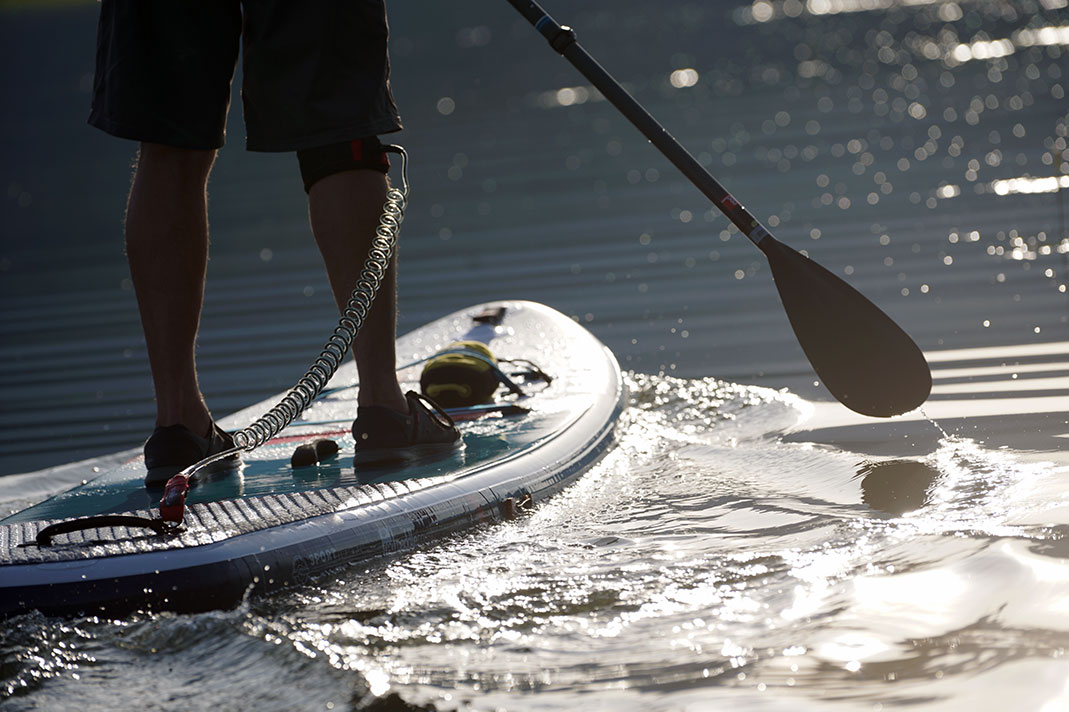
The 11’3” Sport feels quick. It’s not race board quick but, as Red Paddle claims, is a notch up from an all-around board and not intended to be a racer. It does feel fast for a board of this length, perhaps due to what Red Paddle calls their Speed Tail innovation. New for 2021, this rubberized edge on the tail is designed to help with water release to increase speed. I also noticed this board tracked well, aided by a single FCS 12-inch touring fin to keep it on course.
Having worked retail and as a sales rep for another inflatable board brand, I spent years explaining the differences between department store boards and specialty brands. Not an easy task. On the outside, boards can look very similar.
Speed and performance in a user-friendly package.| Photo: Scott MacGregor
Red Paddle’s production process has solidified the brand as one of the leaders in this crazy, highly competitive inflatable paddleboard market. Each Red Paddleboard is built in their own facility. Where, we asked. They wouldn’t say. Except to say theirs are the only boards built there. Red Paddle also said it takes a whopping 72 hours to construct each board, which is more than 10 times the industry average.
Why so long? Red Paddle manufactures its boards using their own patented Monocoque Structural Laminate Fusion technology. Instead of simply coating an interior surface with liquid PVC to make an airtight surface, Red Paddle uses an adhesive to coat the interior, exterior and the threads of its reinforced drop stitch core to seal and bond. A layer of high-density structural PVC is then machine laminated to this adhesive layer. It’s more time-intensive, but Red Paddle says it creates an extra-stiff board and a lighter board too, shaving off more than four pounds from the average weight of a similarly sized inflatable board. And we have to trust them because it’s all on the inside we’ll never see.
Get almost all the stability as an all-rounder with the bonus of more glide. | Photo: Scott MacGregor
The step-up you didn’t know you were ready to take. | Photo: Scott MacGregor
I think too many new paddleboarders get talked into all-rounders. Sure, they may surf it once in a while, but probably won’t living days from the ocean like me. Red Paddle’s 11’3” Sport is the next step up in performance, but a step you could make initially. Why not? Almost all the stability with the bonus of more glide. Who wouldn’t like to cover more water with less effort? Maybe do some cross-training or an overnighter. When you do buy a racer, the solid build of the Red Paddle Co. 11’3” Sport will be in great shape and easy to sell. But you probably won’t sell it.
This article was first published in Paddling Magazine Issue 64. Subscribe to Paddling Magazine’s print and digital editions here, or download the Paddling Magazine app and browse the digital archives here.
The step-up you didn’t know you were ready to take. | Feature photo: Scott MacGregor
An incredible moment was captured on camera in late August in Puerto Madryn, Argentina. A pair of recreational paddleboarders were approached and circled by two large Southern right whales.
The whales were, quite literally, within touching distance of the paddlers. The video shows the impressively-sized animals gently tapping on the paddleboards with their fins. Photographer and paddler Maxi Wells said conditions were “perfect” for capturing the unique event.
Despite capturing some undeniably impressive footage, it is important for paddlers to note that whale watching regulations require boaters/paddlers to keep a minimum 200 meters away from killer whales and 100 meters away from all other whales at all times.
Responsible paddlers endeavor to follow these rules, and rare exceptional encounters do not represent a typical paddling experience.
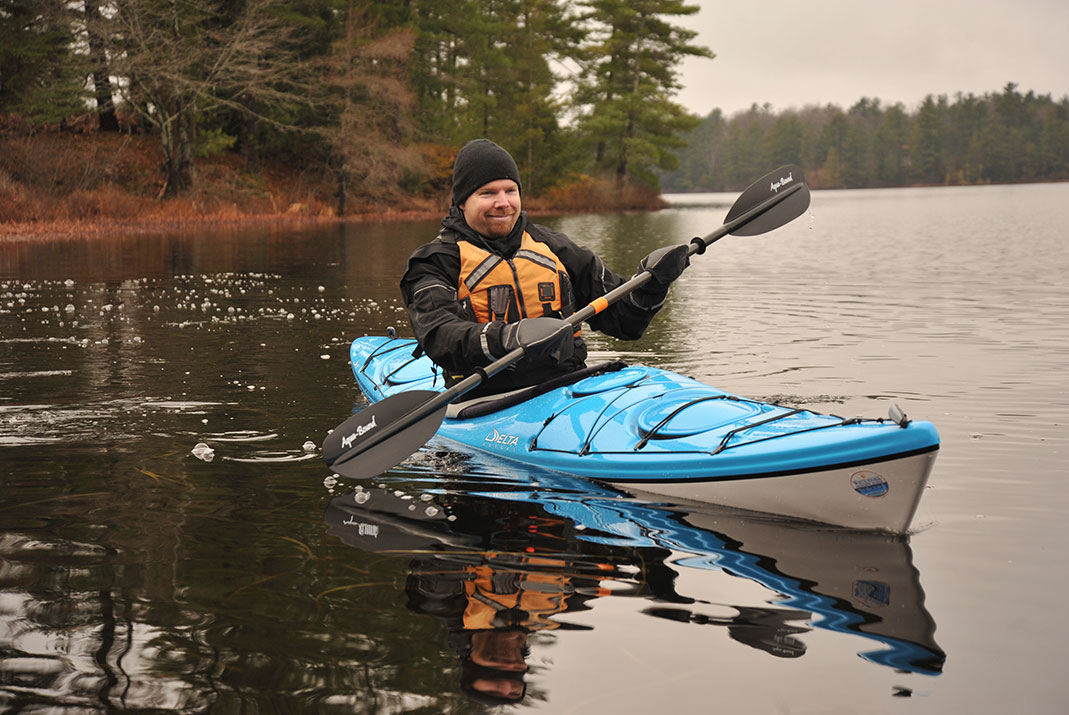
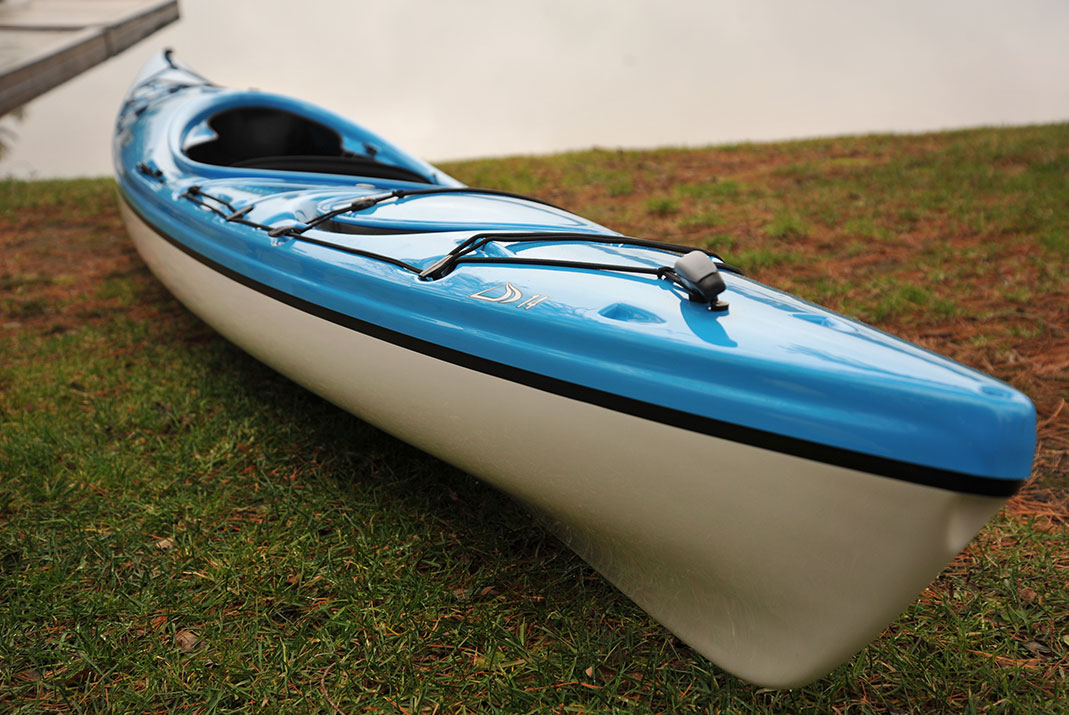
The shortest and lightest of Delta’s touring kayaks at just 45 pounds. | Photo: Virginia Marshall
Over the past 10 years, I’ve had the pleasure of paddling (and reviewing for this magazine) nearly every kayak in the Delta line-up—from their flagship performance touring models to accessible tandems and recreational kayaking chimeras. While boats like the Delta 17.5T tandem and the 12AR adventure rec kayak delighted with innovative design elements, Delta’s latest offering takes a tried-and-true touring design and downsizes it for the modern kayaker.
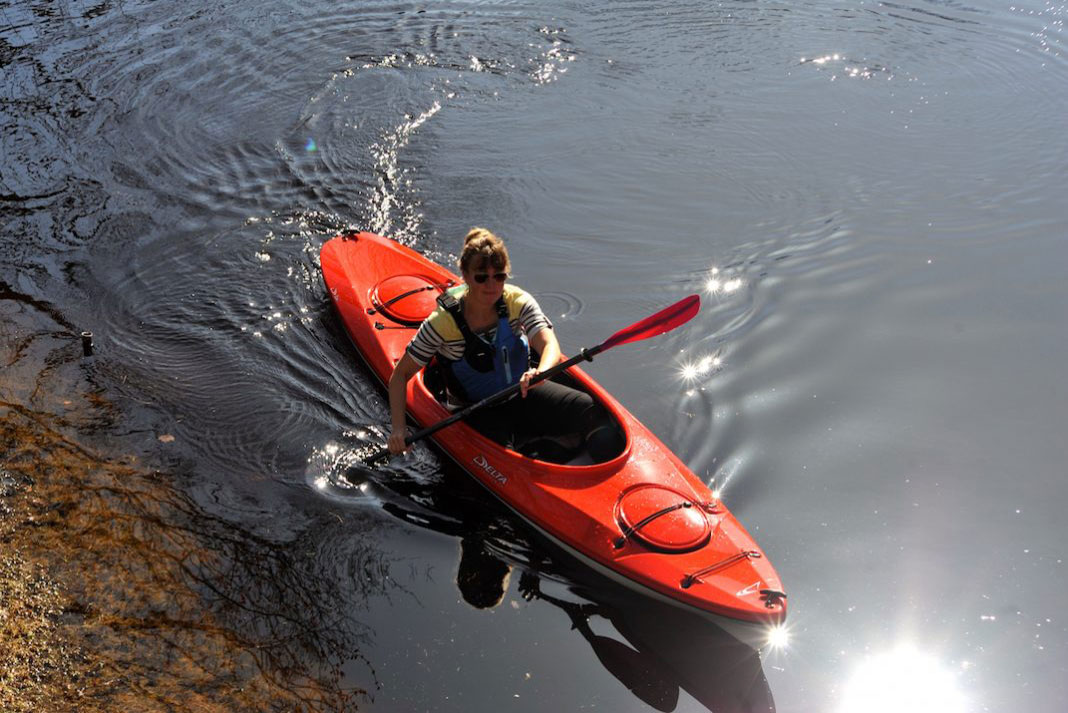
The shortest and lightest of Delta’s touring kayaks at just 45 pounds, the 14 is positioned as the easiest to own for weight- and space-conscious paddlers. If you are looking for a full-fledged touring kayak that can handle diverse waters or escaping to a forgotten coast for a few days—and is easy to move from garage to roof rack to put-in and back—the Delta 14 is a superb one-and-done solution.
Stable, well-behaved and available with a skeg or rudder, the 14 embraces Delta’s West Coast touring design ethos: user-friendly, efficient and more than capable of hauling all your gear. This is a compact touring kayak with crazy capacity—over 200 liters—and the large hatches make it dead easy to pack in the luxuries. Camp chair, fondue set, a box of cabernet sauvignon—bring it all!
Like all Delta Kayaks, the 14 is crafted from lightweight thermoformed plastic. At the company’s British Columbia manufacturing facility, sheets of acrylic–ABS plastic laminate are heated and vacuum-formed into hardwearing kayaks with exceptional durability and flawless finish.
The shortest and lightest of Delta’s touring kayaks at just 45 pounds. | Photo: Virginia Marshall
The acrylic outer layer gives each Delta kayak its glossy appearance, vibrant color, excellent abrasion resistance and protection against UV fading or weathering. The secondary layer of high-impact ABS is nearly indestructible, so clumsy landings and fumbles on cobble aren’t trip-ending calamities.
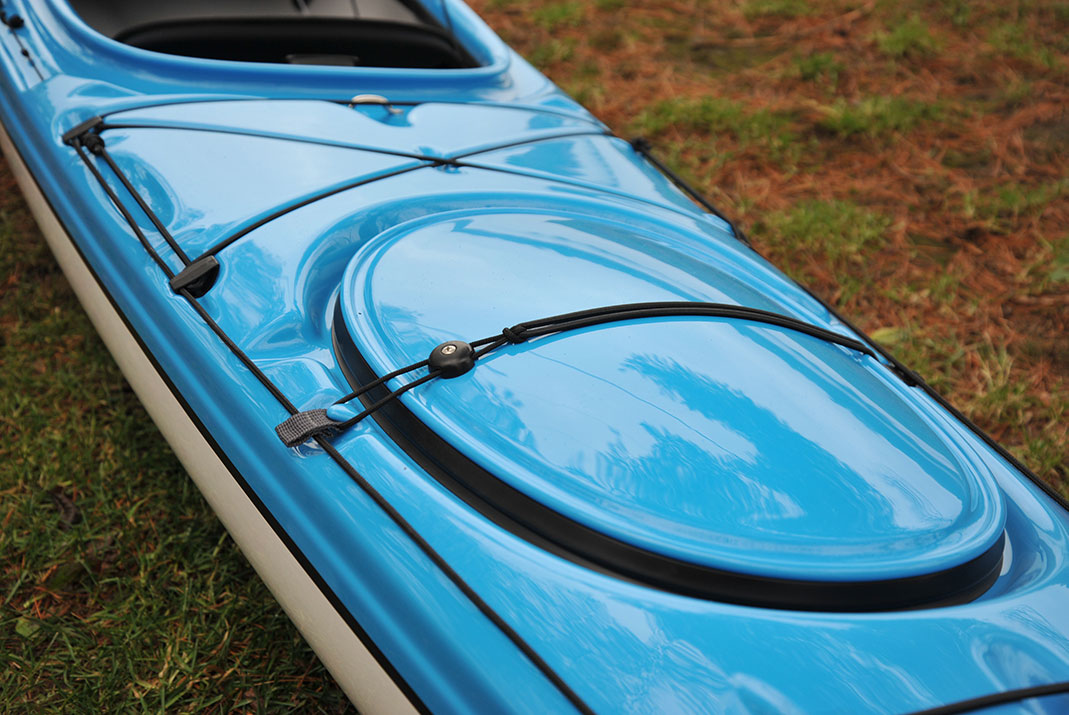
Delta has been working with the same material for 35 years—refining their designs and shaping process to optimize strength, weight and aesthetics—so it’s no surprise they’re industry leaders in thermoforming crisp lines and exquisite detail. Witness the 14’s recessed hatches and bungees, handy paddle parks and integrated cockpit coaming. And while Delta’s 14 may resemble and feel similar to a composite kayak, the substantially lower cost makes it easier for new paddlers to make the leap from renting to owning.
Delta’s outfitting focuses on personalized comfort with the adjustable and intuitive Contour II seat system. The multi-position backrest is supportive without getting in the way. It’s paired with a spacious, padded seat that can be moved four inches fore or aft to optimize fit and trim. This ability to fine-tune the seating position means the 14 will fit a wide range of people well, accommodating paddlers short and tall. Even better, everything can be adjusted on the move so you can easily tweak your trim to adapt to changing conditions or cargo in your hatches.
Choose from an optional rudder or spring-loaded skeg. | Photo: Virginia Marshall
Delta’s generously sized Press-Lock hatches access 209 liters of dry gear storage with easy on and off convenience. | Photo: Virginia Marshall
Adjust the Contour II seat system on the go to optimize contact with thigh braces or trim a loaded kayak. | Photo: Virginia Marshall
Ten years ago, Delta moved the day hatch from behind the paddler to the front deck and never looked back. The 14’s deck pod is easy to reach and can accommodate most things you’re likely to need at a moment’s notice—sunscreen, first aid kit, cellphone, snacks—without impeding paddler legroom. The gasketed, press-fit hatch covers are watertight and wonderfully easy to open and close. Delta designers spent two years developing these hatches and I love that there are no straps, clasps, stubborn rubber or obstinate neoprene to wrestle into place.
The 14 carries over similar performance characteristics from Delta’s popular 15- and 16-foot touring kayaks—including a moderate, V-shaped hull and well-defined chines for outstanding stability and predictable edging. Like its siblings, this makes the 14 comfortable for beginners with enough liveliness to keep intermediate paddlers smiling. The relatively long waterline assists with tracking and efficiency, making for satisfying—if not speedy—cruising capabilities.
Attractive, comfortable and capable on a variety of waters, the Delta 14 squeezes exceptional value into a downsized touring design that’s fun to paddle and just as easy to manage back on shore.
This article was first published in Paddling Magazine Issue 64. Subscribe to Paddling Magazine’s print and digital editions here, or download the Paddling Magazine app and browse the digital archives here.
The shortest and lightest of Delta’s touring kayaks at just 45 pounds. | Feature photo: Virginia Marshall
To celebrate its 50th anniversary in 2021, Kokatat made its Gore-Tex Pro line-up even tougher. | Photo: John Webster
Black Project
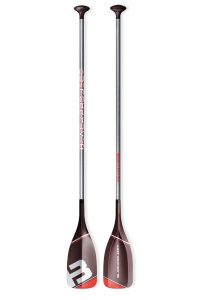
Hydro FlowX Paddle
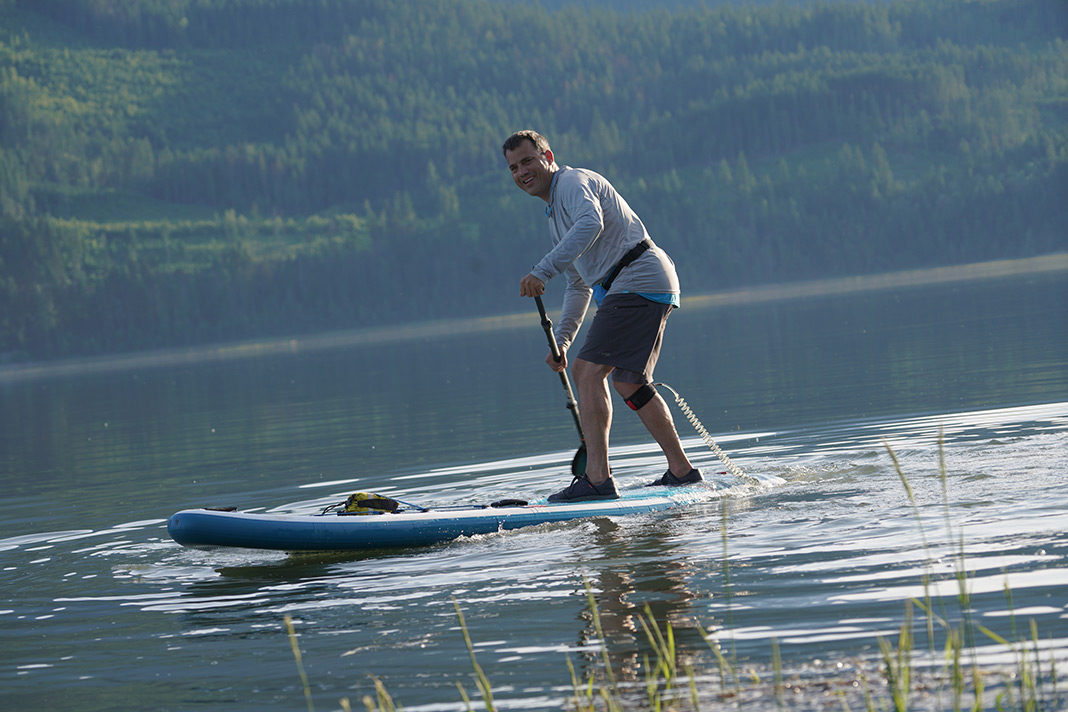
How can wasted energy be turned into increased efficiency? That’s the question Black Project set out to answer when they developed the Hydro FlowX standup paddle — a radical looking design with a ridge running down the neck of the blade, and a deep scoop on the power face. The unique shape came to life thanks to 3D printing, which allowed rapid prototyping throughout the development process. The result is a more efficient paddle with the potential to transform standup racing, just as wing paddles changed the game for kayak and surfski racers.
“The blade is designed to securely hold the water and move through it without sideways movement, jolts of power or anything which would negatively affect the user,” says Black Project co-founder Chris Freeman, who says athletes using the Hydro FlowX have seen an average four percent increase in speed and substantially reduced fatigue over conventional paddles. While currently only available as a standup paddle, Freeman believes the concept is applicable to other single-blade disciplines, such as outrigger canoeing.
Kokatat
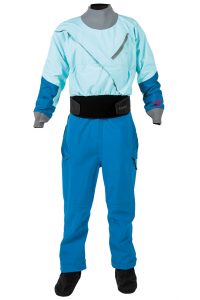
GORE-TEX PRO Drywear
In 1971, Kokatat began manufacturing what would become some of the most respected gear in paddlesports. In 1976 Gore-Tex introduced the world to waterproof and breathable fabric, and has set the benchmark ever since. Kokatat was an early adopter of the lab-produced fabric, using it to produce technical outerwear that would keep paddlers dry for decades to come. For Kokatat’s 50th anniversary the company has introduced to its drywear lineup the newest iteration of Gore-Tex Pro, which is the first major update to the iconic material since 2013. After three years of testing, Gore and Kokatat have collaborated on a rugged 200-denier version of the Pro line fabric formulated especially for paddlesports. The three-layer construction provides an increased durability that stands up to the abrasions and impacts inherent to paddling and travel through tough terrain.
Astral
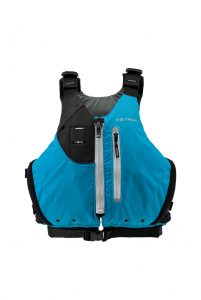
Ceiba PFD
There is no way around the fact that the gear we wear has an impact on the places we love, whether this means shedding microplastics on the water or during manufacturing itself. Astral Designs has worked to minimize the environmental impact of its products, most recently with the Ceiba PFD. For starters, it comes stuffed with natural kapok fiber in the front and PVC-free foam in the rear, as Astral’s life jackets have for years. Now the shell is constructed of 300-denier recycled polyethylene terephthalate, or RPET, a tough and earth-friendly material endorsed by Bluesign Technologies, a third-party organization devoted to overseeing sustainable practices in textiles. That’s a first in the PFD market.
“The first step in preventing damage to water and soil is understanding how chemicals affect them,” says Philip Curry, founder of Astral Designs. “Bluesign, with their deep knowledge in textile chemistry, is the partner we need to constantly evaluate our supply chain and prevent harmful chemistry getting into our products.”
Whitewater Technology
Paddles
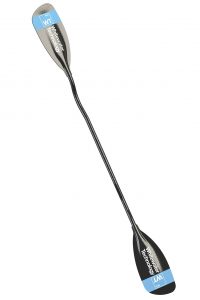
Composite materials used in paddle construction hadn’t changed much in recent years, until Whitewater Technology showed up. The new brand featuring the designs of former Confluence Outdoors engineer Oliver Wainwright aims to bring a fresh take to paddle manufacturing.
Two major components stand out immediately in the production of these carbon blades. The first is they are built from at least 40 percent recycled carbon. A close look at the paddle grain reveals the second innovation: The fabric is not woven. Instead, carbon fibers are individually stacked layer upon layer within an epoxy system with thermoplastic reinforcement added. The technique avoids the overlapping intersections found in woven composite cloth, which Wainwright and his lab-coated cohorts say are potential weak points in the structure—like knots in a rope.By removing these, Whitewater Technology says it’s able to provide paddlers with strong high-performance paddles made largely from recycled material.
Pyranha Kayaks
New Hardware
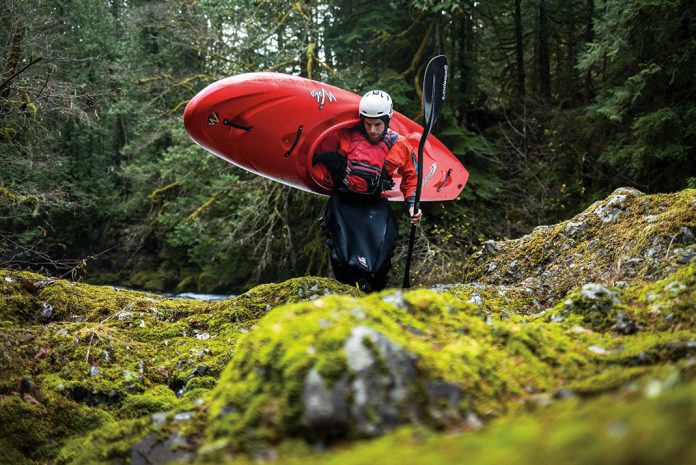
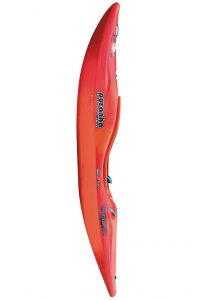
What do you do when the supply chain disruptions make a small but indispensable piece of hardware nearly impossible to obtain? Kayak manufacturer Pyranha simply found a replacement—and it turned out to be better than the original. The large plastic crush-washers used for years on the exterior bolts of their kayaks were notoriously overtightened, deforming the washer seal and leading to leaky boats. The pandemic supply disruption forced the company to switch to a more conventional bolt and washer that paddlers—who are perhaps known to skip directions—can ratchet down as tight as they please. The other positive for Pyranha, besides fewer warranty calls, is that the new washer system saves manufacturing time.
“This new system is more intuitive, gives a cleaner look, and is better for production,” says Chris Hipgrave, Pyranha Director of Sales in North America. “We can save one or two minutes per boat. All of a sudden that adds up to more boats you can assemble in a day, week, month. It’s incremental changes—what they call in bike racing marginal gains.”
Origami
Origami Paddler
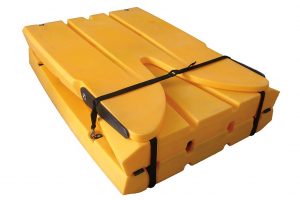
Tim Niemier is best known for designing one of the most iconic and transformative kayaks of all time, the Ocean Kayak Malibu. Sit-on-top kayaks were just what the market wanted when Niemeir scaled his operation in the 1980s. Fast-forward a few decades and the market is craving storable and ultra portable craft as a point of entry into the sport, and Niemier is ready to oblige with his take on folding paddlecraft—the Origami Paddler.
The three-section, double-hinged craft is about as quick to unfold as a futon. It is made of light, hard plastic—and it can be configured as either a sit-on-top kayak or a standup paddleboard. As of June 2021, Niemier had a backlog of 20,000 initial units to fulfill, bringing the paddlesports innovator one step closer to his personal goal of putting a billion butts in boats.
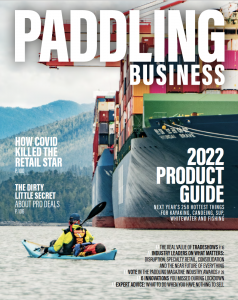
This article was first published in the 2022 issue of Paddling Business. Inside you’ll find the year’s hottest gear for canoeing, kayaking, whitewater and paddleboarding. Plus: Industry leaders on surviving COVID, the dirty little secret of pro deals, brand consolidation and more. READ IT NOW »
To celebrate its 50th anniversary in 2021, Kokatat made its Gore-Tex Pro line-up even tougher. | Photo: John Webster
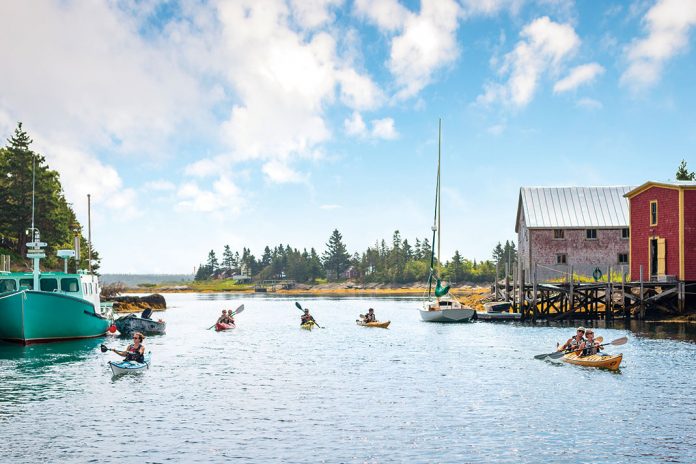
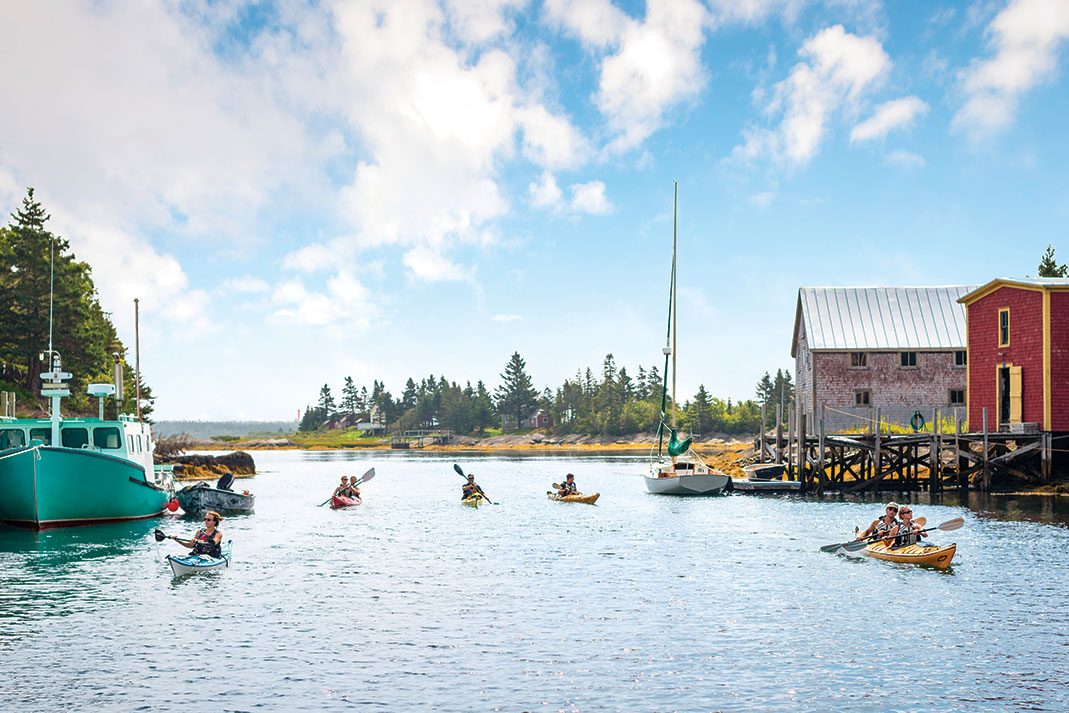
Cape LaHave Adventures,
LaHave Islands, Nova Scotia.
Photo: Tourism Nova Scotia / Patrick Rojo
“When something goes wrong, you have to keep flying the airplane,” says Darren Bush, owner of Rutabaga Paddlesports in Madison, Wisconsin, and host of the annual Canoecopia show. “You either hit the ground hard or you hit the ground soft, but either way, you have to work the problem.”
In March of 2020, when Covid first hit North America in force, Bush found himself at the controls of the world’s biggest consumer paddling show as it sped into the eye of the pandemic storm. Exhibitors were already setting up when he decided to cancel the show rather than risk it becoming a super-spreader event. The last-minute cancellation was a massive financial risk, not unlike a pilot steering a doomed plane away from a residential neighborhood.
We all know the story that followed: Stay-at-home orders, shuttered businesses, a new and frightening reality as the virus spread unchecked around the world. And then, unexpectedly to most, an outdoor recreation boom fueled by cooped-up people seeking social distance. Participation surged in recreational activities like cycling, hiking and paddling. Demand for gear soared, and the pandemic-ravaged supply chain couldn’t keep up. According to market research group NPD, sales across watersports shot up 27 percent in 2020 compared to 2019.
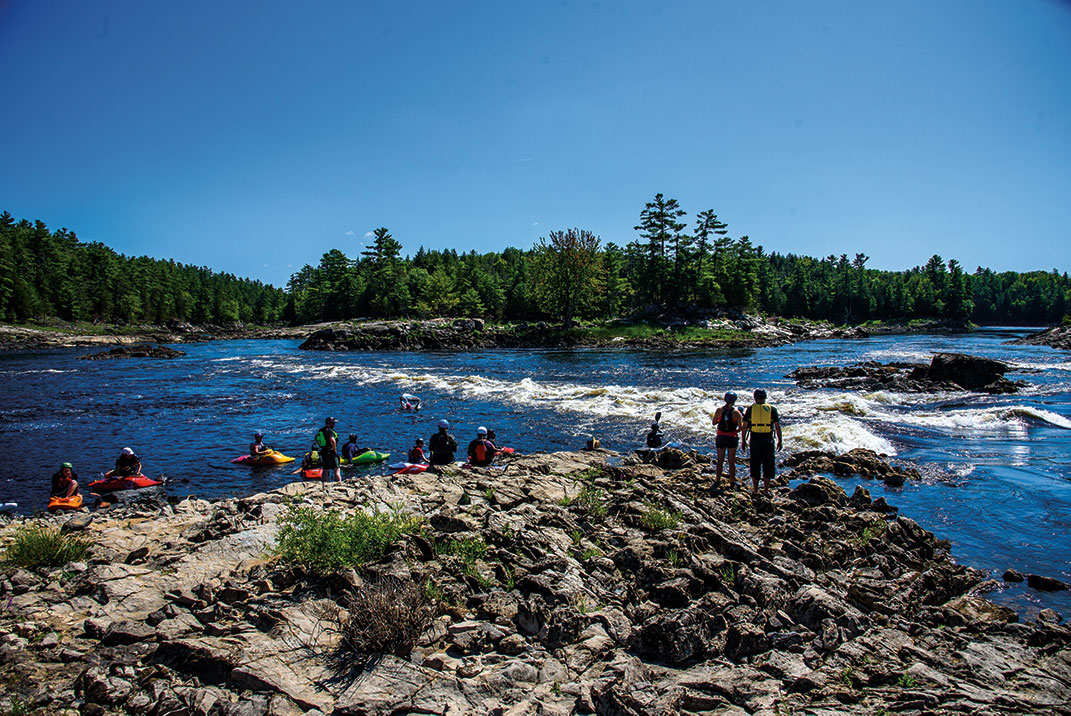
Paddlesports sales shot up 30 percent last summer, and more people were getting on the water than ever before. | Photo: Rob Faubert
Looking back 18 months later, it bears repeating how unexpected the post-Covid boom was. In March 2020, specialty retailers like Rutabaga couldn’t have predicted the insatiable appetite for paddling that would follow the lockdown, let alone their businesses would out-perform large chain stores that were seemingly much better equipped and financed to weather the storm. Specialty retailers didn’t only survive. Most thrived through the most chaotic year in recent history, simply by what Bush describes as flying the plane.
“Being a smaller specialty retail dealer with no corporate pressures, we can react quicker than big box stores and online retailers,” says John Nemjo, founder and president of Mountainman Outdoor Supply Company, a paddling shop of 28 years in the Adirondacks. “We were able to adjust almost on a daily basis based on what we were seeing.”
Nemjo had the luxury of trusting his gut, and his gut told him demand for outdoor gear would rebound as millions of stir-crazy Americans sought fresh air and social distance.
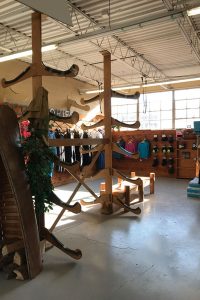
Barren racks and shelves were a common sight in paddling shops during the summer of 2020. | Photo: Courtesy The Complete Paddler
“Our sales never hit anywhere near zero, and within weeks we saw higher-than-average sales,” he says. So when his suppliers told him other retailers were canceling orders, Nemjo pounced. As other businesses back-paddled at the top of the metaphorical rapid, Mountainman went all forward, increasing product orders as others canceled theirs. “We took a chance as we have done over the years, and once again, it paid off,” Nemjo says. “We had boats no one else had. It paid huge dividends to our business that will carry on for years.” Customers came from as far away as Oklahoma to buy boats from Nemjo’s store in upstate New York.
While not every specialty store had the foresight or resources to double down on inventory at the outset of the lockdown, many were still able to navigate the uncertainty better than large retailers whose executives didn’t have their fingers on the pulse of paddlesports.
“The key to succeeding during the pandemic seems to have been understanding the needs of the customer base through difficult times and the ability to stay in step with evolving circumstances.”
Robert Stoky of Florida Bay Outfitters in the upper Florida Keys was cautious in the beginning. He reduced some boat orders, and some of the inventory he ordered was delayed. Stoky responded by shifting his retail focus to soft goods and accessories and emphasizing tours and lessons. The business thrived, even with paddlecraft sales going from approximately 80 percent of pre-pandemic sales to 50 percent since. Stoky recognized that in a destination location like the Florida Keys, people were just as eager for rentals and outings as they were for paddling gear. The key to succeeding during the pandemic seems to have been understanding the needs of the customer base through difficult times and the ability to stay in step with evolving circumstances.
Kelly McDowell can attest to this, though the situation he faced as president of The Complete Paddler in Toronto differed from what Stoky experienced in Florida. Shelter-in-place orders were generally stricter in Canada than in the U.S., and McDowell’s retail season began with a two-month total lockdown. Rentals and instruction weren’t an option for McDowell—not only were instructors hard to come by due to liability and insurance concerns, but he’d sold off its rental fleet the previous fall and couldn’t replace it.
Like Nemjo, McDowell was confident demand would rebound. So while MEC and other big retailers canceled boat orders, McDowell snapped them up. Then he got creative. Though his doors were locked by government order from March into May, he kept the phone lines open, scheduling curbside pickups for eager paddlers. He would deposit boats one at a time on the patch of grass in front of his store, spray them down with disinfectant, and then wave through the locked door as grateful customers loaded their new boat and drove away. Some were regular customers of The Complete Paddler, but others were coming straight from big box retailers that had canceled their orders when McDowell doubled down. “We should have been crushed by those stores,” he says. “But they fell down, and the small independents could react quickly and service those customers.”
When retail stores were finally allowed to reopen in Toronto—if they observed certain Covid-related restrictions—McDowell wasted no time. “I was here until 10 at night installing the new plexiglass barriers myself, and we opened the next morning,” McDowell says. “When we opened on May 19th, we saw an increase like we’ve never seen before. It was insane. We had to limit the amount of people that were in the store. They were lining up to get in.”
“Covid knocked the usually steady balance of supply and demand so far out of whack that big retail’s biggest advantages—price and volume—became less significant.”
Between his early adoption of curbside sales and getting his doors open as soon as legally allowed, he believes running a small business with the ability to deftly change policies gave him an edge over larger rivals. For all the built-in advantages large chain retailers enjoy, it’s a lot easier to dead-stick a Cessna than a jumbo jet—especially when the pilot knows the airspace.
It wasn’t all down to pilot skill though. Covid knocked the usually steady balance of supply and demand so far out of whack big retail’s biggest advantages—price and volume—became less significant.
“One of the most interesting things we’ve faced this season is that with nobody being able to get inventory, the model of selling a million items and making a dollar apiece is a losing model right now,” says Brian DeFouw, chief buyer at Confluence Ski and Paddle in Denver. “So the one good thing is that it’s evened the playing field to where prices haven’t been a huge issue.”
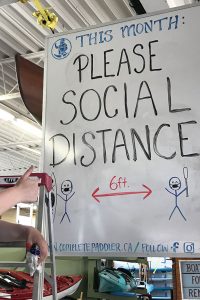
New public health protocols | Photo: Courtesy The Complete Paddler
How long this leveling will last is anyone’s guess. While specialty retailers may have outmaneuvered their larger rivals going into the pandemic storm, big box retailers still managed to come through just fine. The Outdoor Industry Association estimates recreational kayaking was the fastest-growing paddlesports segment in 2020, increasing 14 percent. The bulk of those sales are price-point boats carried by box stores, which indicates while the big boys may have faced a slow start and limited inventory, they still sold plenty of boats.
The NPD similarly reports watersports sales at athletic specialty and sporting goods stores increased 34 percent in 2020 from 2019, while sales at outdoor specialty stores increased 21 percent. Dick’s Sporting Goods reported a nearly 10 percent increase in same-store sales at the financial close of 2020. While that figure doesn’t break out paddlesports sales specifically, it’s an indicator the sporting goods warehouse is coming out the other side of the pandemic in good shape.
Cape LaHave Adventures, LaHave Islands, Nova Scotia.| Photo: Tourism Nova Scotia / Patrick Rojo
For big box, the pandemic was a blip. To specialty retailers, it was an affirmation of what they already knew: The value paddling shops bring to their communities is as much about the services they provide as the specific gear they carry. Bush says the pandemic sharpened his conviction that a sale should be more than a transaction. Even after 30 years working in paddling retail, the lockdown taught him new ways of connecting with customers he plans to stick with long after things return to normal, whatever that is.
“We are still scheduling people for car rack installs, boat pickups, test paddles—all things we did for social distancing and workflow. It turns out people like it,” says Bush, who after canceling Canoecopia went on to have one of his best years in business. Some of this comes down to his flexibility and knowledge of the industry, but Bush says the secret of his smooth landing is still the customer experience.
“You have your boat picked out, and when you get there, we have it unwrapped. And we are installing your car rack. And while we are doing this, we are talking about paddles and life jackets. It’s very curated. By the time we
are done, their boat is loaded on the car, they are ready to go and they are stoked. It’s changed the experience, and it’s changed it for the better.”
This article was first published in the 2022 issue of Paddling Business. Inside you’ll find the year’s hottest gear for canoeing, kayaking, whitewater and paddleboarding. Plus: Industry leaders on surviving COVID, the dirty little secret of pro deals, brand consolidation and more. READ IT NOW »
Cape LaHave Adventures, LaHave Islands, Nova Scotia. | Photo: Tourism Nova Scotia / Patrick Rojo






 Astral
 Whitewater Technology
 Pyranha Kayaks
 Origami
 This article was first published in the 2022 issue of Paddling Business. Inside you’ll find the year’s hottest gear for canoeing, kayaking, whitewater and paddleboarding. Plus: Industry leaders on surviving COVID, the dirty little secret of pro deals, brand consolidation and more.