The San Juan River holds a long-running record of drawing life to its waters within an extremely arid region of the Utah desert, and today you can add paddlers to the list.
The San Juan consistently supports year-round flow for boating. So obtaining a permit for a trip down the San Juan River, when others have run dry, is a small trifle rafters can appreciate. Various dams on the San Juan, like the Navajo Dam, have tamed seasonal fluctuations and provide consistent residential water for an environment sparse on H2O.
While the rapids on the San Juan River are comparatively mild when considering the roaring waves after its confluence with the Colorado River, the culture recorded in the numerous observable artifacts and the opportunity they provide visitors to time travel are incomparable to many other river experiences in the West. Seeing and experiencing the well-preserved remains of the mysterious Anasazi and their more recent descendants is a precious and invaluable peek into pre-history that is reason enough every paddler should consider a San Juan trip.
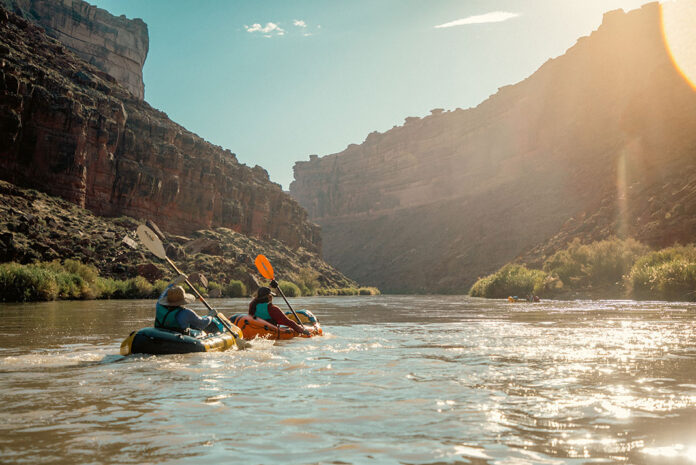
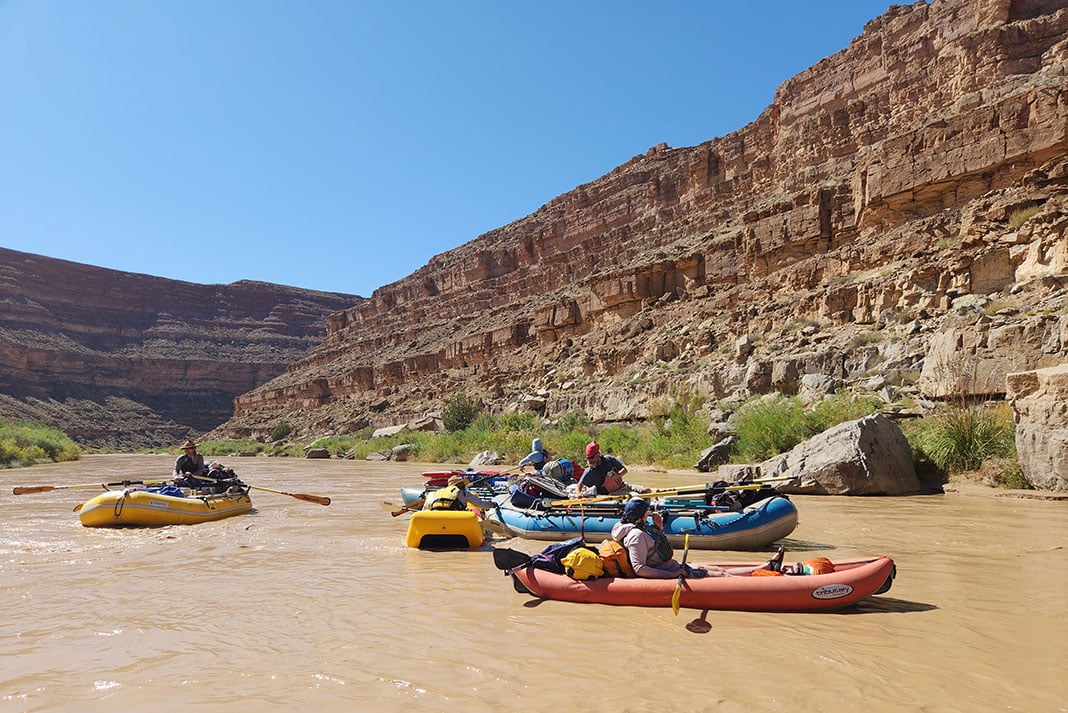
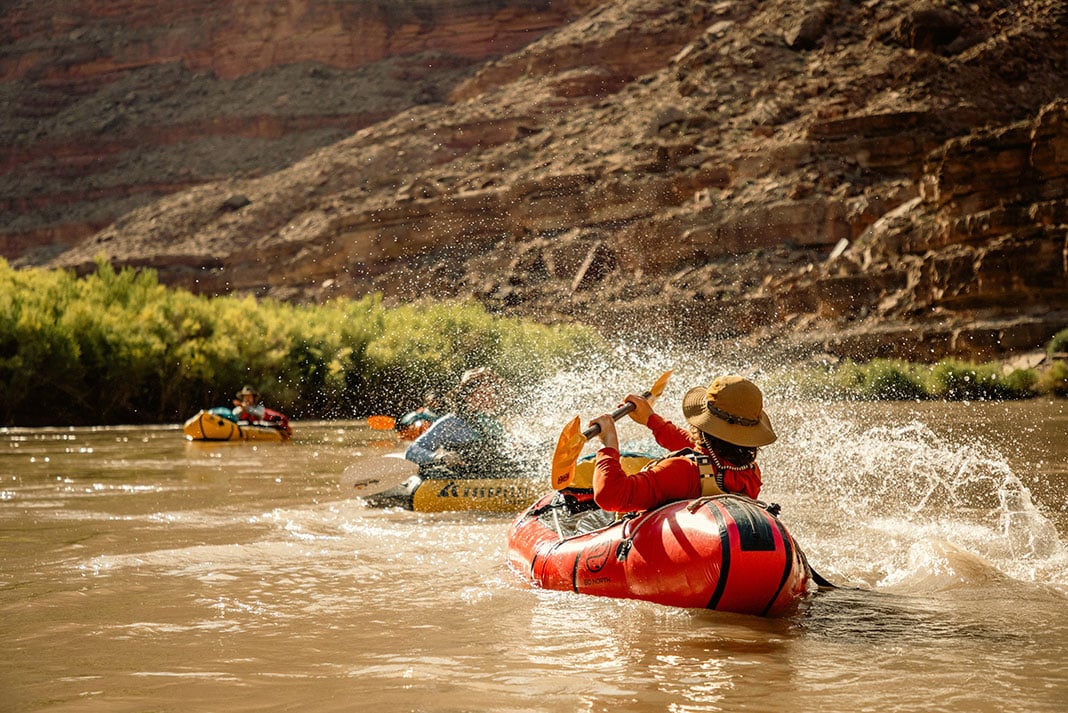
Photo: Corryn Smith
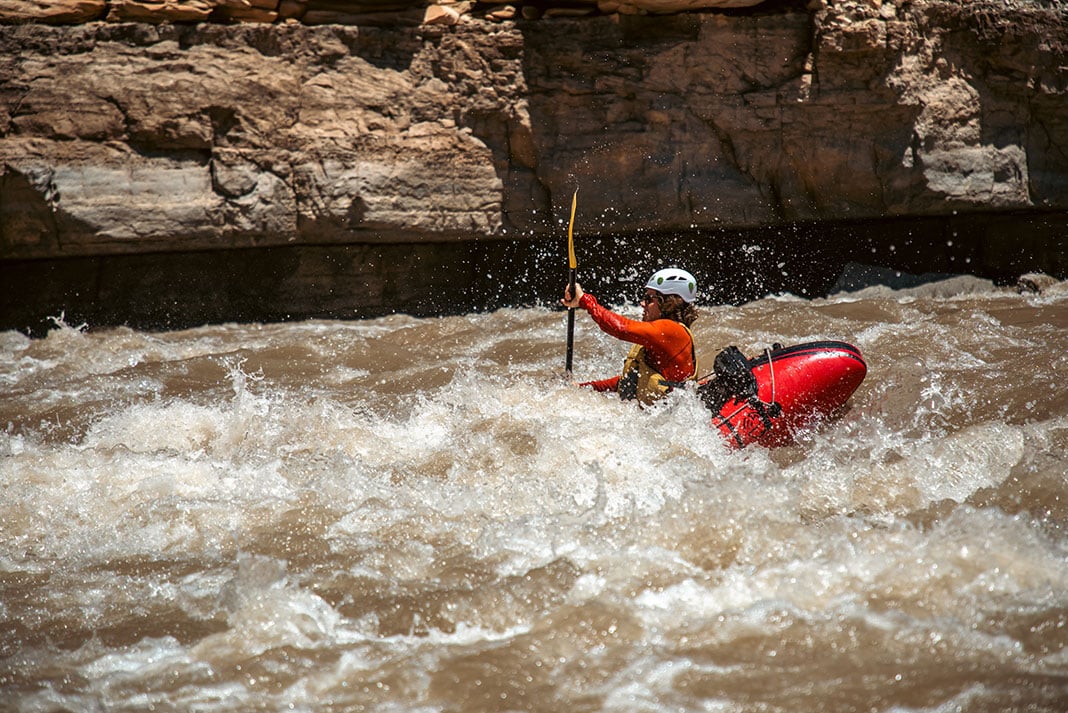
Photo: Corryn Smith
Origin story
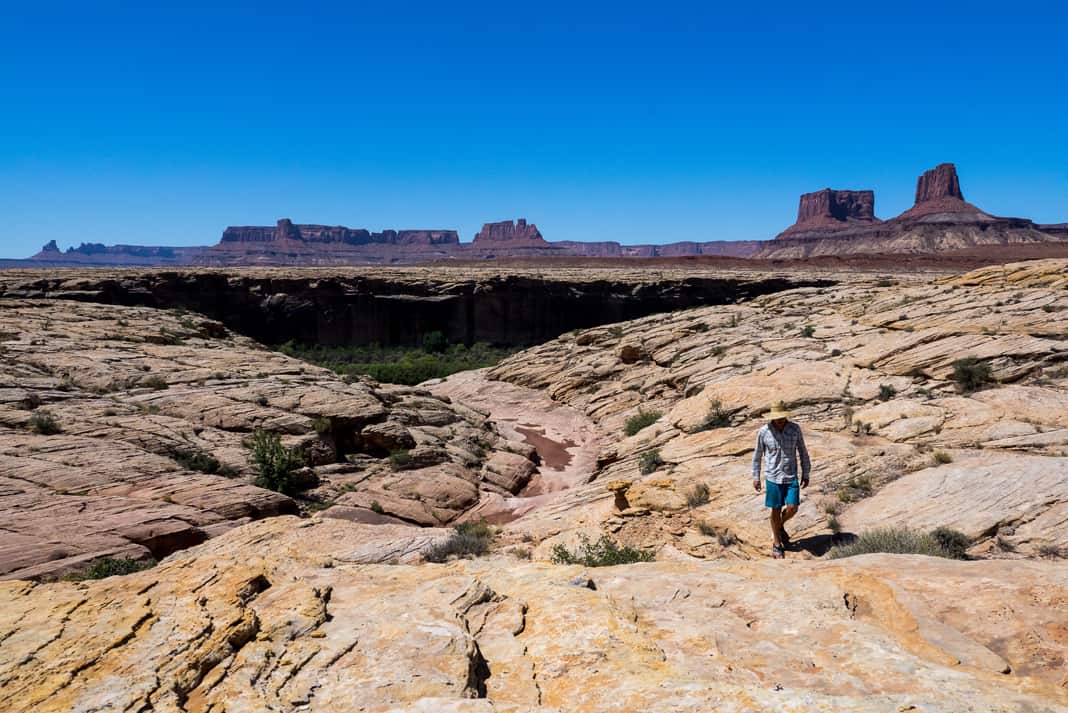
The San Juan River is a major tributary of the Colorado River and forms one of the borders to Bears Ears National Monument. It’s fueled by snowmelt from the arid San Juan Mountains (part of the Rockies) and courses 383 miles before joining the Colorado. Along its reaches are outstanding examples of historic and natural wonders like petroglyphs, ruins, blooming cacti and stacked sandstone that make for some exhilarating jump rocks.
[ Plan your next Utah paddling trip with the Paddling Trip Guide ]
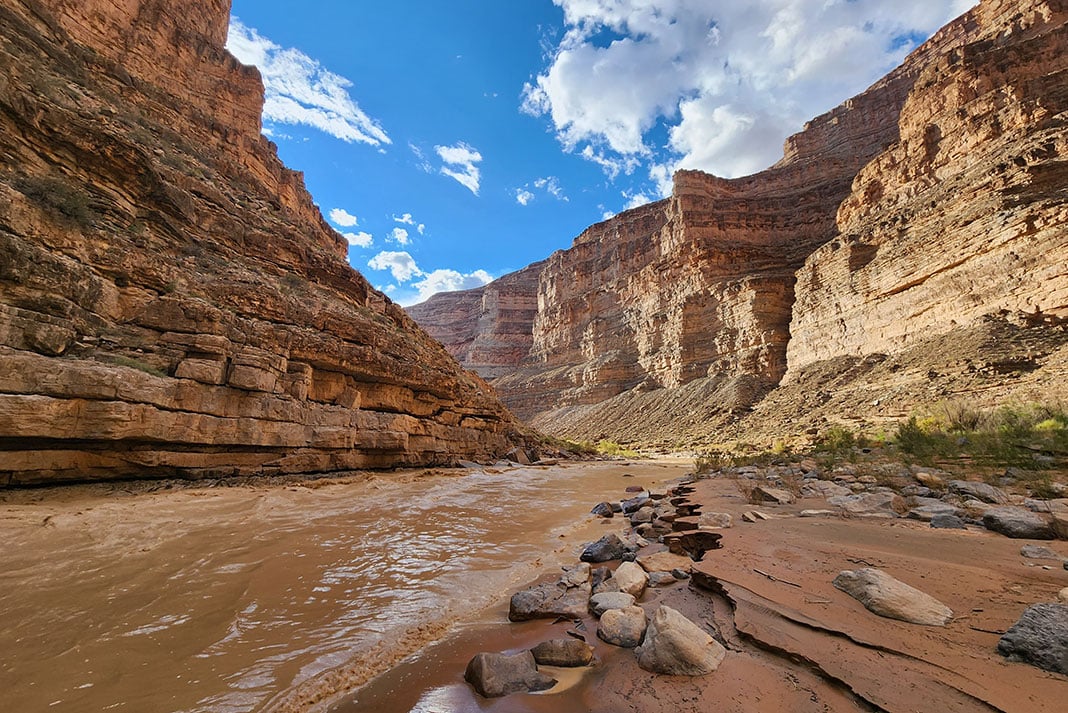
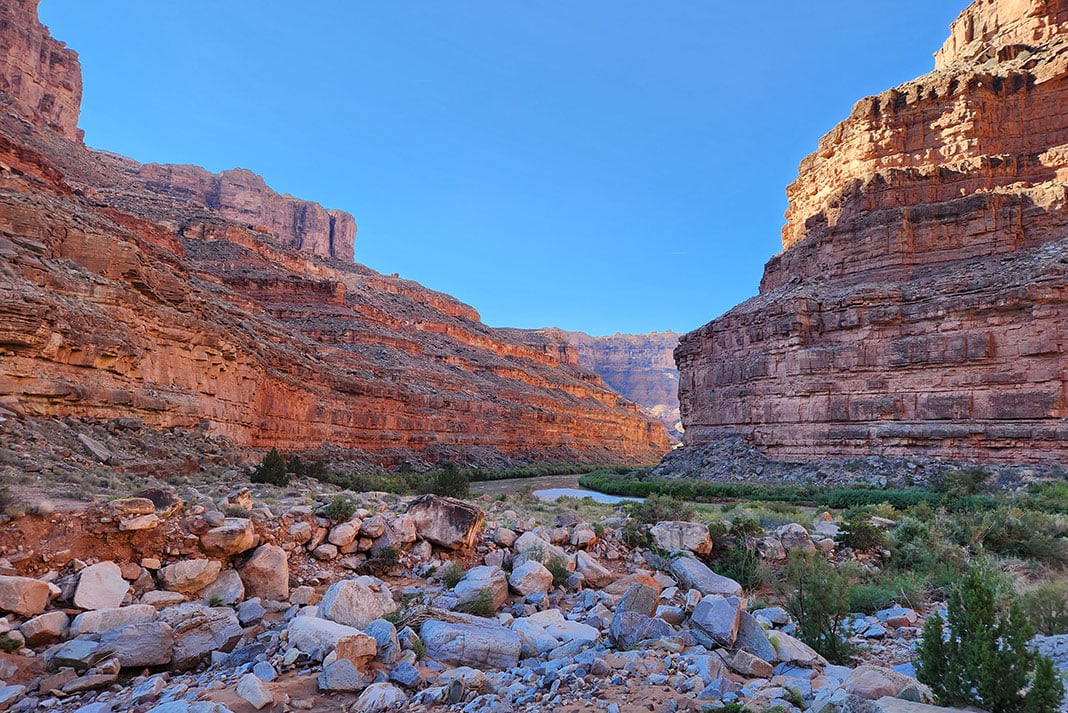
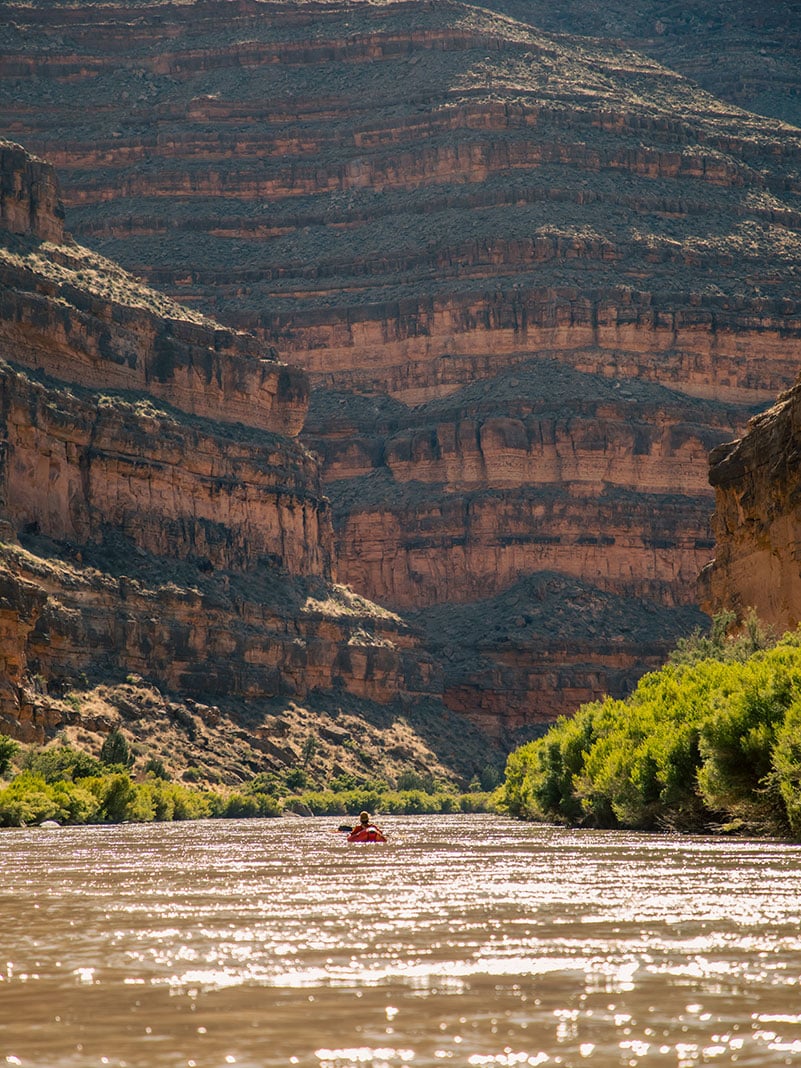
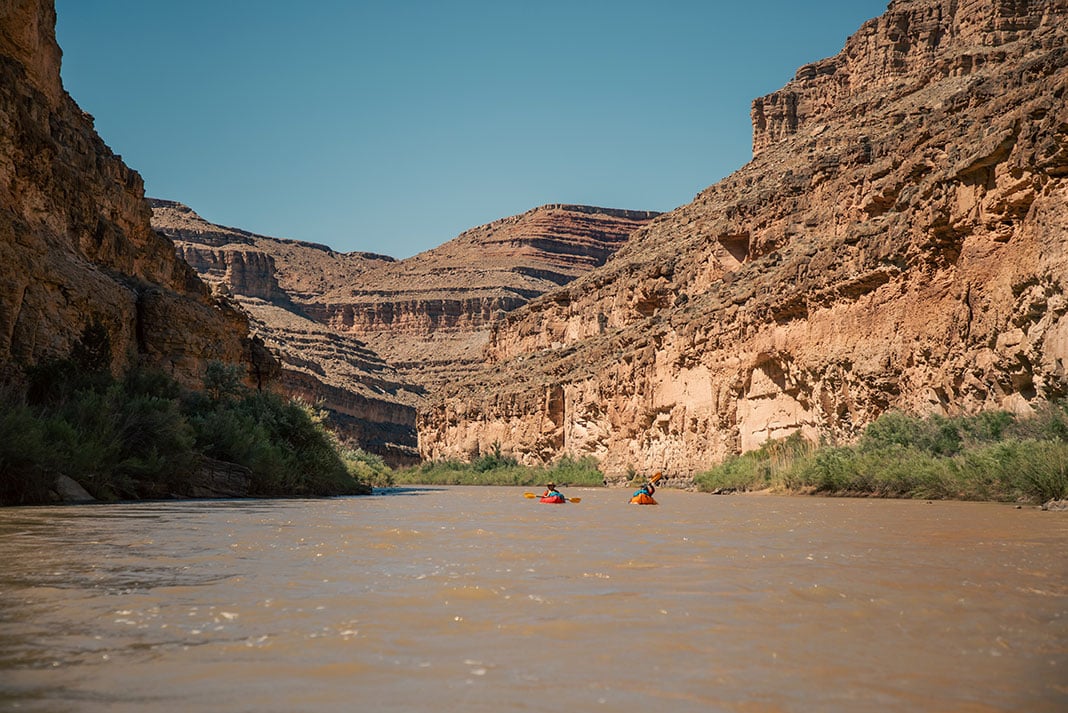
Traveling the San Juan River, rafters weave their way between curving sandstone canyon walls. Layer by layer, a maze of slot canyon labyrinths unfold. Each bend reveals a never-ending stratigraphy of red rocks, sandy beach campsites, heavenly waterfalls, and relics from ancient civilizations, like vertical Moki steps carved around 800 years ago.
Because the San Juan River holds many rich secrets to a 14,000-year human history and is not only located in a hotbed of world-renowned outdoor recreation, but also crosses the landscape in close proximity to sovereign Navajo Nation Reservation lands, permits and access to boating on the San Juan River can seem more highly regulated than other rivers one might have navigated.
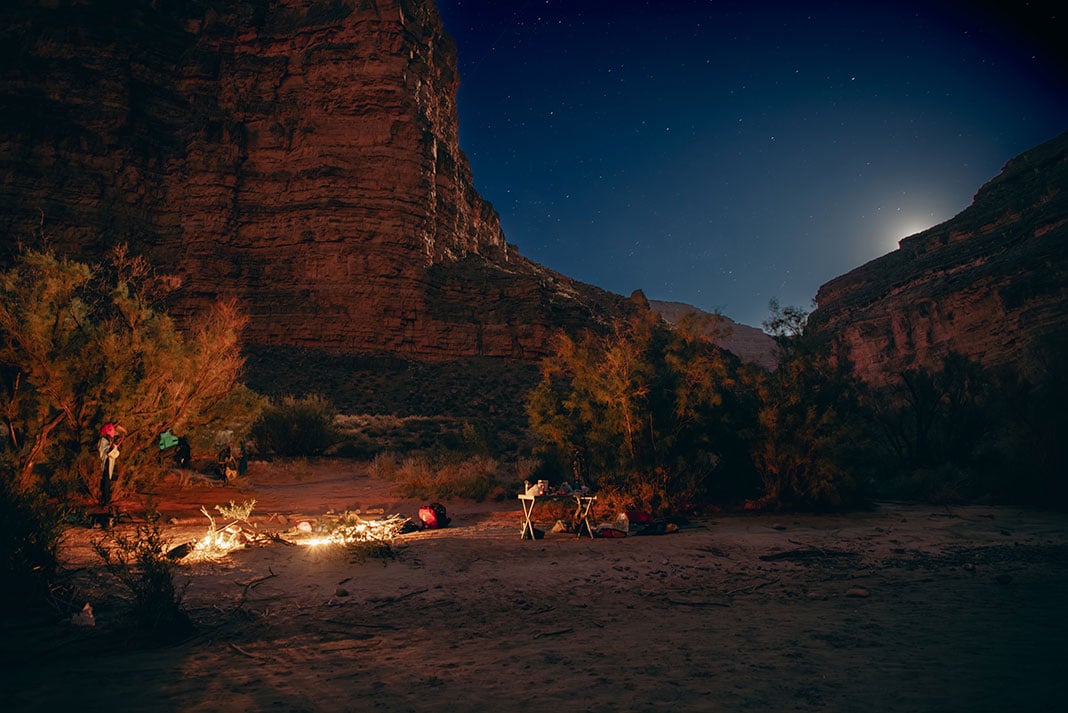
Photo: Corryn Smith
How to score a San Juan River permit and plan the ultimate trip
San Juan River permits
To float the San Juan River between the points of Montezuma Creek and Clay Hills (102 miles) in Southeast Utah, a permit is required year-round. Permits are only issued through advance reservation requests and a preseason lottery process.
The peak season of the San Juan River from April 15 to July 15 requires entry in the annual lottery. This is when flows and weather are optimal for most users. You can register for the lottery from December 1 to January 31 through the Bureau of Land Management (BLM).
The process for obtaining a permit outside of the lottery season requires advanced registration through the Montevallo Bureau of Land Management San Juan River permit application guidelines.
The user fee to float the San Juan between Montezuma and Clay Hills for each trip depends on the stretch you plan to paddle, ranging between no fee and $30 per person.
San Juan River access
Most trips on the San Juan start at either Mexican Hat or Sand Island and end at Clay Hills.
The trip from Mexican Hat to Clay Hills is 57 miles and takes four to five days.
The stretch starting farther upstream from Sand Island to Clay Hills is 84 miles and takes six to seven days.
River trips on the San Juan can also start farther upstream in Montezuma Creek, making a trip up to 102 miles if you decide to travel all the way to Clay Hills. The Montezuma boat launch is an undeveloped site managed by the BLM and you will need to contact the Monticello Field Office to receive a permit. The Montezuma Creek launch is also within the Navajo Nation and if you plan to camp or hike in this initial stretch you will need to visit Navajo Nation Parks & Recreation for a permit.
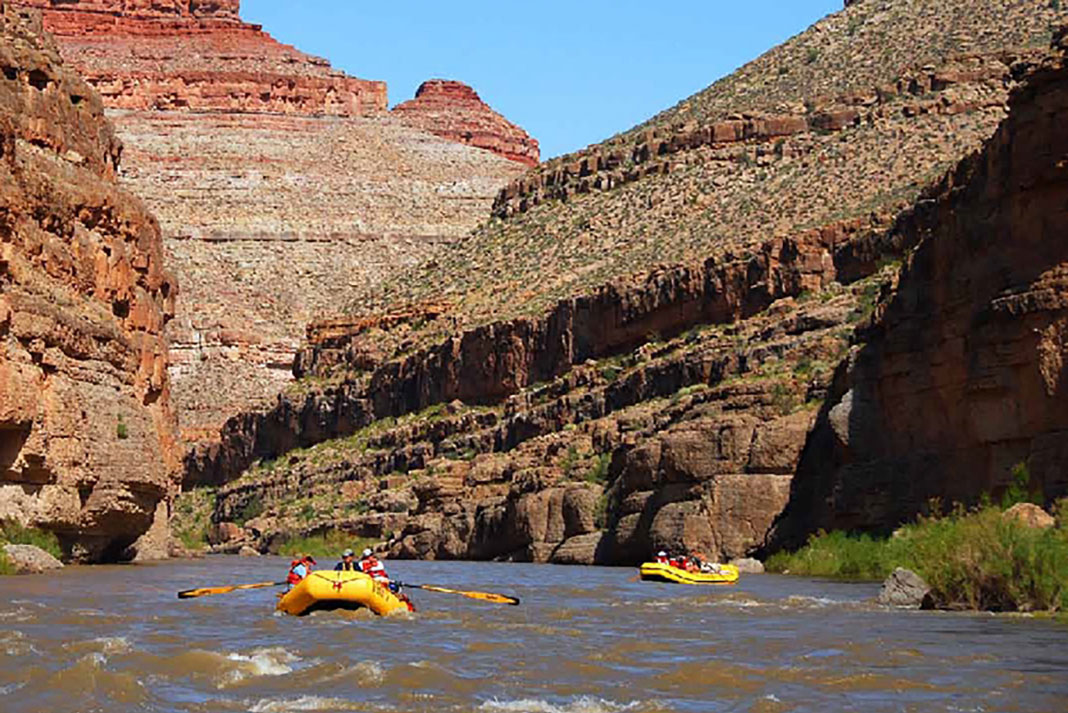
Photo: Alex Hadik
Notable rapids
The San Juan River is fairly mellow in terms of rapids compared to other multiday river trips in the West. For this reason, it makes a great inflatable kayak or paddleboarding trip. The most concerning rapids are Ross (class II) and Government (class III) between miles 63 and 64. A handful of miles above the Clay Hills take-out, shifting sandbars and afternoon winds often kick up.
Photo: Alex Hadik
Posting up for the night
Uniquely, camping along the San Juan River from Montezuma Creek to Clay Hills requires at least one campsite reservation, made when securing a permit. If one is not available, the permit will be revoked. Visitors may find San Juan River camping guidelines more stringent than on other rivers and should be sure to familiarize themselves with the regulations well in advance of their river trip. In addition, camping in cultural sites is prohibited including the Butler Wash Petroglyph site at mile 4.2. For further camping information see the Monticello Field Office Bureau of Land Management San Juan River Rules and Regulations fact sheet.
San Juan River flows
Photo: Alex Hadik
Depending on the snowpack, April and June are hands down the best time of year to float the San Juan River. Ideally, the snowpack is larger and so are flows. Since flows can be a moving target for rivers fueled by runoff, the peak season can be too. The USGS flow gauge in Bluff is ideal for staying in the loop on San Juan River water levels. Be sure to select the cubic feet per second (cfs) tab for the graph view. According to American Whitewater, ideal flows are 500–8,000 cfs.
Points of interest
Although the novelty of being on any multiday river trip is enticing enough, in particular, the rock art, remnants of Puebloan cliff dwellings and warm water to swim in are attractive features of the San Juan River. River House, a site with architecture of cliff dwellings constructed of sandstone bricks and mud mortar and containing rooms with rounded walls, is a can’t-miss stop.
San Juan River shuttle
Like many western U.S. river trips, the most efficient way to set shuttle on the San Juan is to employ a shuttle service to take your vehicle from the top to the bottom. Wild Expeditions offers shuttle services for the various sections of the San Juan.
San Juan River maps
A river map and guide is a great way to plan and track your way down the San Juan River. The RiverMaps San Juan River Guidebook is an indispensable option now in its fourth edition.
Rafting outfitters
Even though the San Juan is an approachable river in terms of difficulty, going with a guided service is always a fantastic option to skip the lottery system or have a well-versed company handle everything. OARS is a well-known western outfitter and offers trips on multiple sections of the San Juan. Their guided trips cost up to $1,500 USD depending on your trip option.
Photo: Alex Hadik
Photo: Alex Hadik
Know before you go
Paddlers on the San Juan River are required to carry certain equipment. This includes equipment for camp and human waste. See the Monticello Field Office Bureau of Land Management San Juan River Rules and Regulations fact sheet for guidelines before making your trip out to the desert.
Beware: This is flash flood country, which is most common from July through August during the monsoon season. Keep an eye on dry washes, which are the former outlets of flash floods. The San Juan River can also carry one of the highest sediment loads in North America. Keep this in mind when swimming.
We know river time is best with furry friends, but no pets are allowed on the San Juan River. Service animals, as defined under the ADA, must be pre-authorized by the Monticello BLM River Office prior to arrival.
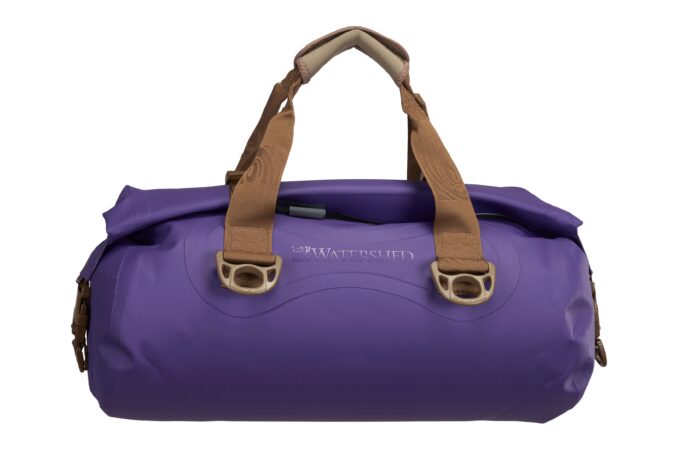
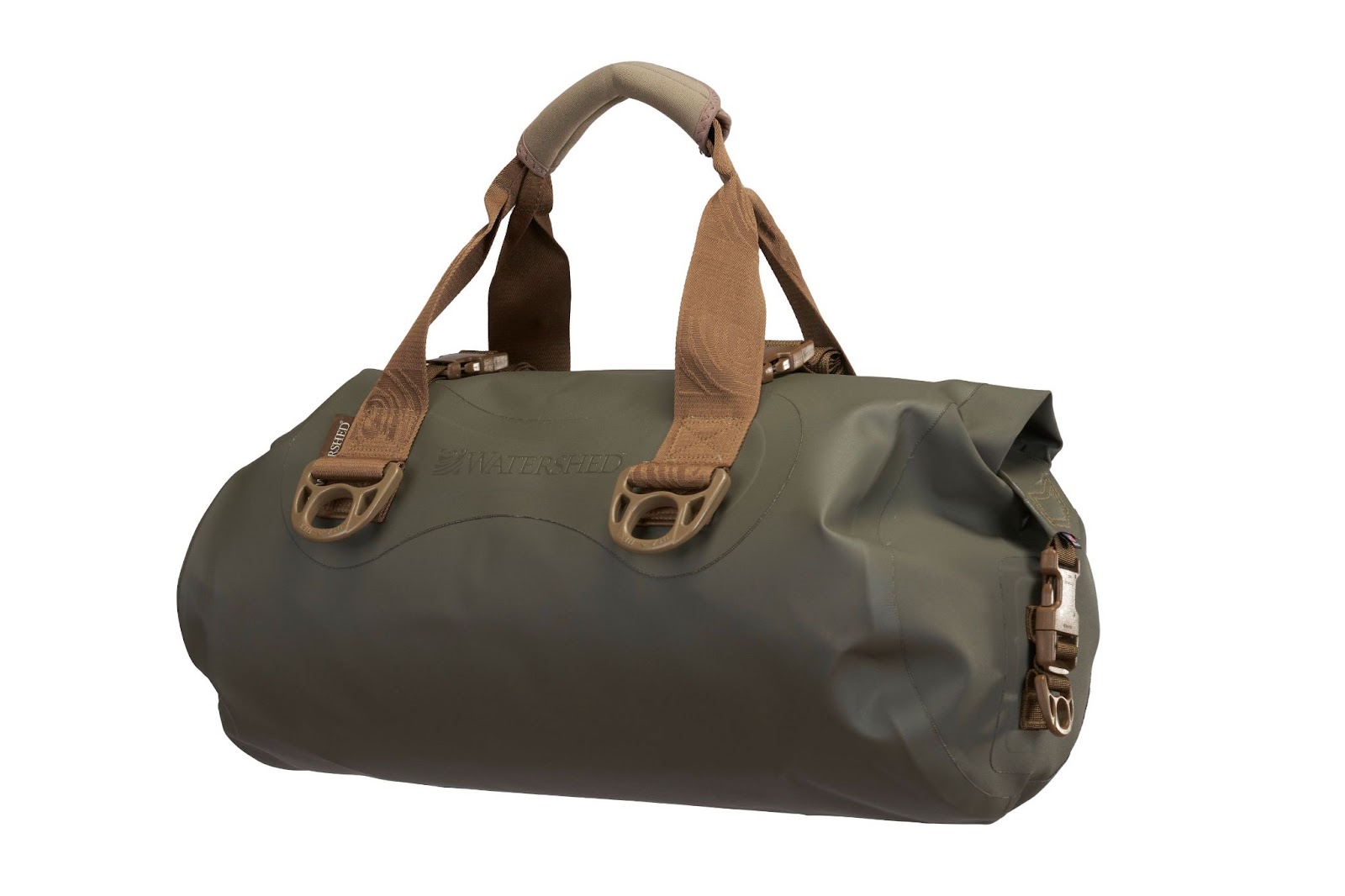
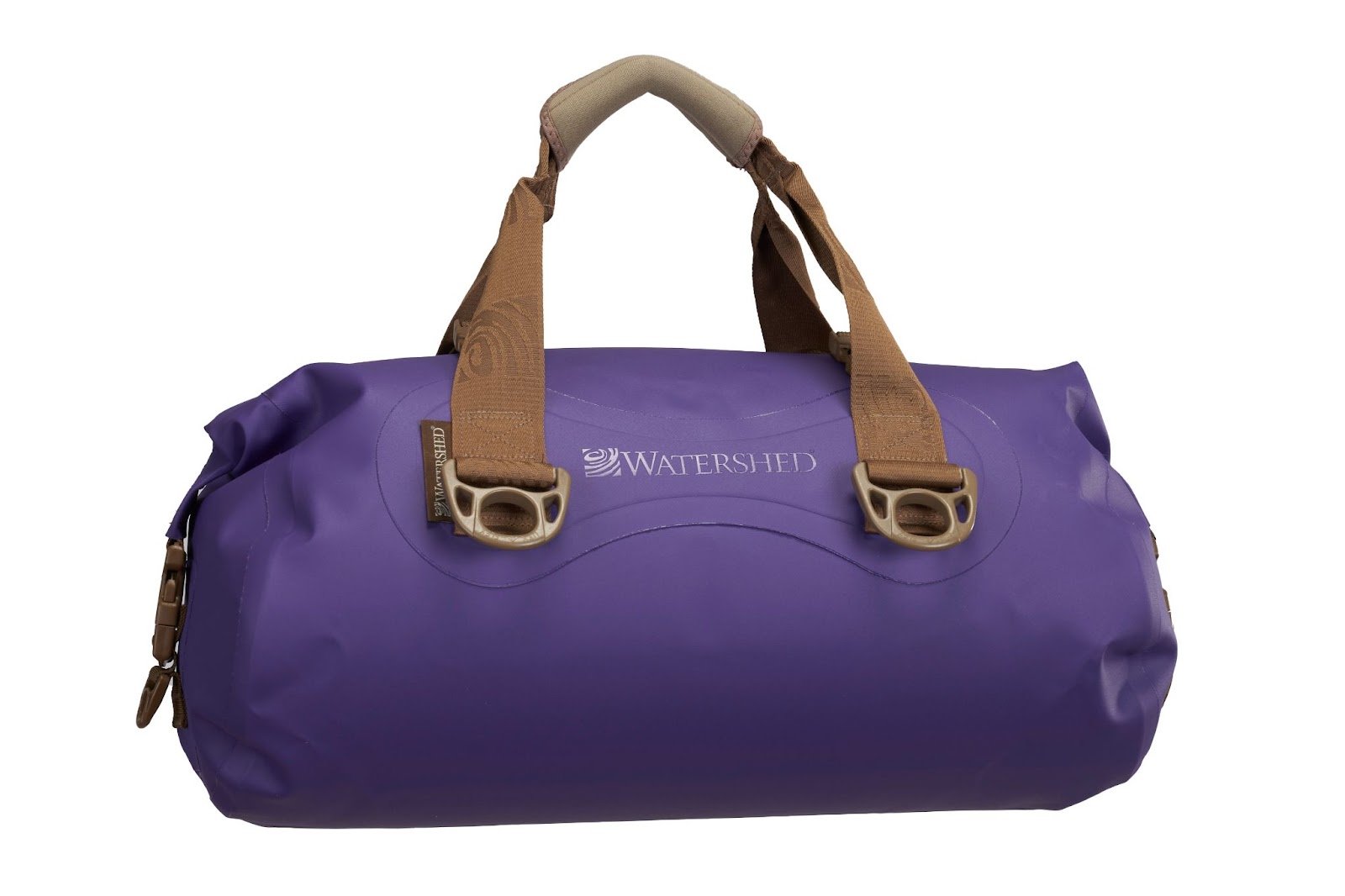
December 19, 2023 – Asheville, NC – Watershed Drybags, the Asheville, NC-based manufacturer of airtight, fully submersible, and waterproof drybags for all outdoor pursuits, unveiled a new material technology today that’s available on all of its recreational drybags. After two years of intensive development and an additional year of rigorous testing, Watershed is thrilled to introduce this innovative material, Kryptothane Plus, to its products. Also, for the first time in seven years, the brand is also introducing three new colors, safety orange, royal purple, and smoke green.
Kryptothane Plus represents a significant leap forward in durability, performance, and aesthetic appeal. The foundation of this cutting-edge material is an 840 denier nylon base fabric, chosen for its exceptional strength and resilience. Building upon this robust foundation, Watershed employs an advanced extrusion process on both sides, utilizing pigmented polyurethane. The result is a coating that not only boasts increased thickness but also exhibits enhanced resistance to UV rays to ensure longevity and reliability in the harshest outdoor environments. One of the standout features of Kryptothane Plus is its unique embossing process. Through the use of a specialized roller process, Watershed achieves a balanced, grippy coating that enhances the overall functionality of the material. This embossing not only contributes to improved grip but also adds a distinctive texture that sets Kryptothane Plus apart from other materials on the market.
“Founded on a mission to craft USA-made, durable, waterproof bags that protect and keep outdoor adventurers’ gear safe and dry, this material launch is a leap forward to ensure durability for all outdoor adventures,“ shared Eric Revels, CEO of Watershed. “This proprietary material recipe coupled with our new colors shows Watershed continues to innovate and keep up with athletes pushing boundaries.”
Born on the water in 1995, Asheville, NC-based Watershed Drybags is on a mission to design and manufacture USA-Made, 100% airtight, waterproof, and submersible bags that can withstand the harshest outdoor conditions. Watershed prioritizes building a range of recreational and tactical bags that are ideal for any type of outdoor pursuit. Learn more at www.drybags.com and follow on Instagram @watershed_drybags.
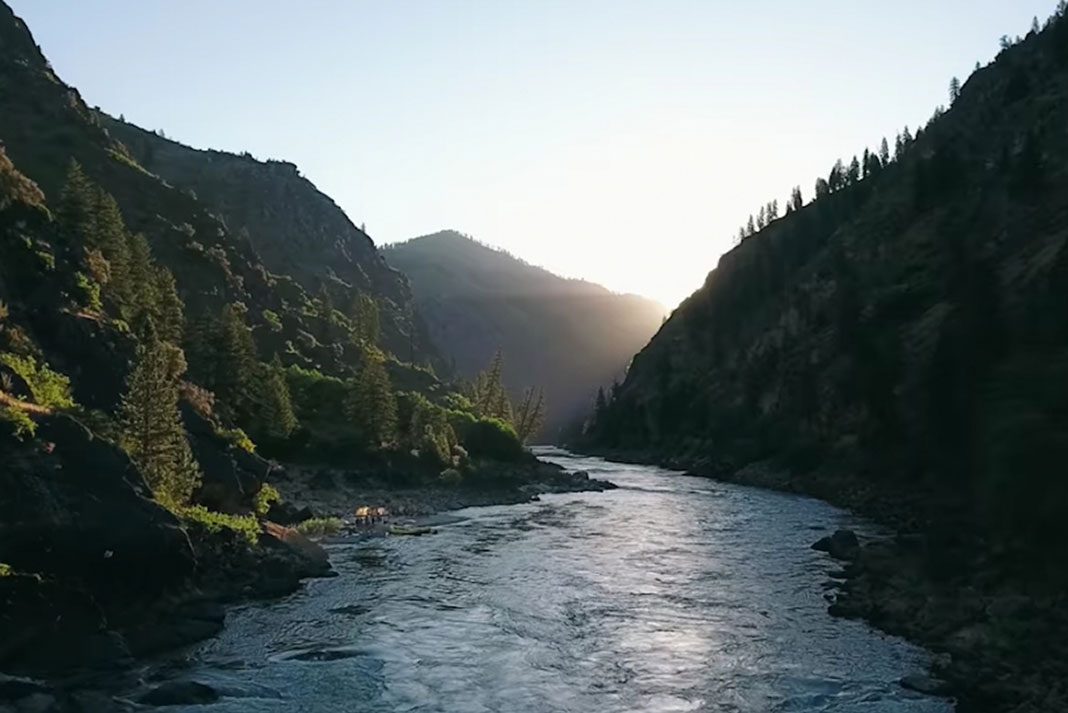
Some rapids sit front of mind for every boater who’s paddled the Middle Fork of the Salmon. Eli Kretzmann, 14-year professional river guide and trip leader for Boundary Expeditions on the Middle Fork, says even senior guides have been known to get the boater butterflies thinking about Velvet Falls.
“There is a good deal of anticipation while hurtling toward the nearly river-wide ledge,” says Kretzmann, noting Velvet Falls at high water is anything but velvety. “The ‘soft spot’ taken ever so slightly offline can be a violent endeavor even for a fully loaded gear boat. I once had two guests launch out of the front of my boat on this hit.”
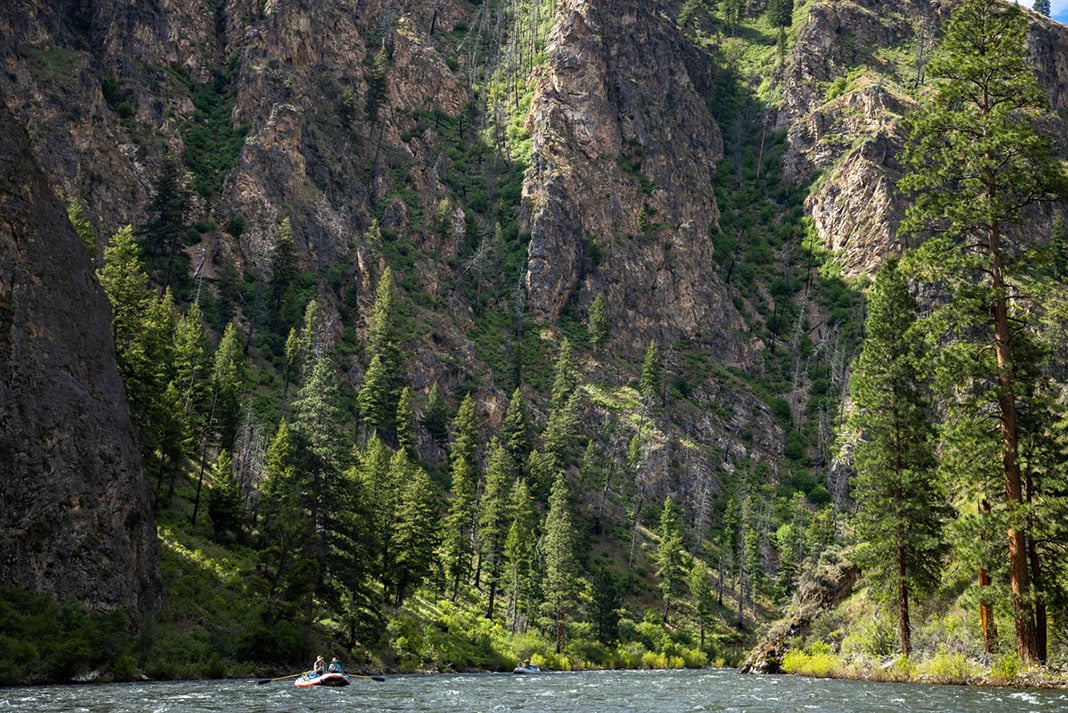
One of the eight rivers designated in the original 1968 National Wild and Scenic legislation, the Middle Fork of the Salmon River in Idaho is internationally recognized as an outstanding wilderness and whitewater experience.
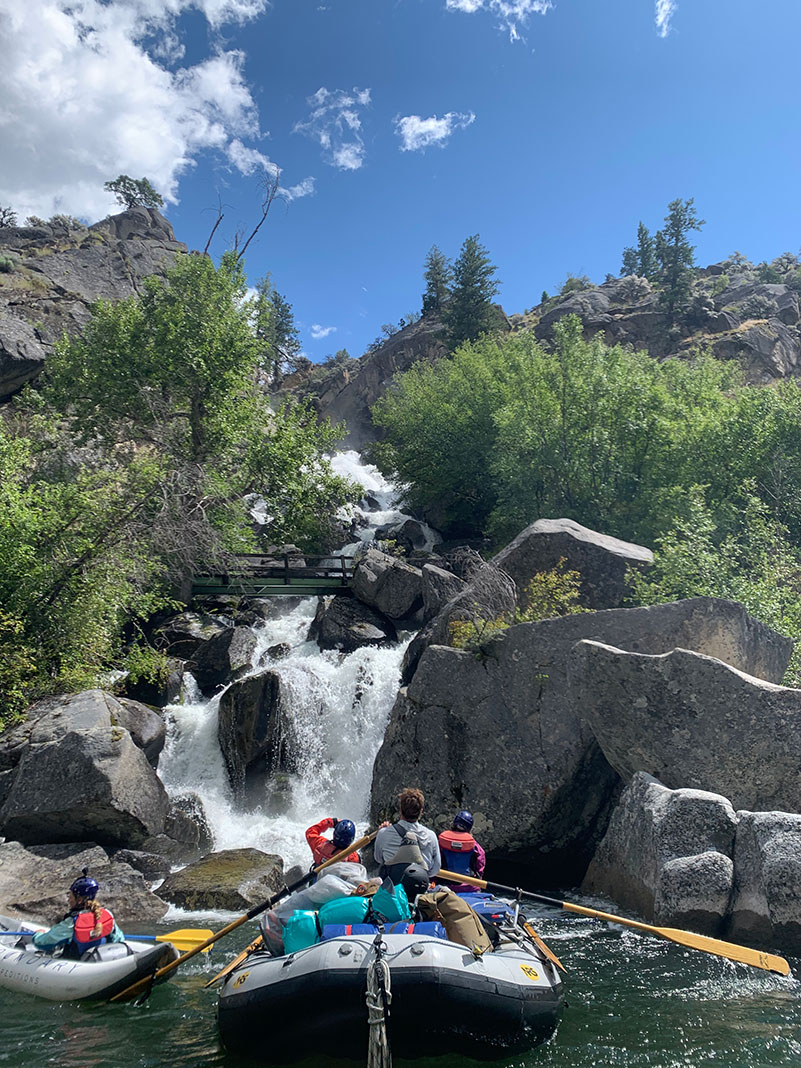
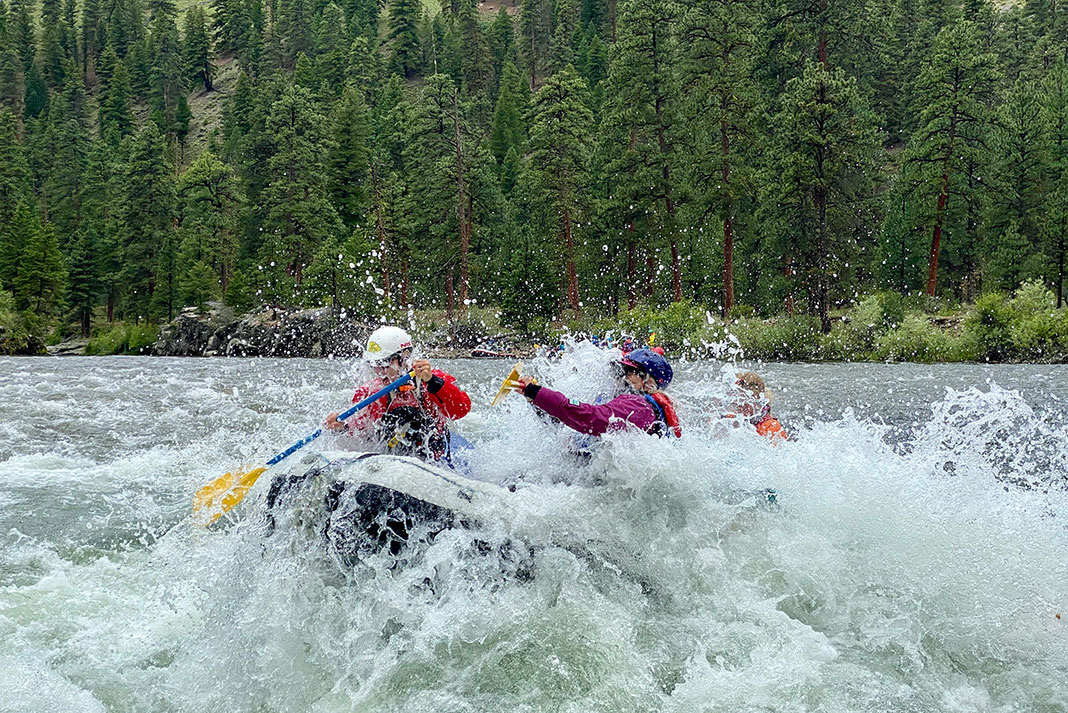
From the confluence of Marsh and Bear Valley Creeks to the confluence with the Main Salmon River, the Middle Fork spans 104 miles of river, the Frank Church Wilderness, and contains at least 100 action-packed mostly class III to IV+ rapids. Throw in an oasis of riverside hot springs in which to regale your crew with river tales, and you can forget the Grand Canyon. The Middle Fork is a whitewater paddler’s river trip.
Photo: John J. Webster // Visit Idaho
Score a Middle Fork of the Salmon River permit and plan the ultimate trip
May the odds be ever in your favor
A lottery process is used to award permits for trips departing between May 28 to September 3. To apply for a permit to boat the Middle Fork of the Salmon River during this time, submit your request through recreation.gov between December 1 and January 31. How are your odds of winning a permit in the lottery? Well, that depends on how many people apply for the permits available, but in 2021 the odds of winning one were less than 1%. If you do get a permit, you’ll be notified on February 14.
Photo: Courtesy Boundary Expeditions
Outside of the lottery season, you can paddle the Middle Fork by obtaining a permit through a reservation system. If a permit is obtained, the Forest Service charges a $4 per-person, per-day user fee. The 100-mile trip takes an average of six days to complete.
Remember, because the Middle Fork flows and conditions can vary greatly from season to season and day to day, scoring a permit is not a guarantee your trip will happen. Natural events can dampen river access as well, such as landslides and wildfires.
The more you know about the Middle Fork
The Salmon River is the homeland and waterway of the Nimiipuu (Nez Perce), Pohogues (Shoshone-Bannock) and the Agaidika (Lemhi-Shoshone) Tribes.
The “River of No Return,” as the Middle Fork was coined in the early days of being explored by trappers, gold seekers and boat pilots, is named for the impossibility of returning wooden sweep boats upriver from where they terminate their journey. Instead, boats were disassembled and sold for lumber.
The unique design and functionality of sweep boats, specific to the Middle Fork region is particularly captivating to outsiders who journey down this river. This boat was originally borrowed from the Mississippi River and evolved for use on the Middle Fork. The large boat’s ability to float relatively high on the river’s surface and distribute the weight of cargo, made it flourish during a time when heavy mining equipment and homesteading supplies were needed on remote stretches of the Salmon River. At the same time, the surface area, cumbersome sweep arms in the front and back of the craft, combined with its rareness, make it a challenge for boat pilots to learn. Many have tried, and many have wrecked. Sweepboat disaster stories are traded like currency in the region.
Photo: Courtesy Boundary Expeditions
Notable rapids
What makes the rapids on the Middle Fork so challenging isn’t just their whitewater classification. Because flows vary drastically on the Middle Fork of the Salmon River throughout a single season, the rapids will likely look extraordinarily different during each trip down the river. To add insult to injury, the flow output on the Middle Fork is typically measured in feet, read from a man-made painted measuring stick at Middle Fork Lodge (33 miles into the trip). While this can be translated to CFS, the best way to fit in with locals is to memorize the units in feet so as to speak the same language. Here’s an example of the cumulative 2022 readings from Middle Fork Lodge, measured in feet.
Like Velvet Falls, at high water (starting at 4.5 to 5 feet) Kretzmann considers Pistol Creek rapid a butterfly maker. “A rocketing constriction between two cliff walls, I still haven’t decided if the scout is more helpful or if it just causes more jitters. But at almost any time of year taking advantage of the scout is a wise move for first-time Middle Forkers,” advises Kretzmann.
Also at high water, Kretzmann finds Rubber’s true colors show (between 5.5 and 4.5 feet). “Rubber is one of those rapids that incites pure adrenaline, but by the time August comes around [low water season] it’s embarrassing to even call it a rapid. At flows over 6 feet it tends to soften. In its prime, gear-boat flipping laterals collide from both sides, inducing sweaty-palmed indecision.”
Boat ramp etiquette
Photo: John J. Webster // Visit Idaho
Because of high traffic at launch sites, here’s a word from the wise al la Kretzmann on boat ramp etiquette: “Understandably, different states and different rivers have different boat ramp dynamics, but here on the Middle Fork, it’s common courtesy to be quick, nimble, and flexible at the boat ramp.”
This advice also reflects certain unique and probably unfamiliar aspects of launching on the Middle Fork for most boaters. For example, at Indian Creek launch, the only alternative launch site if Boundary Creek can not be used, gear and people have to be flown in. And the ramp is a long wooden sled track. When water is low, the bottom of this ramp is not water but an exposed river bed. Boats must be carried, fully weighted to the river shoreline, however far it has receded. All this to say, pay attention and be swift under circumstances you may not be familiar with so everyone can launch on time.
The diplomatic practice of Middle Fork camping
Typically, on the Middle Fork, camp locations are assigned via round-robin selections at a 4:30 p.m. meeting the day before launch. Each permit group is randomly assigned a number and when a respective group’s number is called, they can select their top camp choice. Rounds will continue until camps are selected for all nights of each party’s trip. There is a somewhat detailed flow chart of how campsite round-robin assignments occur based on what launch sites are open. For complete details on Middle Fork campsite selection, see the Forest Service webpage.
When to go
Kretzmann thinks late May and early June are the best times to visit the Middle Fork for the whitewater and best “spring green.”
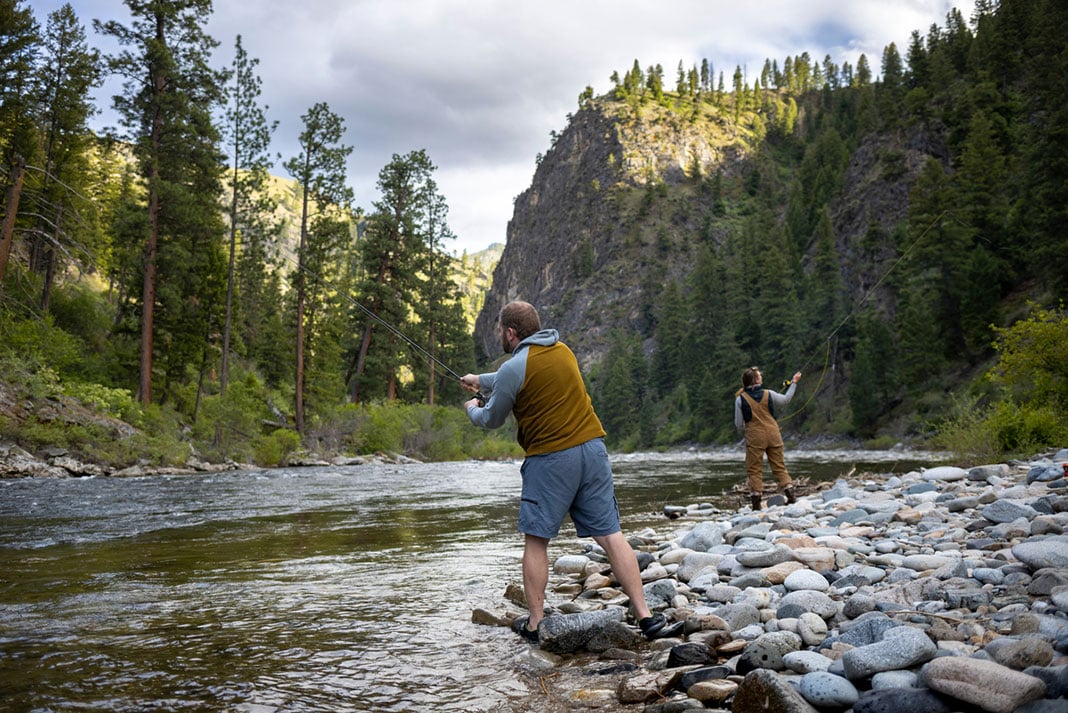
“By the end of June, the fish are typically biting more. July is family season with fun rapids and warm temperatures, which allow for swimming. For anglers, August is hopper season [slang for grasshopper]. Orange-bellied hoppers or stimulators for the win.”
Photo: Courtesy Boundary Expeditions
Outside of the lottery-awarded permit season, the Middle Fork of the Salmon River is generally experiencing its lowest flows of the year. The river also tends to experience its highest flows of the year just before the lottery-awarded permit season begins—due to melting snowpack. Weather outside of the lottery permit season can also be a gamble. Even May or October can pack snowfall and cold weather.
Soak in Middle Fork of the Salmon River hot springs
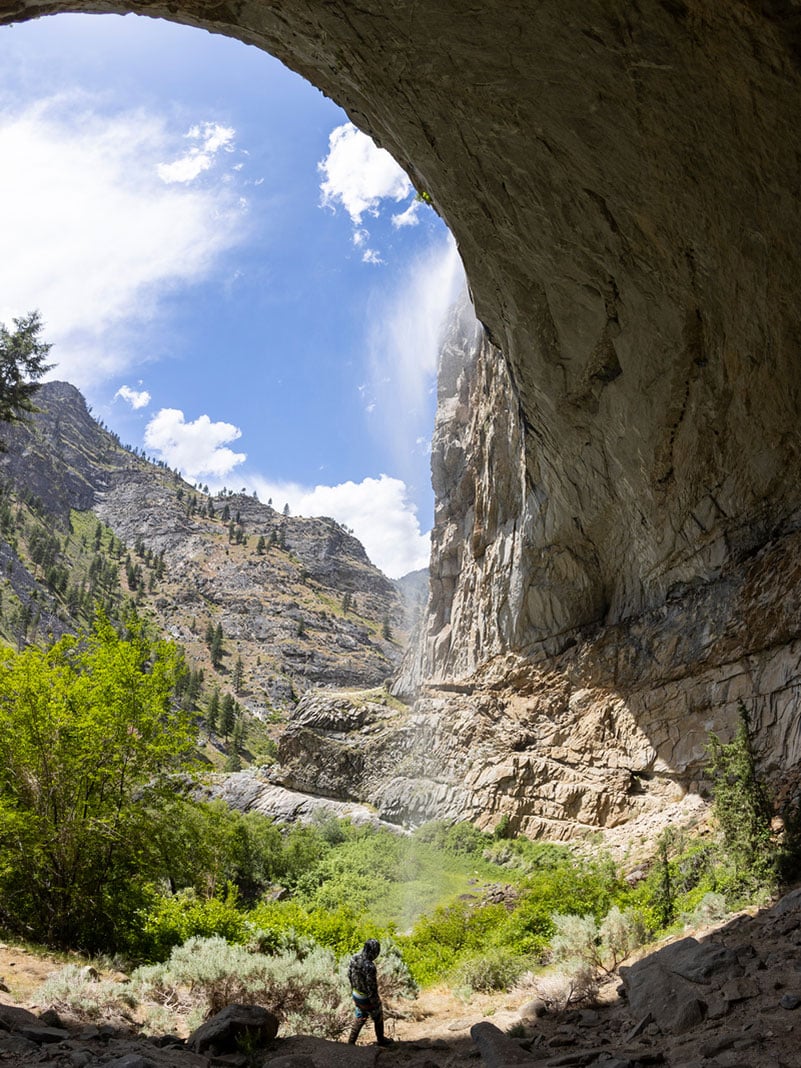
Being enveloped in epically wild scenery, animal encounters and picturesque waterfalls await around each bend. But the ultimate prize of the Middle Fork of the Salmon River is the riverside hot springs that steal visitors’ time and attention.
For an outstanding aerial view of the landscape, see Sunflower Hot Springs. For a magical and captivating hike-in soak spot, check out Sheepeater Hot Springs—where goats are also rumored to steep. Trail Flat, Loon Creek and Hospital Bar Hot Springs are also favorites which will heal and restore your weary bones right smack dab in the middle of your river trip.
Set a river shuttle
Most people running their own trip down the Middle Fork of the Salmon will hire a shuttle service to handle the logistics of getting their vehicles to takeout. Shuttle service operators on the Middle Fork and other Idaho rivers are available on the Idaho Outfitters & Guides Association site.
You can enjoy a trip down the Middle Fork without going it on your own. In fact, a guided trip is a great way to ensure a trip rather than betting on the lottery. Several rafting outfitters operate on this remote fork of the Salmon River and trips tend to cost between $3,000–4,000. A complete list can be found on the Idaho Outfitters & Guides Association site.
[ Plan your next Middle Fork of the Salmon River trip with the Paddling Trip Guide ]
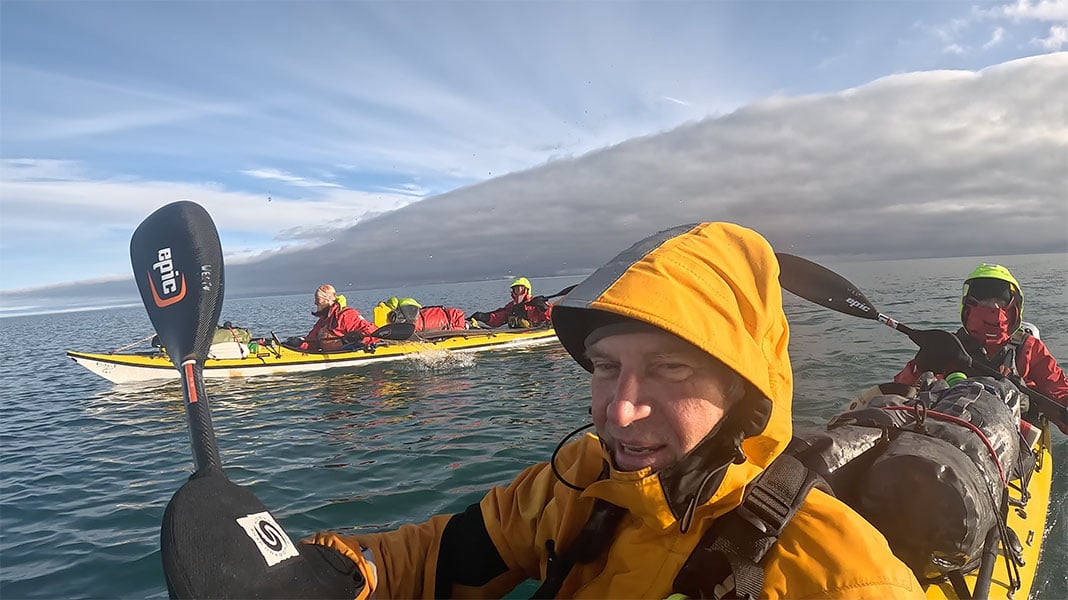
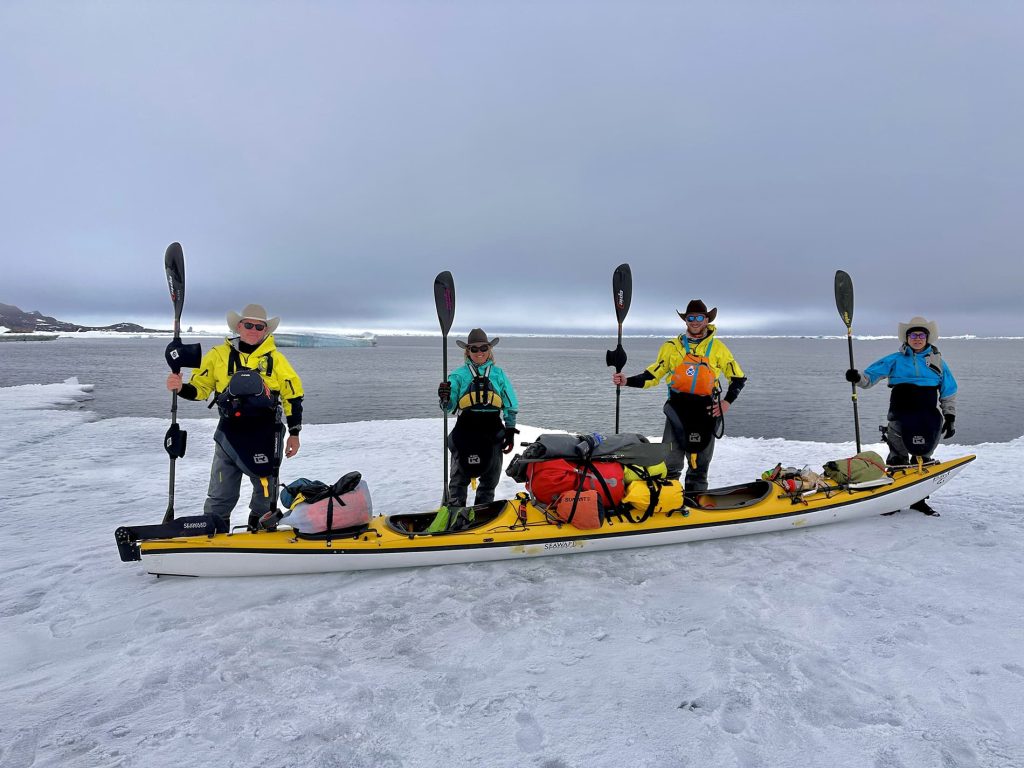
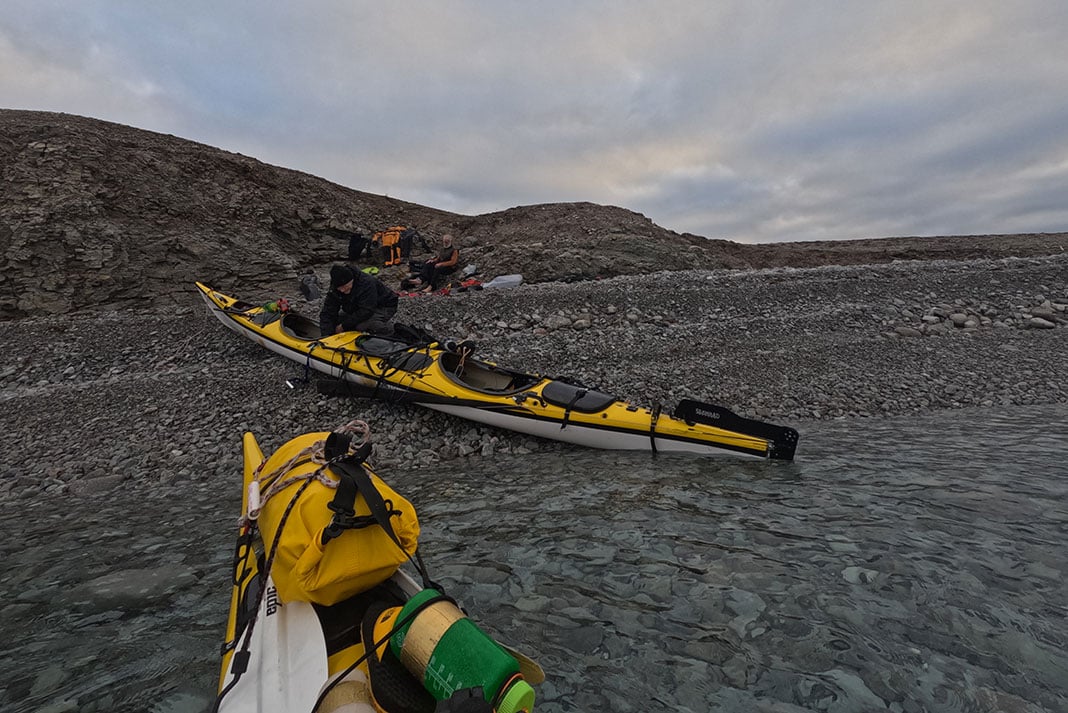
In the never-setting July sun of the Arctic summer, West Hansen and Jeff Wueste paddle their tandem Seaward Passat with euphoric momentum across a frigid, but ice-free stretch of Lancaster Sound toward Somerset Island. Nearby, in another tandem kayak, are their expedition partners Eileen Visser and Mark Agnew. Together, the four are the Arctic Cowboys. Seventy days from now they will complete a momentous first in paddling: they will become the first known people to traverse the Northwest Passage under human power alone within a single season. But on this day, 10 days into their attempt, the expedition party is enjoying a rarity—optimum conditions have allowed them to cover 45 miles of a 1,600-mile journey. Hansen and Wueste have cause yet for more optimism.
Just a year earlier at this point, they ended their first campaign to paddle the Northwest Passage. From here on, they’ll be paddling new waters. But ice-free waters and light winds are as easy a day as the Northwest Passage is going to give.
It’s for good reason no one has paddled the entirety of the Passage in a single year up until now. The Northwest Passage is a series of waterways mazing through a collection of islands that make up the Canadian Arctic Archipelago. For over two-thirds of the year, all or most of the waterways are frozen over with sea ice. The window to successfully pass through the Passage by water is brief—the summer melt season is barely three months.
Since the 1700s, European sailors have recorded their attempts to find and use the Passage as a maritime transportation and trading route. Roald Amundsen and his expedition crew were the first Europeans to transit the Passage by ship in 1906. To this day, even the number of powered vessels that traverse the Passage each year remains small, and the topic of it becoming a major shipping route is one of the most substantial conversations about the Arctic.
Feature photo: Courtesy West Hansen / Arctic Cowboys
The Arctic Cowboys aren’t the first to try paddling it, though. Over the past 40 years, more than 20 attempts have been made to paddle or row the Northwest Passage, and virtually all have failed.
The most notable successful attempt was made by French rower Charles Hedrich, who set out from Alaska in 2013. He arrived in Pond Inlet, Nunavut two years later, in September 2015—making him the first to accomplish the waterway by human power alone. Still, it took multiple years, and Hedrich’s stopping place is argued to be just short of the official geographic mark by about 40 miles.
Of course, alongside the nature of records and exploration, the Inuit people have lived in the Arctic for millennia, using paddle craft and sleds as means of travel. However, there is no evidence suggesting a transit by kayak occurred across the Passage.
Ice is what’s kept human travel through the Passage constrained, but this is changing. According to NASA, the average duration of the Arctic melt season is gradually increasing, and sea ice isn’t replenishing to the same levels in the winter. These shifts to the landscape have now perhaps reached a significant threshold—providing enough time for a kayak to make the journey.
[ Plan your next kayak expedition with the Paddling Trip Guide ]
West Hansen and the Arctic Cowboys
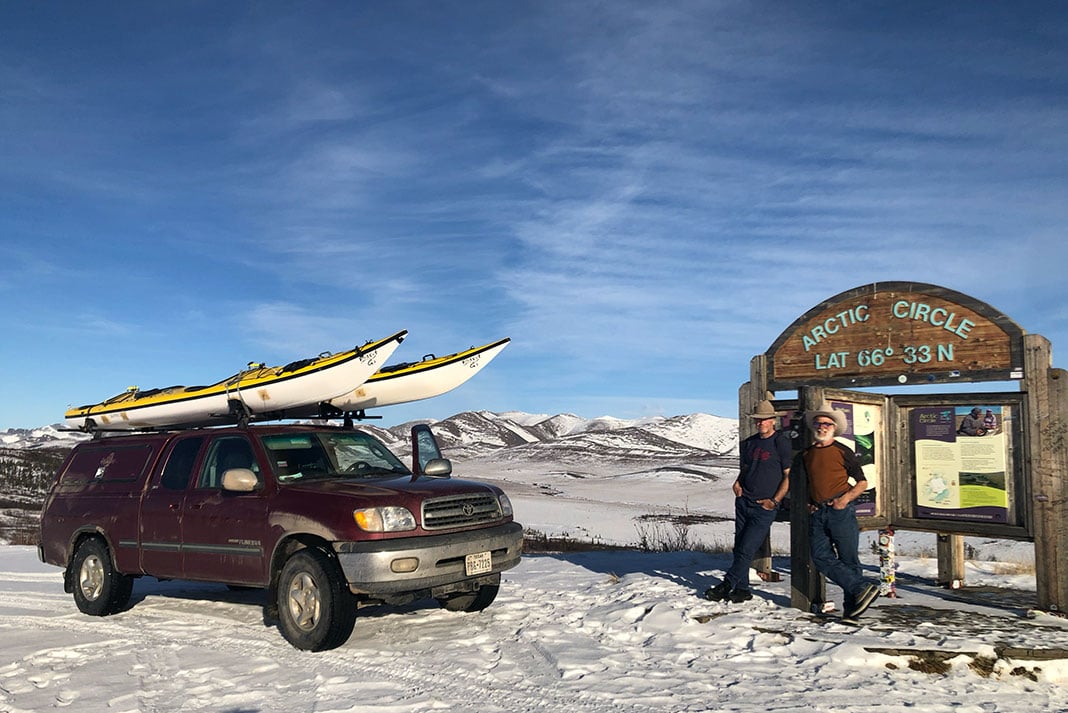
West Hansen is no stranger to endeavors of this magnitude. A social worker by day with a full resume of endurance paddling races, the 61-year-old expedition leader of the Arctic Cowboys has been part of multiple historic paddling expeditions. In 2012, he was a member of the team that was the first to paddle the Amazon River 4,200 miles from a source in the Peruvian Andes to the Atlantic Ocean. In 2014, he was also on the team that was the first to complete the 2,100-mile length of the Volga River in Russia—the longest river in Europe. Jeff Wueste, two years older, has been one of his accomplices each time.
It was over five years ago Hansen started putting the pieces together on the coveted transportation route through the Arctic.
“I was reading a book by a friend of mine, Buddy Levy, on historic Arctic expeditions. It triggered me to do some research on modern expeditions,” Hansen recalls of the self-discovery building toward the attempt. “I realized no one had actually successfully navigated the Northwest Passage under their own power. It’s something that hadn’t been done, which I’m attracted to, and it’s a place most people haven’t been to or seen. So those components came together and we started putting it together.”
The Arctic Cowboys made their first attempt at the start of August 2022. Hansen, Wueste and experienced long-distance paddle racer Rebekah Feaster set out from Bylot Island, just north of Baffin Island at the eastern entrance of the Passage. Within five days on the water, Feaster made the decision not to continue. Two hundred miles into the trip, Hansen and Wueste decided the same and aborted the 2022 expedition in Arctic Bay.
Photo: Courtesy West Hansen / Arctic Cowboys
In July of 2023, Hansen and Wueste returned to Bylot Island—a month earlier than the previous year, and with two new Arctic Cowboys: Eileen Visser, a professor and endurance paddler, and Mark Agnew, a British adventurer and writer. The Arctic Cowboys set out from Bylot determined to finish what they barely scratched the surface of in 2022.
Bathurst or bust
They weren’t the only paddlers making a bid at the Passage in the summer of 2023. There were at least four teams making an attempt, including two rowing teams and standup paddleboarder Karl Kruger. Each of these teams would end their campaigns by September.
After rounding Somerset Island and leaving Lancaster Sound in late July, the Arctic Cowboys had 70 days ahead of them. Seventy days of close calls with icebergs and tidal straits. Of nearly daily encounters with polar bears, and nights under mesmerizing skies. Of days windbound at camp with subfreezing temperatures. And near the end, as they exited Amundsen Gulf, heaving seas with 20-foot breakers.
On October 8, 2023, the Arctic Cowboys reached Cape Bathurst and the Beaufort Sea—a point along the geographic line recognized by the International Hydrographic Organization as the western terminus of the Northwest Passage. They had done it, they had become the first to paddle the Arctic passageway within a single year.
You could easily imagine the expedition instantaneously ends there, but it doesn’t. Like summiting a mountain, the quest to get home is just as, if not more, dangerous.
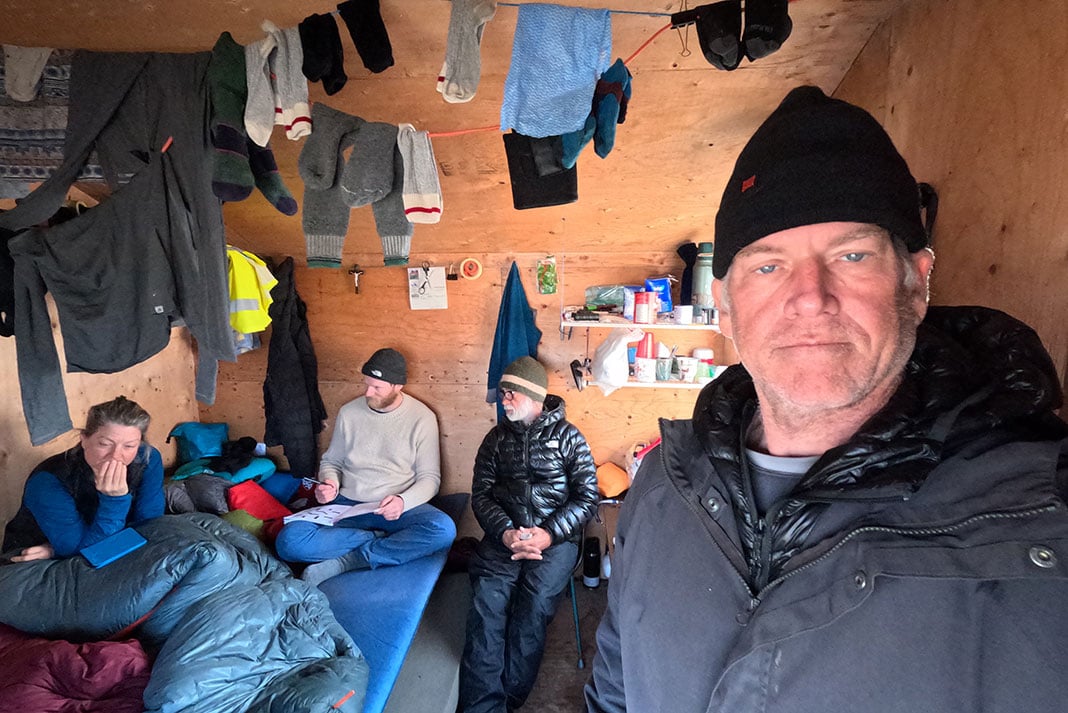
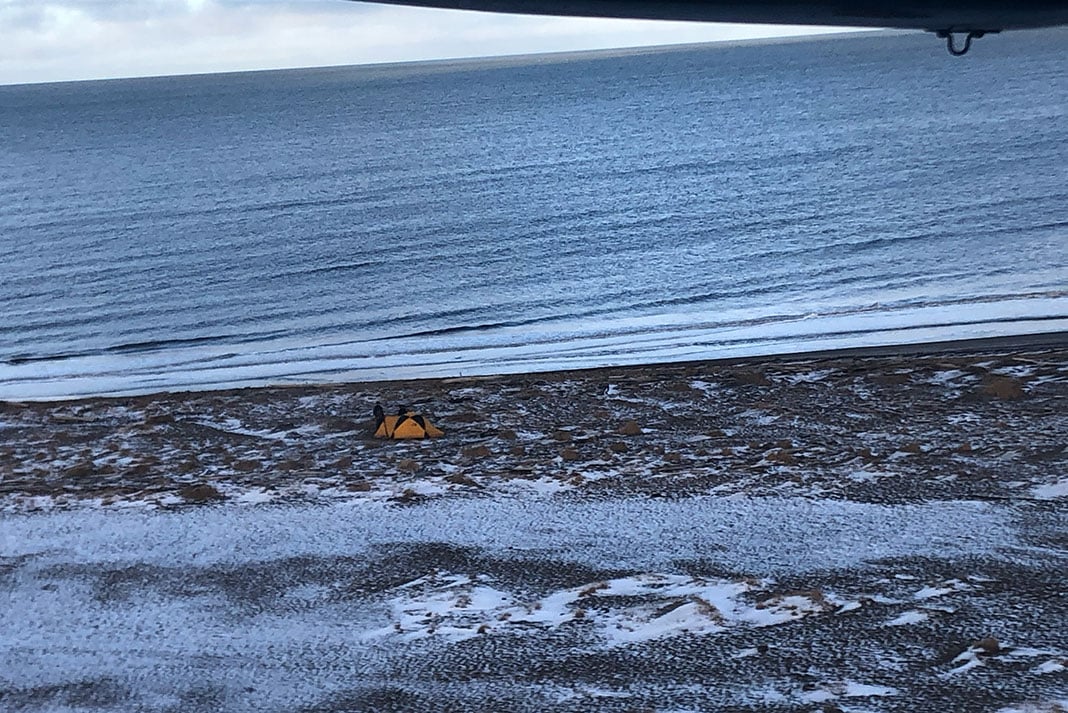
They remained in the Arctic, traversing a freezing landscape as winter roared in, looking for their way out. They would have to make it another three days and 50 miles south to meet a bush pilot on Nicholson Island. Then wait in nervous anticipation for their lift to a more temperate climate where they could truly soak in the revelry of what they had accomplished.
When we called West Hansen, he and his team were sitting in a hotel room in Saskatchewan, 10 days removed from having crossed Cape Bathurst. Exhausted, the tips of his fingers recovering from frostbite, and dreaming of a plate of barbecue 1,700 miles away in his home city of Austin, Texas, the paddler graciously shared some thoughts from the journey.
An interview with Arctic Cowboys expedition leader West Hansen
Paddling Magazine: You attempted the Northwest Passage last year and decided to abort. This time around you passed that mark around mid- to late July and were successful in completing the expedition. What was different this year that enabled you and your crew to complete the Passage?
West Hansen: The learning curve from last year was huge. You know, there’s nothing better than actually doing what you’re going to do. We learned so much in the month that we spent out here last year. We could see that we needed to not rely on a resupply. We had a resupply itself last year that fell through, and that shut everything down. We needed to be able to be self-sustaining in tandem boats, which we would be able to use in rougher water and also carry more gear.
Also, we started earlier this year than we did last year. It was a lot dicier. We were starting while the sea ice was still out there, but that gave us the leg up to have more time in the Passage to complete the expedition.
Photo: Courtesy West Hansen / Arctic Cowboys
PM: So you carried everything you needed for the entire expedition?
Hansen: We carried all of our food and gear throughout the entire Northwest Passage. The only resupply we had was at the town of Cambridge Bay. For this resupply, we shipped cartons of dehydrated food packs to someone we found on Facebook, who volunteered to store the supplies until we showed up. Additionally, we had our expedition manager ship us some additional supplies. Unfortunately, the person in Cambridge Bay whom we trusted to hold our stuff opened the boxes and ate a lot of our food, so we had to purchase additional food in Cambridge Bay. This was our only resupply point. We had no support team, other than Barbara Edington and Tom McGuire, who were back in Texas managing the website and other logistics.
PM: Were there aspects of the Passage that surprised you? That perhaps you and the team couldn’t have expected?
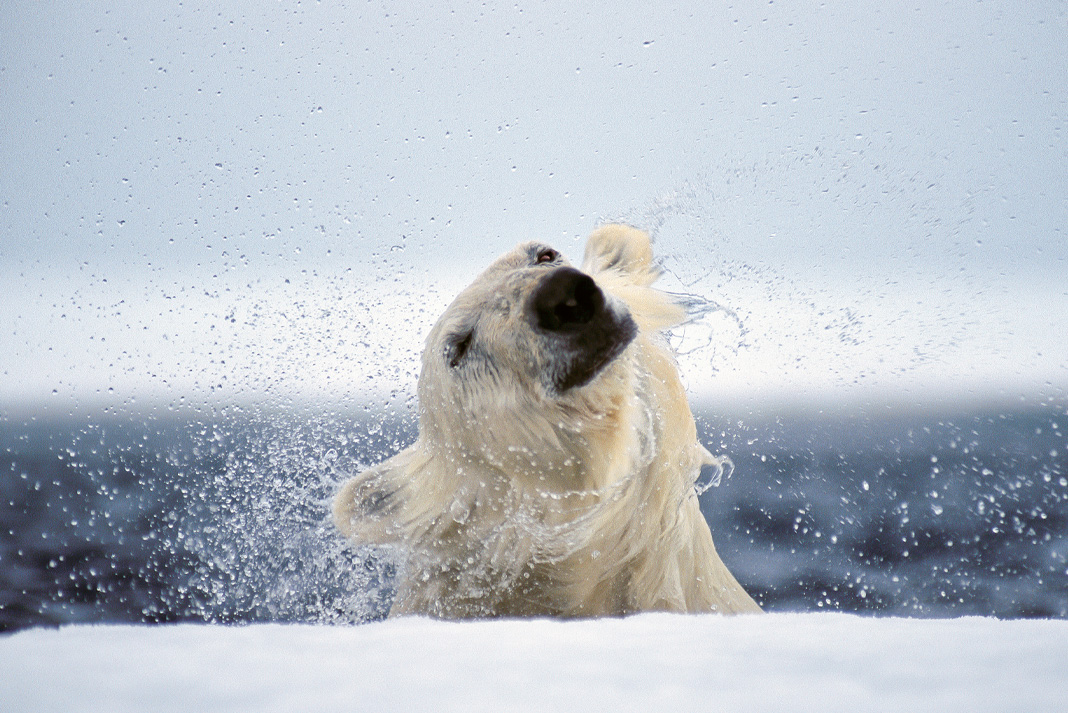
Hansen: Several. One of which is that we saw polar bears every day until we made it to Cambridge Bay. And I’m not talking about every other day, or two or three times a week. No, every day we saw polar bears. We knew there’d be polar bears. We were prepared for them. We had all the appropriate gear to deter polar bears. It’s just amazing to see polar bears and polar bear cubs every stinking day. So we got used to that.
PM: They are obviously some big animals that could do whatever they wish, but did you reach a point where that situation felt normalized?
Hansen: Well, we weren’t afraid of them after a while because we learned they were very afraid of us. They always run away.
We had flares, we had bear bangers, we had shotguns, we had a rifle, we had movement sensors that we put around the tent. We had bear spray. But usually, if you yelled at them, they’d run away.
They really were afraid of us. And so that made us a little bit more comfortable. But yeah we got a bit more used to them, that’s for sure.
PM: So if not the bears, what would you consider one of the most dangerous moments of the expedition?
Hansen: Bellot Strait was a horrendous incident. We waited there for three days for the wind to calm down. And then the information we were provided about the tidal flow through the strait was 180 degrees wrong, unfortunately. So when we started into the skinniest portion of it, the water turned and started coming toward us, including these giant floes of ice. We had to negotiate our way through this ice that was going 10 miles an hour. We had to cross about 400 yards of very strong eddies, whirlpools and this fast-moving ice in order to get to the safety of the shore. And that was pretty scary. Fortunately, we made it.
Then we waited about six hours after that for the tide to calm down, and were able to progress safely through the entire strait.
Photo: Courtesy West Hansen / Arctic Cowboys
PM: It seemed it never let up for you. Toward the end of the trip, we were all following your team and you were getting bogged down. Could you tell us about that home stretch and whether you knew you were going to make Cape Bathurst? Or was there a time you thought you may have to end the campaign again?
Hansen: The last half, from Cambridge Bay to the Beaufort Sea, the farther along we went, the more down days we had because of weather, and that was very, very frustrating. We knew we’d have that. We expected it to a certain extent. But really, you know, paddling three days and sitting in the tent five days was extremely frustrating.
At the same time, I had to be prudent. I didn’t want to get the team out there in some conditions that were too rough for their abilities and risk the entire expedition on a rescue or something like that.
We never thought we’d have to abort the expedition ever. Some teammates did, but I didn’t. I always felt whatever the conditions are, I know we can get through them. And so I felt good about that. But it was very, very frustrating toward the end with the number of bad weather days compared to the days we could make forward progress. That was the roughest part. But once again, we knew it was coming.
I figured also, with the classic expeditions out there, like climbing Everest and crossing the poles, those explorers had huge down days just waiting out the weather. I knew this was no different. Down days were just part and parcel to the experience.
PM: You’re referencing Everest there, and waiting for weather. Was there a seasonal window also playing a factor? A timeframe you had to make to be successful?
Hansen: We knew winter was coming. There’s not a set date that says, okay, this is winter. We didn’t have that date. And I don’t think anybody does. I mean, right now in the Franklin Bay over to Cape Bathurst down into the Beaufort Sea, there are 100-kilometer winds and storms. It’s pretty bad. Maybe five days from now it might be calm enough to paddle so long as the sea isn’t frozen over. I was always figuring, as long as the sea isn’t frozen over, then we have our window.
Those snowstorms in the last two weeks were pretty rough. We woke up with snow piled against the tent, three or four feet high. We couldn’t sleep some nights because the wind was howling, 40-mile-an-hour wind. It was pretty rough in some of those snowstorms, but nothing that would’ve caused us to stop.
There’s the other issue of not really having another option. What are you going to do? You know, stop and call for a rescue because the weather’s bad? No. We didn’t really have an option. We had to keep going.
Photo: Courtesy West Hansen / Arctic Cowboys
Photo: Courtesy West Hansen / Arctic Cowboys
PM: After enduring and completing the Passage the expedition wasn’t over for you, though.
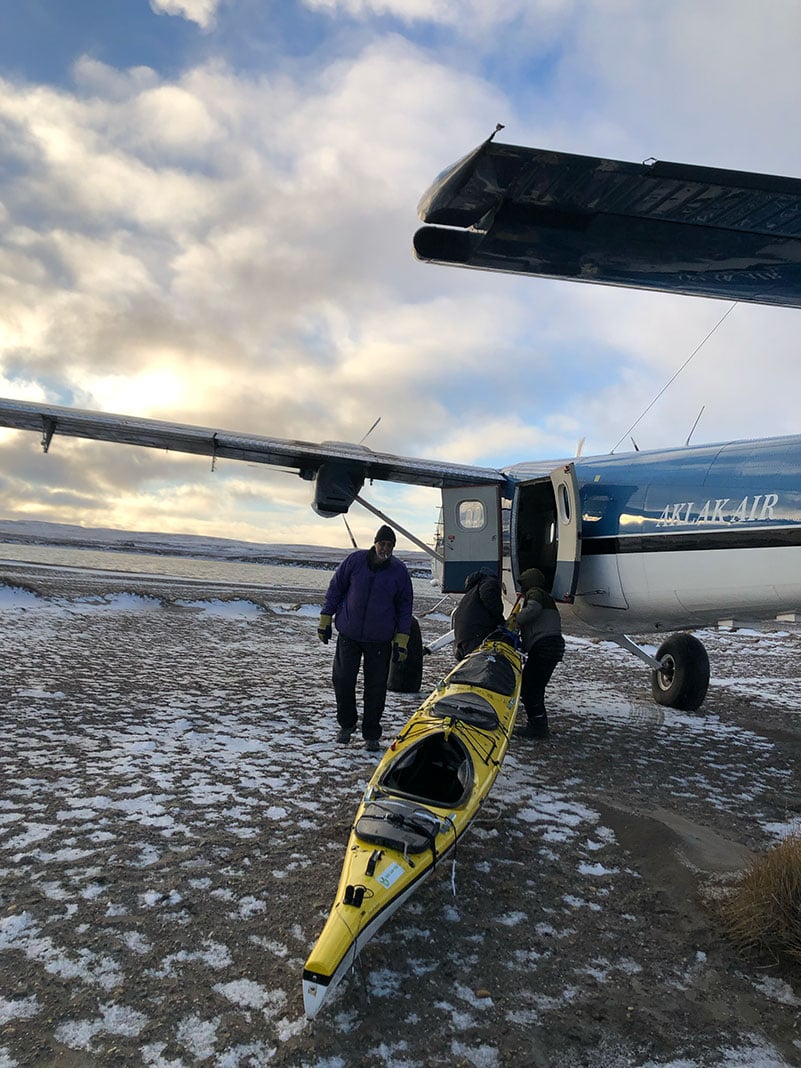
Hansen: No, we finished the western boundary of the Northwest Passage at Bathurst. And then we arranged for a bush pilot to pick us up at Nicholson Island. That was about 50 miles south.
It took three days of negotiating the weather to get down there. One of those days we just sat in the tent because the snowstorm was just too strong. So we just sat there and let the snow pile up against the tent and just hung out.
PM: That has to feel as if it’s reaching a point of desperation.
Hansen: It was very frustrating. I can assure you. You’re this close, you know. We just needed X amount of hours of clear weather and we could get to the pickup point.
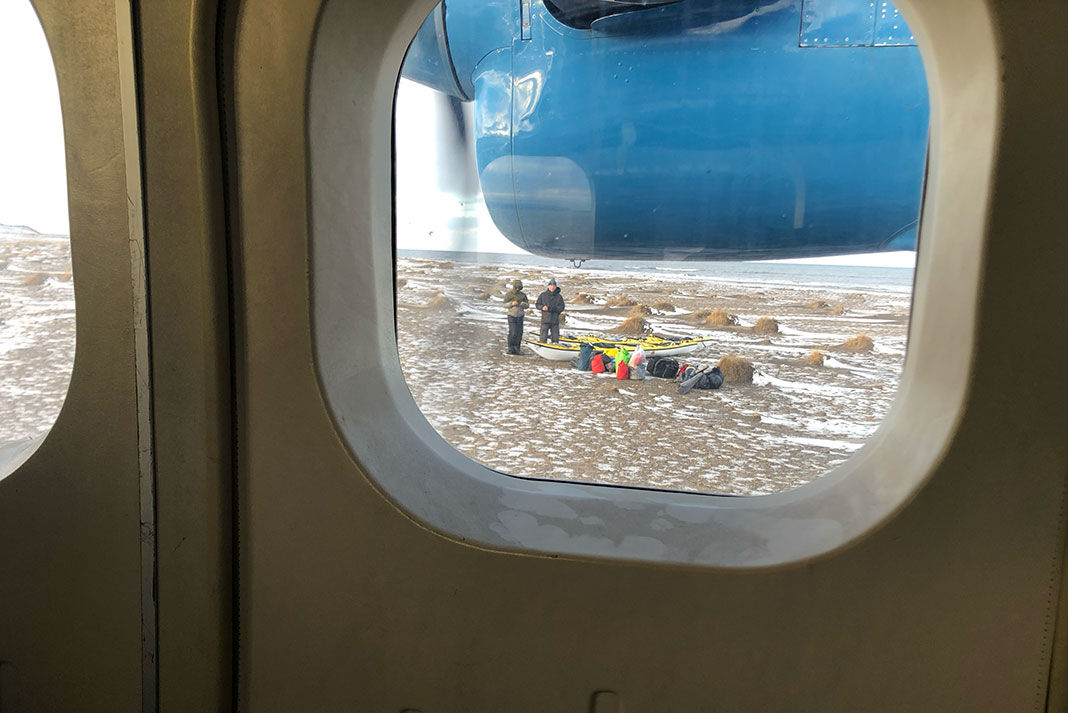
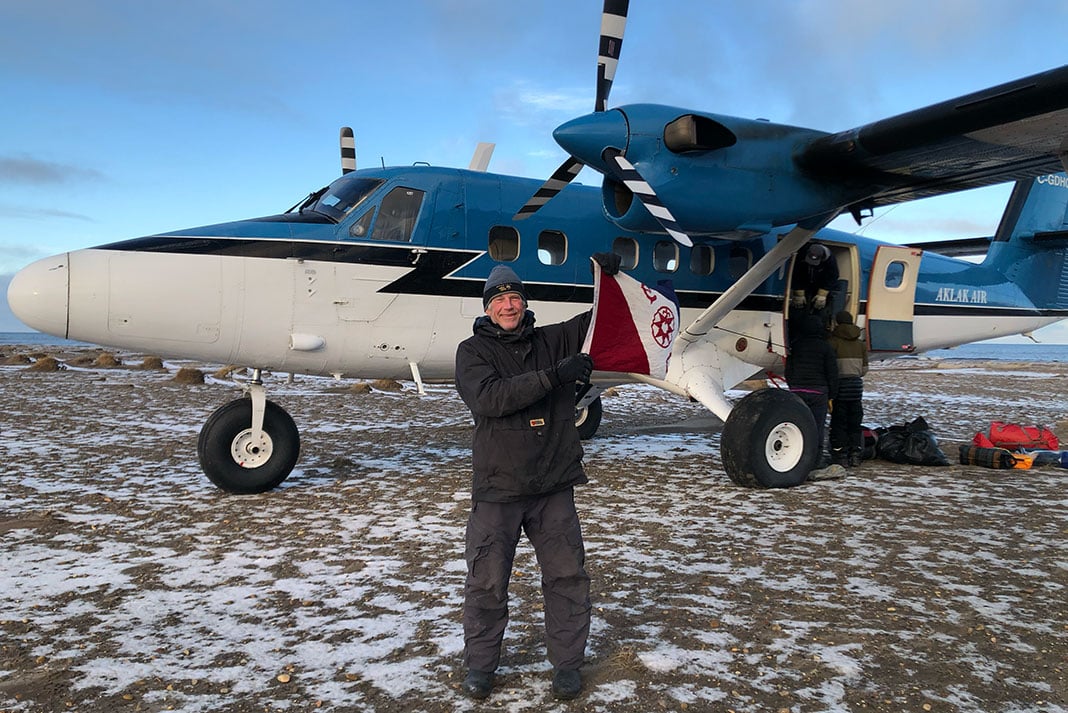
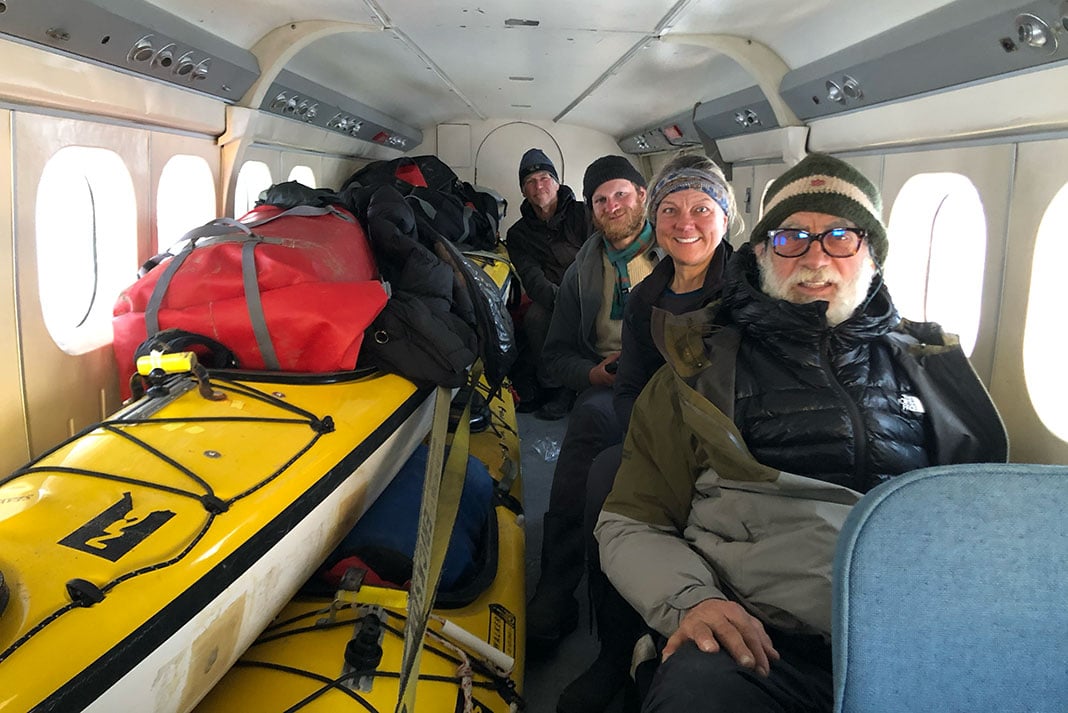
Even at that point, we’re at Nicholson Island and there’s this old abandoned airstrip. The Twin Otter came in to pick us up, and it made about eight or nine passes over this very, very rough runway to see if it was okay. We did not know if it would be picking us up until it actually landed. We thought, “Okay, any minute now, it’s going to turn around and head back. And we’re going have to kayak the final 120 miles in these snowstorms to get out of here.”
Photo: Courtesy West Hansen / Arctic Cowboys
Photo: Courtesy West Hansen / Arctic Cowboys
Photo: Courtesy West Hansen / Arctic Cowboys
PM: That is unnerving, but it couldn’t have all been scary. What were some of the most fascinating parts of paddling the Passage? The reasons to be there?
Hansen: The polar bears were the coolest thing to see. You know, once we figured out they were scared of us. They were very unique animals.
And the stars at night were amazing. Once we started getting nighttime after Cambridge Bay, we could see the Aurora Borealis on a regular basis. And it was south of us, you know, not north. Before the onset of nighttime, when the sun was up 24 hours, at one point we were crossing Prince Regent Inlet. The sun was on the western horizon and it was covered up by clouds, but you could see it. This big red ball in the sky. And on the eastern side of Prince Regent, 40-some-odd miles away, the full moon was at the exact same level in the sky. And it was just huge and bright because it was reflecting the light from the sun. And that was a very magical moment, to see both the sun and the moon, these two huge celestial bodies at the same place, just above the mountains on either side.
The other thing was visiting the same places these historic figures had explored. I’ve done all the research. I’ve read every book I could find on the Golden Age of Exploration and Northwest Passage. Roald Amundsen, I’m obviously a huge fan of his. To see the places he had stayed and had written about and also the Franklin, the Ross expeditions, all through there. They were very specific in their journals. And so I’ve noted that on my maps. And it was just a personal achievement to be in the same places these explorers have been.
PM: Absolutely. And your group has started a new chapter of Arctic travel. Experiencing it yourself, do you see people coming in and paddling this more often—following in your footsteps?
Hansen: I don’t know. My buddy Jeff Wueste and I were just discussing whether this would mean more people would come or, since we had done it, does that mean people are going to stop trying to kayak or row it. I hope people reach out to me, read my book, or watch the documentary we’ll produce, and do sections of it. I think it’s possible someone can do it in a season again with a mimic of a lot of things we did. But I would really hope it opens it up for people to do sections, either supported or unsupported, just to see this gorgeous area.
Photo: Courtesy West Hansen / Arctic Cowboys
It’s going to change pretty radically in the next few years. Once the Northwest Passage is predictably open, commercial shipping will increase a hundredfold, because it’s faster and safer to get through the Northwest Passage from Europe to Asia and back than it is to go through the Panama Canal.
Once it is wide open, this entire area of the Northwest Passage is going to be changed. It will be more populated. And it’ll become pretty industrialized. I’m glad we got to see it before that happens. But I also hope, what we did, and what we’ll write about and depict, will help preserve some of the greater aspects of the Passage.
Feature photo: Courtesy West Hansen / Arctic Cowboys
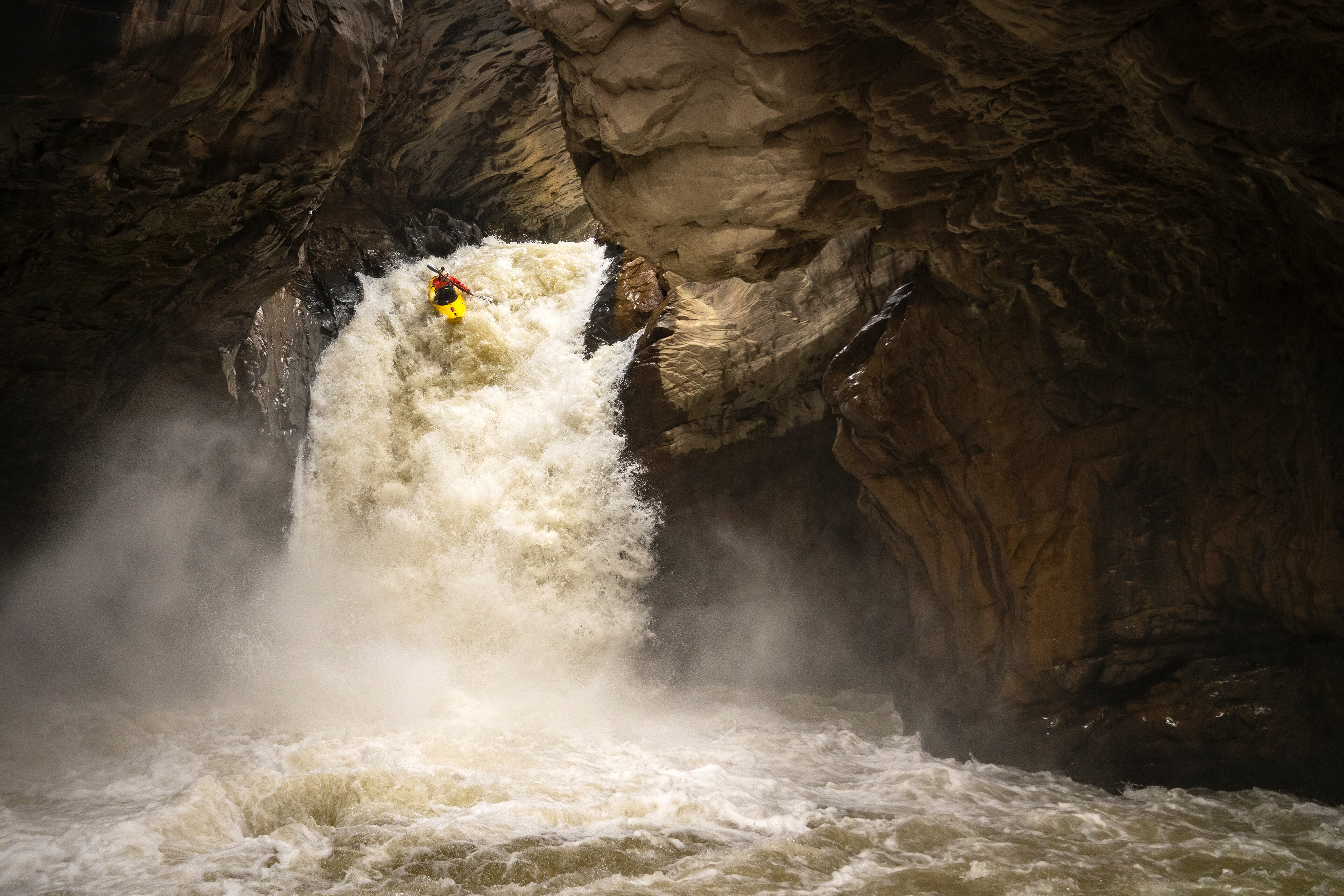
Red Bull Illume 2023 Emerging with Canon winning photographer Gonzalo Robert Parraguez. Image of athlete Kilian Ivelic Astorga. Maipo, Chile. Featured Image: Gonzalo Robert Parraguez // Red Bull Illume 2023
For photographers in the adventure-sports world, perhaps no stage is more regarded as an artist’s potential “breakthrough” as the annual Red Bull Illume Image Quest. Consider the Illume a Cannes Film Festival, if you will, of adrenaline-inducing imagery. It is an opportunity for photographers to make their work known worldwide. The 2023 awards were no exception, and at this year’s Red Bull Illume, photographers were turning heads with some stunning paddling imagery.
Through the vast number of entries, 52 judges cull selections across ten categories. Much of the contest takes place online. The Red Bull Illume Image Quest then culminates to the final award ceremony in Sölden, Austria, at the end of November. Australian photographer Krystle Wright took the Grand Prize for her shot of athlete Angela Vanwiemeersch climbing a Utah canyon in a sliver of light like a lightning bolt.
Paddlers had cause for celebration, too. The Emerging With Canon Award went to Gonzalo Robert Parraguez for his shot of Kilian Ivelic Astorga running a rumbling waterfall in Chile.
Red Bull Illume 2023 Emerging with Canon winning photographer Gonzalo Robert Parraguez. Image of athlete Kilian Ivelic Astorga. Maipo, Chile. Featured Image: Gonzalo Robert Parraguez // Red Bull Illume 2023
On the image submission, Robert Parraguez shared what it took to capture the shot.
“To get to the waterfall, you had to drive two hours, walk 10 minutes, and then to take this photo, I had to do a 15-meter rappel as the waterfall is in a deep canyon. To get in the position I wanted the only way to get there was to rappel in. With Kilian, we have been filming and looking for places for a couple of years now and continuing to do these missions with him is one of my favourite things to do.”
The Chilean wasn’t the only paddling image creator to get a nod from the venerable judges of the annual Red Bull awards. A number were also shortlisted as semi-finalists.
Here are a few stunning paddling shots that stood out from the Illume crowd at the 2023 Red Bull contest:
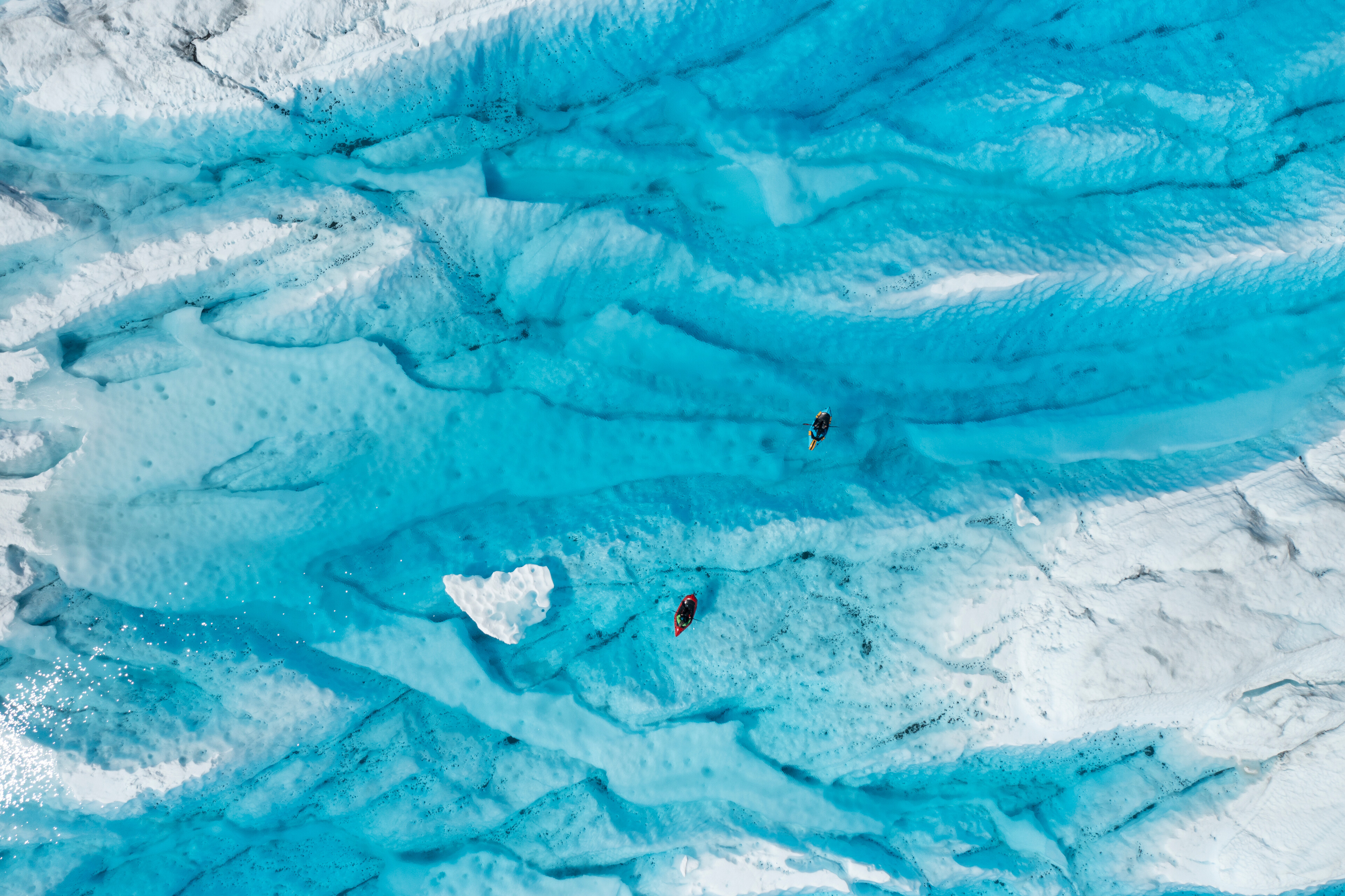
Packrafters Robert Kozakiewicz and Kylee Lambert, Palmer, Alaska. Image: Janessa Anderson // Red Bull Illume 2023
Janessa Anderson—RAW Semi-Finalist
“Supraglacial lakes are a place of absolute wonder. Formed as meltwater accumulates on the surface of the ice, these fleeting lakes can drain at any time, adding to the allure of experiencing them. I had been scouting the area for a few months, watching as the glacial landscape began to change, waiting for a blue pool that would be ideal for a packraft exploration.”
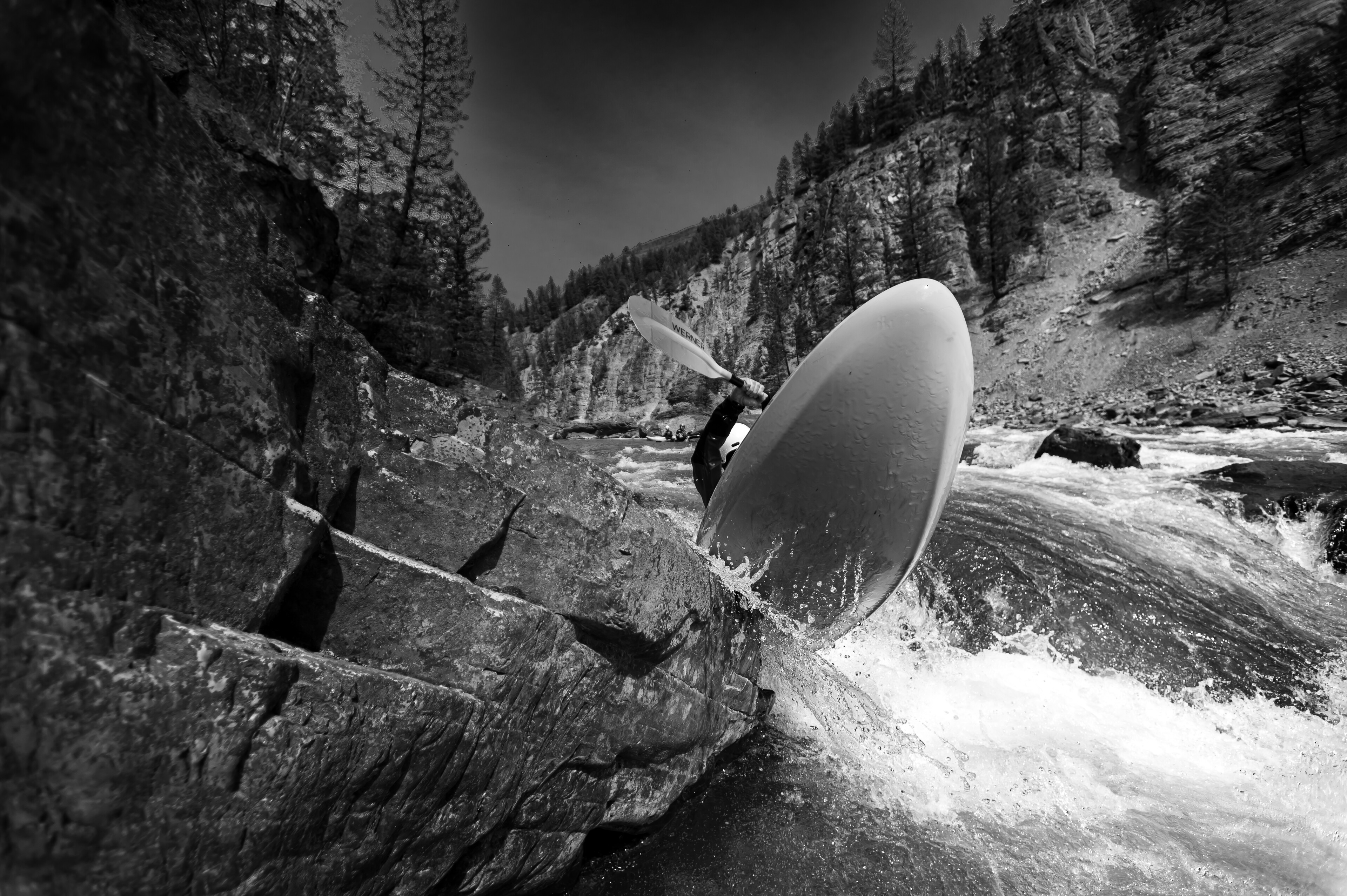
Seán Mc Ternan on the Elk River, BC, Canada. Image: Tim Retzik// Red Bull Illume 2023
Tim Retzik—Innovation by MPB Semi-Finalist 2023
“I found a way to wedge myself so I could get close enough for the angle I wanted. Because of the way I was set up to take the shot, I couldn’t see the paddlers until they were hitting the rock. Sean nailed the line, and through a 14mm lens, it looked like I was going to take a boat to the face. I had a feeling we nailed it. The image reminds me of photos in Thrasher magazine from the big air contests of the 80s.”
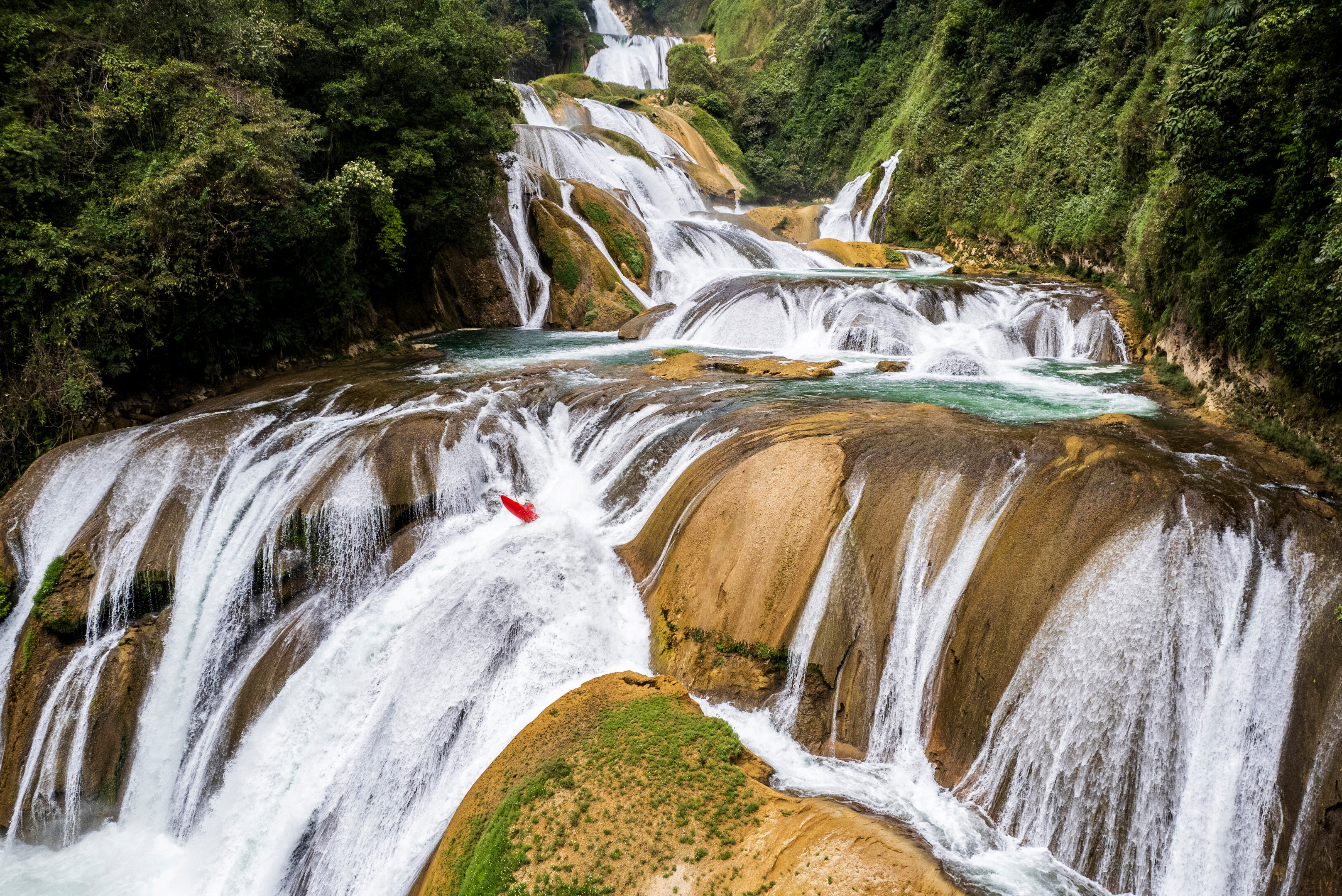
Adrian Mattern on the Rio Santo Domingo, Chiapas, Mexico. Image: David Sodomka // Red Bull Illume 2023
David Sodomka—Energy Semi-Finalist
“Santo Domingo River is the steepest section of whitewater kayaking in the world. It’s short, but extremely steep, linked up and consequential. We went there as a group of five kayakers. We spent five days on this section, and paddled it four times.”
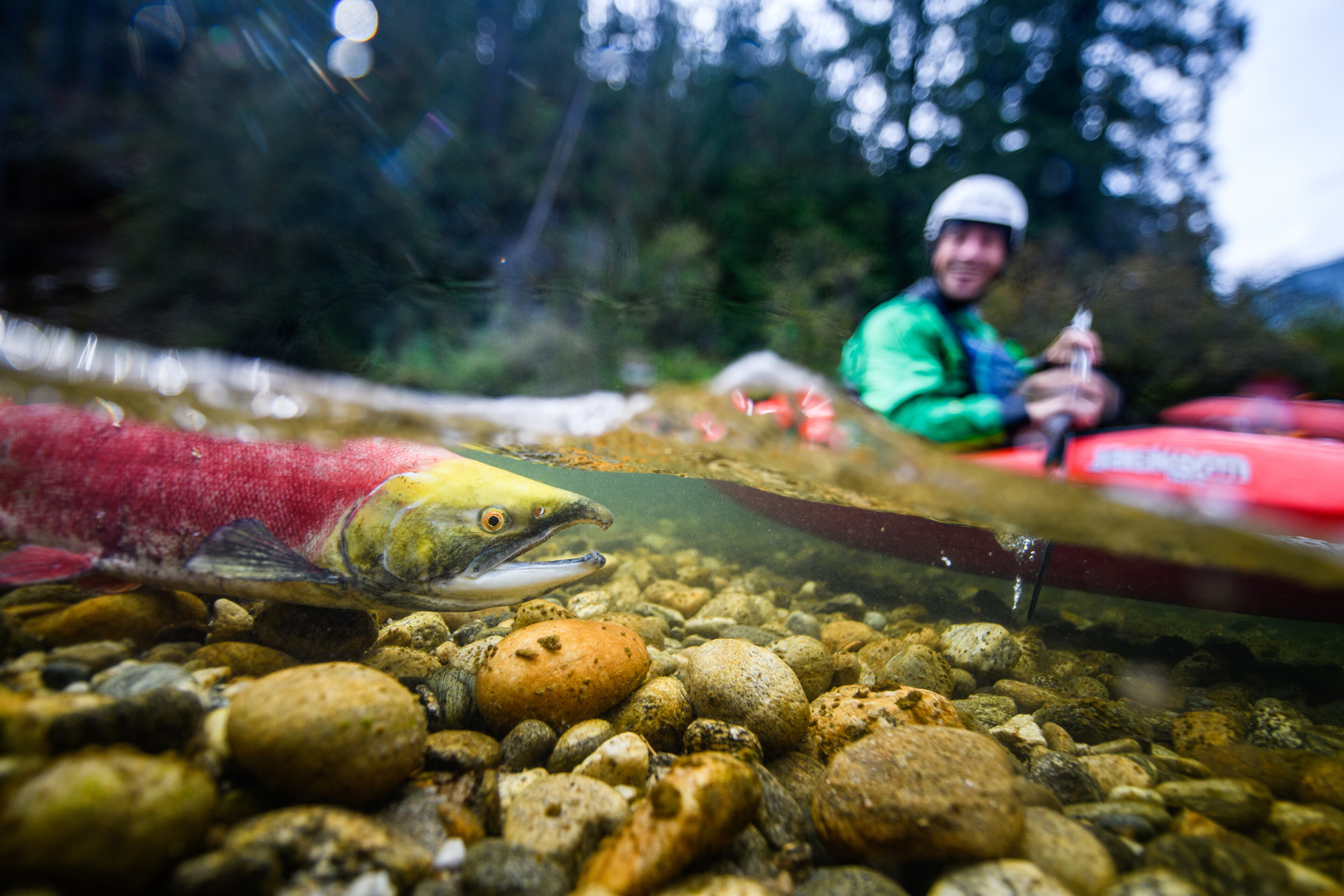
Dennis Werden paddling with salmon on the Eagle River, Revelstoke, BC, Canada. Image: Daniel Stewart // Red Bull Illume 2023
Daniel Stewart—Lifestyle by COOPH Semi-Finalist
“Ever since I’ve seen my first salmon run, I’ve been addicted at getting some good photos of them. It’s one of the most challenging things I’ve ever really taken on. I am naturally not a wildlife photographer, so when I first got in the water, the only thing I’d ever capture was them running away from me.”
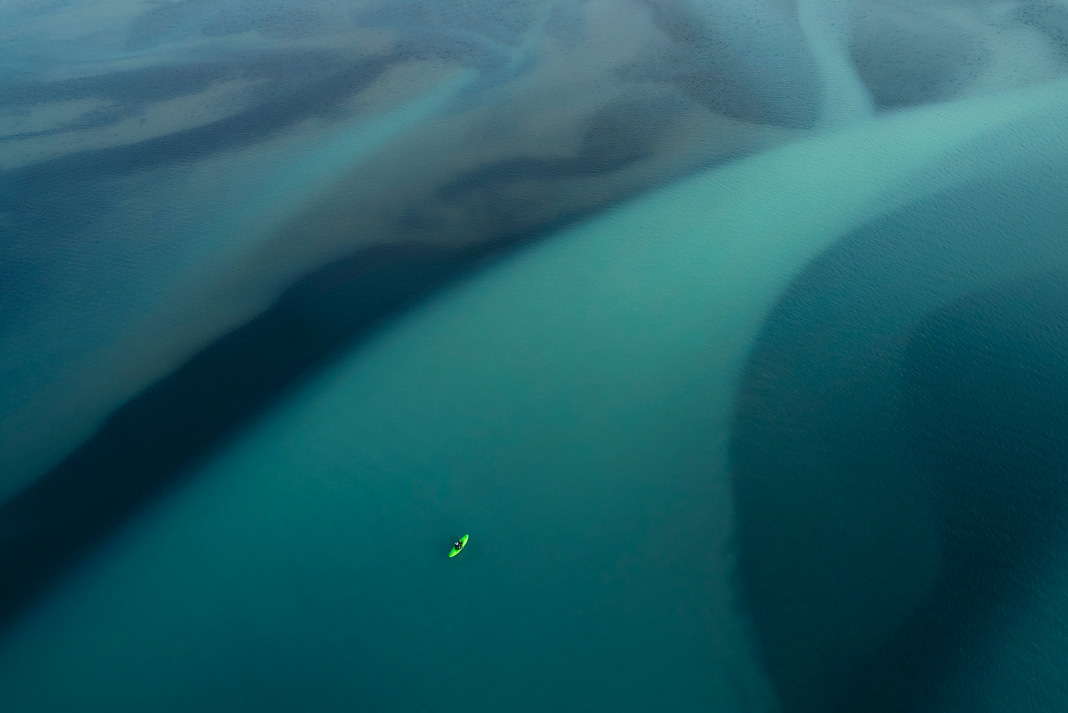
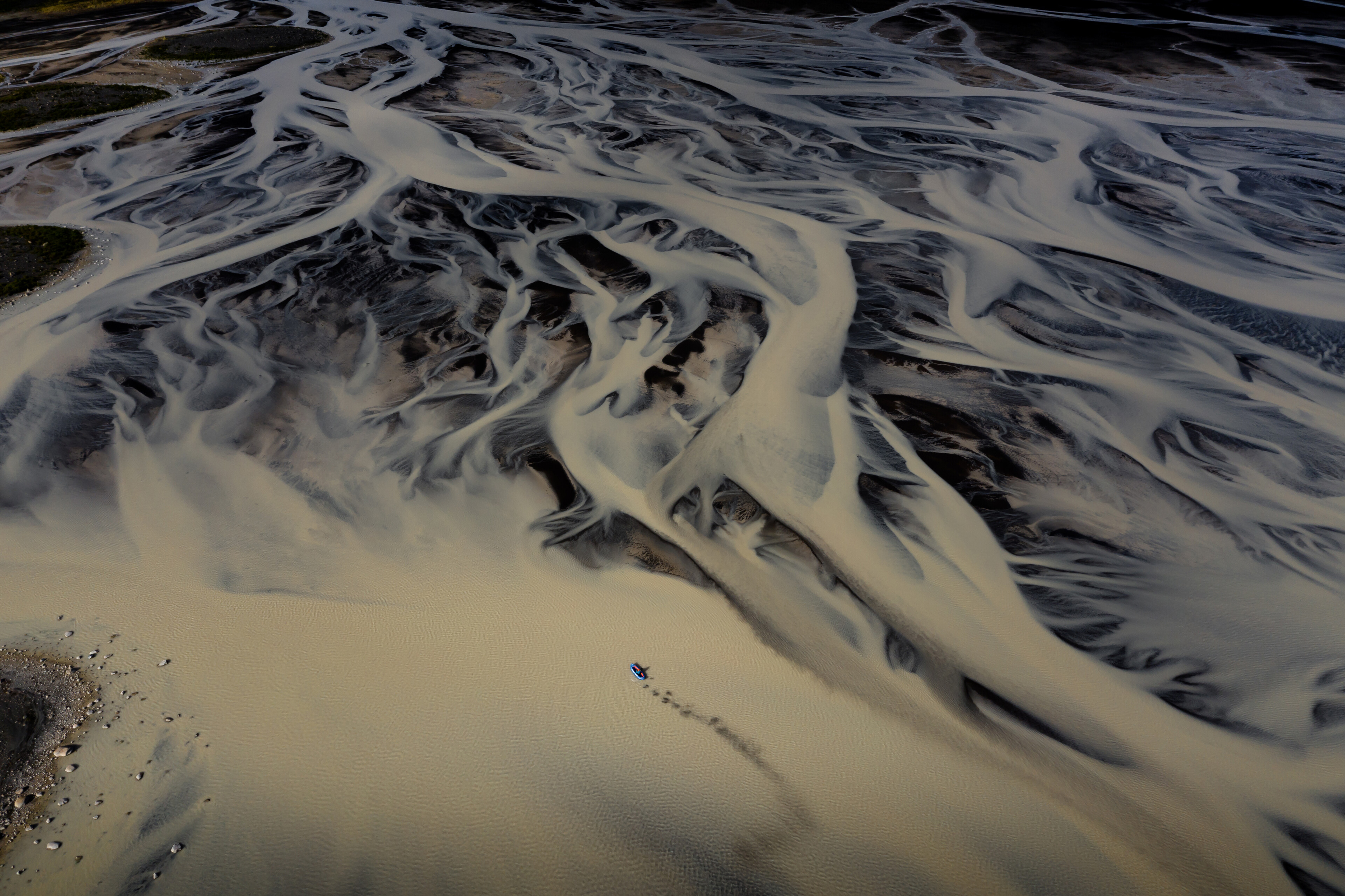
Jemma Bowles kayaking at the mouth of a braided river. Sandvatn Lake, Iceland. Image: Anthony Pearson // Red Bull Illume 2023
Anthony Pearson—Playground by Radiant Photo Semi-Finalist
“With a walkie-talkie in hand, Jemma sets off in a kayak, and paddles across the river. Having kayaked to the foot of the braids, there are many shallow sand banks which she cannot easily see. So, with a bit of guidance from above, Jemma finds her line, and gets into position whilst I snap away. High winds and two depleted batteries later, it’s time to retrieve the drone and move on.”
Shoalts followed the peregrine falcon’s migratory route for his book, Where the Falcon Flies. | Feature photo: Adam Shoalts
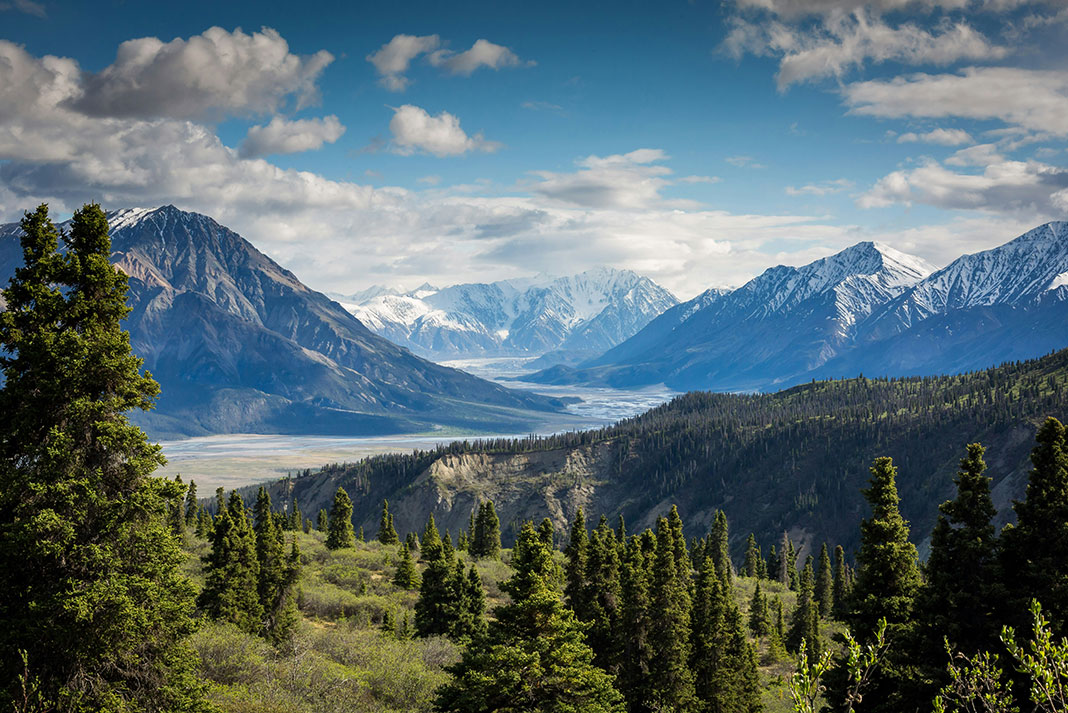
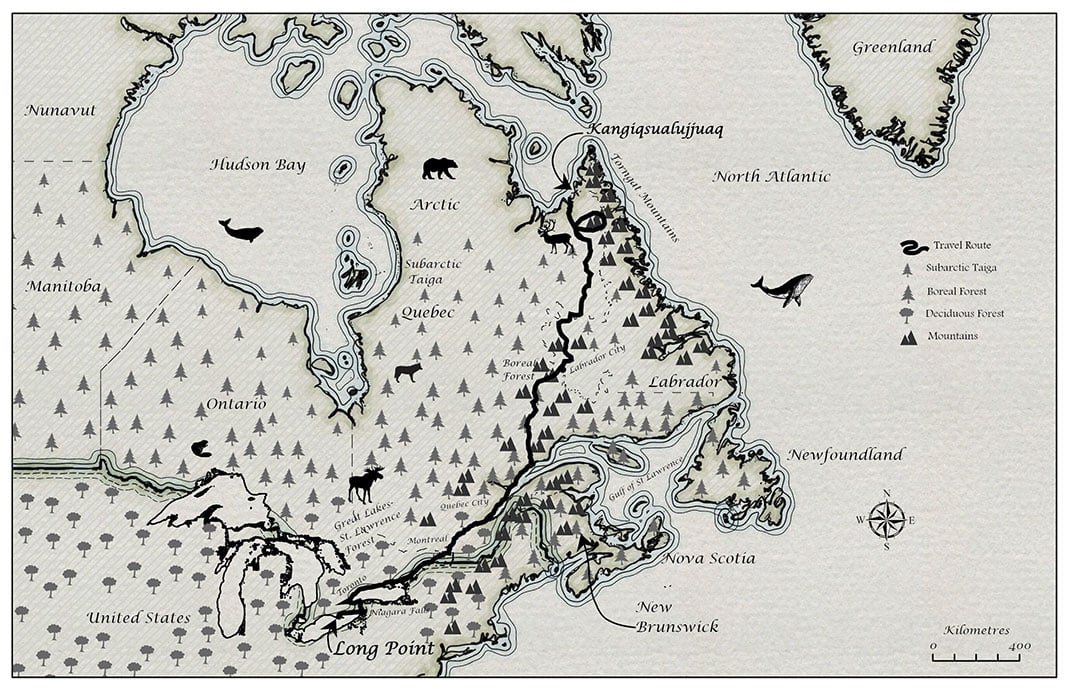
On a foggy day in July 2022, adventurer Adam Shoalts found himself clinging to a moss-covered granite crag in the Torngat Mountains in Labrador. It was an unlikely climax to a three-month, 3,400-kilometer canoe expedition from Lake Erie to Ungava Bay, yet it was exactly where Shoalts intended to be. His arduous journey had traced the path of peregrine falcons, from their migrational stopovers on Lake Erie’s shores to nesting sites in coastal Labrador. Now, Shoalts had left his canoe on the shores of the George River and trekked far inland in search of a falcon nest, the ultimate objective of his journey.
Inside Adam Shoalts’ 3,400-km journey from Lake Erie to Ungava Bay
Shoalts has garnered a reputation roaming the wilderness and spinning yarns about his sometimes esoteric quests. The British newspaper The Guardian called him “Canada’s Indiana Jones” for a project to document an unmapped waterfall on an obscure river flowing into James Bay, which yielded his first bestseller, Alone Against the North. He followed that up with many more adventures and several books, including Beyond the Trees, Shoalts’ account of his 4,000-kilometer west to east canoe expedition from the Yukon to Nunavut’s Hudson Bay coast in the summer of 2017.
Where the Falcon Flies is Shoalts’ latest title, which documents the trip that led him to that moss-covered granite crag in the Torngat Mountains.
From Long Point to Kangiqsualujjuaq. | Image: Courtesy Adam Shoalts
Inspiration for the peregrine epic came on an “ordinary April day” at his home in St. Williams, Ontario, near Lake Erie. Shoalts glanced out the window and “spotted a peregrine falcon flying over the neighboring field.”
“The area near our place is a major birding hot spot, so spotting falcons isn’t that uncommon,” Shoalts recalls. “But living in Southern Ontario, there are times when the Arctic feels unconnected to anything local. The falcon made me realize that isn’t really the case. Each spring, falcons migrate from Southern Ontario to the Arctic. So I thought, why not grab my canoe and backpack, and follow that falcon from our doorstep to the Arctic?”
[ Plan your next northern canoe trip with the Paddling Trip Guide ]
Shoalts’ motivation was also practical: starting from home would save on travel costs.
“Plus, I really liked the idea of exploring the connections between wild places, from the local woods right in my backyard to Arctic mountains, and everywhere in between,” he adds.
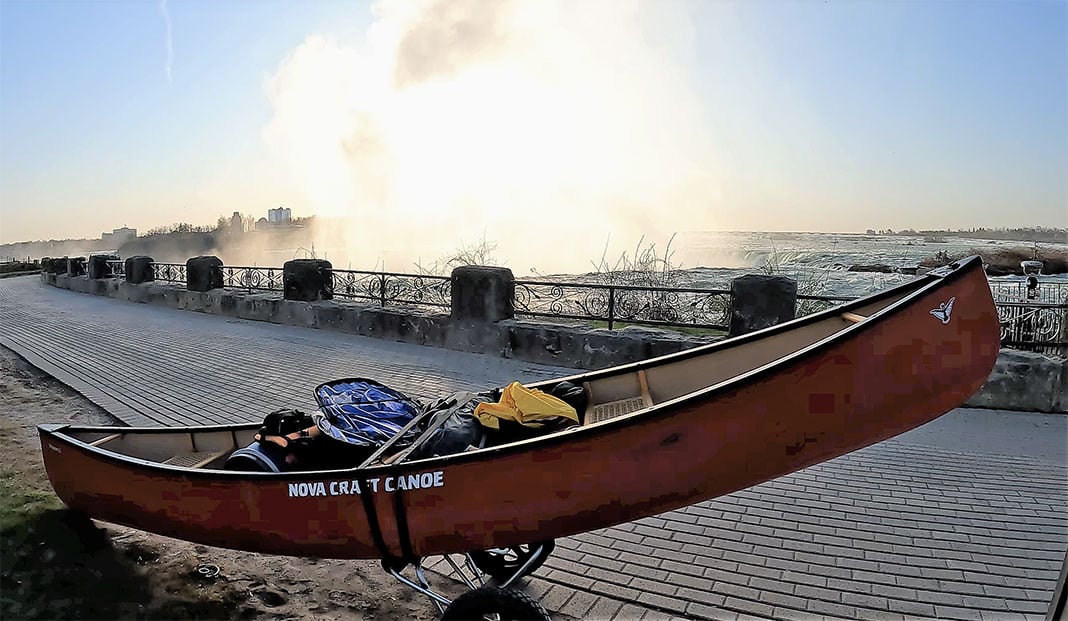
Portaging around the Falls. | Photo: Adam Shoalts
Under bridges and along urban shorelines
Setting off, he immediately encountered what could’ve been the expedition’s greatest challenge: portaging around Niagara Falls. But other than crowds of gawkers and a couple of concerned police officers who “thought [he] might be doing something dangerous,” Shoalts says the 13-kilometer portage followed an easy paved trail and took only five hours to complete.
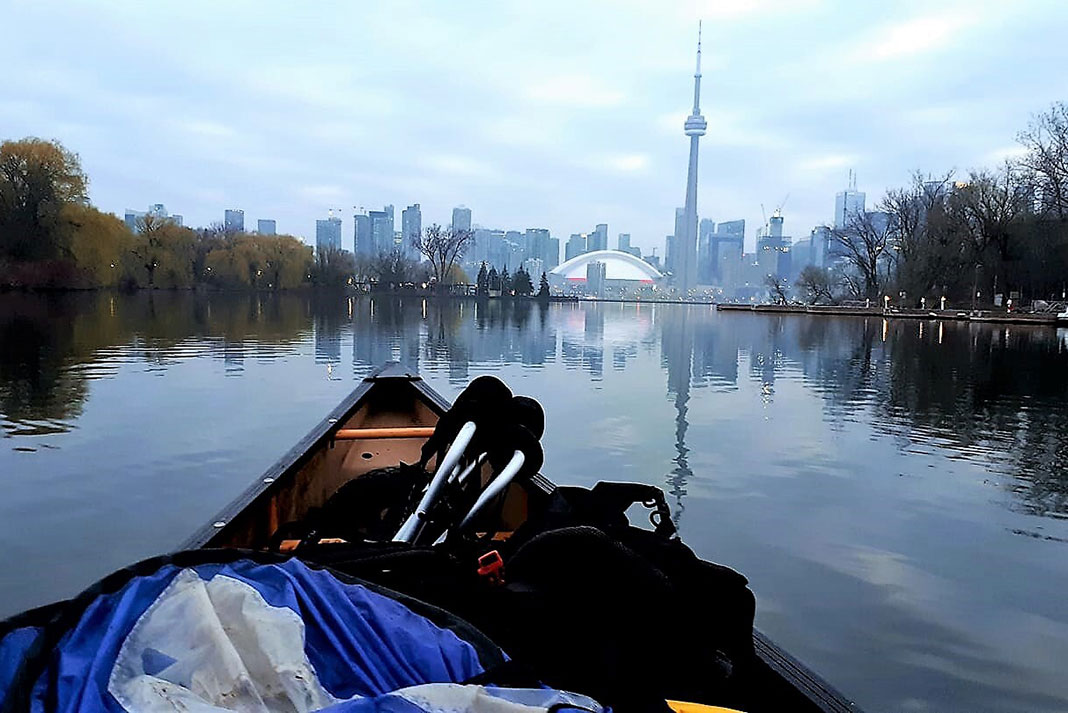
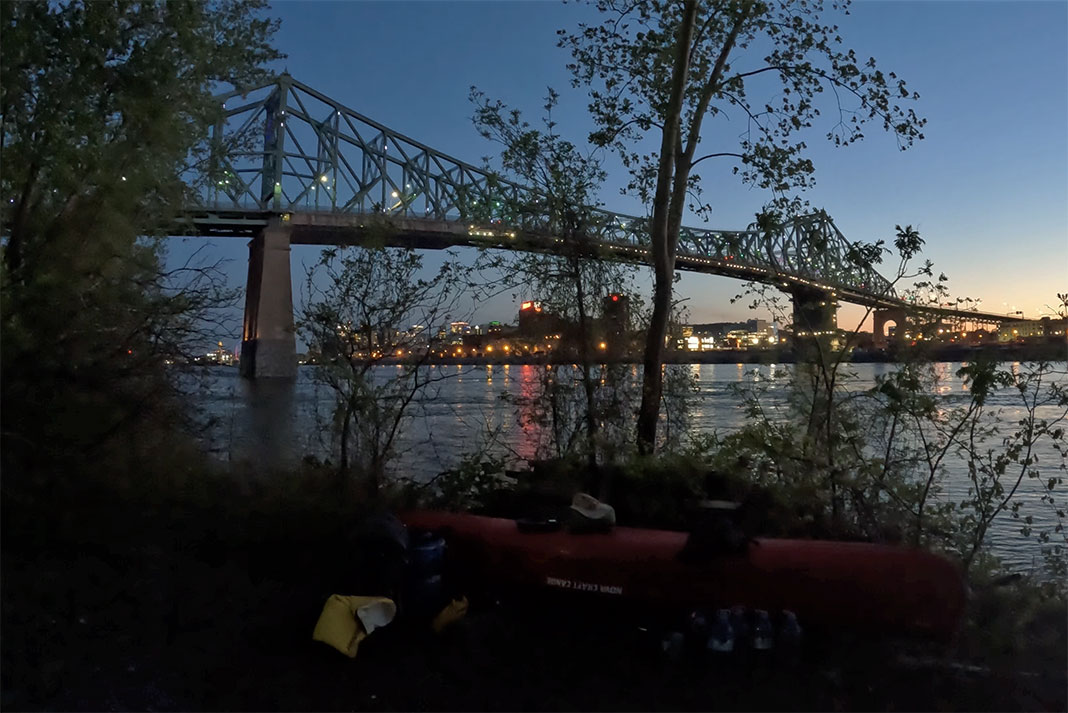
Another problem came in navigating urban shorelines along Lake Ontario and the St. Lawrence River. But even near Toronto, Shoalts says he was able to find secluded copses of trees in which to camp. He also slept a night under the Jacques Cartier Bridge in Montreal and pitched his tent adjacent to Quebec City’s Old Town.
Paddling past the downtown Toronto skyline… | Photo: Adam Shoalts
…and under the Jacques Cartier Bridge. | Photo: Adam Shoalts
The tone of the expedition shifted dramatically when he veered north, ascending wild waterways draining into the St. Lawrence to the height of land on the Labrador Plateau. Here he accessed the George River, which flows into Ungava Bay at the Inuit community of Kangiqsualujjuaq.
“I was relieved to get to a wilder section after more than a month of paddling through Southern Ontario and Quebec,” he says. “I just studied maps and traced my finger between places to work out what seemed like the easiest and most straightforward route from point A to point B. Labrador’s interior is so laced with lakes, rivers and ponds, that so long as you don’t get lost, it’s possible to go from pretty much any point to any other.”
Where the falcon flies
Shoalts admits he saw only three peregrine falcons on the three-month journey, perhaps owing to the vast speed difference between a solo paddler and the planet’s fastest animal. He made up for that near journey’s end, when he finally found a falcon’s nest high among the misty ridges of the Torngats.
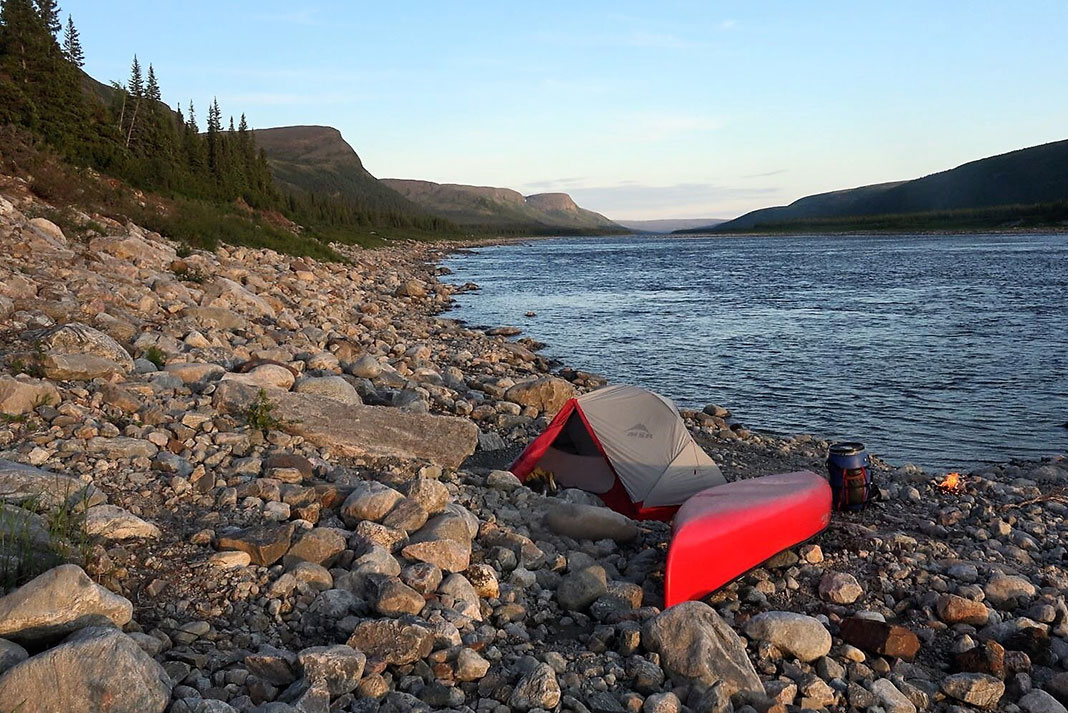
The tone of the expedition shifted dramatically when Shoalts veered north. | Photo: Adam Shoalts
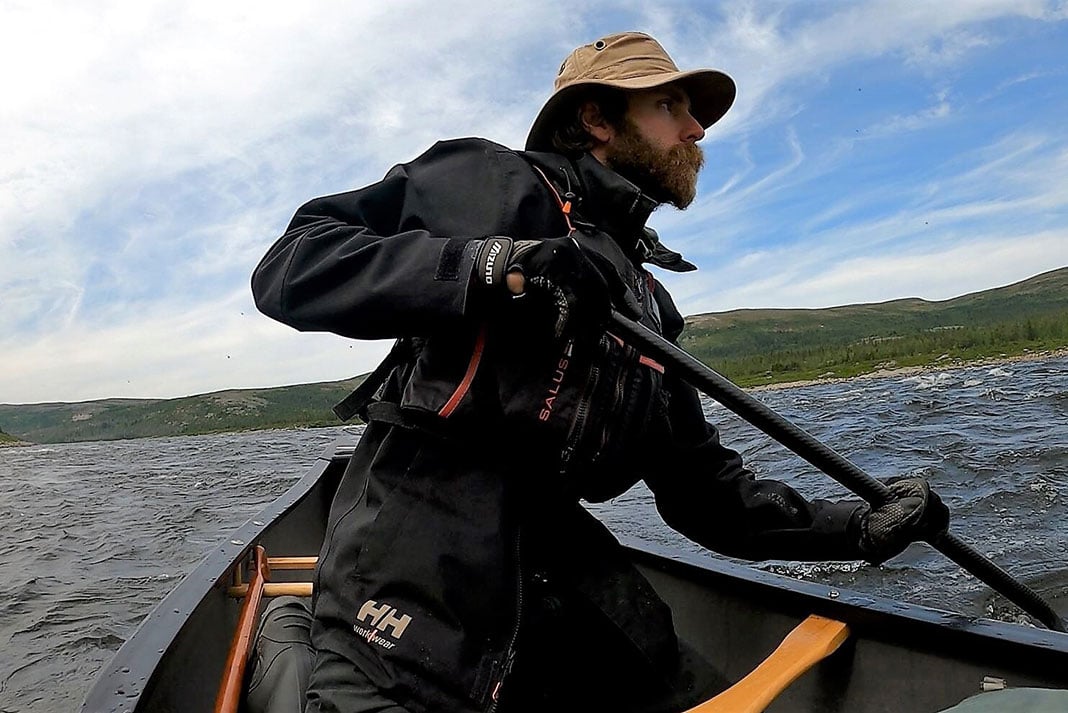
The expedition paddler says the greatest hardship he faced was loneliness. | Photo: Adam Shoalts
“Peregrine falcons nest all across Canada’s Arctic, wherever they can find suitable nesting sites,” he says. “But the sheer cliffs and high peaks of the Torngat Mountains are especially a hot spot for peregrines, and many of the Lake Erie falcons are known to migrate there in particular.”
Unlike his previous expeditions, Shoalts says the greatest hardship he faced was loneliness. Arriving at journey’s end was a huge relief, in stark contrast to the bittersweet emotions he felt at the terminus of his 2017 expedition across Canada’s far north.
“When I did that trip, I wasn’t a parent. Now I am,” he says. “My son was only 14 months when I embarked on this journey, so missing him was definitely the hardest part. I was happy to have finished it and reached the end, but even happier to be going home to my family.”
Shoalts followed the peregrine falcon’s migratory route for his book, Where the Falcon Flies. | Feature photo: Adam Shoalts
From the wild icescapes of Baffin Island to the mighty Mississippi River, Paddling Magazine’s top picks for the best paddling films of the year promise to awe and inspire viewers of all ages and abilities. These films celebrate the spirit of adventure and our connection to water through exceptional storytelling and stunning visuals.
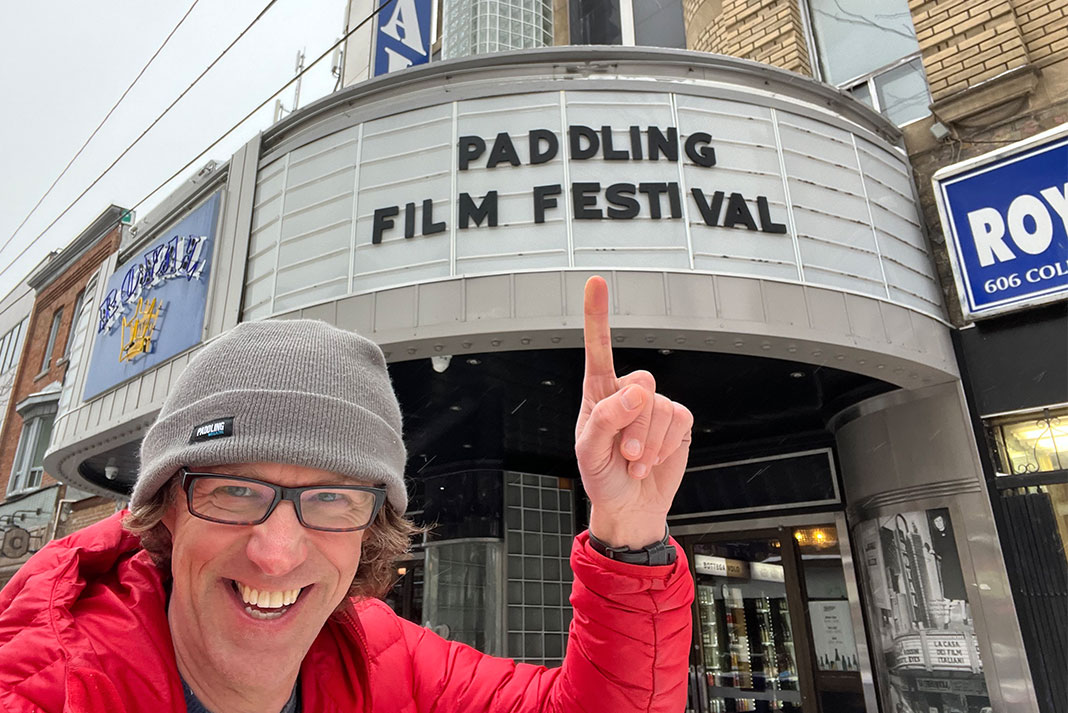
The following nine films are currently screening as part of the Paddling Film Festival, which is the largest paddling film festival in the world and has been showcasing the best canoeing, kayaking, paddleboarding and whitewater films every year since 2006. Watch the films here.
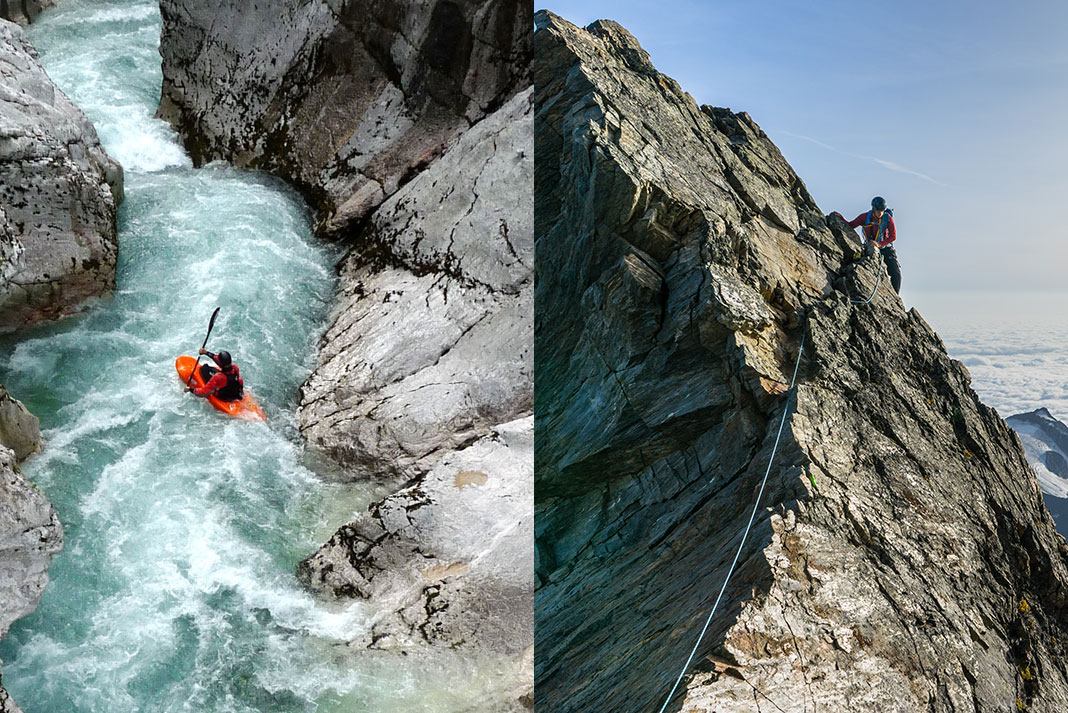
Erik Boomer and Sarah McNair-Landry set off on a bold multisport 45-day expedition—traveling through the remote landscape of Baffin Island in search of stunning cliffs to climb and unexplored rivers to whitewater kayak.
Directors:Sarah McNair-Landry, Erik Boomer
Producers: Rush Sturges, Erik Boomer, Sarah McNair-Landry
Georgie, a forgotten raft rediscovered at a yard sale, narrates her story of running rivers. From her wild days with legendary Georgie White in the Grand Canyon to leisurely weekend floats, Georgie’s wisdom rings true to every generation of river traveler.
Adventurer, competitor, daughter, friend, pioneer, hero and badass human are all words used to describe French kayaker, Nouria Newman. In Wild Waters, we watch Nouria grow from a young Olympic hopeful to one of the greatest kayakers of all time, and follow her as she prepares to become the first female to run a 100-foot waterfall. Running the world’s hardest whitewater isn’t Nouria’s biggest challenge, though. Realizing the expectations placed upon her as an athlete and as a woman weigh heavily as she pushes back to make her own path.
Icelands Most Remote Peninsula: Hornstrandir By Kayak
Winner of Best Sea Kayaking Film 2023
Due to its proximity to the Arctic Circle, Hornstrandir is damn fresh even in summer, and this northern coast is hardly protected. In paddling Iceland’s most remote peninsula, this group of kayakers learns how to fail beautifully.
Tragedies in former lifeguard Brendon Prince’s past forced a change in his life to pursue water safety education. In the pursuit of raising awareness for this cause, he must put his own life at risk, pushing his limits and attempting something no one has accomplished before.
Circumnavigate follows the South Devon-based father of three as he attempts to become the first person to standup paddleboard around mainland Britain in hopes of breaking five world records—a challenge many have tried, but none have achieved.
Dale “Greybeard” Sanders challenges himself to set another world record, trying to reclaim his title as the oldest person to paddle the full source to sea on the Mississippi River. At 87 years old, it takes perseverance and an attitude that says, “One of these days I’ll get old.”
Director: Zak Rivers
Producers: Zak Rivers, Alex Maier, Kyle Johnson, Amy Robin
Five women set out on an eight-day, 65-mile pack rafting journey deep in the wilderness of Montana. A trip inspired by self-growth, adventure and world-class westslope cutthroat trout fishing quickly evolves into a deeper exploration of how we are on the edge of a new climate era. The group begins to question what the future of conservation and ethical wilderness recreation will look like in a rapidly changing climate.
Armed with a raft, snorkels and flippers, four friends drift down Slovenia’s Sava River. Their one mission: find the elusive finned monsters that dwell in the deep, in order to help protect the Sava from the construction of dams.
Directors: Rožle Bregar, Carmen Kuntz
Producers: Balkan River Defence, Leeway Collective
For decades, Eastern Canada has brought people from all over the world to paddle its huge variety of whitewater. There is one aspect in particular that continues to bring the world’s best paddlers—big waves. As the rivers rise with the spring melt, each of these unique waves takes form. Every year, a small group of whitewater athletes dedicate their time to the chase. Those who started this tradition gave it a name: Stakeout.
Featured Image: Chad Houde/Ely Police Department via AP
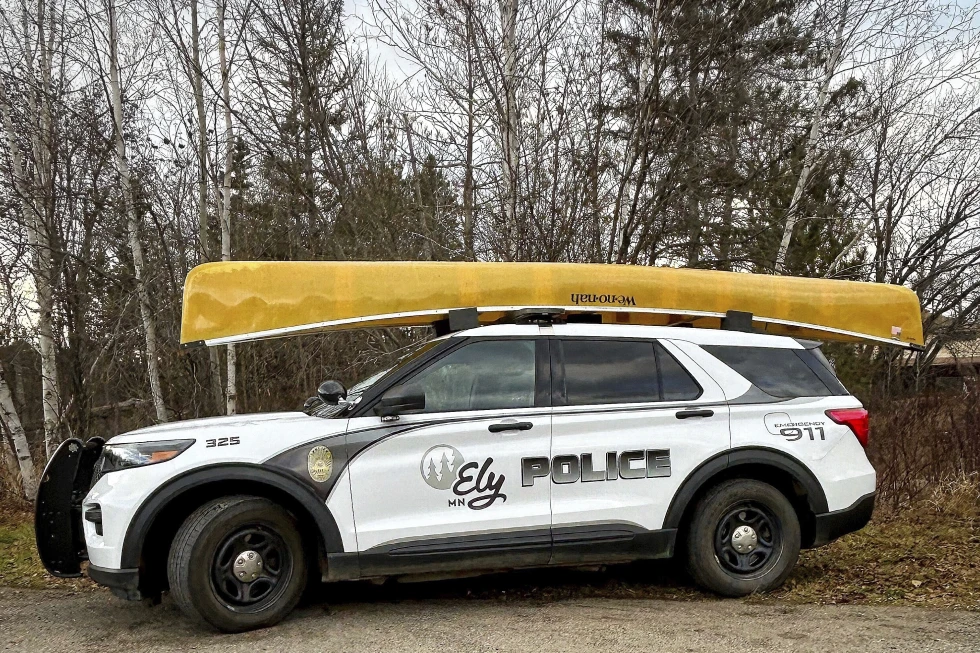
In a small town at the edge of the fabled Boundary Waters Canoe Area Wilderness, a police department is incentivizing recruits with a pretty sweet sign-on bonus—free Kevlar Wenonah Canoes.
Ely, Minnesota, has a population of just over 3,000 residents in a remote corner of the state. Like many police departments in recent years, the small outfit serving Ely is struggling to hire new officers. Utilizing what the town has access to and what Minnesotans value, Police Chief Chad Houde came up with a creative and fitting benefit to joining his force. Houde is giving new (and current) police officers free Kevlar Wenonah Canoes valued at $3800 for committing to three years of duty.
[ Check out finely crafted Wenonah Canoes in the Paddling Buyer’s Guide ]
“You can get done with a shift, maybe it was a stressful shift. … The best way to decompress is go out canoeing, hunting or fishing,” Houde shared with the Associated Press.
Featured Image: Chad Houde/Ely Police Department via AP
Talk about a quality of living bonus. The bordering Boundary Waters Canoe Area Wilderness comprises one million acres of forests and connecting waterways, with over 1200 miles of canoe routes.
To give the offer more state pride, Wenonah Canoes were founded in Minnesota 50 years ago and are still made there today.
For paddlers pursuing a career in law enforcement, one could do worse than scoring free canoe and joining a police department serving a community at the edge of one of the most treasured natural areas in North America. The Ely police department has one slot currently open and another soon to come. But we imagine those won’t last long once word spreads through the canoeing ranks.
Canadians are going outside in record numbers. That’s a good thing: spending time in nature improves mental and physical health. But all those extra boots on the ground is leaving an impact. Now there’s a new way Canadians can play a part in preserving natural spaces.
“Land managers and trail groups across the country tell us they are struggling to keep up with the influx of people,” says Richard Vinson, the Chair for Leave No Trace Canada, a non-profit that promotes the sustainable use of parks and natural spaces. “With more people sharing these outdoor places, the more it matters how we all behave when we’re out there. But there are simple things we can do that make a big difference.”
Photo: Duncan Macpherson
One of them is taking the new Leave No Trace Pledge, a joint project between Leave No Trace Canada and Subaru Canada. By visiting LeaveNoTrace.capeople can learn about the Seven Principles of Leave No Trace and then commit to adopting them by taking the Pledge. For everyone who shares their Pledge on social media Subaru Canada will plant a tree in the spring 2024.
“This is a real win-win-win,” says Vinson. “We’re planting trees in Canada, educating people and protecting parks, natural spaces and wildlife all at the same time. The Pledge is something anyone can do to show that they care.”
Photo: Taylor Bond
Subaru Canada thinks the Pledge is a good way to mitigate environmental impacts.
“We are excited to partner with Leave No Trace Canada and help promote their Seven Principles,” said Tomohiro Kubota, Chair, President and CEO of Subaru Canada Inc. “We look forward to challenging Canadians to take The Pledge as we believe these guidelines provide the basis of responsible exploration.”
Outdoor recreation and park use were both increasing across the country before 2020 and then shot up significantly during the COVID-19 pandemic. A Park People report found that 66 percent of Canadians increased their park visits since 2019, while a Leger Opinion study for the Trans Canada Trail found 40 percent of Canadians increased their trail use in 2021. In addition, Parks Canada experienced its busiest camping years ever with more than 500,000 camping nights in 2022.
Photo: Elisabeth Lacroix
Research shows that more people using parks and natural spaces means more people caring about these important places, says Vinson. But visitors and trail managers tell Leave No Trace this increase is leading to more negative impacts: more waste left behind, more off-trail damage, more campfire scars, more wildlife disturbance and more user conflicts.
“I think most of the impacts are from people who don’t know there is a better way,” says Vinson. “This is where the Leave No Trace principles come in. They aren’t rules. They’re guidelines to help people be gentler users of our natural spaces.”
Research by Brock University’s Garett Hutson backs this up. “Leave No Trace principles and practices give people the tools to experience natural areas responsibly and sustainably,” Hutson says.
“Practicing the Leave No Trace Seven Principles and taking the Pledge present an opportunity to make an investment in the future of our natural spaces,” says Vinson.
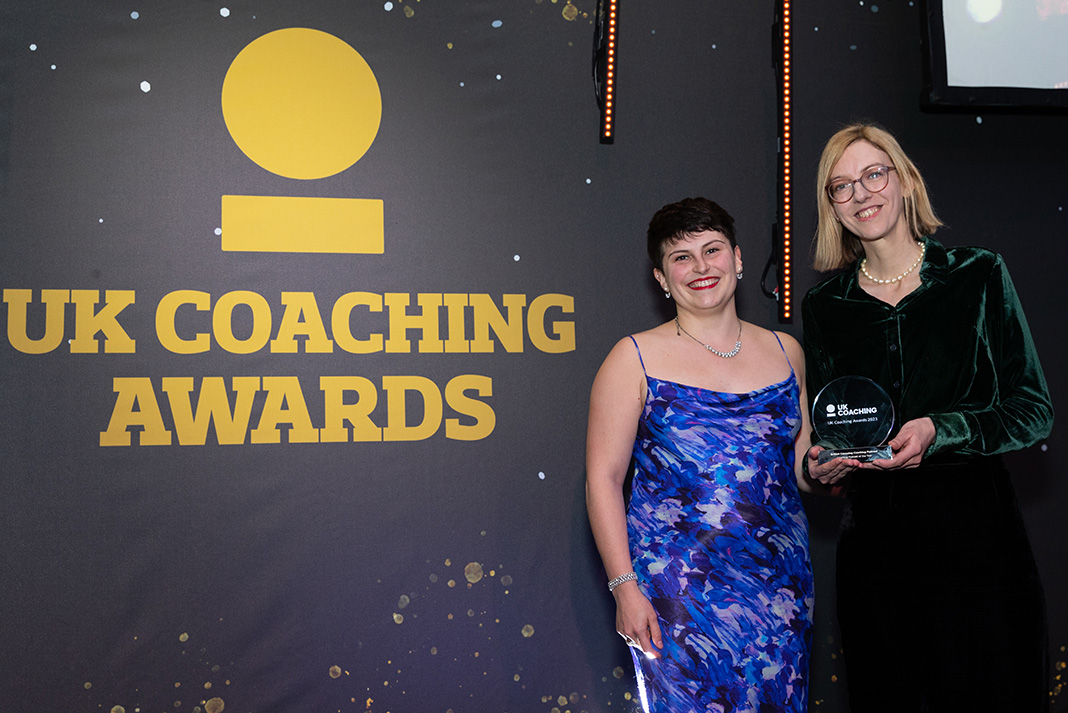
British Canoeing’s British Canoeing Awarding Body Podcast (BCAB) has been awarded the Coaching Podcast of the Year Award at this year’s UK Coaching Awards. The award acknowledges the British Canoeing Awarding Body Coaching Podcast (BCAB), which has facilitated the development of others in coaching and encourages the delivery of broader social impact through sports and physical activity.
The UK Coaching Awards is a national celebration event, regarded as the most prestigious within the coaching community and created to honour the remarkable contributions coaches make – from delivering high quality and technical coaching, to supporting participants both physically and mentally.
The BCAB Podcast is released monthly, exploring different topics around coaching with a range of guests from within the paddling and sports community, now helping coaches far and wide progress their professional development. Nearing 100 episodes, the podcast is a free resource for any coaches to use – praised most recently by the RNLI for detailing specific advice from a leading researcher on the significant danger of winds to stand up paddleboarders, helping to raise awareness for those heading out to sea.
Conducting distinctive and forward-thinking conversations accessible to everyone, the podcast has been acknowledged for notable efforts across multiple topics, including Neurodiversity Celebration Week. In one instance, it engaged in conversations with a marathon and sprint athlete, as well as an Olympic rower, both diagnosed with ADHD and high-functioning autism. By offering an open and secure platform for them to share their experiences, the podcast has ensured a space for the neurodiverse community and praised for exemplifying the broader impact of exceptional coaching.
Overwhelmed to be announced as an award winner, the team reflected:
“We are a bit starstruck, it is an honour, there is a lot of work that goes behind the scenes that go into this and with every episode we feel really proud and happy to be recognised.
“It is incredibly important to celebrate coaches, because they are often there in the background with people mainly focusing on the athletes and the physical participation of people doing the sport.
“Coaches need support as they are giving so much of themselves and so the idea of a coaching podcast is that support for the coaches who are then supporting their participants. It also celebrates lot of different coaches and something we have tried to do in recent series of the podcast is to represent lots of different coaches from different backgrounds, disciplines and experiences.”
With previous award winners including Sarina Wiegman, Jane Figueiredo, Judy Murray, and Ben Stokes’ coaching chain, the awards are seen as one of the most prestigious within the coaching community, recognising the contributions coaches make to their participants lives and their impact within the wider coaching world – including outstanding podcasts that continue to play a vital role in supporting the well-being of the nation.
UK Coaching’s CEO Mark Gannon congratulated BCAB on their award, and for the profound coaching contribution that saw it honoured as part of the annual celebration:
“I would like to extend a huge congratulations to them on their fantastic work which we are very proud to recognise by presenting him with a UK Coaching award. British Canoeing’s Awarding Body Podcast, and all our winners and finalists should be extremely proud of what they have been able to achieve. Great coaches change lives, tackle inequalities, and help build communities, and continue to be the essential conduit to getting our nation more active.
“It is so important that we celebrate great coaching and acknowledge the tireless work our amazing coaching community deliver to support individuals on their own unique sporting journey. The podcast helps our nation’s outstanding coaches, who chang so many lives through their dedication and creativity in making sport and physical activity accessible for even more people.