Home Blog Page 77

The Big Portage: How The Canadian Canoe Museum Will Move 600 Historical Boats

Canadian Canoe Museum Big Move of 600 boats
Feature Image: Making the "Big Lift" of one of the Canadian Canoe Museum's 600 boats to be transported to their new location. Image Canadian Canoe Museum

A grand portage is underway at the Canadian Canoe Museum in Ontario. Since the museum’s beginning in 1997, the growing collection of floating watercraft has made its home in a former outboard motor factory within the town of Peterborough. Now, after years of planning, the Canadian Canoe Museum is beginning to haul the world’s most extensive canoe collection with over 600 crafts across town to a new location most befitting on the eastern edge of Little Lake along the Otonabee River in a campaign called, “Move the Collection.”

The Canadian Canoe Museum recently completed its first, “Big Lift,” removing a 450-pound replica of a fur trade-era Montreal canoe. Within the months ahead, the museum will be preparing and beginning to move every craft plus 500 paddles, among other items, to the site on Little Lake.
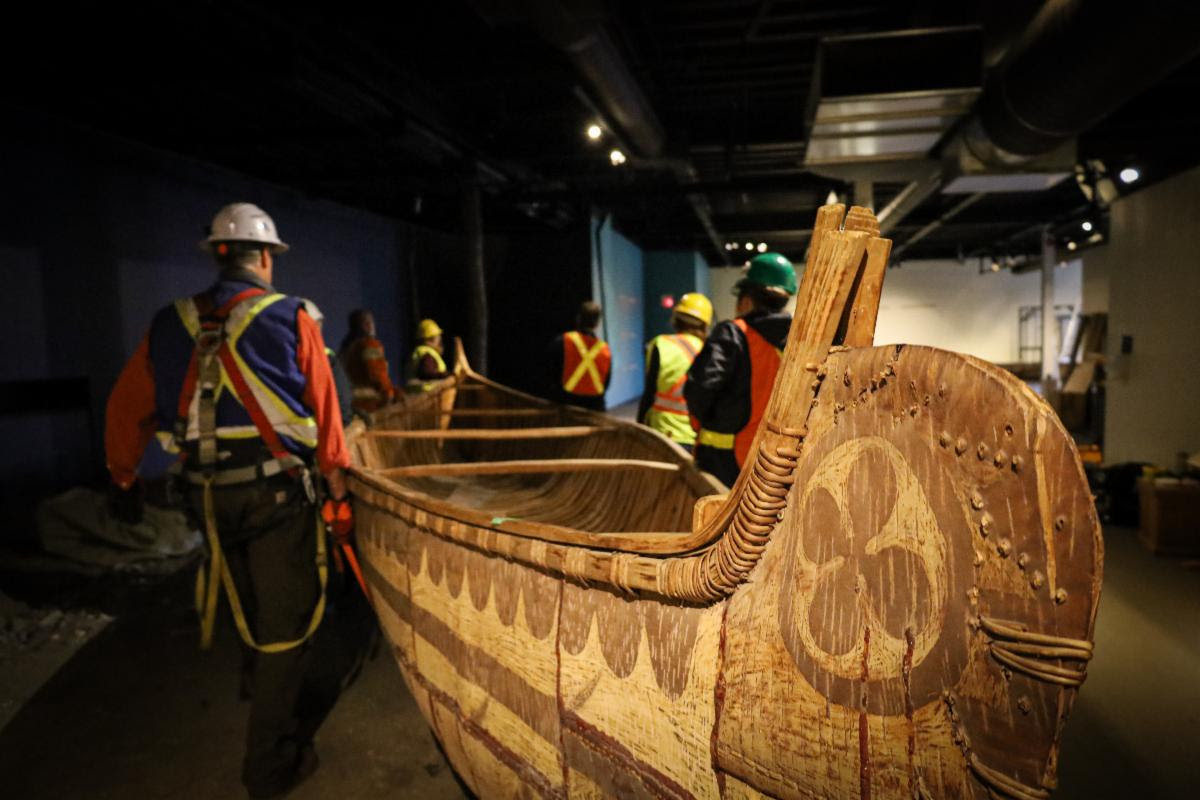
Canadian Canoe Museum Big Move of 600 boats
Making the “Big Lift” of one of the Canadian Canoe Museum’s 600 boats to be transported to their new location. | Feature photo: Courtesy Canadian Canoe Museum

The Canadian Canoe Museum’s big move

“The move to the water is transformational,” shares Executive Director Carolyn Hyslop, who has led the museum since 2016.
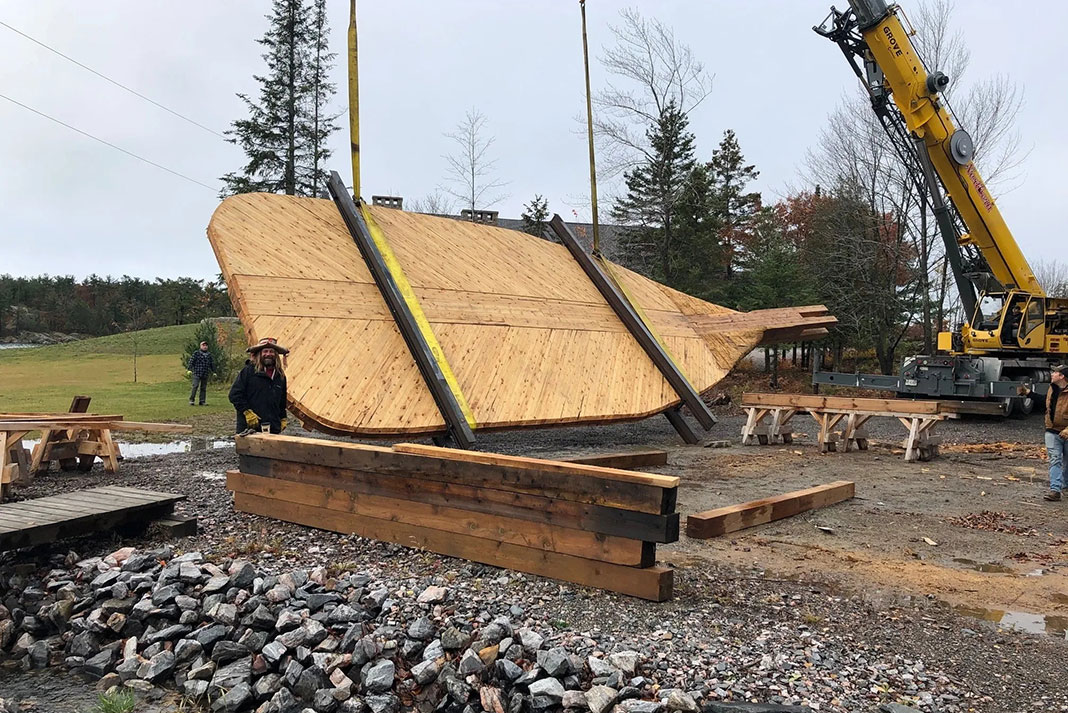
The new home of the Canadian Canoe Museum will provide enough space to display the entirety of its collection to the public, who previously only saw 20 percent of the watercraft and paddling artifacts warehoused. This includes ancient dugouts, and centuries-old birch bark canoes, which Hyslop admires for the Indigenous craftsmanship making use of surrounding resources to produce designs of near perfection. Peterborough itself sits within the traditional territory of the Williams Treaties First Nations.

The new building also provides museum-purpose conditions, with the ability to regulate temperature and humidity.
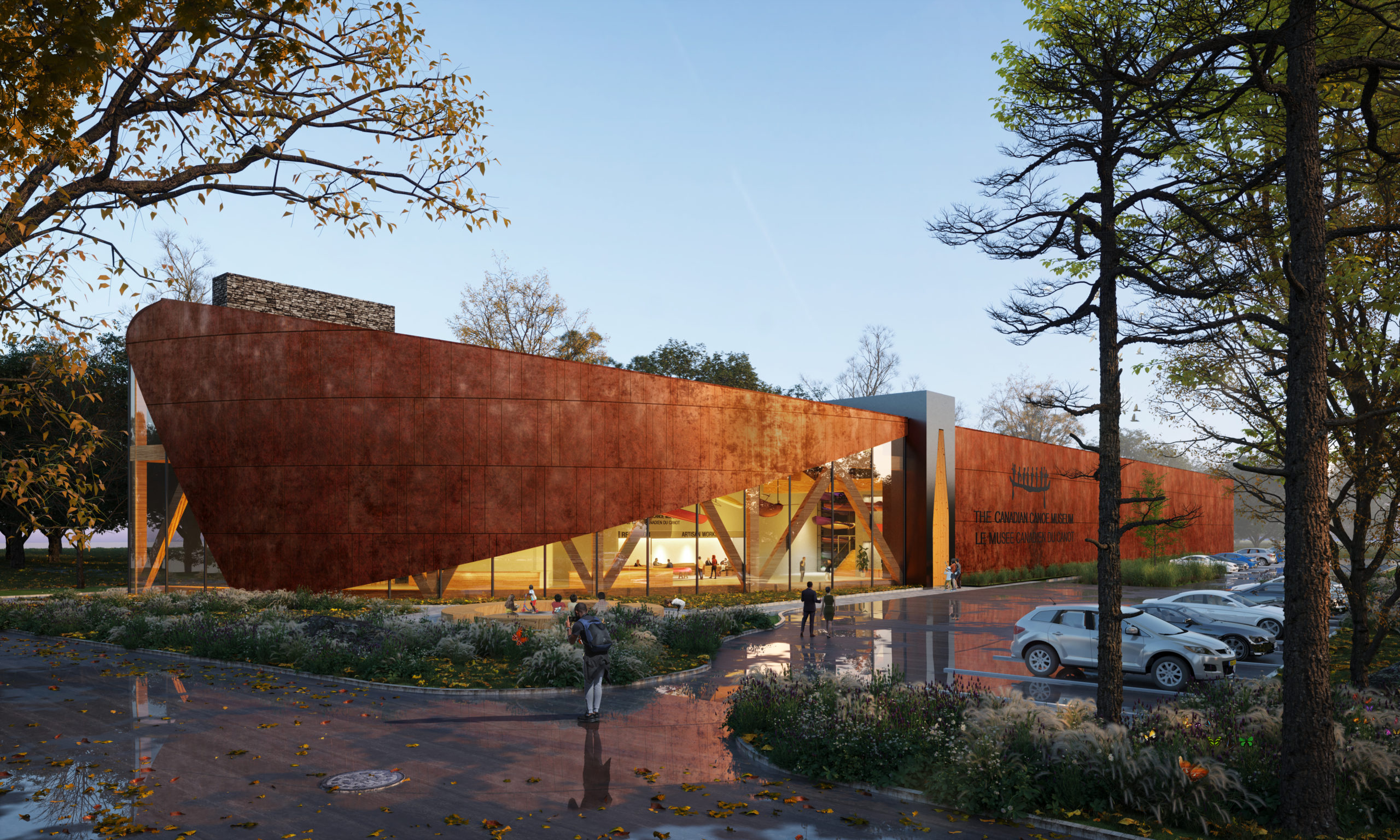
The Canadian Canoe Museum’s unique curved façade and use of weathered steel make for an impressive view from the street. | Photo: The Canadian Canoe Museum
The new Canadian Canoe Museum’s unique curved façade and use of weathered steel make for an impressive view from the street. | Photo: Courtesy Canadian Canoe Museum

For Hyslop, perhaps the most significant direct benefit to visitors of the new museum will be the setting on the shore of Little Lake. This will allow the Canadian Canoe Museum to expand its programs taking place on the water and adjacent land. Bridging visitors to the paddling artifacts through more participatory experiences.

“We will be able not just to immerse people in the collection but directly to the outdoors,” Hyslop adds.

To do so, Hyslop and the museum must first undergo the task of transporting 600 canoes across town. This includes watercraft over 53 feet long and weighing 1,000 pounds. You may have the same idea we do of making a trek to Ontario, rolling up our flannel sleeves and hoisting boats overhead to form a two-mile-long portage party. But as artifacts, each canoe is assessed individually for its proper packaging and transporting needs.
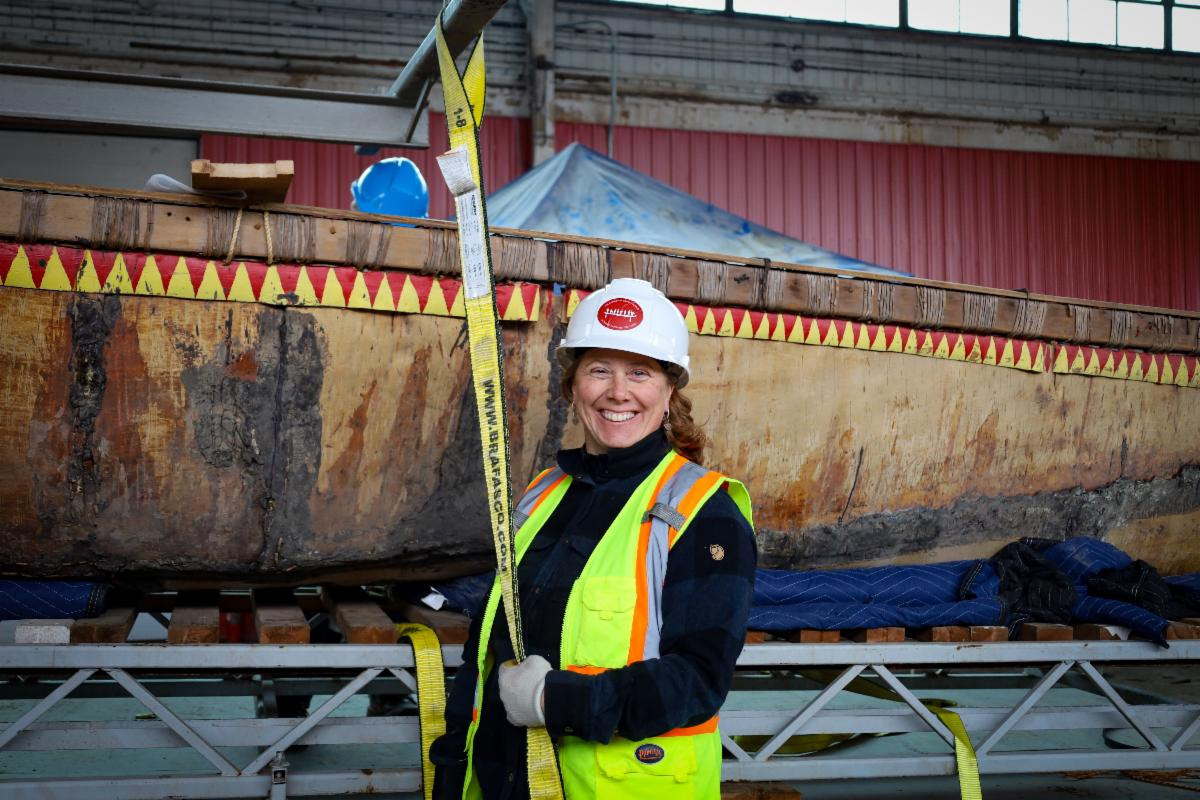
Canadian Canoe Museum Executive Director Carolyn Hyslop. Image: Canadian Canoe Museum
Canadian Canoe Museum Executive Director Carolyn Hyslop. | Photo: Courtesy Canadian Canoe Museum

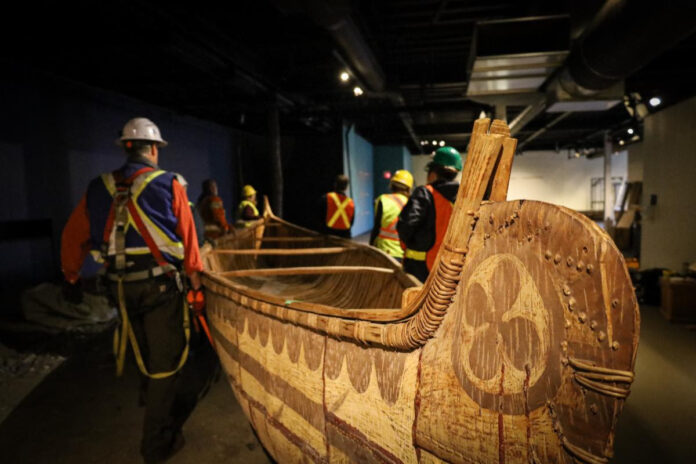
The first Big Lift of the 450-pound canoe from the soon-to-be former museum site required a crane, as others will. Every boat too big to get through the front doors of the canoe museum has to be hoisted out of a second-story hatch of the old outboard motor factory. That’s how the fur trade-era canoe entered the building 22 years ago and recently made its exit.

“It’s a place of story. Canoes and kayaks connect us to heritage, art and language.”

A team of movers hoisted the canoe by pulley at three points for even distribution. Then placed a cart and set of tracks under it. This allowed them to push it outside the second story onto an aptly named “shuttle” on a set of scaffolding.

The crane lowered the canoe shuttle from the scaffolding onto a trailer which was then towed to a storage facility for documentation and temporary holding until the new museum is ready to receive the canoes.

The immeasurable value of a place of story

Moving the collection is a time-consuming and costly endeavor within the opening of the new location. The Canadian Canoe Museum has raised 95 percent of the overall museum project’s $40 million funding goal. At this point, Hyslop implores that the most significant contribution the paddling community can provide to Move the Collection are donations to help them reach the project’s financial milestone and secure the new museum opening for future generations of paddlers to visit.

To Hyslop, the Canadian Canoe Museum serves as a unique place of value to the past, present and future of not just canoeing but the culture surrounding it.

“It’s a place of story,” Hyslop says. “Canoes and kayaks connect us to heritage, art and language. Through the collection, we strive to be a platform for voices and stories to be shared from Indigenous communities. And it provides a place of finding community.”

According to the Canadian Canoe Museum collection preparations have been ongoing since last summer and now increasing substantially. In the next three months, the museum team will begin moving the collection to the new museum.

Learn more about the Canadian Canoe Museum and how to support Move the Collection.

Making the “Big Lift” of one of the Canadian Canoe Museum’s 600 boats to be transported to their new location. | Feature photo: Courtesy Canadian Canoe Museum
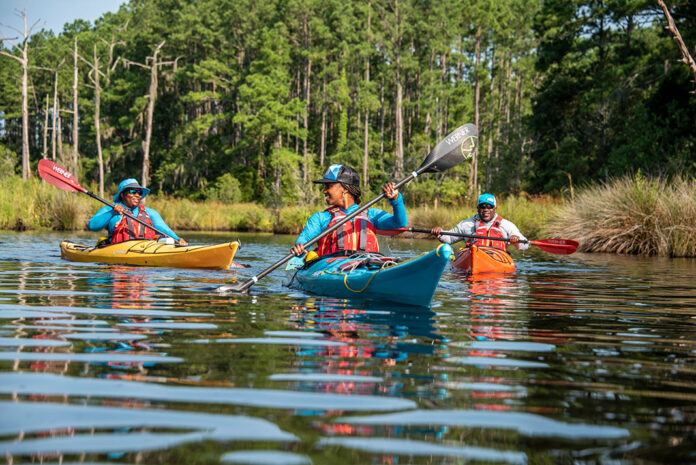
 

A 360-Degree View Of Paddling With Icebergs (Video)

Approximately 10 percent of Iceland is covered in glaciers. The opportunity to paddle where these glaciers meet the sea and icebergs litter the bays is one few paddlers would pass up. In this video in partnership with NRS, a group of instructors from Online Sea Kayaking give us a 360-degree view of the experience of paddling Iceland’s glacial bays.

[ Take a glacial cruise of your own with help from the Paddling Trip Guide ]

The video is just a clip from Online Sea Kayaking’s longer documentary called Sleeping Giants, following their trip to the island where fire and ice meet, making for one of the world’s most impressive paddling destinations.


River Heroes: 4 Organizations Opening Doors For Black & Indigenous Paddlers

three Black men and women kayaking on calm water
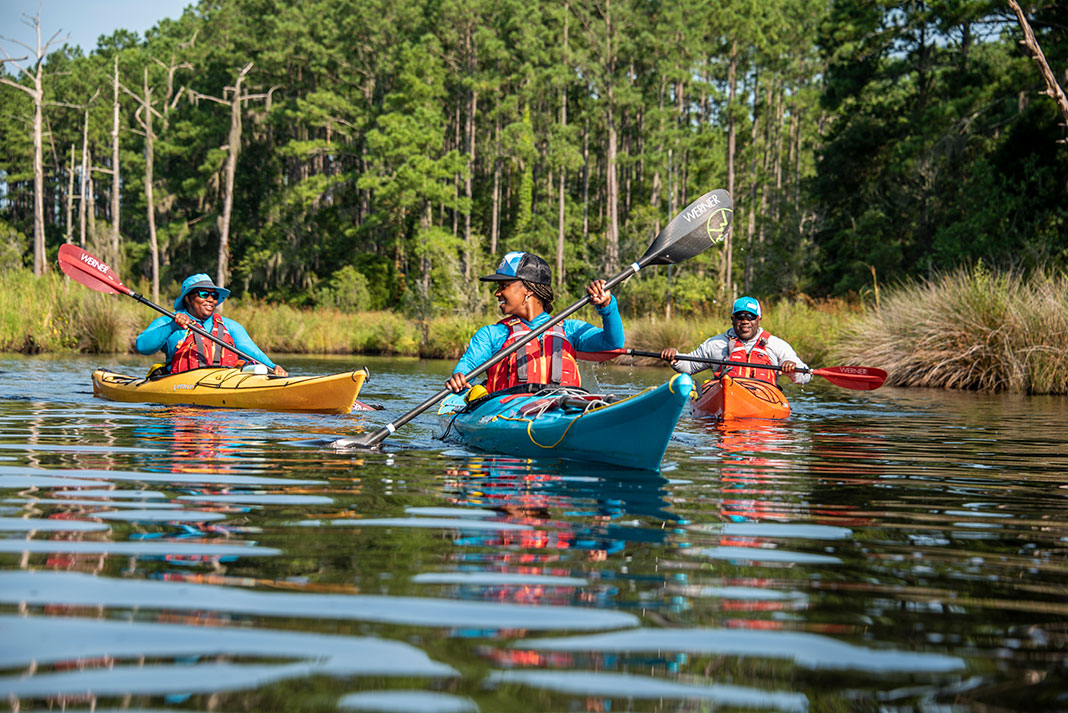
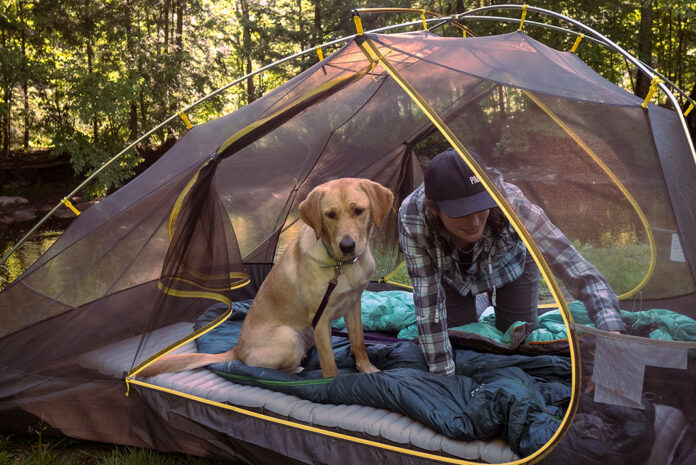
All smiles at Outdoor Afro’s 2021 Paddle Camp. Photo: Jameson Redding // Courtesy: NRS and Outdoor Afro

From entrepreneurs and explorers to game changers and artists, the wide world of paddlesports is enriched by those who see a need and step up to fill it. Whether welcoming underserved communities, mentoring new paddlers or protecting waterways at risk, heres who (and what) is changing paddling for the better this year.

 1 Sammy and Jessica Matsaw

River Newe

Connecting Indigenous youth with heritage and traditional skills via river trips

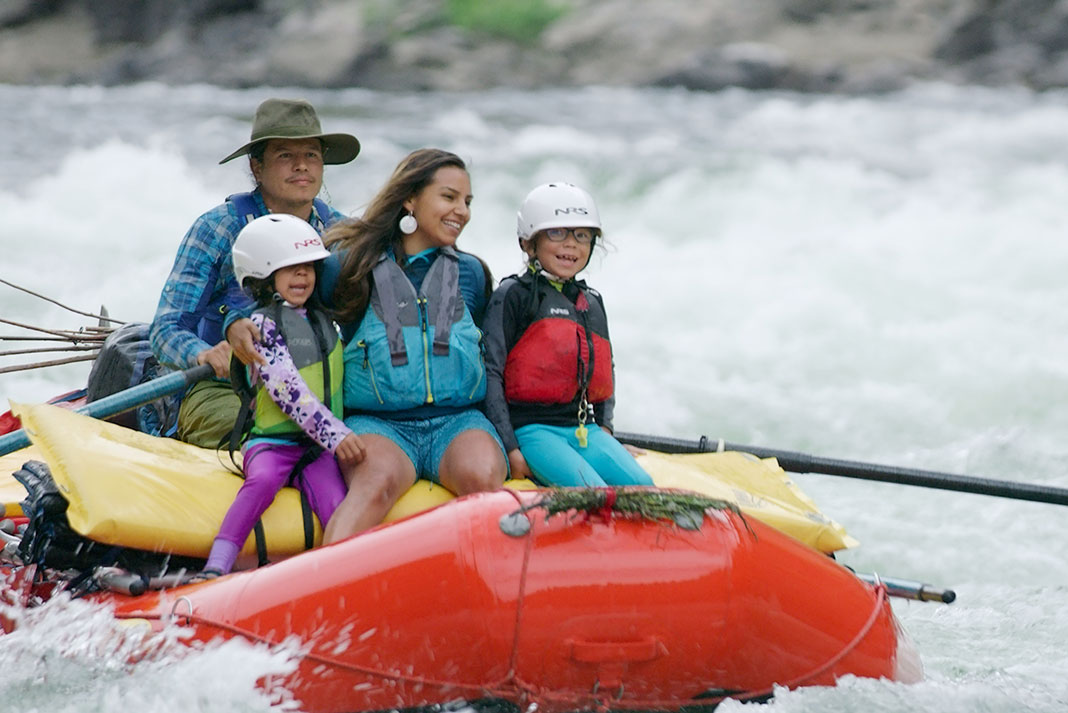
For the Shoshone-Bannock Tribes, the Middle Fork of the Salmon River has been home since time immemorial. Its people remain inextricably linked with the waters even after a history of forced removal from the land. Through River Newe, cofounders Jessica and Sammy Matsaw reintroduce Indigenous youth to the river on free rafting trips, promoting traditional Shoshone-Bannock knowledge.

a hapy Indigenous family rides on a whitewater raft
The Matsaw family on a river expedition while filming the documentary River of Return. | Photo: Skip Armstrong

“My greatest hopes are to take more of our tribal youth down the river… I just know the river would change their lives,” said Jessica Matsaw in River Of Return, a documentary by Skip Armstrong.

River Newe interweaves past generations’ teaching with the present. In 2022, “we are continuing to expand on what we offer to tribal youth. This past spring, we hosted a salmon spear making class. Tying hooks has many perspectives on how to do it and how those get mounted to spears. The class was a great success.”

2 Diversify Whitewater

diversifywhitewater.org

Event series with a mission to get underrepresented paddlers on the water

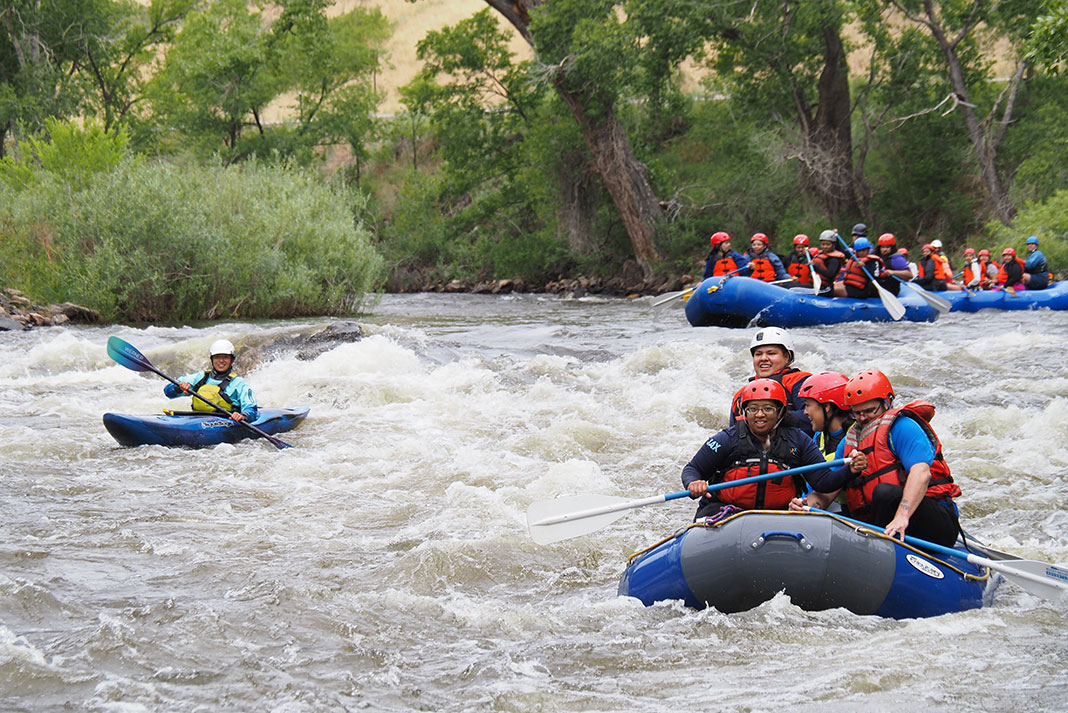
After the success in its inaugural year in 2020 with two free community events in northern Colorado, Diversify Whitewater went national. Dedicated to introducing more Black and Indigenous folks and people of color to whitewater kayaking and rafting, this year Diversify Whitewater is holding 13 events in nine states.

Black and indigenous paddlers go whitewater rafting
Diversify Whitewater’s third annual community river float. Diversify Whitewater cofounder Lily Durkee paddles the kayak (left). | Photo: Courtesy Kaycee Mass

In addition to increasing the size, breadth and frequency of events, the goal is to provide more consistent programming for participants to improve their skills year-round. “We are working on developing gear closets to provide boats and equipment for participants to use on a more regular basis and creating a mentoring network for newer paddlers to be matched with more experienced paddlers,” said cofounder Lily Durkee.

3 Outdoor Afro

outdoorafro.org

America’s leading network celebrating Black leadership in nature

Now in its 13th year, Outdoor Afro has welcomed more than 60,000 people outside through over 1,200 outdoor events, fostering participant networks in 56 cities. The not-for-profit is dedicated to inspiring Black leadership in the outdoors. To do this, Outdoor Afro provides skills training to equip volunteer leaders with essential tools to guide their local communities in nature safely and sustainably.

three Black men and women kayaking on calm water
All smiles at Outdoor Afro’s 2021 Paddle Camp. | Feature photo: Jameson Redding // Courtesy: NRS and Outdoor Afro

In July, Outdoor Afro Paddle Camp welcomed 20 volunteer leaders on a weeklong course to become certified canoeing or kayaking instructors. This cohort is double in size from 2021. After Paddle Camp, volunteer leaders guide trips in their own communities. Last year, 109 people learned how to paddle after volunteer leaders hosted follow-up paddling activities in their local communities.

“Some people had never been kayaking, so seeing the joy and excitement on their faces as their fear of the water went away was thrilling and eye-opening,” said Antonio Simmons, who participated in the 2021 Paddle Camp cohort.

Additionally, Outdoor Afro’s Making Waves program partnered with Keen Footwear and The Y to provide 100,000 swim lesson scholarships to kids and caregivers over the next 10 years. “Research shows Black youth, ages 5 to 19, are six times more likely to drown in swimming pools than white children. This public health disparity is due largely to historic prohibition of Black access to public pools and beaches. We’re working to reclaim our legacy in water,” said Outdoor Afro founder and CEO Rue Mapp.


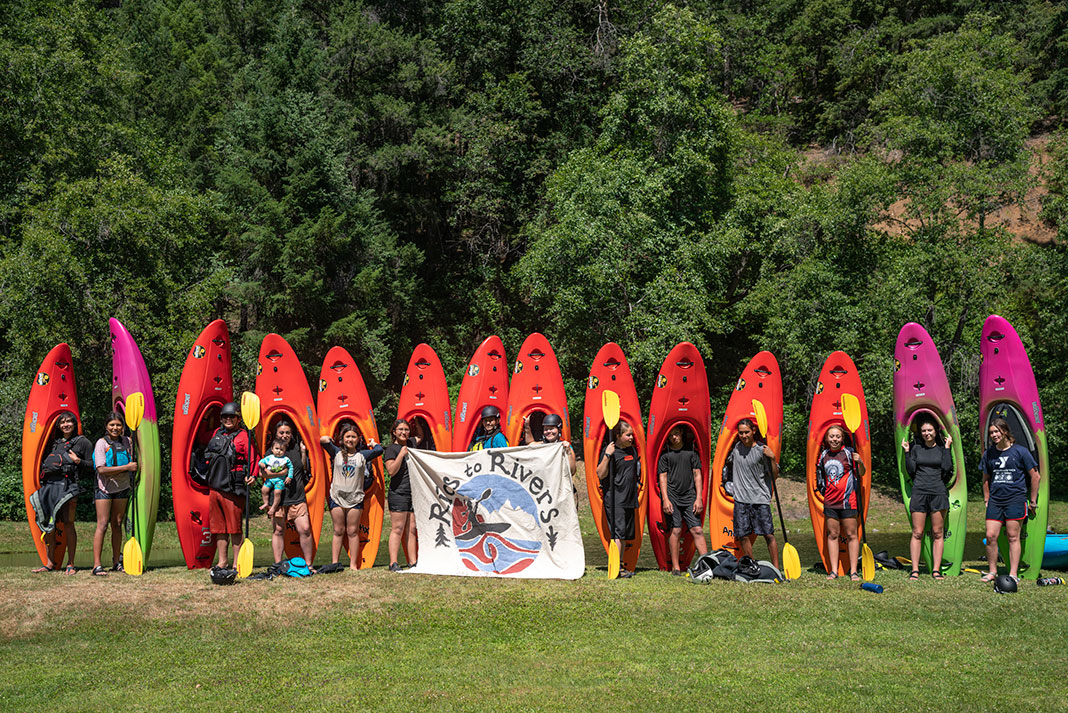
Paddle Tribal Waters youth paddlers pose with their kayaks
Photo: Paul Robert Wolf Wilson

4 Paul Robert Wolf Wilson

Paddle Tribal Waters

Empowering the next generation of river stewards

When four aging dams are removed from Oregon’s Klamath River in 2024, it’ll be a cohort of 16 Indigenous youth who will lead its first descent by kayak. This is the goal of Paul Robert Wolf Wilson and his team’s Paddle Tribal Waters initiative, which will celebrate the years of work the tribes in the Klamath Basin have done to get the dams removed.

When Paddling Magazine caught up with Wilson in July, he was just starting Paddle Tribal Waters’ first two-and-a-half-week training program. Participating were 14 youth, ages 12 to 19, from the Klamath, Modoc, Karuk, Hoopa, Yurok, Quartz Valley Ranchería, Wiyot, Warm Springs, Hopi, Navajo, Inupiaq and Apache tribes.

“The kids are just two days in and already getting their rolls, which is insane,” Wilson told us. The Paddle Tribal Waters program is as much about building whitewater skills as it is about storytelling and river advocacy, including teachings on water rights, tribal sovereignty and environmental stewardship. The program is an initiative of Maqlaqs Paddle Club—which Wilson and his sister co-founded in 2018— and Rios To Rivers. It’s also supported by World Class Kayak Academy, Otter Bar Kayak School, and Rush Sturges’ River Roots.

With the Klamath River expedition still two to three years in the future, “A lot of participants ask, ‘How do I keep this going at home? I want to do this with my family and friends.’ That’s exciting because it’s a call for us,” said Wilson, who is a Klamath Tribal Member and lives near the headwaters of the Klamath River. “Over the next two years, we want to support local paddling clubs on tribal lands as a by-product of larger expeditions.”

Cover of Paddling Magazine Issue 67This article was first published in the Summer 2022 issue of Paddling Magazine. Subscribe to Paddling Magazine’s print and digital editions, or browse the archives.

All smiles at Outdoor Afro’s 2021 Paddle Camp. | Feature photo: Jameson Redding // Courtesy: NRS and Outdoor Afro


6 Best Tents For Canoe Camping

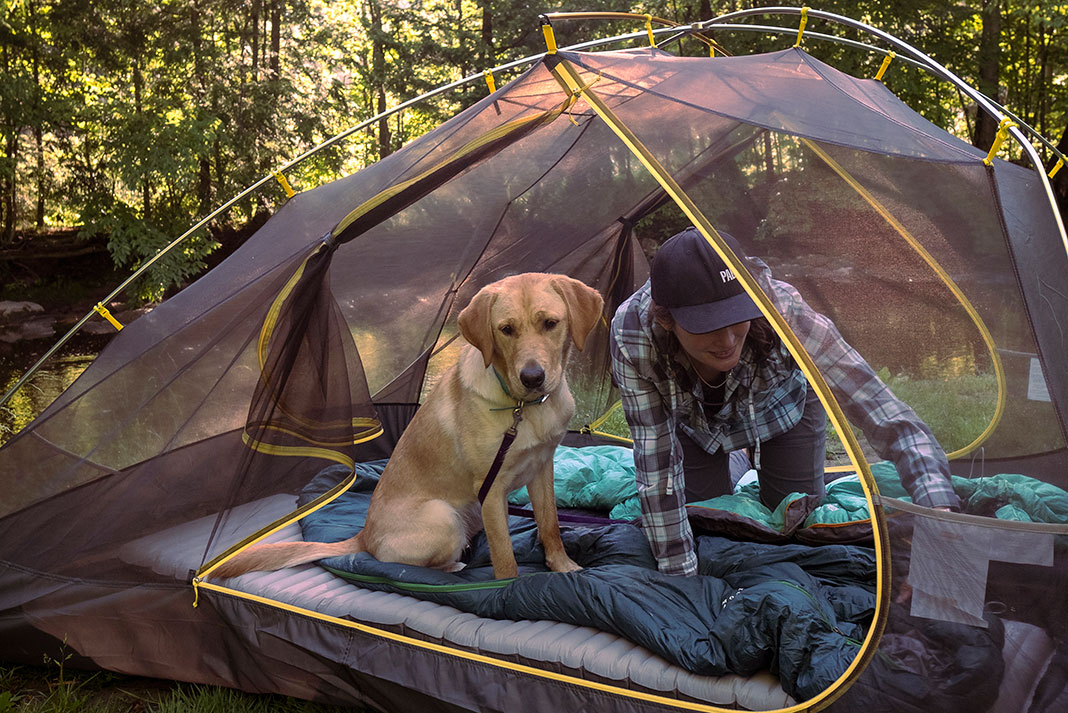
woman and dog sit in a Sierra Designs tent in a sun dappled forest
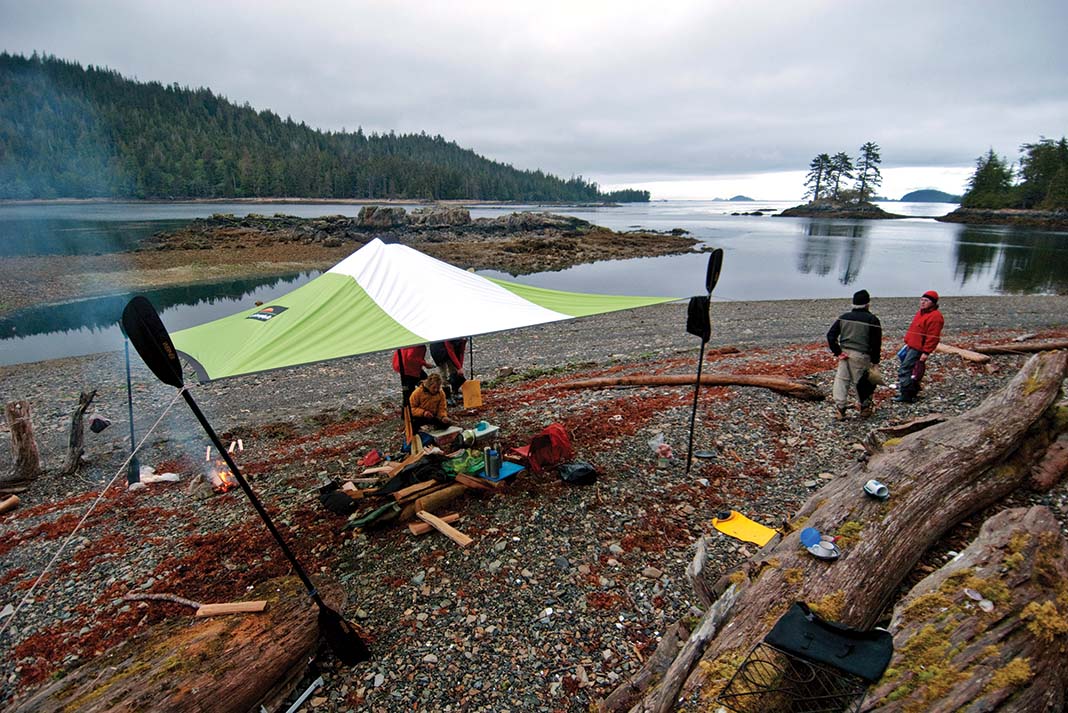
Home is where you stake it. | Feature photo: Wyatt Michalek

To stake a claim in the hyper-competitive tent market, modern shelters must be comfortable, lightweight, durable, weatherproof and easy to set up. So, which new models make the cut? Here are six of the best tents to serve as home away from home on your next canoe camping trip.

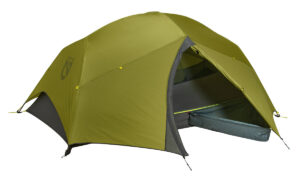
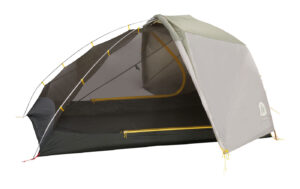
Sierra Designs Meteor 3 camping tent

Sierra Designs

Meteor 3

$299.95 | 5 lbs 6 oz | 40.8 sq ft | sierradesigns.com

Affordable, spacious and reasonably lightweight—the Meteor 3 from Sierra Designs offers the tent trifecta. It boasts a great space-to-weight ratio and reliable durability, all at a budget-friendly price that doesn’t compromise quality.

Pre-bent pole architecture increases the steepness of the exterior walls, resulting in 41 square feet of usable living space. The Meteor 3 is roomy enough so it doesn’t feel cramped for car camping but is still light enough at five pounds and six ounces, so it doesn’t feel burdensome on the trail.

When it’s time to break down camp, forget fighting with the stuff sack. One of our favorite features is Sierra Designs’ burrito-style stuff sacks. The bag opens wide to make fitting in the tent body, fly and poles easy. Then, just cinch the cords and stow.

Buy from:

AMAZON


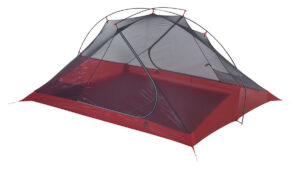
MSR Carbon Reflex 3 camping tent

MSR

Carbon ReFlex 3

$649.95 | 2 lbs 10 oz | 38.5 sq ft | msrgear.com

The roomy Carbon Reflex 3 from MSR packs into such a small and tidy silhouette, we’d forgive you for mistaking it for an inflatable sleeping pad. Weighing just two pounds and 10 ounces, the Carbon Reflex 3 is one of the lightest three-person tents available. During its decade on the market, the Carbon Reflex 3 has found a strong following amongst thru-hikers, bikepackers and packrafters.

Easton carbon fiber poles form a minimalist, semi-freestanding structure needing to be staked out tautly. The second secret to its weight savings is the ridiculously light tent and body material: an eyebrow-raising seven-denier ripstop nylon fly, 10-denier micromesh canopy and 15-denier nylon floor. Buy a footprint with this one.

The Carbon Reflex also features a zipper-free vestibule design. How? Each vestibule is secured with Velcro strips and a metal hook closure. Skeptical? It took a little leap of faith to test the design during a multiday shoulder season storm, but the vestibule and inner body stayed admirably dry with some guy line management. However, those miniature metal clasps are a bit fussy for midnight exits. Bottom line? It’s perfect for weight-conscious gearheads willing to baby the marvelously ultralight space-age fabric.

Buy from:

AMAZON


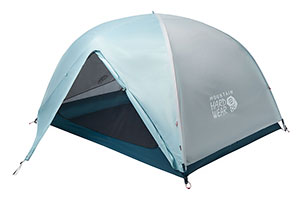
Mountain Hardwear Mineral King 3 tent

Mountain Hardwear

Mineral King 3

$350 | 7 lbs 1.2 oz | 42.5 sq ft | mountainhardwear.com

Positioned solidly in the Goldilocks zone, the Mountain Hardwear Mineral King 3 inhabits what many paddle campers consider the sweet spot intersect for price, durability and performance. Its seven-pound heft for a three-person design is adequate for paddlers and car campers but might be a stretch for backpacking, which is the only factor preventing the Mineral King 3 from being a true all-rounder.

Our testers loved the Mineral King 3’s easy two-minute setup. Its oversized doors create an opulent double-wide view, and its luxurious 90-inch length and 48 inches of headroom make sharing with three campers feel spacious. This is the only tent in the lineup coming standard with the recommended footprint, though with its hardy 68-denier polyester bathtub floor, this is arguably the model least needing it. The Mineral King was more than a match for a surprise early season thunderstorm and its interior stayed bone dry throughout the night.

Buy from:

AMAZON MEC REI


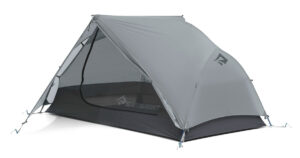
Sea to Summit Telos TR 2 tent for canoe camping

Sea to Summit

Telos TR 2

$559 | 3 lbs 4.2 oz | 47.5 sq ft | seatosummit.com

Since Sea To Summit entered the tent market in 2021, the Australian brand has created some of the industry’s most talked about designs. Available in one- and two-person models, the new Telos 2 is getting buzz for its light weight and innovative features.

You’ll be struck by the tent’s compact package first, which separates the fly, inner body and poles into three individual sacks, which have the option to nest together. The unique design allows weight to be distributed amongst partners—or so you can pack each sack into whichever crevices of empty space remain in your canoe pack.

Though the Telos 2 was designed with weight-conscious backpackers in mind, it doesn’t hold back on a few bells and whistles. Noteworthy features include the pole bag doubling as a Lightbar—snap it to the tent’s ceiling and insert a headlamp in either end to create a diffused nightlight. And use the teeny snaps in the interior corners of the tent to clip in the fly and tent body stuff sacks and stash small essentials in them overnight.

The interior size of the Telos 2 is standard for a two-person tent—which is to say, tight but doable for two campers.

Buy from:

REI


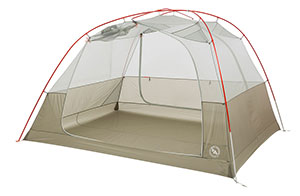
Big Agnes Copper Spur HV UL5 tent

Big Agnes

Copper Spur HV UL5

$799.95 | 7 lbs 5 oz | 65 sq ft | bigagnes.com

It’s hard to imagine getting a good night’s sleep with five campers tucked in one tent, but if it were to happen, we can almost guarantee it’ll be in the spacious Big Agnes Copper Spur HV UL5. Newcomer to the award-winning ultralight Copper Spur series, this high-volume shelter manages to defy the laws of physics by feeling even bigger on the inside than the outside.

After a dead-easy setup, large double-zipper, awning-style vestibules help this family compound maximize living space. Most impressively, even with its 65-square-foot interior and 60-inch headroom, this palatial abode weighs only seven pounds and six ounces. Packed, its two-foot by nine-inch stuff sack is more in line with the size and weight of many three-person tents. The Copper Spur series manages this feat thanks to exceptionally lightweight materials, which you’ll pay extra for, so you’ll want to use a life-extending footprint with this one.


Nemo Osmo 2P tent for canoe camping

Nemo

Dagger Osmo 2P

$479.95 | 4 lbs 2 oz | 31.3 sq ft | nemoequipment.com

Nemo pegs its Dagger OSMO as a quintessential one-tent wonder: compact and lightweight enough for backpacking, yet roomy enough for comfort. With 31 square feet of elbow room inside, it is a roomy fit for two smaller campers.

First released in 2019, this newly updated Dagger features fabrics free of fire-retardant chemicals. The new fabric boasts four times more water repellency and three times less stretch, which means less sag in the rain and a faster dry time afterward.

The Dagger’s redesign also includes D-style doors (two zippers that come together) instead of the previous incarnation’s continuous C zipper, which can be more prone to snagging and requires two hands to close. Two large vestibules provide plenty of dry gear storage. The Dagger OSMO also comes with a Landing Zone attachment, which is like a mini ground tarp for your vestibule to keep gear off the wet ground.

Buy from:

AMAZON BACKCOUNTRY MEC REI

woman and dog sit in a Sierra Designs tent in a sun dappled forest
Home is where you stake it. | Feature photo: Wyatt Michalek

Cover of Paddling Magazine Issue 67This article was first published in the Summer 2022 issue of Paddling Magazine. Subscribe to Paddling Magazine’s print and digital editions, or browse the archives.

Home is where you stake it. | Feature photo: Wyatt Michalek


The 9 Paddling Films We Loved Most In 2022

Our favorite paddling films of 2022 took us to waterways far away and close to home. And they shared with us creative perspectives on how our beloved pastimes intersect with the world around us.

These 9 films are currently screening as part of the Paddling Film Festival, which has been showcasing the very best paddling films since 2006.


A Quality Of Imagination

In a culture seemingly full of adrenaline junkies and going bigger, Benny Marr contemplates the ultimate form of self-expression, and the subtle moments defining one’s style.

Director: Caleb Roberts

[ A Quality Of Imagination is included in our Adrenaline 2022 Virtual Program. Click here to buy your virtual ticket. ]


Following Lines

Seeking a deeper encounter with the territory of the Inuit, six paddlers plan to make the first recorded descent of a little-known river in northern Quebec. Tradition survives in the life and language of the Inuit. Their knowledge of the physical world and the seasons guides the team in its journey. Set against an imposing background of snow, tundra and whitewater rapids, this documentary is a call to go beyond: out onto the land, and inward into ourselves.

Director & Producer: Francois Leger-Savard

[ Following Lines is included in our Adventure 2022 Virtual Program. Click here to buy your virtual ticket. ]


Voice Above Water

This is the story of a 90-year-old Balinese fisherman, Wayan, who can no longer fish because of the vast amount of plastic pollution in the ocean. Wayan instead uses his fishing boat and net to collect trash from the ocean in hopes of one day being able to fish again. The story is a glimpse into how one human uses his resources to make a difference and a reminder that if we all play our part, we can accomplish something much greater than ourselves.

Director: Dana Frankoff
Producer: Dana Frankoff, Eric Ebner

[ Voice Above Water is included in our Voices 2022 Virtual Program. Click here to buy your virtual ticket. ]


Jötunn

Iceland is the land of fire and ice, and also one of the places with the highest concentration of waterfalls. This makes it one of the most popular places for extreme kayaking. Even so, given the inaccessibility of its rivers and the harsh climate, there is still a lot of territory left to explore. Three friends enter new valleys to explore rivers and waterfalls never descended before.

Director: Mikel Sarasola

[ Jötunn is included in our Adrenaline 2022 Virtual Program. Click here to buy your virtual ticket. ]

[ Watch: The 9 Paddling Films We Loved Most In 2020 ]

Sheri

Sheri Tingey defied the odds by starting a company at age 50 that revolutionized the outdoor industry. This film is about the hurdles she overcame to launch the company and how she hid from view so people would judge the boats and not her role in creating them. At this watershed moment of reckoning around equity and inclusion for the industry and paddling lifestyle, Sheri’s story will warm hearts while also challenging the audience to grapple with presumptions about who belongs.

Director: James Q Martin
Producer: Sheila Smithson

[ Sheri is included in our Voices 2022 Virtual Program. Click here to buy your virtual ticket. ]


Dory Land

For whitewater dory lovers, there’s no better place than Idaho. The state’s miles of wild, free-flowing rivers are home to the country’s deepest gorges and some of the best big water rapids. In 1972, renowned conservationist and Grand Canyon Dories founder Martin Litton asked Curt Chang if he’d like to take some boats and a crew to Hells Canyon. After an initial scouting trip, Curt started up the Idaho operation. Since then, Curt has fostered a community of guides who care deeply about rivers, running good trips and the legacy of dories.

Director: Logan Bockrath

[ Dory Land is included in our Voices 2022 Virtual Program. Click here to buy your virtual ticket. ]


The Commute: A Four Day Paddle To Work

Following two rivers, one drain, one sea and one creek, it turns out paddling to work—which ends up being mostly a drag over four full days—is bloody hard work. The Commute is an intimate view into the good and bad of humanity. Told with award-winning filmmaker Beau Miles’ trademark mix of humor and philosophy, what started as a stunt turns out to be the hardest, most insightful four days of travel he’s ever done.

Director: Beau Miles
Producers: Beau Miles, Mitch Drummond

[ The Commute is included in our Adventure 2022 Virtual Program. Click here to buy your virtual ticket. ]


Kwanza

Rumors emerged from Angola about a river the size of the Zambezi laden with rapids, but hidden behind an iron layer of bureaucracy and the aftermath of a 27-year civil war that raged across wild savannahs. Those rumors lured three expedition kayakers on the adventure of a lifetime. Kwanza is the story of Mike Dawson, Dewet Michau and Jake Holland, who embrace the challenge of the wild Kwanza River and race against time to kayak its mighty rapids before dams drown them.

Director: Mike Dawson
Producers: Mike Dawson, Jake Holland

[ Kwanza is included in our Adventure 2022 Virtual Program. Click here to buy your virtual ticket. ]


American Whitewater River Safety Parts I & II

American Whitewater is proud to release a new series of river safety films. These films offer up-to-date and easily digestible tips to help keep you safe on the water. Designed to simply and effectively communicate the most basic elements of whitewater safety, these films provide a basis for essential, but not always readily available, river knowledge anyone wishing to spend time in a river environment should know.

Director: Brendan Wells
Producers: Evan Stafford, American Whitewater

[ American Whitewater River Safety Parts I & II is included in our Adrenaline 2022 Virtual Program. Click here to buy your virtual ticket. ]

2022 Film Festival Viewing

Watch the 17th annual Paddling Film Festival at one of the many stops along the World Tour, or screen at home all year round by renting one of our virtual programs.

The 2022 Paddling Film Festival is brought to viewers with the support of our festival partners: Spectacular Northwest Territories, Aqua Bound, Black Feather, Aire, Kokatat, the Canadian Canoe Museum, Nova Craft Canoe, Ottawa Valley, Thomas Rivers University, Trak and the Water Sports Foundation.

Find more information on screening as well as how you can submit to next year’s Paddling Film Festival.


Summer Bummer: What The Season’s New Normal Means For Paddlers

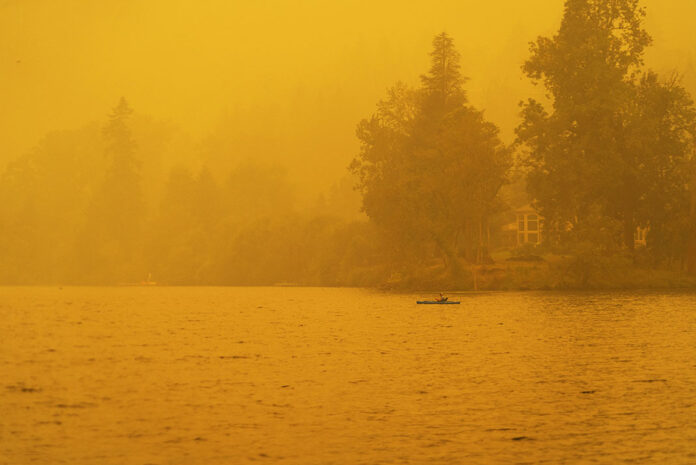
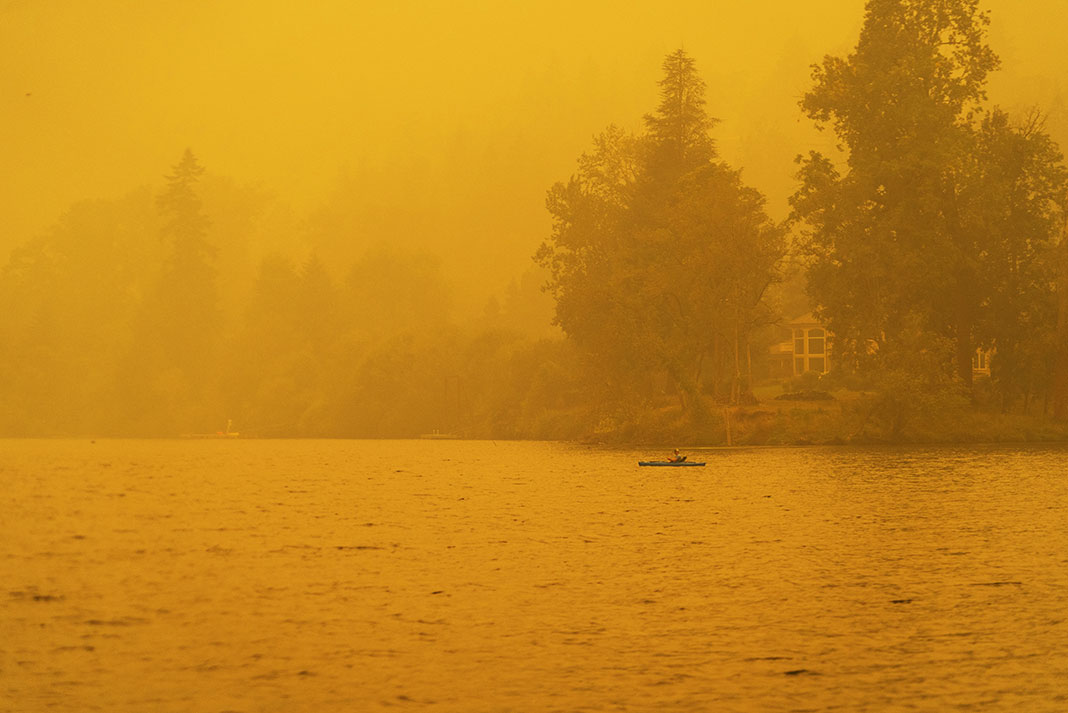
a paddler kayaks in the hazy yellow wildfire light of the summer season
Summer, you’ve changed. | Feature photo: Christian Gallagher

Between May and September, I live in the sweetest place in the world. That’s when the Aleutian Low system gets displaced by the North Pacific High, a subtropical high-pressure anticyclone pushing northeast from Hawaii towards the west coast of North America. It happily shoves the Aleutian Low system and its winter cold back where it belongs in the Gulf of Alaska. The result is the best summer paddling season in the world.

What the summer season’s new normal means for paddlers

Long summer days are warm but not sweltering; predictable northwesterlies give me wind waves to surf until I’m silly with laughter, or I can avoid the wind by paddling in the morning. Northwest summer swell lets me poke out into the Pacific by launching in the protective arc of the Oregon coast’s rocky headlands.

Another summer bonus: the northwest doesn’t have much of a bug problem. My Alaskan friends have stories of chemical warfare and suits of meshy armor against mosquitoes and blackflies. Bug dope is seldom even in my kit.

When it gets hot, I have a 300-mile zone of air conditioning an hour to the west—the Oregon Coast—or 45 minutes east, the icy Cascade volcanos. Sure, there’s the odd week of Juneuary, when it’s cold enough to wear a fleece top with your shorts, but that’s a small cross to bear. Summer is perfect here.

Or, at least, it used to be. Now summer sucks.

Why?

In a warming world, plans are up in the air

Last year the coastal air conditioner ceased to function. A heat dome came to the Pacific Northwest. Portland temperatures hit 114°F. It was 10 degrees warmer than Saudi Arabia was that day. Like everyone else, we fled to the coast—only to find it in the mid 90’s with no wind. We paddled to cool off, rolling and swimming, but the ocean breeze was still too hot for comfort.

The year before, it was toxic air. Not with pollution but smoke. Drought and a weird weather pattern led to huge wildfires in ordinarily green and soggy western Oregon and even on the coast. The air filled with smoke for a week, and we huddled inside with HEPA filters while the news cautioned everyone to stay put instead of seeking cleaner air elsewhere, because it was nasty in the whole region. Lush, green, damp, mossy places I’ve loved, paddled and hiked all my adult life, like Opal Creek, Santiam Canyon and the Clackamas River, burned. And unlike the Columbia Gorge fires of 2017, this wasn’t caused by a bonehead with a firecracker. It was just the weather.

a paddler kayaks in the hazy yellow wildfire light of the summer season
Summer, you’ve changed. | Feature photo: Christian Gallagher

Going from a summer paradise to a dystopian barbeque happened because the North Pacific Ocean has warmed up. The result is the previously awesome North Pacific High became a Ridiculously Resilient Ridge (I’m not making this name up, it comes from the journal Geophysical Research). The RRR, as meteorology nerds call it, blocked the midlatitude westerlies and turned my summer heaven into a bit more like, well, you know. Now I’m doing what I did growing up in the humid Northeast: seeking out air conditioning that doesn’t exist around here.

And to further complicate matters…

That’s one part of what ruined summer. The other culprit is a single strand of RNA with protein spikes. Yup, Covid. In early Covid, it was easy to stay six feet away from everyone in my 17-foot sea kayak. Now the outdoors is mobbed.

Finding a campsite means being at your computer, ready to hit reserve at precisely 7 a.m. six months ahead, and competing with bots snatching up all the sites. I now need reservations to park in the outdoors in a lot of places, let alone camp or run a river. Closures from wildfires also funnel more people into fewer places. As a conservationist who has spent my career encouraging people to love and protect the outdoors, it’s great. As someone who wants to go kayak camping, it’s not.

But when wildfires and crowds come to a green, mossy, wet state with a low population, the writing is on the wall. So, what to do about it?

Spring is the new summer. This year it was desert camping. Last year, I took a 144-mile headwaters-to-sea journey down my home river. I don’t get the long summer days. But it beats breathing smoke, melting heat and battling crowds. I do feel like the proverbial frog in the slowly boiling water, feeling my favorite season become not-so-favorite anymore. When will it become intolerable?

Some folks will roll their eyes, thinking, “Welcome to the club.” California and the mountain west have dealt with summer wildfires for decades. Last August, fires also evacuated the Boundary Waters Canoe Area Wilderness in Minnesota, as if the mosquito serving as the state bird wasn’t bad enough. When wildfires and crowds come to a green, mossy, wet state with a low population, the writing is on the wall. So, what to do about it?

Crowds are the easiest to negotiate a detente with. Last weekend my girlfriend announced with glee she’d found an out-of-the-way hike with nobody on it along a creek, 30 minutes from town. We guard these secret oases like nuclear codes. We time weekend excursions to miss the worst of the crowds. I know a bunch of islands that aren’t much traveled and where camping is still free, unpermitted and primitive—and you won’t pry the location out of me with a crowbar.

Hopefully, Covid vaccines and treatments will send some of the crowds back to their music festivals, museums and sporting events.

If they don’t, I’m ready.

Where we paddle might have to change

Before, decades ago, I started working a compressed schedule so I could bust out of town on Thursday evening ahead of the mayhem. Rough water paddling skills get me to beaches that wouldn’t be crowded even if they were advertised on billboards. When a friend urged me to write a kayak guidebook for the region, I passed—I don’t want my favorite spots advertised.

Climate is tougher. The Pacific Northwest is one of the places people are expected to migrate to as change hits drier and lower places first and worst.

The good news is that even when the snowpack drops, our big rivers, including the Columbia, Willamette, Frazier and Skagit, not to mention Puget Sound and the Pacific Ocean—will still have water in them. Glacial-fed whitewater runs will continue for a while, but eventually whitewater boaters may migrate to the coast to play the sea for an adrenaline fix if that Ridiculously Resilient Ridge keeps doing its thing.

When it gets really bad with heat and smoke, I’ve got some remote foggy islands to head to—and I’ll be a day ahead of you. If you’re a true doomsayer, you could go Elon Musk-level crazy and head for Mars. But I hear the paddling there is even worse.

Neil Schulman leads an environmental non-profit in Portland, Oregon. He melts above 85 degrees.

Cover of Paddling Magazine Issue 67This article was first published in the Summer 2022 issue of Paddling Magazine. Subscribe to Paddling Magazine’s print and digital editions, or browse the archives.

Summer, you’ve changed. | Feature photo: Christian Gallagher


Astral Launches Season Of Giving With $14K Donation & Gear Giveaway

November 3, 2022 – Asheville, NC – On a mission to create and share the highest performing outdoor gear in the least toxic, lowest impact way with its community, Astral is ushering in the season of gift-giving with its first annual Season of Giving campaign that combines charitable gifts and gear giveaways throughout November and December.

To kick off the campaign on November 1, Astral is opening nominations for its Season of Giving Giveaway Contest. Wanting to inspire philanthropy this holiday season from its community, Astral’s asking its fans to nominate an individual who puts nature first to win one of four $1,000 Astral gift cards. Nominees could also be featured on Astral’s Instagram. Nominations will be accepted through December 19 and winners will be selected by an internal committee and announced throughout the campaign with the final winner being selected on December 20.

On November 5, to continue the Season of Giving, Astral will be presenting a donation in the amount of $13,850 to Green River Access Fund (GRAF), which works to maintain permanent public access to the Green River, at the Green Race. The donation comes from the proceeds of Astral’s Heron LE GreenJacket sale and is the organization’s largest donation received to date.

The Green River and the Narrows, a stretch of highly technical whitewater that is the site of the Green Race and considered by many to be the pinnacle of whitewater racing in the Southeast, has played a formative role in many paddlers’ lives, including Astral Founder & CEO Philip Curry, who was among the first few groups to run the Narrows consistently in the early 1990s.

“It’s like you have a knot in your soul or your mind and [the Green] just loosens it and it’s gone,” says Curry of the Green’s effect and its significance in his own life. “You finish that river feeling so clean and refreshed. Mentally, spiritually, and physically.”

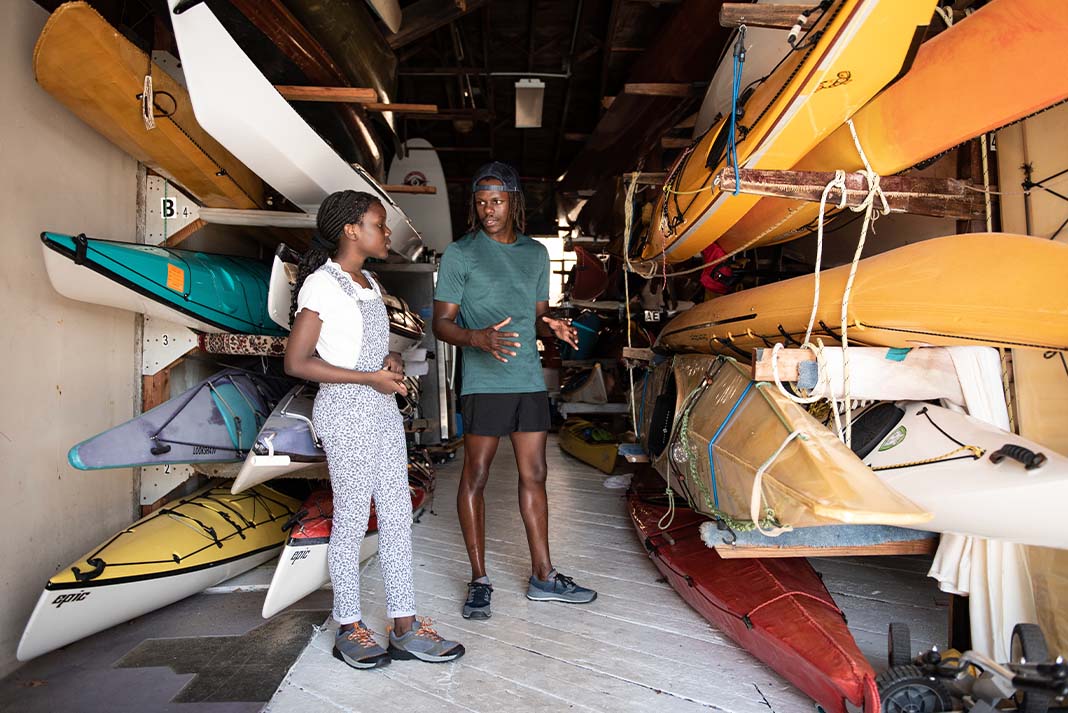
Man and woman stand in room surrounded by kayaks on racks
Photo: Courtesy of Astral

“To continue to build off our mission while giving back to organizations that help increase the access to wild spaces, we are thrilled to celebrate and amplify the athletes and artists in our community through the Season of Giving,” said Curry. “Astral is committed to offering unique experiences and programs and we’re excited to celebrate our network this season.”

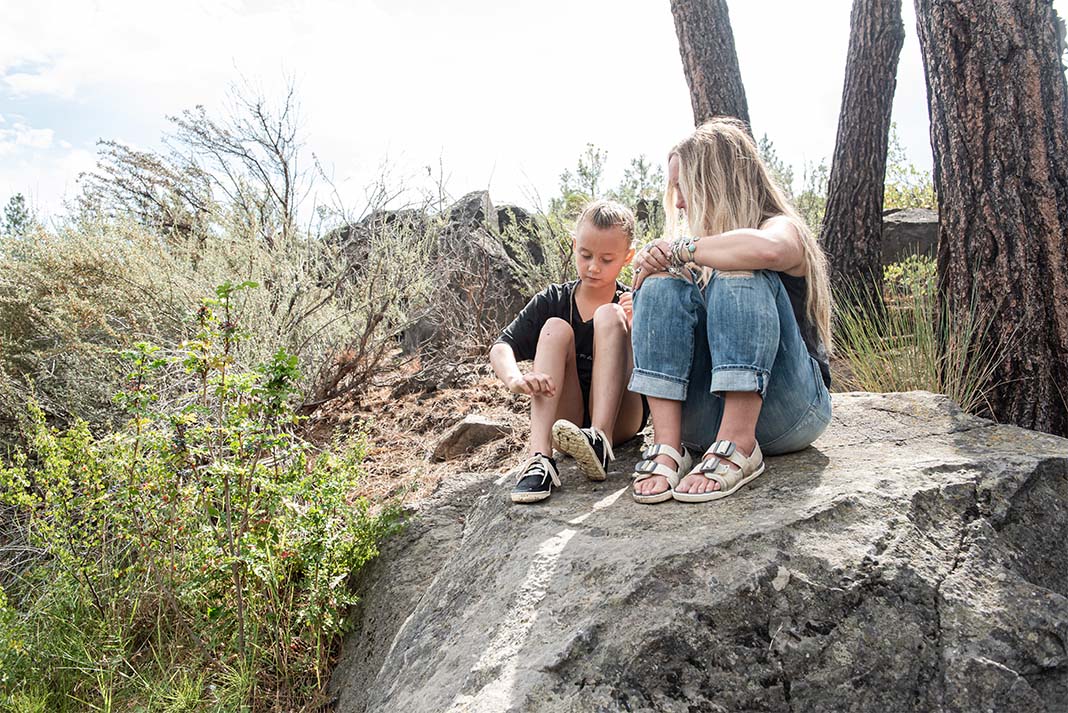
Woman and child sit on a rock
Photo Courtesy of Astral

Stay tuned for other subsequent event announcements including a program that will give 5% of sales to three non-profit organizations dedicated to protecting water and providing youth access to nature, American RiversLonely Whale, and Muddy Sneakers.

For more information on Astral’s Season of Giving campaign visit the campaign’s page or contact Mindy Smith at mindy@darbycommunications.com.

About Astral

Established in 2002, Astral has grown to specialize in designing high performance wilderness equipment including PFDs and footwear, created in the least toxic, lowest impact ways. Built on decades of experience and experimentation, Astral has assembled athletes, artists, and craftspeople to build and use the cleanest, most beautiful, and highest performing products you can buy on the market. Most notably, Astral has significantly reduced toxic PVC foam from the PFD industry, invented breathable life jackets, won awards for their paradigm changing footwear designs, and they’ve developed the stickiest rubber ever worn on wet rock. Visit www.astraldesigns.com for more information.

Alpacka Raft Launches Most Innovative, Advanced Whitewater Packraft Yet

MANCOS, Colo. (November 11, 2022) – The world’s leading packrafting brand, Alpacka Raft, is thrilled to debut the much-anticipated Valkyrie, its most capable whitewater boat to date. After 15 years of development and dozens of prototypes, the Valkyrie is the pinnacle of whitewater performance in an inflatable package, just as founder Sheri Tingey intended when she embarked on the initial design in 2008.

“It has challenged me and made me dig into myself like nothing I’ve ever done before,” said Tingey, who eventually reached a breakthrough by implementing a new stern and hull shape, along with a lowered floor, bringing much-needed secondary stability to the boat.

The Valkyrie’s design is purpose-driven for skilled whitewater kayakers looking for a backcountry or travel boat, as well as developing paddlers hoping to improve kayaking skills in a more forgiving and portable package. Featuring low profile tubes, modern creek boat shaping, generous bow and stern rocker, and a new planing hull floor, the Valkyrie is the closest inflatable resemblance of a hardshell whitewater kayak ever produced.

Weighing in at under 15 pounds, the Valkyrie excels at straight-line speed, boofing off drops and punching through holes. Some of the world’s most accomplished professional paddlers, like Nouria Newman and Tyler Bradt, tested several prototypes of the design until the packraft reached perfection.

“My first experience in the Valkyrie, I could hardly believe I was paddling an inflatable,” said Bradt. “It rolled so well, boofed like a dream, surfed waves, and turned on a dime. Every iteration of this boat was a leap above the last and the boat that is now on the market is undoubtedly the gold standard of packrafts by which all others will be measured.”

The Valkyrie is now available at alpackaraft.com for $2,300. For a limited time, customers purchasing the Valkyrie will be eligible to receive 10 percent off any additional items in their cart.

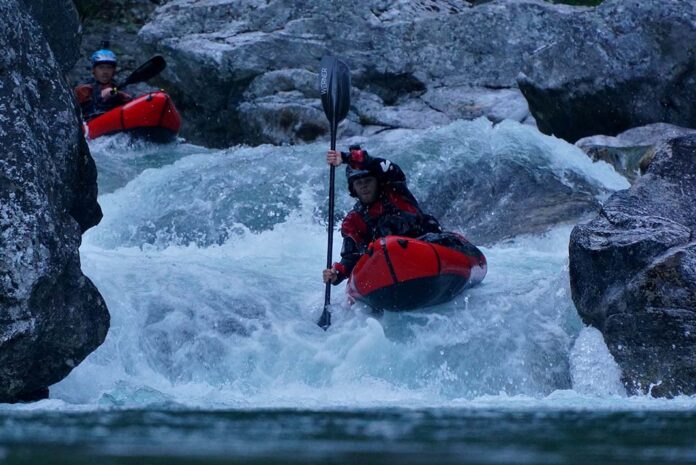
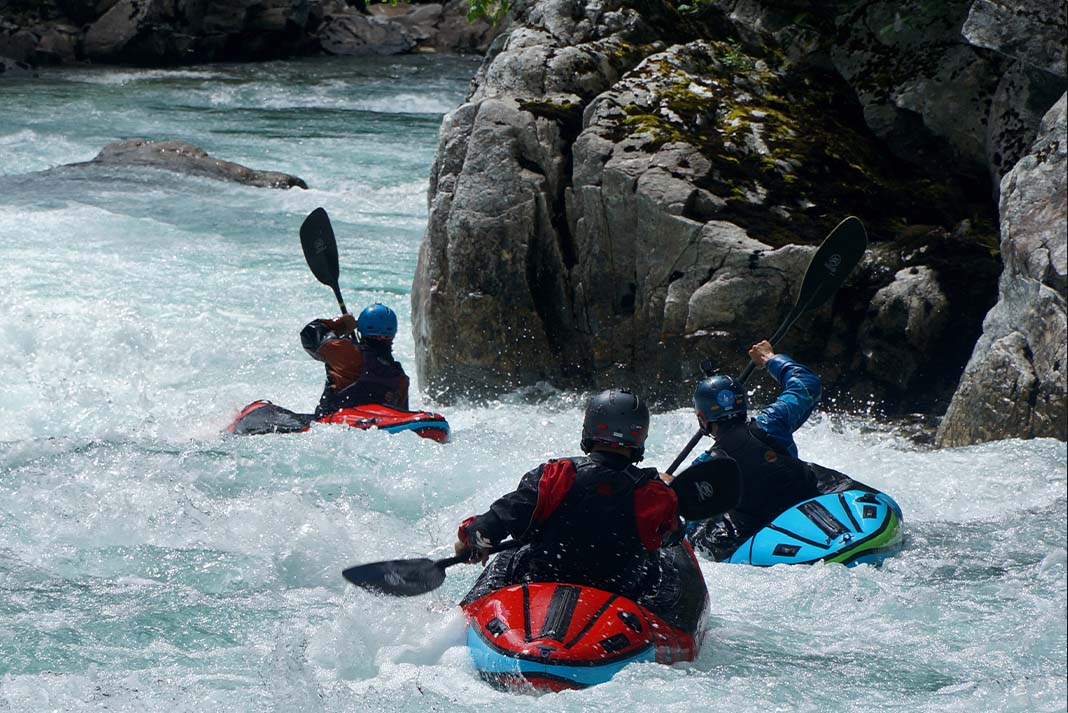
Three paddlers going down a rapid.

About Alpacka Raft

Alpacka Raft seeks to design and handcraft the most innovative, premium packrafts available. The company was founded as a collaboration between Sheri Tingey, the designer behind the products, and her son Thor, who had just completed a 700-mile traverse of Alaska’s Brooks Range with a dream for a better-performing packraft. They strive for a legacy of leadership, stewardship, and support that allows their community of diverse boaters a lifetime of use and adventure-driven fun. Alpacka Raft is committed to providing high-quality, living wage manufacturing jobs in the rural mountain town economy of Mancos, Colorado. Every packraft that leaves the shop is handmade and made-to-order. For more information, visit alpackaraft.com

Whitewater Kayak Review: Zet Chili

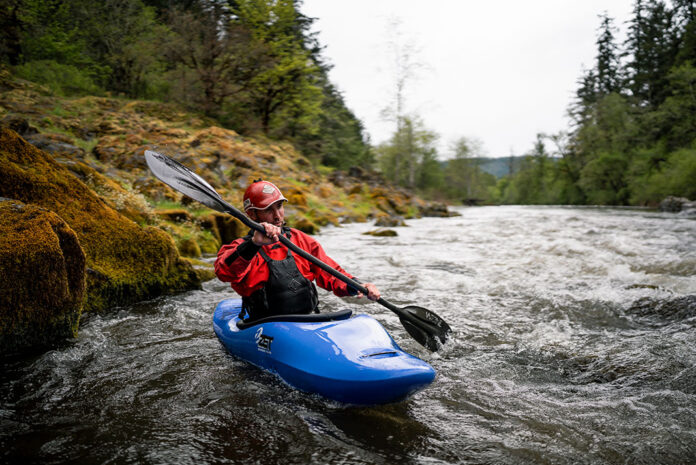
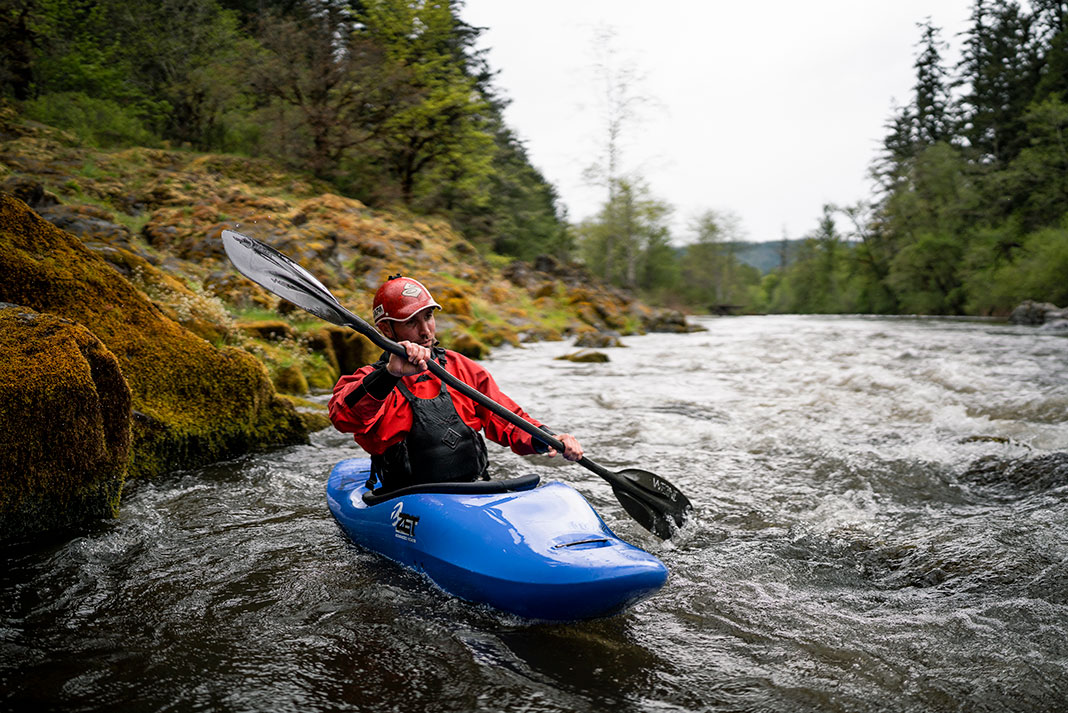
man paddles the Zet Chili whitewater kayak beside a mossy riverbank
The speedy love child of a modern slalom boat and a playful river runner. | Feature photo: Paul Robert Wolf Wilson

Boatercross, or extreme slalom as it is referred to by the International Canoe Federation (ICF), is taking the international race scene by force. The crowd-favorite head-to-head discipline is even making its way to the Olympic Games in 2024. Which means rotomolded plastic boats will finally be sharing the stage with their high-end composite siblings that have held the torch for decades.

The boom of boatercross is happening alongside the resurgence of slalom-inspired kayaks, dubbed half-slice boats. At each ICF extreme slalom cross event, high-volume boats proven in steep creek races are lined up on the starting platform alongside half-slice slalom look-alikes, known for their deft maneuverability.

And at these competitions, the Zet Chili is a regular on the podium.

How has the Chili performed? At the 2021 ICF World Championships, Australian slalom star, Jessica Fox, made the Chiliher boat of choice and won gold. In the men’s final, three out of the four kayaks were Chilis. This kayak is a race car, and it’s no surprise many slalom athletes choose it as their boatercross vehicle.

Zet Kayaks’ Chili turns up the heat

Zet Chili Specs
Length: 9’0”
Width: 24.5”
Volume: 62 U.S. gal
Weight: 40.5 lbs
Weight Range: 120-190 lbs
MSRP: $1,349 USD
www.zet-kayaks.com

Zet is known for making aggressive, high-performance river runners and creek boats. The Czech Republic manufacturer released their first kayak, the Raptor, around eight years ago and has since produced a string of kayaks aimed at paddling technical rivers and big water. The Chili was released in 2021 and is Zet’s only kayak currently deviating from a full-on creek boat or river runner design. Instead, it’s tailored to playing the river and the slalom-cross scene.

Design and outfitting

Our loaner model is a size medium, the only current size, weighing just 40 pounds. That’s around four pounds lighter than similar models from competitor brands. The sleek profile features no drain plug. The cockpit rim where you attach your skirt over the kayak is slim. It’s as if Zet looked for every place they could shave an ounce and took it.

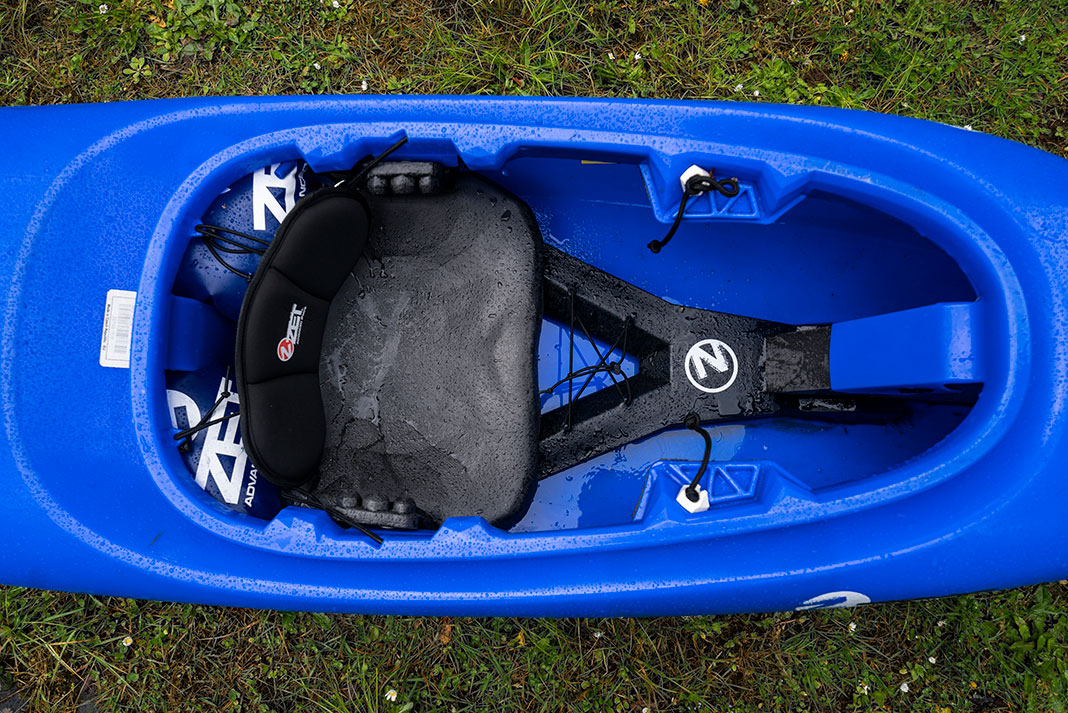
When you look inside, the outfitting is minimalist. A frame connecting the front and rear bulkhead is the only significant hard plastic you’ll find in the cockpit. A shaped block of closed-cell foam forms a nicely scooped seat. Simple and comfortable. It’s another classic take meeting the evolved design of today. The backband adjusts by cord and jam cleat, like a Jackson freestyle kayak, and provides unrestricted access to the rear of the boat.

overhead photo of the Zet Chili kayak's cockpit
The Chili’s simple outfitting design is utilitarian but comfortable. A sturdy, closed-cell foam seat helps protect from impacts and provides considerable warmth. | Photo: Paul Robert Wolf Wilson

Zet Kayaks Chili on the water

Eddy hopping some class III seemed like the perfect way to test the Chili, and so I took it for some spring highwater runs on the upper tributaries of the Willamette River in Oregon. On the river, the Chili is a filet knife. An efficient tool capable of creating beautiful work. Or you might cut your finger off. It’s a boat demanding an active and engaged paddler.

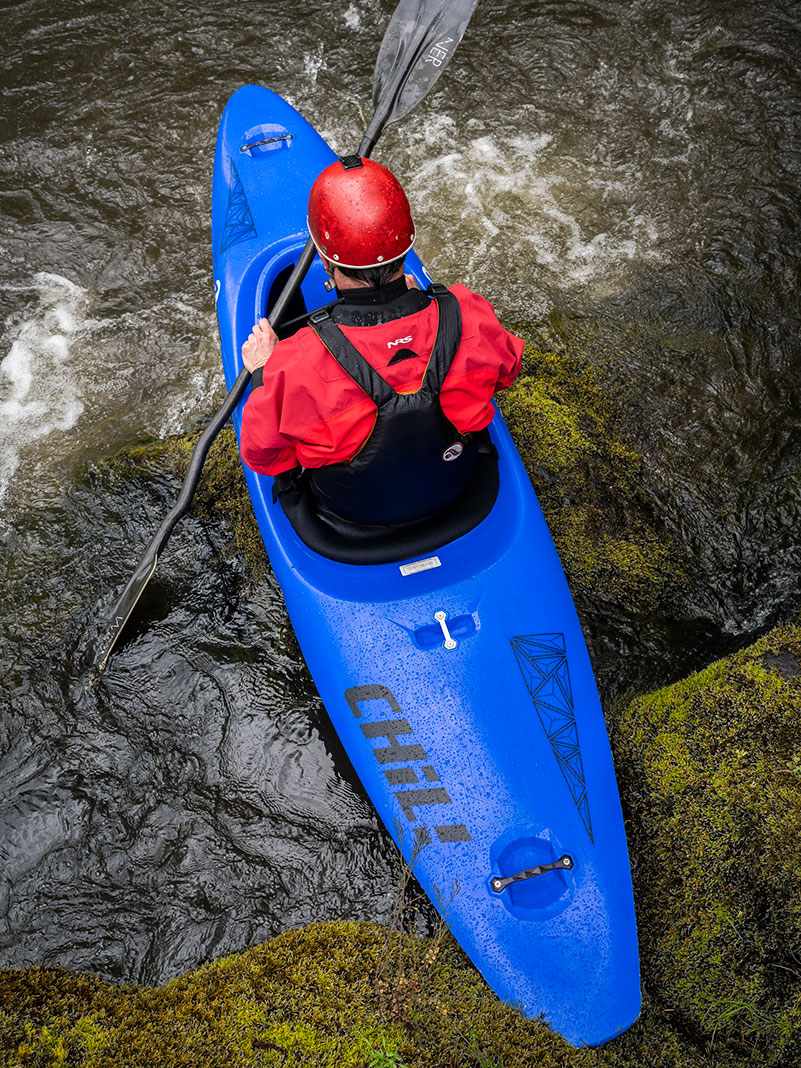
man sits in the Zet Chili whitewater kayak at river's edge
The torpedo-shaped bow of the Chili is narrow and the deck has a low profile. | Photo: Paul Robert Wolf Wilson

On my first lap in the Chili, I was lax. I soon felt the edge want to flip me as I went for a technical move between two rocks. A moment later, the stern started to load when I didn’t ask for it. Right, I’m in a race boat. I learn very quickly, a more assertive mindset made all the difference.

The long hull is where the Chili gets its pep. At nine feet long, the Chili has a large, flat, planing surface stretching out under the paddler. The kayak’s minimal bow rocker doesn’t kick up until past the knees. The elongated waterline, combined with an overall narrow design—just 24.5 inches—provides the Chili with an optimal ratio of length to width for speed.

When it comes to edges, the transition from the hull under the cockpit area to the sidewall is nearly at a right angle. There is no multi-staged transition here. This gives the Chili a solid edge to dig in for a carve, but also an unforgiving one to catch should you not be minding your tilt.

The Chili front surfs waves well. The planing hull and hard edges allowed me to carve up small green waves I would struggle to catch in a playboat, and where a creek boat would be cumbersome to make tight carves.

The bow of the Chili is narrow and the deck has a low profile. This contrasts with many of the half slice kayaks on the market today featuring a modern creek-boat-inspired bow. Rather than a voluminous nose and significant rocker, the Chili’s bow is a torpedo. Those who have paddled river runners from the early 2000s will remember the feeling of having your legs straight rather than out wide—if you don’t remember, it’ll come back to you when you jump in the Chili.

man paddles the Zet Chili whitewater kayak beside a mossy riverbank
The speedy love child of a modern slalom boat and a playful river runner. | Feature photo: Paul Robert Wolf Wilson

The lack of rocker on the Chili means boofing and blasting over features requires some more technique. To clear the bow, it helps to drive down on the rear of the seat and use features like the crest of a wave to lift the bow or spin a turn.

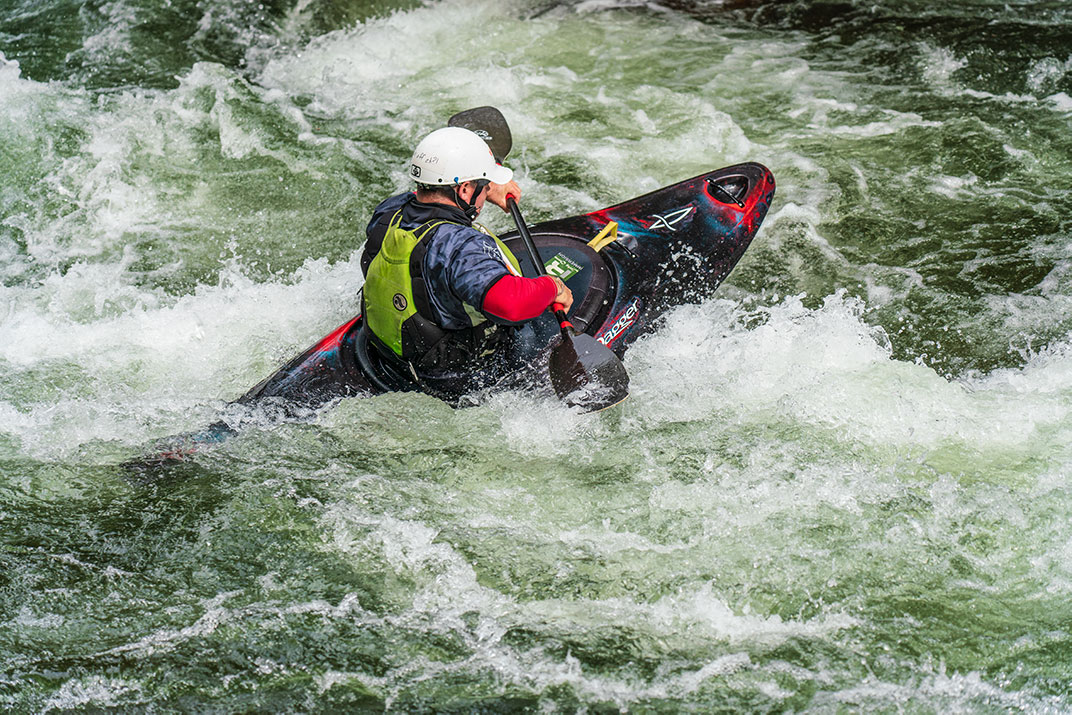
man paddles the Zet Chili in whitewater
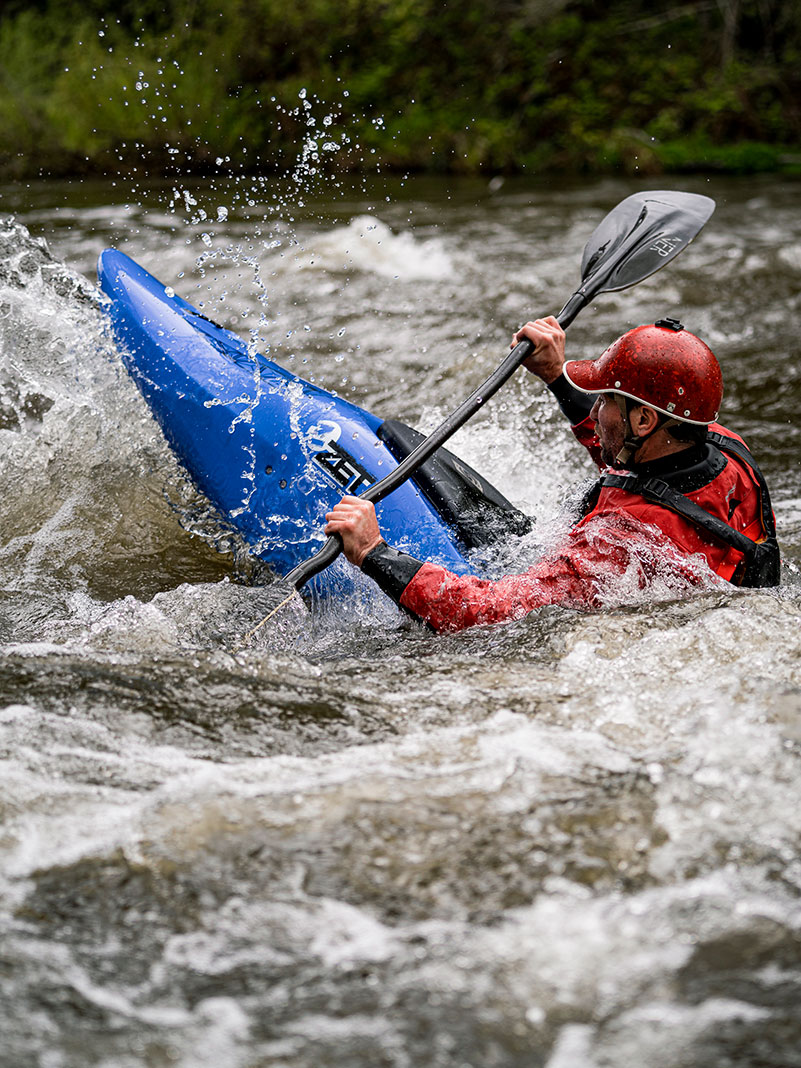
Sporty and agile, the Chili’s flirty, flat stern will spice up your eddy turns and add zest to your squirts and splats. | Photo: Paul Robert Wolf Wilson

The stern of the Chili features a flat tapering deck, synonymous with a half-slice or slalom kayak. There is a fair bit of volume on the stern directly behind the paddler, and the deck profile tapers toward the stern gradually and consistently. There is only the slightest concave scoop right in the last eight inches of the stern. The grab handle on the stern also has a fairly deep divot taking some volume off the rear deck.

When it comes to stern squirting and pivoting, this stern allows for some fun verticality and deft maneuvering. The gradual slope and volume toward the paddler mean sinking the stern is less about out-of-control verticality and more a controlled utilitarian maneuver. This volume and shape allowed me to quickly disengage from a squirt, shed water from the deck and carry on downstream. A desirable trait for racing and river running alike.

The combination of the low-volume stern, flat hull and hard edge give the Chili multiple options for maneuvering and catching eddies: Utilizing the hard edge and initiating a carve, the Chili can engage and snap explosively into an eddy. The first time I was not expecting the explosive feedback, and happily recalibrated for this.

I could also keep the boat flat and allow the Chili to spin and slide. This easily transitions into using the spin momentum to sink the stern and pivot a turn or enjoy some time spinning with the bow toward the sky.

Fan your half slice flames with the Zet Chili

The Chili will spice up your paddling even if you never intend to race. It’ll take your class III and IV rivers and turn up the dial. However, for those seeking a half-slice capable of paddling class V, the Chili’s low bow rocker and aggressive edges leave little margin for error, and it may feel like you’ve taken a bite of ghost pepper in the crux of the rapid.

The ticket with the Zet Chili is this kayak demands to be driven. And when it makes your local run more exciting, perhaps it’ll even fan the flames of your Olympic aspirations or get you to the starting line at your local boatercross.

The speedy love child of a modern slalom boat and a playful river runner. | Feature photo: Paul Robert Wolf Wilson


3 Pieces Of Rescue Gear Worth Spending Extra On

a whitewater rescuer leaps into the river to save a kayaker using rescue gear
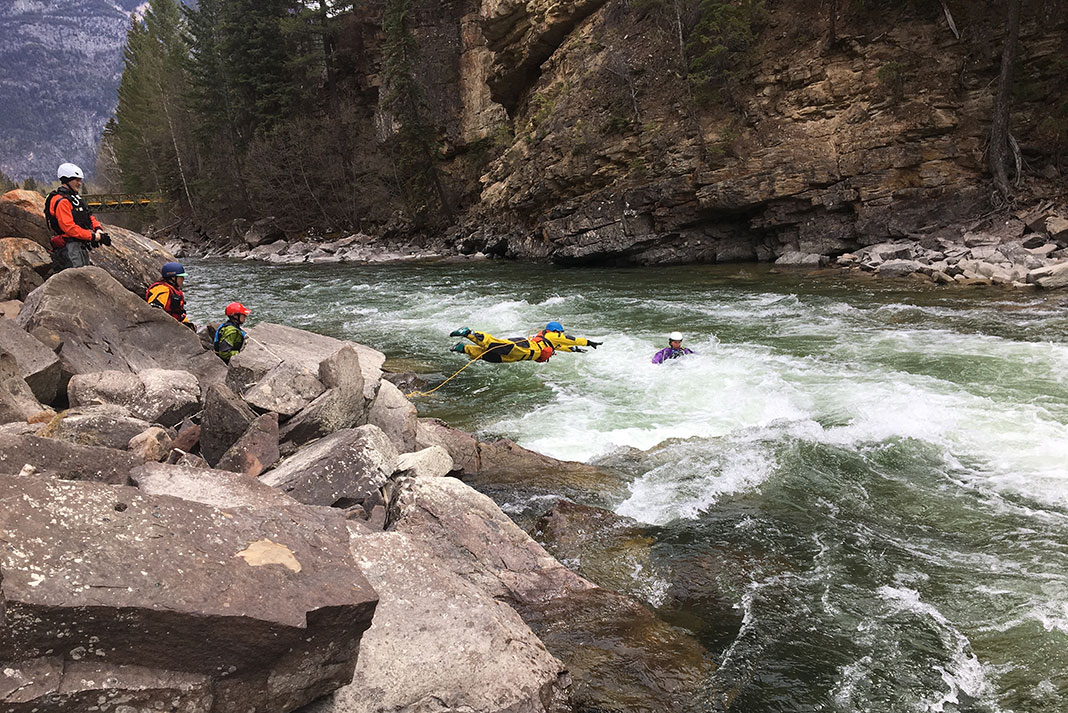
The higher quality your throw rope the more functions it can serve in a rescue scenario, from throw bagging a swimmer to using in a rescue haul system. | Feature photo: Brenna Shultz

Pop quiz. Which three pieces of paddling safety equipment would you choose to spend a little extra on? Take a minute to think about it. Don’t read further until you have your list of whitewater rescue gear worth investing in.

Which whitewater rescue gear is your best investment?

While there is general agreement on which safety items every paddler should carry on the river, there are differing opinions on the relative importance of each item and where spending more money creates the most value.

I asked three of my outdoor safety colleagues for their opinions and compared them to mine. While statistics say four paddlers picking three items each creates 81 potential equipment combinations, the results of my survey showed far less variation. Here is what they said.

a whitewater rescuer leaps into the river to save a kayaker using rescue gear
The higher quality your throw rope the more functions it can serve in a rescue scenario, from throw bagging a swimmer to using in a rescue haul system. | Feature photo: Brenna Shultz

Clare Dallats picks

Based in Australia, Clare Dallat grew up paddling slalom kayak in Europe and is now one of the world’s leading voices in outdoor risk management. Her top safety item to spend extra on? A drysuit.

“If you’re not warm, you can’t function. If you can’t function, things go wrong,” Dallat says. In addition to spending more on a drysuit, she recommends a premium throw bag and knife.

“A knife is one of those things that may never get used, but when it is needed, there is nothing else that will work. A good knife, razor sharp, saved only for the worst-case scenario, is worth the money and can save a life,” Dallat adds.

Gord Bunstons picks

Gord Bunston is a career whitewater guide and longtime river rescue instructor with a master’s degree in disaster and emergency management. He agreed on the added value of a premium drysuit, well taken care of and dried after each use. A waist belt throw bag, he added, was critical.

“A throw bag is of no use left in your boat, especially if you swim and your boat gets pinned.” Bunston stressed keeping the throw bag dry, clean and ready to deploy. His third pick was a helmet, as there can be a big difference in the fit and function of cheap versus high-end helmets. “Hits on the head are not common in whitewater, but it’s not something you want to mess around with,” he adds.

Matt Cuccaros picks

My friend Matt Cuccaro has been guiding for more than three decades. As a remote expedition guide and senior river rescue instructor, his number one choice was a life jacket. “A PFD is obvious. It’s your last line of defense if you leave your boat. All PFDs meet a minimum standard, but the minimum standard does not guarantee fit and wearability.”

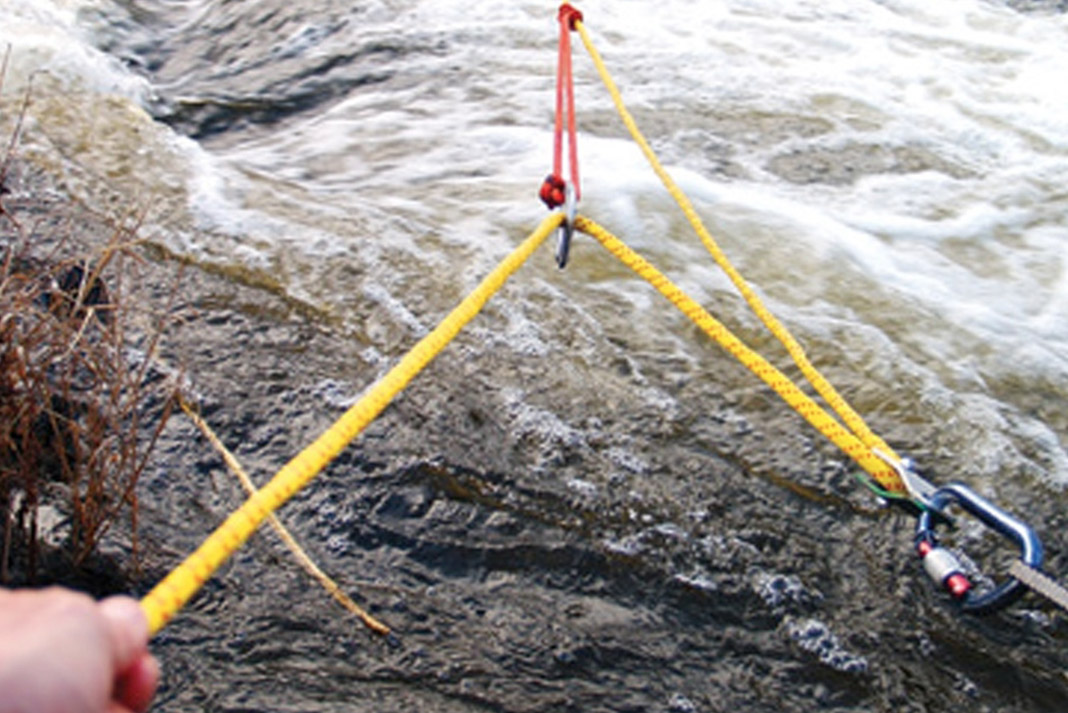
Throw rope was on his list too. “The more you spend, the better the rope, and the more functions it will have, from simply throwing to creating rescue haul systems.”

Keeping track so far? That’s three votes for spending more on a throw rope, two for a high-end drysuit, and one each for knife, helmet and PFD.

The authors picks

I agree with Cuccaro. A PFD is the first item I recommend spending extra on, which includes replacing it more often. My rule of thumb is to replace my PFD every three years and treat it with care in the meantime—no sitting on it or drying it out in the sun, and wearing it snug.

My second pick is a satellite communication device. Nowadays, these units are affordable and often the only way to get help to an off-grid location. My third choice is footwear—the burliest that can fit in your boat. When things get weird, we need to be able to get out and boogie on rocks or wade midstream. Similar to Bunston’s view on throw bags, footwear is useless when stuffed in a boat; it needs to be on our feet.

Rescue gear is like an insurance policy

What do these four opinions tell us? PFDs and drysuits are everyday safety items with comfort functions, so we often justify spending extra on them. But a throw rope, knife, communication device or even a helmet could conceivably go through its whole serviceable life and never be put to the test.

Spending more on these items can be harder to justify for some paddlers, as they fall into the low-probability but high-consequence event category. However, like an insurance policy, you’re going to want it when you need it. Having the right equipment is critical to potentially saving a life when something serious happens.

Jeff Jackson is a professor of outdoor education at Algonquin College near the banks of the Ottawa River.

Cover of Paddling Magazine Issue 67This article was first published in the Summer 2022 issue of Paddling Magazine. Subscribe to Paddling Magazine’s print and digital editions, or browse the archives.

The higher quality your throw rope the more functions it can serve in a rescue scenario, from throw bagging a swimmer to using in a rescue haul system. | Feature photo: Brenna Shultz