Home Blog Page 78

Summer Bummer: What The Season’s New Normal Means For Paddlers

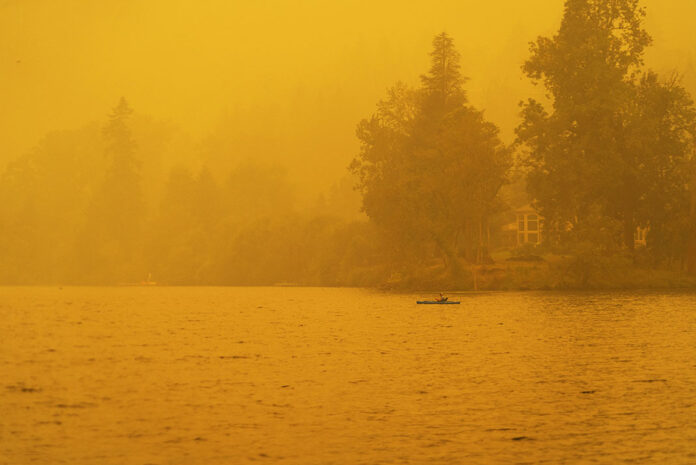
a paddler kayaks in the hazy yellow wildfire light of the summer season
Summer, you’ve changed. | Feature photo: Christian Gallagher

Between May and September, I live in the sweetest place in the world. That’s when the Aleutian Low system gets displaced by the North Pacific High, a subtropical high-pressure anticyclone pushing northeast from Hawaii towards the west coast of North America. It happily shoves the Aleutian Low system and its winter cold back where it belongs in the Gulf of Alaska. The result is the best summer paddling season in the world.
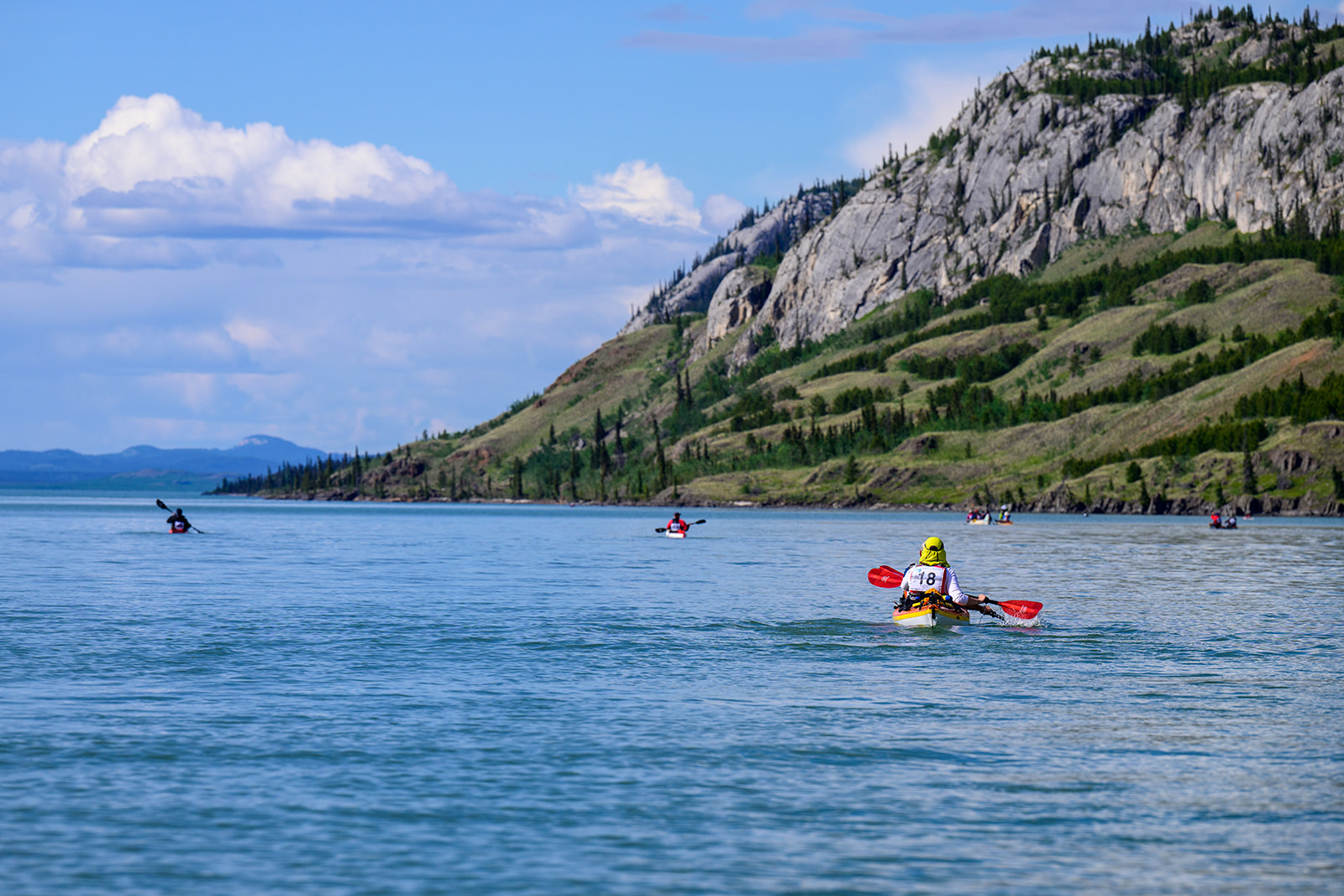
What the summer season’s new normal means for paddlers

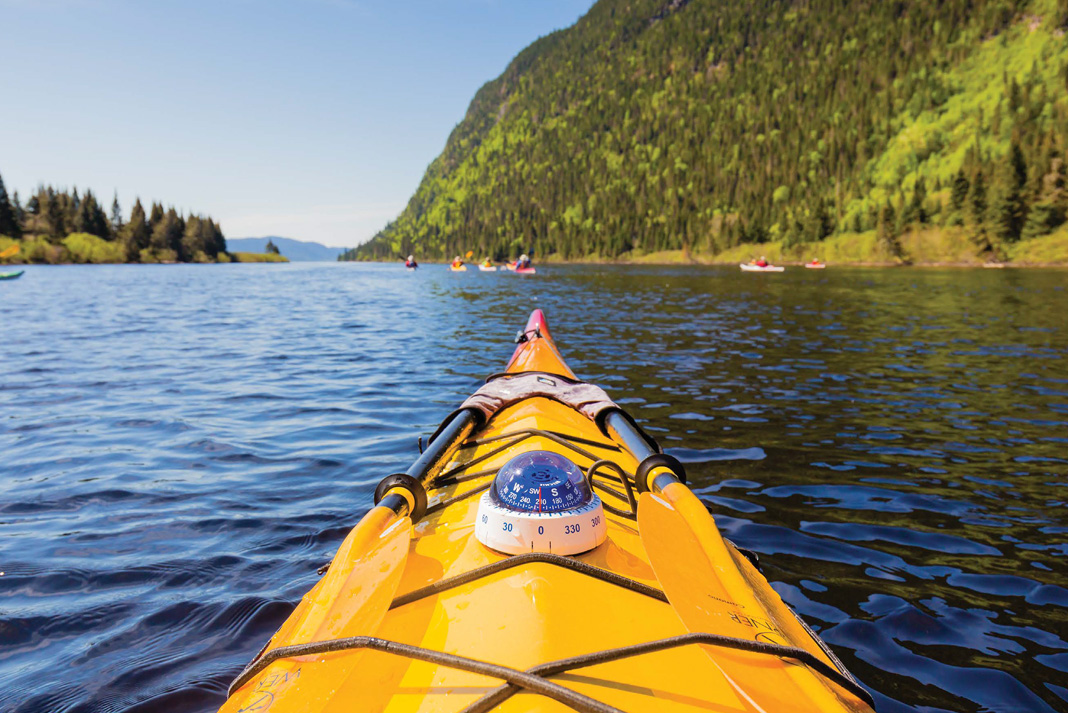
Long summer days are warm but not sweltering; predictable northwesterlies give me wind waves to surf until I’m silly with laughter, or I can avoid the wind by paddling in the morning. Northwest summer swell lets me poke out into the Pacific by launching in the protective arc of the Oregon coast’s rocky headlands.

Another summer bonus: the northwest doesn’t have much of a bug problem. My Alaskan friends have stories of chemical warfare and suits of meshy armor against mosquitoes and blackflies. Bug dope is seldom even in my kit.

When it gets hot, I have a 300-mile zone of air conditioning an hour to the west—the Oregon Coast—or 45 minutes east, the icy Cascade volcanos. Sure, there’s the odd week of Juneuary, when it’s cold enough to wear a fleece top with your shorts, but that’s a small cross to bear. Summer is perfect here.

Or, at least, it used to be. Now summer sucks.

Why?

In a warming world, plans are up in the air

Last year the coastal air conditioner ceased to function. A heat dome came to the Pacific Northwest. Portland temperatures hit 114°F. It was 10 degrees warmer than Saudi Arabia was that day. Like everyone else, we fled to the coast—only to find it in the mid 90’s with no wind. We paddled to cool off, rolling and swimming, but the ocean breeze was still too hot for comfort.

The year before, it was toxic air. Not with pollution but smoke. Drought and a weird weather pattern led to huge wildfires in ordinarily green and soggy western Oregon and even on the coast. The air filled with smoke for a week, and we huddled inside with HEPA filters while the news cautioned everyone to stay put instead of seeking cleaner air elsewhere, because it was nasty in the whole region. Lush, green, damp, mossy places I’ve loved, paddled and hiked all my adult life, like Opal Creek, Santiam Canyon and the Clackamas River, burned. And unlike the Columbia Gorge fires of 2017, this wasn’t caused by a bonehead with a firecracker. It was just the weather.
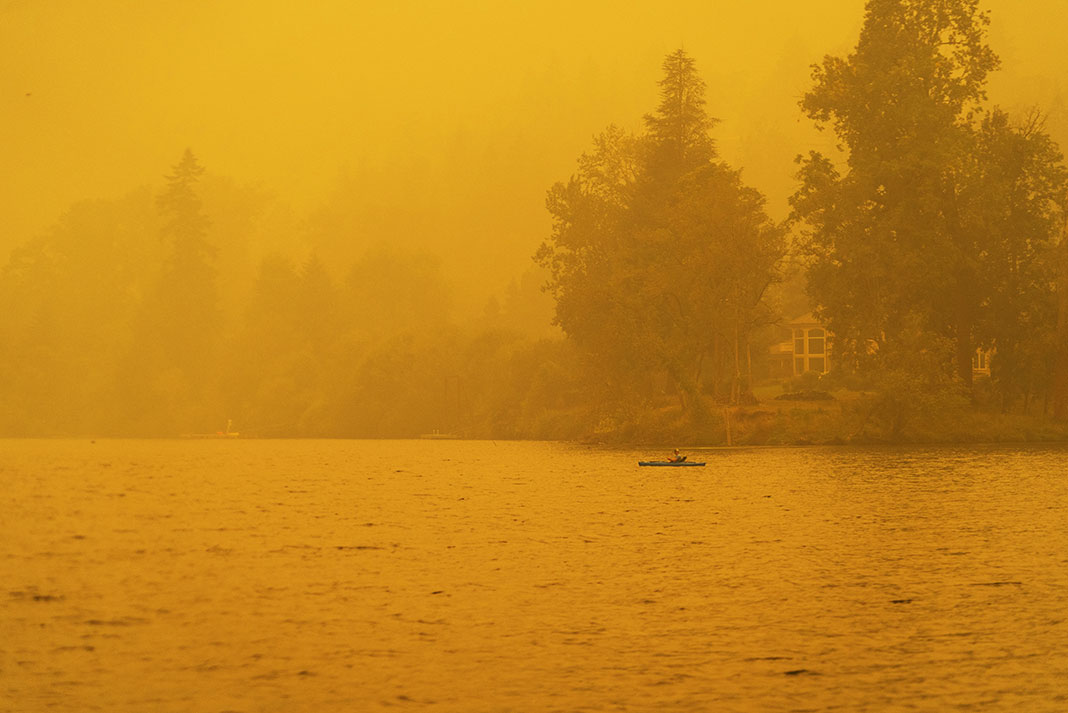
a paddler kayaks in the hazy yellow wildfire light of the summer season
Summer, you’ve changed. | Feature photo: Christian Gallagher

Going from a summer paradise to a dystopian barbeque happened because the North Pacific Ocean has warmed up. The result is the previously awesome North Pacific High became a Ridiculously Resilient Ridge (I’m not making this name up, it comes from the journal Geophysical Research). The RRR, as meteorology nerds call it, blocked the midlatitude westerlies and turned my summer heaven into a bit more like, well, you know. Now I’m doing what I did growing up in the humid Northeast: seeking out air conditioning that doesn’t exist around here.
And to further complicate matters…

That’s one part of what ruined summer. The other culprit is a single strand of RNA with protein spikes. Yup, Covid. In early Covid, it was easy to stay six feet away from everyone in my 17-foot sea kayak. Now the outdoors is mobbed.

Finding a campsite means being at your computer, ready to hit reserve at precisely 7 a.m. six months ahead, and competing with bots snatching up all the sites. I now need reservations to park in the outdoors in a lot of places, let alone camp or run a river. Closures from wildfires also funnel more people into fewer places. As a conservationist who has spent my career encouraging people to love and protect the outdoors, it’s great. As someone who wants to go kayak camping, it’s not.

But when wildfires and crowds come to a green, mossy, wet state with a low population, the writing is on the wall. So, what to do about it?

Spring is the new summer. This year it was desert camping. Last year, I took a 144-mile headwaters-to-sea journey down my home river. I don’t get the long summer days. But it beats breathing smoke, melting heat and battling crowds. I do feel like the proverbial frog in the slowly boiling water, feeling my favorite season become not-so-favorite anymore. When will it become intolerable?
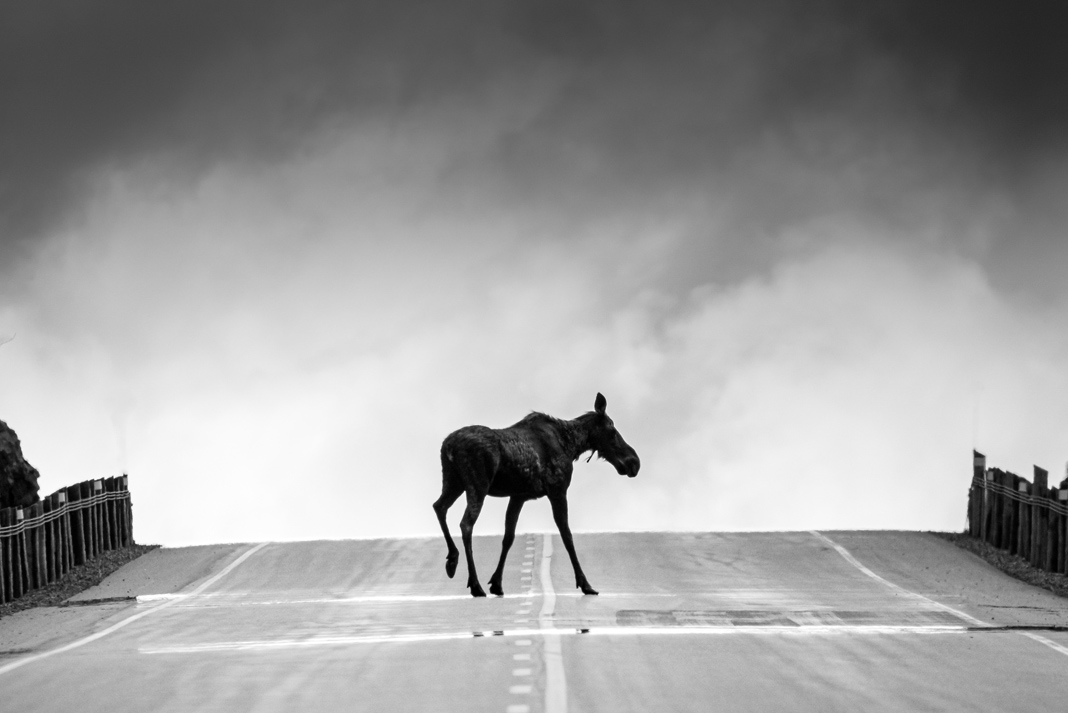
Some folks will roll their eyes, thinking, “Welcome to the club.” California and the mountain west have dealt with summer wildfires for decades. Last August, fires also evacuated the Boundary Waters Canoe Area Wilderness in Minnesota, as if the mosquito serving as the state bird wasn’t bad enough. When wildfires and crowds come to a green, mossy, wet state with a low population, the writing is on the wall. So, what to do about it?

Crowds are the easiest to negotiate a detente with. Last weekend my girlfriend announced with glee she’d found an out-of-the-way hike with nobody on it along a creek, 30 minutes from town. We guard these secret oases like nuclear codes. We time weekend excursions to miss the worst of the crowds. I know a bunch of islands that aren’t much traveled and where camping is still free, unpermitted and primitive—and you won’t pry the location out of me with a crowbar.

Hopefully, Covid vaccines and treatments will send some of the crowds back to their music festivals, museums and sporting events.

If they don’t, I’m ready.

Where we paddle might have to change

Before, decades ago, I started working a compressed schedule so I could bust out of town on Thursday evening ahead of the mayhem. Rough water paddling skills get me to beaches that wouldn’t be crowded even if they were advertised on billboards. When a friend urged me to write a kayak guidebook for the region, I passed—I don’t want my favorite spots advertised.

Climate is tougher. The Pacific Northwest is one of the places people are expected to migrate to as change hits drier and lower places first and worst.
The good news is that even when the snowpack drops, our big rivers, including the Columbia, Willamette, Frazier and Skagit, not to mention Puget Sound and the Pacific Ocean—will still have water in them. Glacial-fed whitewater runs will continue for a while, but eventually whitewater boaters may migrate to the coast to play the sea for an adrenaline fix if that Ridiculously Resilient Ridge keeps doing its thing.

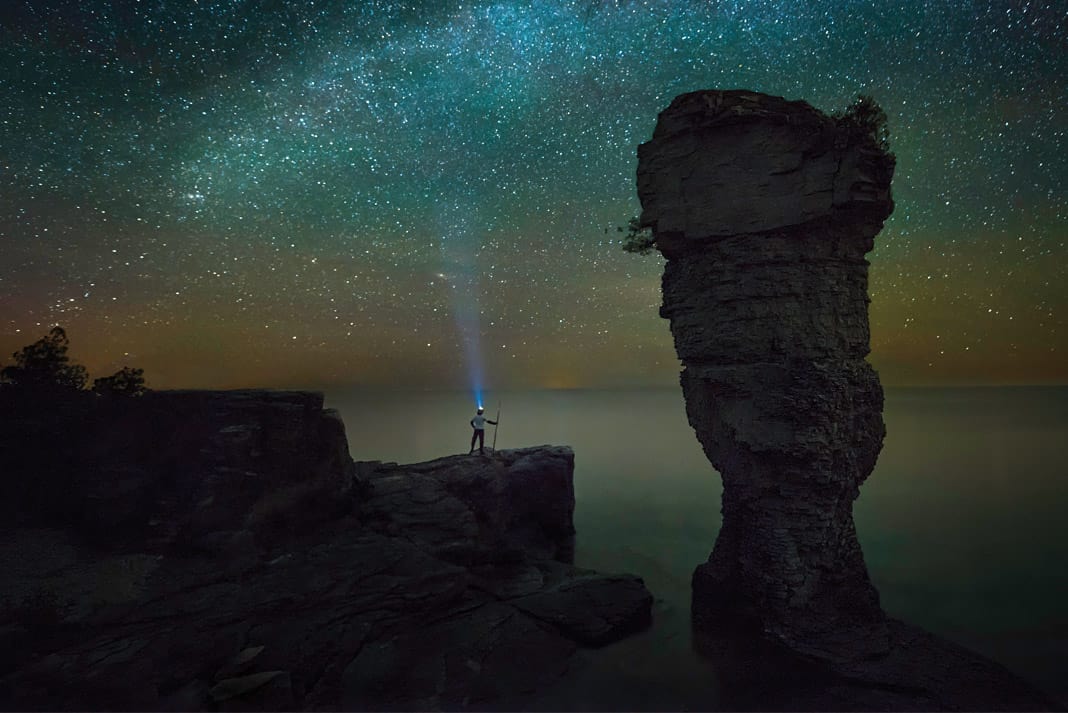
When it gets really bad with heat and smoke, I’ve got some remote foggy islands to head to—and I’ll be a day ahead of you. If you’re a true doomsayer, you could go Elon Musk-level crazy and head for Mars. But I hear the paddling there is even worse.

Neil Schulman leads an environmental non-profit in Portland, Oregon. He melts above 85 degrees.
Cover of Paddling Magazine Issue 67This article was first published in the Summer 2022 issue of Paddling Magazine. Subscribe to Paddling Magazine’s print and digital editions, or browse the archives.


Summer, you’ve changed. | Feature photo: Christian Gallagher
 

Astral Launches Season Of Giving With $14K Donation & Gear Giveaway

November 3, 2022 – Asheville, NC – On a mission to create and share the highest performing outdoor gear in the least toxic, lowest impact way with its community, Astral is ushering in the season of gift-giving with its first annual Season of Giving campaign that combines charitable gifts and gear giveaways throughout November and December.

To kick off the campaign on November 1, Astral is opening nominations for its Season of Giving Giveaway Contest. Wanting to inspire philanthropy this holiday season from its community, Astral’s asking its fans to nominate an individual who puts nature first to win one of four $1,000 Astral gift cards. Nominees could also be featured on Astral’s Instagram. Nominations will be accepted through December 19 and winners will be selected by an internal committee and announced throughout the campaign with the final winner being selected on December 20.
On November 5, to continue the Season of Giving, Astral will be presenting a donation in the amount of $13,850 to Green River Access Fund (GRAF), which works to maintain permanent public access to the Green River, at the Green Race. The donation comes from the proceeds of Astral’s Heron LE GreenJacket sale and is the organization’s largest donation received to date.

The Green River and the Narrows, a stretch of highly technical whitewater that is the site of the Green Race and considered by many to be the pinnacle of whitewater racing in the Southeast, has played a formative role in many paddlers’ lives, including Astral Founder & CEO Philip Curry, who was among the first few groups to run the Narrows consistently in the early 1990s.

“It’s like you have a knot in your soul or your mind and [the Green] just loosens it and it’s gone,” says Curry of the Green’s effect and its significance in his own life. “You finish that river feeling so clean and refreshed. Mentally, spiritually, and physically.”

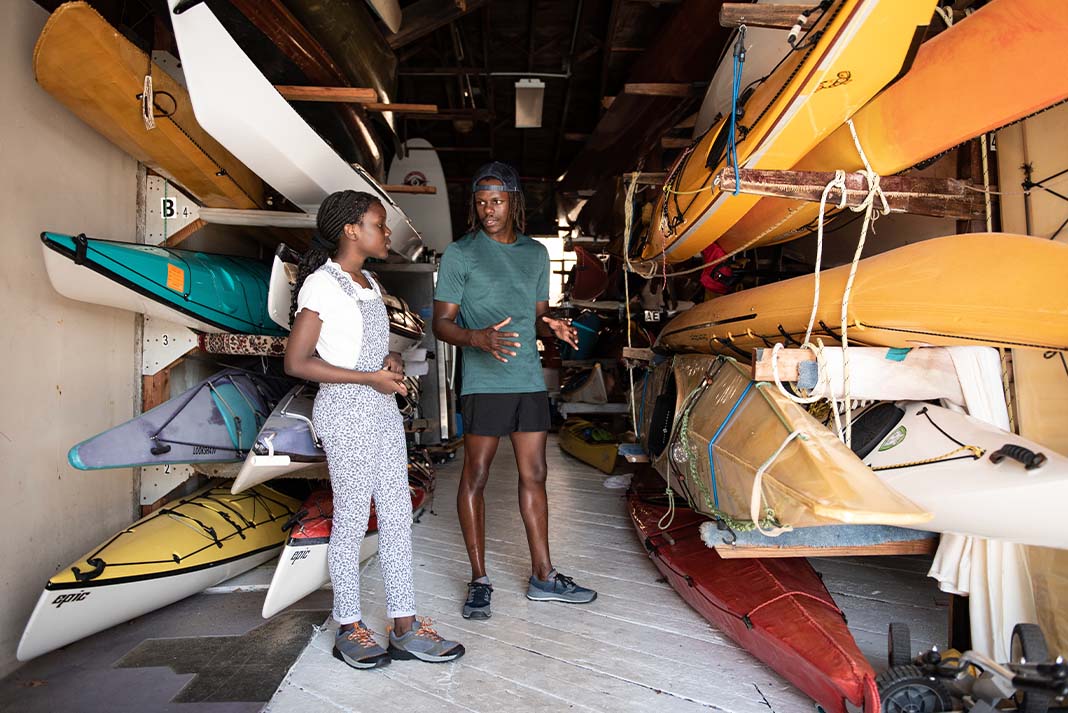
Man and woman stand in room surrounded by kayaks on racks
Photo: Courtesy of Astral

“To continue to build off our mission while giving back to organizations that help increase the access to wild spaces, we are thrilled to celebrate and amplify the athletes and artists in our community through the Season of Giving,” said Curry. “Astral is committed to offering unique experiences and programs and we’re excited to celebrate our network this season.”

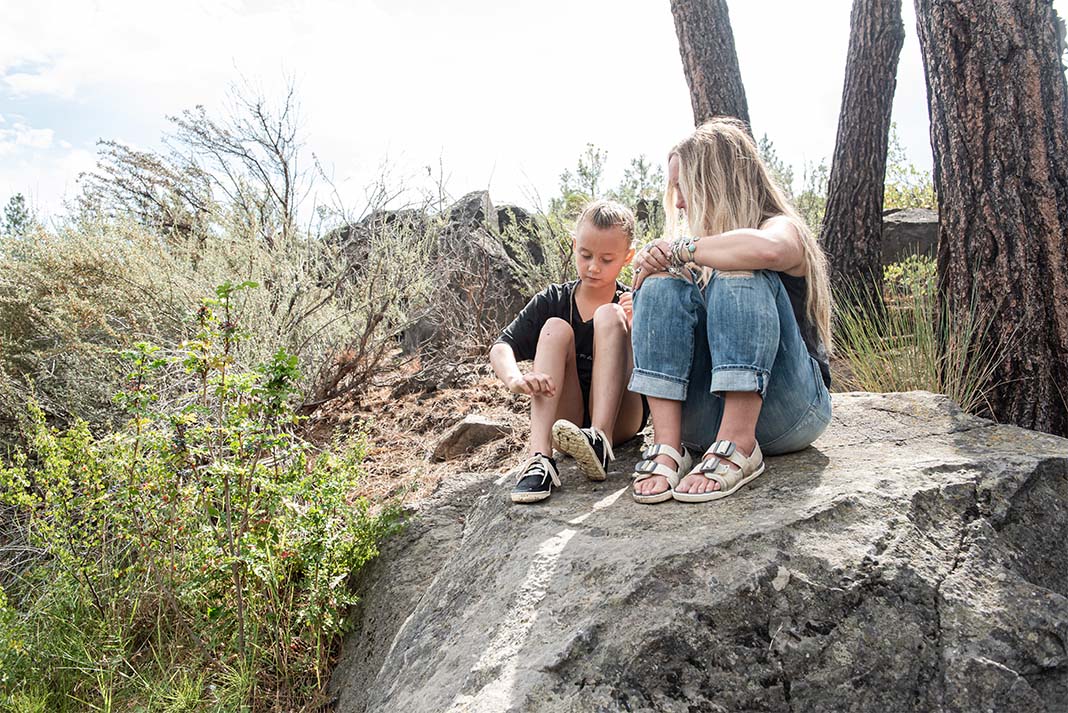
Woman and child sit on a rock
Photo Courtesy of Astral

Stay tuned for other subsequent event announcements including a program that will give 5% of sales to three non-profit organizations dedicated to protecting water and providing youth access to nature, American RiversLonely Whale, and Muddy Sneakers.

For more information on Astral’s Season of Giving campaign visit the campaign’s page or contact Mindy Smith at mindy@darbycommunications.com.
About Astral

Established in 2002, Astral has grown to specialize in designing high performance wilderness equipment including PFDs and footwear, created in the least toxic, lowest impact ways. Built on decades of experience and experimentation, Astral has assembled athletes, artists, and craftspeople to build and use the cleanest, most beautiful, and highest performing products you can buy on the market. Most notably, Astral has significantly reduced toxic PVC foam from the PFD industry, invented breathable life jackets, won awards for their paradigm changing footwear designs, and they’ve developed the stickiest rubber ever worn on wet rock. Visit www.astraldesigns.com for more information.
Alpacka Raft Launches Most Innovative, Advanced Whitewater Packraft Yet

MANCOS, Colo. (November 11, 2022) – The world’s leading packrafting brand, Alpacka Raft, is thrilled to debut the much-anticipated Valkyrie, its most capable whitewater boat to date. After 15 years of development and dozens of prototypes, the Valkyrie is the pinnacle of whitewater performance in an inflatable package, just as founder Sheri Tingey intended when she embarked on the initial design in 2008.

“It has challenged me and made me dig into myself like nothing I’ve ever done before,” said Tingey, who eventually reached a breakthrough by implementing a new stern and hull shape, along with a lowered floor, bringing much-needed secondary stability to the boat.

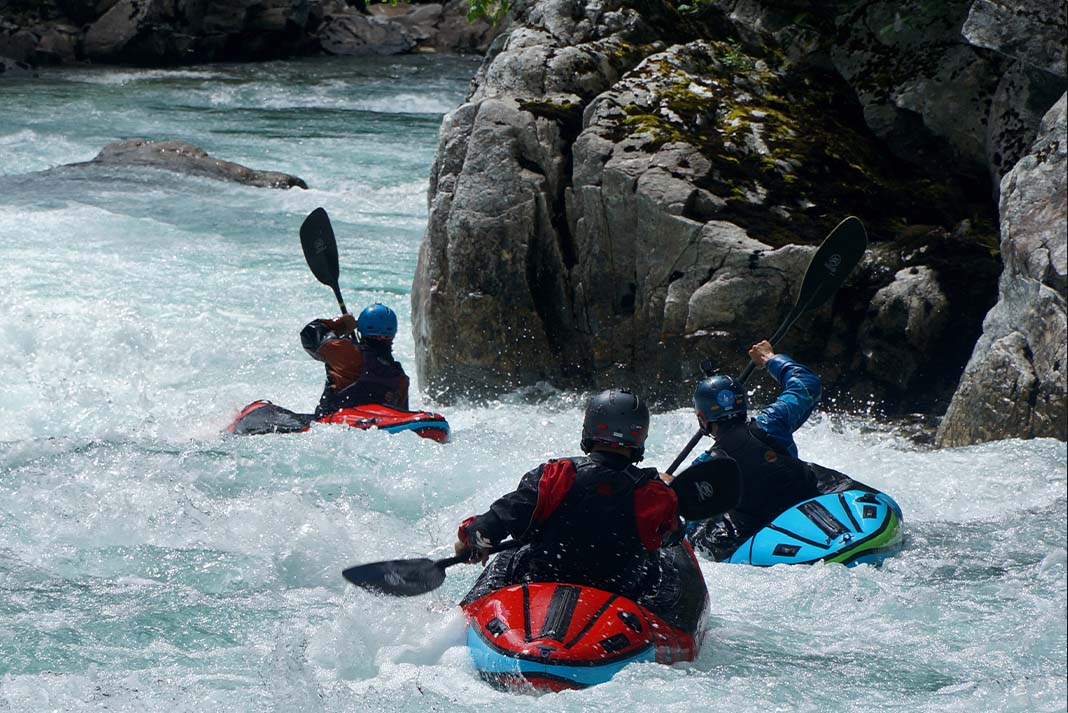
The Valkyrie’s design is purpose-driven for skilled whitewater kayakers looking for a backcountry or travel boat, as well as developing paddlers hoping to improve kayaking skills in a more forgiving and portable package. Featuring low profile tubes, modern creek boat shaping, generous bow and stern rocker, and a new planing hull floor, the Valkyrie is the closest inflatable resemblance of a hardshell whitewater kayak ever produced.

Weighing in at under 15 pounds, the Valkyrie excels at straight-line speed, boofing off drops and punching through holes. Some of the world’s most accomplished professional paddlers, like Nouria Newman and Tyler Bradt, tested several prototypes of the design until the packraft reached perfection.

“My first experience in the Valkyrie, I could hardly believe I was paddling an inflatable,” said Bradt. “It rolled so well, boofed like a dream, surfed waves, and turned on a dime. Every iteration of this boat was a leap above the last and the boat that is now on the market is undoubtedly the gold standard of packrafts by which all others will be measured.”

The Valkyrie is now available at alpackaraft.com for $2,300. For a limited time, customers purchasing the Valkyrie will be eligible to receive 10 percent off any additional items in their cart.

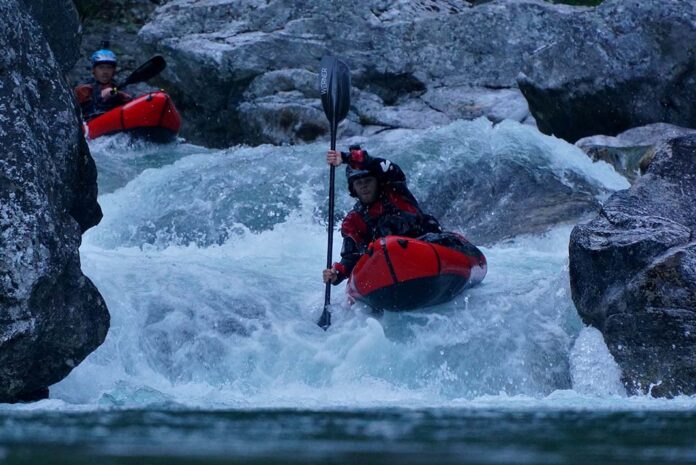
Three paddlers going down a rapid.

About Alpacka Raft

Alpacka Raft seeks to design and handcraft the most innovative, premium packrafts available. The company was founded as a collaboration between Sheri Tingey, the designer behind the products, and her son Thor, who had just completed a 700-mile traverse of Alaska’s Brooks Range with a dream for a better-performing packraft. They strive for a legacy of leadership, stewardship, and support that allows their community of diverse boaters a lifetime of use and adventure-driven fun. Alpacka Raft is committed to providing high-quality, living wage manufacturing jobs in the rural mountain town economy of Mancos, Colorado. Every packraft that leaves the shop is handmade and made-to-order. For more information, visit alpackaraft.com

Whitewater Kayak Review: Zet Chili

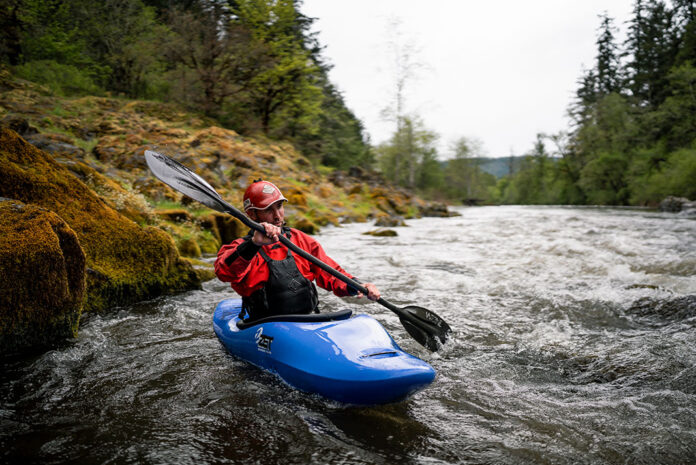
man paddles the Zet Chili whitewater kayak beside a mossy riverbank
The speedy love child of a modern slalom boat and a playful river runner. | Feature photo: Paul Robert Wolf Wilson

Boatercross, or extreme slalom as it is referred to by the International Canoe Federation (ICF), is taking the international race scene by force. The crowd-favorite head-to-head discipline is even making its way to the Olympic Games in 2024. Which means rotomolded plastic boats will finally be sharing the stage with their high-end composite siblings that have held the torch for decades.

The boom of boatercross is happening alongside the resurgence of slalom-inspired kayaks, dubbed half-slice boats. At each ICF extreme slalom cross event, high-volume boats proven in steep creek races are lined up on the starting platform alongside half-slice slalom look-alikes, known for their deft maneuverability.

And at these competitions, the Zet Chili is a regular on the podium.

How has the Chili performed? At the 2021 ICF World Championships, Australian slalom star, Jessica Fox, made the Chiliher boat of choice and won gold. In the men’s final, three out of the four kayaks were Chilis. This kayak is a race car, and it’s no surprise many slalom athletes choose it as their boatercross vehicle.

Zet Kayaks’ Chili turns up the heat

Zet Chili Specs
Length: 9’0”
Width: 24.5”
Volume: 62 U.S. gal
Weight: 40.5 lbs
Weight Range: 120-190 lbs
MSRP: $1,349 USD
www.zet-kayaks.com

Zet is known for making aggressive, high-performance river runners and creek boats. The Czech Republic manufacturer released their first kayak, the Raptor, around eight years ago and has since produced a string of kayaks aimed at paddling technical rivers and big water. The Chili was released in 2021 and is Zet’s only kayak currently deviating from a full-on creek boat or river runner design. Instead, it’s tailored to playing the river and the slalom-cross scene.

Design and outfitting

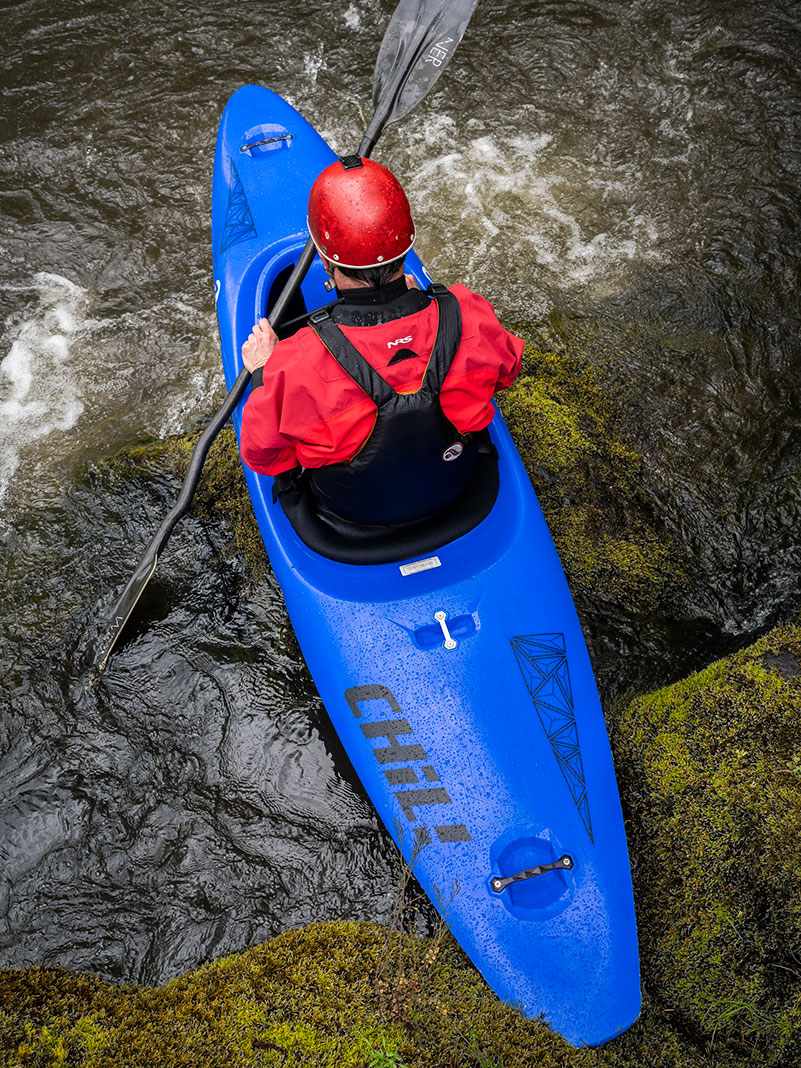
Our loaner model is a size medium, the only current size, weighing just 40 pounds. That’s around four pounds lighter than similar models from competitor brands. The sleek profile features no drain plug. The cockpit rim where you attach your skirt over the kayak is slim. It’s as if Zet looked for every place they could shave an ounce and took it.

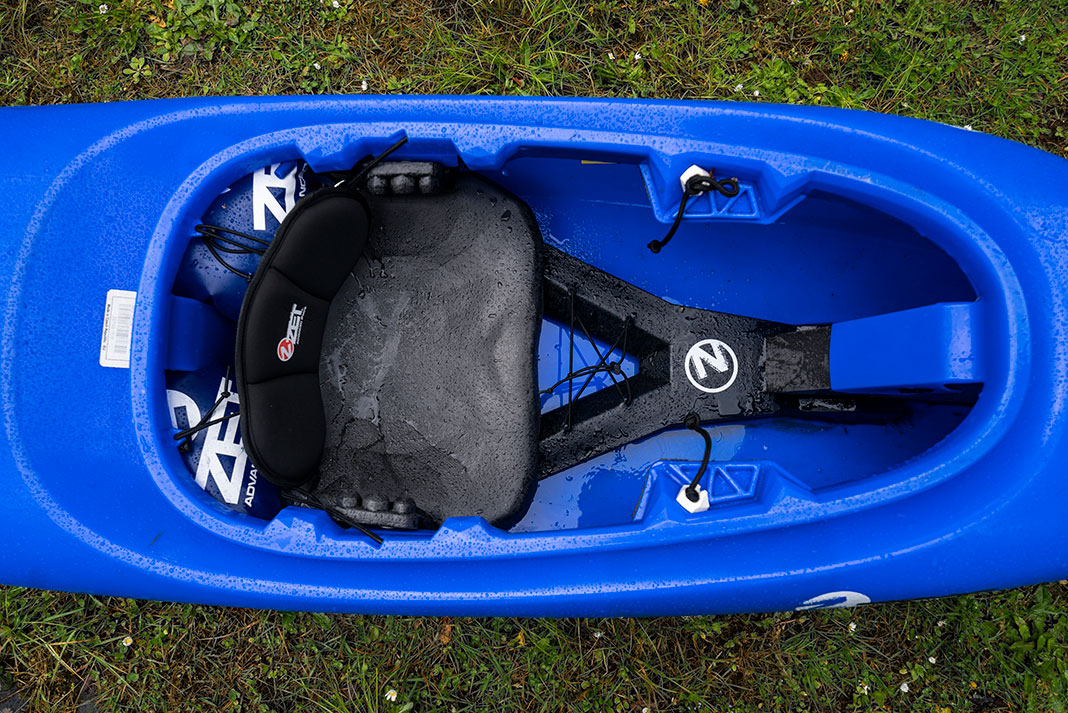
When you look inside, the outfitting is minimalist. A frame connecting the front and rear bulkhead is the only significant hard plastic you’ll find in the cockpit. A shaped block of closed-cell foam forms a nicely scooped seat. Simple and comfortable. It’s another classic take meeting the evolved design of today. The backband adjusts by cord and jam cleat, like a Jackson freestyle kayak, and provides unrestricted access to the rear of the boat.

overhead photo of the Zet Chili kayak's cockpit
The Chili’s simple outfitting design is utilitarian but comfortable. A sturdy, closed-cell foam seat helps protect from impacts and provides considerable warmth. | Photo: Paul Robert Wolf Wilson

Zet Kayaks Chili on the water

Eddy hopping some class III seemed like the perfect way to test the Chili, and so I took it for some spring highwater runs on the upper tributaries of the Willamette River in Oregon. On the river, the Chili is a filet knife. An efficient tool capable of creating beautiful work. Or you might cut your finger off. It’s a boat demanding an active and engaged paddler.

man sits in the Zet Chili whitewater kayak at river's edge
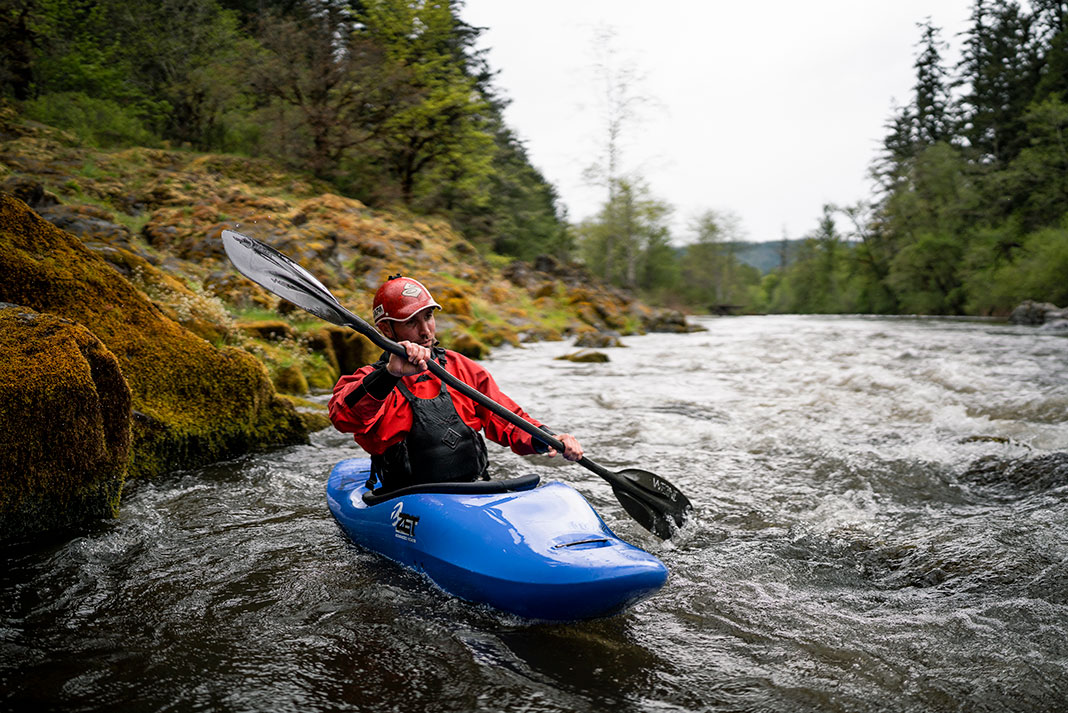
The torpedo-shaped bow of the Chili is narrow and the deck has a low profile. | Photo: Paul Robert Wolf Wilson

On my first lap in the Chili, I was lax. I soon felt the edge want to flip me as I went for a technical move between two rocks. A moment later, the stern started to load when I didn’t ask for it. Right, I’m in a race boat. I learn very quickly, a more assertive mindset made all the difference.

The long hull is where the Chili gets its pep. At nine feet long, the Chili has a large, flat, planing surface stretching out under the paddler. The kayak’s minimal bow rocker doesn’t kick up until past the knees. The elongated waterline, combined with an overall narrow design—just 24.5 inches—provides the Chili with an optimal ratio of length to width for speed.

When it comes to edges, the transition from the hull under the cockpit area to the sidewall is nearly at a right angle. There is no multi-staged transition here. This gives the Chili a solid edge to dig in for a carve, but also an unforgiving one to catch should you not be minding your tilt.

The Chili front surfs waves well. The planing hull and hard edges allowed me to carve up small green waves I would struggle to catch in a playboat, and where a creek boat would be cumbersome to make tight carves.

The bow of the Chili is narrow and the deck has a low profile. This contrasts with many of the half slice kayaks on the market today featuring a modern creek-boat-inspired bow. Rather than a voluminous nose and significant rocker, the Chili’s bow is a torpedo. Those who have paddled river runners from the early 2000s will remember the feeling of having your legs straight rather than out wide—if you don’t remember, it’ll come back to you when you jump in the Chili.

man paddles the Zet Chili whitewater kayak beside a mossy riverbank
The speedy love child of a modern slalom boat and a playful river runner. | Feature photo: Paul Robert Wolf Wilson

The lack of rocker on the Chili means boofing and blasting over features requires some more technique. To clear the bow, it helps to drive down on the rear of the seat and use features like the crest of a wave to lift the bow or spin a turn.

man paddles the Zet Chili in whitewater
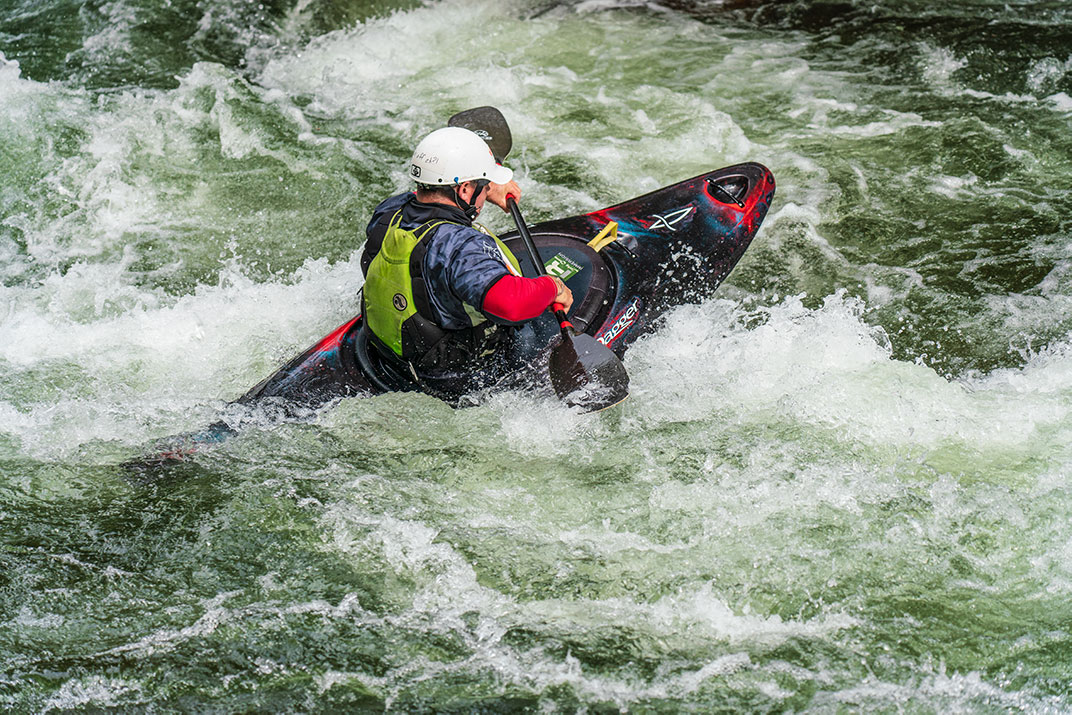
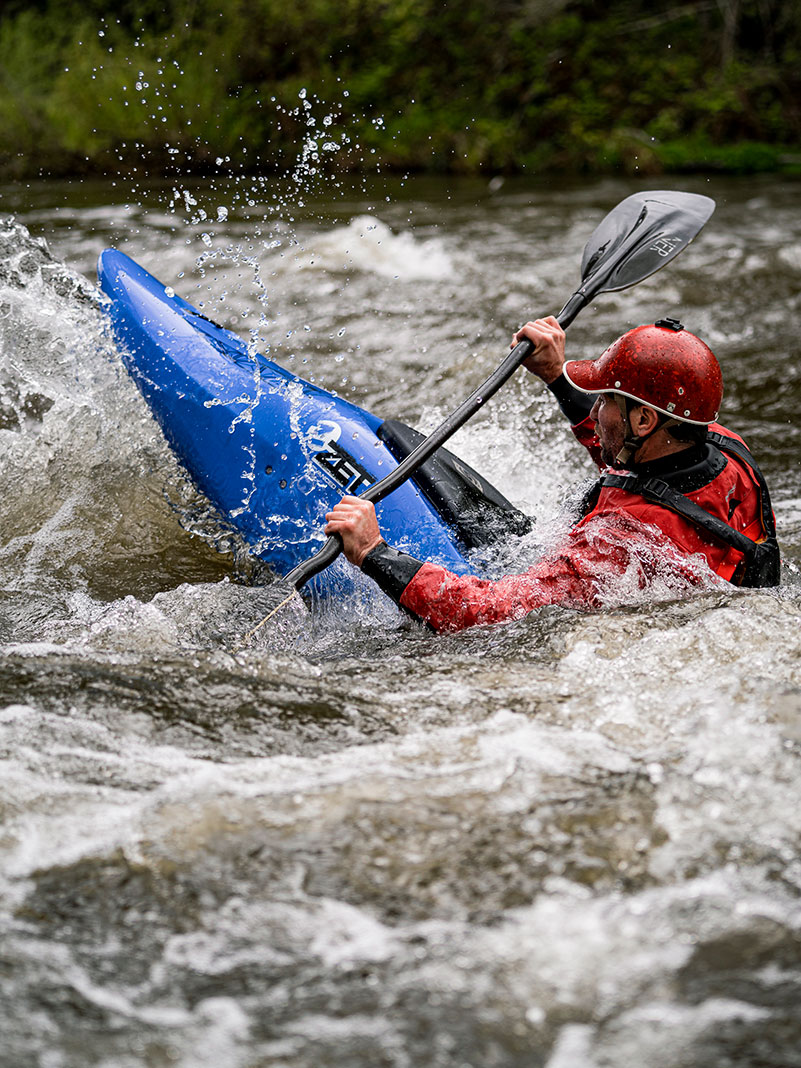
Sporty and agile, the Chili’s flirty, flat stern will spice up your eddy turns and add zest to your squirts and splats. | Photo: Paul Robert Wolf Wilson

The stern of the Chili features a flat tapering deck, synonymous with a half-slice or slalom kayak. There is a fair bit of volume on the stern directly behind the paddler, and the deck profile tapers toward the stern gradually and consistently. There is only the slightest concave scoop right in the last eight inches of the stern. The grab handle on the stern also has a fairly deep divot taking some volume off the rear deck.

When it comes to stern squirting and pivoting, this stern allows for some fun verticality and deft maneuvering. The gradual slope and volume toward the paddler mean sinking the stern is less about out-of-control verticality and more a controlled utilitarian maneuver. This volume and shape allowed me to quickly disengage from a squirt, shed water from the deck and carry on downstream. A desirable trait for racing and river running alike.

The combination of the low-volume stern, flat hull and hard edge give the Chili multiple options for maneuvering and catching eddies: Utilizing the hard edge and initiating a carve, the Chili can engage and snap explosively into an eddy. The first time I was not expecting the explosive feedback, and happily recalibrated for this.

I could also keep the boat flat and allow the Chili to spin and slide. This easily transitions into using the spin momentum to sink the stern and pivot a turn or enjoy some time spinning with the bow toward the sky.

Fan your half slice flames with the Zet Chili

The Chili will spice up your paddling even if you never intend to race. It’ll take your class III and IV rivers and turn up the dial. However, for those seeking a half-slice capable of paddling class V, the Chili’s low bow rocker and aggressive edges leave little margin for error, and it may feel like you’ve taken a bite of ghost pepper in the crux of the rapid.

The ticket with the Zet Chili is this kayak demands to be driven. And when it makes your local run more exciting, perhaps it’ll even fan the flames of your Olympic aspirations or get you to the starting line at your local boatercross.

The speedy love child of a modern slalom boat and a playful river runner. | Feature photo: Paul Robert Wolf Wilson


3 Pieces Of Rescue Gear Worth Spending Extra On

a whitewater rescuer leaps into the river to save a kayaker using rescue gear
The higher quality your throw rope the more functions it can serve in a rescue scenario, from throw bagging a swimmer to using in a rescue haul system. | Feature photo: Brenna Shultz

Pop quiz. Which three pieces of paddling safety equipment would you choose to spend a little extra on? Take a minute to think about it. Don’t read further until you have your list of whitewater rescue gear worth investing in.

Which whitewater rescue gear is your best investment?

While there is general agreement on which safety items every paddler should carry on the river, there are differing opinions on the relative importance of each item and where spending more money creates the most value.

I asked three of my outdoor safety colleagues for their opinions and compared them to mine. While statistics say four paddlers picking three items each creates 81 potential equipment combinations, the results of my survey showed far less variation. Here is what they said.

a whitewater rescuer leaps into the river to save a kayaker using rescue gear
The higher quality your throw rope the more functions it can serve in a rescue scenario, from throw bagging a swimmer to using in a rescue haul system. | Feature photo: Brenna Shultz

Clare Dallats picks

Based in Australia, Clare Dallat grew up paddling slalom kayak in Europe and is now one of the world’s leading voices in outdoor risk management. Her top safety item to spend extra on? A drysuit.

“If you’re not warm, you can’t function. If you can’t function, things go wrong,” Dallat says. In addition to spending more on a drysuit, she recommends a premium throw bag and knife.

“A knife is one of those things that may never get used, but when it is needed, there is nothing else that will work. A good knife, razor sharp, saved only for the worst-case scenario, is worth the money and can save a life,” Dallat adds.

Gord Bunstons picks

Gord Bunston is a career whitewater guide and longtime river rescue instructor with a master’s degree in disaster and emergency management. He agreed on the added value of a premium drysuit, well taken care of and dried after each use. A waist belt throw bag, he added, was critical.

“A throw bag is of no use left in your boat, especially if you swim and your boat gets pinned.” Bunston stressed keeping the throw bag dry, clean and ready to deploy. His third pick was a helmet, as there can be a big difference in the fit and function of cheap versus high-end helmets. “Hits on the head are not common in whitewater, but it’s not something you want to mess around with,” he adds.

Matt Cuccaros picks

My friend Matt Cuccaro has been guiding for more than three decades. As a remote expedition guide and senior river rescue instructor, his number one choice was a life jacket. “A PFD is obvious. It’s your last line of defense if you leave your boat. All PFDs meet a minimum standard, but the minimum standard does not guarantee fit and wearability.”

Throw rope was on his list too. “The more you spend, the better the rope, and the more functions it will have, from simply throwing to creating rescue haul systems.”

Keeping track so far? That’s three votes for spending more on a throw rope, two for a high-end drysuit, and one each for knife, helmet and PFD.

The authors picks

I agree with Cuccaro. A PFD is the first item I recommend spending extra on, which includes replacing it more often. My rule of thumb is to replace my PFD every three years and treat it with care in the meantime—no sitting on it or drying it out in the sun, and wearing it snug.

My second pick is a satellite communication device. Nowadays, these units are affordable and often the only way to get help to an off-grid location. My third choice is footwear—the burliest that can fit in your boat. When things get weird, we need to be able to get out and boogie on rocks or wade midstream. Similar to Bunston’s view on throw bags, footwear is useless when stuffed in a boat; it needs to be on our feet.

Rescue gear is like an insurance policy

What do these four opinions tell us? PFDs and drysuits are everyday safety items with comfort functions, so we often justify spending extra on them. But a throw rope, knife, communication device or even a helmet could conceivably go through its whole serviceable life and never be put to the test.

Spending more on these items can be harder to justify for some paddlers, as they fall into the low-probability but high-consequence event category. However, like an insurance policy, you’re going to want it when you need it. Having the right equipment is critical to potentially saving a life when something serious happens.

Jeff Jackson is a professor of outdoor education at Algonquin College near the banks of the Ottawa River.

Cover of Paddling Magazine Issue 67This article was first published in the Summer 2022 issue of Paddling Magazine. Subscribe to Paddling Magazine’s print and digital editions, or browse the archives.


The higher quality your throw rope the more functions it can serve in a rescue scenario, from throw bagging a swimmer to using in a rescue haul system. | Feature photo: Brenna Shultz


River Heroes: 5 Mentors Helping Beginners Broaden Their Horizons

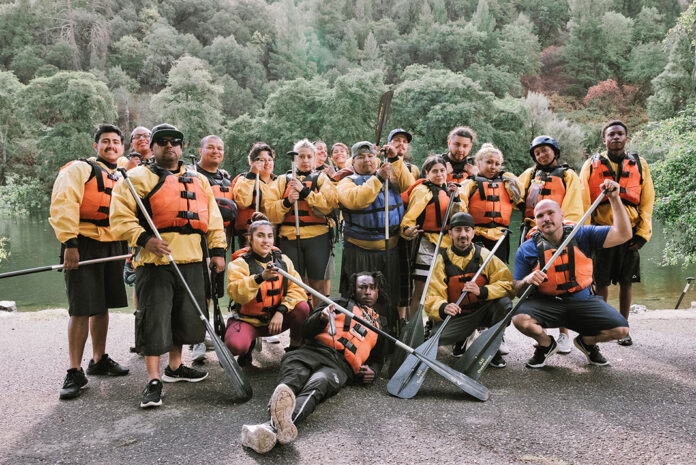
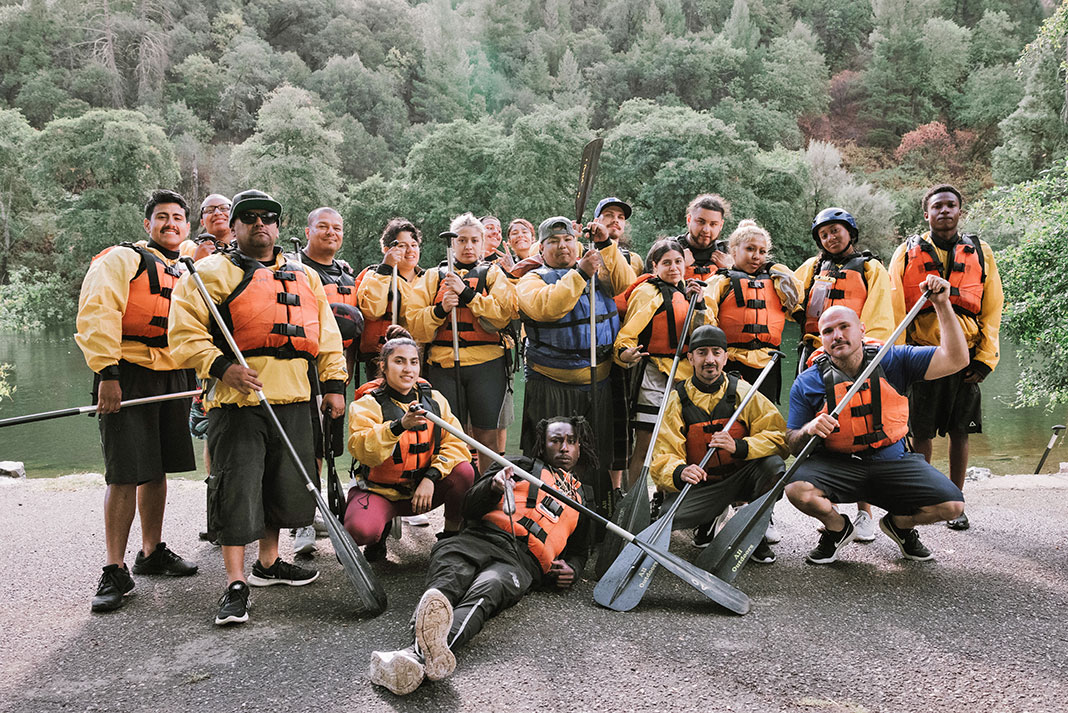
a group of ex-gang members pose in paddling gear after taking part in a beginners paddling program
“I love being a part of new experiences, and getting out of the box of generational poverty, gangs, and the concrete jungle,” said Hector Verdugo (fourth from left), associate executive director at Homeboy Industries in Uncharted Waters. | Feature photo: Jack Armstrong

From entrepreneurs and explorers to game changers and artists, the wide world of paddlesports is enriched by those who see a need and step up to fill it. Whether welcoming underserved communities, mentoring new paddlers or protecting waterways at risk, heres who (and what) is changing paddling for the better this year.


5 mentors helping beginners broaden their paddling horizons

 1 Andrea White

Rescue for Rec Boaters

Saving lives by bringing safety courses to those who need them most

Andrea White was in her mid-40s when she fell hard for paddling. As her love affair with the sport deepened, she noticed an unsettling trend.

“I started hearing about incidents and fatalities in groups I paddled with, where I was two degrees of separation from people who were calling 911,” said White, now an executive with the ​​American Canoe Association.

The incidents White heard about weren’t happening on difficult whitewater or rough seas. They were occurring on lakes and slow-moving rivers such as the Cumberland River in her city of Nashville. And the type of paddlers getting into trouble were paddlers of recreational kayaks—the group she identifies most closely with and, not coincidentally, the largest market in American paddlesports.

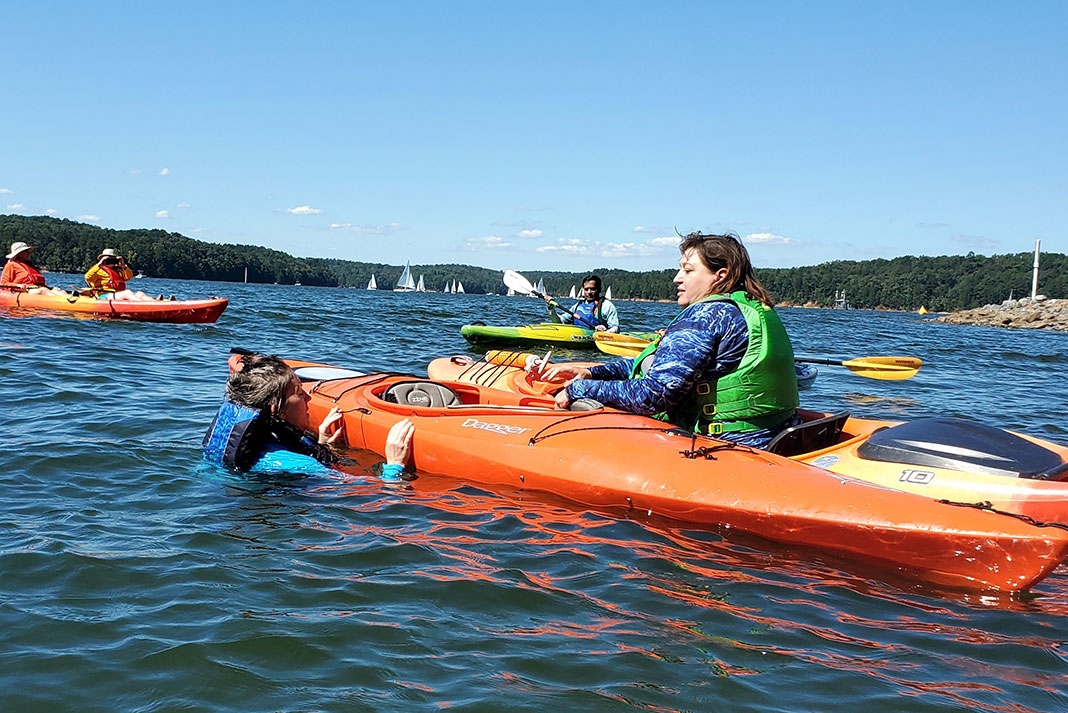
woman teaches a kayak rescue course to some beginner kayakers
Andrea White teaching a Rescue for Rec Boaters course. | Photo: Courtesy Bonnie Murphy

Recreational kayakers number more than 13 million in the United States, according to the 2021 Outdoor Foundation Participation Report. Those numbers are fueled by the accessibility of recreational kayaks, which are one of the easiest, cheapest and—one would think—safest ways to enter the sport. So why does this segment account for so many fatalities and close calls?

Inexperience. Recreational kayaks are designed for and marketed to casual users, and casual users represent a disproportionate share of paddling fatalities. According to the U.S. Coast Guard’s annual Recreational Boating Statistics report, 38 percent of paddling fatalities involved participants who had less than 10 hours of paddling experience. Meanwhile, 78 percent of paddling fatalities involve participants with less than 100 hours of experience.

“I was in the community of ACA instructors who were doing this kind of training, and I could see all we have to do is connect these two dots,” she said.

White launched Rescue for Rec Boaters in 2017, hosting it through the Tennessee Scenic River Association. The two-day program is split into a lake day and a moving water day. It features entry-level instruction in paddling strokes and skills, including throw ropes, strainer avoidance and self-rescue. The idea is to give new paddlers in recreational kayaks the skills they need to deal with common encounters on flat and slow-moving water. 

The program sold out the first few years. Since then, White has relocated to Atlanta, Georgia, and she brought the program with her. Her most successful recruiting tool has been social media, specifically local kayaking Facebook groups. She credits the success of the course to its approachability—meeting recreational kayakers where they are. Her strategy is a concept the entire paddling community needs to embrace.

—Joe Potoczak


a group of ex-gang members pose in paddling gear after taking part in a beginners paddling program
“I love being a part of new experiences, and getting out of the box of generational poverty, gangs, and the concrete jungle,” said Hector Verdugo (fourth from left), associate executive director at Homeboy Industries in Uncharted Waters. | Feature photo: Jack Armstrong

2 Homeboy Industries

homeboyindustries.org

Gang intervention program harnessing the transformational power of the river

Homeboy Industries is the world’s largest gang intervention and re-entry program for formerly gang-involved men, women and youth. The organization has helped more than 8,000 participants since 1988. In 2021, it branched out to include river rafting in its activities. The short film Uncharted Waters follows the joy of new connections when 50 Homeboy program participants take up the challenge of an overnight whitewater rafting adventure. “In gang culture, you’re on the edge of death, on the edge of pain—it’s an excitement,” said Hector Verdugo, associate executive director at Homeboy. “I felt like, how about if we were to play with adrenaline in this manner where it’s positive.”


3 Chev Dixon

Hudson River Riders

Hudson River Riders’ director transforms passion into purpose at New York’s Yonkers Paddling & Rowing Club

Meet Chevaughn “Chev” Dixon, the director of Hudson River Riders, a free paddling program for youth offered by the Yonkers Paddling & Rowing Club. After benefitting from the program as a teenager, Dixon moved up through the ranks, from participant to staffer to his current position. Today, his role is more than a job. Dixon has adopted advocating for river access, increasing diversity in paddlesports, and developing the next generation of environmental stewards as his personal mission.

“We want to get the youth into paddlesports because we believe it’s a good activity to keep them physically fit, mentally ready and emotionally intact,” said Dixon.

Chev Dixon stands inside Yonkers Paddling & Rowing Club in New York statea
Chev Dixon inside Yonkers Paddling & Rowing Club in New York state. | Photo: Scott Martin

Born in Kingston, Jamaica, Dixon spent most of his childhood between the city and the quiet country parish of Trelawney. He moved to Yonkers, New York state’s third most populous city, at the age of 13.

Dixon came to kayaking in an unexpected way. After another teen threatened him with a knife during a basketball game, Dixon needed a new pursuit. Hanging out by the Hudson River, he met Gerry Blackstone, a Yonkers Paddling & Rowing Club board member. Blackstone asked Dixon and his friends if they’d like to learn to kayak through Yonkers’ free community program. Dixon’s “yes” changed the trajectory of his life.

Twelve years later, Dixon is now the program’s director and an ACA Level 4 sea kayaking instructor. The community program serves about 1,400 participants a year.

What’s the secret to Hudson River Riders’ success in engaging a diverse group of inner-city youth? “The way we get youth here is to make them feel comfortable. If they’re antsy, scared or worried, they’re not interested. We want a light, free, fun and enjoyable environment for everyone to thrive in,” said Dixon.

“We need [leaders] who can really connect with the community, who are from the community,” he added. “This is why Hudson River Riders works.”

Hudson River Riders also makes paddling look and feel accessible. Dixon has encouraged gear manufacturers to stop promoting class IV+ runs as the standard-bearer of river kayaking because it does not do much to entice new paddlers, he said. It looks like too much risk for people whose daily lives already include many environmental and societal risks. “People are more likely to start paddling if they see what it’s like for new paddlers at the beginning of their progression into the sport,” Dixon added.


View this post on Instagram


A post shared by Chev Dixon (@negus_chev)

Even with its impressive number of participants, the focus of the Hudson River Riders is on youth retention to create lifelong paddlers and environmental stewards. There are two youth groups: The Explorers program, for seven- to 12-year-olds, includes all sorts of outdoor adventures, including hiking, camping, kayaking, running, cycling, tree identification, swimming lessons, and more. The program for 13- to 18-year-olds focuses on developing paddling skills.

Exposing inner-city youth to outdoor adventure opens up careers in conservation and the outdoor industry. “Access to the water is access to a whole world of possibilities,” said Dixon. After hikes, paddles, tree identification and learning about local animals, youth have talked about careers in botany, veterinary science, chemistry, conservation and more—all inspired by their activities through Hudson River Riders.

And Hudson River Riders isn’t the only way Dixon gives back to his community. Last year, he traveled to the Caribbean nation of Dominica to help start a free kayaking center to teach local youth how to paddle and care for their local waterways. He also led a kayak camping trip in Maine with Chicago Adventure Therapy and Hudson River Riders youth.

In May, Dixon completed the Hudson Valley Challenge, where he ran, hiked, biked, kayaked and standup paddleboarded the 300-mile round trip of the Hudson Valley Estuary. Leading by example, Dixon hopes to inspire others to be active and positive forces in their communities.

Antoinette Lee Toscano

Antoinette Lee Toscano is a cofounder of Diversify Whitewater, founder of the American Adventure Sports Club, and producer of Whitewater TV. Watch her in-depth interview with Chev Dixon. Follow Chev Dixon’s adventures at negusoutdoors.com.


a group of people paddle a yellow whitewater raft through rapids
Photo: Courtesy OARS // Andrew Miller

4 Guide School Scholarship

oars.com

Since 2015, the Pam & George Wendt Foundation has provided subsidized outdoor adventure experiences for more than 2,000 under-resourced youth. In 2021, the Foundation and OARS launched a fully sponsored, need-based Guide School Scholarship. The scholarship returned in 2022 to help four individuals with limited resources attend OARS’s sought-after guide training programs, improving access to a career in the whitewater rafting industry.


5 D.A.R.E. To Kayak

barkerrivertrips.com

Teaching kids to paddle asa healthy alternative to drugs and alcohol

Celebrating its 20th season in 2022, D.A.R.E to Kayak offers paddling instruction to about 20 Idaho students each summer. What started as a pool program has grown to paddling on the river, focusing on safety and conservation. “We also host a field day. We had 200 kids this year who learned how to use a PFD and helmet, whitewater safety and our message of finding a healthy passion to steer away from drug and alcohol abuse,” said founder Devon Barker-Hicks.

instructor teaches young kayaker how to roll
Devon Barker-Hicks teaching a roll in a D.A.R.E. To Kayak session. | Photo: Paul Robert Wolf Wilson

“One element continuing to enhance D.A.R.E to Kayak has been the increased involvement from parents since the start of Covid,” she added. “We continued teaching by involving the parents working one-on-one in the eddy with their child. We taught the parents how to wear a PFD, how to help their child with the steps of the wet exit, and how to support them hands-on through the rolling progression. We always say it takes a village to make a kayaker. Now, our village includes parents too.”

Cover of Paddling Magazine Issue 67This article was first published in the Summer 2022 issue of Paddling Magazine. Subscribe to Paddling Magazine’s print and digital editions, or browse the archives.


“I love being a part of new experiences, and getting out of the box of generational poverty, gangs, and the concrete jungle,” said Hector Verdugo (fourth from left), associate executive director at Homeboy Industries in Uncharted Waters. | Feature photo: Jack Armstrong


The 90-Year-Old Coach Who Will Never Stop Paddling (Video)

David Kurtz found his way to whitewater in 1954. As part of the early group of people paddling whitewater on the US East Coast as a recreational activity in the 20th century, Kurtz has been sharing the sport with others for nearly 70 years.

The Daily Collegian, a Penn State University student media outlet, took the opportunity to gleam the life of Kurtz on his home river in central Pennsylvania.


North To South: Expedition AKOR Completes Epic Cross-Canada Trip

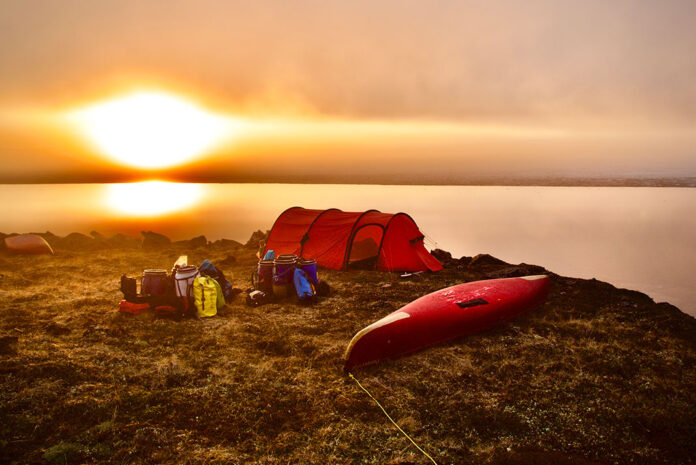
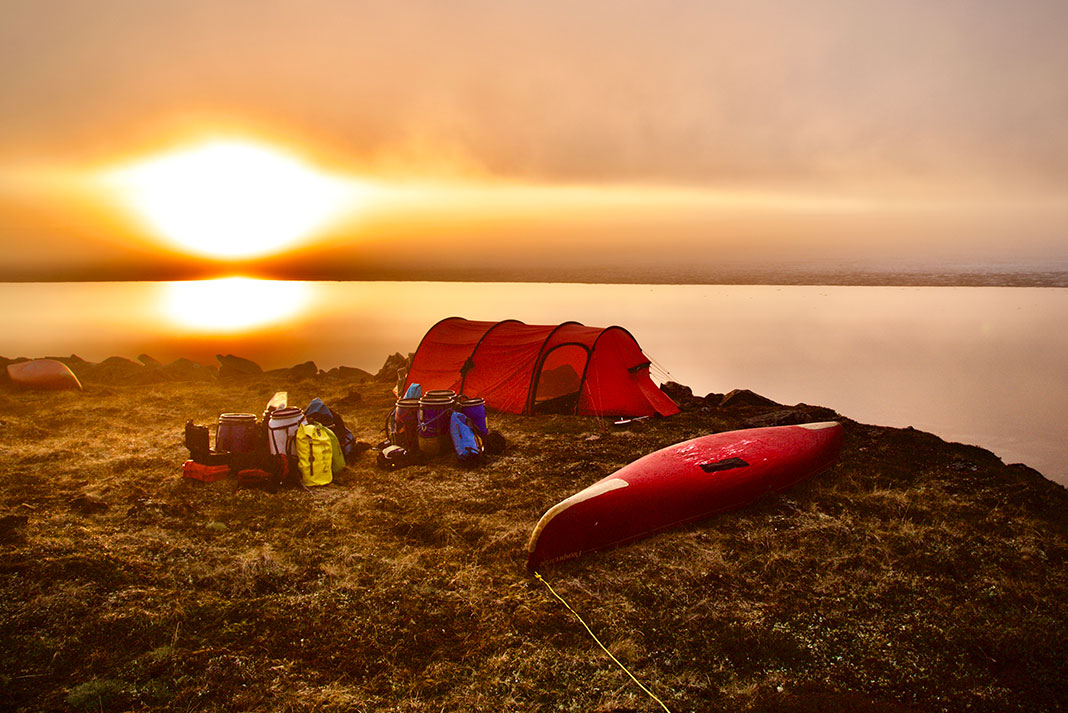
Expedition AKOR's campsite at dusk on their cross-continent trip across Canada
"During the journey, almost nothing went as planned. We had to change our route many times, we were seriously injured, we had to ration our food, and we even had to manage the departure of a crew member and his replacement. Even with the best preparation, we can never be ready for everything. What we must rely on is our mental flexibility and our ability to adapt," says expedition team member Nicholas Roulx. | Feature photo: Expedition AKOR

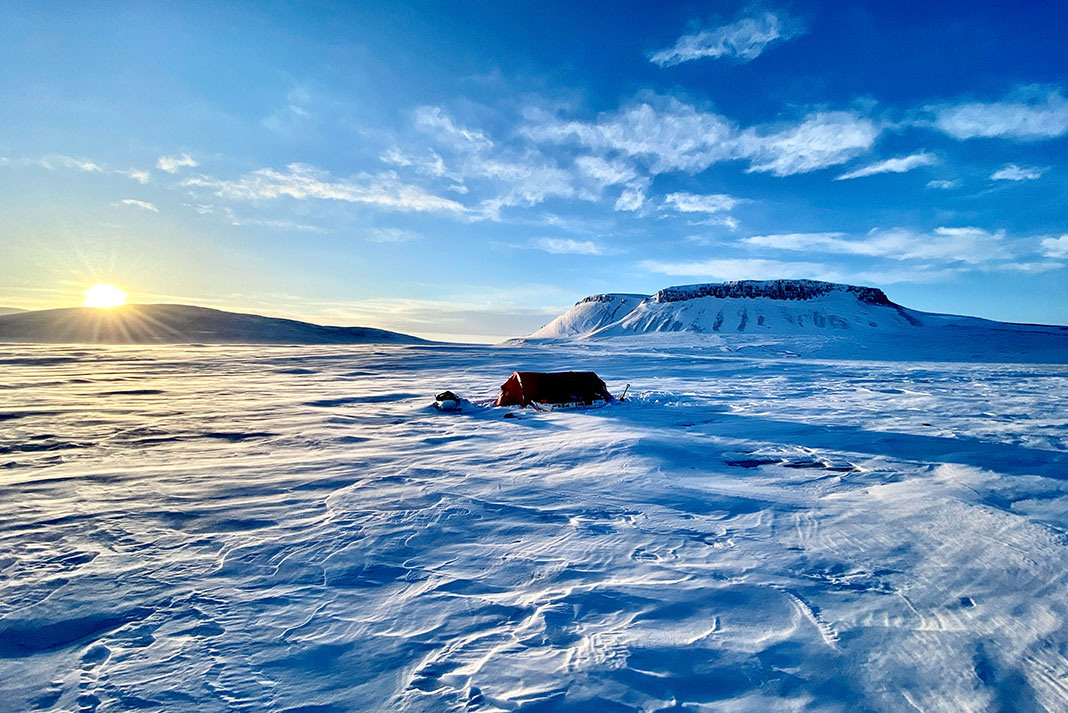
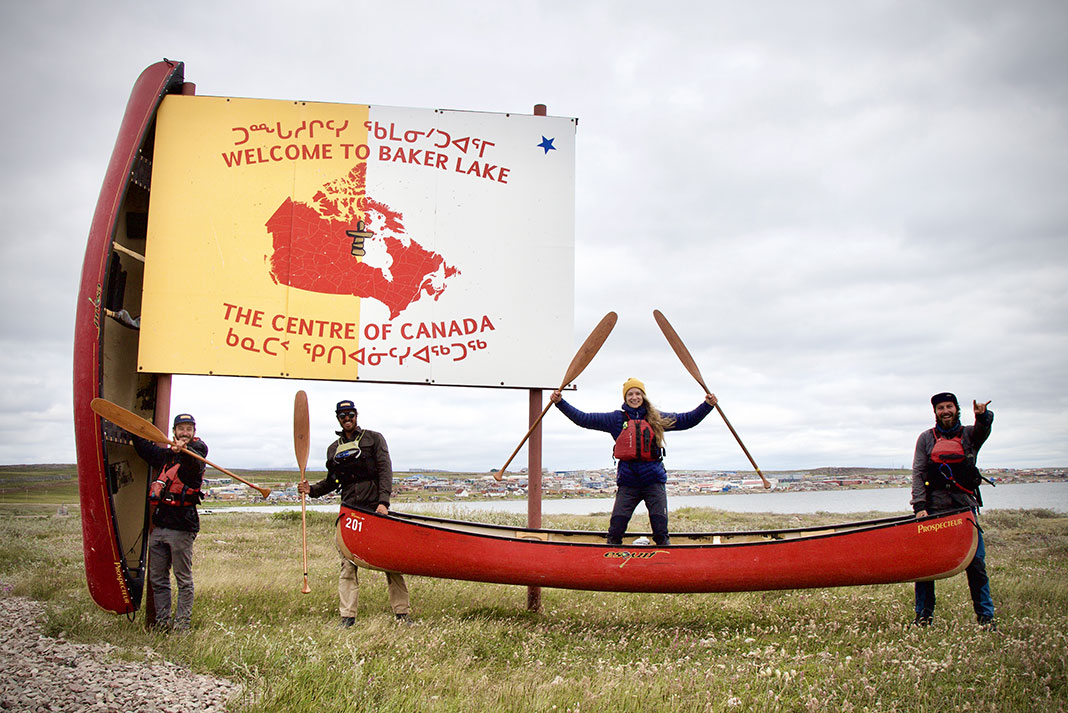
When Nicolas Roulx and Guillaume Moreau paddled south from the remote hamlet of Baker Lake, they were already three months and more than 2,000 kilometers into an unprecedented north-to-south crossing of Canada, and they thought the worst was behind them. They’d survived -45°C Arctic temperatures, polar bear encounters and 12-hour days hauling 350-pound sleds through sea ice pressure ridges.

Yet, the ferocious winds on the massive lakes of Nunavut during the canoeing section of the trip were almost their undoing. The paddlers were stormbound in their tent for eight of the first 15 days and, with another 1,000 kilometers to traverse before their next resupply, their food rations were quickly dwindling.

“Even with the best preparation, you can never be ready for everything. This expedition could have been doomed many times,” says Roulx via phone after the trip. In fact, he adds, almost nothing about this gargantuan mission went according to plan.

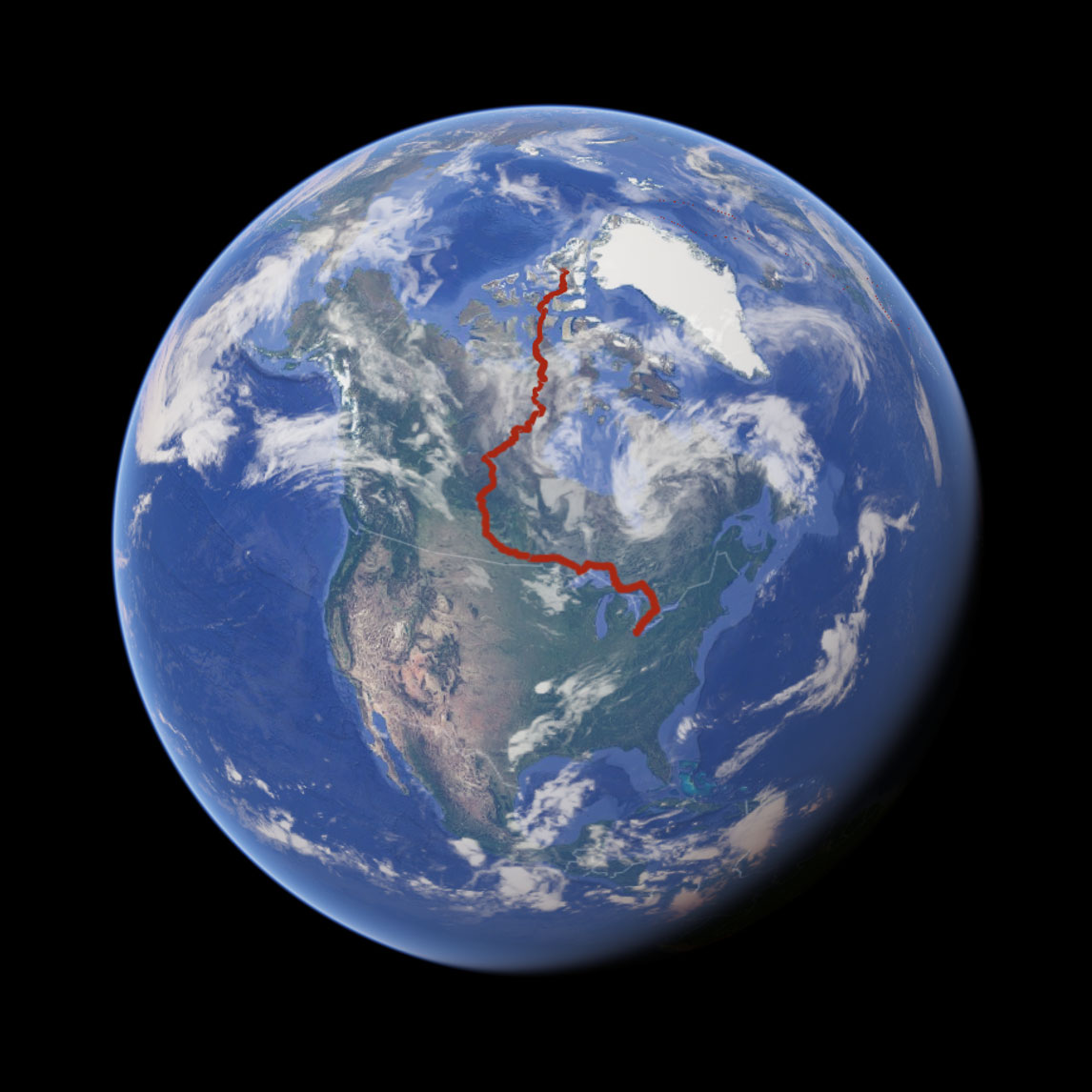
Instead, adaptability was the most critical skill for Expedition AKOR, a never-before-attempted, seven-month-long crossing of Canada on a north-to-south axis. The journey was comprised of three expeditions within one mega-journey: a 1,450-kilometer ski across the Arctic, a 2,000-kilometer canoe trip through the tundra of Nunavut, and finally, a 4,150-kilometer bike ride to the most southern point in Canada. In total, the route spanned just under one-fifth of the circumference of the Earth. Here’s how they did it.

Expedition AKOR completes epic cross-Canada trip

graphic of the earth with the expedition's route traced in red
In total, the expedition route spanned just under one-fifth of the circumference of the Earth.

Back to the beginning

Canada is regularly crisscrossed east-to-west by cyclists and canoeists, but no one had attempted to cross the length of Canada on a north-south axis under human power. The route is mostly wilderness and requires a lengthy time commitment, as well as the skills and gear to span the conditions from the Arctic Cordillera to Carolinian forest. Plus, Arctic logistics are wickedly expensive.

The seed for this north-to-south crossing was planted at the end of a 2018 canoe trip in the eastern province of Labrador. That trip ended in the small coastal community of Nain, where local kayaker Noah Noggasak off-handedly shared a route with Roulx and Moreau, a route that hadn’t been done before.

“It was a very casual conversation; he didn’t know the information would change our lives,” says Roulx.

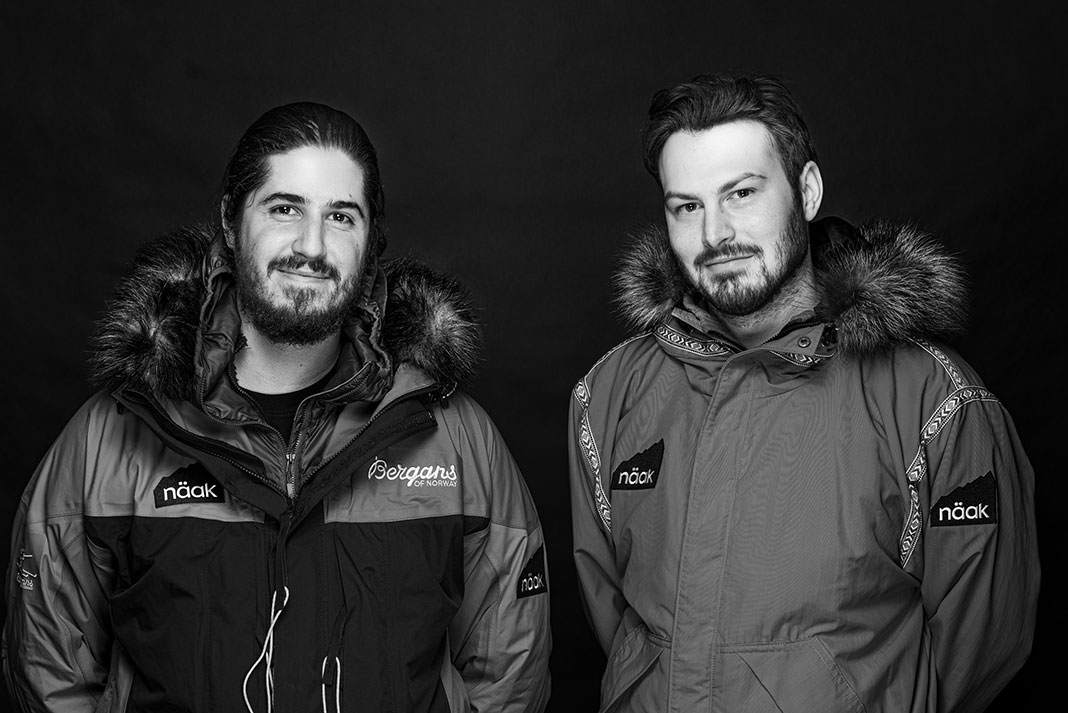
members of the Expedition AKOR team
Camp friends last forever: Nicolas Roulx and Guillaume Moreau met at a Quebec summer camp when they were teenagers. | Photo: Expedition AKON

Upon returning home, Roulx and Moreau—who met at a Quebec canoe camp as teenagers—immediately started mapping a route that played to their strengths as wilderness canoeists instead of kayakers. They spent the next two-and-a-half years preparing, training, gathering sponsorships, and partnering with research projects. They also launched a successful crowdfunding campaign.

“Our expedition budget was more than $300,000. While many of my friends are saving to buy houses, I put all my money into expeditions,” says Roulx, 28. By day, he’s a high school geography teacher, while Moreau holds a Ph.D. in forest sciences and teaches at Laval University. More than half their budget went just to Arctic logistics, with the rest covering gear, food and skills courses, including wilderness first aid and ice rescue training.

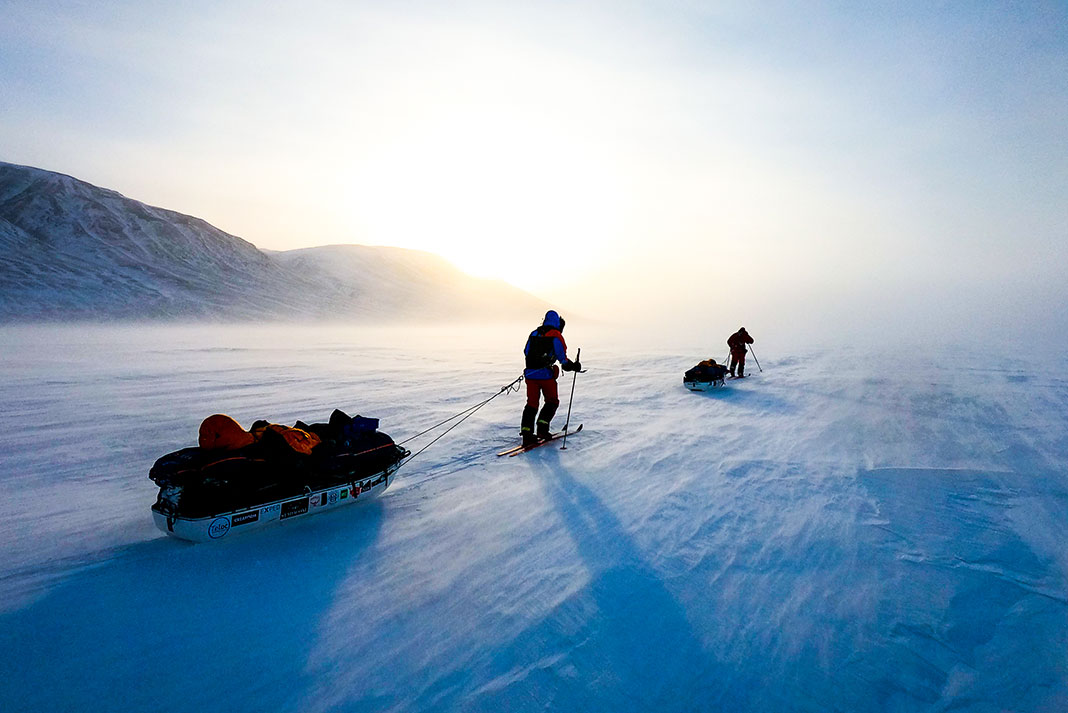
expedition members ski across the Arctic tundra
During the first leg of the skiing journey, “It was 24 hours a day of sunlight but it’s always cloudy. You feel like you’re in a pingpong ball,” says Roulx. | Photo: Expedition AKON

Across a frozen sea

On March 19, 2021, Roulx and Moreau, along with polar adventurer and friend Jacob Racine, departed from Ellesmere Island’s Eureka Weather Station, Canada’s second-most northernly settlement. The temperature hovered around -35°C and their sleds weighed 350 pounds, laden with supplies for the 800-kilometer ski to Resolute, their first resupply point.

“The skiing portion was the hardest thing we’ve done in our lives,” says Roulx. In addition to the frigid conditions, they faced 85 kilometer-an-hour windstorms and navigated massive compression ridges, like a labyrinth made of blocks of sea ice the size of hills.

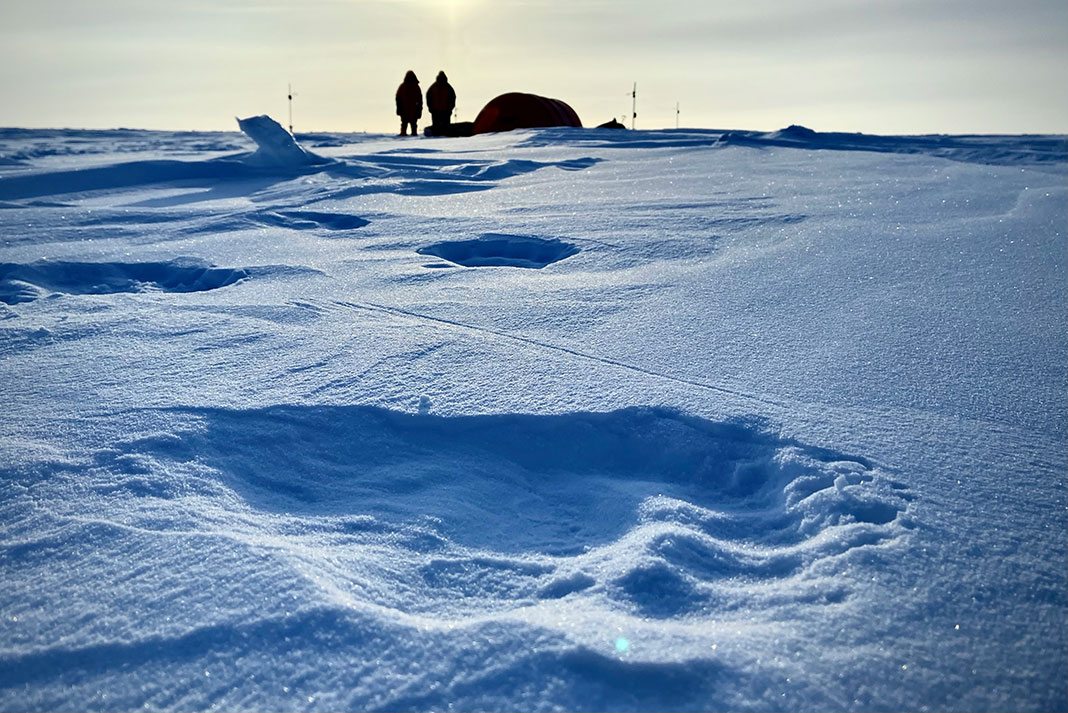
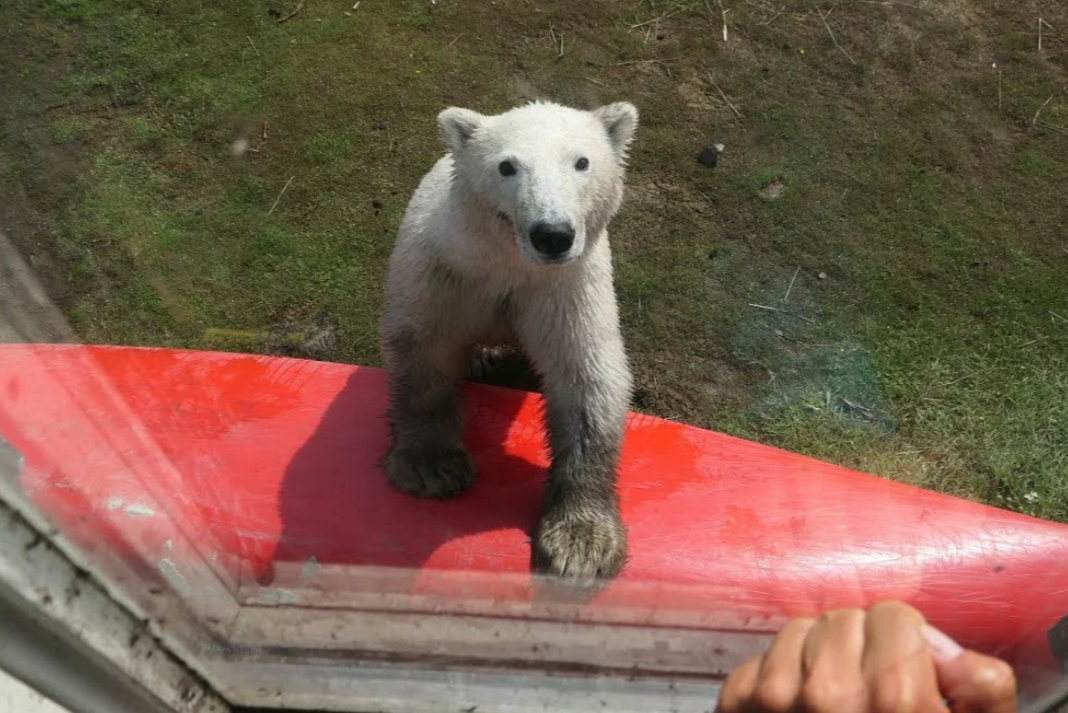
The first polar bear came into camp three weeks into the trip, loitering a mere 10 meters from the tent. That was the first of several nights spent on watch. On another night, four bears were in view of the tent. The team had two bear fences, bear bangers and a 12-gauge shotgun as a last resort.

“It’s always a scary moment when you see a polar bear. You never know when you might come across a skinny bear with nothing to lose,” says Roulx. “Polar bears can be discouraged, but they’re not scared. When you look in their eyes, they’re very intelligent. They’re thinking strategy.”

When the trio limped into Resolute Bay, 40 days after setting out, they were in rough shape and suffering painful polar rashes. Moreau had injured his knees and was in agony while skiing. Each man had lost between 13 to 17 pounds, even while eating 8,000 calories a day. They had covered just 800 kilometers, less than a tenth of the expedition’s total distance.

“We arrived intensely physically broken and took two weeks to rest. It was like, ‘Welcome to polar expeditions.’ If you want to get somewhere in the Arctic, you have to work hard,” says Roulx.

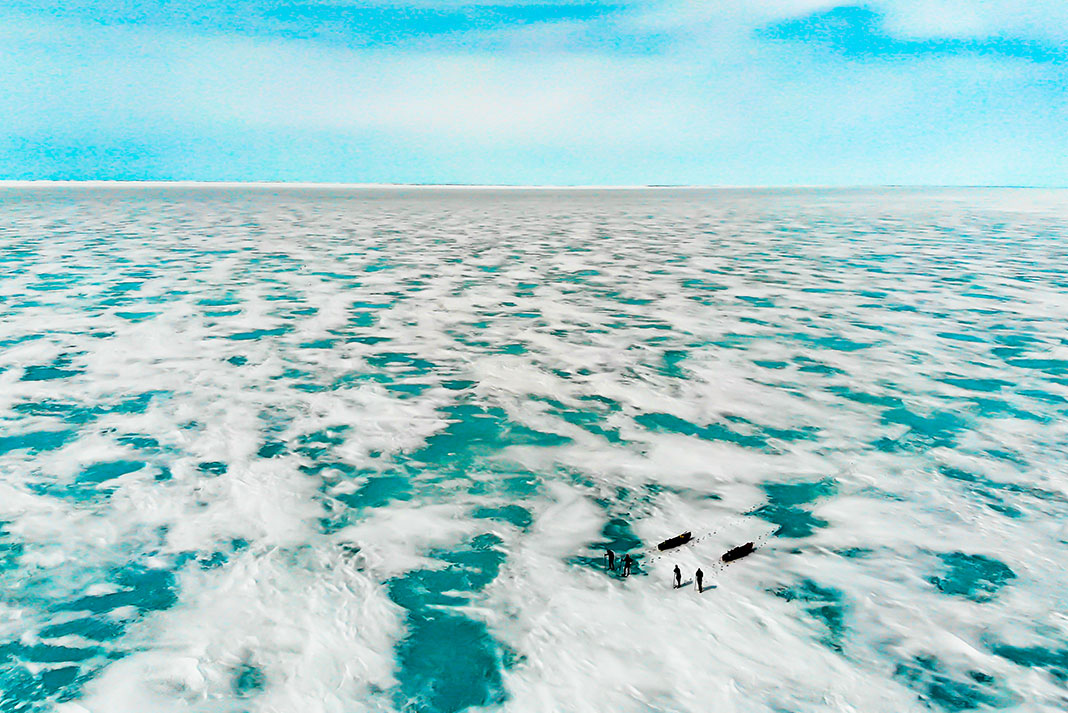
people haul canoes across thin sea ice with blue patches showing through
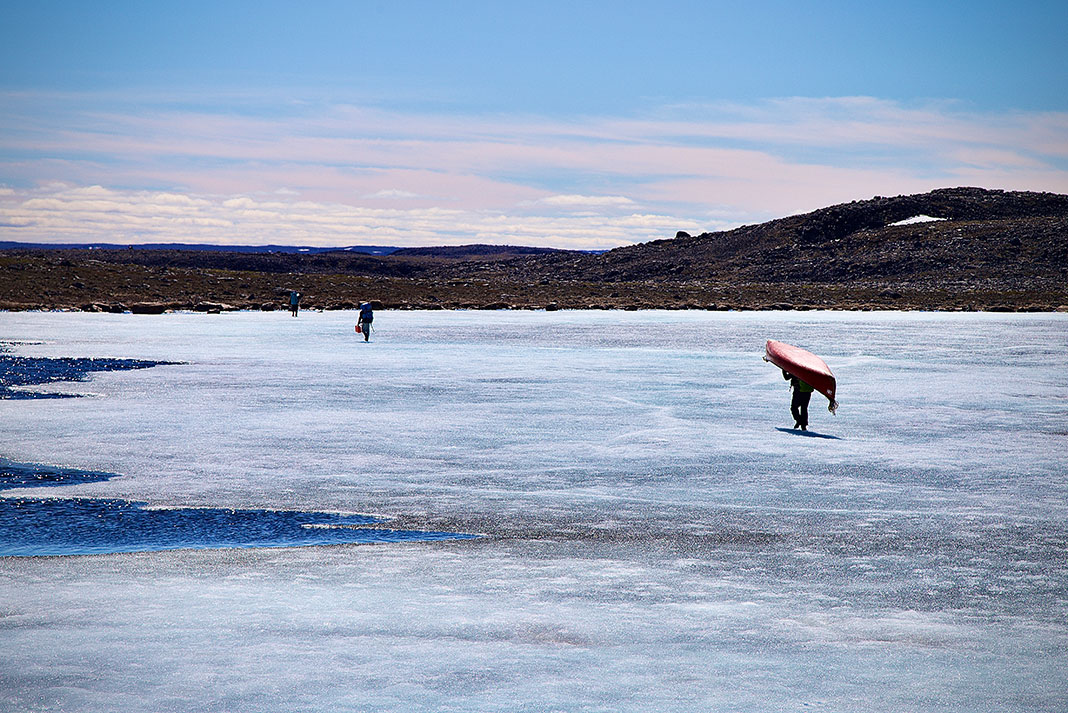
The canoeing portion of the journey began with 10 days of hauling the sleds across sea ice. | Photo: Expedition AKON

Bring on the blades

The second leg of the skiing journey offered flatter and faster conditions. Spring warmed temperatures up to -5°C, and the trio could sometimes ski in T-shirts. They often traveled more than 25 kilometers a day and reached Gjoa Haven on King William Island in 24 days. Two used Esquif Prospector canoes were waiting for them.

Racine left the expedition in Gjoa Haven as planned, and two canoeists, Philippe Voghel-Robert and Etienne Desbois, joined Moreau and Roulx. The original plan was to paddle upstream on the legendary Back River, but when the team analyzed satellite data they saw huge white sheets of ice on the river, which meant it was still breaking up.

Instead, the team rerouted onto a smaller network of rivers to the west. They packed their canoes with supplies and started out dragging the heavy boats across the frozen sea towards open water, a technique they used on previous expeditions with the same canoe model. However, they soon discovered the ice was destroying their hulls.

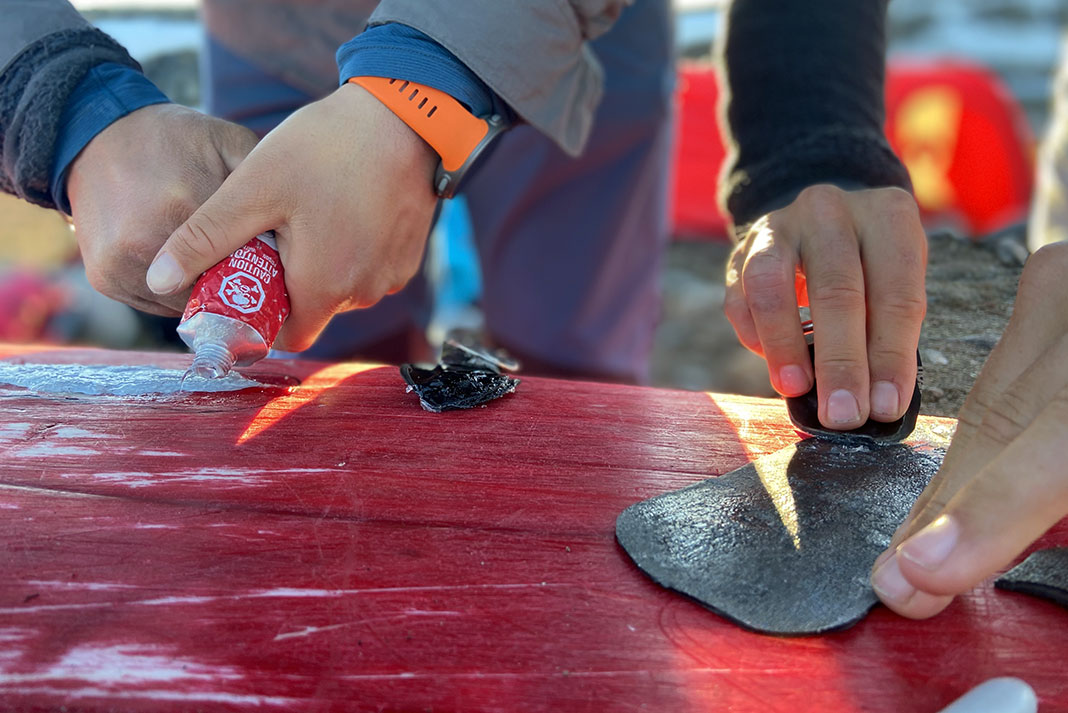
“We found a big hole in the plastic,” says Roulx. “The hole happened in the first 10 days of a 90-day expedition. So, we had to treat the canoes like cedar canoes from then on.” The team blamed the delaminating and cracking hulls of the used boats on poor storage the previous winter. Near daily repairs required a lot of problem solving—Desbois’ rubber boots were even cannibalized in a repair job.

On land, the crew often came across archeological sites from Thule and Inuit, including artifacts, inukshuks, old tent rings and a kayak stand. “Those were a privilege to witness,” says Roulx. “People have been there for 8,000 years. There was nothing to explore geographically; the trip was about exploring our own limits.”

Six hundred kilometers later, the team reached Baker Lake on schedule. Once there, they were stunned by Voghel-Robert’s announcement he was dropping out of the expedition. Roulx says this was due to “interpersonal conflict,” declining to elaborate. Moreau’s girlfriend, Caroline Chagnon, dropped everything to fly to Nunavut for six weeks of paddling so the expedition could continue.

a group of expedition canoeists pose with two red canoes in front of the Baker Lake sign
Caroline Chagnon (center) joined the expedition in Baker Lake for the second leg of the canoe journey. | Photo: Expedition AKON

“Almost catastrophic”

Leaving Baker Lake, the next 1,000-kilometer leg to the Saskatchewan border was unexpectedly one of the toughest. That’s where raging winds kept the crew windbound for eight of the first 15 days, slowing progress to a crawl. Underestimating the wind on these massive lakes required the team to improvise a resupply with the only outfitter within hundreds of kilometers and reroute again.

“We thrive on problem solving,” says Roulx. “But on a seven-plus month expedition, you think, ‘Why can this not be simpler? There’s always someone injured, something breaking or wrong with the route.’ We were sick of it. Polar bears are stressful; being chased by a muskox is stressful; repairing the canoe every day is stressful. You wonder if you might have to abandon the canoes and finish the trip on foot, like a 19th-century explorer.”

“Before the trip, I knew there would be a time when I would be exhausted, and the moment occurred in this section,” he adds. “I felt like I was born on this expedition, and I would die on this expedition. It was endless.”

This fourth leg of the journey took an extra two weeks. When the paddlers reached the dusty dirt road on the shore of Wollaston Lake in northern Saskatchewan, they’d been paddling hard for 90 days. It was mid-September, and the days were growing short.

Paddle to pedal power

The team next hopped on bikes and pedaled towards Point Pelee National Park in Ontario, the southernmost point in Canada. Two more friends joined, and the risks of the journey changed: the team could eat their fill at roadside convenience stores, but unpredictable trucks were a constant danger. Though this was the longest stretch of their journey by distance—4,150 kilometers—the crew completed it in just 44 days, pedaling quickly to stay ahead of winter.

two people cycle long-distance along a somewhat snowy forest road in early winter
After the canoe journey finished in northern Saskatchewan, the team cycled more than 4,000 kilometers to the north shore of Lake Erie, pedaling fast to stay ahead of winter. | Photo: Expedition AKON

After managing the risks of polar bears, Arctic sea ice and windy, wild rivers, the expedition ended somewhat anticlimactically on the sandy shores of a calm Lake Erie on November 8. It was Day 234, almost eight months after Moreau and Roulx had set out.

“We started on Ellesmere Island and ended exactly where we wanted. For months we thought about the final destination, but when we got there, we wondered what’s next?” says Roulx. “We had so much fun developing our skills and being happy on the land, and then it’s over. We do these trips for the challenge and experience, not the glory.”

Of course, the ambitious expedition has garnered attention. Expedition AKOR earned the Royal Canadian Geographical Society’s 2021 Expedition of the Year award. While the journey has set a new standard for land crossings in Canada, the AKOR team is modest, insisting there’s nothing to be conquered or explored except ourselves.

Expedition AKOR's campsite at dusk on their cross-continent trip across Canada
“During the journey, almost nothing went as planned. We had to change our route many times, we were seriously injured, we had to ration our food, and we even had to manage the departure of a crew member and his replacement. Even with the best preparation, we can never be ready for everything. What we must rely on is our mental flexibility and our ability to adapt,” says expedition team member Nicholas Roulx. | Feature photo: Expedition AKOR

“We had a huge experience with vulnerability. Nature has the last word on if you’re going to paddle today or if you’re going to stay in the tent. We weren’t even at the top of the food chain,” says Roulx. “Traveling the land is a big lesson in being humble. And in patience. It would really take a lot now to make me say, ‘Oh man, we’re in deep trouble.’ Now, everything is manageable.”

[ Plan your next canoeing expedition with the Paddling Trip Guide ]

Roulx has had ample opportunity to test this philosophy. After returning home, he caught COVID then broke his femur. He’s currently writing a book about the expedition, doing physio, and he and Moreau are dreaming up their next Arctic adventure.

Cover of Paddling Magazine Issue 67This article was first published in the Summer 2022 issue of Paddling Magazine. Subscribe to Paddling Magazine’s print and digital editions, or browse the archives.


“During the journey, almost nothing went as planned. We had to change our route many times, we were seriously injured, we had to ration our food, and we even had to manage the departure of a crew member and his replacement. Even with the best preparation, we can never be ready for everything. What we must rely on is our mental flexibility and our ability to adapt,” says expedition team member Nicholas Roulx. | Feature photo: Expedition AKOR


Back In The Pack: Ostrom Outdoors Returns

a man and woman stand beside a northern river wearing Ostrom Outdoors canoe packs
Ostrom packs have been traversing canoe country for more than 30 years. | Feature photo: David Jackson

Painless portaging was the dream that started it all. Ostrom Outdoors was born in 1987 on a small off-grid country farm west of Thunder Bay in northern Ontario. It was the brainchild of canoeists Bill and Anne Ostrom. With a generator and just a few employees, they meticulously sewed what many trippers consider to be some of the greatest portage packs to hit northern waters. Ostrom acolytes rave about the packs lasting decades of hard use, and some even claim they’ll pass the packs down to their kids when the time comes.

Back in the pack: Ostrom returns

At its peak, Ostrom Outdoors had a dozen employees and produced anywhere from 600 to 1,000 packs per year. But behind the scenes, there was trouble. With Canada’s rising labor and material costs, Ostrom says he struggled to produce a product affordable for the consumer and still profitable for his business. Ultimately, he closed the company in 2013.

“It was the hardest decision of my life,” remembers Ostrom. He received close to 3,000 emails from paddlers dismayed to hear the news.

a man and woman stand beside a northern river wearing Ostrom Outdoors canoe packs
Ostrom packs have been traversing canoe country for more than 30 years. | Feature photo: David Jackson

Even though the company was shut down, Ostrom never really got out of the business of designing. During his eight-year hiatus, he helped create prototypes for the first-ever front-facing wheelchair bag, a rucksack for the Canadian military, and a pack harnessing the kinetic energy from hiking to charge small electronics. He also found an overseas manufacturer he trusted.

It was a surprise to many in the canoeing community when Ostrom Outdoors reopened as an online store in 2021. The outpouring of support has been a little overwhelming, he says. “People are reaching out just to say, ‘I don’t need a new pack, but I’m happy you’re back.’”

Ostrom Outdoors’ new inventory includes their classic Voyageur Barrel Harness and three models of packs: the Wabakimi, the Winisk and the Quetico. The models are named after some of the Ostroms’ favorite paddling locations. Volumes range from 79 to 117 liters.

With manufacturing now outsourced to a facility in China, Ostrom says quality control is as rigorous as ever but admits “some people will never buy offshore.” The new manufacturing facility is capable of more complex sewing patterns, and the packs now have added reinforcements, he adds.

For Ostrom, the most significant difference is the new sewers half a world away aren’t personally connected to the canoe routes these packs will travel, which was part of the charm of a made-in-North-America product. Otherwise, he says, the company is back to pursuing its original mission—to make portaging as painless as possible.

SEE ALL BAGS, BOXES, CASES & PACKS

Cover of Paddling Magazine Issue 67This article was first published in the Summer 2022 issue of Paddling Magazine. Subscribe to Paddling Magazine’s print and digital editions, or browse the archives.


Ostrom packs have been traversing canoe country for more than 30 years. | Feature photo: David Jackson


5 Top Women’s Drysuits Go Head-To-Head

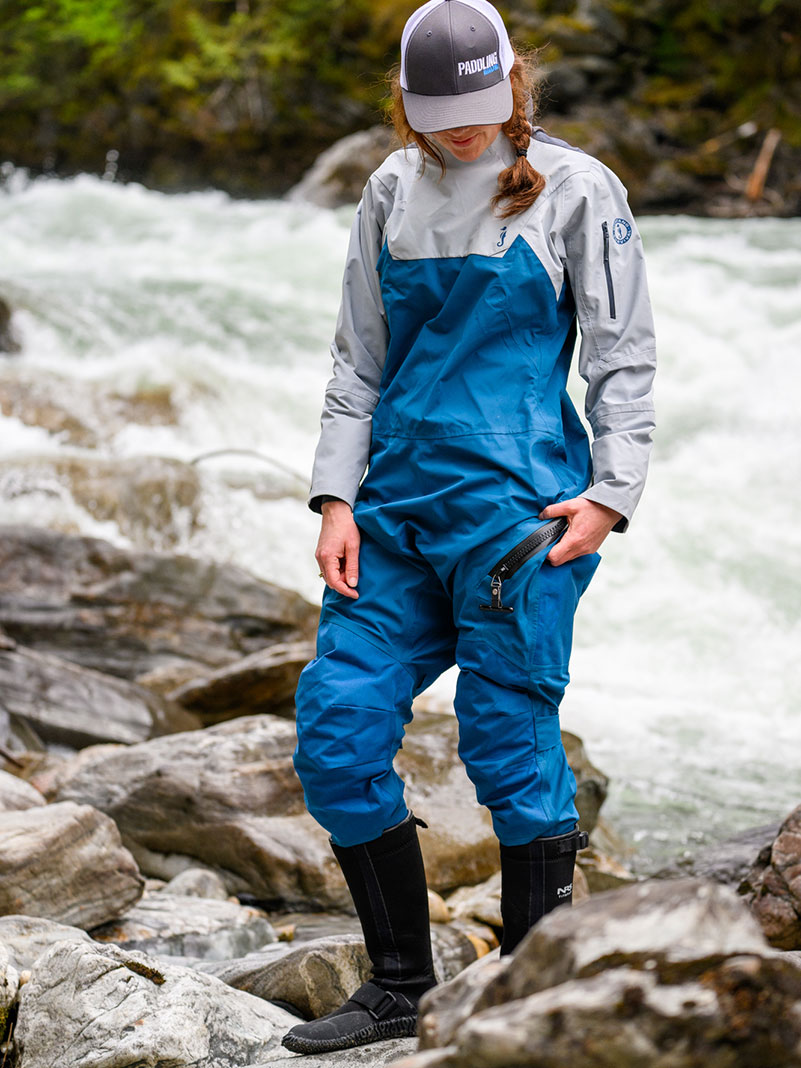
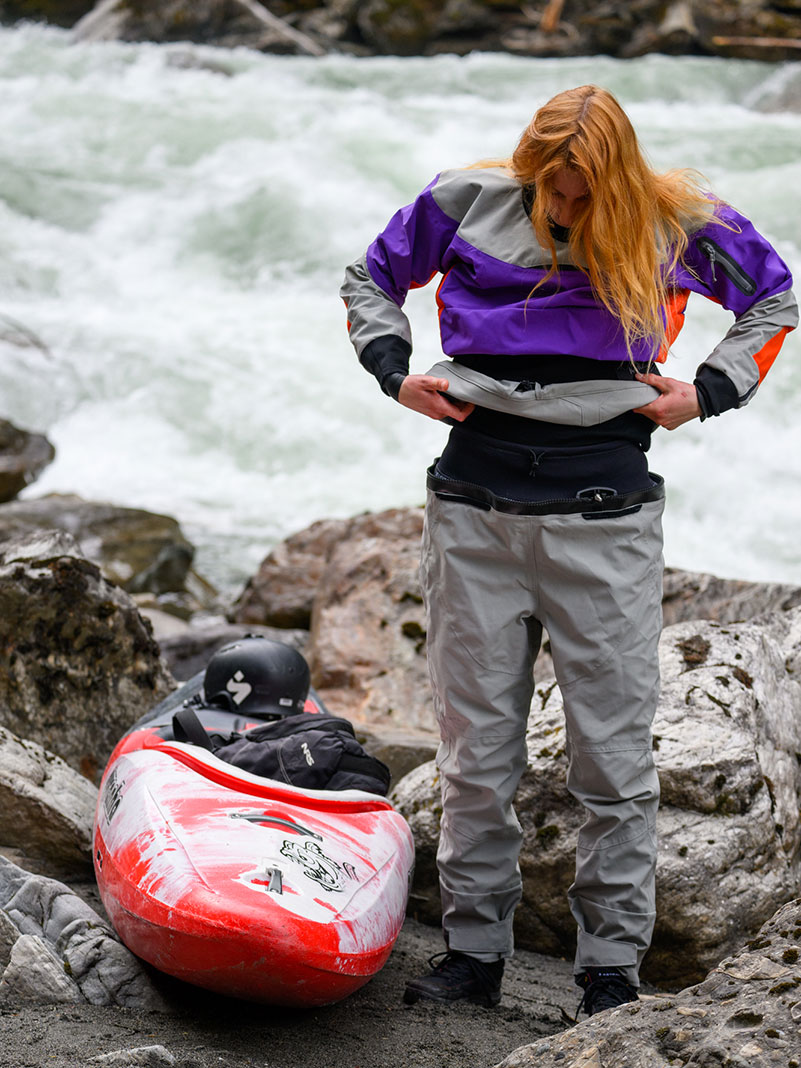
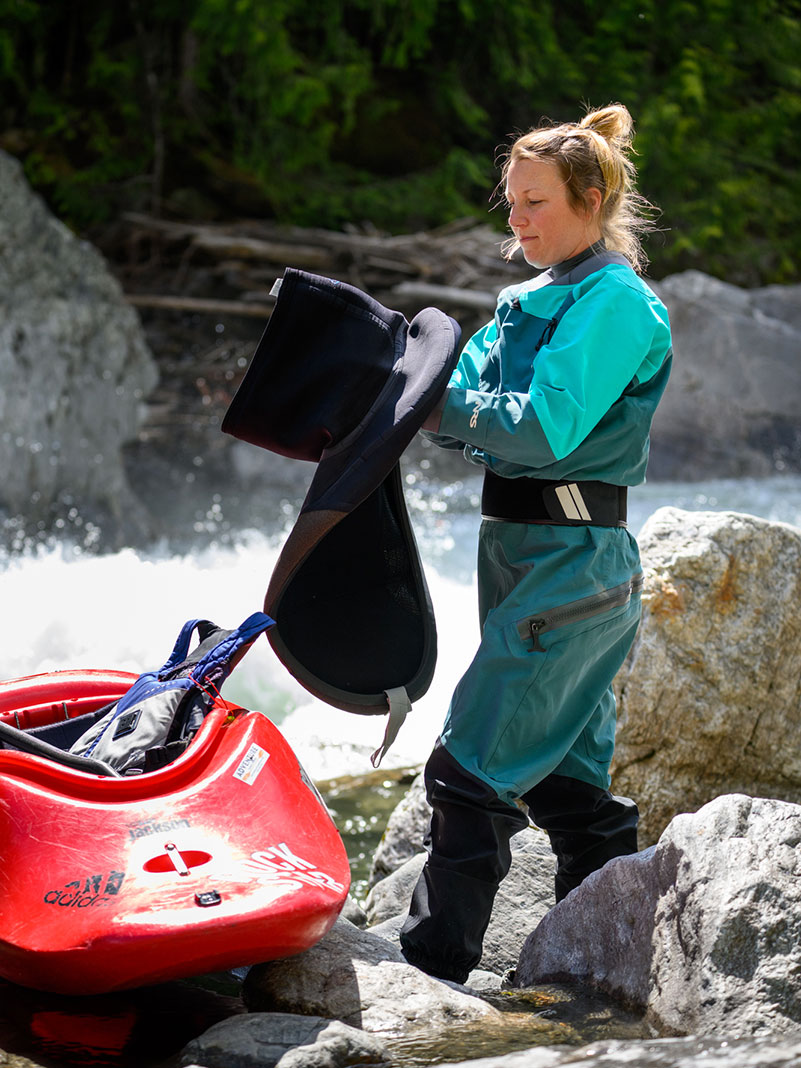
a group of female whitewater paddlers scout a river while wearing womens drysuits
The right women’s drysuit is the only investment that will double the length of your paddling season. | Feature photo: Daniel Stewart

We’ve come a long way since the rain-jacket-adaptation drysuits of the late 1970s. The first leap towards a more inclusive drysuit offering for paddlers was in 1995, when the first women’s-specific suit hit the market. In the almost three decades since, we’ve seen bolstered efforts from paddlesports apparel brands to release at least one women’s suit in each of their lines and create progressive products catering to multiple body types.

This positive shift has given me renewed energy to find the perfect drysuit. As a female whitewater kayaker, I’m already in the minority. Pair that with my swimmer’s build—I’m 5’10” with broad shoulders and skinny legs—and I’m left with a pretty atypical physique.

After narrowing down five top contenders from industry-leading brands, I took to the water with friends to test them for comfort, fit, breathability, durability, waterproofness and weight. Here’s how they measured up.


Mustang Survival Women’s Helix Latex Gasket Dry Suit
Photo: Daniel Stewart

Mustang Survival

Women’s Helix Latex Gasket Dry Suit

$1,099.99 USD | mustangsurvival.com

The Helix from Mustang Survival is a suit for true water babies. This multipurpose piece of kit is suitable for whitewater, sea kayaking, canoeing, paddleboarding and sailing. The design features removable knee pads with adjustable tabs, trimmable latex wrist and neck gaskets, internal suspenders and a rear diagonal zipper for entry and relief. The Helix’s wrist and neck over-cuffs feature a loose fit and cannot be tightened; this is to allow for easy adjustments and repositioning of the latex underneath.

The fit of the Helix is a little different from the others. This suit is spacious around the hips and upper thighs, with a snugger fit on the legs and arms—a better fit for someone wide in the hips and narrower around the shoulders.

While some whitewater kayakers might miss the snug fit of a neoprene waistband holding everything together, other multi-discipline paddlers will love that this suit delivers the same waterproof-breathable protection without the additional bulk and complexity of a tunnel.

Buy from:

REI


NRS Womens Axiom Gore-Tex Pro Drysuit
Photo: Daniel Stewart

Kokatat

Women’s Idol Dry Suit (Gore-Tex Pro) With SwitchZip Technology

$1,459 USD | kokatat.com

Kokatat has been an industry leader in drysuits since the late ‘80s, and it’s rare to be at the put-in and not see flashes of its distinct wavy logo peeping out from a gear bag.

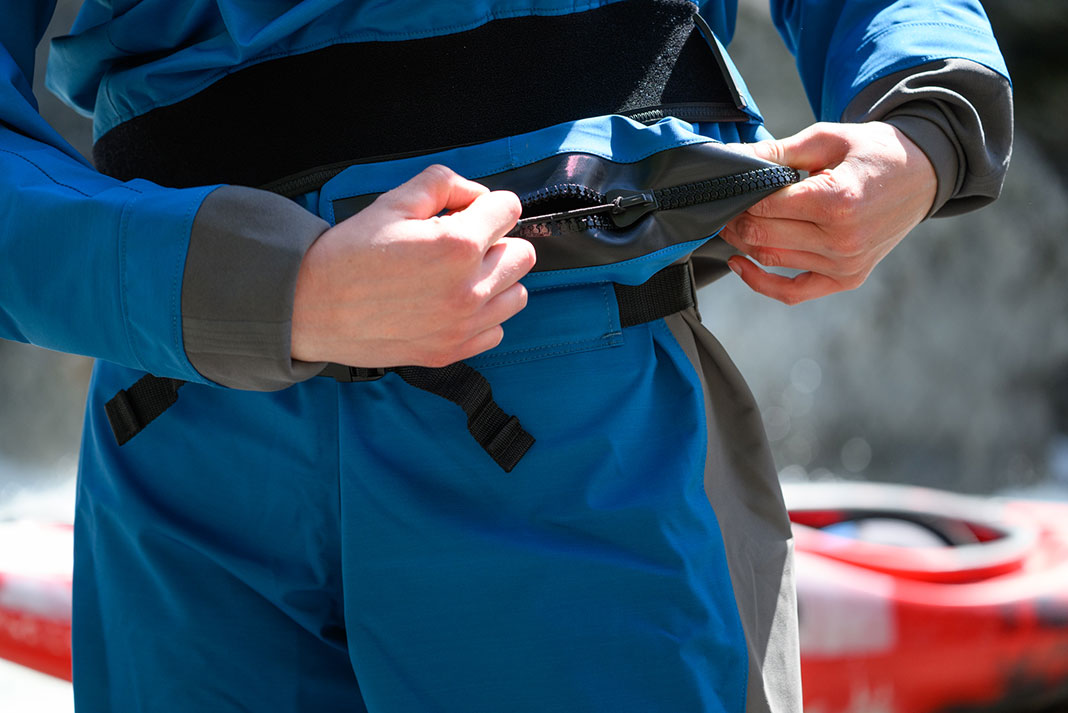
Kokatat’s Idol, first released in 2015, is the only suit in our lineup that does it all: it’s a drytop, a drysuit and dry pants all in one, thanks to its innovative SwitchZip technology. For many, this versatility will be worth the slightly higher price point, about $160 more than Kokatat’s other Gore-Tex one-piece suits. Besides the obvious lure of its three-in-one capabilities, its highly breathable Gore-Tex Pro membrane, a limited lifetime warranty, and the fact Kokatat’s suits seem to last forever are three more reasons paddlers love ‘em.

I found the women’s large Idol to be roomy in all the right places for a tall woman with an athletic build. The feminine design and fit allow me to move freely without tugging, and I’m not left with folds of extra fabric on the chest—a problem I’ve encountered many times while drysuit shopping.

detail of NRS Womens Axiom Gore-Tex Pro Drysuit
Photo: Daniel Stewart

While the SwitchZip hardware is a little bulky for my liking—I found it challenging to pull my sprayskirt over top—once in my kayak, it’s almost undetectable. Not into SwitchZip? No problem. Kokatat has seven other women’s drysuit models to choose from.

Buy from:

AMAZON BACKCOUNTRY


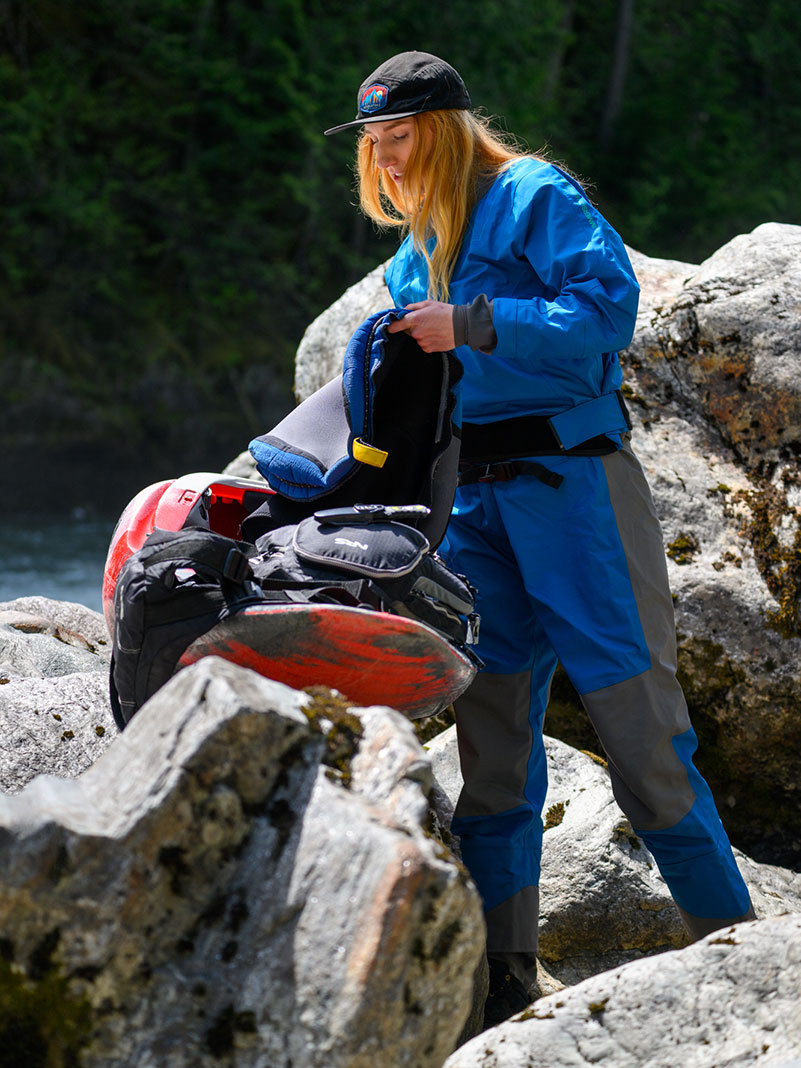
NRS Women’s Axiom Gore-Tex Pro Dry Suit
Photo: Daniel Stewart

NRS

Women’s Axiom Gore-Tex Pro Dry Suit

$1,295 USD | nrs.com

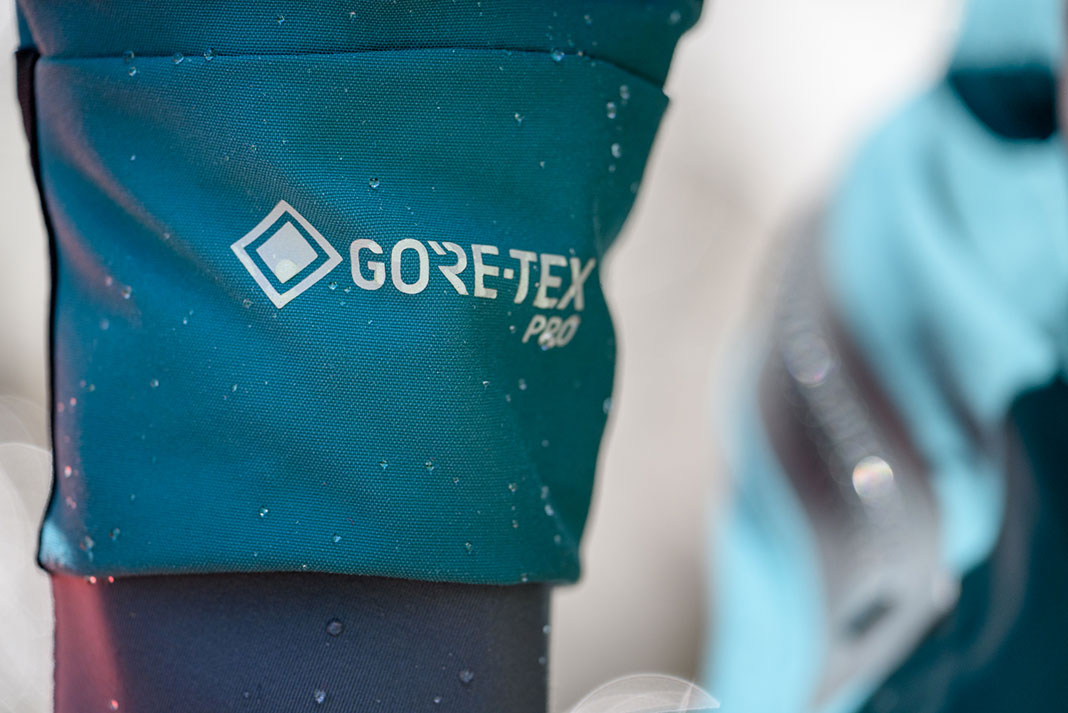
NRS’ new Gore-Tex Pro line launched this spring to much hype from the paddling community. Gore-Tex Pro is a highly breathable, three-layer, 28,000 mm waterproof membrane and its integration in the all-new women’s Axiom takes this suit to the next level and makes it a real top contender in the market.

The new Gore-Tex integration might not even be the best part of the Axiom. I loved the neoprene volcano-style over-cuffs on the wrists and neck. They look sleek, keep the water out and your latex gaskets will last longer with the added protection. Likewise, the ankles are purposefully elasticized to create a sleek appearance and reduce excess bulk. The Axiom also features a front-entry design. Great news, I’m sure, for those who hate asking for zipper assistance when changing.

detail of NRS Women’s Axiom Gore-Tex Pro Dry Suit
Photo: Daniel Stewart

Currently, the Axiom is the only NRS women’s drysuit constructed with Gore-Tex Pro. Coming in a couple of hundred bucks cheaper, NRS’ two other women’s drysuits still use its beloved, in-house, four-layer Eclipse waterproof membrane.

Buy from:

AMAZON MEC


Level Six Freya Dry Suit
Photo: Daniel Stewart

Level Six

Freya Dry Suit

$1,200 CAD | levelsix.com

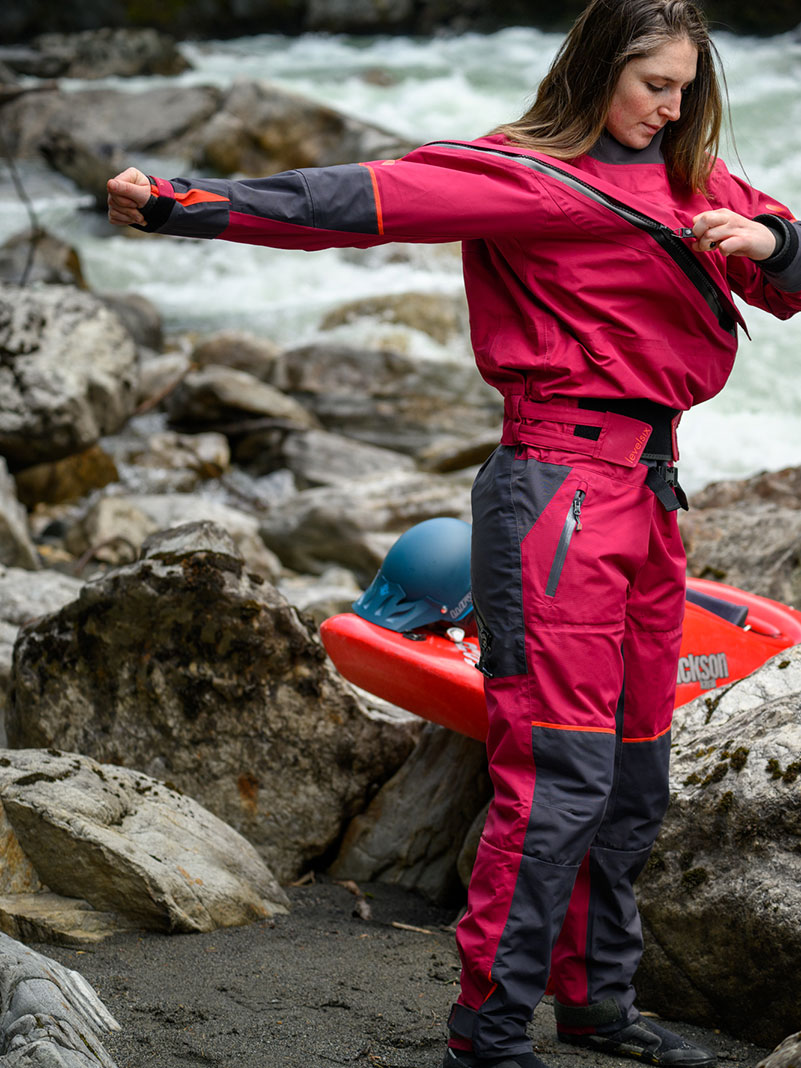
The Level Six Freya is ideal for paddlers who want to look great and stay dry without breaking the bank. Named for the Norse goddess, this suit has an overall relaxed fit, with the option to cinch up around the waist and ankles if needed. Despite being tailored for paddlers up to six feet tall, I found the legs of the large size—designed to fit those with a 30- to 31-inch inseam—just a little short. For atypically sized paddlers, it’s worth paying close attention to the measurement of the inseam and the torso to spot where the fabric has been most generously distributed.

Level Six uses its own brand of waterproof membrane, called Exhaust 3.0, which is a tough waterproof-breathable nylon with a 10,000 mm waterproof rating. The Freya feels more robust than its competitors—which could, in part, be attributed to its additional comfort features. The suit includes cozy fleece-lined pockets just below the waist, a front-entry zipper, a rear-relief zipper, a double tunnel, and a buckle waistband system. This suit also comes in some rad, not-so-typical color combinations: a muted merlot (shown here) and a steely blue. It’s a refreshing departure from the teal and purple colorways permeating women’s outdoor gear.

Buy from:

BACKCOUNTRY


Immersion Research Aphrodite Dry Suit
Photo: Daniel Stewart

Immersion Research

Aphrodite Dry Suit

$1,259 USD | immersionresearch.com

The Immersion Research Aphrodite was the dark horse of the lot for me. I’ve always been drawn to the idea of a Gore-Tex suit, so I all-too-quickly dismissed Immersion Research’s Aphrodite as it didn’t check this box for me. It turns out, I was wrong.

Not only does this suit offer an impressive 30,000 mm waterproof rating, but its shell is also made entirely from recycled plastic water bottles. Alongside a light carbon footprint comes a light product, too. This naturally hydrophobic fabric weighs 3.5 pounds, just barely heavier than the NRS Axiom suit.

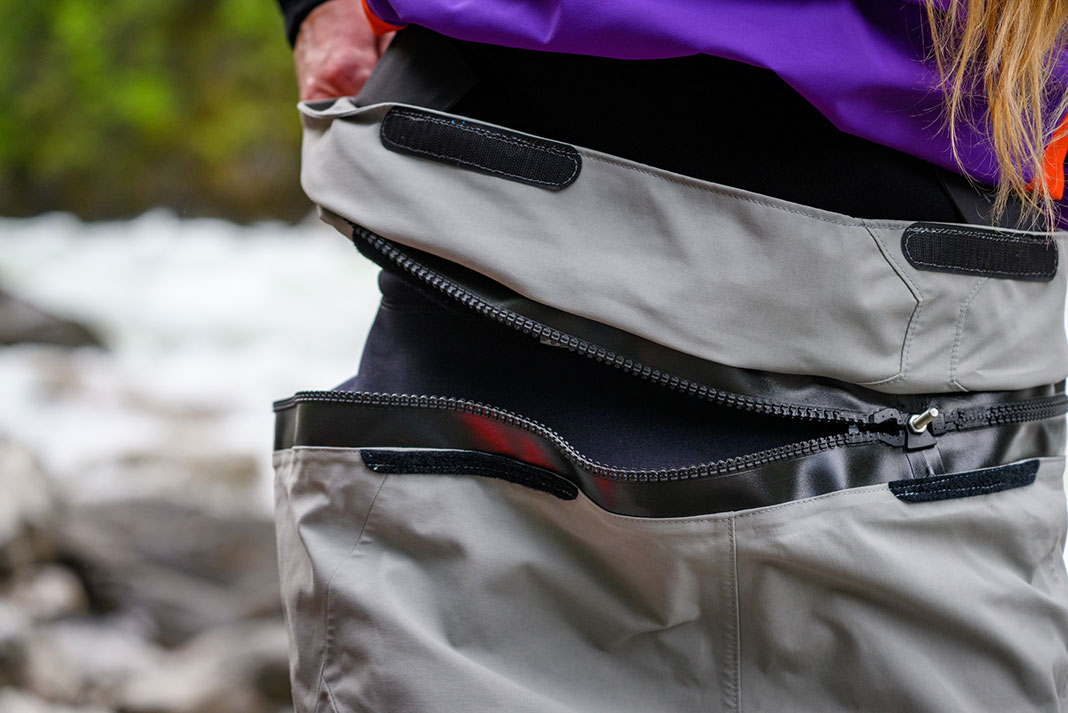
The Aphrodite’s strategically placed clamshell zipper on the butt functions as both an entry and a relief zipper and is surprisingly easy to use. Don’t be deterred by the zip placement–it’s less bulky than you would imagine and is undetectable in look and feel once you’re sitting in your boat.

detail of Immersion Research Aphrodite Dry Suit
Photo: Daniel Stewart

The Aphrodite fits with ample room around the shoulders, hips and thighs. For me, the size large is plenty long enough in the legs and sleeves to fit comfortably without hindering movement.

a group of female whitewater paddlers scout a river while wearing womens drysuits
The right women’s drysuit is the only investment that will double the length of your paddling season. | Feature photo: Daniel Stewart

Cover of Paddling Magazine Issue 67This article was first published in the Summer 2022 issue of Paddling Magazine. Subscribe to Paddling Magazine’s print and digital editions, or browse the archives.


The right women’s drysuit is the only investment that will double the length of your paddling season. | Feature photo: Daniel Stewart