Home Blog Page 106

How To Make Cowboy Coffee That Actually Tastes Good (Video)

Learn to make a great backcountry coffee the old-fashioned way for your camping adventures. This technique, often called cowboy coffee, has been used by wilderness travellers for generations. John Langford of Voyageur Quest shows us how it’s done on Surprise Lake in Algonquin Provincial Park near Access Point #1.


Brew cowboy coffee in 6 easy steps

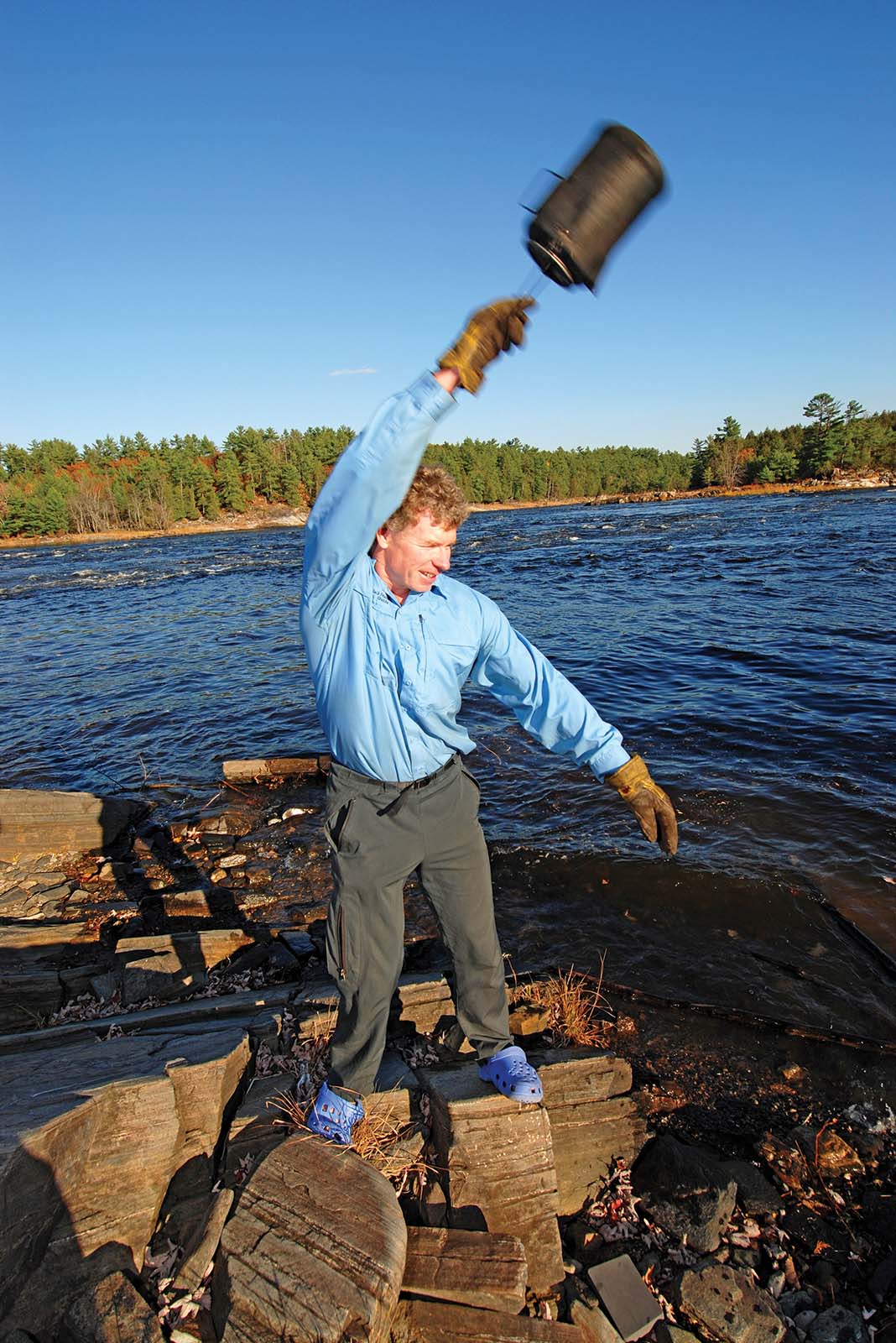
Great brew without extra gear. | Photo: Max Finkelstein

All you need for a strong brew is water, coffee, a good pot with sturdy handle, a pair of sturdy gloves and a cooking fire. Not only does cowboy coffee free you from packing extra gear, it can also taste darn good. But you have to brew it right. Here’s how.

1 Add your grounds

Add medium ground coffee to cold water. Coarse grinds will work too, but don’t use fine grinds. The coffee pot should be tall rather than squat.

2 Get the right mixture

Use about one tablespoon of grinds per cup of water. Add an extra spoonful if you’re making more than four cups.

3 Bring to a boil

Gently bring to a rolling boil. If the brew boils violently the grounds will stick to the sides of the pot, and end up in your coffee. Reduce heat or move the pot so it simmers.

4 Add cold water

After five minutes of simmering, remove from heat and add one tablespoon of cold water. The colder the better. The cold water makes the coffee grounds sink.

5 Go for a spin

A more dangerous technique is to tie a short rope to the bale of the pot and whirl the pot of boiling coffee like a windmill. If whirled smoothly, the centrifugal force will keep the coffee in the pot, even without a lid. Make sure the bale is securely attached and that your partners are out of the way. Finally, weigh the relative pros and cons of coffee with a few grounds in it versus second-degree burns.

[ Paddling Buyer’s Guide: View all camp kitchen accessories ]

6 Enjoy your cowboy coffee

After a few dozen rotations, the grounds will have settled to the bottom, and you’ll need a cup of tea to settle your nerves.

person demonstrates how to makes cowboy coffee at a campsite
Cowboy coffee has been brewed by wilderness travellers for generations. | Feature image: Canoeroots/YouTube

Paddling Magazine Issue 65 | Fall 2021This article originally appeared in Paddling Magazine Issue 65. Subscribe to Paddling Magazine’s print and digital editions here, or download the Paddling Magazine app and browse the digital archives here.


Cowboy coffee has been brewed by wilderness travellers for generations. | Feature image: Canoeroots/YouTube


Kayak Reviews

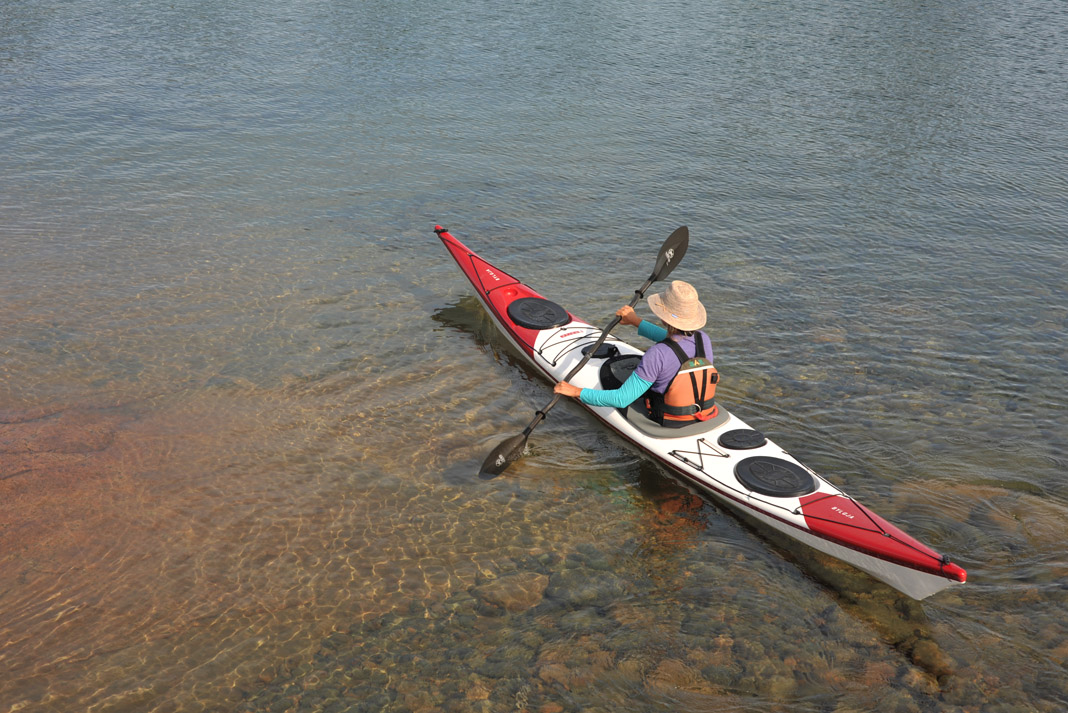
person paddling a sea kayak
Feature photo: Courtesy P&H Sea Kayaks

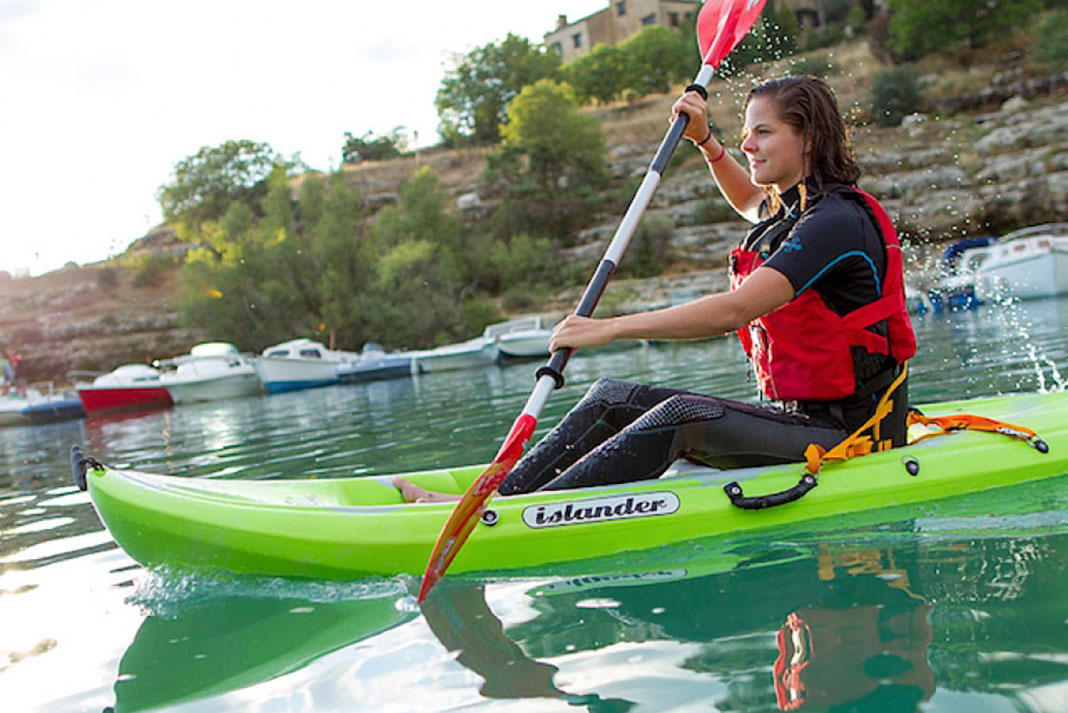
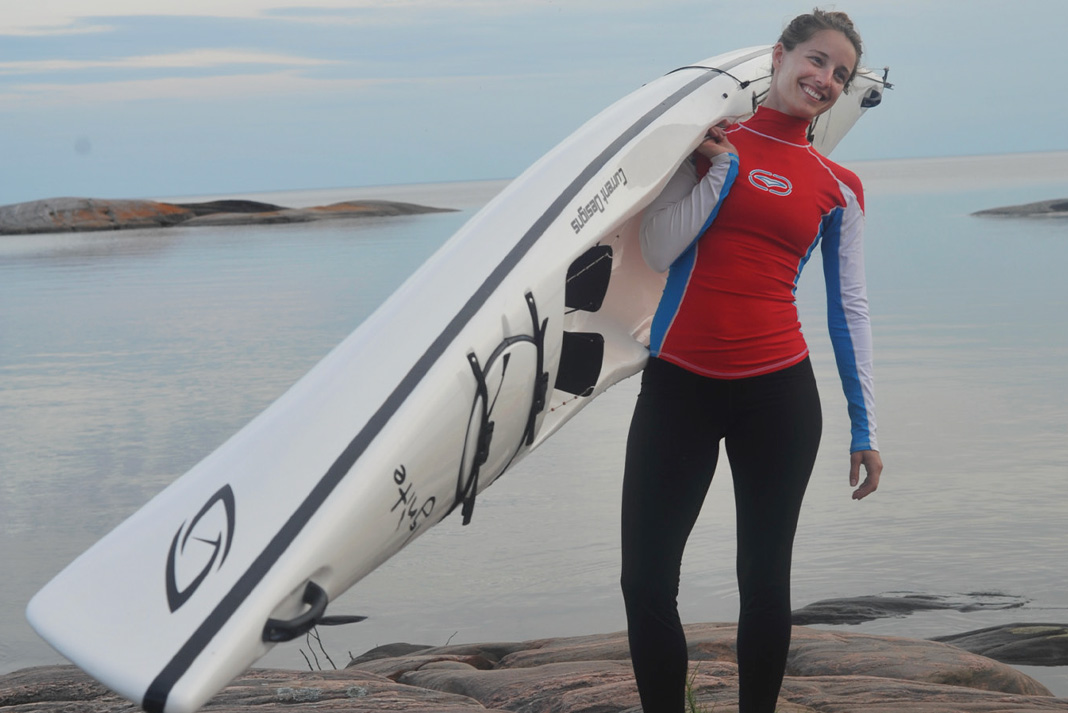
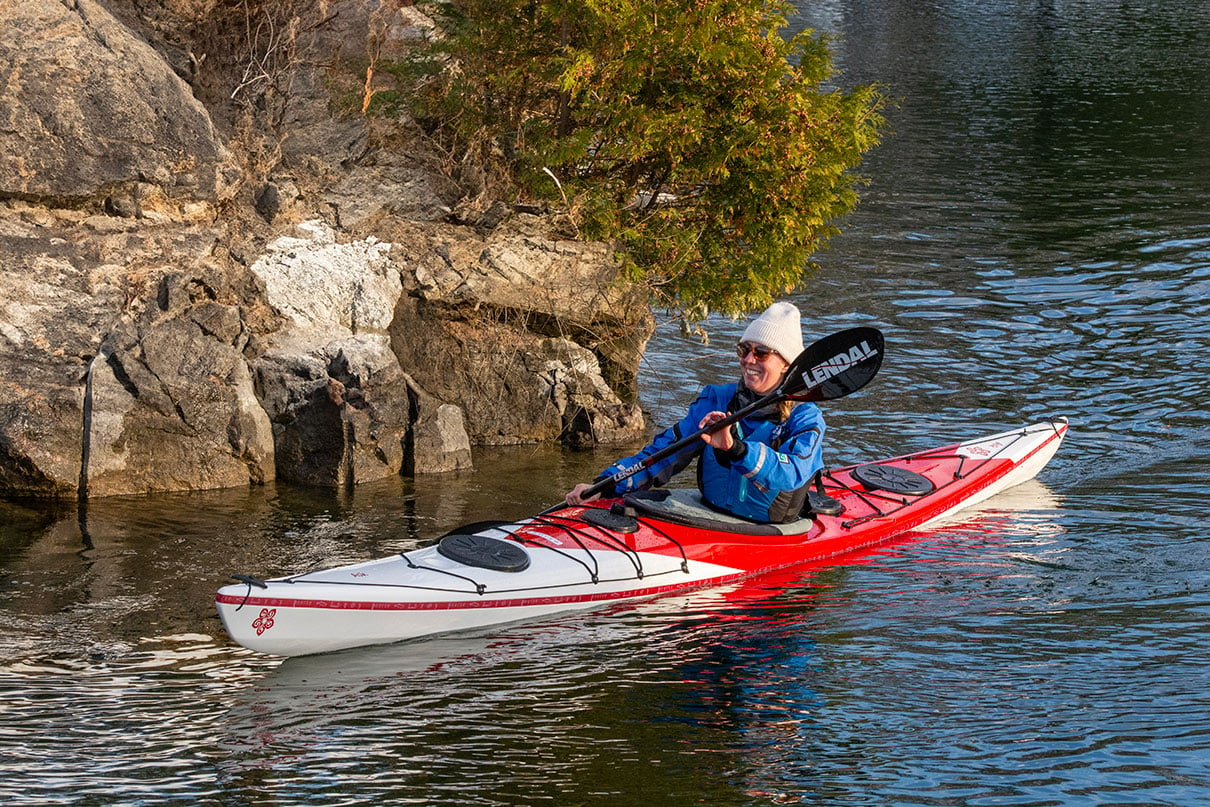
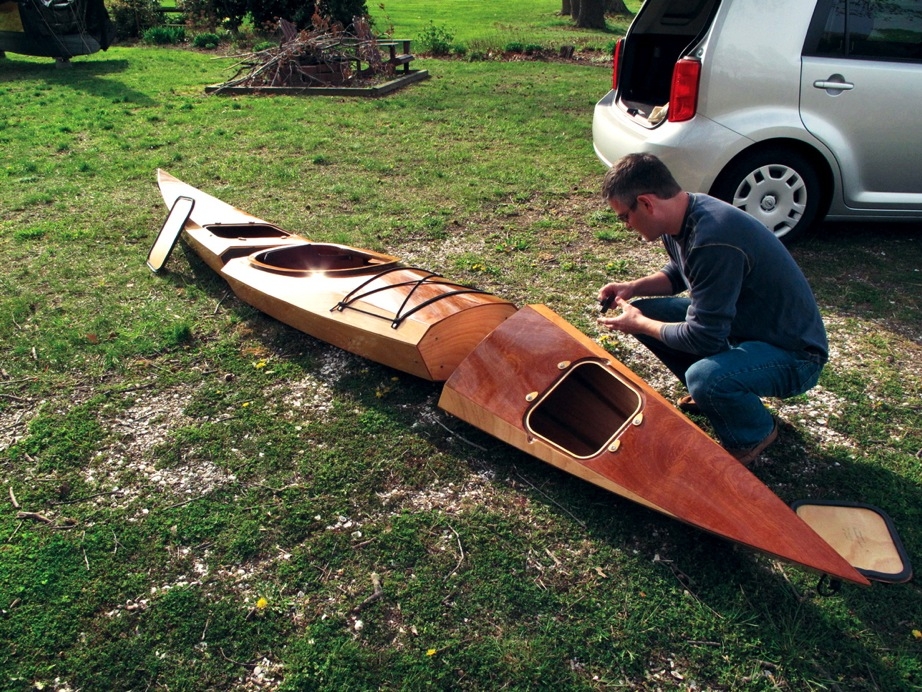
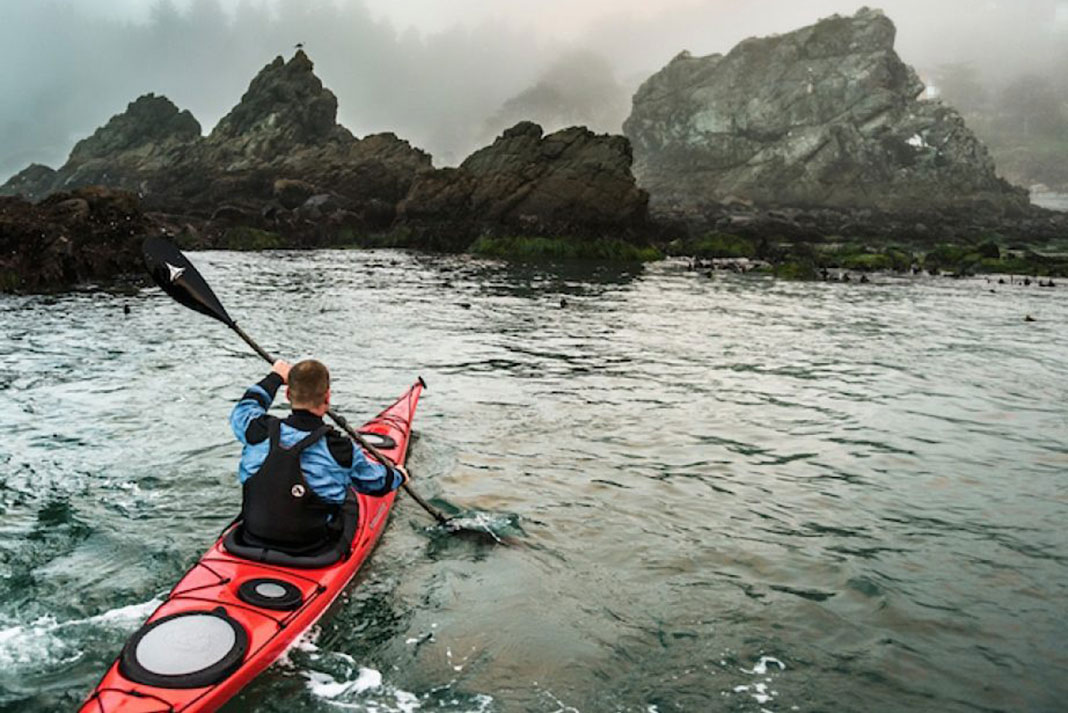
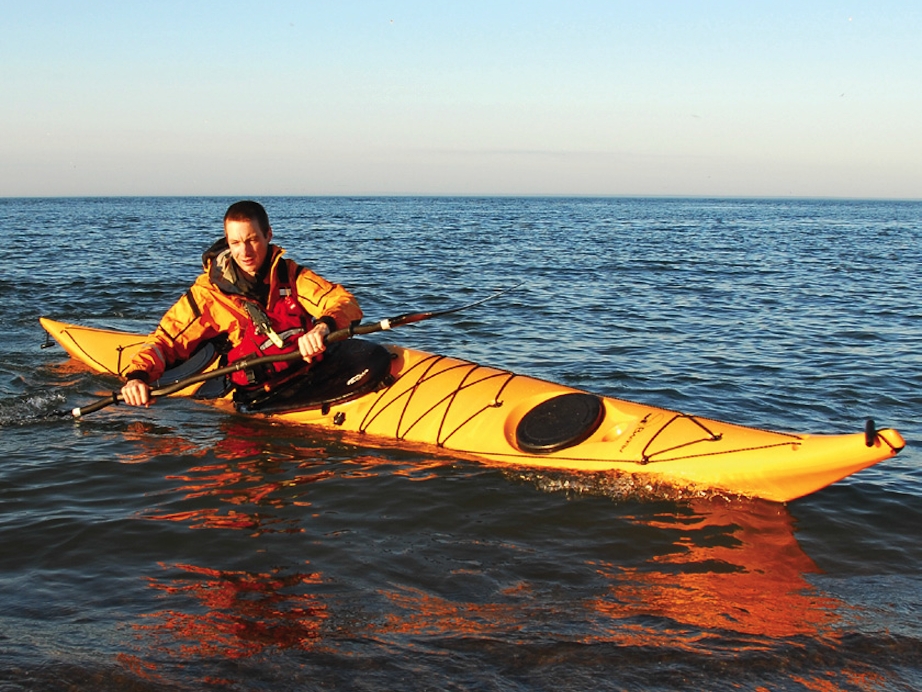
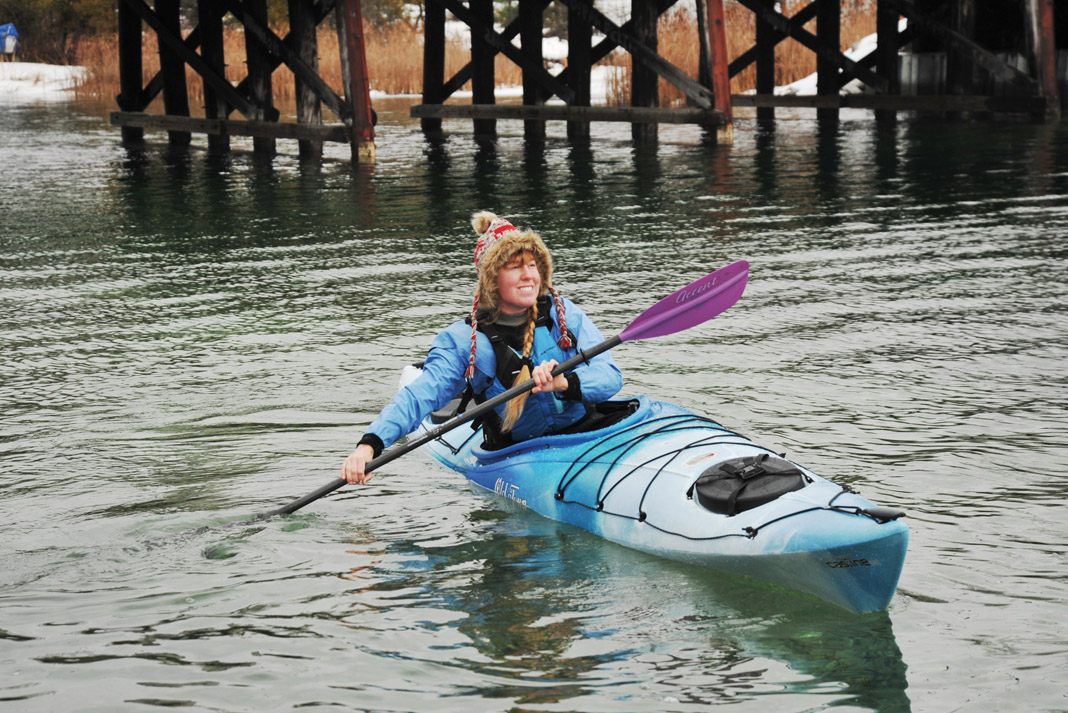
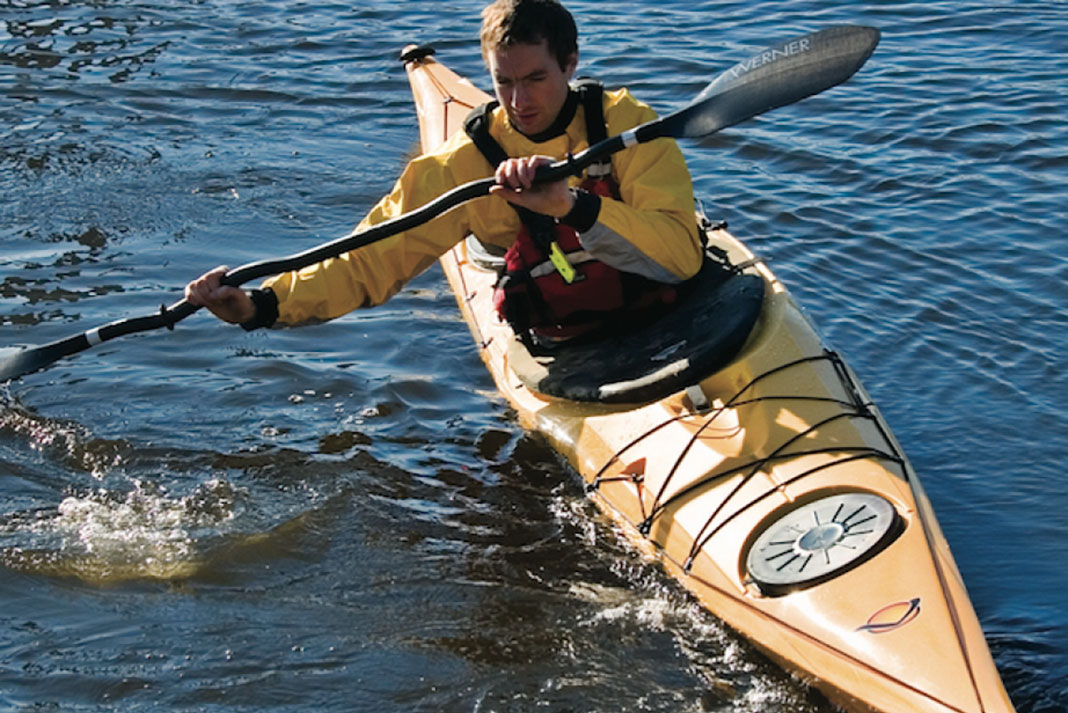
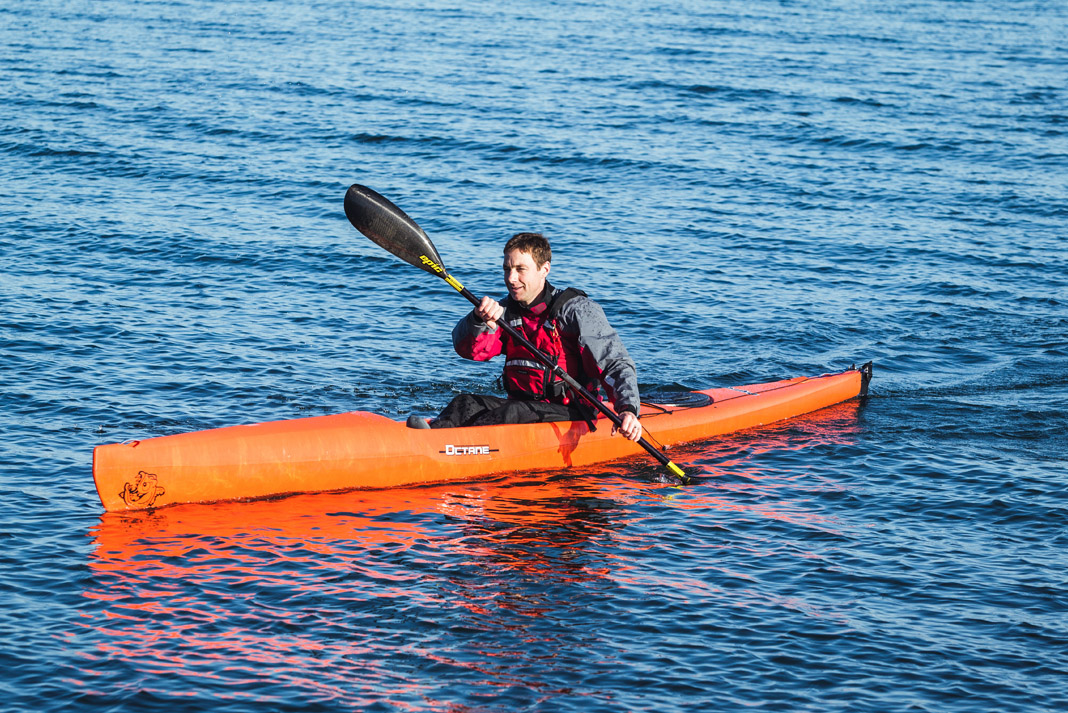
Are you looking for kayak reviews? You’ve come to the right place! This article contains all the kayak reviews the Paddling Magazine editorial team has compiled. You’ll find kayak reviews by type, including detailed critiques of the best (and worst) sit-inside and sit-on-top kayaks; kayak reviews by size; kayak reviews by store; and kayak reviews by brand.

Welcome to the web’s greatest resource for kayak reviews. Your paddling journey starts here.

Kayak reviews by type

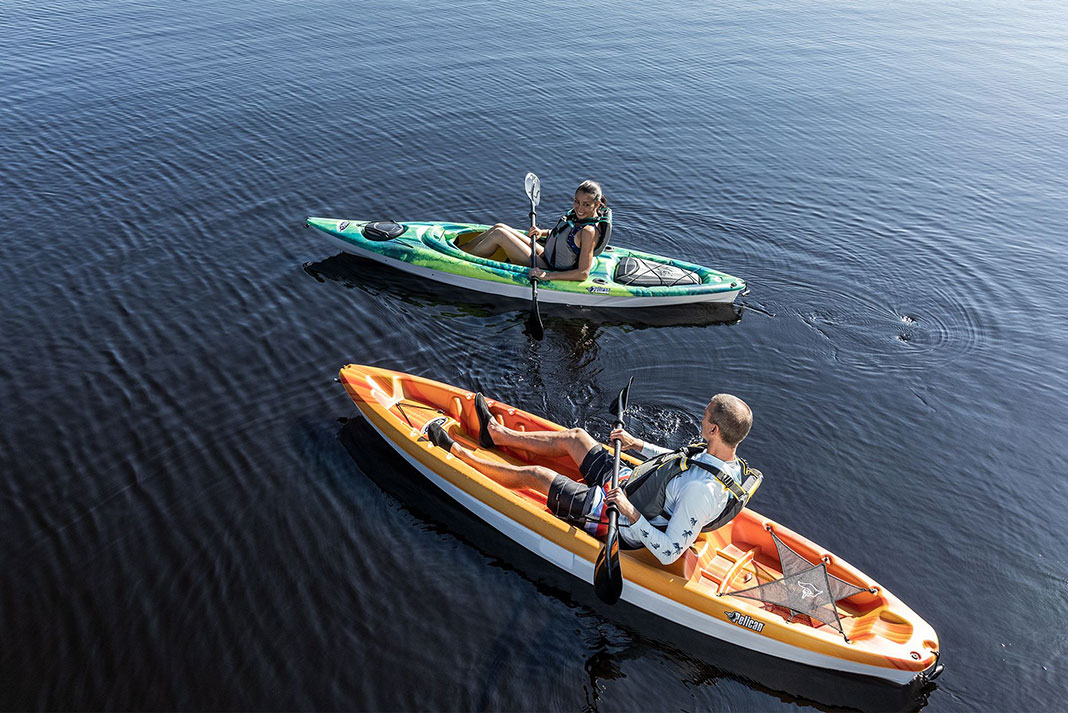
Kayaks are divided into two main categories: sit-inside and sit-on-top, both of which come in many shapes and sizes. Depending on where you’ll paddle (ocean, large lakes, small lakes, rivers, surf) and your reason for paddling (recreation, fishing, fitness, touring, camping or a combination of these), as well as your experience level, the best way to identify a short list of kayak options is to search by type.

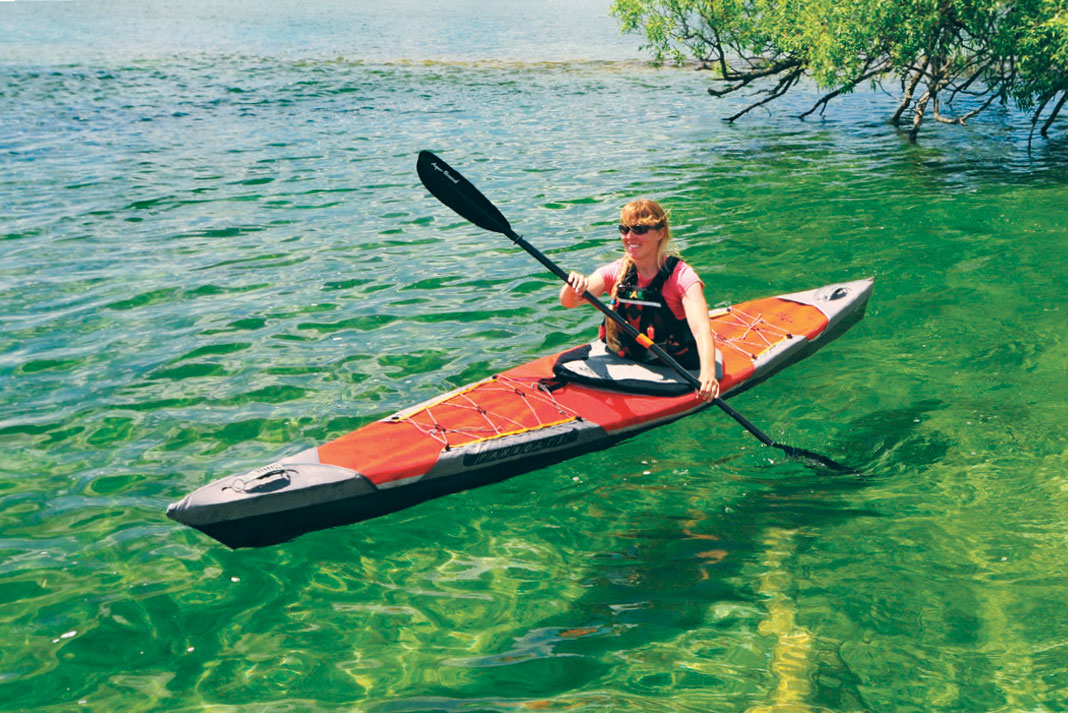
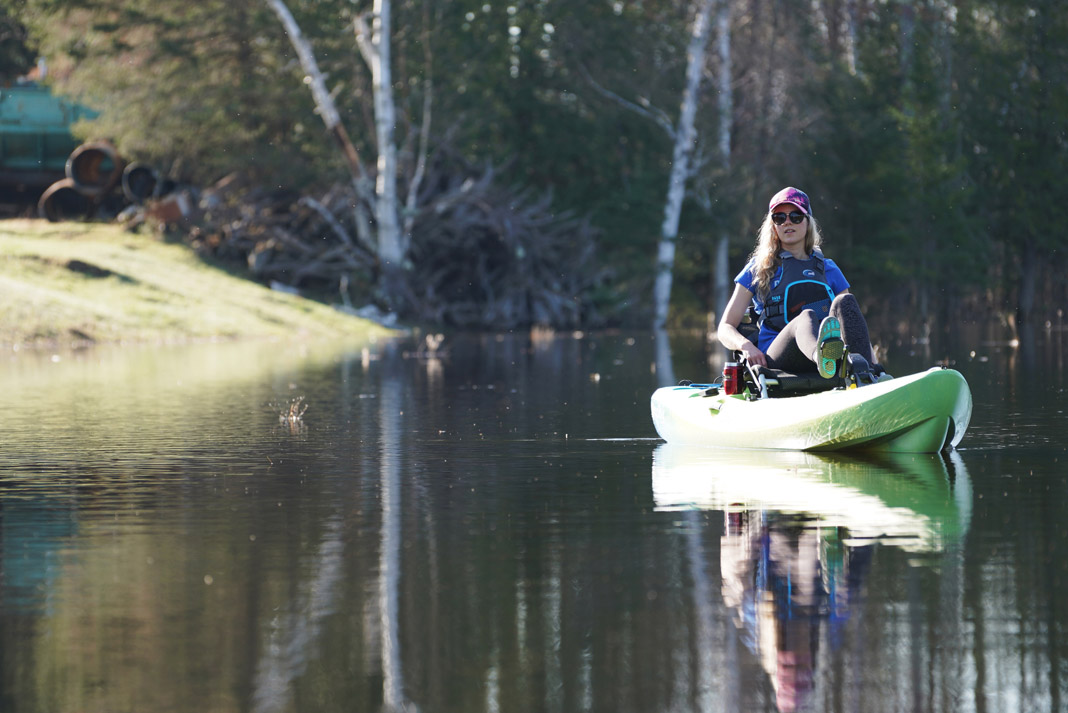
We’ve organized our reviews by kayak type so you can narrow down the best boat for you. Here you’ll find additional types of kayaks you may not have considered, such as inflatable and foldable kayaks, pedal kayaks and more.


Fishing kayak reviews

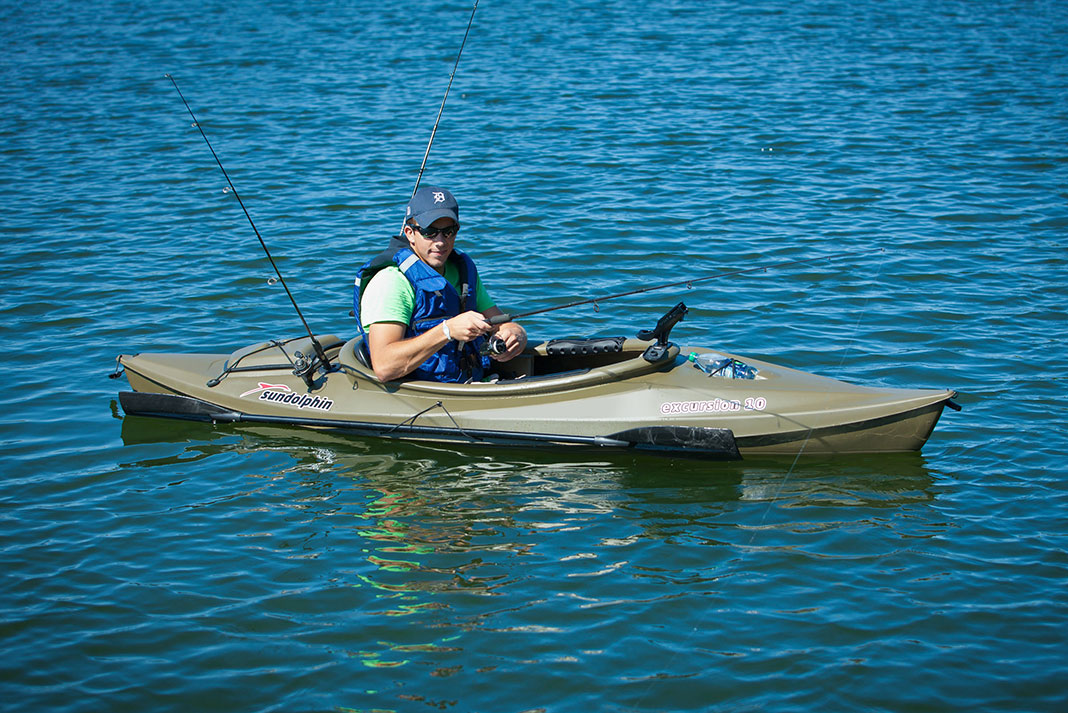
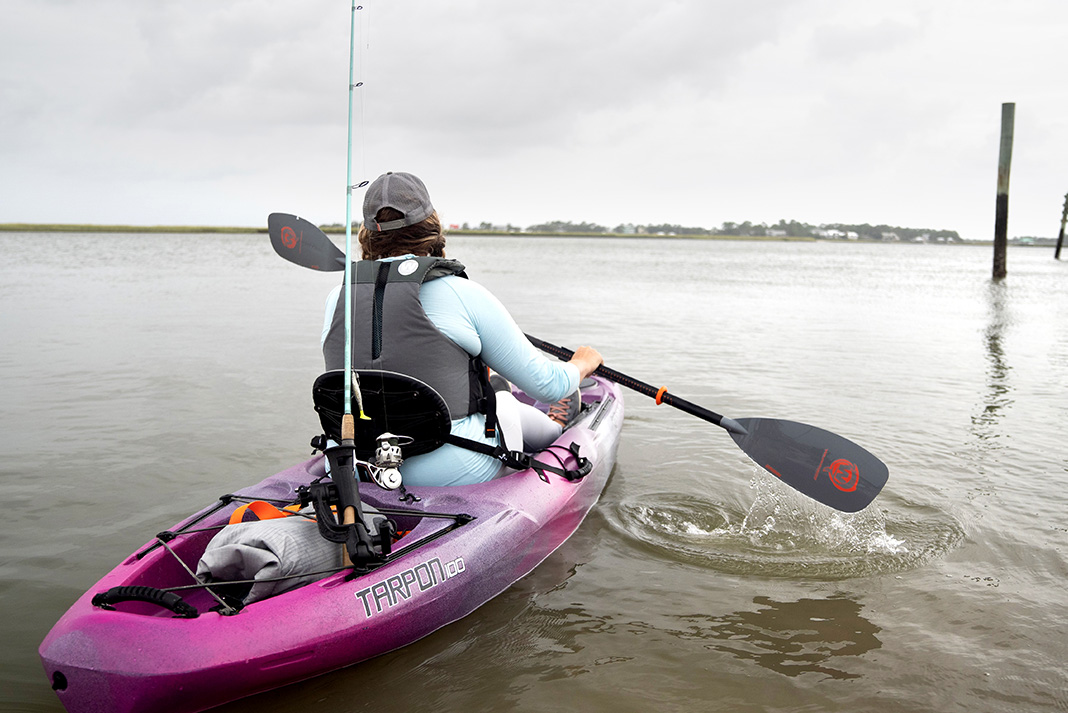
Fishing kayaks are wildly popular and we’ve created a dedicated article on our sister website, Kayak Angler, exclusively to this type of kayak. Here you’ll find reviews for every fishing kayak on the market, including all the top brands and spanning the entire price spectrum. This is your first and only stop for authentic fishing kayak reviews.


Sit-inside kayak reviews


Beginner kayak reviews


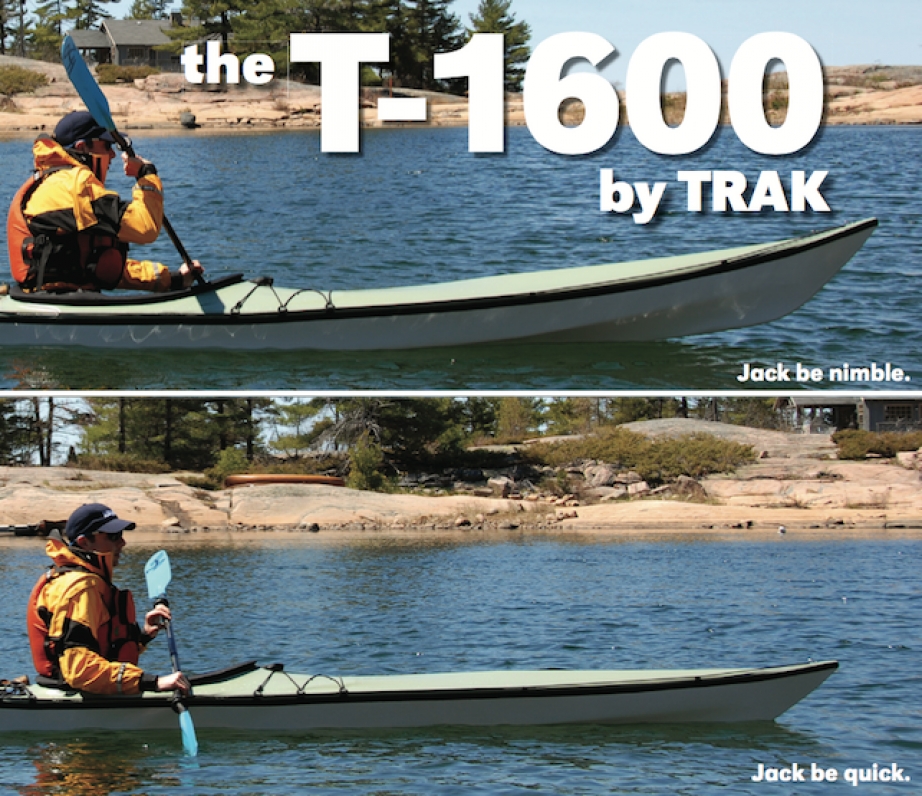
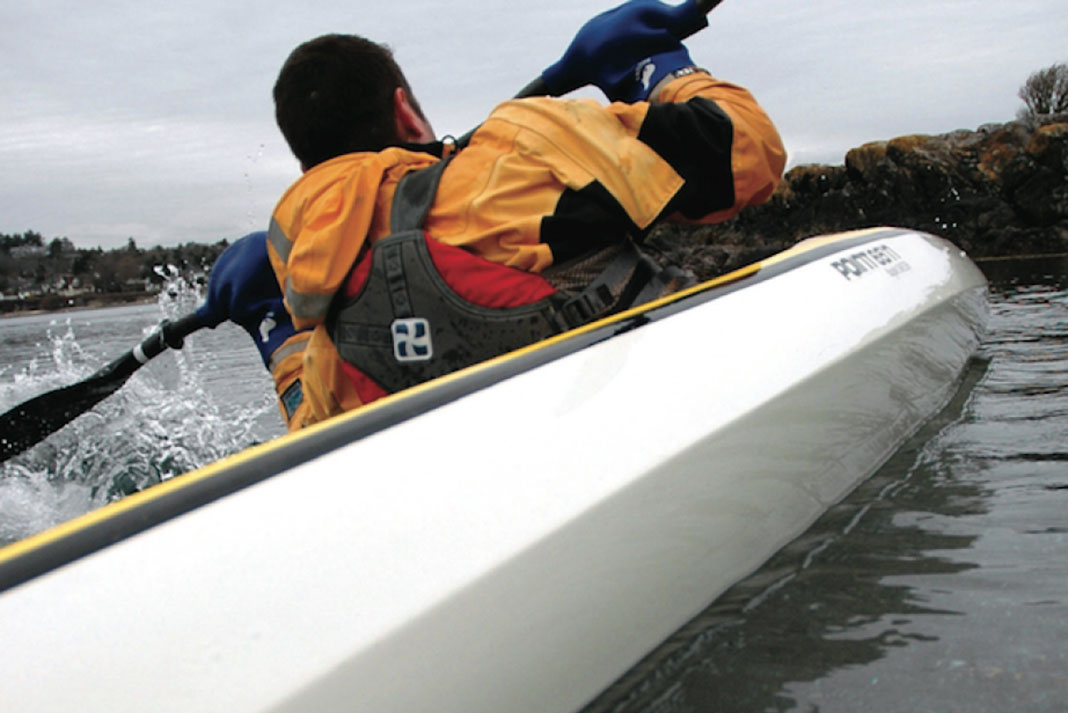
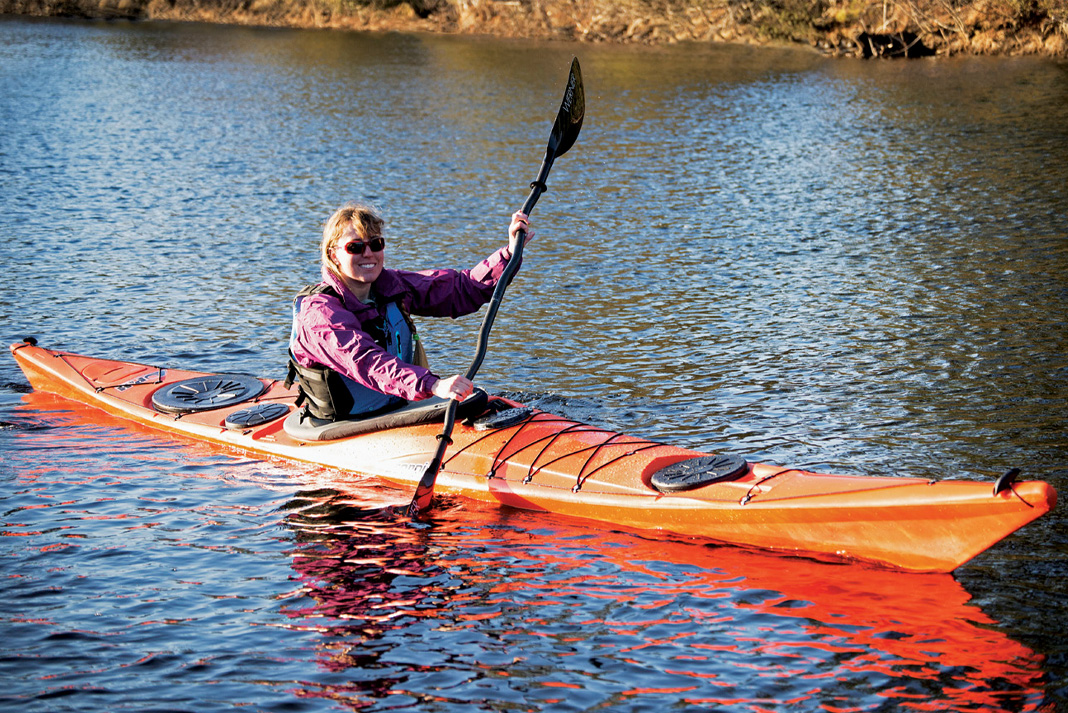
Touring kayak reviews


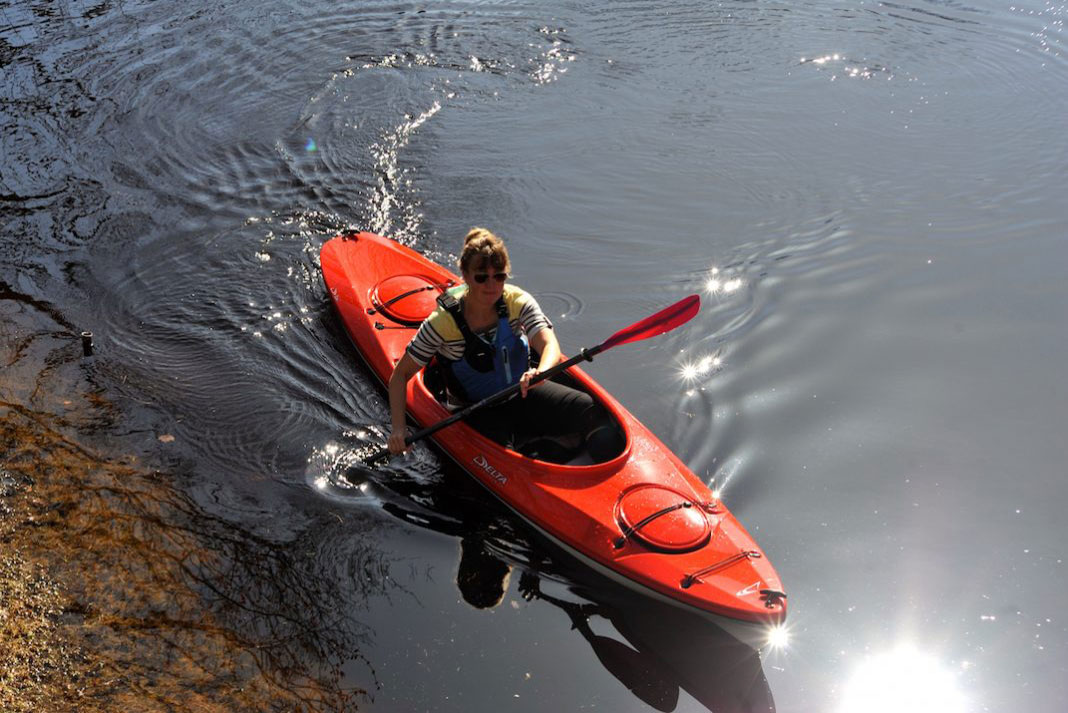
Recreational kayak reviews


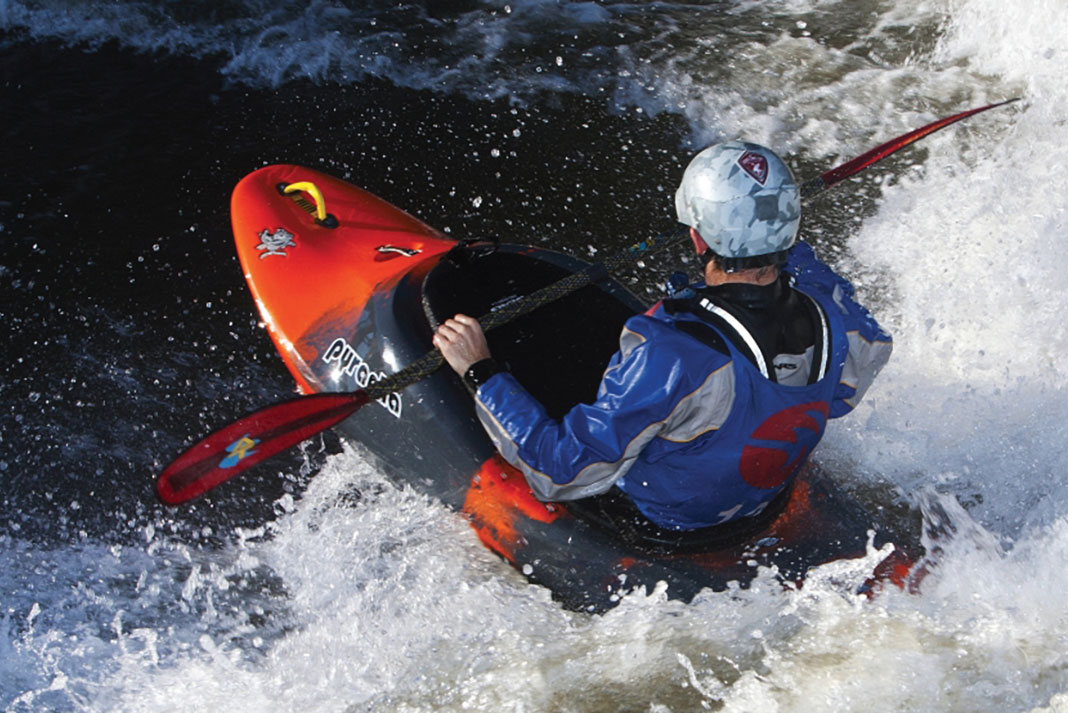
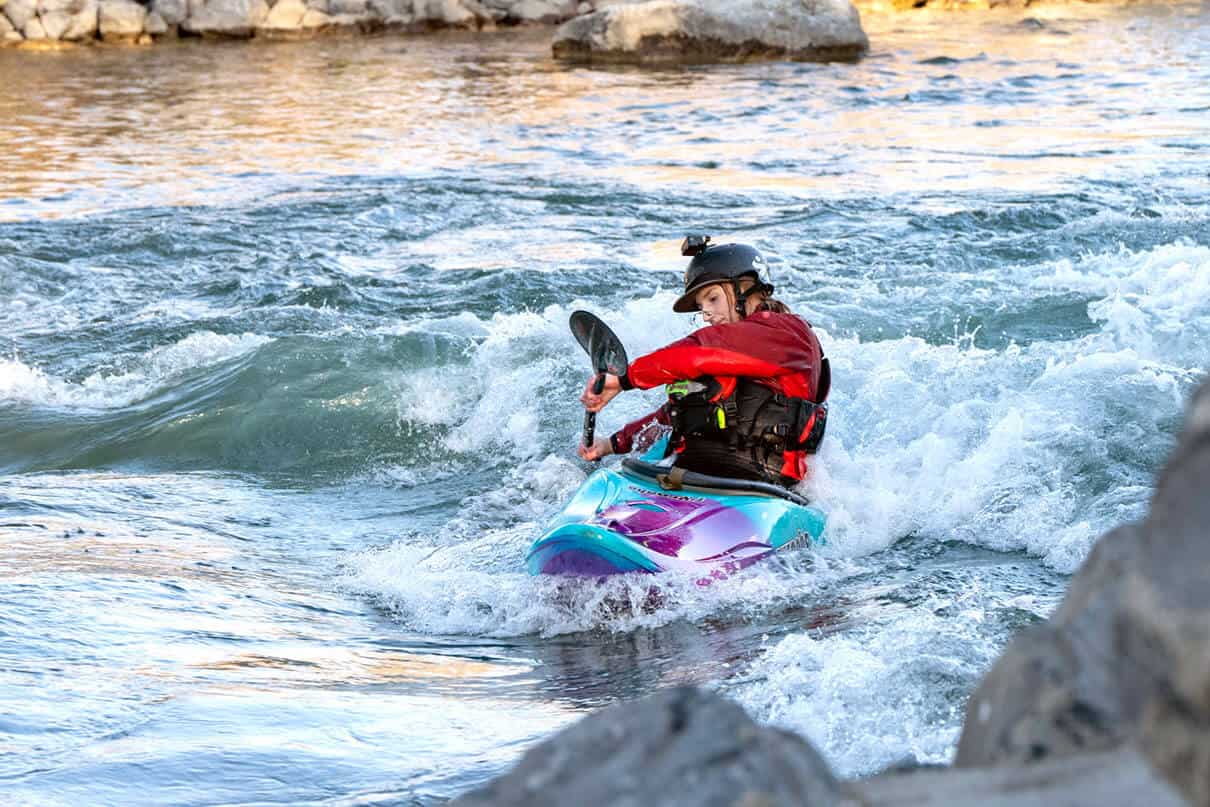
Whitewater kayak reviews


Hybrid SUP Kayak Review: Hobie Mirage Lynx

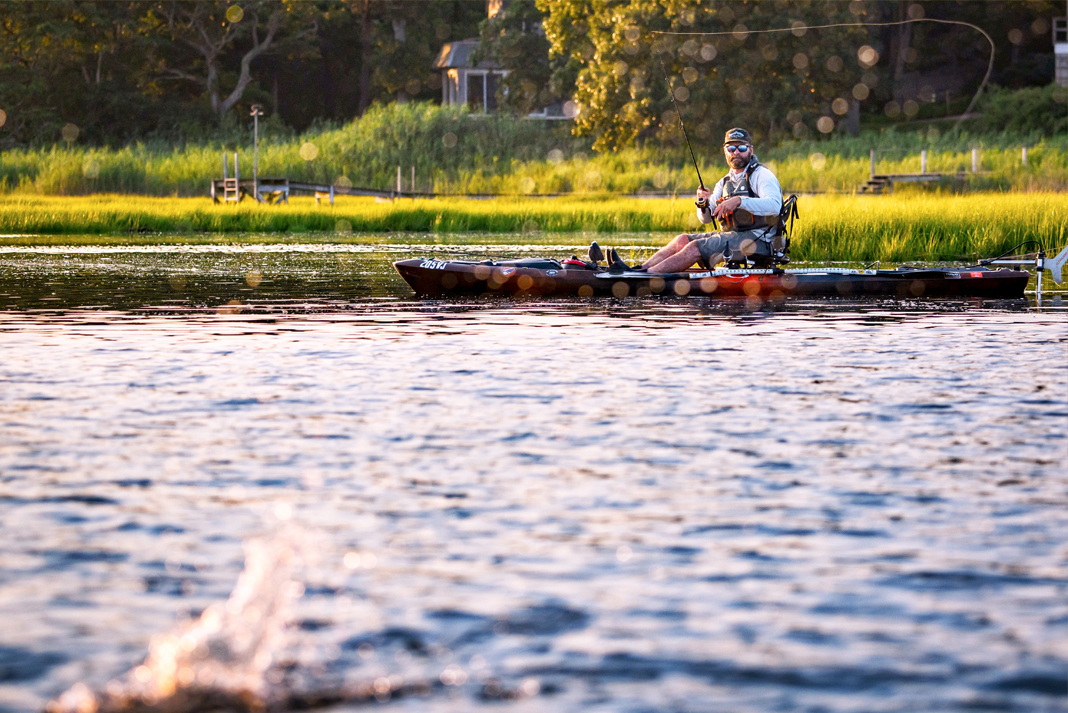
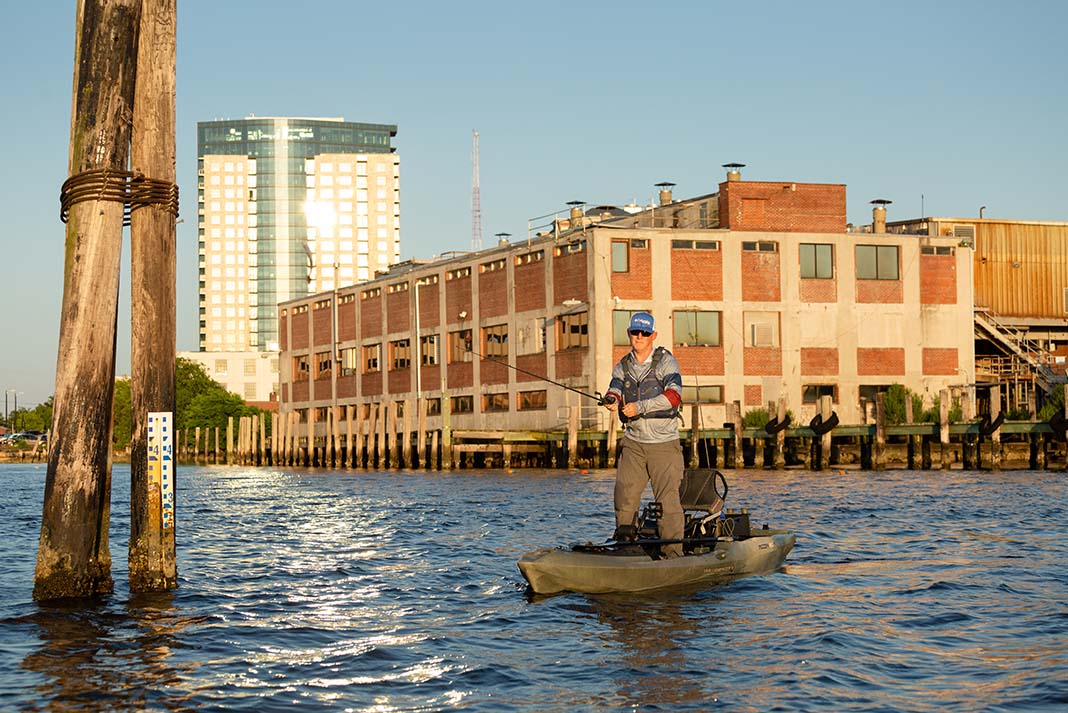
man stands and casts near a pier in the Hobie Mirage Lynx
Calm waters and beautiful sunsets are in reach. | Feature photo: Roberto Westbrook

According to Wikipedia, a lynx is a small to midsized cat and a versatile hunter. According to Hobie, the Lynx is a hybrid standup paddleboard and kayak, and a versatile hunter.

Combining the convenience of a paddleboard with the performance of a pedal kayak, Hobie’s new Mirage Lynx is an angler’s perfect companion. Measuring only 11 feet long and 36 inches wide, the Lynx is compact enough to be stored on your back porch, then easily cover distance on the fishing grounds thanks to its MirageDrive 180 pedal system.

Equally attractive is the Lynx’s 47-pound weight—light enough to cartop and carry to the water. Hobie uses its ACE-TEC construction in making the Lynx. ACE-TEC is a foam core sandwiched between layers of thermoformed plastic with fiberglass patches reinforcing the deck and rails. The process creates a tough watercraft that’s lighter and stiffer than rotomolded plastic.

We’re not the only ones who think this fishing vessel is the cat’s meow. The Mirage Lynx was voted Best New Kayak in this year’s Paddling Magazine Industry Awards by specialty paddlesports retailers, outdoor media and enthusiasts.

Fishing with the Hobie Mirage Lynx

Hobie Mirage Lynx Specs
Length: 11’0” / 3.35 m
Width: 36” / 91 cm
Weight: 64 lbs / 29 kg
(with drive)
Capacity: 360 lbs / 163 kg
MSRP: $2,999

On the surface, the Lynx comes with a simple layout. Bow and stern bungees, EVA foam deck padding and a cup holder perfect for cougars at the lake. Hobie threw on a comfortable frame seat and dropped in their MirageDrive 180 with Kick-Up Fins for a prowl around the neighborhood. But then Hobie also cleverly incorporated features that turn it from a house pet into an aquatic predator.

Look closer to see inserts in the deck allowing the covert angler to install accessories, add electronics and store more gear to turn the boat into a sporty fishing craft. To make rigging easier, add Hobie’s H-Rails to each side of the boat. The multi-sided metal tubes accept a range of Hobie’s matching accessories and make convenient carrying handles. I kept rigging simple with a Hobie H-Crate to hold my gear and rods. I installed a YakAttack track mounted LockNLoad base and an Omega Pro rod holder on the gear track beside the seat to keep one rod within reach. Simple.

For anglers who have a hard time standing in kayaks, you can add the H-Bar standing aid to the H-Rail. To stand up from the elevated seat, just grab the top of the bar and pull yourself up. Once standing, hold onto the bar for improved stability. The Hobie H-Rail system allows you to add a rod holder and paddle holder to the stand assist bar.

In the stern, a special scupper accepts a Power-Pole Micro Spike Driver. Then, with the push of a button on a wireless remote, you can drop a stakeout pole to stop the kayak and hold it in position.

Another scupper ahead of the pedal system leads to the Lynx’s transducer plate. Install a fish finder display and battery near the scupper and run the transducer cable through the scupper to a covered compartment below the boat protecting the transducer.

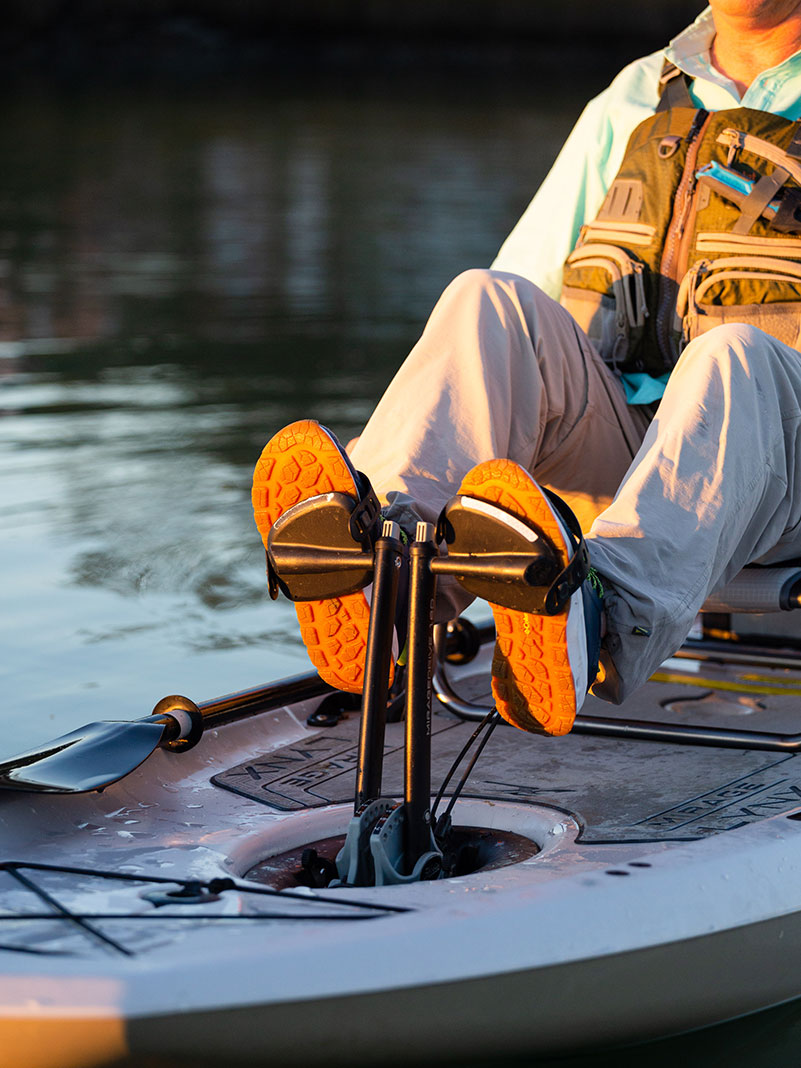
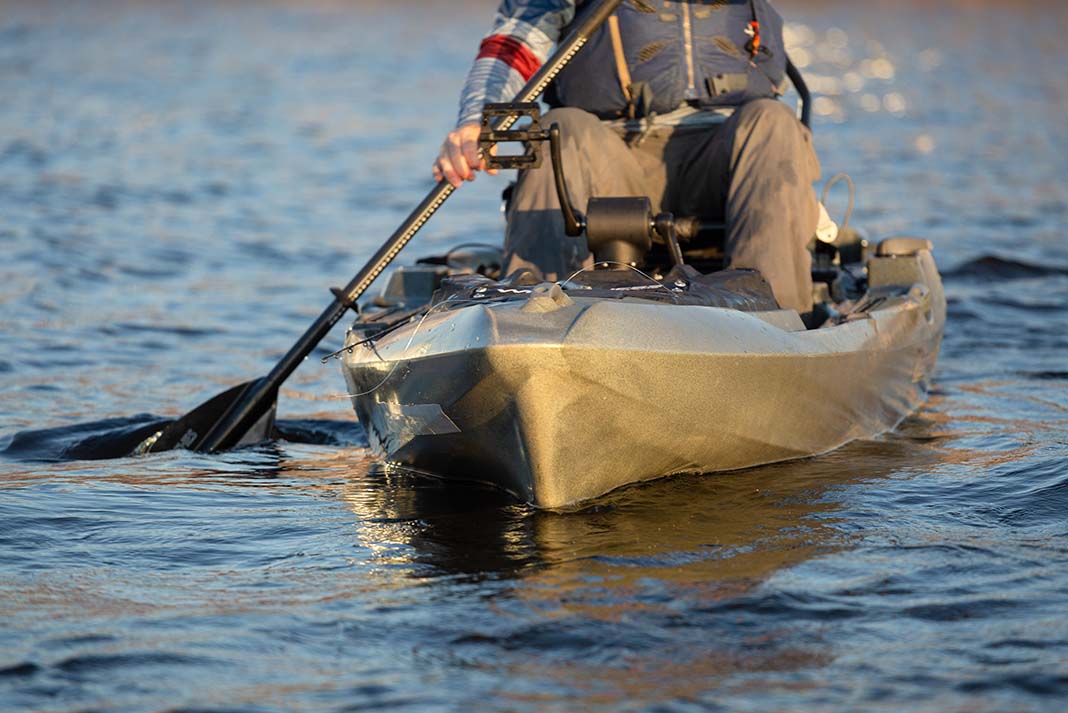
man pedals the Hobie Mirage Lynx with MirageDrive 180
Plenty of power with Hobie’s MirageDrive 180. | Photo: Roberto Westbrook

Starring the MirageDrive 180

One of the best features of the Lynx is Hobie’s MirageDrive 180 with Kick-Up Fins. While it’s a mouthful to say, the advanced pedal drive turns the Lynx into an efficient and easy-to-operate fishing platform.

The latest generation of Hobie’s MirageDrive makes me appreciate how far the pedal system has improved since its introduction way back in 1997. The new MD180 is light and tight with fewer moving parts and simpler construction.

A few years ago, Hobie added reverse to the MirageDrive. Pull a tab on the drive and the fins spin 180 degrees to propel the boat backward. While the system doesn’t provide instant reverse, like a propeller drive, switching the MD180 into reverse quickly becomes second nature. Second nature now, revolutionary at the time.

The most recent improvement to the MirageDrive is the Kick-Up Fins. When the fins strike an underwater obstruction, they kick up, folding flat against the hull. After the obstruction is cleared, the flippers flip down, and the driver can keep kicking.

While I didn’t get to run over any tree limbs like in the Hobie promotional video, I did find the Kick-Up Fins helpful fishing in shallow water where I always worried about damaging the old MirageDrive. Now, I fish until I hit bottom and then bring up the fins. A pedal system with more than nine lives.

On the water performance

I borrowed a Mirage Lynx from the rental fleet of Kitty Hawk Kites in Nags Head, North Carolina. After a half-season of heavy use, the boat looked good and worked just fine. To test the Lynx, I launched at my favorite fall fishing hole, Owl Creek in Virginia Beach. With the trees in full autumn yellow and red and the marsh reeds a golden green, the sunlight sparkled off the bright facade of the oceanfront hotels bejeweled in the background.

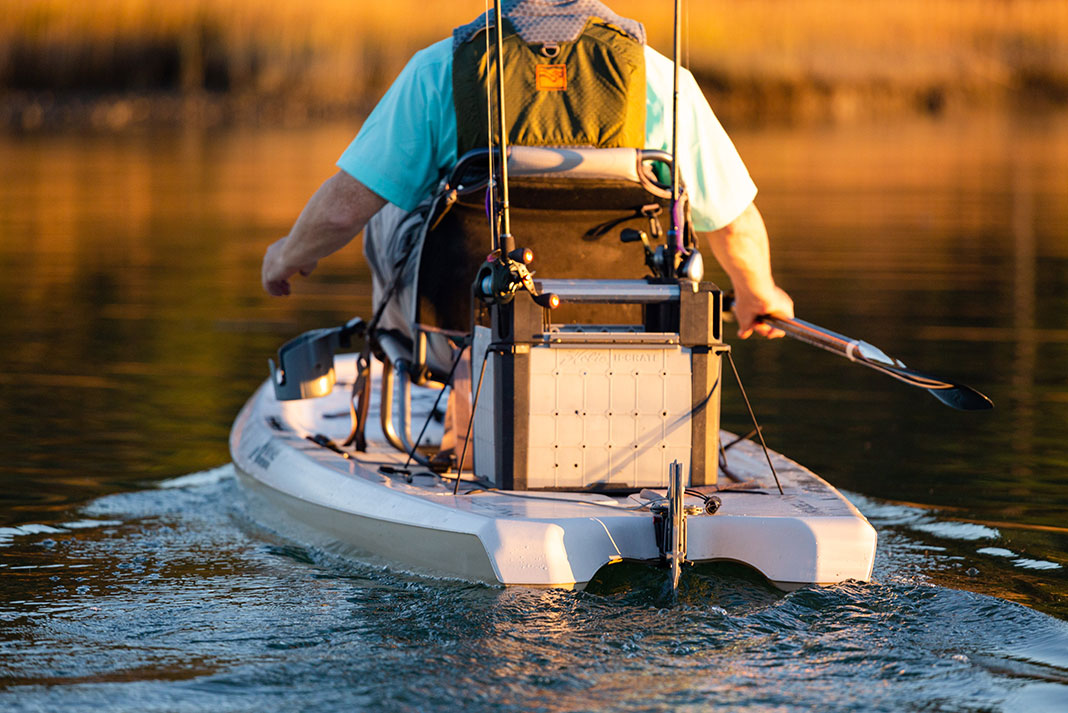
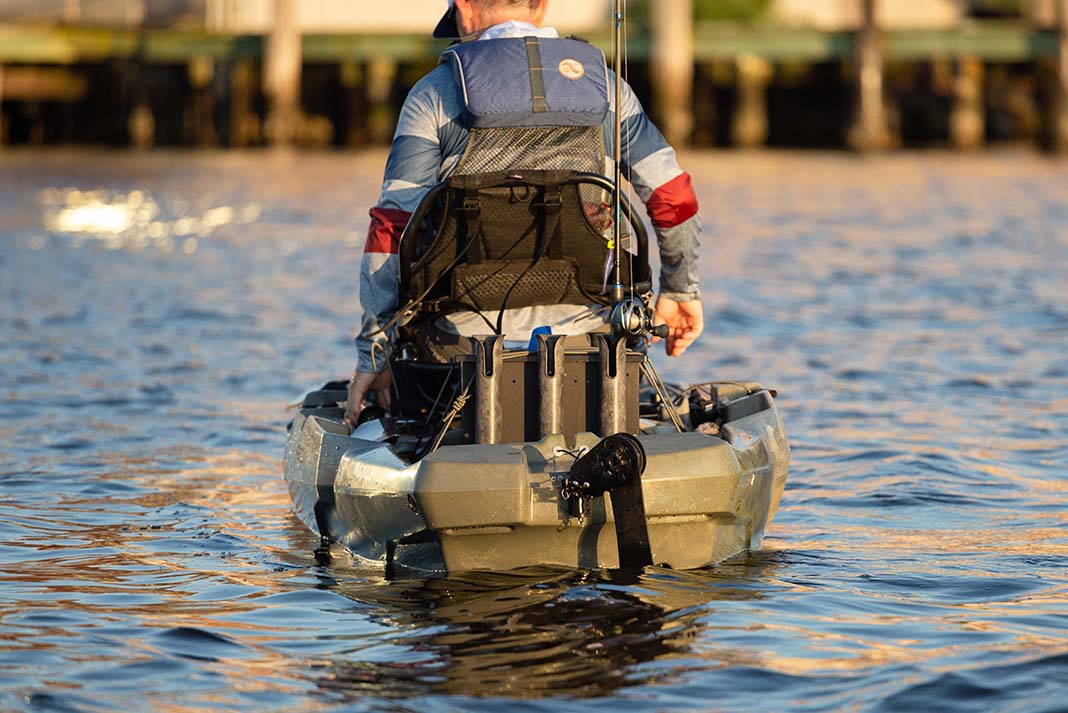
The first thing I notice on the water is how easy the Lynx is to operate. I paddled a few feet from the launch, dropped the fins through the scupper, clipped it in place and pedaled away. The rudder is perfectly matched to the boat for quick turns and slight adjustments in direction. The rudder is connected with a flexible external cable to a control knob clipped to the side of the seat. I can change the control knob from the right or left side of the seat.

stern of the Hobie Mirage Lynx hybrid fishing kayak/SUP
The rudder is perfectly matched to the lightweight thermoformed hull. | Photo: Roberto Westbrook

Speaking of the seat, it looks too simple to be this comfortable. The seat is a simple low-slung frame with a mesh cover, but the angle of the back and the bottom provided support for pedaling and fishing. I had no problem standing up from the seat. I spend most of my time standup fishing, so I appreciated the foam deck padding. I also appreciated the rock-solid stability of the wide, flat hull. It was easy to stand, kneel, turn around and sit back down on the Lynx.

The Lynx isn’t the first choice for long stretches of open water because the square bow and low sides suffer in large waves or heavy currents. But it’s perfect to pedal for a full day exploring backwaters. I mean, think about it. The MirageDrive 180 with Kick-Up Fins is reliable and powerful enough to propel many of Hobie’s full-size sit-on-top kayaks, making it more than capable of pushing the light and nimble Lynx. The MD180 complements the Lynx by providing a reliable, efficient and compact power source to push this hybrid SUP beyond its paddleboard roots.

After pedaling a few miles and landing a half dozen fish, I realized the Lynx would be a great addition to my fleet of full-size kayaks. The Lynx is easier to transport, launch, rig and fish. I can save my full-size boat for open water and all-day, long-distance fishing expeditions.

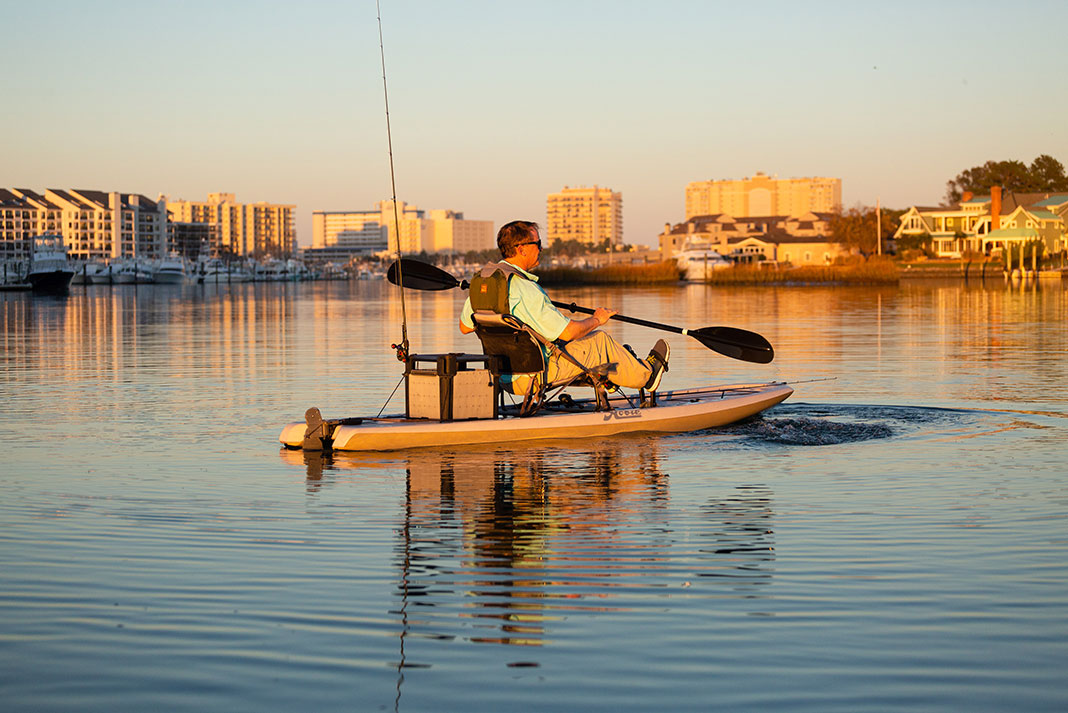
man paddles the Hobie Mirage Lynx across calm water in front of city buildings
The Lynx is simple with the potential for serious rigging. | Photo: Roberto Westbrook

The biggest downside of the Mirage Lynx is the price. For the cost of the Lynx, I could buy another manufacturer’s premium full-size pedal kayak and have some change left over. In fact, the Lynx costs $400 more than the base-model Hobie MirageDrive Passport with Kick-Up Fins. Oh, wait, but you don’t get reverse on the Passport.

The Lynx does something else some bigger boats can’t do: quickly and easily hit my favorite inshore fishing spots when I get a few hours on the water. The hybrid SUP and pedal kayak is purrfect to cartop and only takes a minute to rig with a handful of tackle and a couple of rods. With the Lynx in my arsenal, I don’t pro-cat-stinate, I just fish more places more often.

5 Secrets For A Successful SUP Camping Trip

All you need for a weekend in paradise. | Photo: Cory Leis

SUP camping is a minimalist’s dream. Because the added weight of gear on a paddleboard can significantly reduce its speed and efficiency, paddlers likely need to lean out their go-to camping kits to be more lightweight and compact. How should you decide which gear makes the cut? These tips will make for a more enjoyable SUP camping trip.

5 secrets for a successful SUP camping trip

Aim for a kit under 40 pounds, packed into a 50-liter drybag and a medium-sized 20- to 30-liter drybag. Follow these five rules to help you become a lean, mean SUP camping machine.

1 Just the essentials

A packing list helps to prioritize items and makes it easier to spot where to cut down weight and volume. Look to remove nonessentials from your kitchen kit—a SUP camping adventure is no place for a Dutch oven. Cull your camp clothing and footwear options and leave behind binoculars and games.

Paddleboarders paddling into sunset
SUP. Sleep. Repeat. | Photo: Colin Field

Use the packing list to identify multi-use items to eliminate redundancy and create extra space for one or two creature comforts, like a beer and a book. Get creative with your multi-use items—you may have used a puffy jacket as a pillow, but how about using your inflatable board as a sleeping pad?


2 Get compact

Does size matter? With limited deck space for gear on the board, the answer is yes. Paddleboards best suited for SUP camping will be 12.5 feet or longer and at least 30 inches wide—you’ll need to optimize much of the deck space for gear. Roll clothes, use compression sacks and remove packaging in advance to reduce the volume of items.

Look for opportunities to substitute a version of an item in its smallest form, such as using tabs to purify drinking water instead of a filter. Shelters tend to be one of the bulkiest camp items, so consider choosing a more minimalistic option, like a bivy or hammock, or go without if the weather forecast is clear.


3 Nesting bags

While larger drybags keep items safe and dry, it’s important to take your organization a step further and KonMari your kit by assigning everything a home. Group items together in stuff sacks by category so they can be found quickly and easily. This ensures you know exactly where to find what you are looking for and your gear remains orderly as everything has a designated spot to go after use.

Use designated bags for toiletries and first aid items, a repair kit, kitchen kit, clothing, and sleep system. Pack safety items into a smaller dry sack for added water protection. Then pack the smaller bags into the large drybag. Tying down a single, large drybag to the board will be much more secure in chop or during an upset than a half dozen smaller bags.


All you need for a weekend in paradise. | Photo: Cory Leis
All you need for a weekend in paradise on your next SUP camping trip. | Feature photo: Cory Leis

4 Separate on-water essentials

Whether you want to grab your GoPro to capture a wildlife photo quickly, take a SUP selfie (#paddleforever), or need to lather on more sunscreen under the heat of the sun, ensure anticipated on-water items are packed for easy availability. This includes water, snacks, maps, hat, sunglasses, sunscreen, camera and a warm layer.

Pack these items in a 20-liter drybag, which may be opened on the water. Keeping on-water items separate ensures your large, 50-liter drybag of camp equipment, including shelter and sleeping gear, stays closed—and dry—until hitting land.


5 Achieve balance

A good SUP adventure board has tie-down and attachment points for securing gear at both the front and rear of the board to ensure even distribution of weight. Installation of additional attachment points, bungee tie-downs, straps or cargo nets onto the deck of the board is easy and doesn’t have to be permanent thanks to suction cup attachment points.

When packing gear, be mindful of the trim and avoid making the board either nose or tail heavy. Load while the board is floating in shallow water, so you can test the placement of your gear.

Generally, place heavier items toward the center handle. Weave the straps and tie-downs through the handles of the drybags where possible. Tighten all tie-down straps to secure the load and prevent it from shifting when exposed to wave chop or from going overboard. Lastly, secure a spare paddle and enjoy the adventure ahead.

Paddling Magazine Issue 65 | Fall 2021

This article originally appeared in Paddling Magazine Issue 65. Subscribe to Paddling Magazine’s print and digital editions here, or download the Paddling Magazine app and browse the digital archives here.


All you need for a weekend in paradise on your next SUP camping trip. | Feature photo: Cory Leis

Courtney Sinclair is a SUP instructor and ultramarathoner based in the Ottawa Valley, Ontario. You can find out more at Court Outdoors.

First Descents In The Land Of Fire And Ice

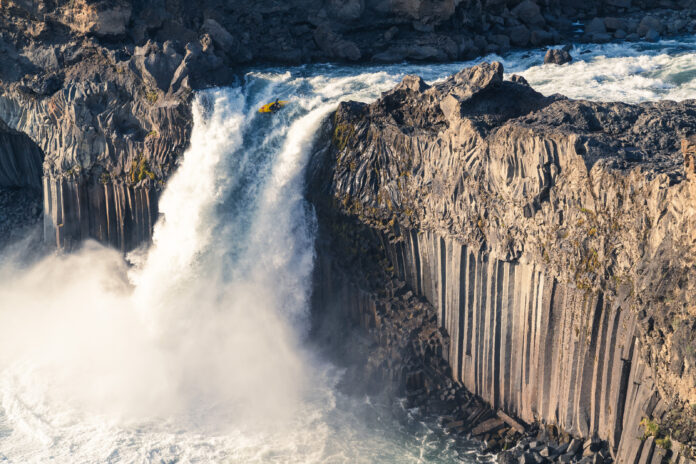
Aniol Serrasolses droping a waterfall in Aldeyjarfoss, Iceland
Aniol Serrasolses droping a waterfall in Aldeyjarfoss, Iceland. Photo: David Nogales / Red Bull Content Pool

Iceland is known for its dramatic canyons, steep whitewater rivers and mesmerizing volcanic activity. Holding the highest concentration of waterfalls in the world, it’s no surprise that the land of fire and ice is becoming a popular destination for professional kayakers looking to push the limits of the sport.

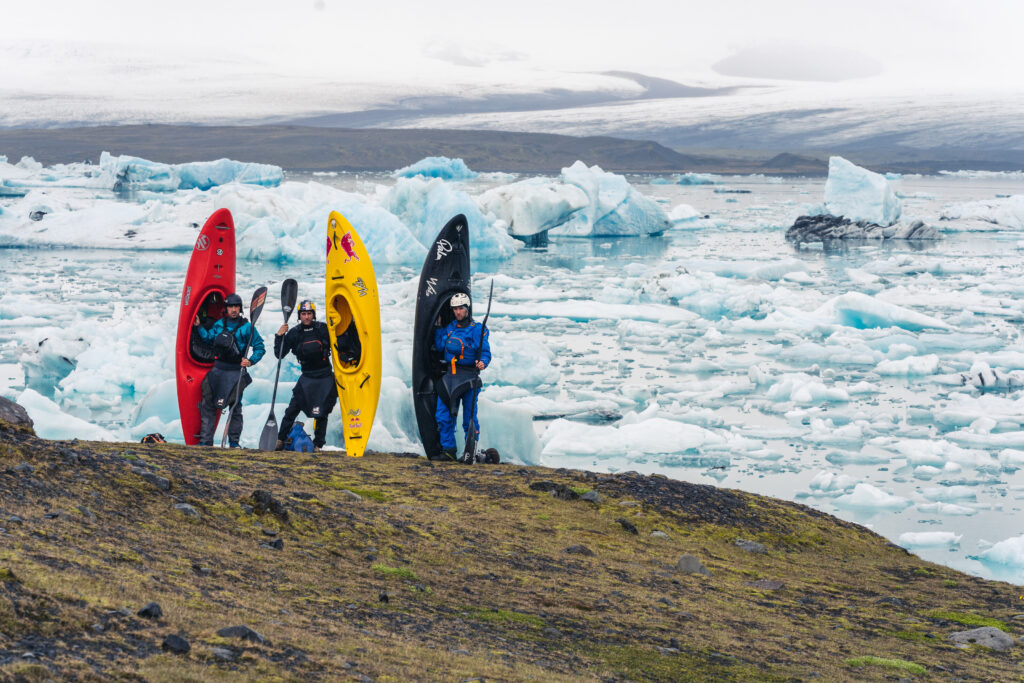
Aniol Serrassolses, Mikel Sarasola and Aleix Salvat posing during the Jotunn project in Jokulsarlon Glacier, Iceland
The team: Aniol Serrassolses, Mikel Sarasola and Aleix Salvat posing during the Jotunn project in Jokulsarlon Glacier, Iceland. Photo: David Nogales / Red Bull Content Pool

In summer 2021, Aniol Serrasolses, Aleix Salvat and Mikel Sarasola embarked on an expedition to unchartered waters within the Nordic country in the hopes of unearthing its most technical, remote and previously unrunnable rivers.

Serrasolses and the team spent three long weeks hiking the unforgiving terrain with their kayaks in tow. They pushed themselves to the limits both physically and mentally in their quest to achieve their mission: travel to a series of remote, Icelandic rivers (identified via satellite imagery) and bag some incredible first descents.

Aniol Serrassolses, Mikel Sarasola and Aleix Salvat paddling in Studlahil, Iceland.
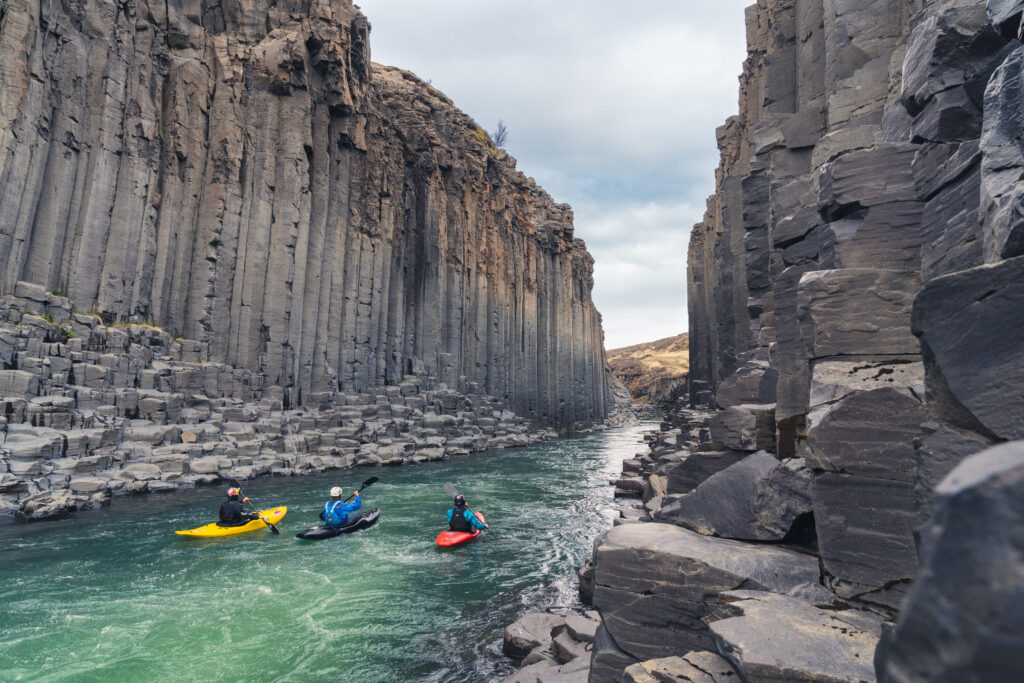
Not a movie set: Aniol Serrassolses, Mikel Sarasola and Aleix Salvat paddling in Studlahil, Iceland. Photo: David Nogales / Red Bull Content Pool

The recent RedBull TV documentary Jötunn follows Serrasolses and crew throughout the highs and lows of their otherworldly adventure. It teases us with scenes so spectacular and Game of Thrones-esque that it’s hard to believe that we’re witnessing real footage.

“It’s in nature and in the rivers where we are ourselves and feel fulfilled,” said Serrasolses. “I cannot think of a better place than Iceland to start over again after such a difficult year as 2020.”

Aniol Serrasolses dropping a waterfall in Fossa, Iceland.
Aniol Serrasolses dropping a committing waterfall in Fossa, Iceland. Photo: David Nogales / Red Bull Content Pool

Watch the full 22-minute film here »

Canoe Skill: How To Read Whitewater

group of canoeists learn how to read whitewater
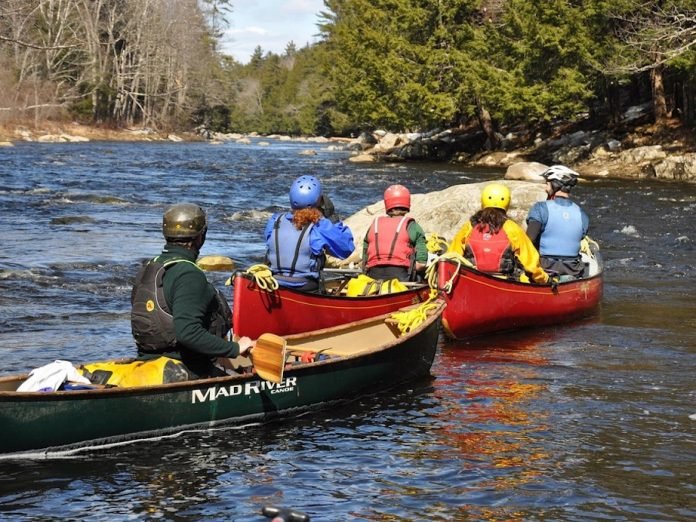
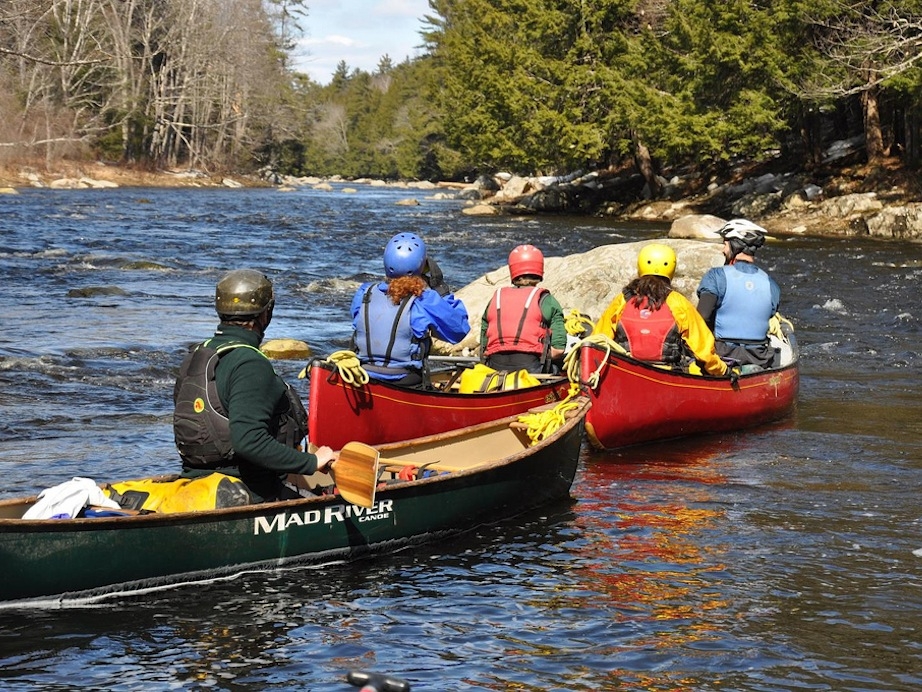
Learning how to read whitewater is similar to learning a language. The more you practice, the better you’ll be at deciphering its message. | Feature photo: Chewonki Semester School/Flickr

Choosing to run whitewater, and doing it successfully, can be a highlight on your next canoe trip. Jumping in over your head, however, can ruin your trip or at least your gear. Often your choice and success comes down to your ability to read water—the language of rivers—and understand what it is trying to communicate to you. Here are the basics to help you learn how to read whitewater rapids.


Learning how to read whitewater

Being fluent in reading whitewater begins by learning to interpret its two main visual characteristics: texture and colour. When observing moving water, as it winds its way over rocks, ledges and around outcrops, you’ll witness a veritable kaleidoscope of changing colours and wave patterns.

Each obstacle leaves a visual marker to its presence. By looking at the river’s textures and colours you can decipher the characteristics of the riverbed, the difficulty of the water features and ultimately, make a choice as to whether you should run the rapid.

Photo: Flickr user Chewonki Semester School
Learning how to read whitewater is similar to learning a language. The more you practice, the better you’ll be at deciphering its message. | Feature photo: Chewonki Semester School/Flickr

Whitewater signs to watch

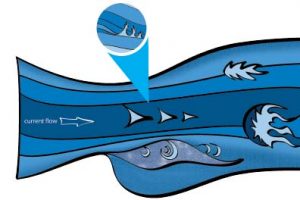
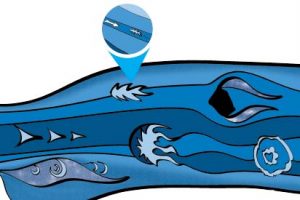
For many, a rapid is first judged by the roller coaster of waves they’ll ride during the run. Beyond looking at size, navigable waves usually occur in groups or families called standing waves. Standing waves are dark in colour, often with crashing white tops and usually have three or more similar, evenly spaced waves decreasing in size as you look downstream.

Lone waves should be approached with caution; chances are there is a rock hiding upstream. Also, consider that waves positioned across the flow of water are much easier to punch head-on than waves that cross the current at an angle.

Rivers also create a fascinating display of textures visible as bubbles, swirls and boils. Each is a clue to changes in current speed and obstacles above and beneath the water’s surface.

Water that appears rough and bumpy in texture, almost like gravel, is likely an eddy line—the abrupt division between two currents. Often, calm eddy pools, behind exposed rocks and bends in the river, allow canoeists to rest, bail water or scout the next section of river. It’s crucial to know the location of eddylines to execute stable eddy turns—the entering and exiting of eddy pools.

[ Paddling Buyer’s Guide: View all whitewater canoes ]

The most common colour patterns on a river are long parallel bands of similarly shaded water. Each band indicates a speed of current with neighbouring bands being either slightly faster or slower. No set rule seems to indicate that one shade of water is quicker than another; you’ll have to be the judge as sometimes an eddy effect will be dark, while other times, deep fast-flowing currents will also be dark. It’s the alternating dark and light bands of current that show changes in velocity.

When considering current speed, first pick out the slow bands of water and determine if they are caused by submerged rocks that should be avoided. Next, identify the fast bands and make sure they don’t flow toward unavoidable obstacles, like rocks, ledges or hydraulics.

If you’re planning to cross the river in a front ferry, adjust your ferry angle to match the changing speed of the current to aid efficiency and possibly avoid an unfortunate loss of balance when traversing from one band of current to another.

Reading whitewater is similar to learning a language. The more you practice, the better you’ll be at deciphering its message. Fluency comes once you can glance at a set of rapids and know precisely where to place your canoe. Understanding the basic vocabulary of texture and colour will help you to scout a safe route down the rapid, or more importantly, recognize when it would be safer to portage around it.


Whitewater glossary

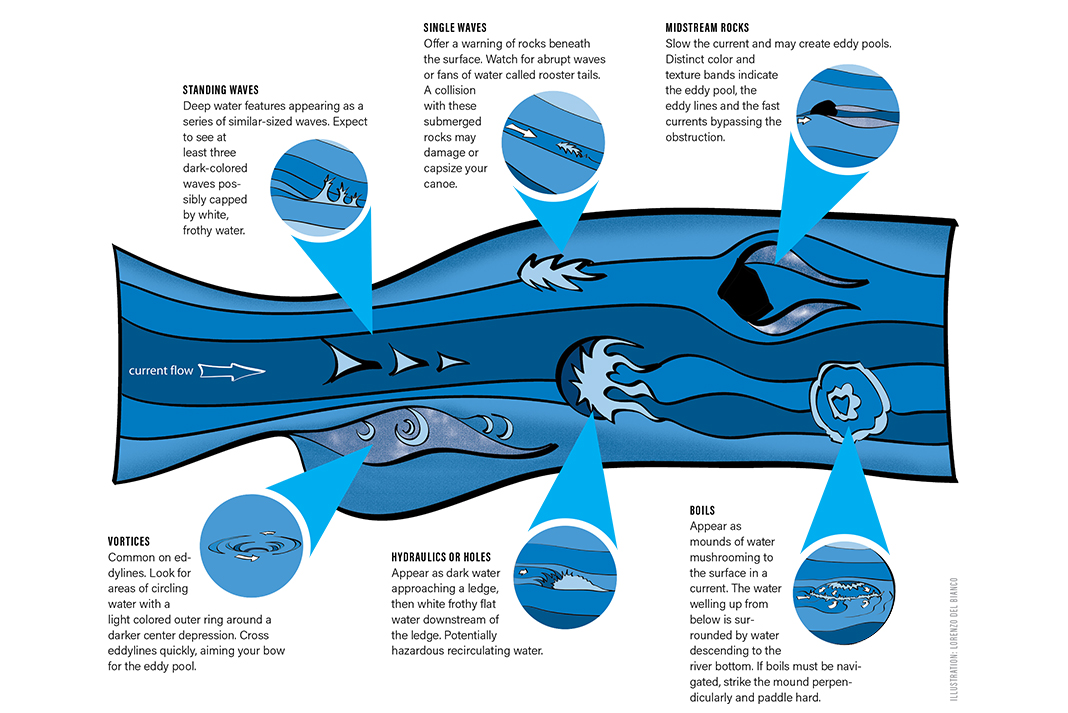
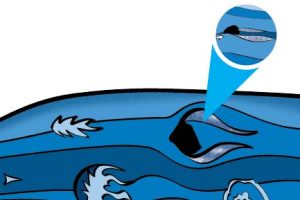
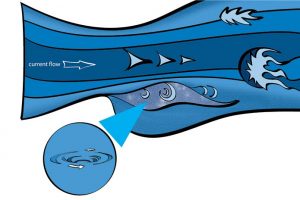
A diagram showing different terms to help you learn how to read whitewater
Illustration: Paul Mason

diagram showing how to read standing waves in whitewaterStanding waves

Deep water features appearing as a series of similar-sized waves. Expect to see at least three dark-colored waves possibly capped by white, frothy water.


diagram of single wavesSingle waves

Offer a warning of rocks beneath the surface. Watch for abrupt waves or fans of water called rooster tails. A collision with these submerged rocks may damage or capsize your canoe.


diagram showing how to read midstream rocks in whitewaterMidstream rocks

Slow the current and may create eddy pools. Distinct color and texture bands indicate the eddy pool, the eddy lines and the fast currents bypassing the obstruction.


diagram of vorticesVortices

Common on eddylines. Look for areas of circling water with a light colored outer ring around a darker center depression. Cross eddylines quickly, aiming your bow for the eddy pool.


diagram showing how to read hydraulics or holes in whitewater

Hydraulics or holes 

Appear as dark water approaching a ledge, then white frothy flat water downstream of the ledge. Potentially hazardous recirculating water.


diagram of boilsBoils

Appear as mounds of water mushrooming to the surface in a current. The water welling up from below is surrounded by water descending to the river bottom. If boils must be navigated, strike the mound perpendicularly and paddle hard.


Paddling Magazine Issue 65 | Fall 2021

This article originally appeared in Canoeroots and Family Camping’s Spring 2010 issue and also in Paddling Magazine Issue 65. Subscribe to Paddling Magazine’s print and digital editions here, or download the Paddling Magazine app and browse the digital archives here.


Learning how to read whitewater is similar to learning a language. The more you practice, the better you’ll be at deciphering its message. | Feature photo: Chewonki Semester School/Flickr


Fishing Kayak Review: Wilderness Systems Recon 120 HD

kayak angler stands up and casts from a Wilderness Systems Recon 120 HD fishing kayak
A capable hull and full-feature cockpit goes from paddling to pedaling and motor power. | Feature photo: Roberto Westbrook

For many anglers, fishing is a mission. Preparing gear, loading the truck, strategizing a plan, launching the attack, adapting, defending, defeating and conquering another species. For these anglers, Wilderness Systems developed the new Recon 120 HD.

With paddle, pedal or motor power, the Recon 120 HD gives anglers a choice of propulsion to meet the needs of today’s battlefield. The boat comes rigged from the factory and ready to fish, or it can be armed to the teeth with accessories and electronics.

Recon 120 HD is rigged and ready

Wilderness Systems Recon 120 HD Specs
Length: 12’8”
Width: 38”
Weight: 115 lbs
Capacity: 450 lbs
MSRP: $2,449
wildernesssystems.com

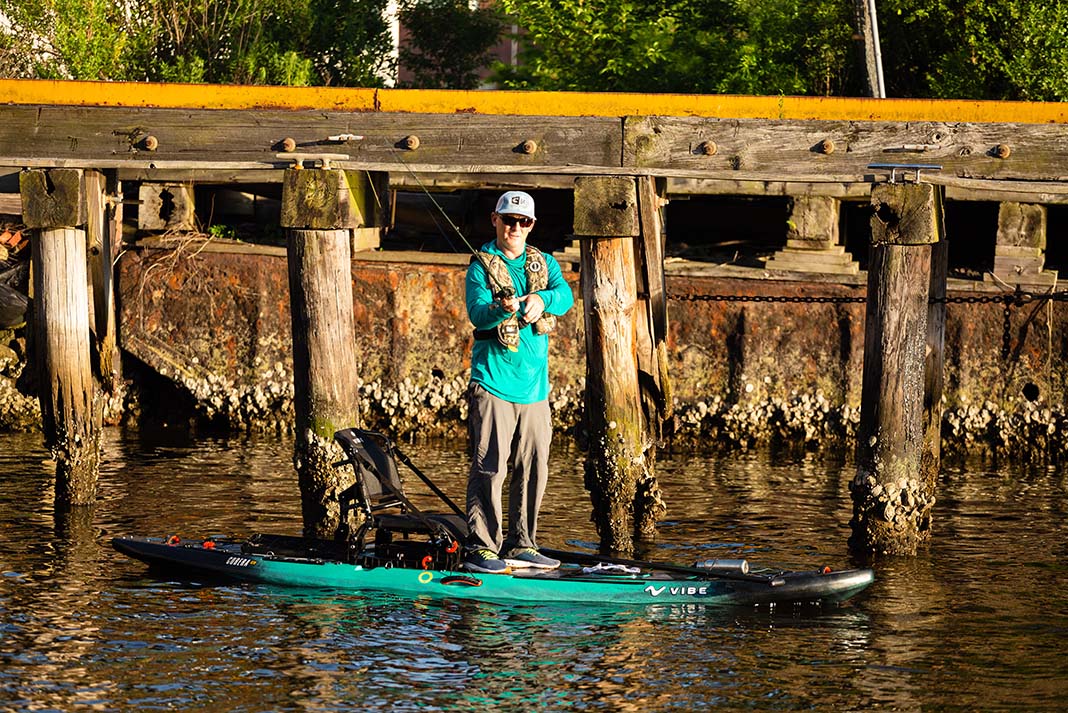
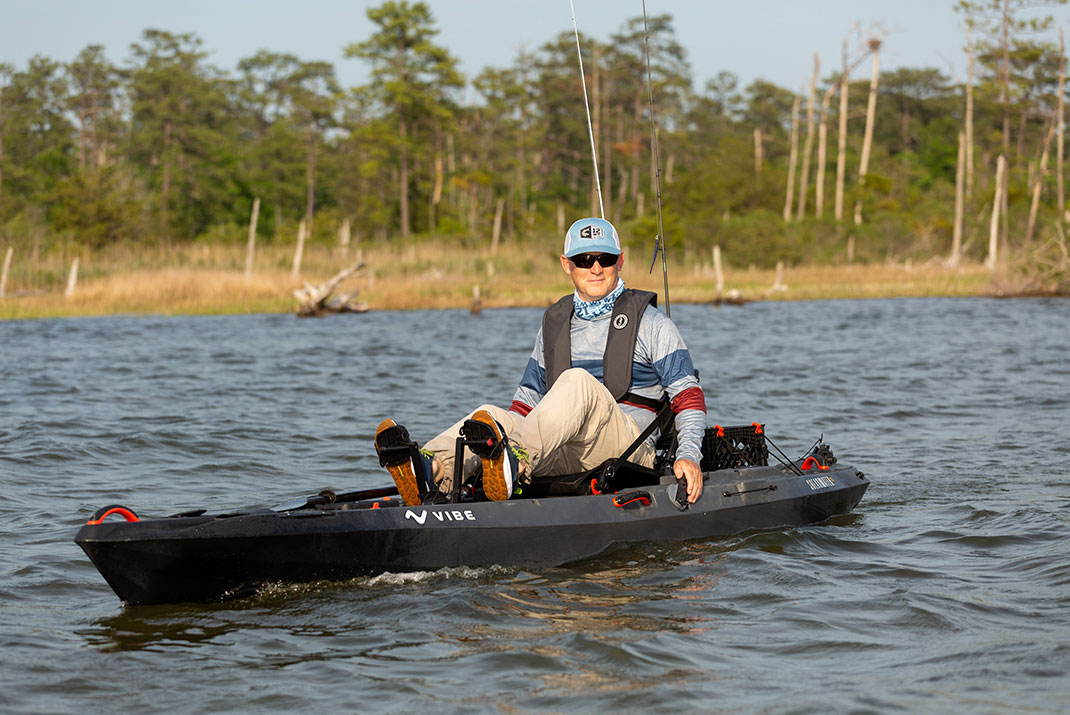
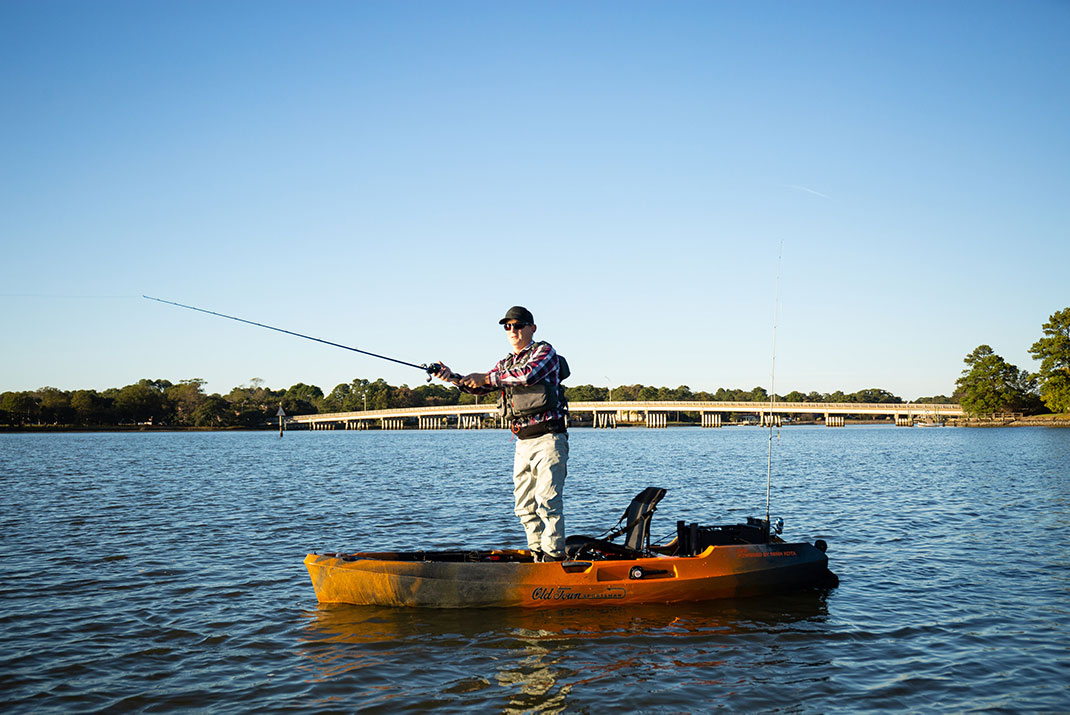
The Wilderness Systems Recon 120 HD fits in the category of standup, full-feature kayaks with multiple propulsion options. Compare the Recon HD with the NuCanoe Flint or the Vibe Shearwater XD.

These kayaks appeal to anglers looking to cover a lot of water and fish hard in mostly sheltered areas. They are also popular with enthusiastic beginners looking for stable kayaks that can grow with them.

Wilderness Systems has a lot of boats in the standup category. Their Radar 135 offers pedal and motor power with the Helix PD and MD systems. The ATAK has a Helix MD motor without a pedal option. So, the Recon HD gives the owner pedals with the ability to add an electric motor.

The Recon 120 is wider and more stable than the ATAK 120 or Radar 115. Also, the Recon is heavier than the other standup boats in Wildy’s line.

Man stands and casts from the Wilderness Systems Recon 120 HD fishing kayak
A capable hull and full-feature cockpit goes from paddling to pedaling and motor power. | Feature photo: Roberto Westbrook

Designed to satisfy demanding anglers

Wilderness designed the Recon to satisfy a very demanding audience: the tournament angler. Kayak tournaments are offering big money prizes and competitive anglers require every advantage.

To win a bass tournament, serious competitors require an outboard electric motor to get to the fishing grounds and then switch to pedal and paddle to maneuver into hidden honey holes.

Currently, tournament rules are all over the board with motor requirements. Some tournaments don’t allow motors but allow pedal systems. Other tournaments allow an electric motor. To fish both sides of the fence, an angler needs a full-function pedal boat that can be motorized when the rules allow it.

On the other hand, the Recon’s 12-foot waterline and factory fishing features make the boat a great choice for entry-level anglers who are excited about exploring the limits of kayak fishing. With the Recon’s unmatched stability and reliable pedal power, new anglers get a solid platform to develop confidence and skills.

Wilderness Systems gets smart

The Recon 120 HD’s design is based on Wilderness’s SMART Hull Technology. SMART stands for stability, maneuverability, acceleration, responsiveness and tracking. The designers focus their experience on balancing all elements of hull shape and cockpit layout to maximize performance.

With their latest offering, Wilderness’s experience pays off in a design that really is smart. The Recon’s wide hull is assisted by a tunnel design. The bottom of the boat has two tunnels running down either side of a central keel. The keel keeps the Recon traveling straight, even when wind and waves push the boat’s wide and high gunnels.

The outer pontoons move volume to the outside for rock solid stability and improved tracking. To improve efficiency, the tunnels let the water pass with less resistance. This design concept is common on Wilderness boats and other standup kayaks.

But the Recon takes the idea to a new level.

Bow detail of the Wilderness Systems Recon 120 HD fishing kayak
SMART hull design combines sharp entry with a tunnel hull for an efficient ride. | Photo: Roberto Westbrook

One of the problems of a tunnel hull is noise. Not only does a heavy boat slap its way through the waves, but water passing through the tunnels often gurgles in the scuppers.

Wilderness tackled this problem two ways. First, they curved the scuppers to reduce water boiling up through the deck. Then, the Recon’s pedal scupper is baffled with plastic bristles. These touches keep water moving smoothly across the bottom of the boat for a faster and quieter ride.

The Recon’s chine is also carefully designed for efficiency with a flared bow and stepped stern to allow the big boat to pass smoothly through the water.

Recon 120 HD is still a pleasure to paddle

Considering the Recon’s 38-inch waistline and 115-pound weight, every effort has been made to improve handling. These touches help pedal and motor performance, but the design allows the big, heavy boat to paddle better than similar boats in the standup kayak category.

While new pedal anglers may not consider the advantages of paddling efficiency, experienced drivers know there are many times when paddling performance is a game changer.

Standup fishing requires the angler to paddle the kayak from an elevated position. Even with a trolling motor mounted in the stern, when the water is too shallow or weed-choked for a propellor, a kayak’s advantage is going super shallow with a paddle or push pole.

Maneuvering the boat through wind and current and then into boat docks and lily pad fields gives the kayak angler an advantage. The Recon hull design tames the big boat’s bullish nature for a full-feature standup kayak that handles like a smaller, lighter boat.

Tournament-ready rigging and outfitting

The topside of the Recon continues the SMART design mantra. Relying on their pro staff’s tournament experience, Wilderness incorporated favorite features from the most popular bass sleds.

Starting in the bow, a huge hatch with a deep bin and watertight lid will hold tackle trays and bags of soft plastics.

Storage is further extended in the wide-open stern. One of the cool things about Wilderness Systems kayaks is the extensive line of matching factory accessories. The stern well is specially designed to host a Wilderness Kayak Krate, a covered, sealed thermoformed gear box with four rod holders and a separate tackle tray in the lid.

Stern detail of the Wilderness Systems Recon 120 HD fishing kayak
The Recon 120 has plenty of room for full size crate and more. | Photo: Roberto Westbrook

Another feature tournament anglers appreciate is the Recon’s abundant horizontal rod storage. In the heat of competition, there is no time to cut one lure off and tie on another. Savvy anglers have multiple purpose-built rods with different lures ready to go. More rods can equal a better chance at offering a trophy fish its favorite meal.

The Recon HD has deep channels down each side of the cockpit capable of accommodating three rods. The channels have a padded platform to protect the reels and a short bungee to keep the rods onboard.

Not only do the horizontal rod holders expand storage, but they allow an angler to safely stage rods without interfering with overhanging tree limbs.

One thing the Recon doesn’t have is a flush mount rod holder. The boat does have gear tracks on each side of the cockpit to add an elevated rod holder. And there is plenty of flat space for the owner to install a flush mount rod holder behind the seat.

Another update to the Recon HD is the redesigned AirPro ACE seat. The breathable, padded mesh and ergonomic design are sturdy and soft.

Seat position is one of the most important considerations for pedal boaters. Getting the angle of the legs just right will ease fatigue and improve comfort.

The new AirPro seat slides on a track in the frame. To release the seat, pull a lever under the legs and it moves easily to any position. The operation is similar to a manual seat control in a car. Compared to other boats with frame seats, the AirPro ACE is one of the easiest to dial in for a perfect fit.

To power the Recon HD, Wilderness installed their well-tested Helix Pedal Drive. After years on the water, Wilderness has had time to sort out the bugs for a solid and reliable pedal system.

Helix PD offers pedal performance

The Helix drive is light and simple. The drive clips into a base in the kayak and connects with a heavy pin and two latches. When the kayak enters shallow water, simply kick a pedal on the base and the lower unit pops up through the hull.

To reengage the propeller, just push the head unit back down through the scupper and it clicks into place. In our tests, the Helix HD was one of the fastest pedal systems to go into zero draft mode. The trick is lining up the propellor so it passes through the pedal scupper.

The pedal system is tested to be powerful and responsive. Matched to the rudder, the Helix PD works smoothly and turning the kayak is intuitive, although the rigging could be sturdier. Once the rudder is dialed in, it is more than competent to turn the big boat.

With the Recon 120 HD, Wilderness Systems set out to design a tournament-ready pedal kayak. Instead of using their Helix MD motor drive, they give the owner the option of running a more powerful and responsive electric outboard or trolling motor. Remove the rudder and install Wilderness’ motor plate to make room for a transom-mount motor with plenty of space in the stern for a lithium-ion or lead-acid battery. A small hatch provides access to the inside of the boat to run rigging.

Up your game with the Recon 120 HD

While the Recon 120 HD is focused on standup tournament fishing, the stable and efficient design makes it a great boat for inexperienced anglers, too. Of course, at 115 pounds and 38 inches wide, the boat can be a bear to handle, but Wilderness’ SMART design tames the beast.

Related articles

Wilderness Systems kayak reviews

Sit-on-top fishing kayak reviews

Pedal fishing kayak reviews

This article was first published in Kayak Angler Issue 46. Subscribe to Kayak Angler and get the magazine delivered to your front door. Download the Kayak Angler Magazine+ app to seamlessly glide between the digital archives, the latest articles and videos.


A capable hull and full-feature cockpit goes from paddling to pedaling and motor power. | Feature photo: Roberto Westbrook


When Is The Best Time To Buy A Kayak?

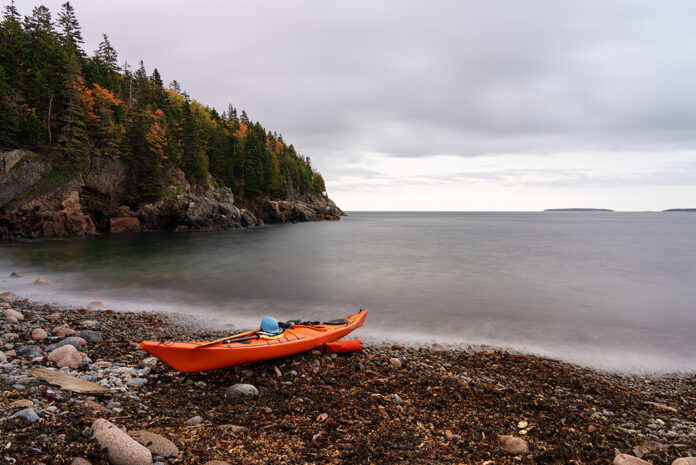
a touring kayak sits on a rocky beach in fall
Feature photo: Skyler Ewing/Pexels

There is no best answer to the question, when is a good time to buy a kayak? The best time to buy a kayak varies depending on your purchasing objectives: Is your priority to have the best selection? Or are you simply interested in finding the best price for a kayak? This article will provide you with a summary of what kayaks are available over the course of the year, and will offer guidance on when is the best time to buy a kayak for you.

When to buy a kayak

What time of year is best to buy a kayak? There are two conflicting realities to contend with in choosing when to buy a kayak: availability and price. If selection is your primary goal, then you should shop for a kayak in May or June when retailers receive their season’s stock. The importance of shopping early became crystal clear when the pandemic launched a revival of outdoor activities and Covid-19 imposed supply chain limits on production of outdoor gear.

As the pandemic continues, demand for kayaks is still outstripping supply. Shopping early in the season gives you the best opportunity to find the kayak of your dreams. With kayak shortages, it makes sense to put price aside and shop early to find a kayak that’s safe, comfortable and meets your performance needs.

On the other hand, shopping later in the season (specifically in late August and September) once rewarded patient shoppers the best chance of scoring a good deal. You may still get lucky—but it’s not a sure thing. Kayaks remaining on shop floors at this time of year are often the leftovers, obscure sizes or less desirable models.

Sure, you might find a sale as store owners attempt to clear out stock, but you’ll certainly miss out on the wider selection offered earlier in the paddling season.

When do kayaks go on sale?

The answer to the question “when do kayaks go on clearance?” is simple. The cost of a kayak tends to go down at the end of the paddling season, when stores are looking to clear out summer stock and move into the autumn and winter retail seasons. Here are some details to help you pinpoint when kayaks go on clearance at various popular outlets.

  • When do kayaks go on sale at Costco?

    You’ll find kayaks on sale at Costco in August and September, when they’re no longer seasonally relevant and more space is needed in-store for other goods. You may also get lucky and find remaining kayaks at clearance prices around Thanksgiving.

  • When do kayaks go on sale at Academy?

    Besides late-season autumn sales, kayaks often go on sale at Academy around holidays—such as Memorial Day and the Fourth of July. Shopping these earlier sales will give you better selection but the discounts may not be as significant as end of season.

  • When do kayaks go on sale at Bass Pro?

    Watch for holiday kayak sales at Bass Pro, especially Memorial Day and Fourth of July if you’re looking to strike a balance between price and availability.

  • When do kayaks go on sale at Walmart?

    As Walmart’s tagline suggests, kayaks are sold at everyday low prices at Walmart. However, you may score clear-out deals on leftover kayak stock at the end of the summer.

  • When do kayaks go on sale at Canadian Tire?

    Keep track of the weekly flyer to watch for kayaks on sale at Canadian Tire. Of course, you can also score great deals at the end of the season, particularly in August when stores switch stock from watersports to winter sports.

  • When do Menards kayaks go on sale?

    Menards sells a limited range of watersports equipment, including kayaks and SUPs. You’re most likely to find Menards kayaks on sale in August and September. It’s also a good idea to follow the Menards flyer to catch weekly sales earlier in the paddling season.

When do new kayak models come out?

New kayak models come out in the spring, to match the time when paddlesports, outdoors and big box stores begin to display summer stock. But don’t wait till spring if you’re looking to paddle off in the latest and greatest kayak from your favorite manufacturer.

Most manufacturers offer pre-season sales on new kayak models at local dealers. Attending a paddlesports trade show such as Canoecopia is another great way to check out (and pre-order) the year’s newest kayaks.

Do kayaks get cheaper in the winter?

You may wonder, “do kayaks get cheaper in the winter?”—especially if you’re looking to surprise a loved one with a unique Christmas gift. Kayaks may go on sale in the months leading up to winter, as retailers attempt to clear out the previous season’s stock. Sometimes you can find discount kayak prices around Thanksgiving. Bear in mind, however, you’ll have a smaller selection than other times of year.

Custom ordering a new kayak in the winter is another option, but don’t expect a discount. You can also plan to attend a paddling trade show, such as Canoecopia in Madison, Wisconsin, or the Outdoor Adventure Show in several Canadian centers. These events are a great spot to check out the newest kayaks and receive expert advice from industry professionals—and often also take advantage of special sale prices.


Feature photo: Skyler Ewing/Pexels


Best Kokopelli Packrafts For 2026

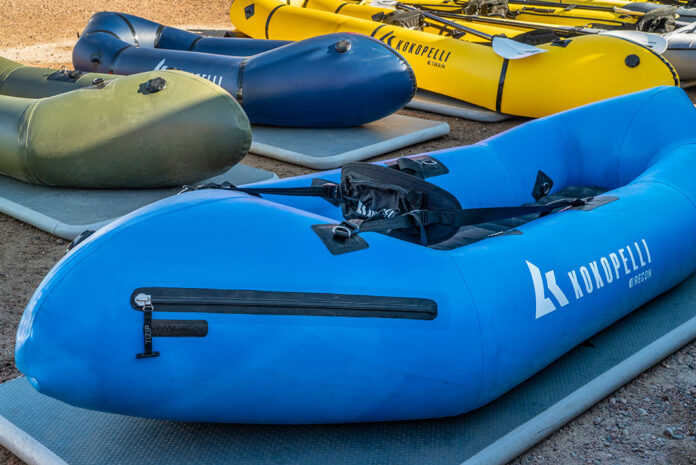
a bunch of Kokopelli packrafts laid out on the ground
Feature photo: iStock

One of the newest products in the paddling world, packrafts have “blown up” in adventure circles. Modern explorers have turned to these compact inflatables to access waterways that might be impossible to reach otherwise—leading to incredible firsts, like crossing the North Pole by human power.

Packrafts are durable enough to trust in remote environments, and they pack small enough to fit in a backpack or bike handlebar bag on the way there. Drive, bike, hike or even ski to the water’s edge, inflate the raft, load your gear and jump in.

Built like a miniature whitewater raft and typically paddled with a kayak paddle, a packraft’s inflatable chambers are forgiving and buoyant. You can paddle them with kids or dogs, on flatwater or in current. You won’t keep up with hard-shell kayaks, but the removable fins in some models help you track (stay on a straight course) for greater efficiency.

Colorado-based Kokopelli Packrafts debuted their first product on Kickstarter. Launching their ideas on a crowdfunding platform like Kickstarter allows companies like Kokopelli Packrafts to gauge demand while they raise the cash needed to get their prototypes into mass production. Kokopelli’s offerings have since expanded to include ultralight packrafts that roll up to the size of a shoebox, burly whitewater packrafts and inflatable kayaks. You’ll find Kokopelli packrafts in outfitters and retailers across North America.

Kokopelli’s innovative inflatables are driven by the adventurers who use them, pushing the limits of what’s possible. You don’t need to be a hardened explorer to enjoy a packraft though; they are great, supremely portable boats for quick outings anywhere. They pack down small enough to store in your closet or bring on the subway—something you probably shouldn’t do with a full-size kayak.

This article will help you find the right Kokopelli packraft for your paddling goals, whether you’ll take it on an alpine lake or through the metro to the waterfront. We’ll give an overview of the types of inflatables Kokopelli makes, as well as some tips for buying new and used. You’ll also find links to curated lists where you can learn more about specific models and where to buy them.

Shopping for a used Kokopelli packraft?

You can save some money by choosing to buy a used packraft. Even better, Kokopelli’s web store has an awesome “Garage Sale” section where you can buy blemished and open box models. Check here for deals on the boats—you’ll easily save a few hundred dollars. Purchasing from the company means that the warranty still applies when you register your packraft.

If you choose to buy a used Kokopelli packraft from another source, like a friend or online classified, ensure that all the parts are present. If pieces are missing, you can purchase replacements through Kokopelli’s website.

Also be sure to fully inflate the packraft so you can check for punctures or air leaks at the seams and valves. If there is a TiZip zipper (used to access interior storage space within the packraft’s tubes), pay special attention to that area. If the owner has properly lubricated and cared for the zipper, it should be water- and airtight. If it isn’t, or if the zipper is jammed, you may need to replace the TiZip.

Kokopelli provides replacement TiZips and will replace them for you. They have a range of other repair services offered on their website to get your used packraft back into top shape.

For more tips on what to look for when selecting a used inflatable, read our article How To Buy A Used Kayak.

Kokopelli packraft buying advice

Kokopelli conveniently divides their packraft offerings into three series: Adventure, Lake and Whitewater. There are differences in the design and price of these boats as they align with the different possibilities for each type of packraft. We’ll give an overview of each category and touch on the activities these boats are suited for.

A few key features found on Kokopelli’s packrafts are the seating systems, valves and optional TiZip storage system. Like many other inflatable boat manufacturers, Kokopelli’s seats are predominantly inflatable. Most of their models also come with an EVA foam backband that provides additional support.

You’ll find Leafield D7 valves on all Kokopelli packrafts. These are the gold standard as far as air-stoppers go. Nearly every high-quality inflatable uses these valves, and Kokopelli is no exception. For multi-day trips, Kokopelli offers the TiZip storage feature. This airtight zipper is placed on the outside of the pontoon. It allows you to store gear inside the inflated pontoons, protecting your gear in an efficiently packed manner. TiZip is an optional add-on to all Kokopelli packrafts.

Adventure Series

Kokopelli’s Adventure series packrafts are their all-arounders. These packrafts aren’t dialed in to one thing, but are made for dabbling in various activities. You can use them on small lakes or down moderate whitewater without worries. Within this series falls the XPD, Rogue Lite and Rogue R-Deck.

The XPD is built with bombproof 1000D Nylon, the same material used for whitewater rafts, which Kokopelli also uses in their whitewater series. It’s a bit bulkier when packed compared to the Rogues but still fits easily into a small duffel. At 14 pounds, it’s pretty easy to carry around in a vehicle or backpack. These rafts are durable enough to withstand the pressures of tough use. The XPD comes with a removable skeg (fin that attaches to the hull) for better tracking on flat water.

The Rogue packrafts are the ultimate option for anyone who prioritizes portability. Deflated and rolled, the Rogue Lite is roughly the size of a roll of paper towels and weighs just six pounds. The Rogue R-Deck, adds a bit more bulk and three pounds with its spray deck (which prevents water from splashing into the raft).

These packrafts are designed for light and fast trips—they can attach to handlebars for bikepacking or stash in a hiking pack nearly unnoticed. The Rogues inflate quickly, in less than 10 minutes or even faster with Kokopelli’s electric Feather Pump.

Lake Series

Designed for exploring on calmer waters, Kokopelli’s Lake Series comprises the ultralight Hornet-lite, two-person Twain and Moki inflatable kayaks. The Hornet-Lite packs smaller than any of Kokopelli’s other models and weighs a trim five pounds. It’s forgiving stability and low price make it a great option for beginner paddlers who will stick to calm waters.

The Twain is Kokopelli’s self-described “Packhorse,” with 10 feet of space to seat two paddlers. It’s also a great choice for a solo paddler who wants more space for large canine companions, extra gear or even just legroom. Kokopelli’s other packrafts are around seven feet long, so this additional three feet of space opens up gear options for a week or more in the backcountry. The longer waterline, combined with a removable fin, also gives the Twain good tracking on flat water. You can even add an electric motor to the fin box when you have a lot of water to cover.

With their longer, tapered hull shapes, Kokopelli’s Moki kayaks excel in flatwater conditions. Kokopelli’s three kayaks feature two solo designs and one tandem, the Moki II. These inflatable kayaks are all built with a drop-stitch floor, a construction technique that allows inflatables to retain flat, rigid shapes. Integrating this into the kayak’s hull helps it track (travel in a straight line) and paddle faster.

All Moki kayaks also include a removable skeg (or fin) to further enhance tracking. The removable spraydecks of the Moki I and II add protection against wind and splashing waves, and paddlers can also choose to wear a sprayskirt that creates a seal between the paddler and the deck to keep water out of the kayak. The Moki I is a 12-foot solo kayak suited for recreational use or short overnight trips on calm waters. The Moki II Tandem stretches out to 15 feet and boasts a 600-pound capacity in its multi-chambered hull. The beginner-friendly Moki Lite is a compact, 10-foot kayak with an open cockpit for easy entry and exit.

Whitewater Series

Kokopelli’s rugged Whitewater Series includes the Recon and Nirvana models. Kokopelli uses their toughest reinforced PVC on the Recon packraft so it can handle any abuse on the water. At 18 pounds, it’s their heaviest packraft, making it less suitable for hike- or bike-access trips. Choose the lighter Nirvana for those harder-to-access whitewater trips, as it weighs less than 12 pounds and easily packs into a small duffel.

Both the Recon and Nirvana whitewater packrafts can be purchased with either a spraydeck or as a self-bailing iteration. Self-bailing packrafts are great for paddlers in warm waters who want to be able to jump in and out of the boat easily. Water exits through one-way openings on the bottom of the self-draining raft. Thigh braces anchored to the raft enable you to stay securely seated in the self-bailing packrafts.

Kokopelli’s spraydeck-equipped packrafts fit more like whitewater kayaks, with the paddler’s legs braced beneath the deck. The paddler wears a sprayskirt that attaches to the deck’s coaming (rim around the seat area) to prevent water from entering the packraft. Spraydeck packrafts are good options for running colder rivers, as you’ll stay warmer and a lot drier than in an open, self-bailing packraft.

If you’re still not sure which Kokopelli packraft best suits your needs, take the short quiz “Which boat is right for me?” on their website. Choose from a few easy options about where and how you want to use the boat, and presto—Kokopelli will recommend the model(s) that best fit your goals.

Accessories

Whatever Kokopelli packraft you choose, you will also have options for accessories and add-ons. Many of their packrafts come with a four-piece kayak paddle, which can also be purchased separately. This paddle can easily be stashed in a pack during transit. Whitewater packrafters can upgrade to Kokopelli’s four-piece edition of the classic Werner Powerhouse paddle.

The rechargeable Feather Pump shortens inflation time to less than a minute for most boats. Finally, Kokopelli’s Delta series of dry bags are tailored to fit in TiZip-equipped pontoons or in the bow of the packrafts.

Repairs and warranty

The TiZip system has a limited one-year warranty, and every other part of the packraft has either a limited three-year or lifetime warranty covering defects in materials and workmanship, depending on the model.

If something happens to your packraft that isn’t covered by the warranty, don’t throw the packraft out. Kokopelli does complete repairs on their packrafts, and they also sell kits to do your own repairs, whether in the field or at home.

  • Where are Kokopelli packrafts made?

    Kokopelli packrafts are made in China.

  • Kokopelli packraft dealers

    Kokopelli packrafts can be ordered directly from the company or through their authorized dealers, including MEC and REI. Find a full list of Kokopelli packraft dealers using their dealer locator.

Kokopelli packraft comparison

  • Kokopelli packraft vs Alpacka

    Alpacka is another Colorado-based packraft company that builds their premium packrafts in the state. One of the pioneers of modern packrafting, Alpacka’s rafts have been tested on remote rivers around the world. They offer more specialized rafts, with a larger selection of packrafts to fill different niches.

    Choose an Alpacka if you know exactly what type of packrafting you want to do. Kokopelli’s packrafts land at a slightly lower price point and are more suited to general, “all-around” use. Choose Kokopelli if you’re going to dabble in more varied casual paddling—some lakes, slow rivers or whitewater. Both companies have solid repair services and warranties backing their products.

Feature photo: iStock


3 Steps To Stick The Balance Brace

man performs the kayak balance brace maneuver
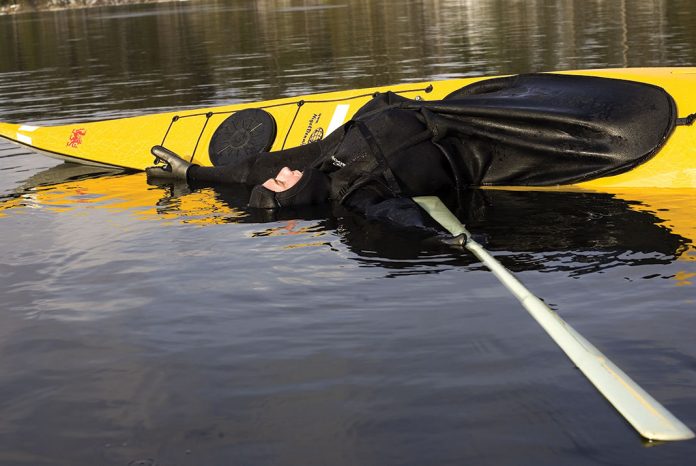
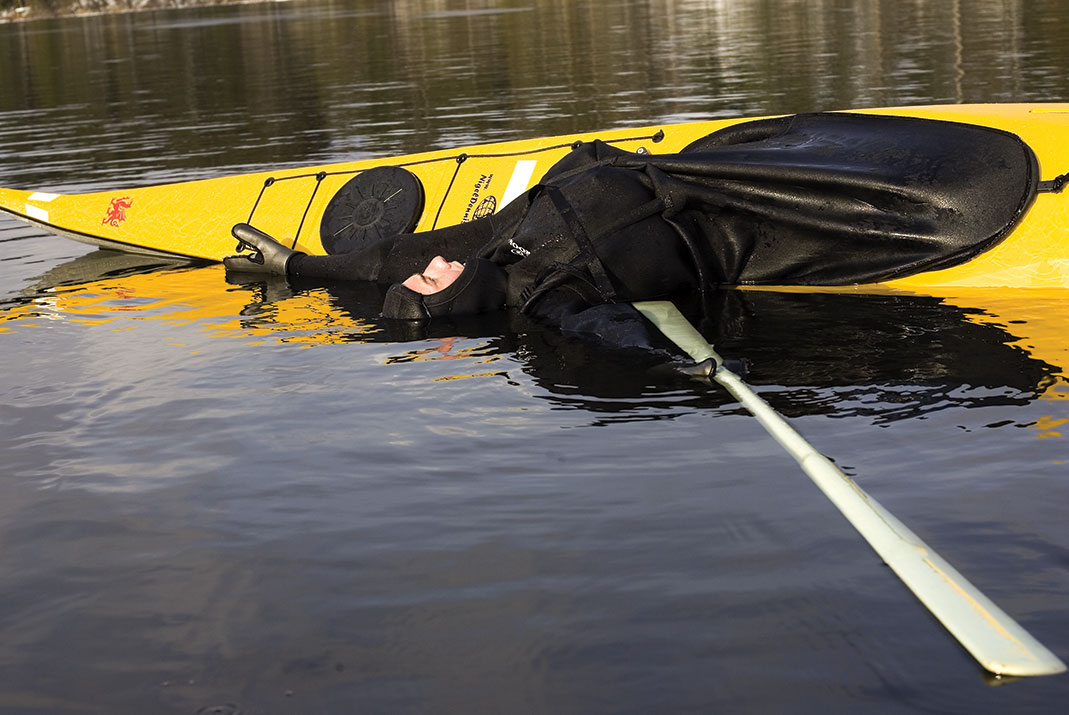
A properly executed kayak balance brace is almost as relaxing as a break on shore. | Feature photo: Scott MacGregor

The first sea kayakers devised the balance brace as a means of gaining stability in rough water and a way to stretch out their lower bodies without leaving their boats. In the balance brace maneuver, the kayak is held at the capsize point indefinitely—without ever going over—using the flotation of the upper body and Greenland-style paddle. Pressure from one leg is needed to hold the paddler in the boat while the other is free to dangle. It’s almost as relaxing as a break on shore.

Modern-day paddlers should think of the balance brace as a party trick that’s practical. Not only does it look good; it also makes a solid rough-water survival position and is the basis of several Greenland rolls.


Almost as relaxing as a break on shore. | Photo: Scott MacGregor
A properly executed kayak balance brace is almost as relaxing as a break on shore. | Feature photo: Scott MacGregor

How to Stick the Kayak Balance Brace

1 Lean Back and Scull

Start off by leaning the kayak and sculling with the paddle to keep the boat upright. Lean back as far as you can on the stern deck and work on twisting at your hips to expose the back of your PFD to the water—think of arching your back. Use your lower leg—the one that’s in the water—to keep the boat from capsizing by exerting steady pressure on the foot and thigh braces. Relax the other leg—you can even take it off the foot brace.

2 Act Like an Outrigger

Now stop sculling altogether. Arch your back and let your head fall into the water; maintain a steady pressure on your lower knee; and hold the paddle motionless across your chest, allowing it to float to the surface. The boat should be kept as level as possible; your body acts like an outrigger to keep the kayak from capsizing.

[ Paddling Buyer’s Guide: View all outriggers & stabilizers ]

3 Sit Back Up

Returning to the upright position from the balance brace is as simple as sitting up. It’s possible to scull your way up, but unnecessary. It’s easiest to bring your body over the back deck of the kayak by pivoting at your hips. Remember to bring your head up last.

Paddling Magazine Issue 65 | Fall 2021

This article originally appeared in Paddling Magazine Issue 65. Subscribe to Paddling Magazine’s print and digital editions here, or download the Paddling Magazine app and browse the digital archives here.


A properly executed kayak balance brace is almost as relaxing as a break on shore. | Feature photo: Scott MacGregor